Marius
-
Posts
3,213 -
Joined
-
Last visited
-
Days Won
26
Content Type
Profiles
Forums
Events
Store
Downloads
Gallery
Everything posted by Marius
-
Mark, never do that again, otherwise you risk cutting your fingers badly. Gently up only, from the hamachi to the kissaki, NEVER down. Justa an advice of someone who has done it the wrong way.
-
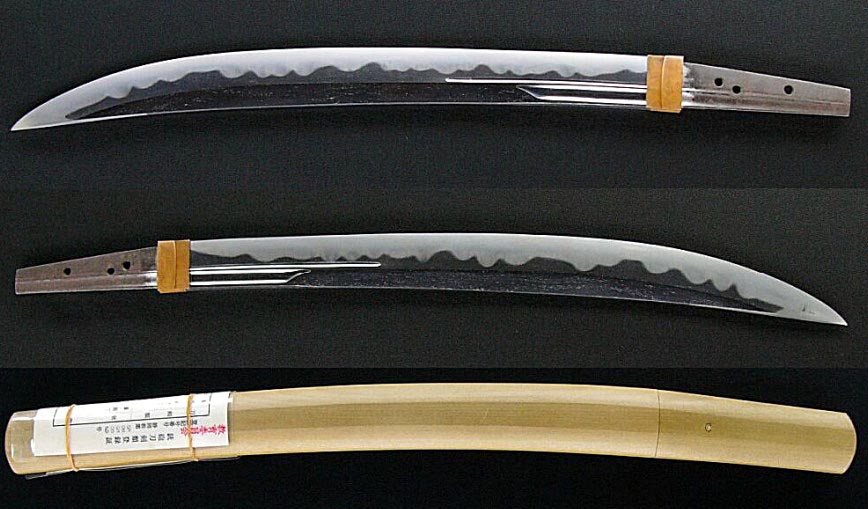
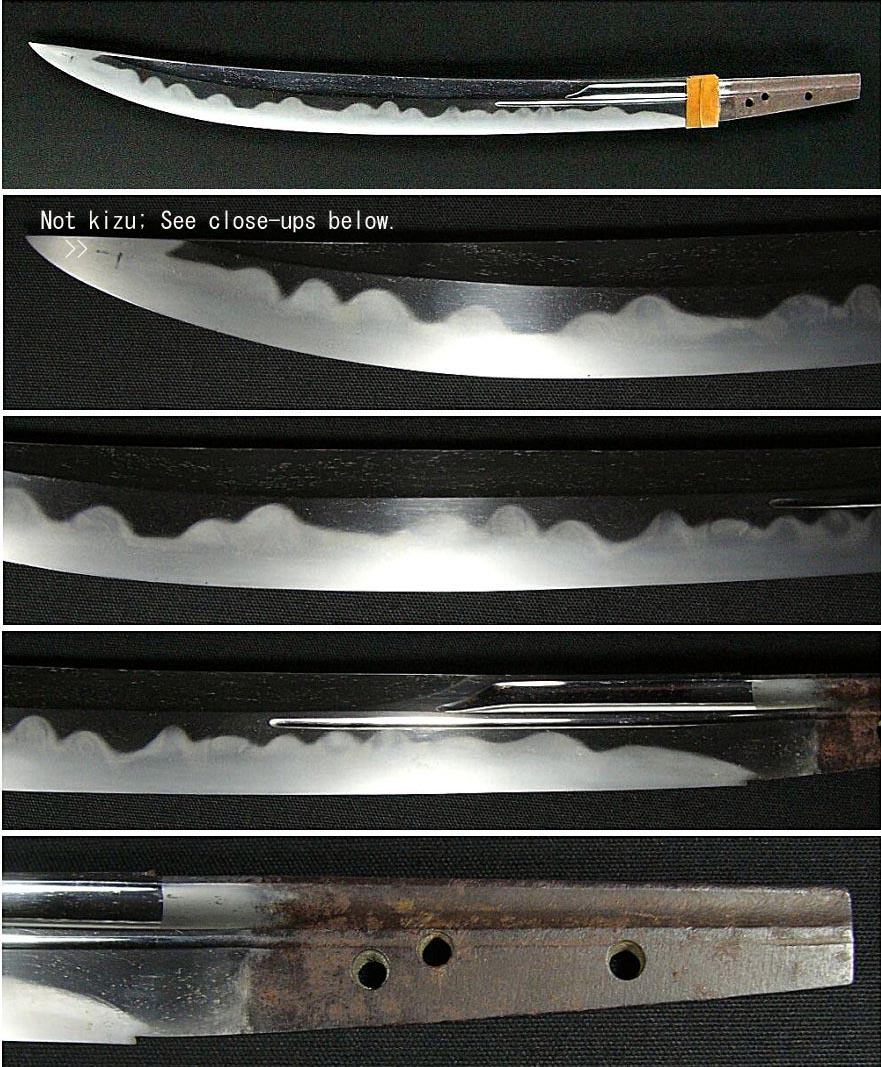
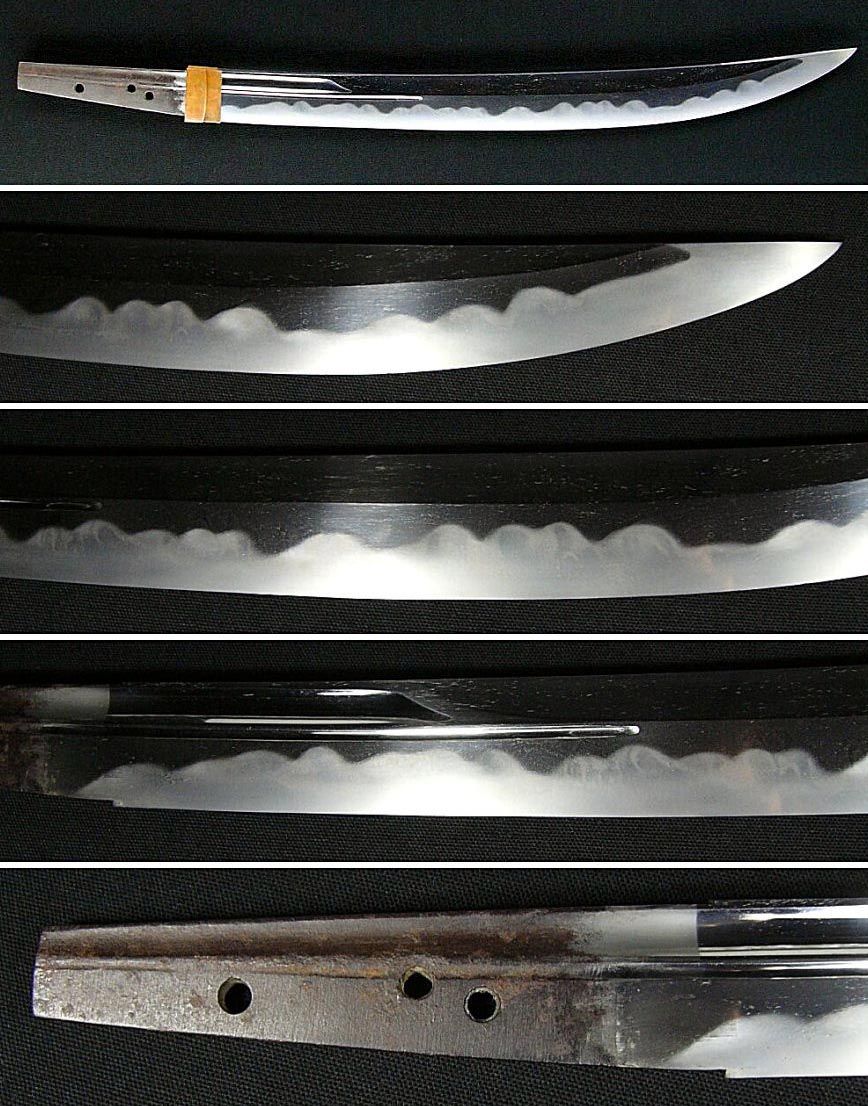
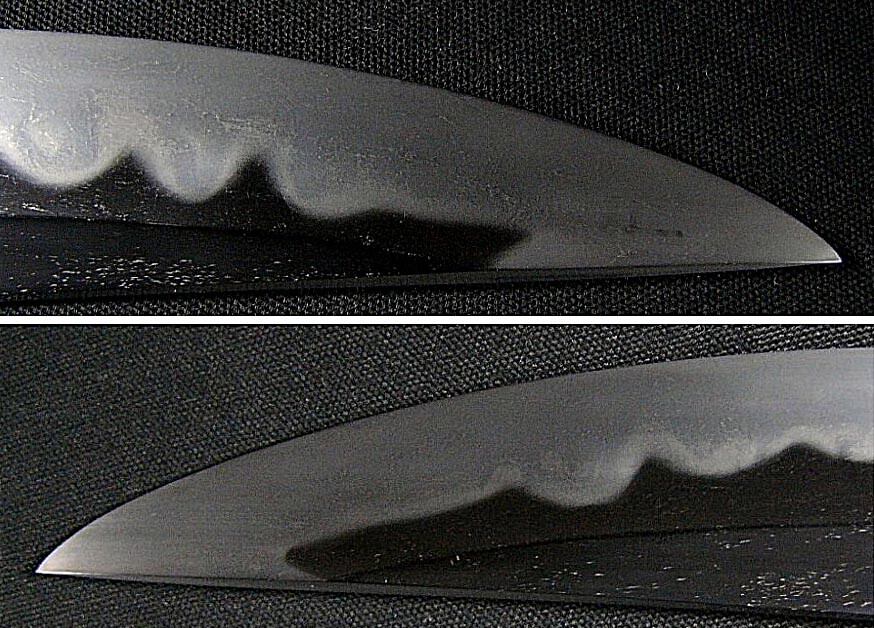
A treasured blade is returning to me after a few years (I have sold it to a friend, and I was regretting it ever since). Just wanted to share it with you, as I know there are some fans of naginata naoshi here. Pictures attached, comments appreciated. Close up pics possible at the end of the month, when the blade is in my hands again... Let me know if you are interested in such pics. This blade's cost has cost me quite a few greenbacks, and I know I could have got an excellent ubu wakizashi or even an average katana for it. I know I will not be able to sell it fr what I have paid. I don't care, it simpy has this something that appeals to me. I was waiting for years to get it back... This blade is not gimei, so it clearly violates my principles of collecting :lol: Oh, BTW, and this blade is:



-
Thanks, Markus, I appreciate your help :-)
-
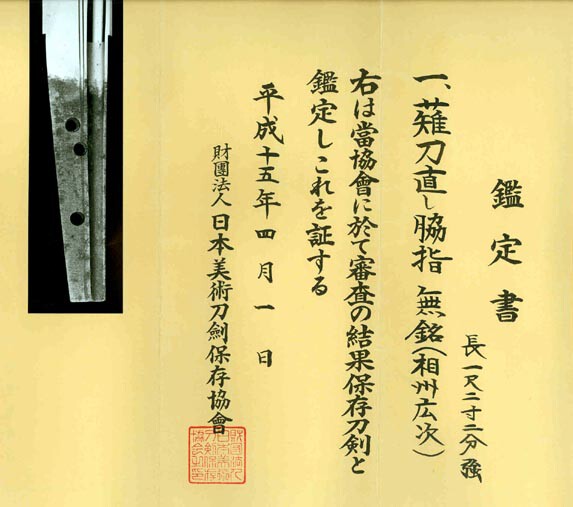
Dear All, could you please help me with this origami? I know it is Soshu Hirotsugu, that is all... Thanks
-
Not bad. From what I can see on your pics, the tsuba might be cast iron, though. I might be wrong as I am over-cautious and usually completely wrong when it comes to a tsuba . Could you post some pics, please?
-
Actually, no conspiracy here, just a simple calculation by eBay: how much of our fees comes from nihonto sales? does it make sense to provoke anger of (admittedly not too bright and rather populist) authorities, or worse, suffer a PR debacle at the hands of a hysteric press? The answers to both questions result in a logical conclusion - let's call the whole thing off. eBay is neither good nor evil. It is a company whose goal is to earn money. It is not a club of like-minded people or a charity, or a public service of any kind. And as clients, we, the nihonto collectors, have no bargaining power with eBay.
-
Adam, the admins here will tell you that we don't comment prices here, just swords. But I would say: hey, that is what "the market" now pays for a sword like this. Fair enough?
-
I just love the nakago, can't wait to see good quality pics, Piers I wonder how you get it repatinated... Not that I like such new patina when it is put on a nakago for the purpose of deceiving a buyer, but in this case, where it is a restoration job. I mean, how many nakagos have been "cleaned" by ignorant idiots...
-
I love it :D Great job More pictures of the nakago, please, please PS: I have just noticed how nice the seppa are!
-
Togishi: Contrary opinions on using uchiko
Marius replied to Marius's topic in General Nihonto Related Discussion
Peter, I shouldn't be surprised, but your knowledge of nihonto is positively occult :-) Yes, it is Aizu Michitoki (attribution by the NTHK, London Shinsa last year, I believe), with a Shibata Mitsuo origami attributing it to Yamon Naokatsu. BTW, I have ordered uchiko from Bob Benson, and I use German machine oil (Ballistol - http://www.ballistol.de/english/index.p ... 05&sub2=33). -
Togishi: Contrary opinions on using uchiko
Marius replied to Marius's topic in General Nihonto Related Discussion
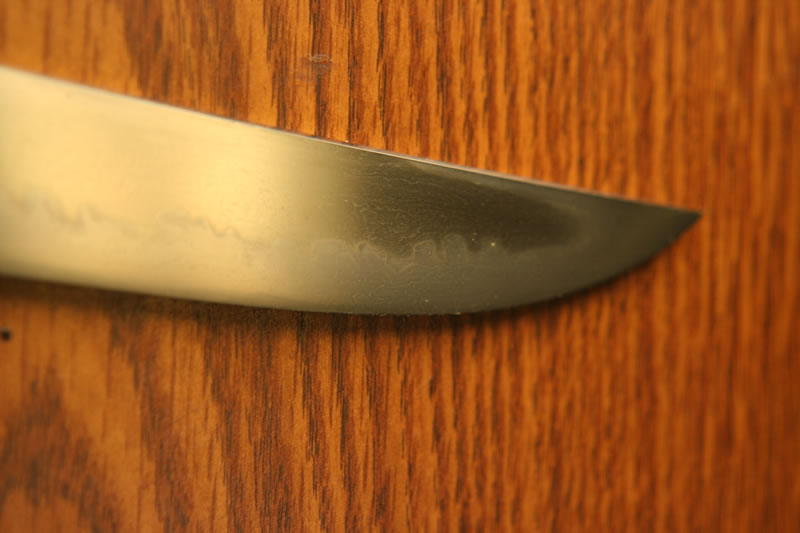
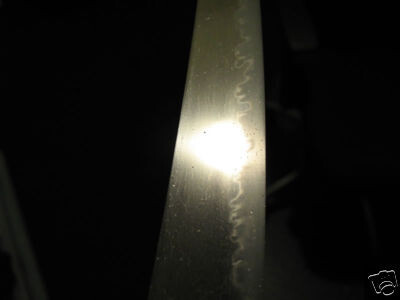
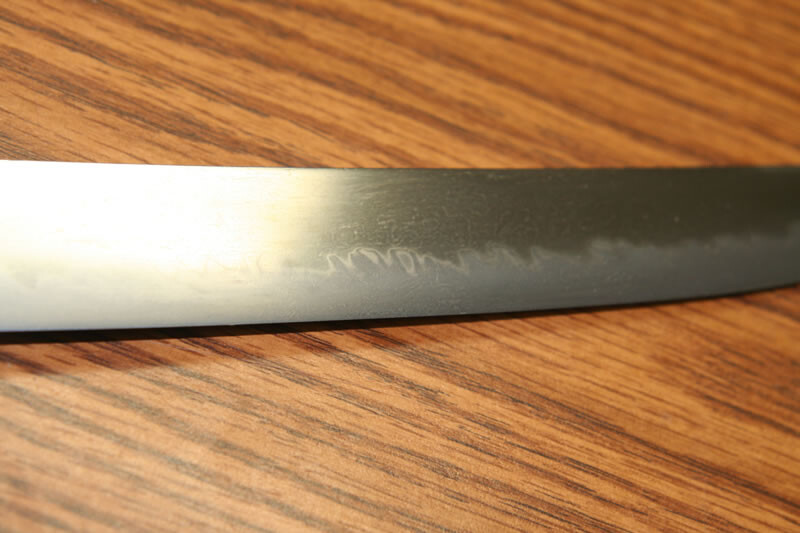
Hi Franco, many thanks, your advice sounds very reasonable to me. Question - what do you mean by "hike"? Scratches? Or something else? Also, HOW do I develop my uchikoing technique? What should I look for? How often should I uchiko my old polished sword? I presume that I will have to keep two balls of uchiko - one for freshly polished swords, one for old polished? Actually, I would rather avoid uchiko for newly polished swords - all my swords are polished in the kesho (hadori) style. Another question arises - how does an amateur like me tell sashikomi polish from hadori (kesho) polish? I know the difference - sashikomi is more subdued, the hazuya follows the hamon more precsisely, the hamon is not too bright, but I still am not confident enough to tell which one is which. I have a tanto, where I am in doubt (picture attached). I ask these questions only to determine where I can use uchiko...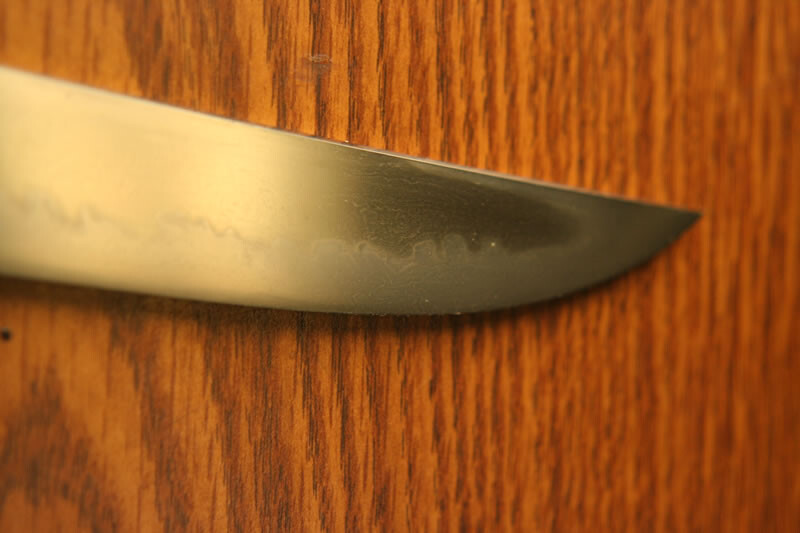
-
Togishi: Contrary opinions on using uchiko
Marius replied to Marius's topic in General Nihonto Related Discussion
Thanks for the clarification - I like the Hon'ami approach - it seems honest and sensible. BTW, where can I buy top grade uchiko? Any shop you can recommend? I don't mind paying top prices. I would not like to risk using uchiko from a kit... -
Dear All, I have just stumbled upon an interesting opinion on the Usagiya website: http://www.ksky.ne.jp/~sumie99/ns8.html This is a short article about a newly made sword and the togishi who has polished it in the classical style (sashikomi). Allow me to quote the part which has left me bewildered: "The polisher said that he wanted to polish this blade in the classical style (sashikomi), because it should be better for that interesting appearances in the blade. Then he presented an uchiko powder ball to the blade and said. "Polishing work is not finished by polisher. A newly polished blade has to be treated politely by the owner. Careful treatment during long time makes the blade surface clear. It takes some years or longer. For that, real uchiko powder is necessary. His policy is quite correct. But on a deep make-up polishing, it is not good sometimes. Treatment with real uchiko powder may take the make-up off and bring the true face up." Now, this is something totally contrary to what I have learned - uchiko has been defamed as an abrasive agent which can indeed ruin a good polish over time and even blur those crispy edges of a newly polished sword. And togishi who have recommended to apply uchiko to a newly polished blade have been defamed as lazy bums who don't do their job properly. Then again, I allow myself to quote the late Jim Kurrasch's opinion on that topic: "Swords in Sashi-komi polish are different. Sashi-komi polishes will improve with age and uchiko. If properly maintained using uchiko several times a year they will reach perfection in five or ten years (please see the quote at the end of this article)." BTW, for me, the humble amateur, Jim's essays on nihonto have been a constant source of knowledge and inspiration. I have downloaded and archived his website long before it was taken down and now I would like to host it, or basically put it up for everybody interested to download. If anyone here has got a contact to Jim's family, I would like to ask them their permission to distribute Jim's essays to the nihonto community. His articles are small gems, as most of you will surely know.
-
Koichi-san, what would we do without you and your kind help? Arigatou Gozaimasu
-
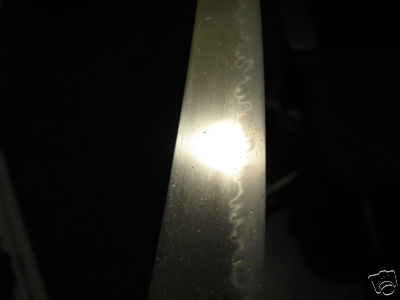
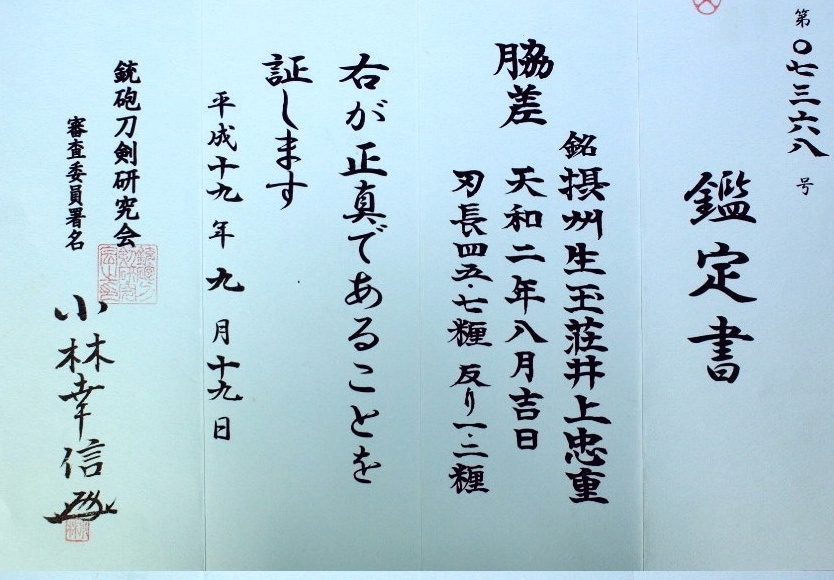
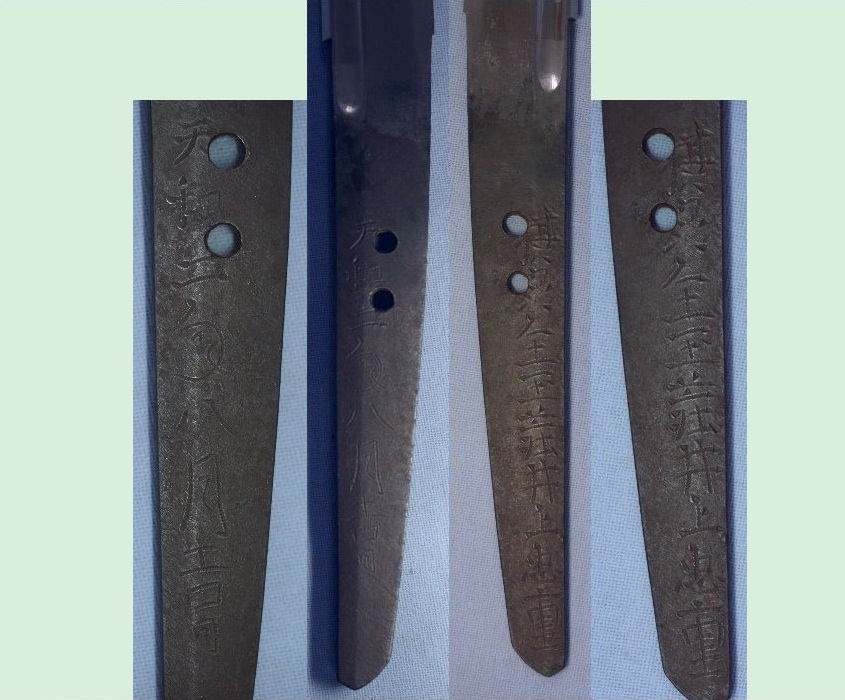
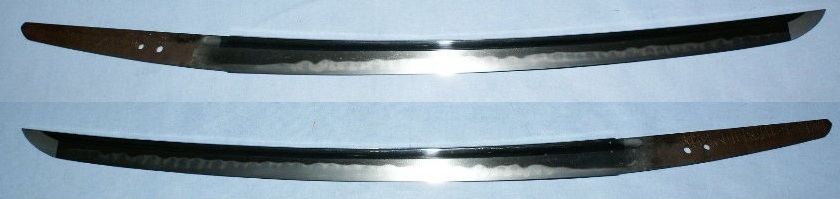
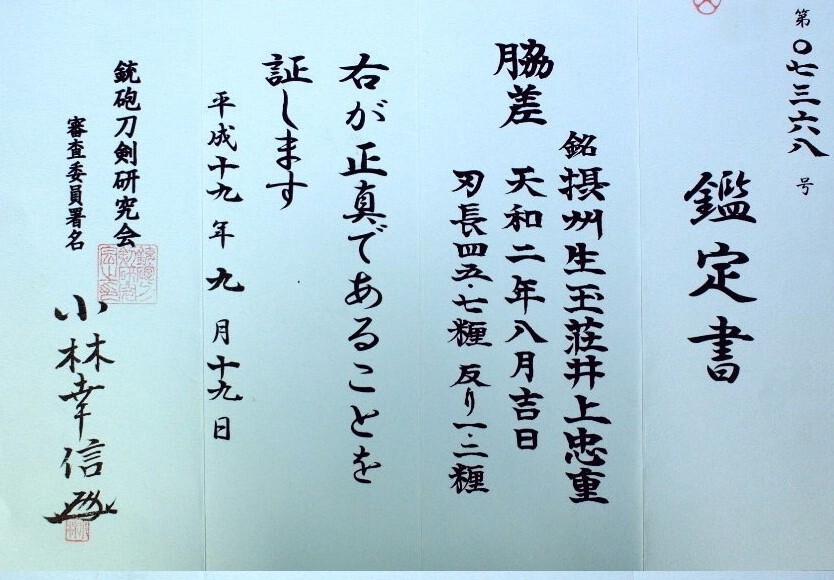
Dear All, I have a nice Kanbun shinto wakizashi which has some weird origami attached to it. I know from the seller that the origami attributes this sword to Tadashige (Fujiwara Tadashige, Settsu - as some Forum member explained "He was a pupil of shodai Tadayuki, and he also produced in Edo". The signature on the sword is - not that I can read it - SESSHU IKUTAMA NO SHÔ INOUE FUJIWARA TADASHIGE My questions are: 1. who has issued the origami? 2. Is it a known organisation or dealer? 3. What do the papers say if (if they say anything more than I already know)? Thank you for your kind assistance, I am obliged :-) Oh, and for the curious - here are some pics of the sword as well :-)



-
Piers, To all intent and purpose, the tanto is a tsunagi, now that some idiot has tampered with it. Having the nakago reshaped and repatinated professionally will cost you as probably nearly much as a perfectly decent and undamaged entry-level tanto. eBay is full of such itesm, and they can be enjoyed, if you happend to have no access to hundreds of Juyo blades. Keep it as it is, enjoy it as long as you will like it, keep if if you like it a tyear from now, but do not invest a penny into it. It is simply not worth it, koshirae has nice items but is cobbled together from what was at hand, tanto is damaged and out of polish. Just my tuppence
-
Well, my guess would be shishinto. The pictures do not disclose too much due to the resolution, but it seems that this tanto is muji hada. Also, it seems rather healthy and thick, while you get more chance of a slightly polished down blade when it's a koto (although there are no rules here). I don't get the hamon, seems indistinct, I cannot see the pattern clearly, but might it be uma no ha, or maybe hako midare? The nioiguchi is not distinct, maybe because the blade lacks a fresh polish (I would not invest in a polish here). The shape does not correspond with Muromachi, either. But overall - it is really hard to tell anything conclusive from these pictures. What I have said here, at the risk of becoming the object of ridicule, is just my uneducated opinion, so it might be just the other way around
-
Piers, that is an interesting interpreation, but doesn't it go too far? This reminds me of calling bo-hi blood-groves, while they were made to reduce weight, balance the blade, but not with running blood in mind. I think a tsuba is a guard, which keeps your hand from being cut or slide down the blade, and that is all there is to it....
-
Piers, IMHO the nakago has been "cleaned" by an amateur and then "repatinated" It seems original, though, with oine mekugi ana filled. Koshirae: the fuchi seems awkward, it is simply to broad for that short handle. The kashira seems to come from some handachi mounts and does not correspond to the saya. I love the menuki, the rabbit is so cute :-) The wooden tsuba fits into the picture of a koshirae which has been put together from ready available parts - it looks more like a thick seppa. My gut feel is: the saya and the bashin are original, the tsuka has been compiled from whatever was at hand. Actually, I like the saya and the bashin very much. All in all, if you bought it for a song, it was a very good deal. How long is the nagasa? I should think it would not exceed 20 cm? The blade is also nice and good enough to be studied. Well done :-) John, many thanks about your comments on the primary function of a tsuba. I haven't thought about this. But given, that it was the area above hamachi which was used to parry blows of the enemy's sword (as explained by Sugano Sensei in this clip: ) I guess that the samurai preferred a tsuba which was not easily cut.
-
Hi Piers, 1. An interesting thing you seem to have there. Tsuba is a guard, protecting your hand from a cut. Forged iron tsuba do their work best, kinko tsuba were possibly more for the display of wealth and taste of the owner than for combat, cast iron tsuba are fakes or Meiji tourist items, but a wood tsuba? What purpose would that have? It would not keep a blade from cutting your hand. Then agian, your sword is a tanto, and tsubas on tanto were sometimes really minuscule and they were clearly not meant to parry blows. Such tsuba could be made of iron, soft metal or anything else that the artisan happened to deem a useful material. Your tsuba seems to fit into this category. 2. the blade is not necessarily old OR the nakago might have been cleaned by some idiot at a certain point. Besides, "old" is relative (is a 100 years old sword "old"?). And, what precisely makes you think it is old? gendai blades are often produced as (very good) copies of celebrated swords and gendai sword smiths often emulate a certain school or master. Is it polished down? That in itself is not a reliable proof of old age, although it might serve as an indication. 3. what you describe seems a home-grown machi okuri done by some vandal. Is this common? Yes, machi okuri is quite common. Alterations to nihonto done with a grinder are also quite common, I am afraid. The supply of idiots who ruin good swords in order to "clean" them or make them fit into some koshirae that they happen to have at hand is quite substantial ((horror stories about ruined blades abound) I don't think this will help you a lot, but at least I have tried Of course pictures would be very helpful...
-
Oh, great. Now I have made a fool of myself (not the first, not the last time.. Brian, please would be so kind as to delete my post? It is rather embarassing
-
Dear All, the books I have assembled might be interesting for the nihonto collector - some of them are early Japanese sword books, some are about art, legend and samurai tales. Most of them can be found on the Internet Archive: http://www.archive.org/ - they have been digitised for the Archive by Microsoft and can be freely downloaded and distributed for non-commercial use. I thought it might be conveniet to have them all in one place, so I have uploaded them to my file sharing site for you to download. I hope that at least some of you don't have these books yet, and that they might be of use to you. "Legend in Japanese Art" is a nice example - packed with information about various characters you can find on kogodu (this book has also illustrations of tsuba). You will find the books here: http://public.me.com/mariuszk In order to download a book, please click on the little arrow on the right side. And here is the list: A Muramasa Blade, A story of Feudalism in Old Japan, Louis Wrtheimber, Boston 1887 Gods and Heroes of Old Japan, Violet M. Pasteur, London 1906 Japanese Sword and its decoration, Helen C. Gunsaulus, Field Museum of Natural History, Chicago 1924 Japanese Sword Mounts in the Collections of Field Museum, Helen C. Gunsaulus, Field Museum of Natural History, Chicago 1923 Japanese Sword Guards, Okabe Kakuya, Museum of Fine Arts, Boston (exhibition catalogue 1907-1908) Legend in Japanese Art, Henry L. Joly, London, New York, 1908 Tales from Old Japanese Dramas, Asato Miyamori, revised by Stanley HughesNew York, London 1915 Tales of the Samurai, Stories illustrating Bushido, the Moral Principles of the Japanese Knighthood, Asataro Miyamori, Tokyo 1920 Enjoy :-)
-
Dear Markus, dear Koichi-san, I am very grateful for your kind help and as always very impressed with your kindness to ignorant people like myself. Thank you very much indeed
-
Dear All, I believe that I may have Shibata Mitsuo origami attributing a tanto to the Naotane school. Since I cannot read it, I would kindly ask for your assistance and forgiveness of my ignorance of the Japanese language and its hiragana, katakana and kanji. I would not be so impudent as to ask you for a full translation, if you please, I would be very happy with the author of the origami and a brief description of his attribution. I am sorry to bother you with that. Thank you very much PS: should better pictures be needed, I will try to produce some, as this origami is already in my possession (alongside the tanto)

-
Thank you Koichi-san, thank you Jean :-) I may have been mislead by the fact that it has been polished down so strongly. Do you have any other comments about this tanto? I should be grateful for any hints. As you see, I am quite helpless here...