hxv
-
Posts
1,271 -
Joined
-
Last visited
-
Days Won
1
Content Type
Profiles
Forums
Events
Store
Downloads
Gallery
Everything posted by hxv
-
This must be your new sword. http://www.nihonto.us/MINAMOTO%20IYE--.htm Hoanh
-
Thank you for the info, Jussi. Jason should have plenty of leads to search out on the relevant workmanship now. Regards, Hoanh
-
Jason, There is nothing to be bumped out about. For a first blade, it's much nicer than what most of us had for our first blade. The price is an outright steal for a papered blade in good polish. If I am not mistaken, Settsu Tadayuki is ranked Josaku - an excellent smith. Enjoy the sword! You did very well. Hoanh
-
Thank you Jean. That's what I thought as well. In my opinion, statements that express the exception rather than the norm should be qualified for the benefit of new collectors. Once again, thank you for the clarification, Jean. Regards, Hoanh
-
Jacques, Would you say that the statement above is the norm or the exception? Hoanh
-
Jason, No, Hozon is all you can expect for a mumei shinto sword. If this is your first sword, you did well. Enjoy the sword. Hoanh
-
I saw this sword on ebay. Price-wise, it's a good deal for a papered sword. The sword looks to be in good shape. To answer your question, mumei shinto swords do not get Tokubetsu Hozon. In fact, even signed shinto swords do not get Tokubetsu Hozon if they has been shortened. Hoanh
-
Eric, The shinogi-ji is semi-burnished. What I mean is that it is clearly burnished, but the masame hada in the shinogi-ji is still visible, especially if you view the sword at certain angles. Regards, Hoanh
-
Thank you Ron for the kind comments. Uwe's tutorials are not hard to follow. I just have to be willing to make lots of mistakes and learn from them. I have always found my pictures, although focused and showed clear details, always on the "yellowish" side. Uwe's instructions really helped me tremendously in correcting the colors and in exposing ji nie more clearly. Regards, Hoanh
-
Just isopropyl alcohol and store dry (no oil) for me. Hoanh
-
Tom, What you are looking at is not a sword as we usually think of swords. It's a tiny utility knife a few inches long. Aoi website was working fine this morning. I don't know what happened. May be check back with them later in the day or tomorrow? Regards, Hoanh
-
Lucy, You are a wonderful & understanding wife...I think before plunking down $5k, you need to find out what kind of sword your husband is looking for: old (Koto), new (Shinto), new new (Shinshinto), modern (Gendaito). Of these time periods, what tradition of forging does he like:Yamato, Yamashiro, Bizen, Soshu, Mino? Of the forging tradition he likes, what school/sword smith does he admire? There are a lot of things to consider. Not all Japanese swords are the same. If I were you, I would talk to him first. Regards, Hoanh
-
Thank you George and Jacques for the correction. I didn't read it the translation carefully enough, then. Regards, Hoanh
-
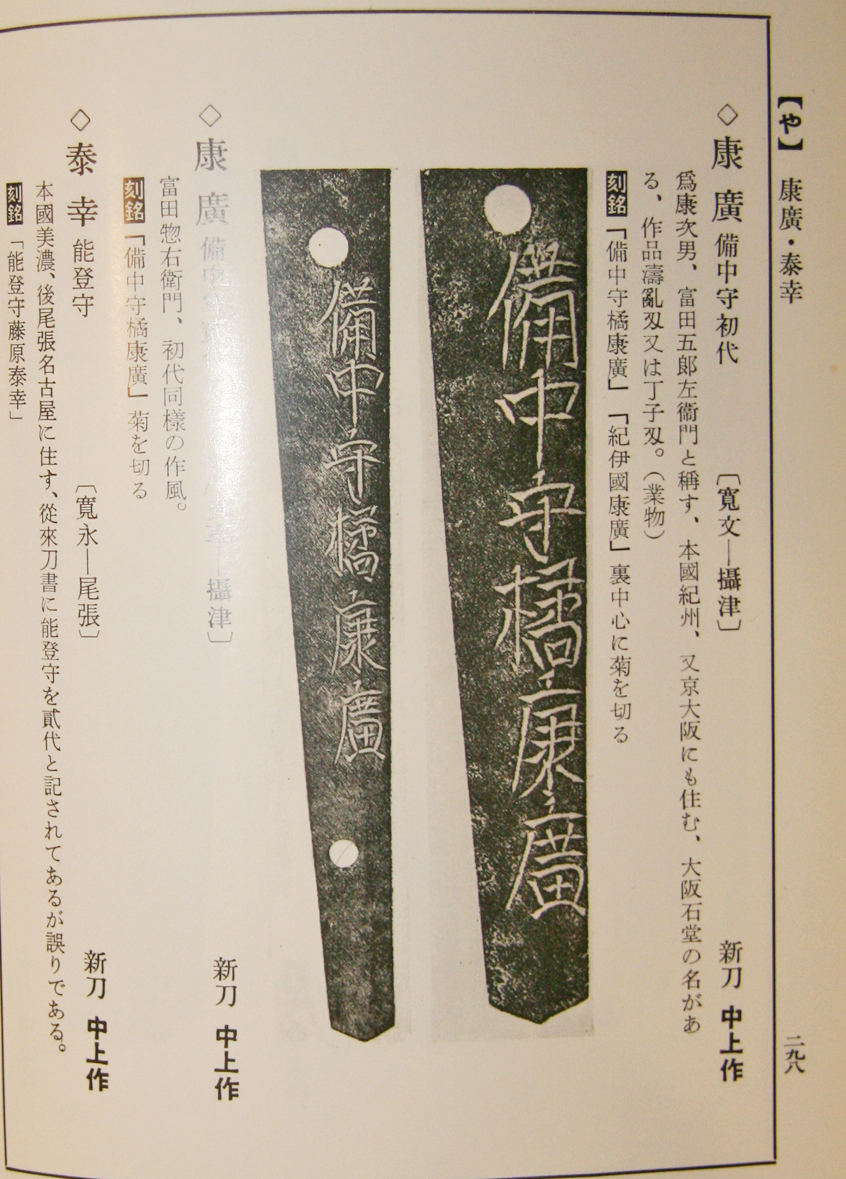
Interesting! Reading the AFU translation, I distinctly understand that Plates I (right) and II (left) on page 298 (the page I posted) refer to the shodai and nidai, respectively. Perhap, I misread the translation? For those with Fujishiro, I would appreciate your thoughts regarding my interpretation of the translation on page 298 of the Shinto volume. Hoanh
-
Uwe, Yes, more tutorial, please! May be you can start a new thread with your tutorials. I have always found Photoshop a little daunting with so many choices, so your step-by-step tutorial is great. Regards, Hoanh
-
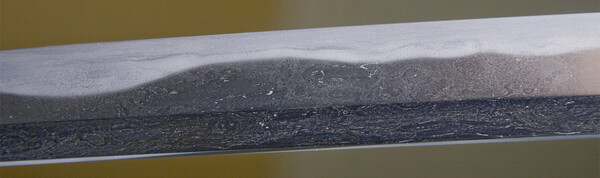
Hi Uwe, Thank you for the new screenshot. I followed your instructions and manged to get the following picture. Thank you for the tutorial. Regards, Hoanh
-
A page from Fujishiro: left nakago is nidai and right nakago is shodai. Hoanh

-
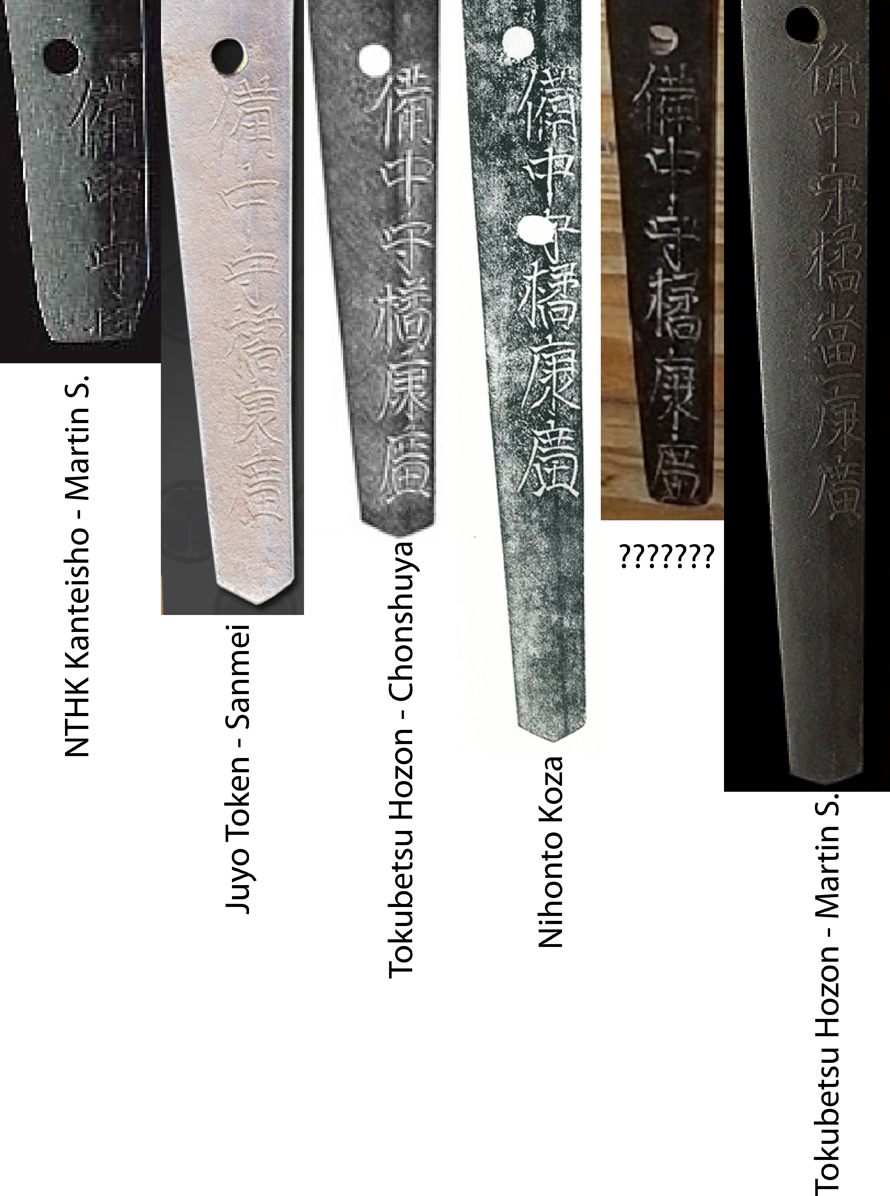
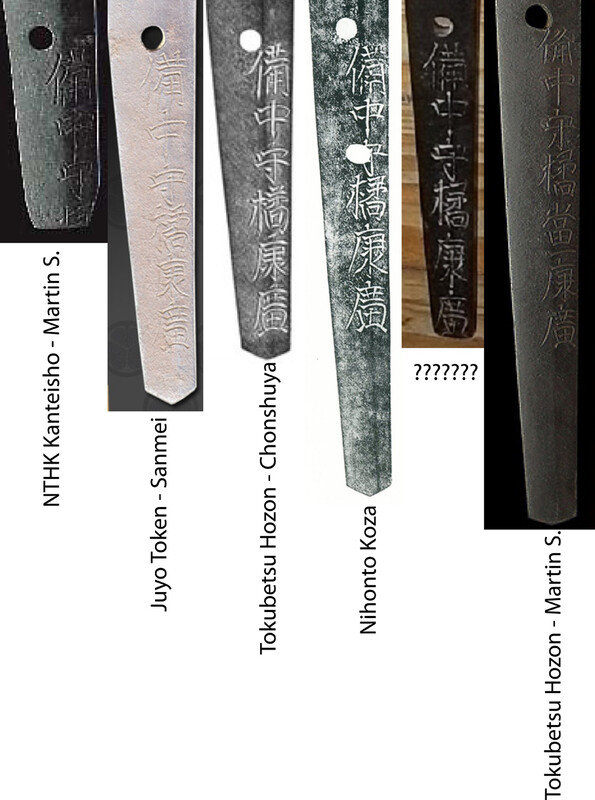
Chris, It's definitely not by the shodai. Although there are 4 generations of Ishido Yasuhiro, Nihonto Koza and Fujishiro only has mei for the first two generations. Let me have a little time to take pictures of a page from Fujishiro and post it for you. In the mean time, below is a mei compilation for the shodai, all swords shown are papered. The sword with '?????' is my sword, which has just been papered. Your sword could be by the nidai (since I have no mei examples for the 3rd and 4th generations), but there are some significant differences in the kanji. So, it's hard to say - can't say for sure one way or another. EDIT: Just from a gross observation, the placement of the first kanji relative to the mekugi ana in all of the papered examples and in Fujishiro is very consistent. In your sword, this placement is quite a bit off. If you look carefully, you can see that the proportions of some of the kanji are off, too. Regards, Hoanh
-
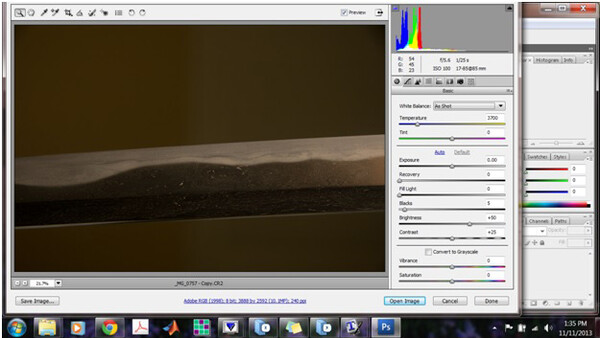
Hi Uwe, I opend up my RAW file with Adobe Photoshop and got the following screen. Where do I go from here? Regards, Hoanh
-
Hi Uwe, It would be outstanding if you could give us a step-by-step tutorial. Regards, Hoanh
-
Mick, That does not look like Osafune work to me, and it does not look Koto. The boshi looks unnatural, like it is etched on. Do you have other photos? Regards, Hoanh
-
Why would someone do that?!
hxv replied to Sporkkaji's topic in Auctions and Online Sales or Sellers
Mune xx Saku. Hoanh -
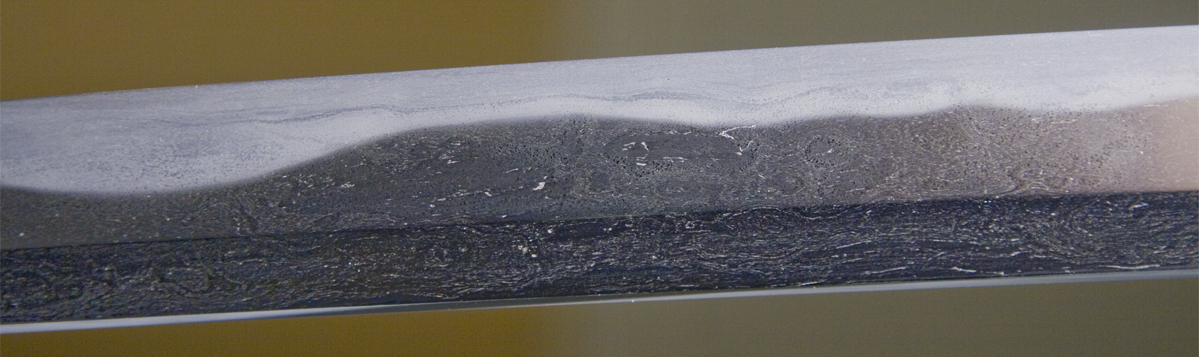
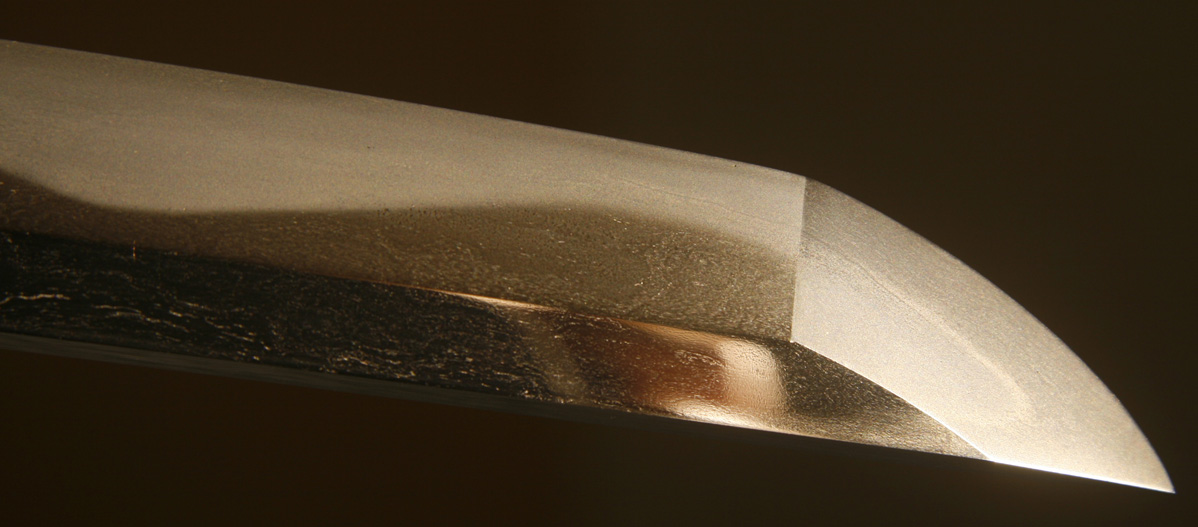
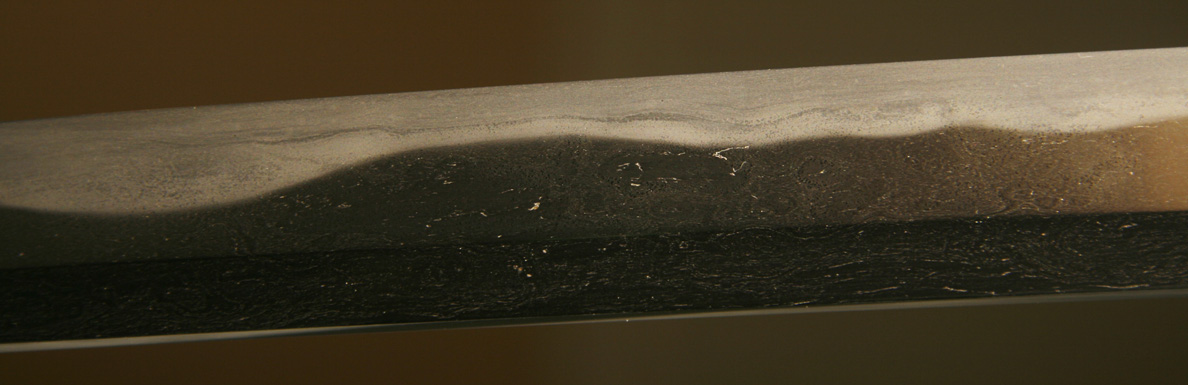
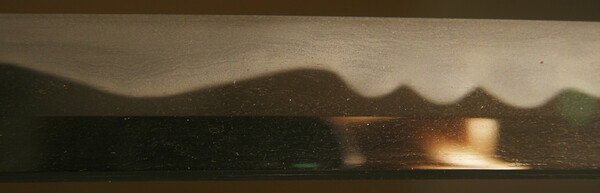
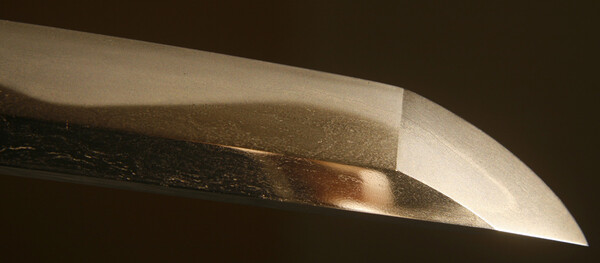
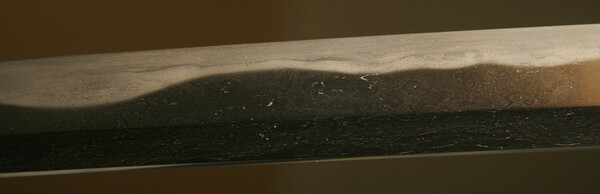
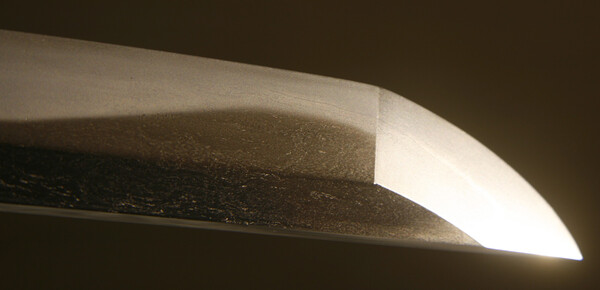
My sword came back from NBTHK shinsa with Hozon origami. Below is a link to the sword before the new polish by Bob Benson. viewtopic.php?f=15&t=13572&st=0&sk=t&sd=a&start=15 It's remarkable to compare the sword before and after polish. This sword is interesting to me for two reasons. First, it sports an o-choji hamon, which is not typical of Yasuhiro. Second, it is suriage by about 2". You can see from the pictures (compared to ubu nakago pictures from Fujishiro and Nihonto Koza, and various papered examples on the web) that the bottom mekugi ana is the original, and the sword has been suriage by just a little more than 2". Its current nagasa is 27 1/8", making its original nagasa 29" - quite long for Yasuhiro daito whose signed extant works hover around 25"-26". In the monouchi, there is clear utsuri, but I have not been able to capture the utsuri in the pictures. I think Ishido Yasuhiro is ranked Ryowazamono from what I can find on the web. If this is incorrect, please let me know. The sword is quite nice and worth the resources I spent on polishing, having new shirasaya made, and papering. Pictures are posted for your enjoyment. Constructive comments, positive or negative, are always welcome. Regards, Hoanh


-
According to Hawley's, there is only 1 Osafune Munemitsu that signs with a "Kore" at the end of his mei, and his full signature reads "Bizen Kuni Osafune Munemitsu Oite Heianjo Saku Kore." He works in mid-Muromachi (1487) and is a 13-point smith. No smith listed in Hawley in Koto times signed as "Bizen Kuni Ju Osafune Mumemitsu Saku Kore." So, I would also lean towards gimei. The complete Hawley listing of Osafune Munemitsu in Koto times is below: 1324: Bizen Osafune Ju Munemitsu, Student of Osafune Nagamitsu. 1362: Bishu Osafune Munemitsu (2nd generation) 1394: Bishu Osafune Munemitsu (3rd generation) 1429: Bishu Osafune Munemitsu (4th generation) 1469: Bishu Osafune Munemitsu/Bizen Kuni Yueigo Ju Osafune Sakyoshin Munemitsu (5th generation) 1532: Bishu Osafune Munemitsu (6th generation) 1487: Bizen Kuni Osafune Munemitsu Oite Heainjo Saku Kore 1558: Bishu Osafune Sakon Munemitsu Regards, Hoanh
-
Thank you Chris. Very interesting! I have not seen Kore chiseled this way. Regards, Hoanh