Drago
-
Posts
464 -
Joined
-
Last visited
Content Type
Profiles
Forums
Events
Store
Downloads
Gallery
Everything posted by Drago
-
Well, I know there are storage boxes for all kinds of Japanese items, such as sake cups, tsuba, menuki, scrolls etc. And that they traditionally are made from Kiri wood (Paulowina wood) What I would like to know, are there such boxes for whole swords? The reason being that one could, for example, store the shirasaya or koshirae (or even the whole sword) when not on display. If there are, do they have a special name or some such? I've been giving that a lot of thought recently. A scroll box might do the trick too, there are ones that are long enough, so you'd only have to see if the Tsuba would fit when it comes to the inner diameter. But if there were deidcated boxes... The only time I've seen such boxes are in movies where treasures swords are stored, but I haven't seen any offered on eBay or other online shops. Thanks.
-
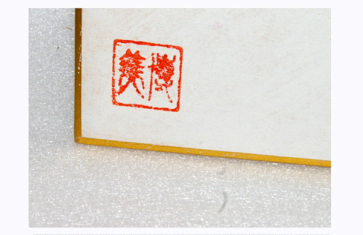
Can anyone identify this stamp on a Shikishi
Drago replied to Drago's topic in Translation Assistance
Just thought I'd bump it a little. I know that this question might be pretty difficult, but I'd still like to keep this question visible. -
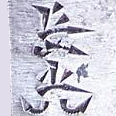
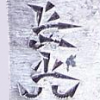
Hi, I know that this is a place of Nihonto-related translations. But since there recently has been a question about a text on a candle holder box I thought I might ask as well. I bought this beautiful Shikishi on eBay just a couple of hours ago and would like to know if anyone of you might be able to tell me the name in the stamp. It probably is not the highest quality nor by any famous painter, but still I'd like to get some more information - Just as you need to study your swords to be able to fully appreciate it. I would greatly appreciate your help Thanks.

-
Interesting Akasaka tsuba on eBay...
Drago replied to Soshin's topic in Auctions and Online Sales or Sellers
Hm... it sure is extreme. Perhaps the Nakago Ana (thanks for the word btw) was way too big so that such measures became necessary - forcing the smith do not just are the material right at the Ana but also further out resulting in an almost Seppa-wide adaption. Or it might be that the top and bottom already had been adapted for another blade and no couldn't be modified further for the new blade so that the sides hat to be hammered as well. Those are basically the only two possible reasons I see. -
Interesting Akasaka tsuba on eBay...
Drago replied to Soshin's topic in Auctions and Online Sales or Sellers
Hi, I'm a noob, but from what I know that happens when you have to fit a Tsuba that has a Nakago hole das is too big for the actual Nakago. You hammer on the edged of the hole to force the metal towards the hole thus making the hole smaller. However, this here is the first time I've seen that done so extremely, usually it's just found on the top and bottom of the hole. -
Hi, I've seen a couple of Katana and Wakizashi that had Aikuchi Koshirae and was quite intruiged by it. What I would like to know: 1. Does there have to be a fitting counterpiece for the Fuchi at the Koiguchi? What I mean is, if for example the Fuchi shows cranes does there have to be a collar showing cranes around the Koiguchi, or is it okay for the Fuchi to meet the Saya just like that. Of course, this is mostly an aethetics question, but I thought I'd ask. 2. Is there usually as Seppa between Habaki and Fuchi? I've often seen that the Nakago holes on the Fuchi are rather big so there might be a gap between Habaki and Fuchi... And also, would it be better to use a Seppa if the Fuchi is signed to protect the signature? Of course, the Seppa would have to be cut down in size to be the same size or smaller than the Fuchi, right? Thanks.
-
Hi, Recently, I noticed on some pictures of Katana and Wakizashi that Saya sometimes have some sort of hook on them (I'm not talking about Kurigata). From what I found they are called Saguri. Does anyone know what their purpose is? (I didn't find anything other than "catch hook" or something similarly uninformative). Thanks.
-
Are those Fuchi Kashira real or not?
Drago replied to Drago's topic in Auctions and Online Sales or Sellers
Hi, thanks. After some good thinking I bought it and even got it cheaper - 800 instead of 950. -
Are those Fuchi Kashira real or not?
Drago replied to Drago's topic in Auctions and Online Sales or Sellers
So... Now I am really confused. The owazamono website says 1350 Dollars, the eBay seller says 950 Dollars but uses the same images and the same text (with typos). So, is this a fake offer??? EDIT: I just noticed, the website hasn't been updated in almost a year, and on eBay the article location says owazamono.com NY (although the seller name is different)... -
Hi, I found this Fuchi Kashira set, and I really consider buying it. But since it is rather expensive (900 Bucks) I'd first like to know what you think. Is it real or a fake/reproduction? Supposedly signed Nara Toshishige, mid 18th Century, material Shakudo. US Seller, no certificate. The thing is, when I checked google for other Nara Toshishige fittings I only found two, and both signatures looked different, even between each other... http://imagehost.vendio.com/a/32051207/ ... arafk1.JPG http://imagehost.vendio.com/a/32051207/ ... arafk2.JPG http://imagehost.vendio.com/a/32051207/ ... arafk3.JPG http://imagehost.vendio.com/a/32051207/ ... arafk4.JPG http://imagehost.vendio.com/a/32051207/ ... arafk5.JPG http://imagehost.vendio.com/a/32051207/ ... arafk6.JPG http://imagehost.vendio.com/a/32051207/ ... arafk7.JPG http://imagehost.vendio.com/a/32051207/ ... arafk8.JPG http://imagehost.vendio.com/a/32051207/ ... arafk9.JPG Thanks.
-
Do Menuki, Fuchi-Kashira and Tsuba have to fit together?
Drago replied to Drago's topic in General Nihonto Related Discussion
Keith. Thanks. I'll give it a try... Could you, should it not pose a problem, upload a picture and just a few sentences of explanation? Just so I can get an idea of what I am getting myself into... -
Very interesting. A few pictures would have been nice though...
-
Hi, I didn't find any info on this, so I'm asking you: Do Tsuba, Fuchi-Kashira and Menuki have to fit together? For example, does everything have to be peach-blossom themed? Also, what about the material, e.g. Shakudo Fuchi-Kashira vs. Iron Tsuba? I think it is only natural that Fuchi and Kashira have to fit, otherwise that would look odd, but what about the rest? I'm asking because I'll probably assemble my own sword fittings, Edo period or older. I found this beautiful orchid themed Fuchi-Kashira set and also some Shogi piece style menuki (quite rare, or so I have read). So that is the first question, if those fit together or not... Then I went looking for a shogi or orchid themes tsuba (no luck on the first one, the latter all were too expensive or I didn't like them. Then I thought I'd get a Tsuba depicting a Torii (Japanese Shrine gate), there are a few of those, but would that theme fit? And most are made from iron, so would that fit Shakudo Kuchi-Kashira? I don't want to create some sort of Frankenstein Koshirae, so I thought I'd ask before buying anything. I hope you understand my questions, and honestly, my confusion. Thanks.
-
@Admins: Should this be the wrong place, please fell free to move this topic. Hi, as some of you might be aware I am new to Japanese swords and will probably buy my first one within the next two months. Now I am aware that proper sword care is very very important. That is why I would like to ask a couple of questions concerning that topic. First. I read the NBTHK Sword Care Guide (The one hosted on The Japanese Sword Index) and this is a tried and true method of taking care of your sword. But somewhere else (I don't really remember where) it said that this method is very complicated and novices could even easily ruin their blades with it. Is that true? I really consider this method to be difficult and don't want to do anything wrong... Second. Is the traditional method the only one you would recommend and is it the only one that works properly? I am asking because I own a medieval exhibition fighting sword that probably rusts as easily as a Japanese sword, or even more. And for that I always used precisicion mechanics oil (the stuff you can use for sewing machines and watches and that neither causes stains nor does it form resin over time) and it always worked pretty well... There are a few additional things that I might ask later, when I have thought it through properly. For now, I'd like to hear your answers on my two questions... Thanks.
-
A question for people versed in Japanese & Japanese History
Drago replied to Drago's topic in Translation Assistance
Thanks, so I'll be waiting for their contributions. Ohh, what I meant by contemporary was, contemporary to the timeframe 1300-1700... I am aware of their current names. I wasn't sure, I think I heard that somewhere. Thanks for the confirmation. -
@Mods: Ich hope this is th right place for my question. If not, feel free to move it. Hi, For every sword, dagger or whatever I have I make a little plaque containing some general information like who made it, where and when... Since my first Nihonto purchase is imminent, I'd like to at least prepare a few things. And I thought I'd make that plaque Japanese instead of English or German. So here are my questions: 1. If a Japanese person around, say, 1300-1700 was asked what country he lived in, what term would he usually use? Would he say nihon 日本 or akitsukuni 秋津国 or akitsushima 秋津洲 or what? 2. What are the most common contemporary names for the four main Japanese islands? e.g. kyuushuu 九州 vs saikaidou 西海道 vs ? 3. The use of 國 instead of 国 (e.g. in Province names) was more common at that time, or am I mistaken? I did learn Japanese, but that by far doesn't help answering my questions.
-
A question about NBTHK (and others) rating policies
Drago replied to Drago's topic in General Nihonto Related Discussion
Guido, I appologize if this question might have sounded outraged. This is not the way it was meant to sound. I liked the answers in the other thread just fine. I am not so stupid as to stubbornly insist on my opinion when people who are much more experienced and knowledgabe than me give me their honest opinion and advice. On the contrary, I highly value it. The reason I asked is purely to further my knowledge. That is why I asked for an explanation. -
Hi, I recently have been looking for an affordable blade. Being new to sword collecting the main thing I am looking for is the existence of a certificate for blades I am interested in. Since some of you have advised me against buying one blade I asked your opinions for, I have started wondering about the rating policies of NBTHK and others. The sword in question had a few flaws, but still was rated tokubetsu hozon. How is that possible for a blade with obvious flaws? I know the rating doesn't say anything about the value of the blade but rather about it being "a good (better, best, extraordinary) example of swordcrafting that should be preserved for posterity". So, how can a flawed blade be rated tokubetsu hozon? I would think obvious flaws would never been any kind of example for swordcrafting... Can you explain that to me? Thanks.
-
What do you think about that offer?
Drago replied to Drago's topic in Auctions and Online Sales or Sellers
Keith, really the only reason I have any interest in that blade is because the hamon looks pretty interesting. That is all. I am aware of the blade's flaws, so after listeing to and carefully considering your opinions I am probably not gonna buy it. -
What do you think about that offer?
Drago replied to Drago's topic in Auctions and Online Sales or Sellers
Hi, the online shops I checked are: http://www.japanszwaard.nl/de/intro.html - but a bit too expensive for me at the moment http://www.nihonto.de/index.html - who offers the questionable Sukesada http://www.juwelier-strebel.de/asien-ku ... atana.html - who offers the koto I mentioned All three are mentioned on TJSI, that is how I found them. The sword in my other thread is offered by a UK seller, but there were questions about gimei... @Keith Of course the blade is more important than the inscription. I might be a noob, but that much I know! The only reason I'd like to get a sword with an inscription is because I want to know who made it. That is all. I keep track of all the swordsmakers of swords I have. No Japanese swords so far, but I know the "smiths" of all my sports swords (medieval swordmanship sports club). @Andreas I am currently loacted in Augsburg, so even Munich or Ulm wouldn't be far if you know any reliable shops. (when I talk about import taxes I usually mean import tax and Umsatzsteuer combined) I didn't find any info about guest addmitance on the NBTHK websitem, only regular membership... -
Hi, By coincidence I read on Wikipedia that swords were sometimes tested on the bodies of executed prisoners and that that was inscribed on the blade (like "5 bodies from shoulder to hip). Is that true? If so, would you be so kind as to answer a couple of my questions? 1. Could anyone provide pictures of blades and inscriptions? (I don't know what to look for on the net and I don't know if these kinds of inscriptions are also simply called mei or something else...) 2. Does anyone of you have one of those? If so, what does it say and how much did you pay for it? 3. Is that extremely rare, very rare, rare or common (for certain periods of time or social class)? 4. Are there certain time periods when this was done? 5. How does that incluence the price of the blade? From expensive or unaffordable? Thanks! :D
-
What do you think about that offer?
Drago replied to Drago's topic in Auctions and Online Sales or Sellers
Hi, and thanks for your opinions. It is true that I am not familiar with many terms, but I do not think absolute knowledge is required to buy one sword. Anyway, back to the topic at hand. The reason why I consider buying from eBay is simple. I checked "The Japanese Sword Index" website for all commercial links I could find that are based in Germany. (I try to avoid non-European shops because of the rediculously high import takes when buying something above $1000.) Then I had a look at those shops' offers and became really uncertain. One offers a blade that has been disussed on this forum before where there where some doubts about it being fake or not. (the discussion is here: http://www.nihontomessageboard.com/nmb/ ... f=1&t=5052 ) And other shops caused similar doubts, they offer an affordable koto by "BISHU OSAFUNE SUKESADA", it even comes with a JTK certificate, but after reading that this signature was even faked in old times, I grew even more doubtful. And if there is doubt about one sword why not about the others. And many other offers are simply out of my monetary reach. I thought since I consider TJSI a rather trustworthy site so would be the links available... That is also why I am hestitant for follow your offers of checking the commercial links section. But if you can alleviate my doubts I'd be more than happy to ckeck it out. What I do when I find an interesting offer is that I take a very good look at it, compare signaturres with images of other examples on the net, check if the origami looks good and stuff. -
Okay, well, I am currently looking for an affordable signed wakizashi or katana. (about 1650 or koto, signed, preferably with certificate, $2000 max) My other suggestion lead to some doubts about the quality/state of the blade, so I kept looking and found this (a few pic links): http://www.ryujinswords.com/Pictures/Sw ... C_0016.jpg http://www.ryujinswords.com/Pictures/Sw ... C_0014.jpg http://www.ryujinswords.com/Pictures/Sw ... C_0010.jpg Supposed "Dewa Daijo Fujiwara Kunimichi", unfortunately no NBTHK or other certificate. But after checking google for a few other swords by him the signatures look identical. What do you think? Thanks.
-
What do you think about that offer?
Drago replied to Drago's topic in Auctions and Online Sales or Sellers
Hm, I checked all pictures very carefully but didn't find something like a hagire... I thought by crack they might mean a more coarse grain near the egde (image 9 and 10) or that line at the tip (image . Sorry, I don't know most of the terms... However, I will ask them, once I get an answer to another question I asked them. -
Hi, I feel rather attracted to this little beauty: http://www.ebay.com/itm/120767709458 But before buying I'd like to ask your opinions. edit: there is a link with more (and bigger) images in the item description btw. It has a tokubestu kicho paper and the price is (although just barely) within my budget. Is it in your opinion real? Well, just because there is a NBTHK paper doesn't mean the blade (or the paper) are real. I tried to look for the smith but didn't find any information, other than "around 1650". And what do you think about the hamon? Is this an ashi hamon? So, what is your judgement: to buy or not to buy? Thanks.