Hello everyone,
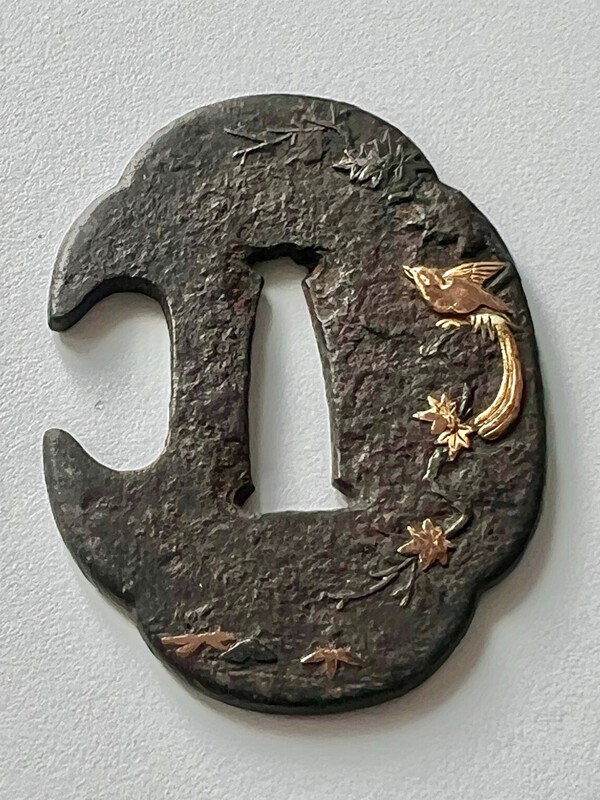
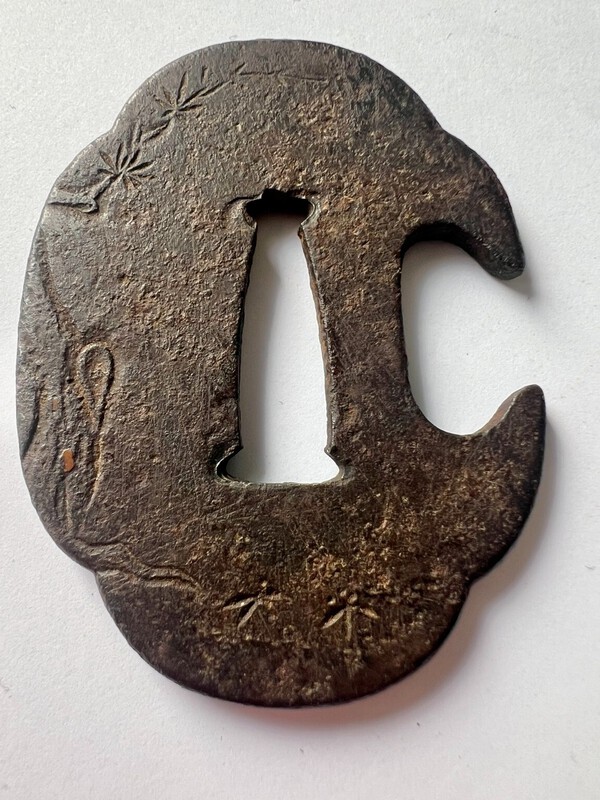
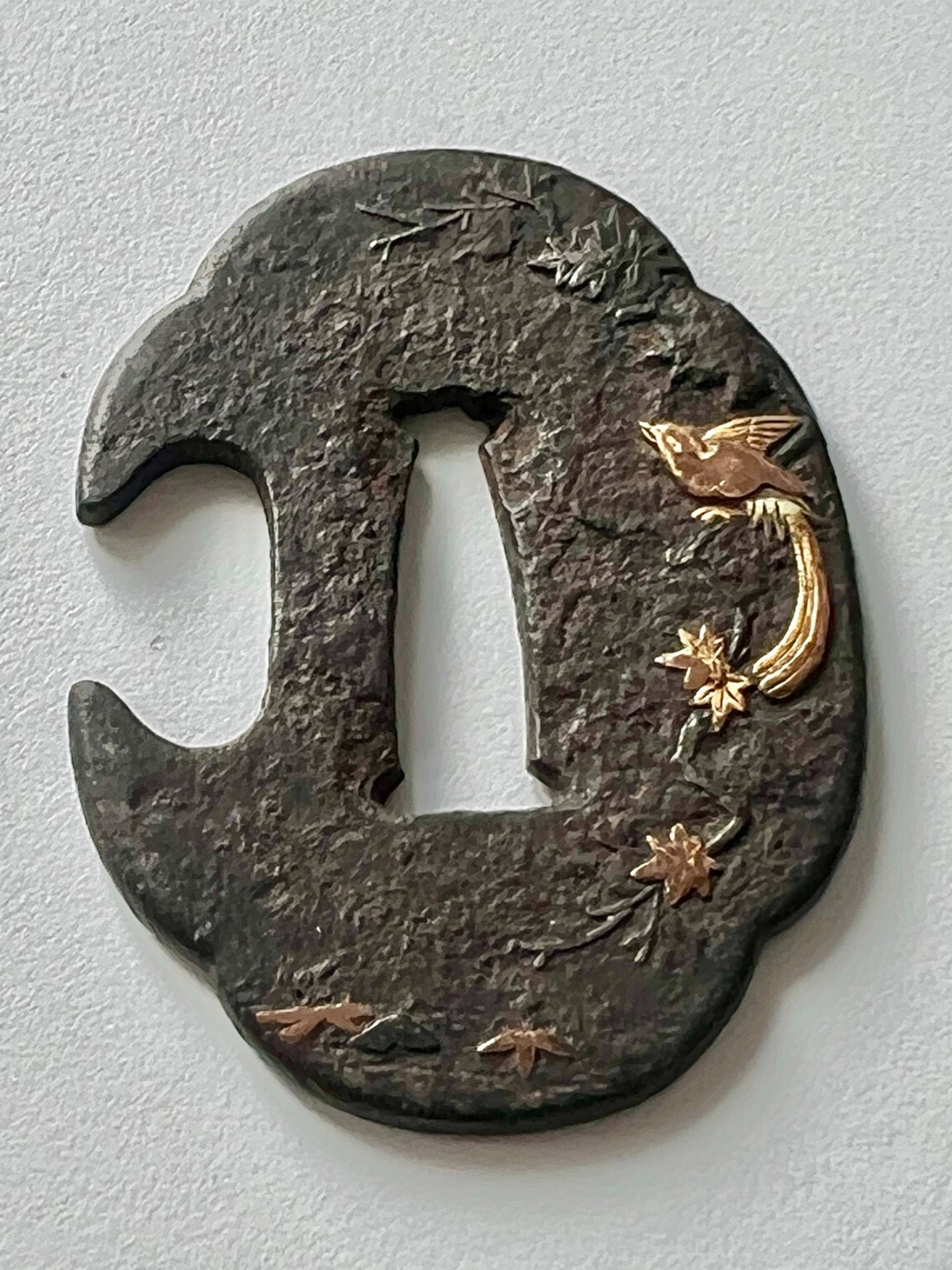
I recently acquired a small iron mokkō-gata tsuba and noticed an unusual feature: the kozuka-hitsu-ana on the omote side is not the typical oval opening but appears unusually open and almost merges with the outline of the guard.
Some details:
iron mokkō-gata tsuba
motif appears to show a bird with autumn vegetation (possibly maple leaves and berries)
traces of gold inlay remain
dimensions approx. 57 × 44 mm
thickness approx. 2.5 mm
weight approx. 41 g
My main question concerns the large, open kozuka-hitsu-ana. It seems much more open than what I usually see and visually becomes part of the design rather than a clearly separated aperture.
I would be very interested in your thoughts:
Is this type of very open or integrated kozuka-hitsu-ana known on certain tsuba?
Could this indicate a specific school or regional tradition (for example Mito, Nara, or a provincial Shoami workshop)?
Is there any functional explanation, perhaps related to a particular mounting style (e.g. horizontal carrying of a tantō)?
Are there documented examples in the literature (e.g. Haynes Index, Wakayama, or Token Bijutsu) showing similar pieces?
Many thanks for any insight or comparable examples!