WillFalstaff
-
Posts
248 -
Joined
-
Last visited
Content Type
Profiles
Forums
Events
Store
Downloads
Gallery
Everything posted by WillFalstaff
-

WW2 Wakizashi? Thoughts? How to remove blade?
WillFalstaff replied to JustinJustin's topic in Nihonto
Hi Justin, Also, get a proper stand. You don't have to go balls-deep like EastCoast did in the post I'm linking, but don't go cheap on the display stand either. Keep it oiled. If it's humid where you live, oil more than not. If you take it out to look at it, don't talk as saliva will affect the blade--absolutely no touchy with fingers! Use a cloth to support the blade incase you want to use two hands. You can barehand it on the nakago ONLY. -
“Ah yes, Gandalf the Grey, that is what they used to call me. I am Gandalf the White.” (I did not bid on this auction, thought the temptation was *almost* overpowering 😈
-
Ouch! Someone's going to be sorry after purchasing and then researching. https://www.lloydsonline.com.au/LotDetails.aspx?smode=0&aid=29125&lid=3329832&pgn=1&pgs=100
-
Oh, fear not, for I am strong in constitution! I’d rather save for a papered nihonto. I don’t care enough for WWII blades, though I am learning how to spot fakes in case I come up on them around here (meaning Texas).
-
What is the definition of "suriage"?
WillFalstaff replied to NewB's topic in General Nihonto Related Discussion
John - I posted excerpts from Nakahara’s book on how to ID and interpret suriage in the post below. I found it exceptionally enlightening. I think his warning about fake suriage is especially important. -
Why do I, being new to nihonto, feel like Gandalf when Frodo offered The One Ring to him, as I look through the listings?

-
Thought this was a nice intro to the many steps of how nihonto are made, from forging to saya laquering. Forging video: He also has videos on engraving (horimono), handle making (tsukamaki), saya making, and lacquering. Makes me wish someone would make an in depth docu series of each topic to show how complex these artforms are. His other videos are good too. especially the one about saki brewers!
-
- 1
-

-
Finally had time to read through The Cutting Edge posts on green papers. What an eye opener! There are still some blades being sold on ebay with green papers--I just saw them a few hours ago. Question to those in the know; are there other colors of paper from the decades in question that should be suspect? (underline and italics on color of paper are mine) "If you buy a blade papered with old green, white or blue papers from the NBTHK absolutely insist on a guarantee of Hozon and have the dealer send the blade directly into the NBTHK immediately. This is your biohazard gear." - https://blog.yuhindo.com/green-papers-no-papers/
-
My first sword: Noshu Ju Marayama Kaneshige Saku
WillFalstaff replied to BenVK's topic in Military Swords of Japan
Interesting post, but geez! I didn’t realize but this post was resurrected from 2010!!
-
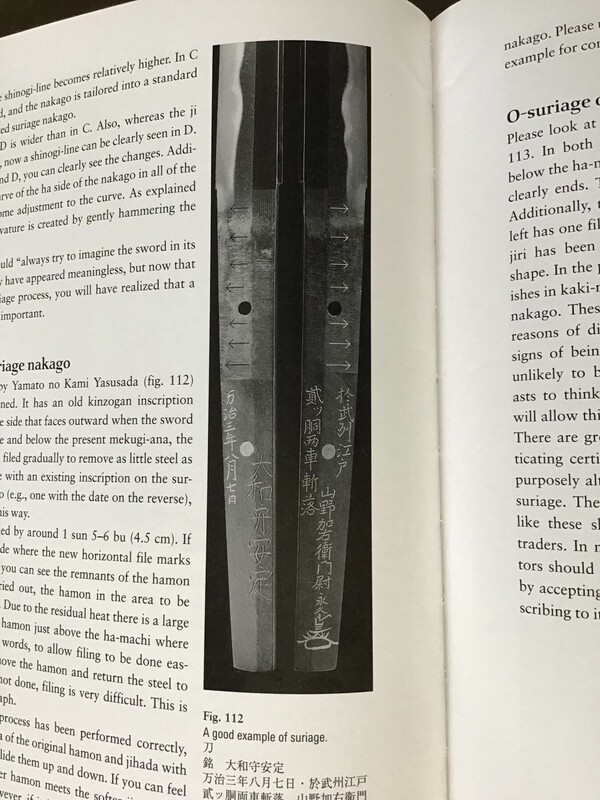
This pic is important
-
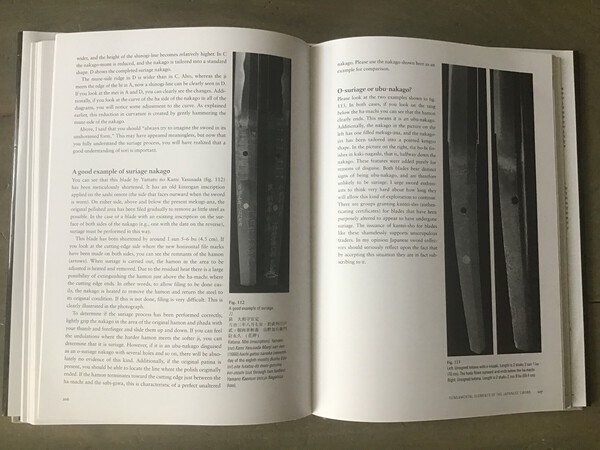
And one more
-
(Pics continue)


-
noneed2hate - I literally just got done reading a chapter in Nakahara’s book. Instead of me bumbling out letters and incoherent sentences, here’s some picks. (Taken from “Facts and Fundamentals of Japanese Swords: A Collector’s Guide”, by Nobuo Nakahara, trans. by Paul Martin, pg. 99-107)


-
I might be mistaken, but wouldn’t the sword be automatically rejected for Shinsa if the signature is even remotely suspected gimei? If it is, can the green papers lend support that it might not be a gime when resubmitted? Just wondering if it’s worthwhile to resubmit. Without niggling the pics, it’s a nice blade.
-
Second try on a sword, request for input
WillFalstaff replied to dhammer_911's topic in General Nihonto Related Discussion
dhammer_911 - I’m just finishing “Facts and Fundamentals of Japanese Swords: A Collector’s Guide”, by Nobuo Nakahara (trans. by Paul Martin). In the past two months I’ve read and studied other recommended books (6 all together), and spent hours and hours on here and other sites to get the fundamentals set into memory. I practiced kantei based on my studies, as well as on Markus Sesko’s online guide, on the one Wakizashi I have in good polish. I am at the beginning stage of all this (compared to the veterans with decades of knowledge, Token Kai meetings, and handling experience on me). So far, I’ve gotten the most out of Nakahara’s book. It’s an incisive look into how you should judge nihonto either for studying or buying, and almost every page answered lingering questions the other sources did not answer. Plus, Nakahara’s personality bleeds through the text making the read fun. It’s a quick book, I’ve gotten through most of it in the last 2 days, but I now look at nihonto a very different way and understand the key points I’ve struggled with. If you haven’t already pick the book up if you are going to be doling out some serious cash. https://www.amazon.com/Facts-Fundamentals-Japanese-Swords-Collectors/dp/1568365837/ref=sr_1_1?crid=WJGC6UM7GVMZ&keywords=facts+and+fundamentals+of+Japanese+swords+a+collector's+guide&qid=1645467161&sprefix=facts+and+funda%2Caps%2C108&sr=8-1 -
Mekugi, the real secret of Japanese blades?
WillFalstaff replied to Peter Bleed's topic in General Nihonto Related Discussion
One consideration is that this polearm was arsenal grade, meaning there wasn’t a need to make it last generations. For example, some Viking blades were passed on from generation to generation, with the hilt being replaced when a new owner received the sword and wanted his own type, or the old hilt fittings were too corroded and had to be replaced. The tang was most likely hot or cold peened and it would have taken a master swordsmith to make the modification, but there are examples of reworked hilt constructions in museums. Same could be said about some Chinese swords that were better made than your average “G.I.” issue stabbie-stabs, and modifications were considered for the blade down the road. Also, China had a lot more natural resources than Japan, so they could “afford” to make weapons that were sitting on a rack for a long time before being used. -
Oh nice! Ohmura's study will definitely help. Nice pictures too, though I worry about comparisons to actual examples in the real world (suffering decades of mis-handling/neglect).
-
Well, I'm already (cannon)balls deep into it, so I'll keep on going. Right now it's a rough word document, but I'm thinking about migrating it to PowerPoint just for the ease of picture formatting. I would like to share this here when the first draft is ready so that you pros can sanity check it. Brian or the other Mods will have to sign off on that. Oh, btw, thank you Shamsy, Trystan, and Bruce for the inordinate amount of work you guys do! I'm primarily interested in nihonto, but I have to know what I'm doing when encountering the WWII stuff. The posts and threads you guys are guilty of making/participating in, have helped enormously!
-
I'm in the middle of compiling pictures from this forum that show fake Type 95 NCO swords and components compared to real ones. (I'm attributing all pictures to the original posters.) This is really for my own reference as I learn best by creating. Around where I live I'm more likely to bump into 95s and maybe 98s instead of nihonto, so I need to really learn to spot the well-done fakes. I have read through the pinned "Fake Type 95 Nco Swords" and am using examples from there. Essentially, the document I'm making is a bare-bones, quick reference "this is fake - this is not" side-by-side picture document. Some verbiage, but I want a reference I can print and take with me when we go check out antique stores and spot some slicy-slices. To anyone's knowledge, does such a document exist in the NMB downloads/info areas? I've looked but haven't found any quick reference documents with tons of pictures like what I am in the middle of making. (I printed Bruce's "Stamps of the Japanese Sword" document.) Thanks for any advice!
-
Token Kai in Houston, TX
WillFalstaff replied to WillFalstaff's topic in General Nihonto Related Discussion
Checked out Collectors Firearms. Very impressive collection of historical firearms. Canons, bruh—cannons! (I think they have more than numerous museums have, put together). Forests flintlocks to modern day stuff. Been looking to get a Mosin’s Rifle so I’ll have to go back to do some serious browsing. They also have a lot of armor, helmets, and general militaria. A very large selection of tosogu. Plenty of tsuba, fuchi-kashira, menuki, kozuka, ko-gatana. I only had a little time to peek at the display cases, so I can’t speak to quality, but I saw prices that to my semi-trained eyes looked fair. Nihonto, you ask? Not on display. You have to ask. Not sure if they do this often. The magic word might have been when I inquired about “nihonto”. Basically you are guided into the back room and to a collection. I got strange looks from the employees, but that could have been because of the stroller with my son in it I will be going back and talking to the very nice gentleman who took me behind the scenes. We did have a chat about the current state of Japanese sword market and Token Kai in the Houston area, but he didn’t have anything new and exciting to offer. I encourage all to go and peruse their stock of boom-booms and stabbie-stabs. Go with money. I didn’t, and regret it. -
It's especially worse when you've been a fan of history for most of your 40 years of meager life like me, even getting a degree in it, studying it incessantly daily like breathing and eating, not just one area but worldwide--ancient to recent--, multiple book cases spilling with papyrus, and then you go and bump into the art of kantei. As far as I'm concerned, I'm happy to have joined this particular crack-den!
-
Www.studyingjapaneseswords.com
WillFalstaff replied to yurie's topic in General Nihonto Related Discussion
Hi Yurie, So, I didn't know the book was a culmination of effort over this many years and input from this board! Just got the softcover this week. It is a fantastic resource for those of us new to nihonto and are stuck learning as much kantei as possible without a teacher or local Token Kai. Thank you for the hard work. I am familiar with the mountain of work it takes to put a book together, nevermind one as complex and multi-faceted as yours. -
Book - Study of Japanese Swords
WillFalstaff replied to Brian's topic in General Nihonto Related Discussion
She also includes a lot of info on the role of women throughout the historical tracing, which is an important aspect I never read about as it’s missing from a lot of texts on blades. More kudos are due. -
Book - Study of Japanese Swords
WillFalstaff replied to Brian's topic in General Nihonto Related Discussion
Reading through the first few chapters. To a FNG like me, Yurie’s book is great. She cuts through a lot of jargon and has pictures—pictures galore— and graphs, and drawings, and all with arrows and ‘Murican terms and Japanese terms! The best though is that she goes chronologically, through the main schools, and sticks to the main distinctive features. For example: Bizen Den, Middle Kamakura period: a timeline graph at the beginning of the chapter anchors your wandering mind in the era. Then there is a paragraph of short history of this school at this time, followed by the tree most distinctive features (numbered) to look for: temper line description, Ji-hada, and reflection. Then she goes on to Sugata details with pictures, Horimono details with pictures, nakago type description - no pictures - but she explains very plainly distinctive features, hamon is plainly described, boshi details with pictures, and elaboration on ji-hada details. The chapter ends with the swordsmith groups and associated smiths. I can say this is exactly what helps me really internalize kentai. Kudos to her—millions of kudos to her! Throw money at the screen and buy her book (when it’s in stock again). -
Thanks for the input. David S - while I can't claim I haven't made impulse buys (nothing i regret and def nothing $$$), I do feel the pull of the dark side of the force that's encompassed ebay. I am building my personal library, as you recommended (Also, never thought small, southeastern Texas libraries would have books on blades, but here I am reading Sinclaire's Samurai. Who knew?) Bob s - Thanks for the details. I'm always judging my very pre-pubescent, nay newborn, kentai abilities. George - Agreed on Ray. He'll be one of my few picks for when my wallet is about to burst.