
Kaiser21
-
Posts
47 -
Joined
-
Last visited
Content Type
Profiles
Forums
Events
Store
Downloads
Gallery
Everything posted by Kaiser21
-
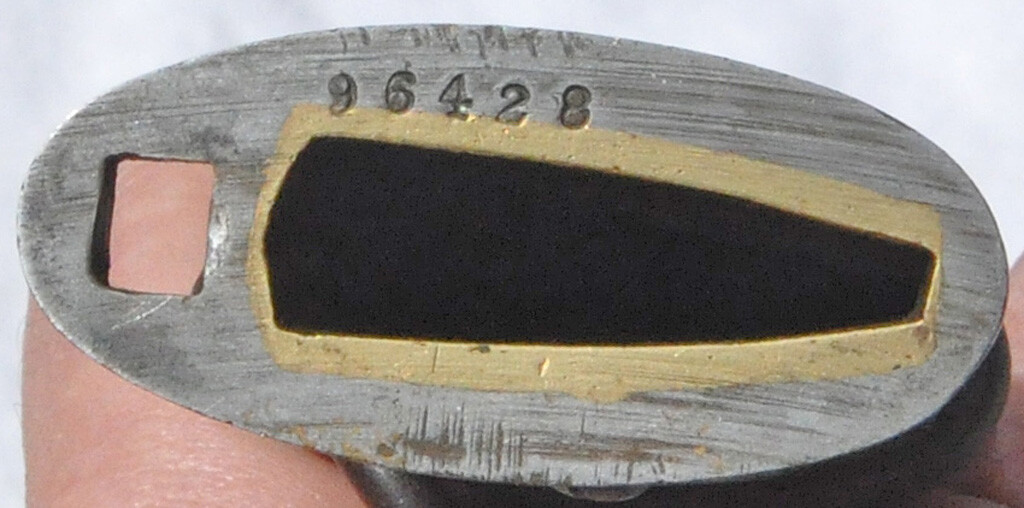
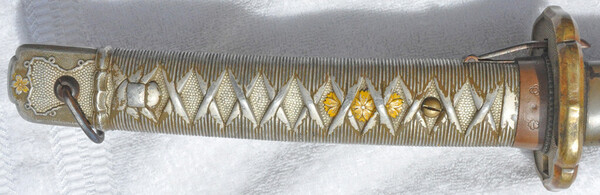
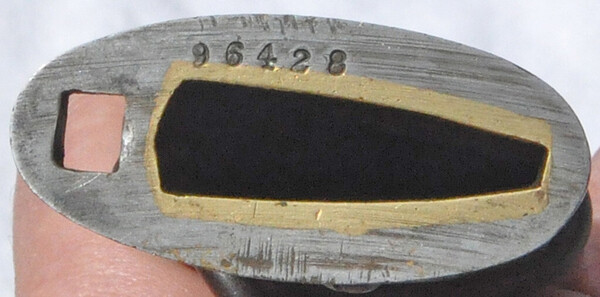
I picked this item up as part of a trade a year or two ago. I think it’s a legit one. I’m assuming it saw some use as the scabbard paint is worn away in the area where one would grasp it to pull the blade. The paint on the handle is also well worn. It’s the first Japanese sword I acquired. A couple of years later I’m up to three and still looking. My Imperial German collector colleagues are starting to worry. The brass Tsuba is 9.3mm thick. The serial number on the blade and scabbard is 96428. The marks on the Fuchi are (I think) From Left to Right Maker’s mark = Kobe Shoten, Arsenal Inspection Mark, Tokyo Arsenal Mark From the research I’ve done I believe the sword was made in the 1941 period, however, I’m no expert when it comes to these swords. If anyone can be more precise I’d appreciate your insights.





-
Marco: Not problem at all. And thanks for taking the time to respond with an answer to my question re. the sword knot.
-
OK. Thanks. I'll see about correcting that.
-
Bruce: Thanks for responding. So, it's only the diamond and N that is a mystery.
-
You'll have to educate me here. I thought putting my first name and initial at the bottom of the post was compliant.
-
Thanks for responding. I'd been told that the diamond with the N in it was unknown. Strange that both marks are unidentified. Does that make it a hard to find sword or do these show up fairly often? Any thoughts on the sword knot?
-
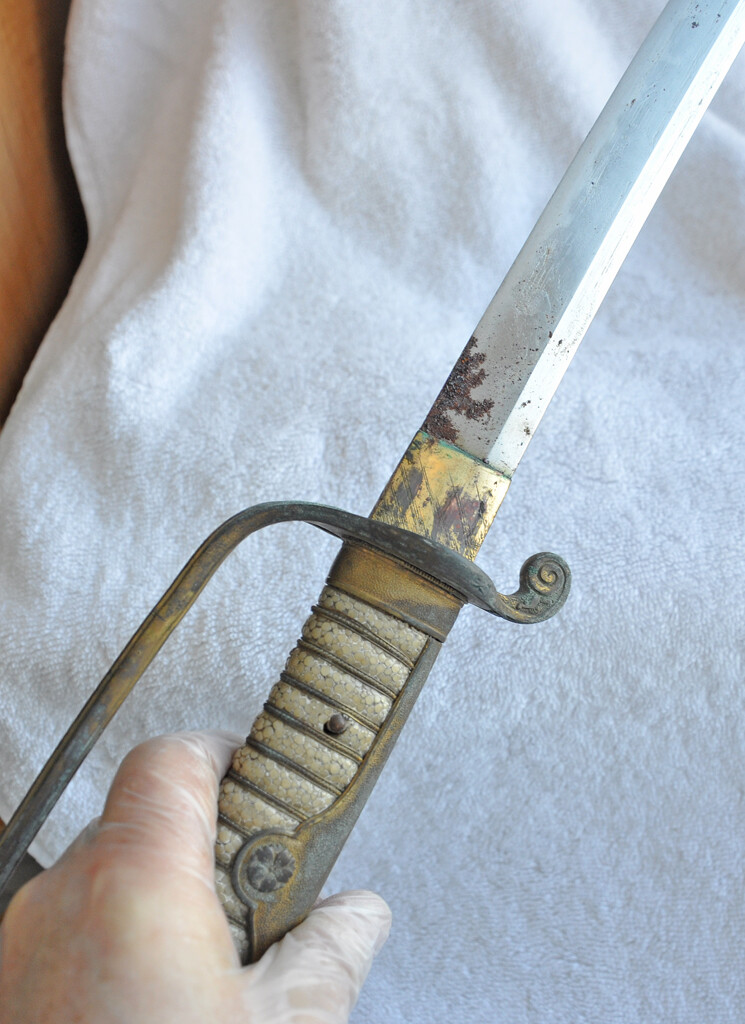
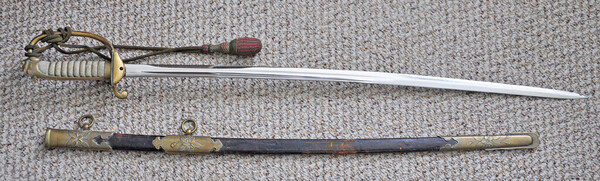
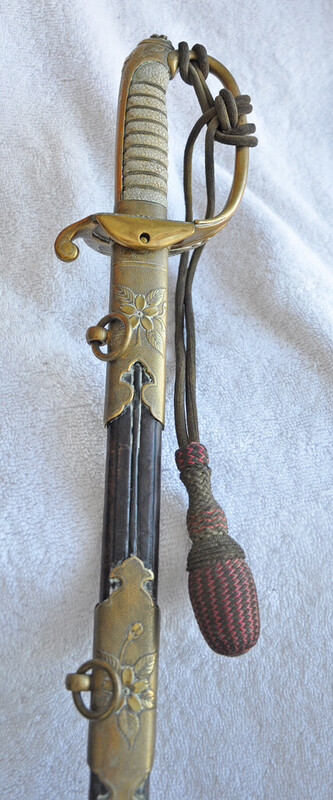
This sword is one of two that I purchased from the estate of a Capt. In the British Army Royal Engineers who served during the Burma Campaign. I believe it is a pattern 1883 Naval Officer’s Parade sword. It has a factory made blade. It must have been displayed in his home as it has been polished several times as evidenced by the Brasso deposits. I know very little about these swords and would be interested in knowing more about where and when it was made etc. The hilt area shows what I would call the Showa stamp containing an anchor as well as a diamond containing an uppercase N. The sword knot chord appears to have been a gold colour which has turned to a brownish hue over the years. I’m unsure what rank this indicates or whether it actually belongs with this sword.



-
Kyu Gunto - Blade assessment
Kaiser21 replied to Kaiser21's topic in General Nihonto Related Discussion
Bob: I agree with your reasoning. I guess I'm hesitant for fear of taking too far. Once done it can't be undone. -
Kyu Gunto - Blade assessment
Kaiser21 replied to Kaiser21's topic in General Nihonto Related Discussion
The active rust issue was pointed out to me earlier in this thread. I did use a piece of deer antler to remove some of the red rust but I guess the "don't mess with the tang" message has me erring on the side of caution, perhaps too much so. -
Kyu Gunto - Blade assessment
Kaiser21 replied to Kaiser21's topic in General Nihonto Related Discussion
The balance of the pictures.

-
Kyu Gunto - Blade assessment
Kaiser21 replied to Kaiser21's topic in General Nihonto Related Discussion
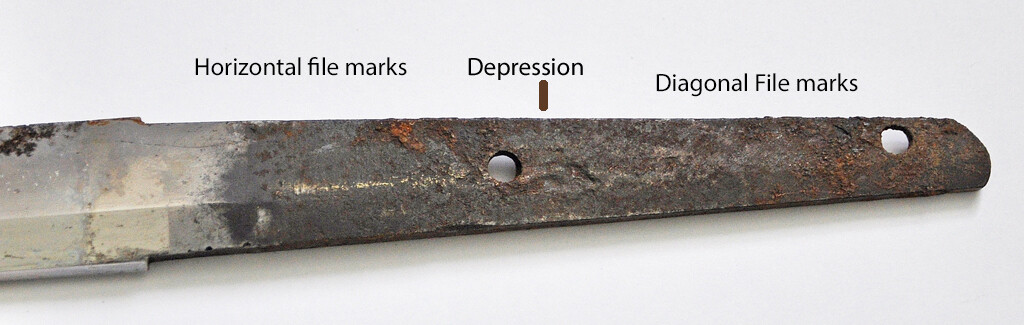
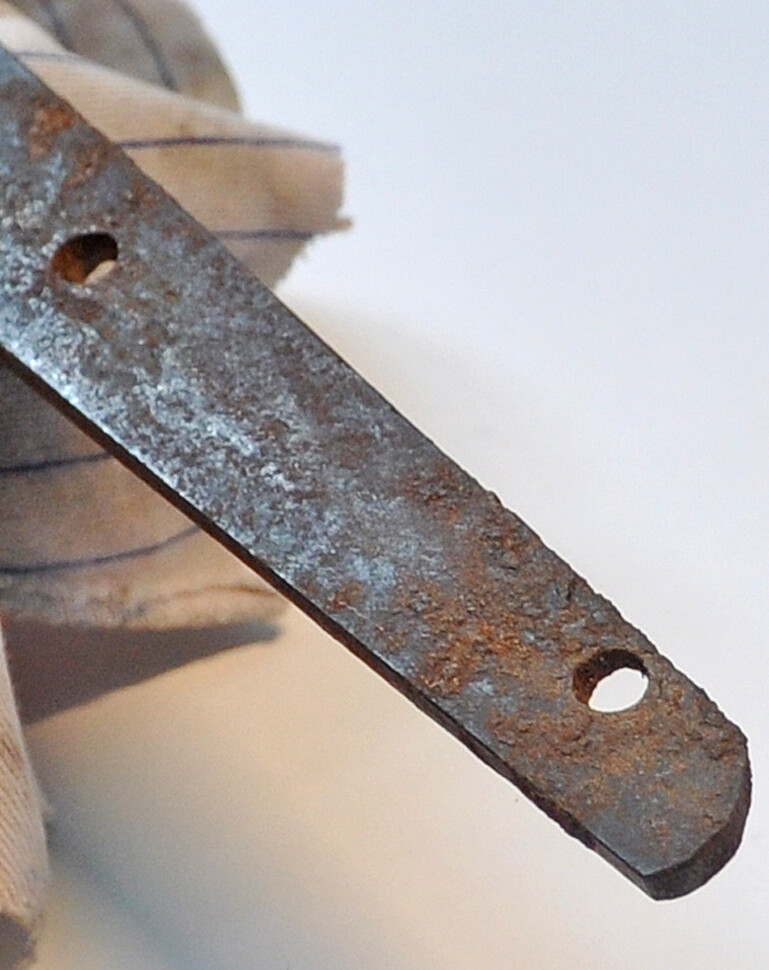
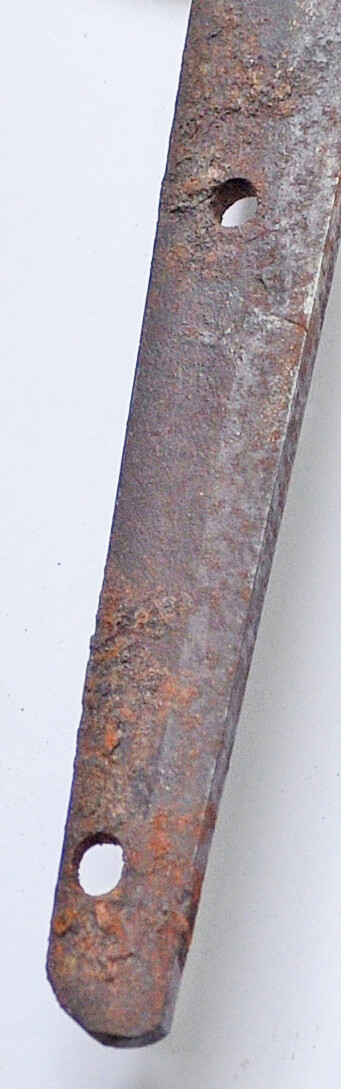
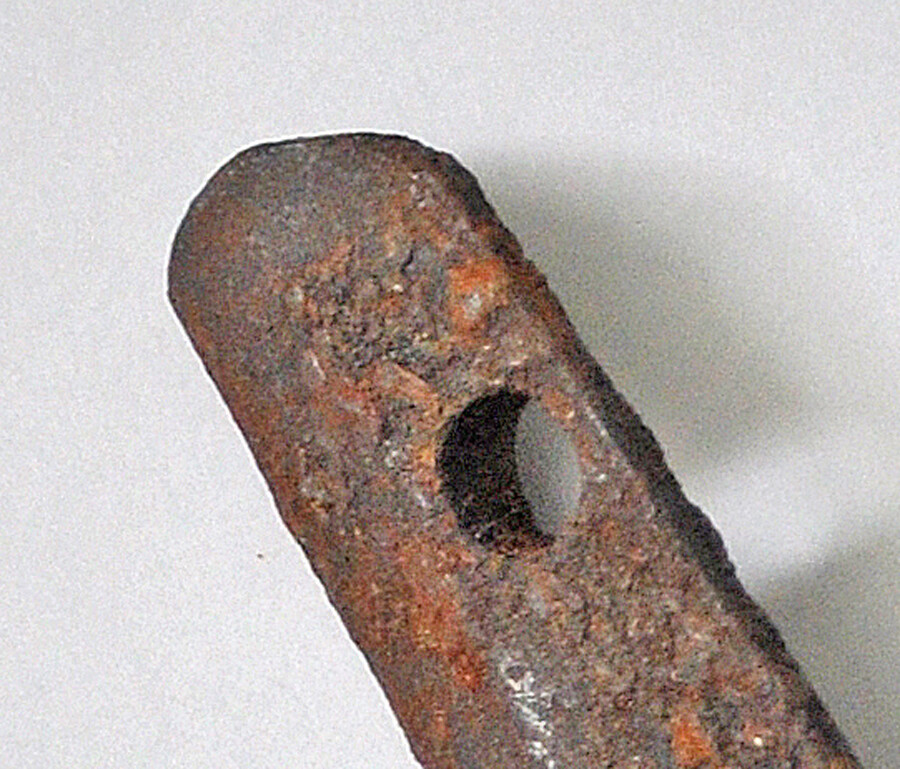
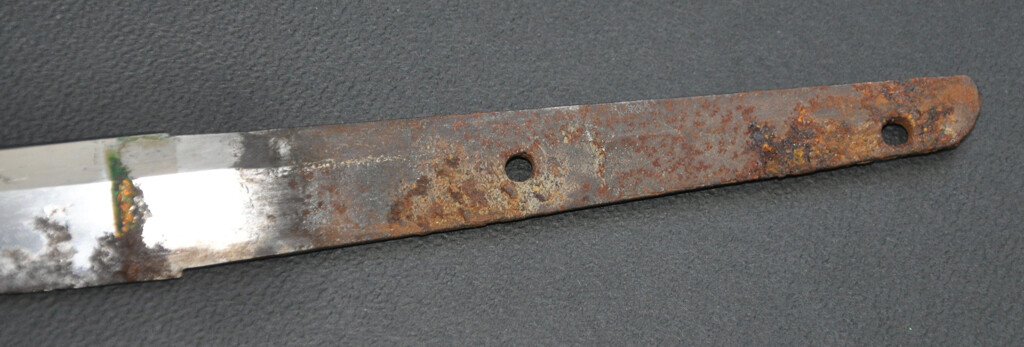
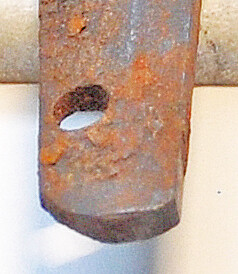
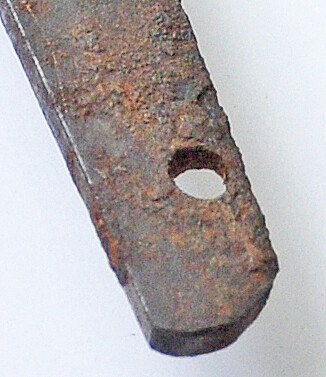
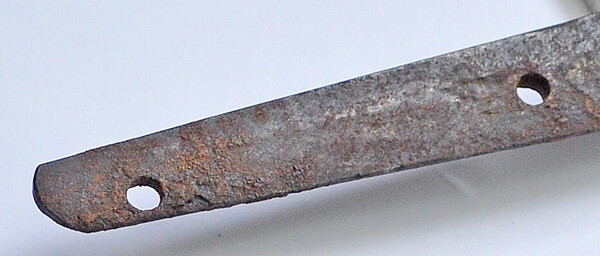
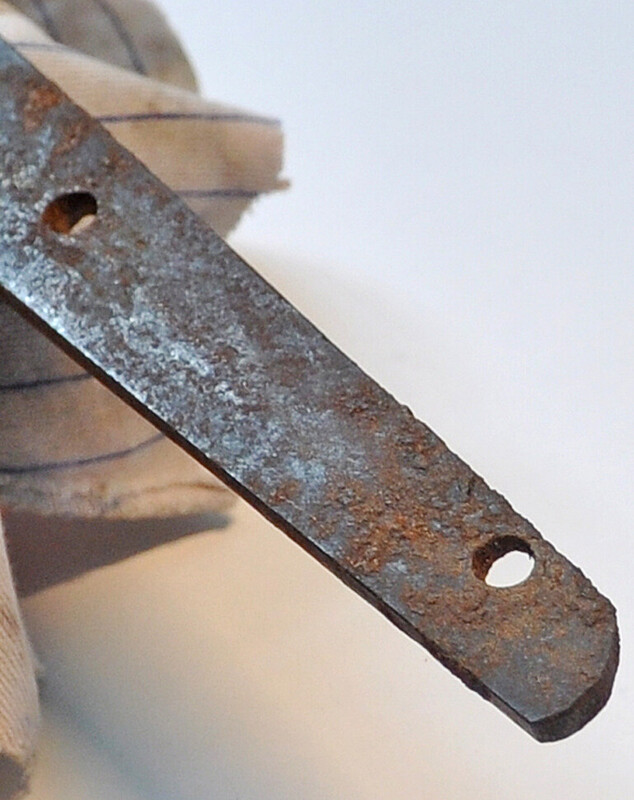
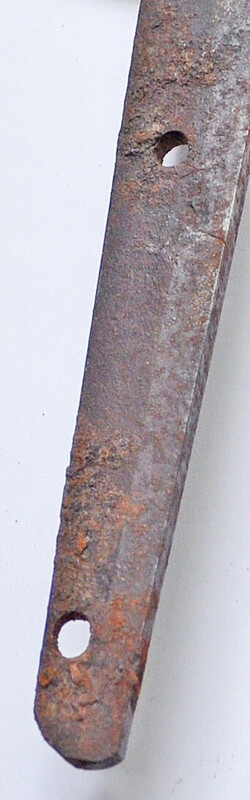
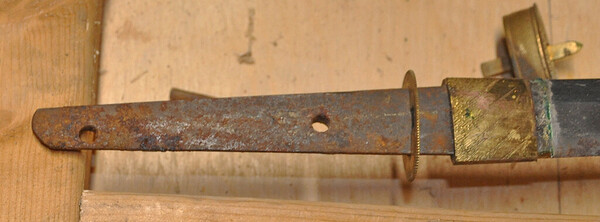
Bob: I've done my best to improve the quality of the photos attached. Should the pictures not tell the tale then I can offer the following: Regarding the holes; I got my micrometer out and measured them. They are not circular. The one at the rear of the tang is visibly out of round. The diameter horizontally is 5.75mm and vertically 5.34mm. The one at the front is better, measuring 5.46mm on the horizontal and 5.31 on the vertical. The rear of the tang appears to have been filed into shape. There appears to be file marks but they are not very distinct. There are file marks running vertically on the Kissaki side of the front hole. They are hard to see without magnification. There are diagonal file marks on the section of the tang between the holes and the marks are canted towards the rear of the tang on the right side of the blade. I noted that there is a depression in the metal on either side of the tang just behind the front hole. More pictures to follow.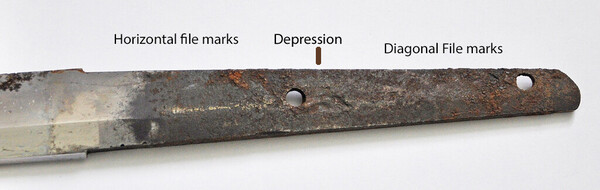


-
Kyu Gunto - Blade assessment
Kaiser21 replied to Kaiser21's topic in General Nihonto Related Discussion
Bob: I will try to take some more detailed pictures tomorrow using different angles , closer attention to the holes, potential shortening of the blade etc. This is more complicated than assessing Imperial German spiked helmets. ..but certainly quite interesting. Thanks for taking an interest. -
Kyu Gunto - Blade assessment
Kaiser21 replied to Kaiser21's topic in General Nihonto Related Discussion
Fair enough. Many thanks for your perspectives gentlemen. -
Kyu Gunto - Blade assessment
Kaiser21 replied to Kaiser21's topic in General Nihonto Related Discussion
Bob: OK. Is there any way of confirming if it was made in the late Edo period or earlier than that? Sorry to be bothersome, but I'm very interested in understanding the history of this blade. I have a dozen or more Imperial German regimental swords and I know a lot about where they've been. This one is a mystery. -
Kyu Gunto - Blade assessment
Kaiser21 replied to Kaiser21's topic in General Nihonto Related Discussion
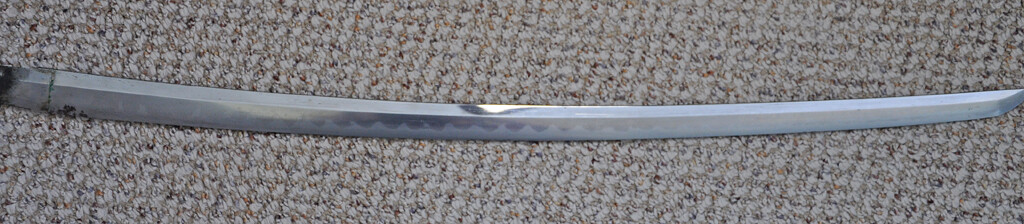
Bob: Sorry to be so ill informed but I understand that "the Mino school" implies the blade was made in the environs of Mino. In John Yumoto's book which is the only reference I have, it seems that swords were made in this area in a time frame that spans the Muromachi to Early Edo periods. Does "regular "pine tree" shapes' correspond to what Yumoto refers to as "three cedar zigzag"? Thanks taking the time to provide your input. -
New Member - Introducing myself
Kaiser21 replied to Kaiser21's topic in General Nihonto Related Discussion
Thank you for the welcome! I have a copy of John Yumoto's book. Can you recommend any other books for the person just starting out? I'm undecided as to whether I will be actively collecting at this point ( I have enough money sucking hobbies now) but I would like to know enough to recognize a real Nihonto blade when I see one in future. Thanks for guiding me here Bruce. There is a lot to learned here. And thanks to Barry for forwarding some informative articles. Steve N -
Kyu Gunto - Blade assessment
Kaiser21 replied to Kaiser21's topic in General Nihonto Related Discussion
Thank you both for taking the time to respond. I must say this is good news as I was taking a risk in bidding on this sword. I am a moose/deer hunter so finding a piece of antler was not an issue. I have gently removed the red rust from the nakago and near the habaki and re-oiled the blade. Are there any means of narrowing down the area where this blade would have been created? It is quite an attractive blade and having done a considerable amount of research on these blades over the past week, I have developed a clearer understanding as to why people find them so appealing. Again, I appreciate you having taken the time to provide your insights. Steve N -
Kyu Gunto - Blade assessment
Kaiser21 replied to Kaiser21's topic in General Nihonto Related Discussion
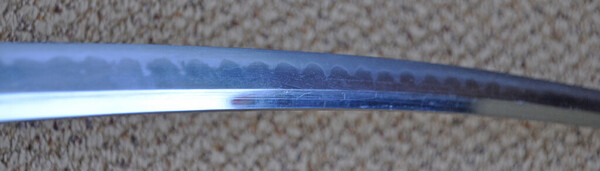
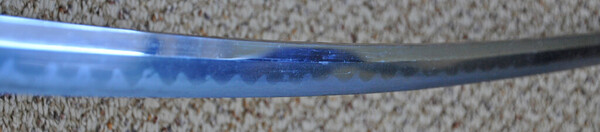
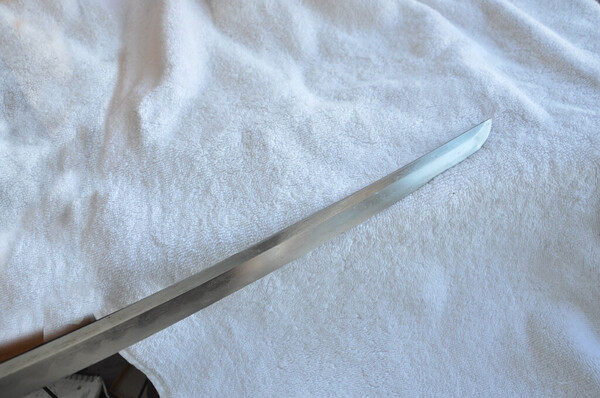
Last five photos. If any additional/ better photos are required to help identify this sword let me know. Thanks in advance for looking. Steve N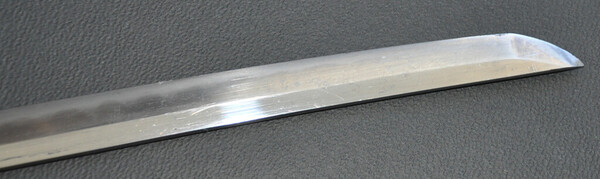


-
Kyu Gunto - Blade assessment
Kaiser21 replied to Kaiser21's topic in General Nihonto Related Discussion
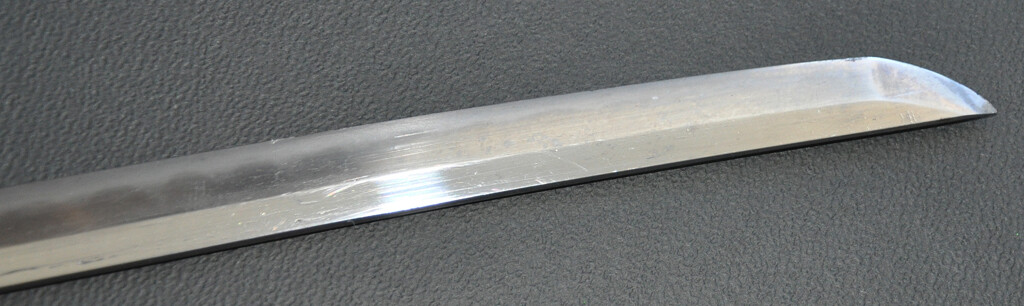
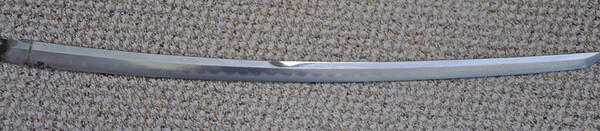
So, I have taken some measurements as follows: The length from the notch in the Nakago to the tip of the Kissaki is 24 5/8 inches. The distance between the straight edge in image #2 to the Mune is 15/16 inches. Hopefully the attached images will be informative. Next five photos in my next post.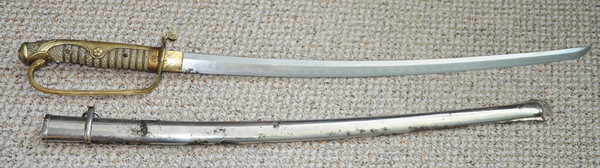



-
Kyu Gunto - Blade assessment
Kaiser21 replied to Kaiser21's topic in General Nihonto Related Discussion
Chris: Thank you for the swordcare.pdf and your words of welcome. I will take the pictures tomorrow along with the measurements. I did some looking around and I think I know which measurements you are looking for. Steve -
This is my first posting on NMB so please forgive my lack of technical knowledge of this subject. I’m primarily an Imperial German collector but now that I’m retired, I’ve been dabbling in other areas that interest me. Just last week I picked up two Japanese swords through an on-line auction site. They come from the estate of a Captain who served with the British Army Royal Engineers during the campaign in Burma. I also picked up a Naval Gunto parade sword which is much better shape but with a factory blade in it. Pictured is an Army Kyu Gunto. It was badly stored as a result the scabbard has some significant rusting on one side but the saving grace is the blade was well oiled (for the most part) and only has one area of rusting. I suspect this sword, not being as "pretty" as the Naval sword nor having the look of a stereotypical Samurai blade was relegated to storage in the basement of the condo in which this gentleman lived on the waterfront. I was drawn to this sword by the two mekugi pegs on it on the basis of almost all the examples I found on-line had only one peg. I sensed this one was out of the ordinary. It also has a visible Hamon which is irregular which I hope indicates the blade was hand made. I managed to get the blade unmounted (without losing a finger) and it appears the tang is not signed. I have three questions for the experts. 1 - How should I go about removing the rust on the blade nearest to the Habaki? 2 – The blade appears to be unsigned. I have not touched any of the rusted areas. Can I assume that the blade was hand made? 3 – If the blade was hand made; with better pictures and dimensions etc. do you think it would be possible to narrow down it's date or place of fabrication? I find these blades quite interesting but I'm very early into the Learning Curve so any insights would be appreciated. I should say that this sword will be remaining in my collection for as long as my curation of it lasts, so no opinions will be posted beyond this forum.



-
Hello from Rideau Lake, Ontario, Canada. I would like to introduce myself to the members of this forum. I'm new to the Japanese sword arena but have been a collector of Militaria for about 45 years or so. I recently downsized a large collection of Imperial German headgear (Pickelhaubes) and Canadian 1st World War uniforms and medals. I'm now collecting on a much more eclectic basis and acquiring items that just pique my interest. One of those areas is Japanese swords which I've always had an interest in. I picked up my first sword, a NCO Shin Gunto a couple of years ago and just recently managed to purchase two more Guntos from an on-line auction. This is quite a complex area and I'm very early into the Learning Curve so I hope to learn from the experienced admirers of these fascinating swords. Cheers: Steve N