jt nesbitt
-
Posts
96 -
Joined
-
Last visited
-
Days Won
1
Content Type
Profiles
Forums
Events
Store
Downloads
Gallery
Everything posted by jt nesbitt
-
Ray- The blade is very slim and narrow, I would say "delicate and fast". What attribution would you give it? (thanks again for all of your time) -- JT
-
Ray- That would mean that somebody took the time to alter a fake Kanzan Sayagaki, two levels of deception. Is this common? -- JT
-
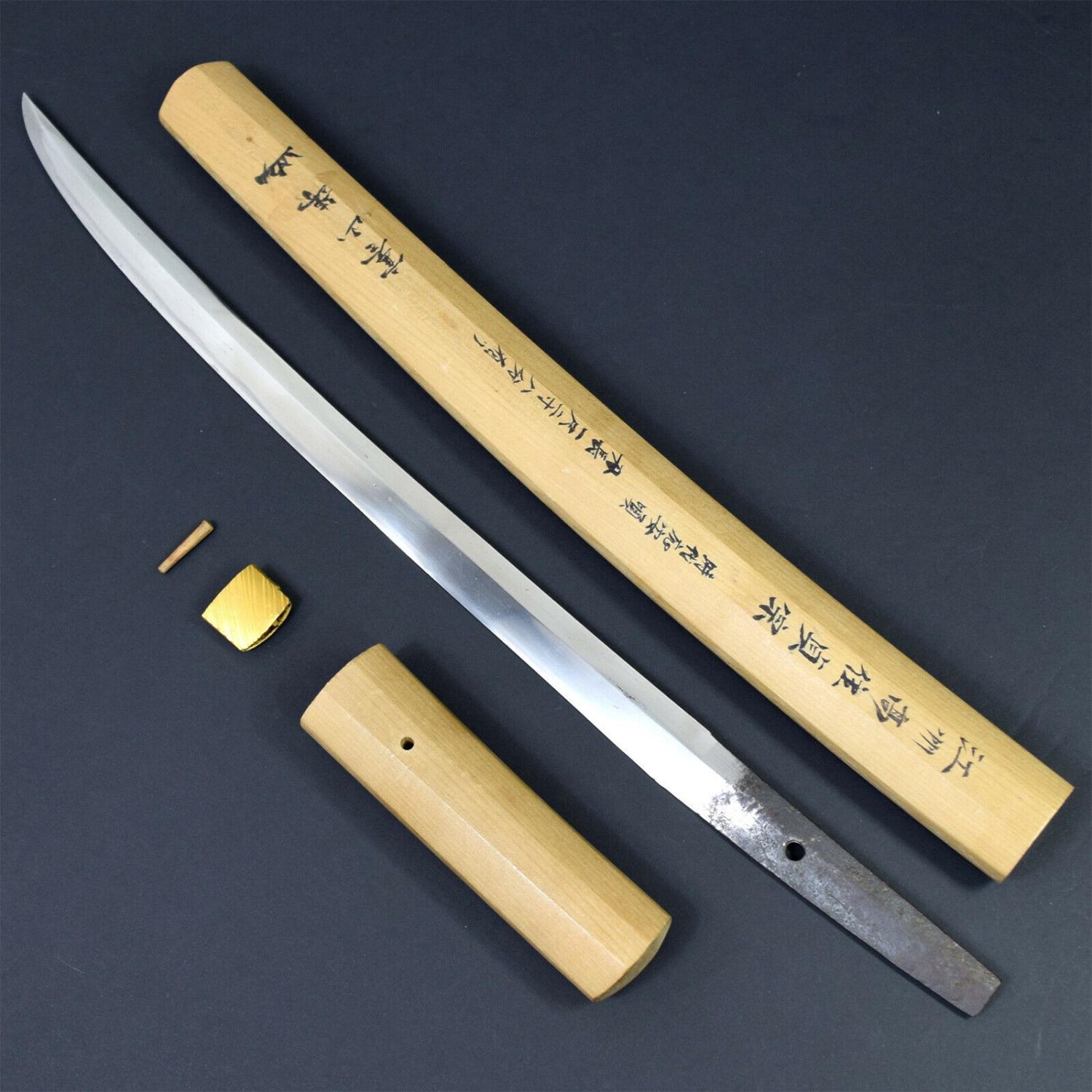
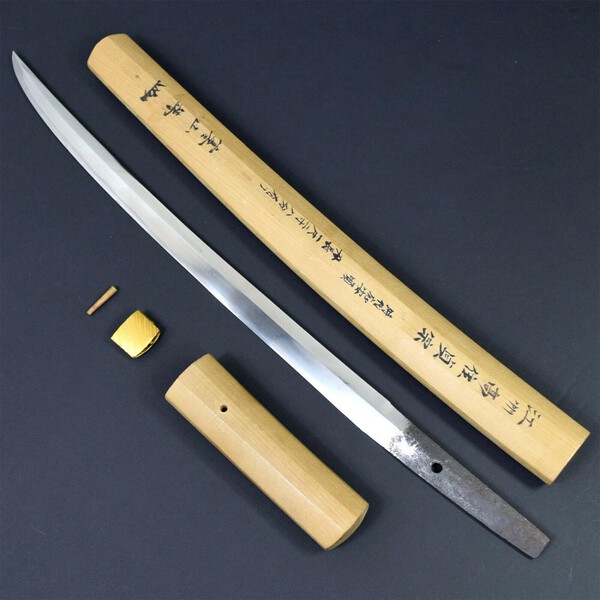
Well shucks, The sayagaki has probably been monkeyed with. Here is a image of the blade...Pretty thing don'tcha think? - JT
-
Ray- This sword is another one of my "Ebay specials" I bought it because I am a sucker for shobu, but this one doesn't have any papers. I just liked the shape, connection to Kanzan, and the price. At $510.00 it was worth having in my collection. I have Sato Kanzan's book "The Japanese Sword" and wanted to have some of his work around. I will ask Ed Marshall about whether it is worth submitting when I see him- Thanks so much for sending me his contact info, as soon as the coast is clear for travel I am going to head his way. -- JT
-
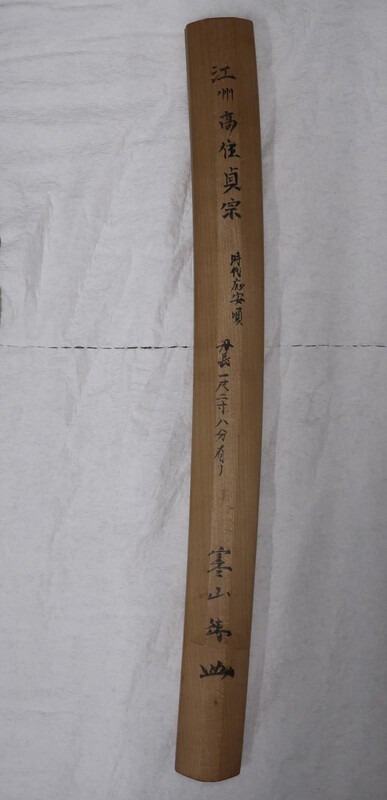
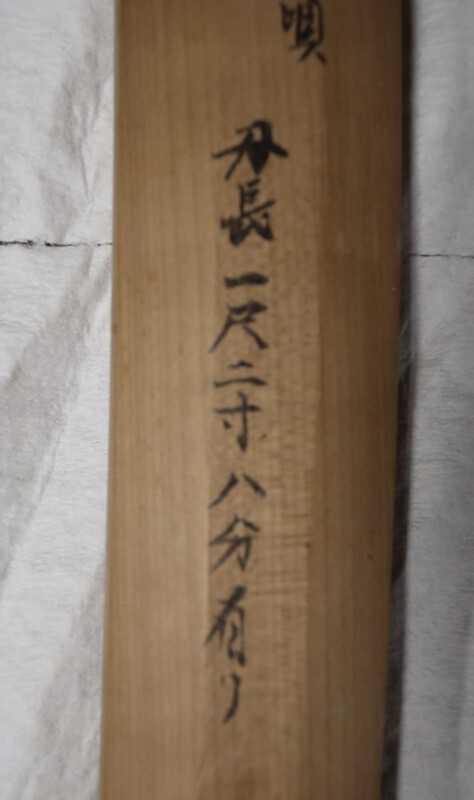
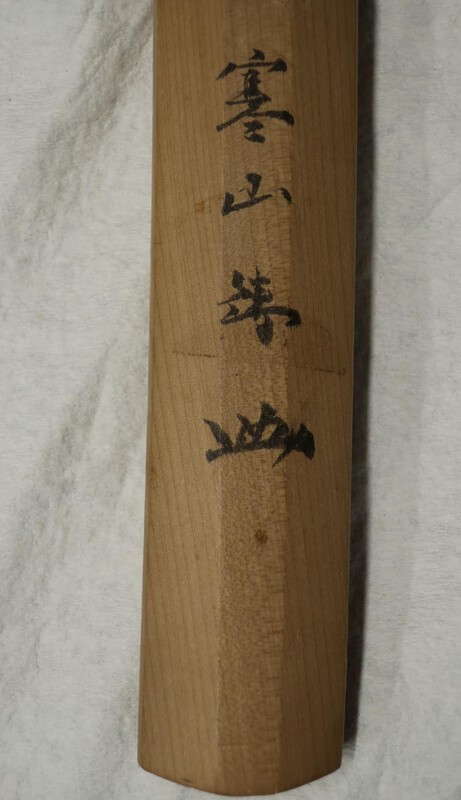
Ray - I am 100% sure that the shirasaya was made for the blade that it is housed in. I am pretty sure that the Kanzan signature is legit. A little "iffy" on the Sadamune. If the ink used stains the wood to a depth that would take real sanding and removal of lots of wood, then I think I have a legit signature that somebody went over and "highlighted". Your thoughts? -- JT
-
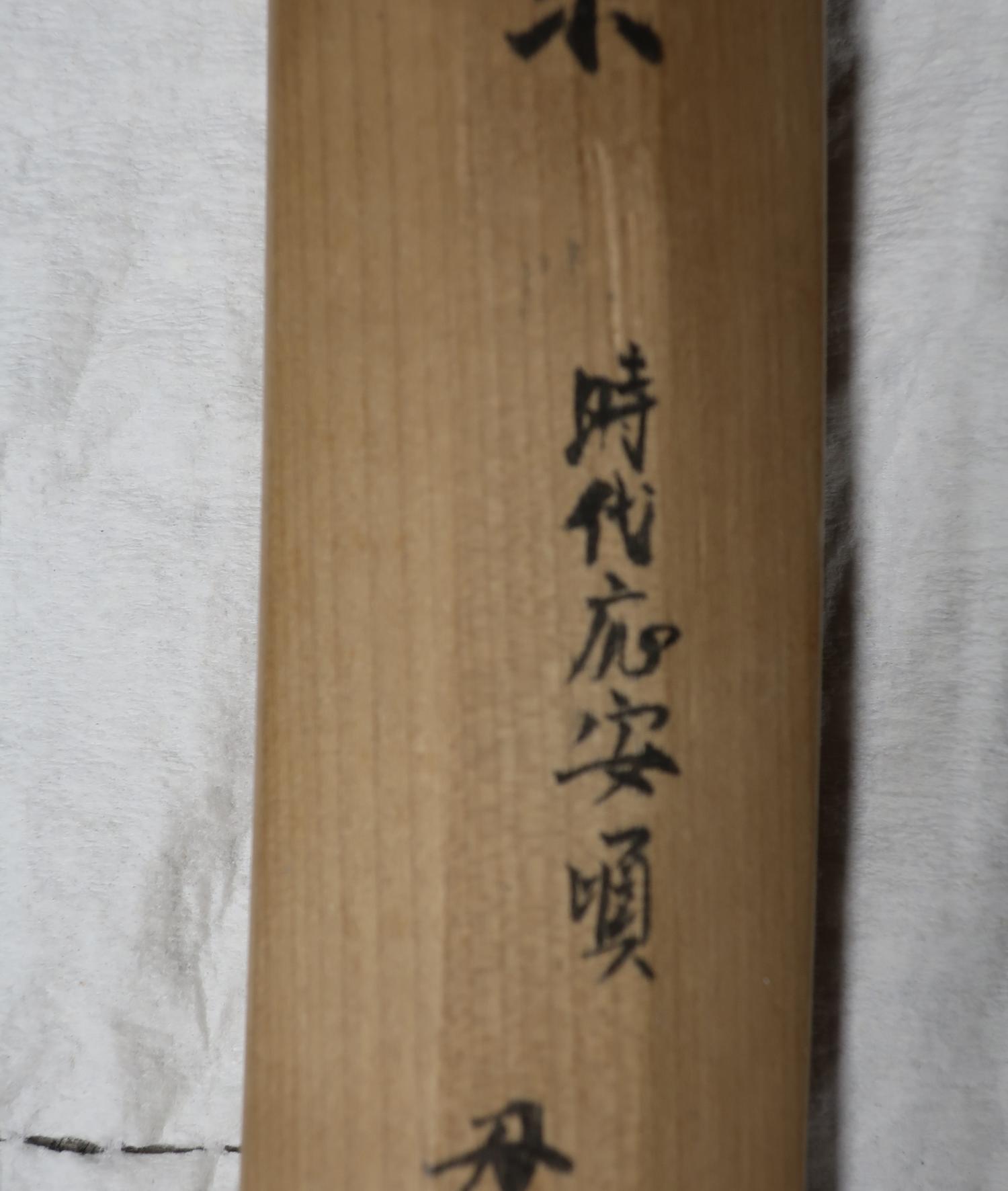
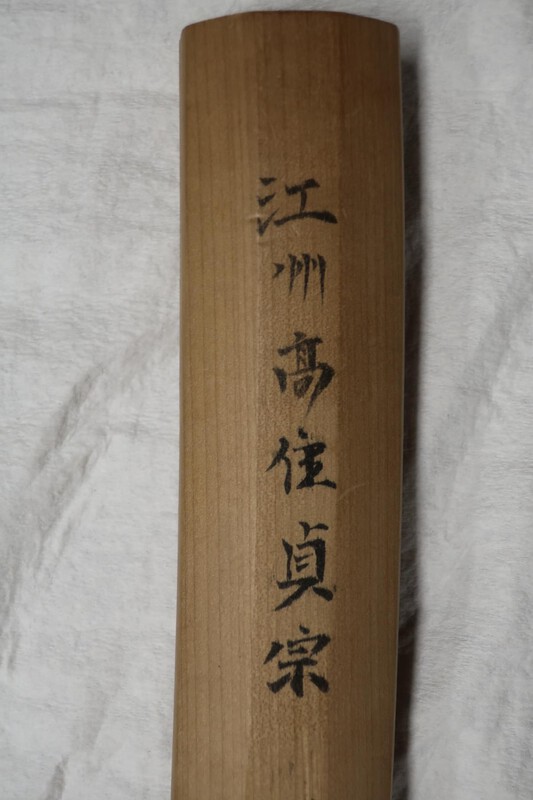
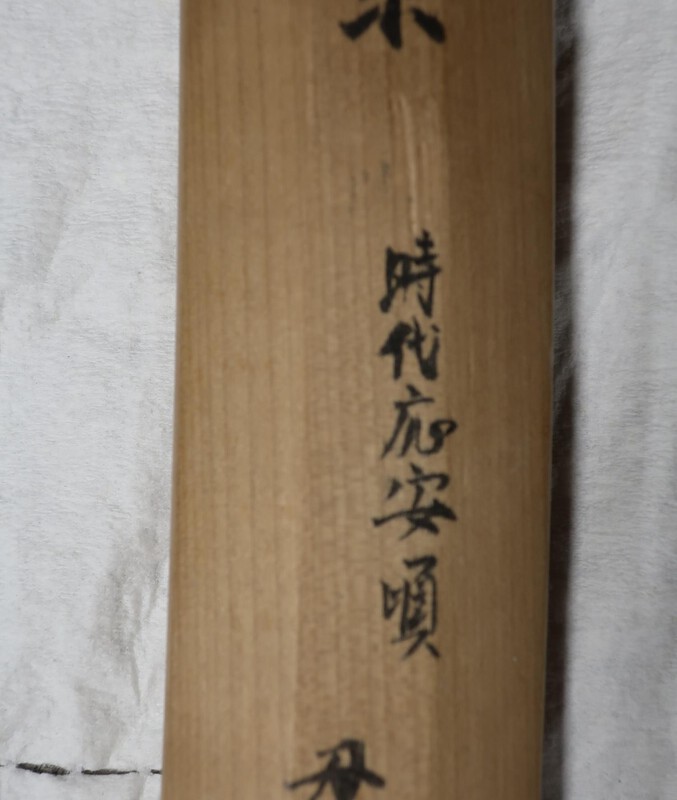
Ray- You are consistently on it here! Thank you for your reply -Sorry for the double post, I can't figure out how I double clicked the "post" button or how to take it down! OK - so back to the sayagaki- what if I told you that I had a suspicion of "enhancement" to the calligraphy? Take a close look at the last three characters of the first photo. What do you think? How difficult would it be to sand off the ink from the saya and replace? Does the ink that Sato Kanzan used penetrate and deeply stain the wood of a shirasaya? -- JT
-
Hey Fellas- Here's a quickie for you...I am having trouble with the calligraphy. I broke it down into 4 sections, What do you read in each of the sections- by individual kanji? Thanks --- JT Nesbitt
-
 Raymond, Bruce, Vajo, Et All- Thank you for taking the time to read my post and for the sage and salubrious advise. I am reaching out to Ed Marshall this week. He is just 2.5 hours away from me, so a perfect excuse to get the Bentley out on the highway for a fun road trip. If anyone else in the Deep South would like to connect, the bars in New Orleans will be open soon (we can socialize safely, I promise), the first round is on me. Thanks again for the warm welcome. --- JT
 -
Ken- That is a great question... I have acquired these beautiful things, they are a part of my life now. Every morning, the first thing that I see when I wake from sleep, is an object that was created over 700 years ago, by a person who was much like myself - a craftsman who was on a quest for immortality. As a motivating tool to get me out of bed, put on the work boots and get busy making stuff goes - it is a great motivator! I want to know more about the things that I own. I can't help but to feel a bit separated from the people who made them. I don't know enough about them, and it makes me feel like an interloper. We are all on a quest to add MEANING to our lives. I think that that is why most people who collect art, find comfort in the presence of great work. I want to be sure that I can tell the correct story of the work that I own when asked by those that will inherit it from me. It would give me comfort. --- JT
-
Brian- I just posted a thing in general nihonto discussion - I am asking for help here in the US - Did the post make it onto the board? Thanks -- JT
-
So I find myself with a collection of 12 Japanese blades.... and only 5 crummy books on the subject. Probably an inverse ratio, but I just can't seem to refrain from the "best offer" button on Ebay. Yeah, you read that right, for the past 2 years I have been a bottom-feeding Ebay buyer, but I have had a great experience and made friends with all of my Ebay vendors. If nothing else, it has been a really fun time connecting with interesting people on the other side of the world. The good news is that I have started slowly... papered blades, straight from Japan, shirasaya only, in good to excellent polish, and in the $500 to $1500 price range. The overarching philosophy is to link my financial exposure to my first hand knowledge. My personal goal for this collection has been to buy beautiful things that inform and inspire my career in industrial design, and to have some nice heirlooms that my nephew will one day inherit and hopefully cherish. Jay Leno once told me in regards to collecting cars- "buy what you like, maintain it properly, and the market will eventually catch up". I think that there is some crossover wisdom in that statement that may apply to the Nihonto world and help to demonetize the pursuit, and help to elevate the art of it all. As a professional designer, and fine arts major, I can tell you that Masterpieces definitely pop up in unlikely places. The Masters of fine art (humans every one) make mistakes and produce bad work on occasion. Amateurs sometimes get lucky and do exceptional work. What separates the two camps is the concept of BRAND. The unfortunate reality of the way human minds work, is that we inherently need to classify and order our wold in ways that are reductive, due to our limited processing capability. Brand becomes mental shorthand for quality. Think Mercedes Benz- They have made some great cars, but have also made some real turkeys, nevertheless their brand is regarded as having value. I suspect that the "brand" of any single piece of Nihonto may carry too much weight and is used as a selling tool. I could be wrong about that statement, so consider the source. I am sure that Every single Japanese sword smith of every era, was human being. That fact carries with it emotions, and attitudes - good days and bad ones. Not to mention financial pressures to deliver goods, supply chain issues (so sorry- no good tamahagane this month, make do with what you have on hand to be able to feed your family). Just plain luck due to the handmade nature of these objects and how close they are to unrefined raw materials....Great smiths can have terrible outcomes that they have to deliver to remain viable, mediocre smiths that had a perfect day where everything worked out just great! Therefore, I decided two years ago to stop worrying and start buying. For my own quest, in this strange, dimly lit, little corner known as Nihonto, I have endeavored to assemble a collection that has variety... Different shapes, different eras, different hamon, different schools, but all work that firstly appealed to my artistic eye as being beautiful stand-alone objects in their own right. Focusing entirely on the maker- and not the work- just seemed a little pretentious for where I am on this learning curve. Now that I am at capacity (I more or less have everything in the collection that I set out to acquire), I find myself curious about the opinion of an expert of the entire collection. I have a couple of swords that I think would benefit from a touch-up polish. I am not convinced that all of my papers (NBTHK) are accurate. I would love to get an in-person lesson on spotting hada with in-hand examples (I have never really understood how to identify specific schools). You know, make an evening of it. I am not looking for an official appraisal, as I have absolutely no desire to sell ANY of the swords that I have collected, rather a casual fun experience where I can learn more about the topic through the work that I am now the caretaker of. I am ABSOLUTELY certain that I have bought stuff that the majority of the people reading this post would turn their collective noses up at. I am totally OK with this fact and view it as a learning experience that in itself has value. I am willing to pay for the service. I am willing to travel. I am located in New Orleans, so I would really appreciate someone within reasonable driving distance (flying on airplanes with a bag of swords during an epidemic is beyond ridiculous). So what do Y'all think? Anybody know anybody who might be into helping me more fully grasp the nature of the objects that I have the good fortune to own? I have 12 swords to review. Thanks for reading this exhaustive rant! --- JT
-
OK- Making a donation now, and thanks for organizing, and operating this collective! -- JT
-
Hey Y'all- JT Nesbitt here...I have some questions and am seeking advise on my collection. I want to donate to the board before I go any further. I like pulling my own weight, and understand the value of knowledge. I went to the donate page and it is asking me to give in South African Rands...This seems a little scary to me. I want to pay with a credit card, but don't want my card to get flagged and shut off due to suspicious overseas activity. Am I overthinking this? Anybody else have reservations about this system? Thanks -- JT
-
What In The Cornbread Hell Is This?
jt nesbitt replied to jt nesbitt's topic in Military Swords of Japan
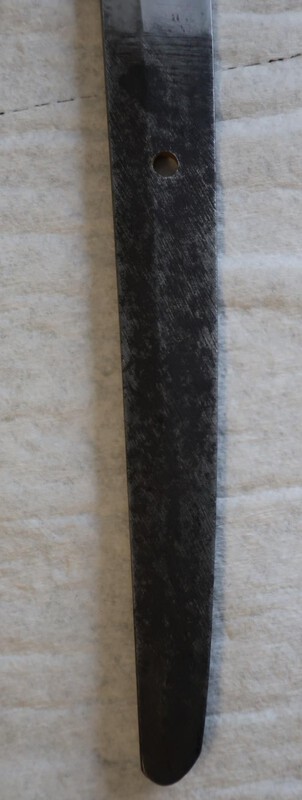
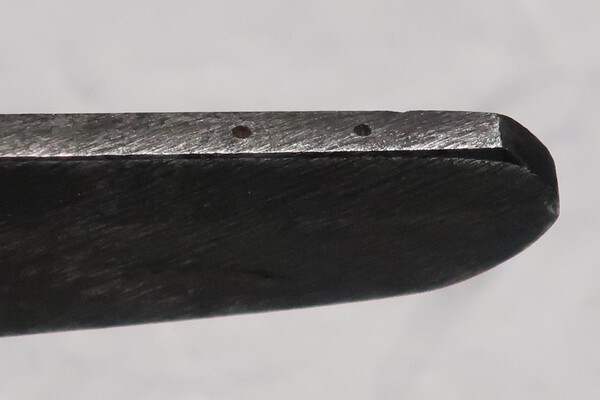
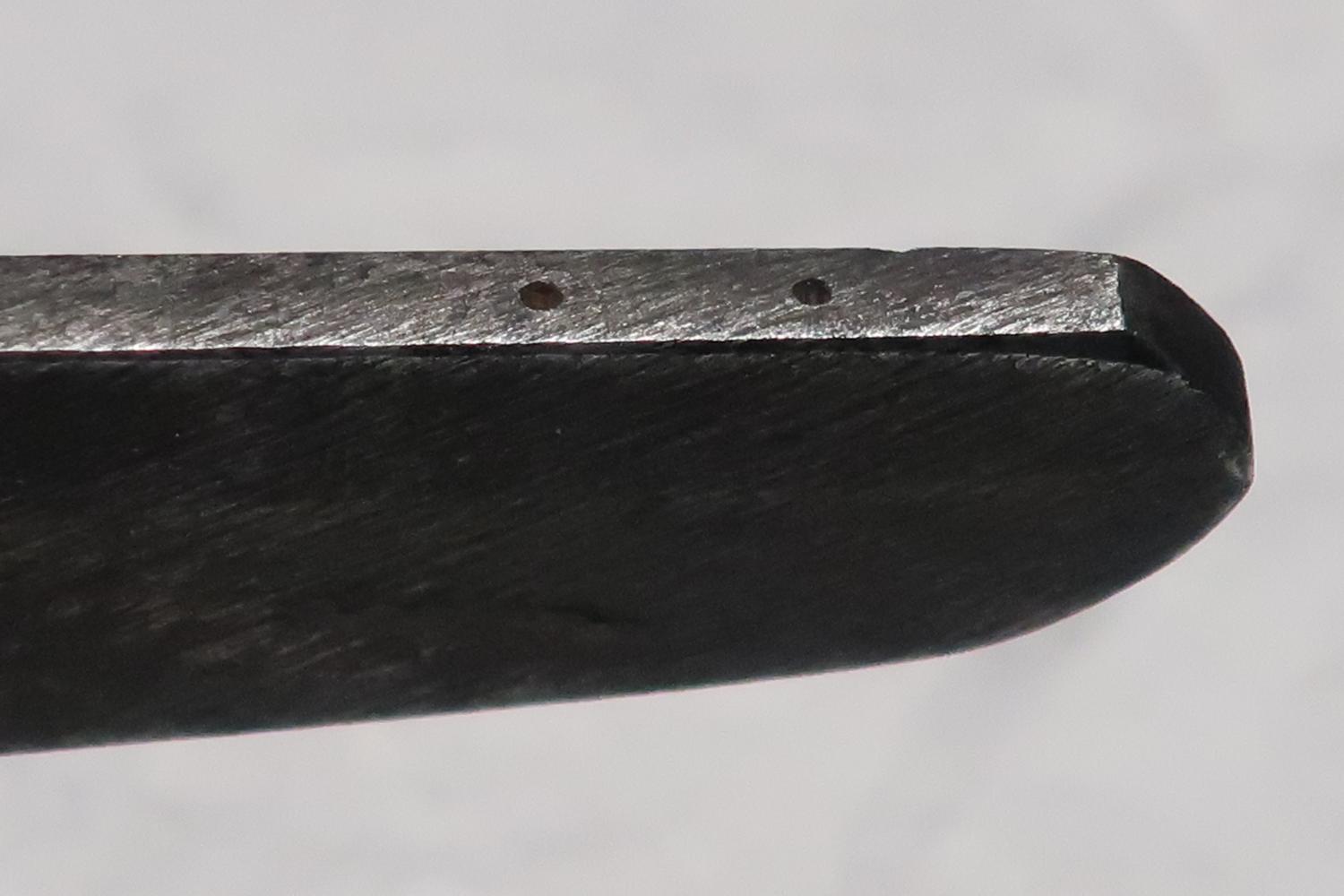
Dave- Thanks for the length info- I should have written "This sword is short compared to the only Showa Gunto that I have access to". So is it your opinion that this is some kind of Gunto type blade? During your study, have you ever encountered a sword with the two little punch marks on the nakago (see photo)? Thanks for your help! -- JT -
What In The Cornbread Hell Is This?
jt nesbitt replied to jt nesbitt's topic in Military Swords of Japan
So has anyone ever seen the two little punch marks on the back of a nakago before? The are not a later addition as the age around and inside of them is consistent with the corrosion on the rest of the nakago. Forgot to mention that the mikugi-ana is way too perfectly round and crisp to be hot-punched. Definitely done on a drill press. -- JT -
What In The Cornbread Hell Is This?
jt nesbitt replied to jt nesbitt's topic in Military Swords of Japan
Nice shirasaya...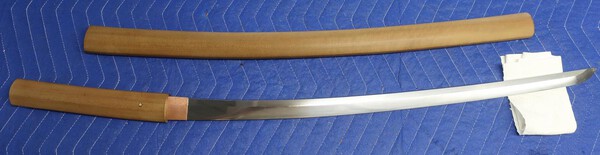
-
What In The Cornbread Hell Is This?
jt nesbitt replied to jt nesbitt's topic in Military Swords of Japan
Nagasa length is 24.25" Nakago length is 8.15" Thanks for the question, Chris! -- JT -
What In The Cornbread Hell Is This?
jt nesbitt replied to jt nesbitt's topic in Military Swords of Japan
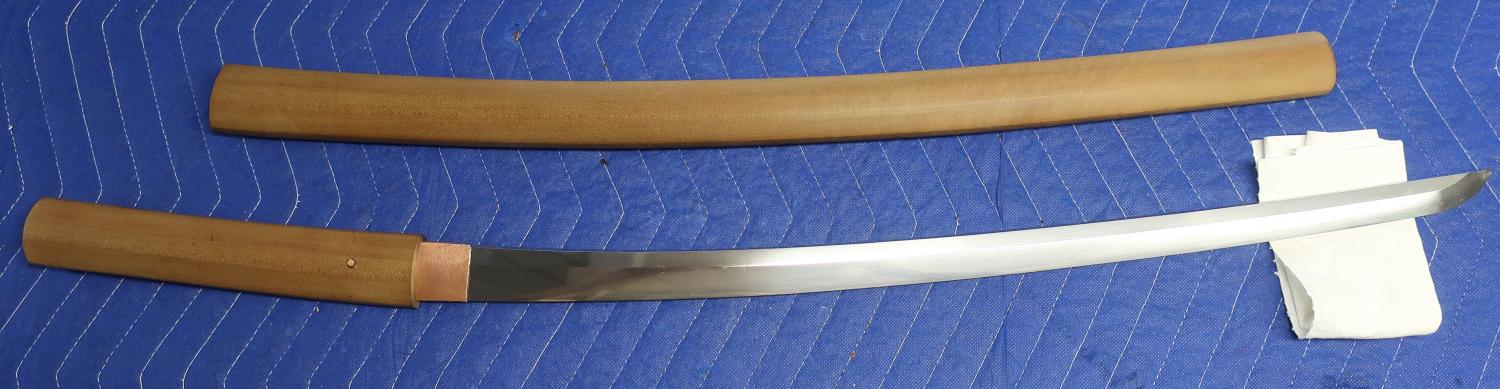
Sure Chris - Width at the Mune-machi is 1.3" Width at the kissaki is .830 Thickness is .290 at the Mune-machi .210" at the yokote Nice custom copper hibaki and decent shirasaya...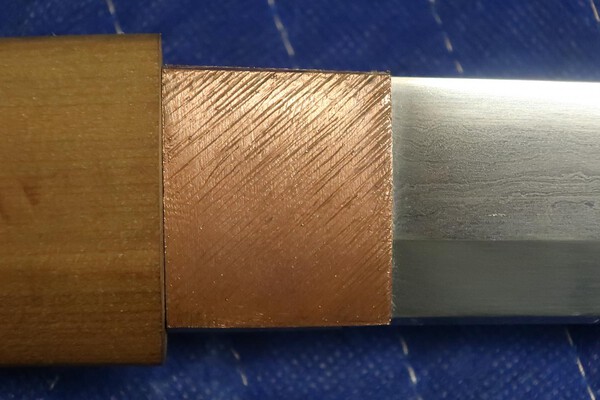
-
What In The Cornbread Hell Is This?
jt nesbitt replied to jt nesbitt's topic in Military Swords of Japan
Thanks for the quick replies! I have a very nice Oosawa Showa Gunto in my collection and I have examined them side-by side. The quality of this sword is WAY beyond just weapon for common soldiers. That's the problem, it's too good to be a mass produced blade, but no way is it made in the traditional manner. -- JT -
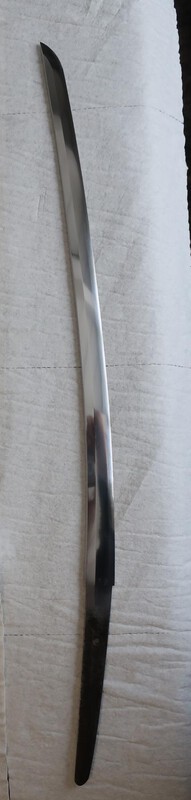
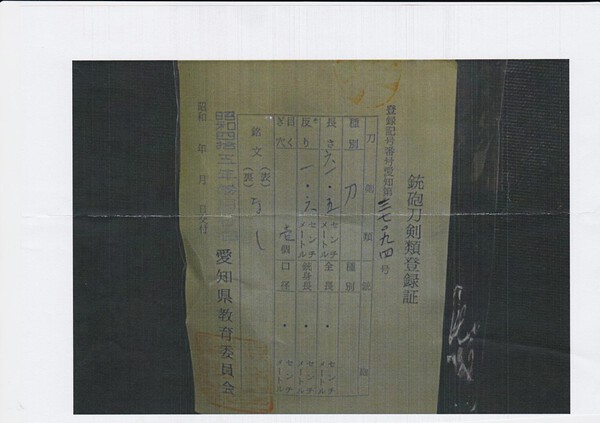
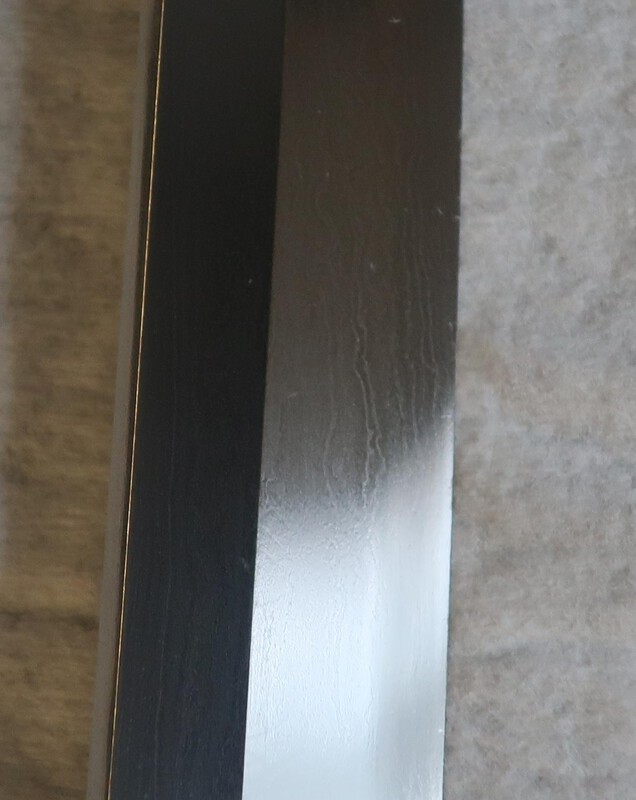
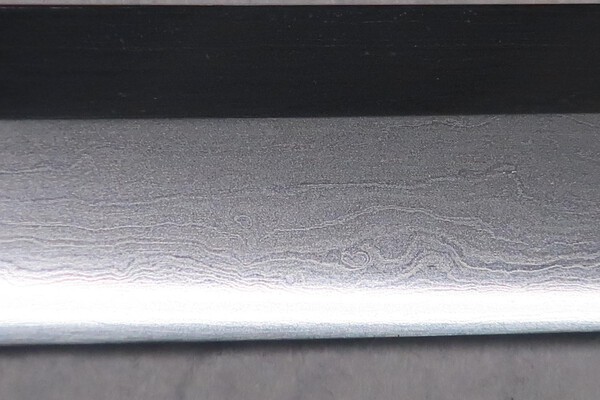
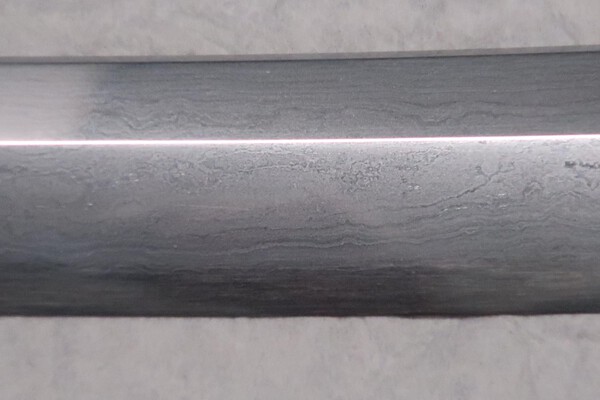
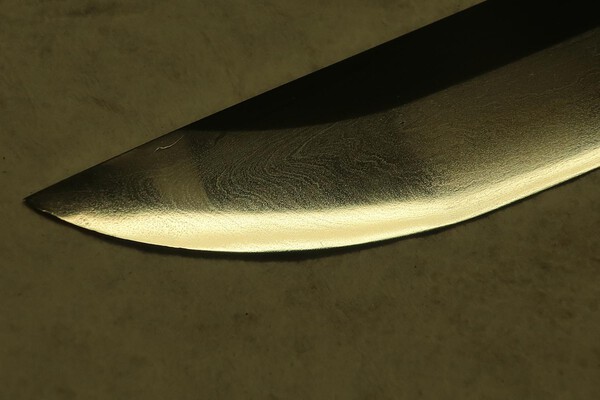
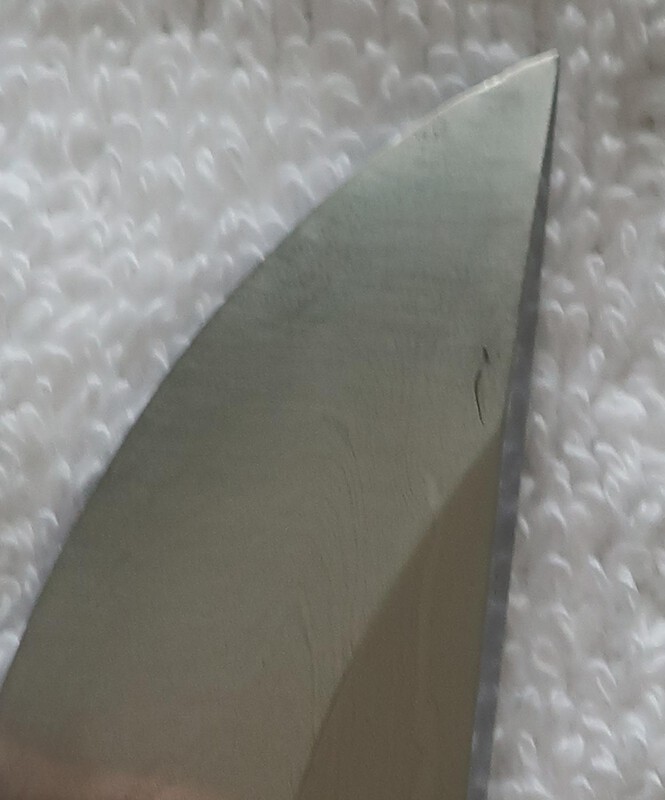
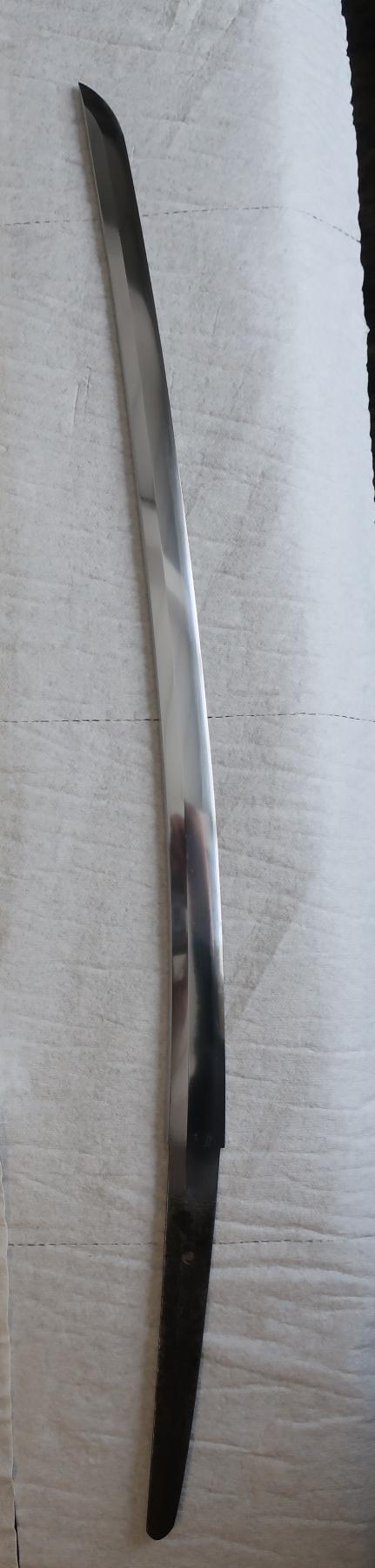
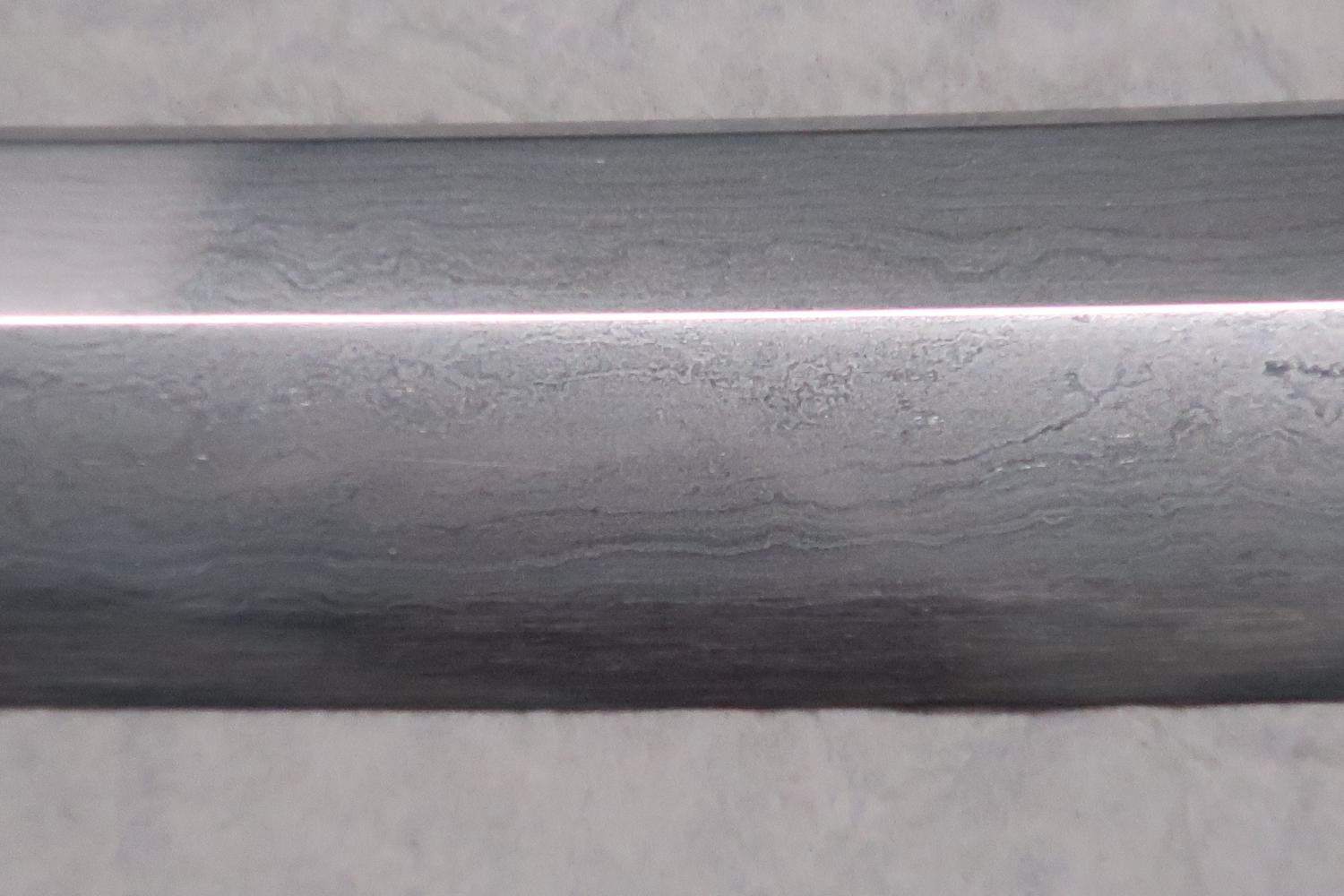
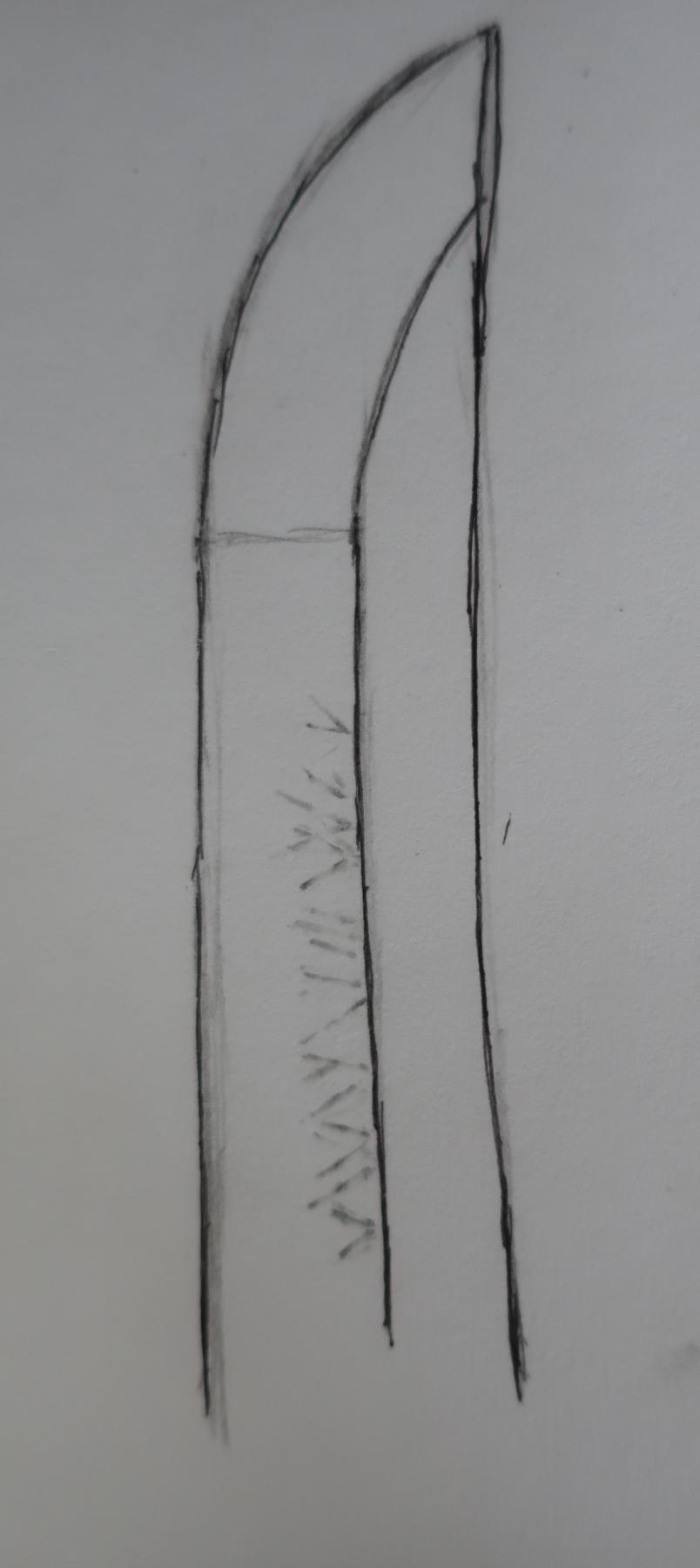
Hey Y'all! JT Nesbitt here...I have a forenzic mystery on my hands, and thanks to the Virus, plenty of time to try and solve it. I am an industrial designer, and for the past couple of years, gotten infected with the Nihonto sickness. My journey has been a pure delight. I have been collecting mostly smaller insignificant, but papered and imported directly from Japan, legit Nihonto to train my eye and learn some of the language. I am a student without a teacher, just noodling around and buying stuff that appeals to me. Last month I came across something that just didn't fit in with everything else that I have been looking at, so on impulse I bought it. Now this sword has become a real pain in my ass. I can't stand the riddle of it anymore so I signed up here to access greater minds and real expertise....here goes: This sword has a really short ha of right at 24", and it's shape is sorta like a mini-tachi that is wide and thick. More belly towards the nakago, saki-zori style. It came directly from Japan with Daimyo registration. The reason for my purchase is the jihada. It is masame/itame and so perfectly rendered that I reckon that it is either a saijo masterpiece (not at all likely), or was executed with a powerhammer sans tamahagane, using modern steels. There is only one tiny kizu in the kisaki (see crummy photo). That's it, only ONE in the whole blade. There are very faint file marks radiating from the shinogi towards the ha (see terrible oshigata by me) that appear to be done with a mill file by hand and not completely polished out. I think that the lack of a discernible hamon is due to being not properly polished because the steel in the ha-saki area seems to be denser and have a different texture. The Nakago is mui-mei and pretty featureless, except for two microscopic punch marks on the mune side, right at the end (very weird). Judging by the level of corrosion, I would believe it if you told me that this sword were 100-120 years old. It came in a nicely done shira-saya that was probably built in the 1950's. So that's about it...What the heck is this? Thanks for your kind attention!!! --- JT