Bryce
-
Posts
759 -
Joined
-
Last visited
-
Days Won
14
Content Type
Profiles
Forums
Events
Store
Downloads
Gallery
Everything posted by Bryce
-
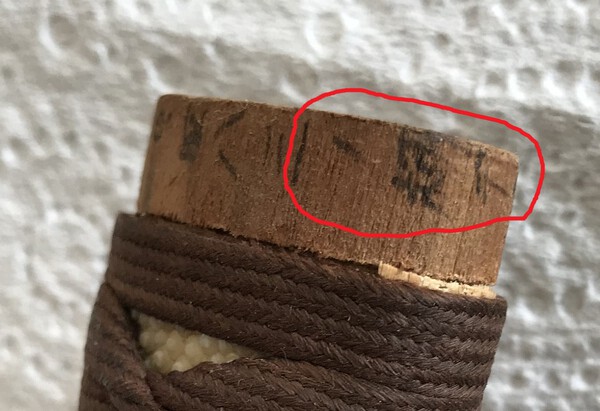
Thanks Steve, If that is the craftsman's name, I wonder what the other set of kanji refers to? Cheers, Bryce
-
Thanks Bruce, Ray singer posted a photo of one of his shin gunto tsukas in the "Show Us Your High Class Gunto" thread, with the same kanji. Cheers, Bryce

-
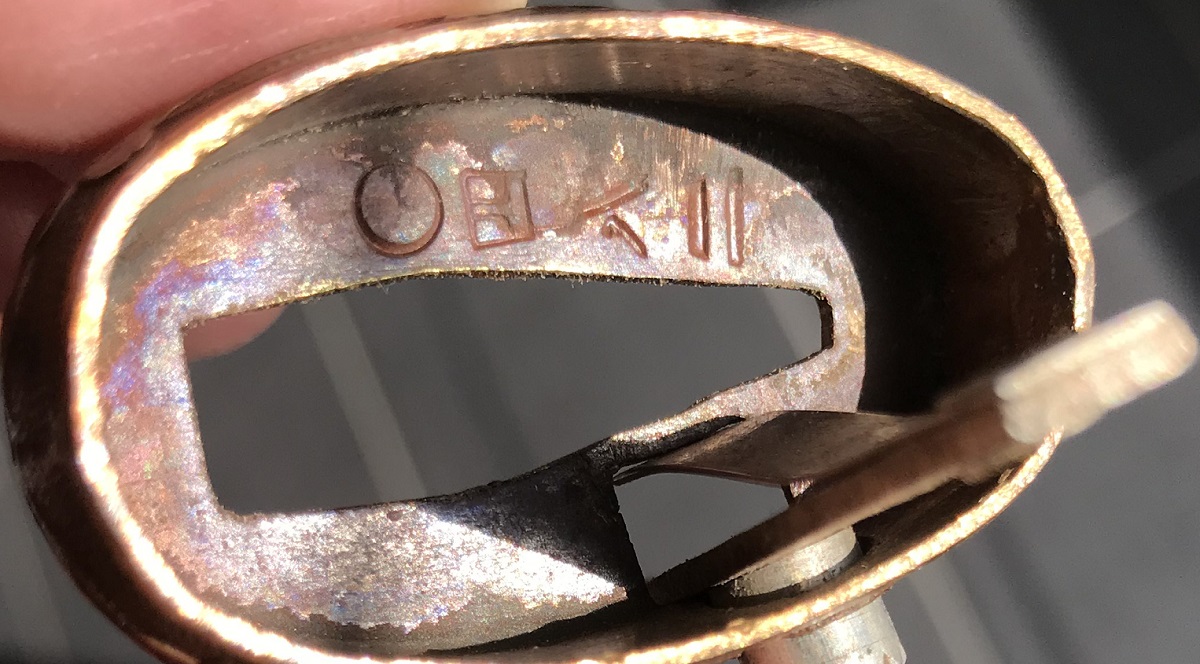
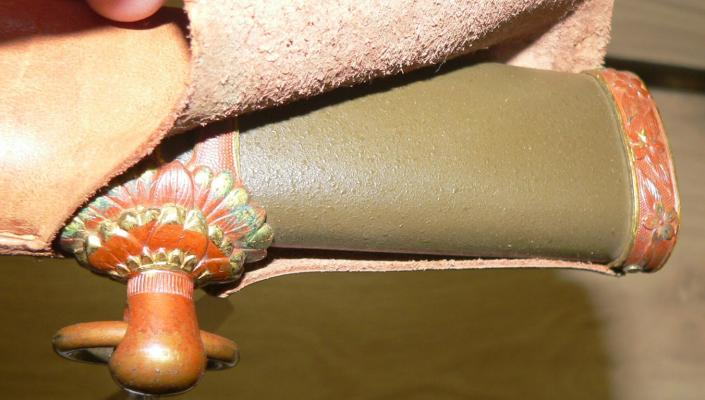
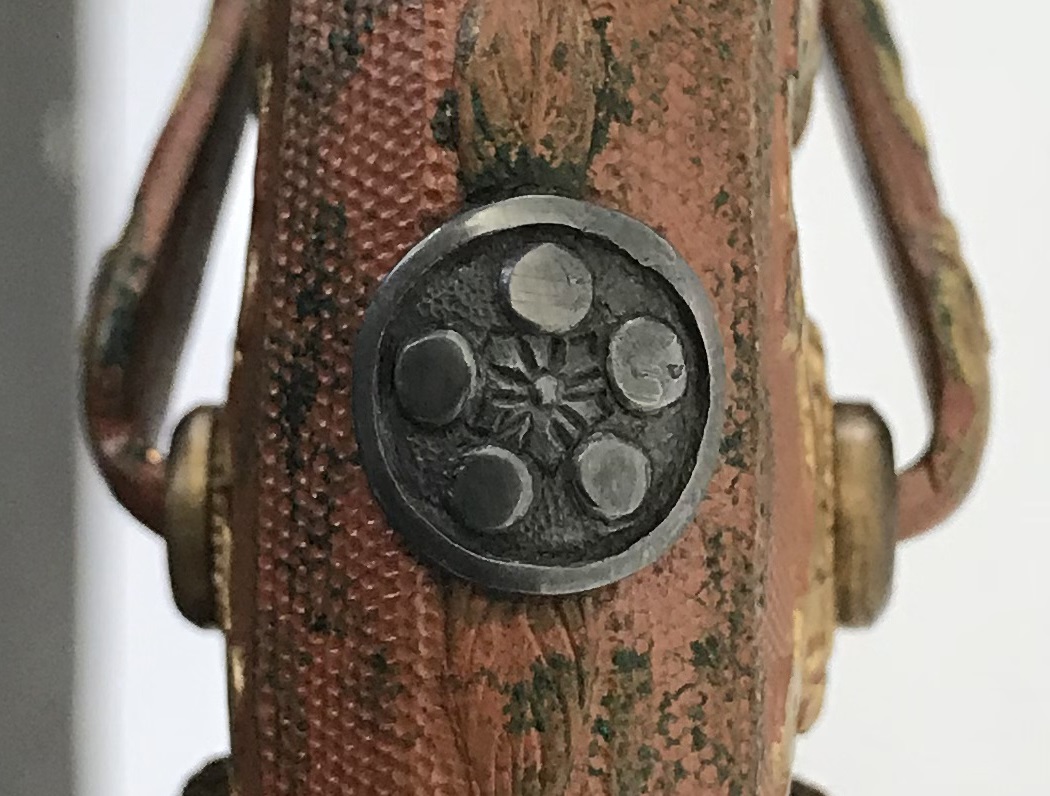
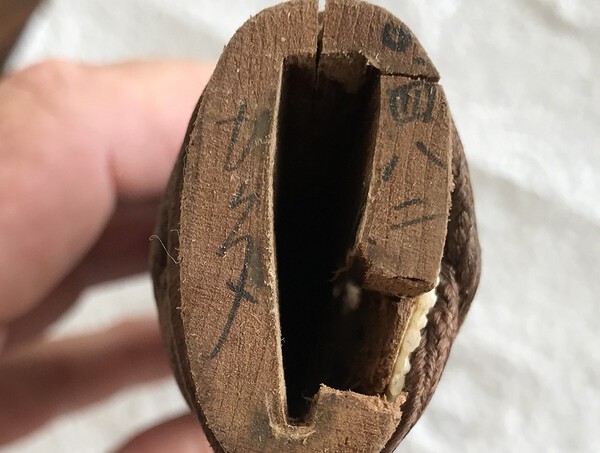
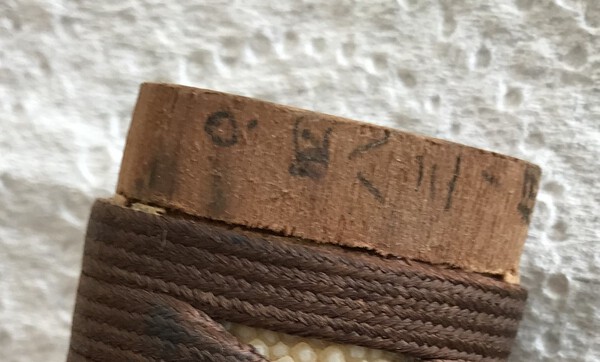
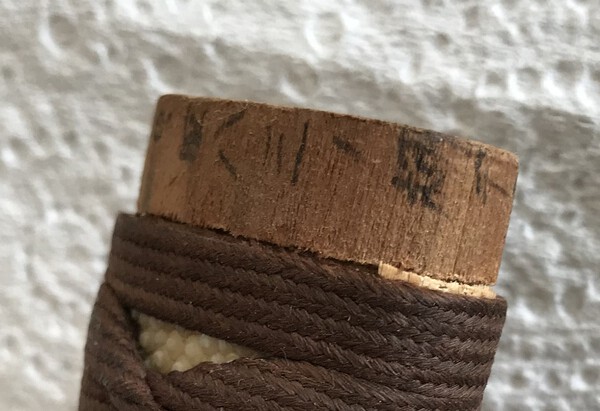
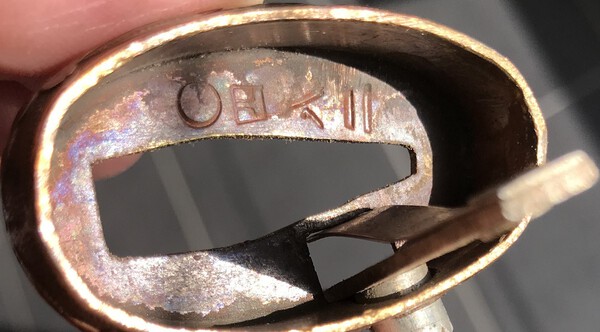
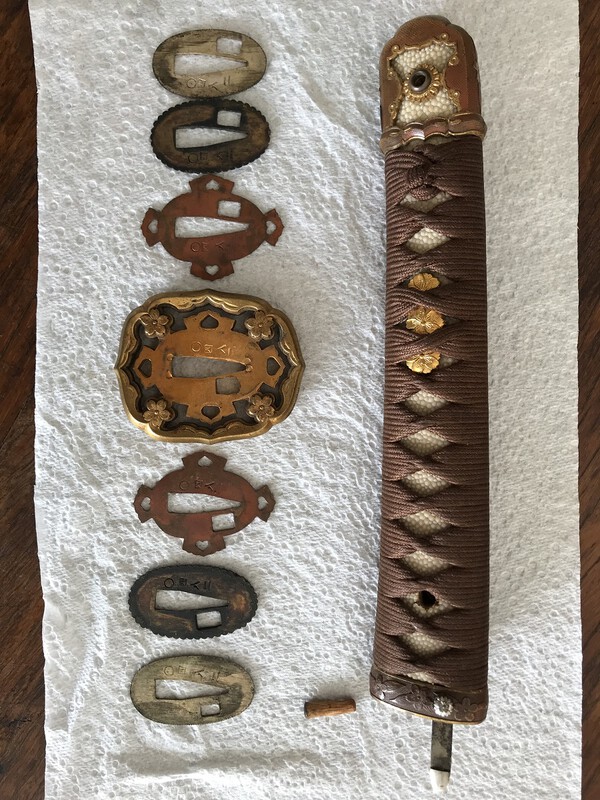
G'day Guys, Had a closer look at one of my shin gunto the other day. On the tsuka, as well as the assembly numbers there are additional kanji, which I assume must belong to either the tsuka maker or perhaps the workshop it was put together in. I know this has been discussed somewhere before, but can't find the thread. Cheers, Bryce
-
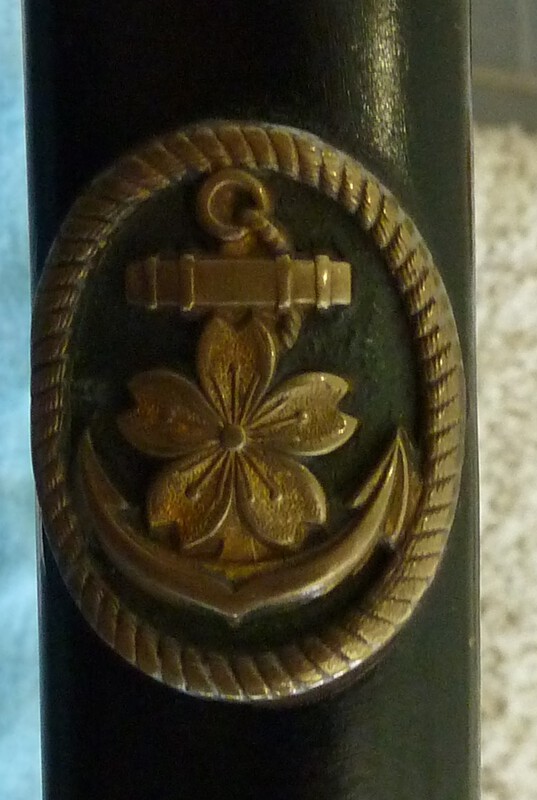
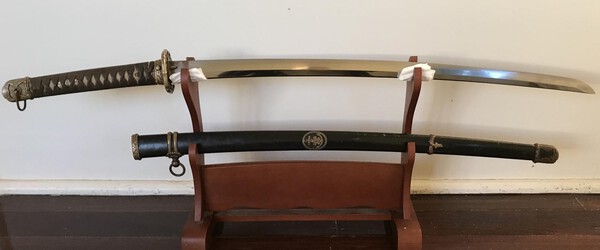
G'day Bruce, I own this sword now. Here are a couple of better pictures. Cheers, Bryce
-
Thanks John, Thinking about it some more, the fact that the sarute is gone suggests the original was most likely silk cord. I think it is unlikely that a metal sarute would simply fall out or fail. Cheers, Bryce
-
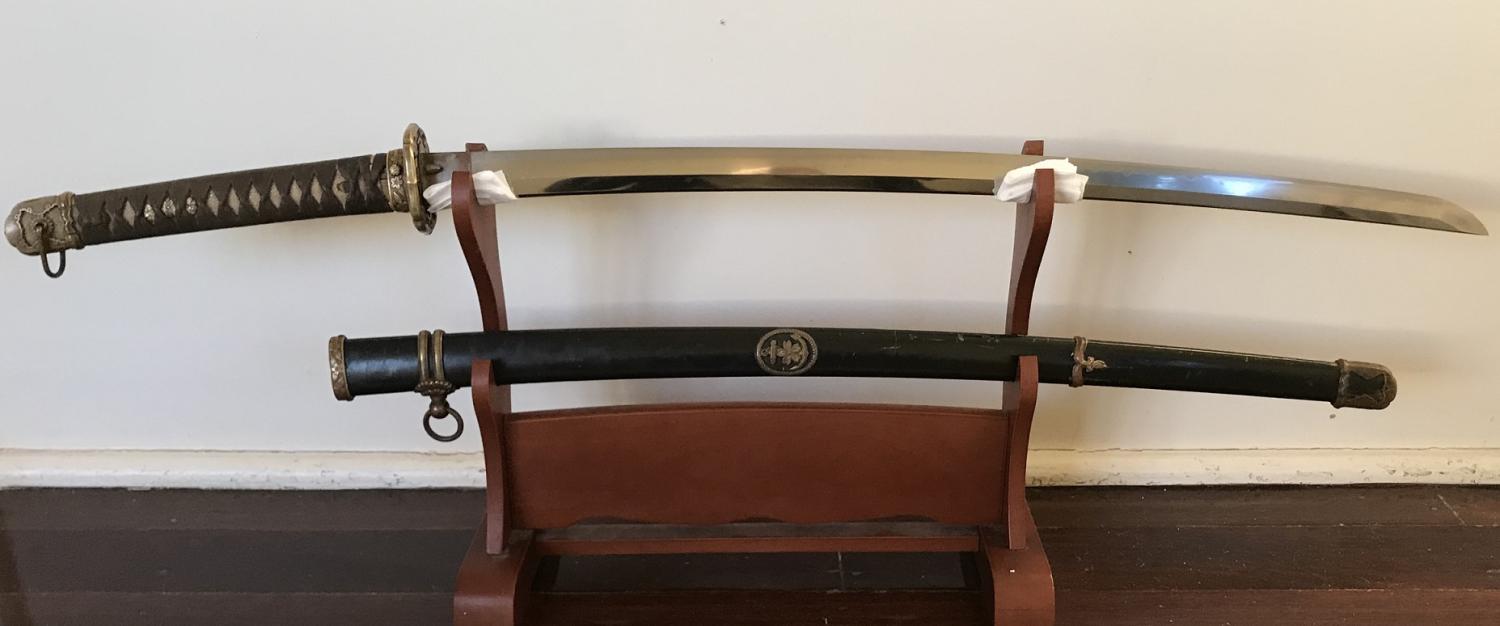
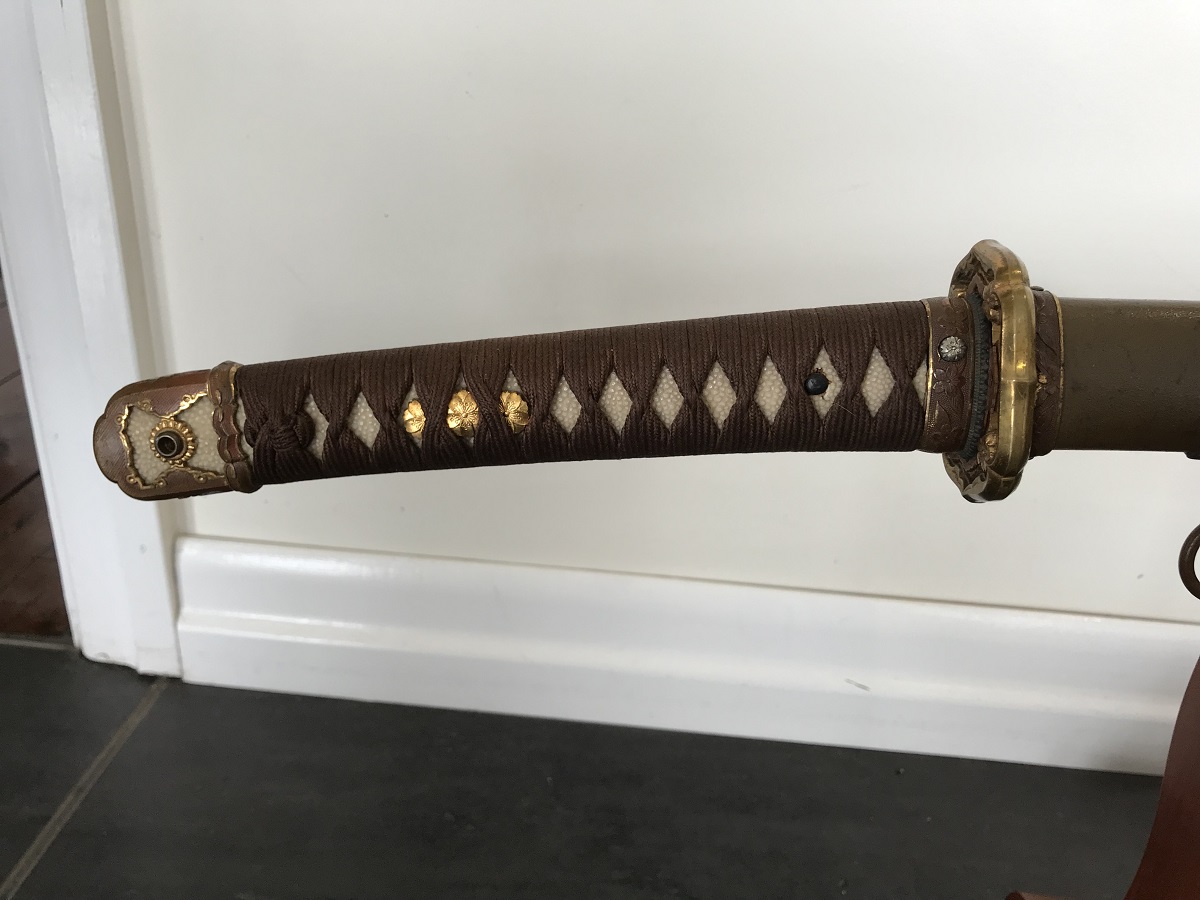
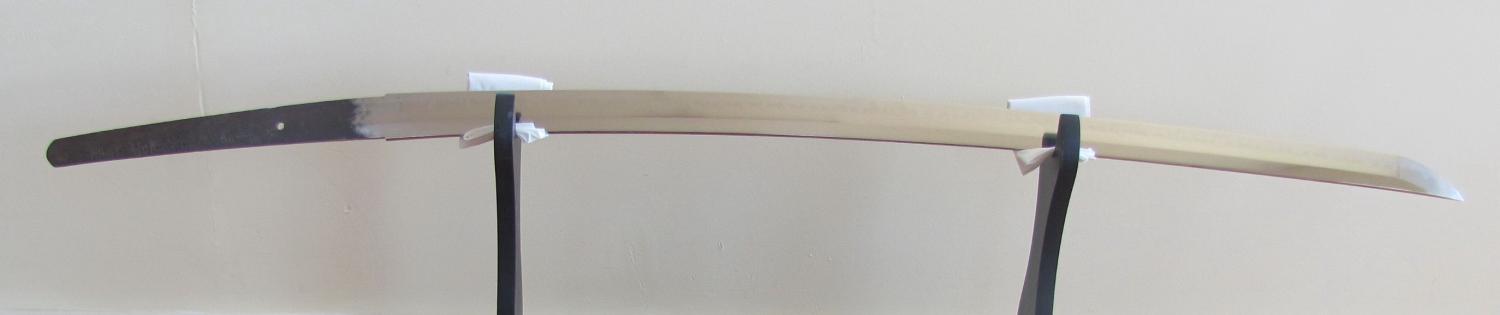
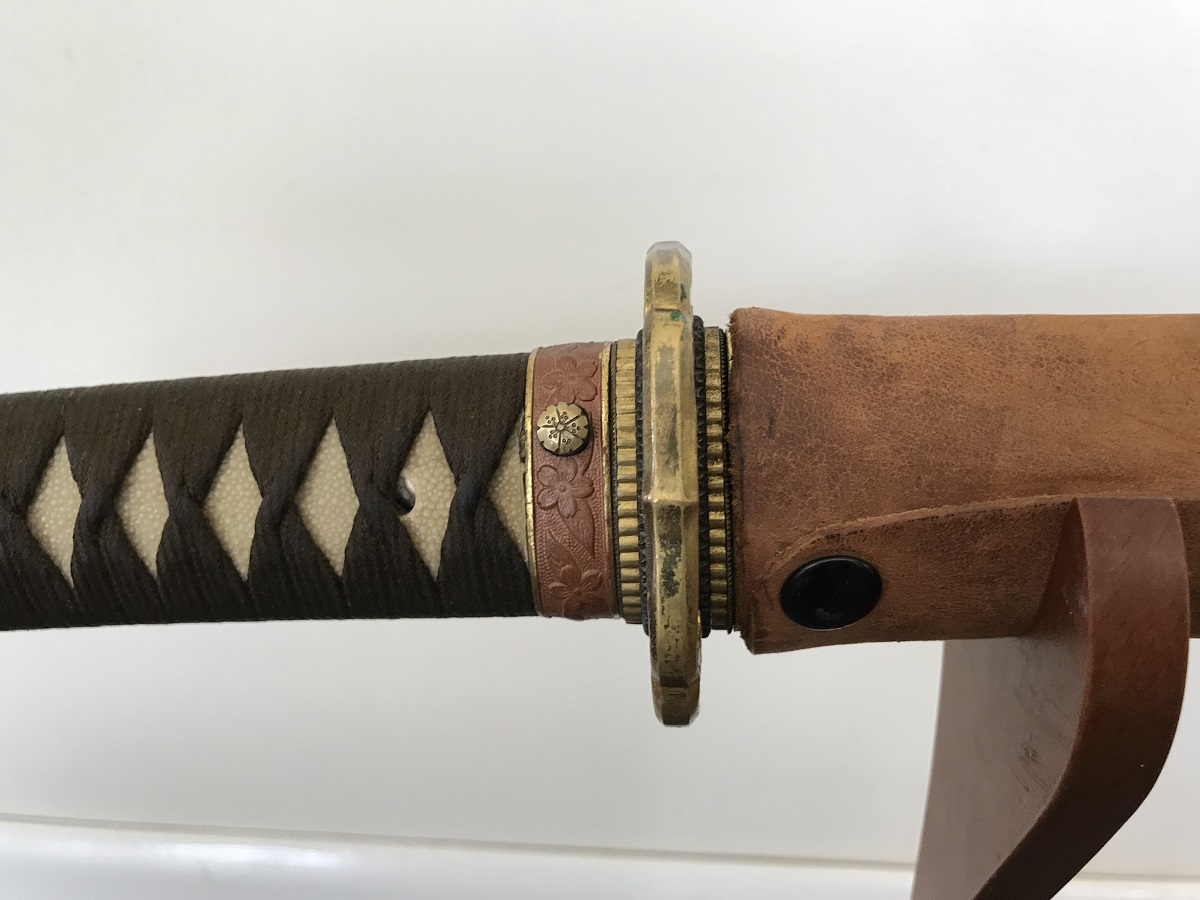
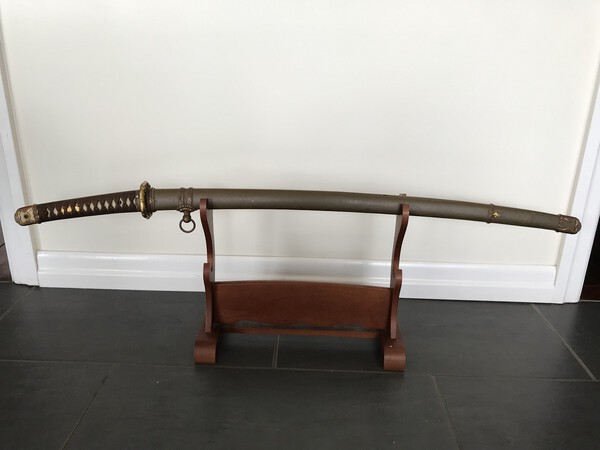
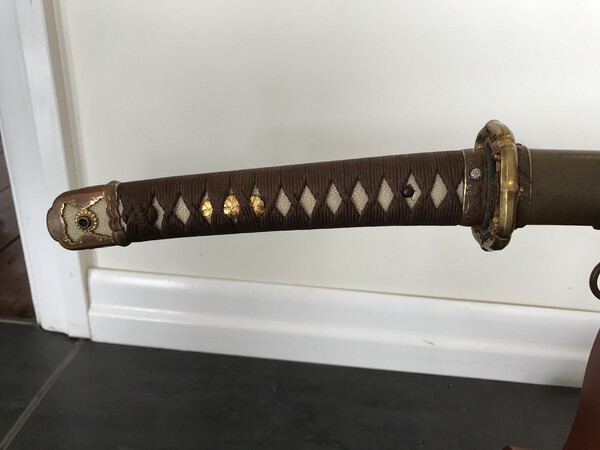
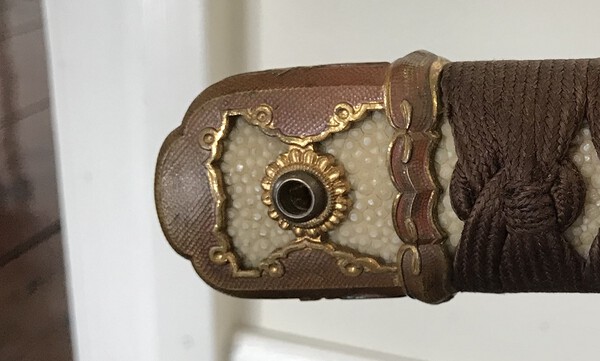
G'day Guys, Here are some shots of my large shin gunto. It is just under 41.5 inches overall with a 29 inch nagasa and a steel saya. Looking at my small collection there appears to be an inverse relationship between tsuka length and blade length. My shortest blade has the longest tsuka and vice versa. Looks like there was an effort to keep them all a similar overall length, despite the blade length. This one is missing its sarute. Does anyone have any thoughts as to what type of sarute it would most likely have been? Cheers, Bryce

-
Thank you for clarifying that Guido and thanks also to Uwe and Geraint for the original reading. G'day Stephen, I bought this from Grey, but don't have it in hand yet. Here is a link to the sales listing. I will post some more pics when it arrives. www.japaneseswordbooksandtsuba.com/store/swords/k75-29-katana-yokoyama-sukenao-custom-gunto-koshirae# Cheers, Bryce
-
G'day Guys, Can anyone answer Grey's question above? Cheers, Bryce
-
According to Sesko (2012) there was a Sukekuni from Harima who was a student of Yokoyama Sukenaga. I guess he must have moved to Harima from Bizen at some stage. Could it have been him? Cheers, Bryce
-
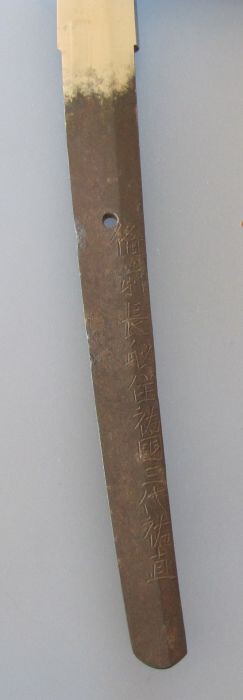
G'day Guys, I was wondering if any one could help me to decipher the mei on a recent acquisition. It appears to read: Bizen Osafune Ju Sukekuni Sandai Sukenao Did two smiths make this sword as in Sukekuni and Sukenao, or does the name refer to a single smith only? Thanks to Grey for the pictures. Cheers, Bryce


-

How Long Does It Take To Really "know" A Blade?
Bryce replied to Bryce's topic in General Nihonto Related Discussion
G'day Guys, Paul, that is a great story and very similar to my experience. I figured I couldn't be the only person this has happened to. In my defence, it is possible that this blade arrived just before I realized I needed my first pair of reading glasses. On a different tack, how would you describe this hamon? I know it is choji, but could it also be described as a different interpretation of sanbonsugi? Cheers, Bryce -
How Long Does It Take To Really "know" A Blade?
Bryce replied to Bryce's topic in General Nihonto Related Discussion
G'day Guys, Thank you for your replies. I will take on board your advice about over oiling. I live in a very hot, humid and coastal environment, so I figured more was better than not enough. Cheers, Bryce -
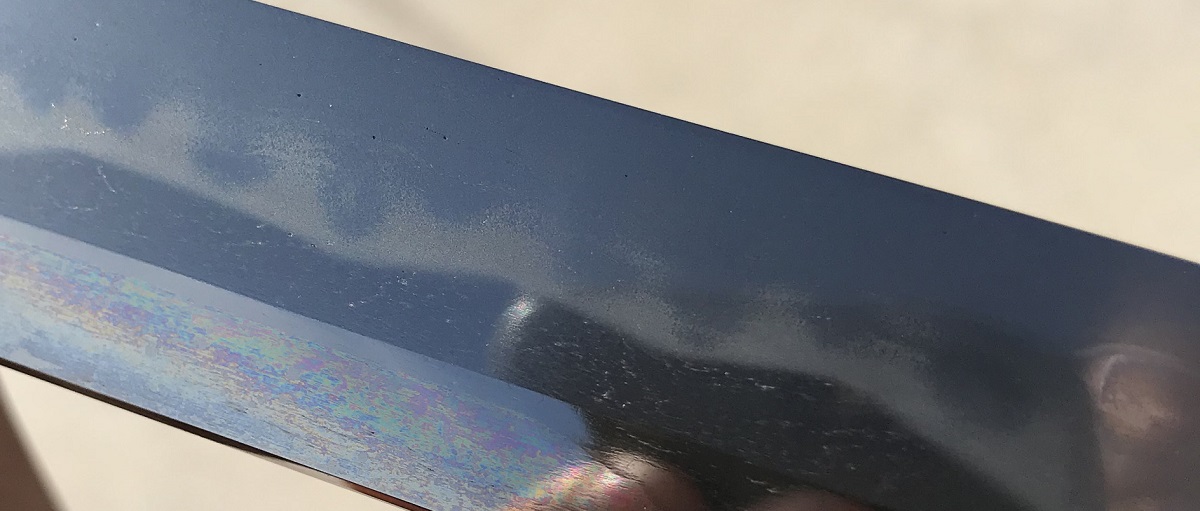
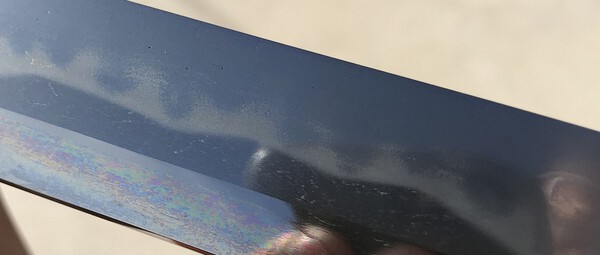
G'day Guys, I have had this katana in my collection for 5 years now. It was my first nihonto. The blade is mumei and attributed by the NTHK den shinshinto Kanesaki. When it arrived I was a little underwhelmed. I was expecting perfection, but the blade has a number of small ware. For years I was unable to see past these imperfections, but each time I looked at it I began to see a little more of the blade's beauty. Recently I took the blade out to re-oil it and took it out into the sun to have another look. For the first time I have been able to see the true beauty of the blade. The flowing lines of nie amongst the nioi combine to create a 3D effect, so that it appears you can actually see into the steel. Not sure why I was never able to see this before. As always, the photos I was able to take can't capture the full effect you see with the naked eye. Cheers, Bryce



-
Thanks Guys, When I posted this I was thinking specifically of ubu mumei. I can understand why the lack of a signature makes a mumei blade worth less than a signed one for all of the reasons you have outlined above. What I don't understand is the thinking that an ubu mumei blade must be inferior to a signed one. To my way of thinking it means a collector can buy a good quality blade at a much lower price than a similar signed one. No harm in that. I collect British swords from the early 1800's. Most of these are signed by the maker, but many are not. Those that aren't signed tend to be high quality swords from some of the best makers of the day. I wouldn't consider not buying a good sword simply because it wasn't signed. Collecting British swords is a lot different to collecting nihonto, but my point is there must have been valid reasons for a maker to not sign a sword, we just don't know what they were. Cheers, Bryce
-
G'day Guys, Why do mumei Shinto blades seem to be viewed with distaste, while mumei blades from other periods are not? I am a little confused as members often say "buy the blade not the name". Cheers, Bryce
-
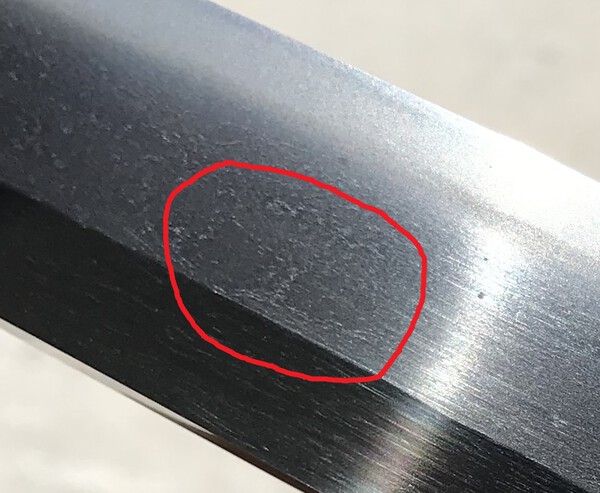
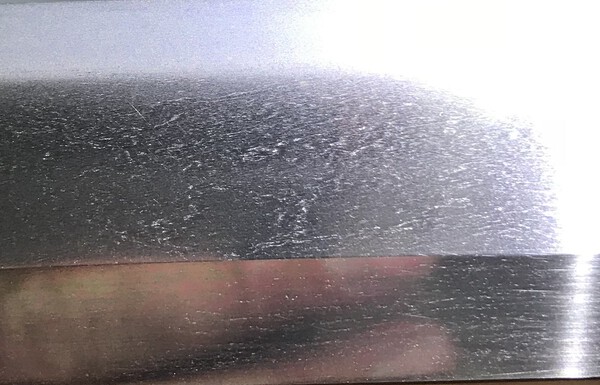
G'day Guys, I have noticed that the blade has a couple of small mokume burls that have a darker/flatter "look" inside them. Is this likely to be shingane showing thru the skin steel? Cheers, Bryce
-
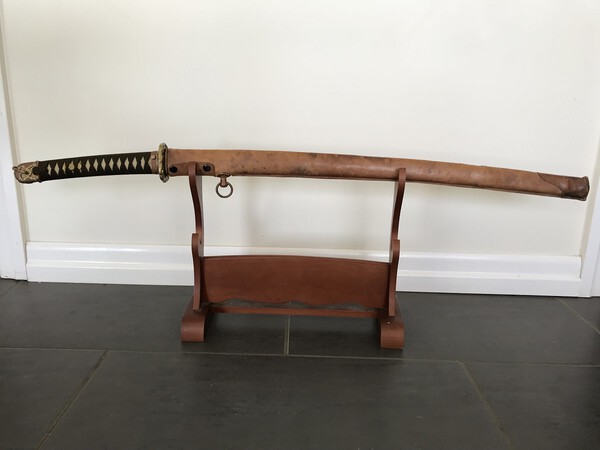
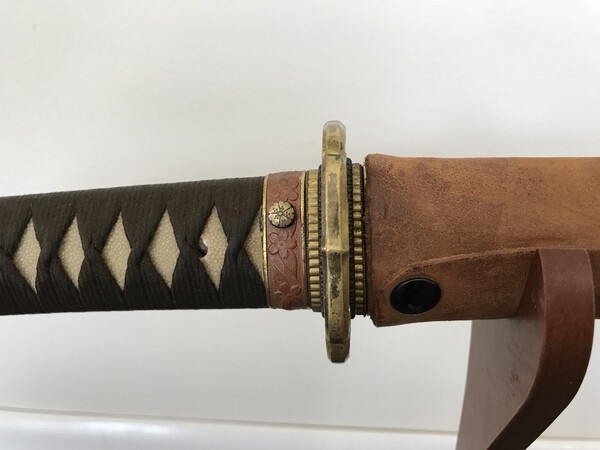
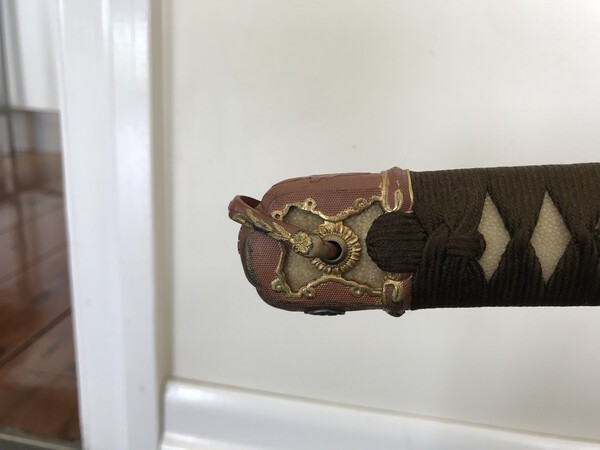
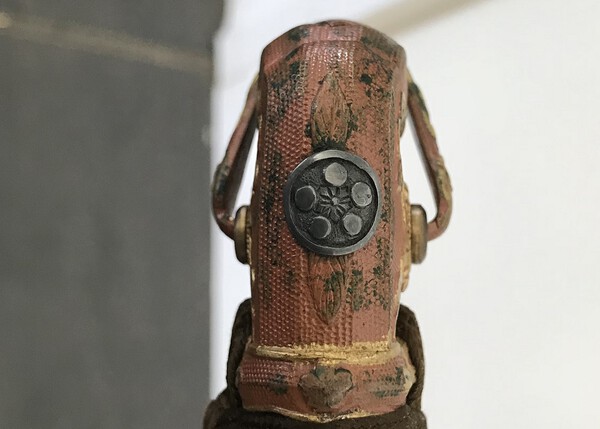
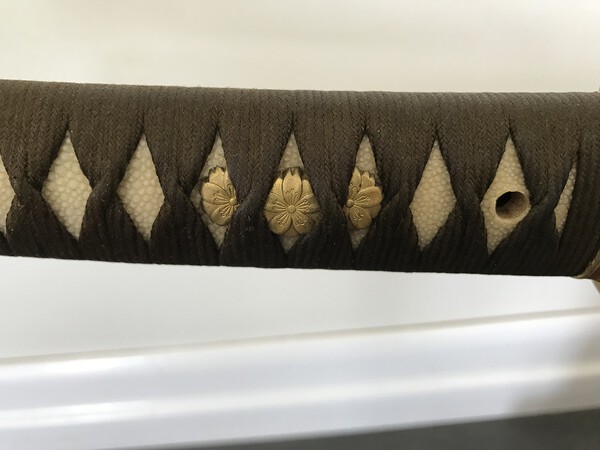
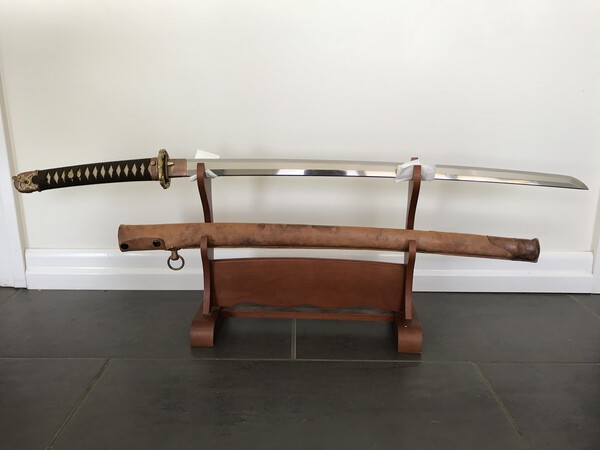
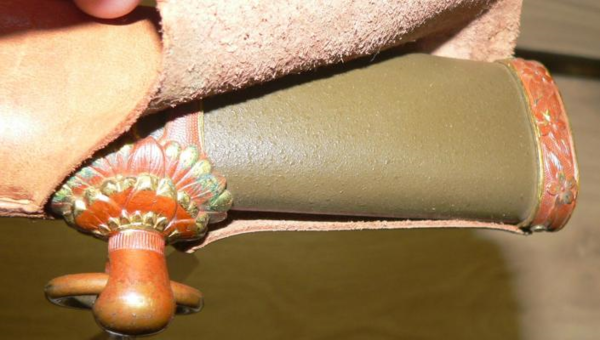
Here you go John. Cheers, Bryce
-
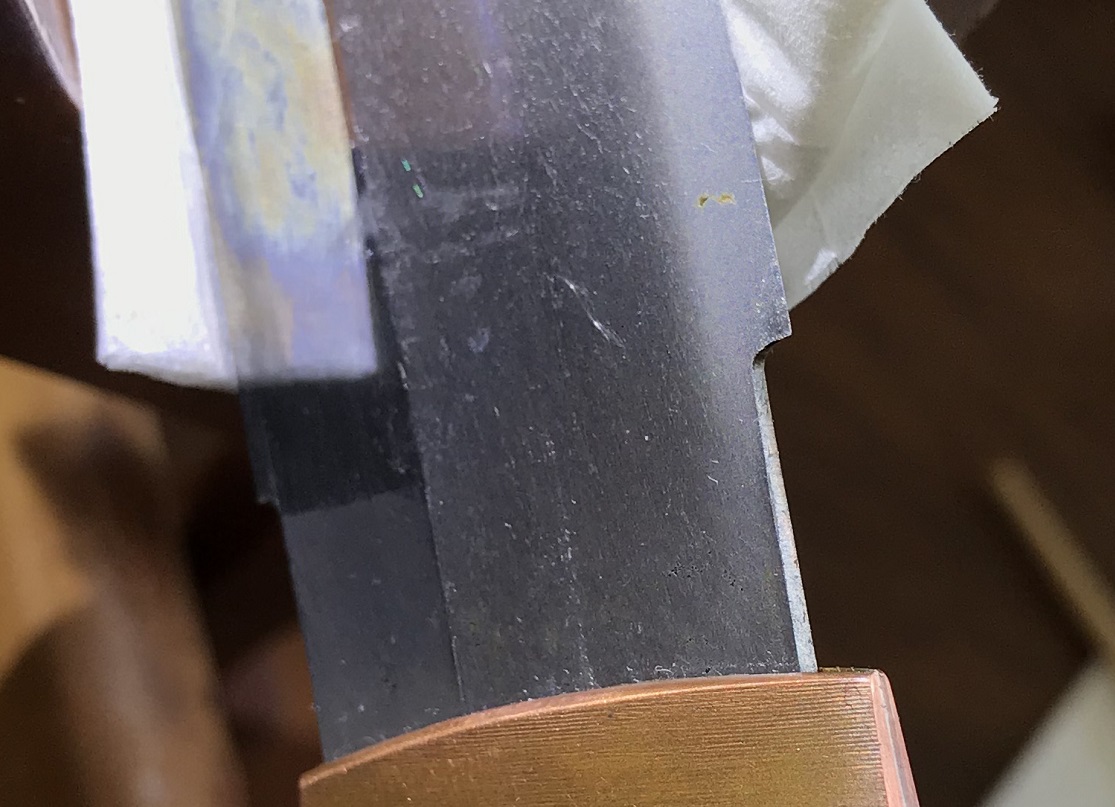
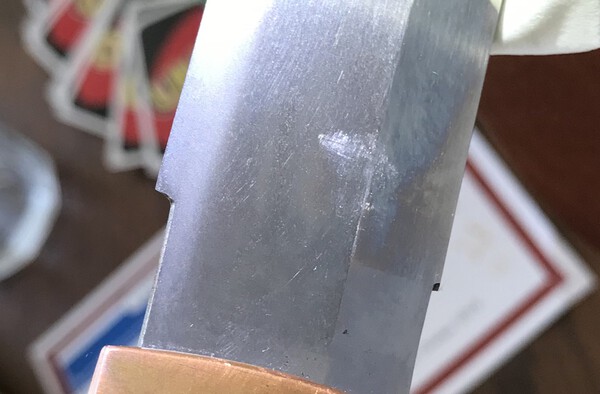
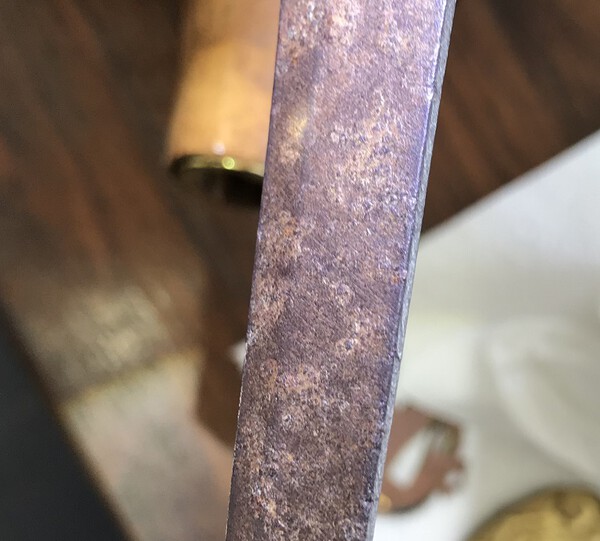
G'day Guys, I had a bit of time recently so was able to move the habaki. The nakago length is 21 cm and the yasurime is sujikai. After your comments about it maybe being Hizen, I did a bit of research and Hizen does sound like a good fit for it. The only possible detractor is the sujikai yasurime, rather than the more common kiri, but there seem to be plenty of examples with sujikai as well. Any more thoughts? Cheers, Bryce

-
Fantastic! Thank you Steve M. Cheers, Bryce
-
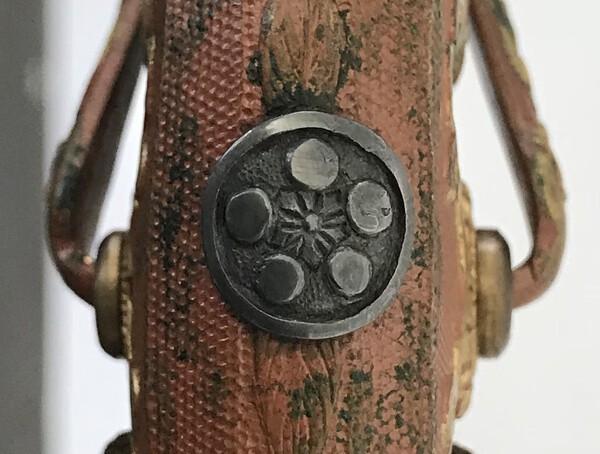
G'day Guys, I am trying to identify this mon on a shin gunto. Found this diagram of the same mon online. Can someone please translate this for me? Cheers, Bryce

-
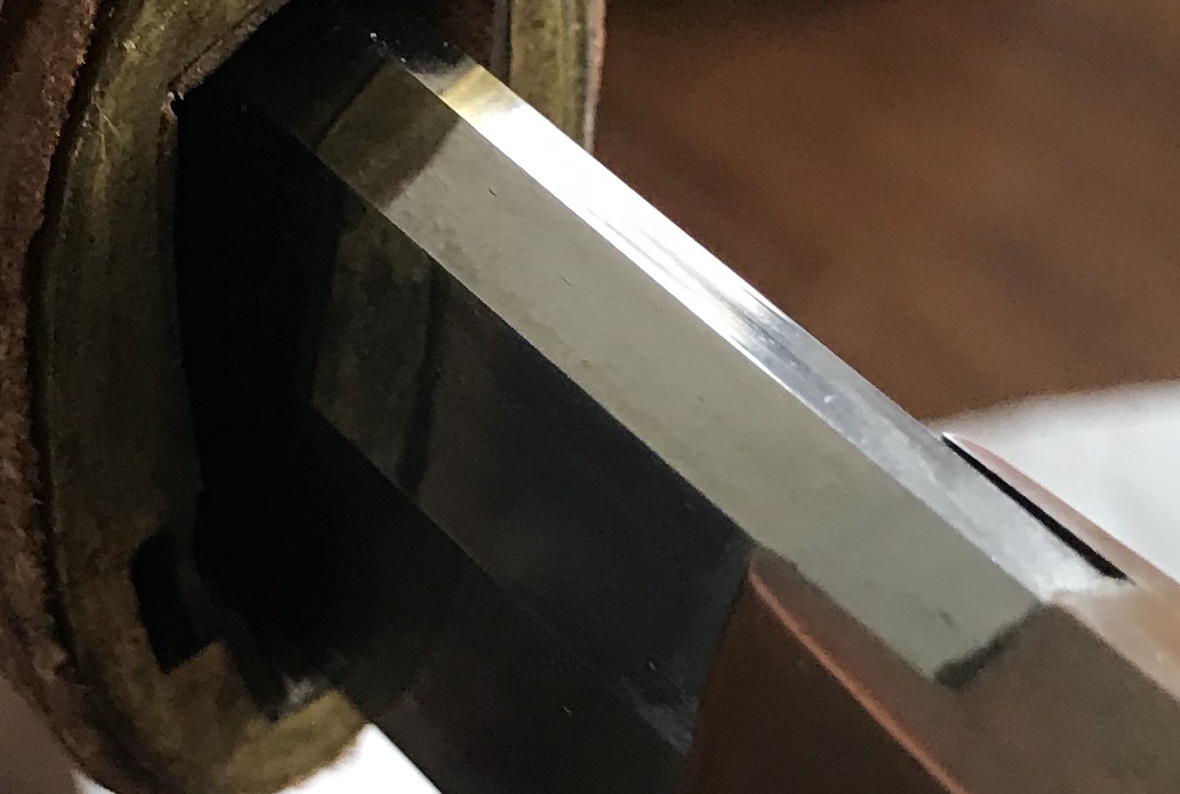
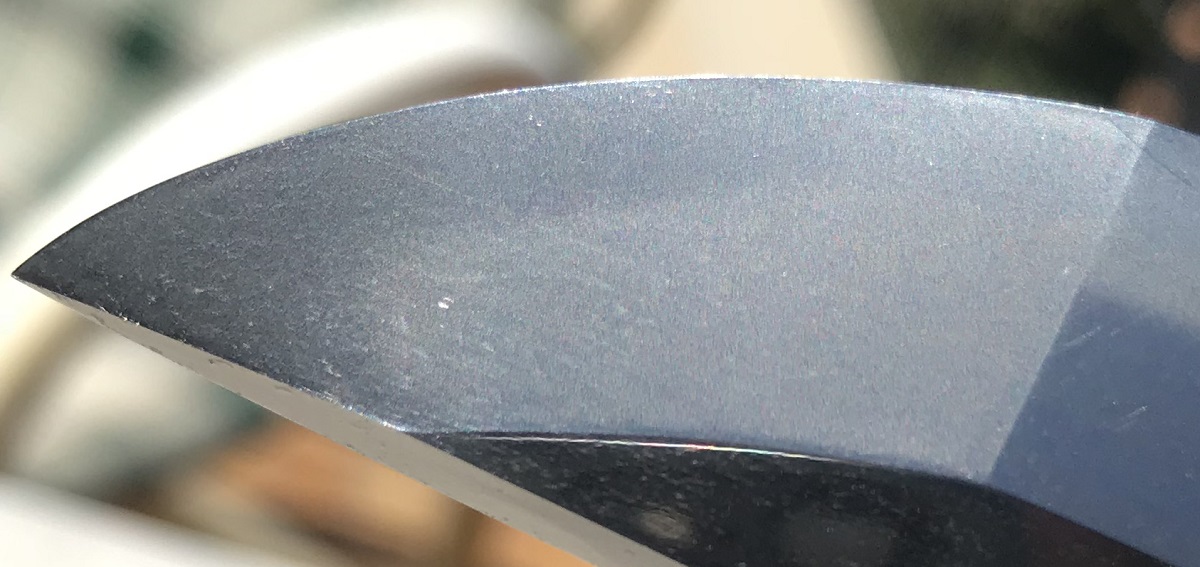
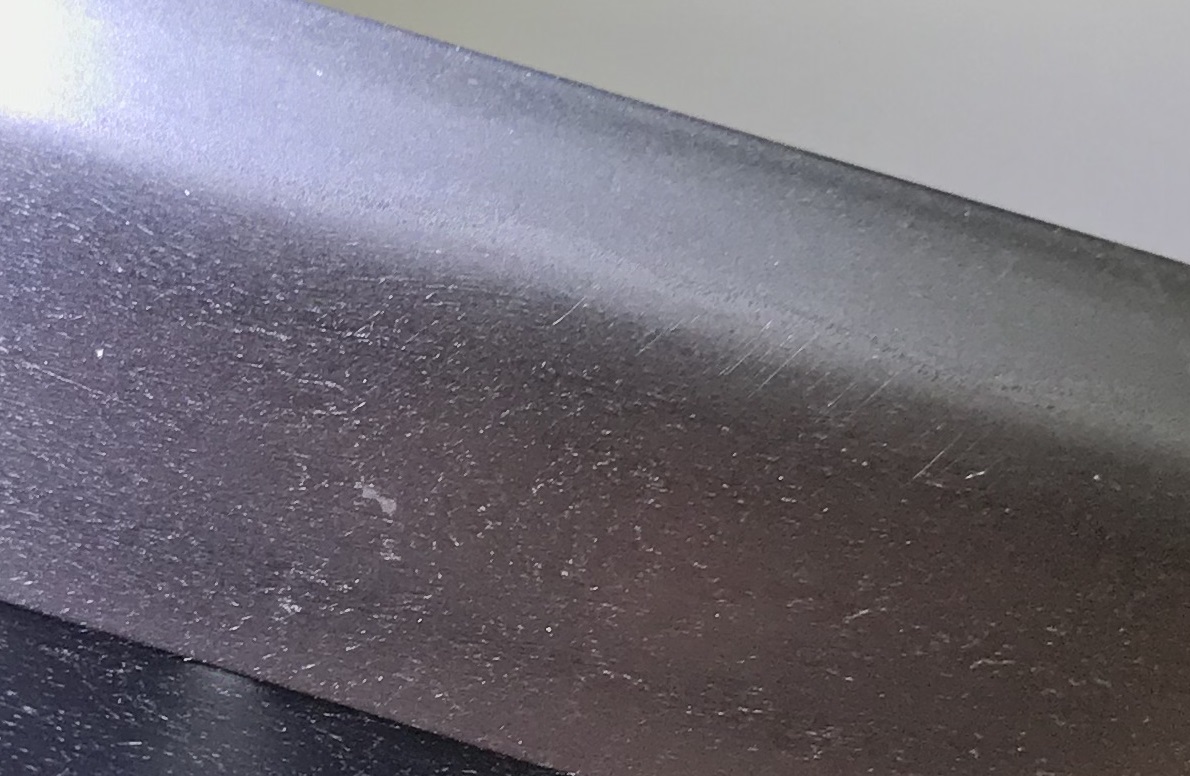
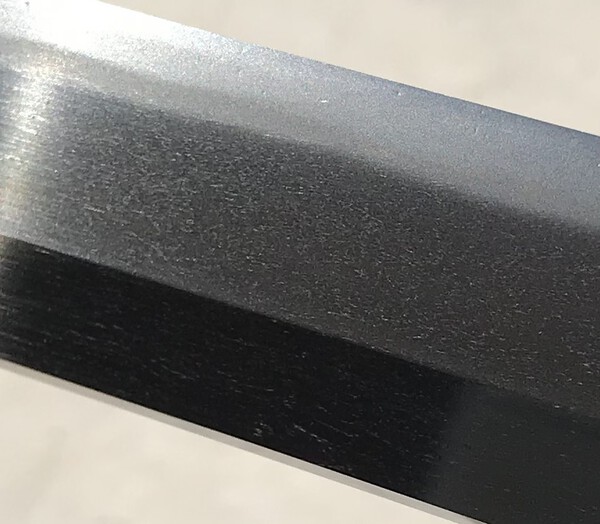
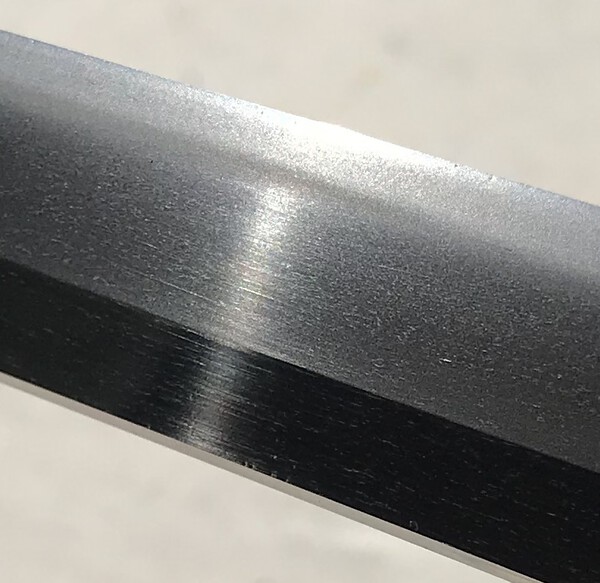
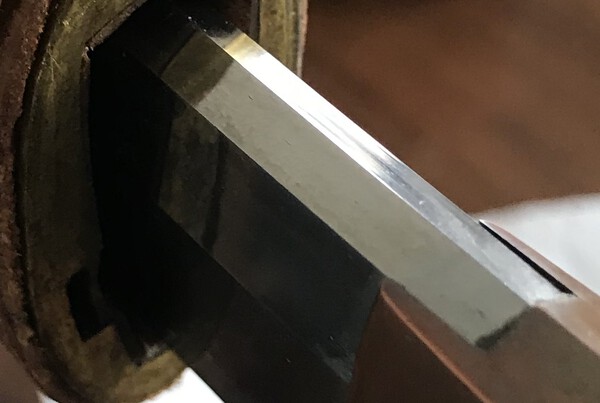
G'day Guys, Here are a few more shots of the hada and mune. Cheers, Bryce
-
G'day Guys, Thanks for your replies. I can't post any photos under the habaki, because I haven't been able to get it off yet! I have tried tapping it with wooden tools and holding it and banging the nakago jiri down on to some wood, but so far it hasn't budged. Haven't tried hot water yet. When I have some time I will give it another go. Cheers, Bryce
-
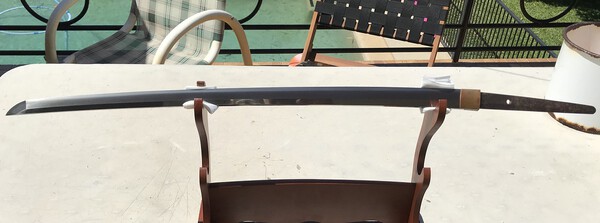
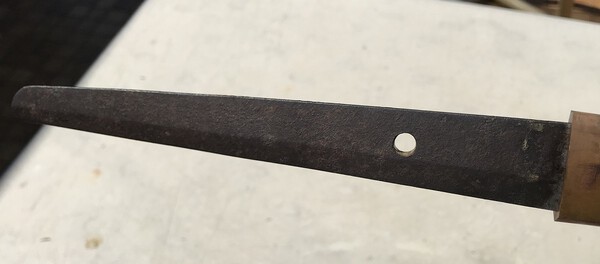
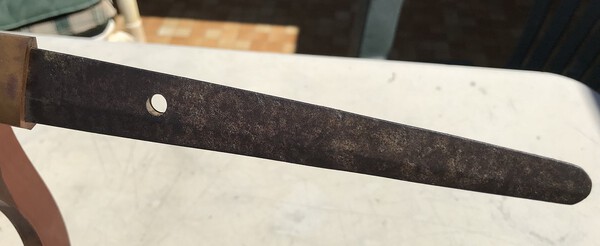
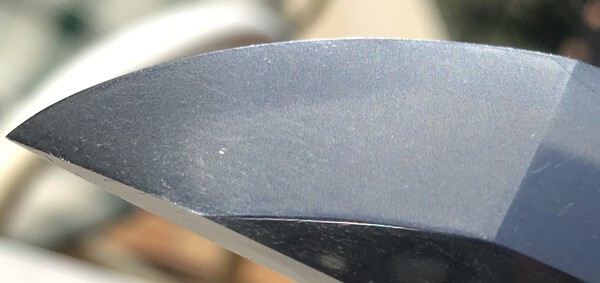
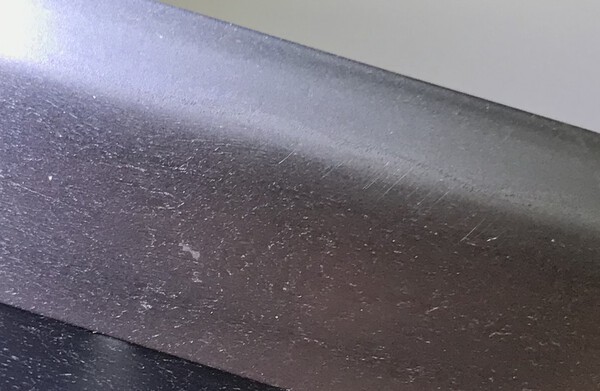
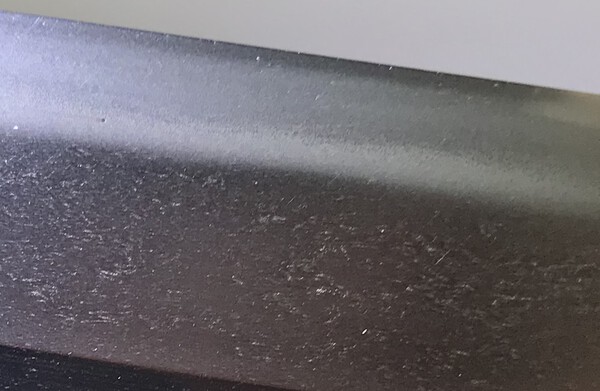
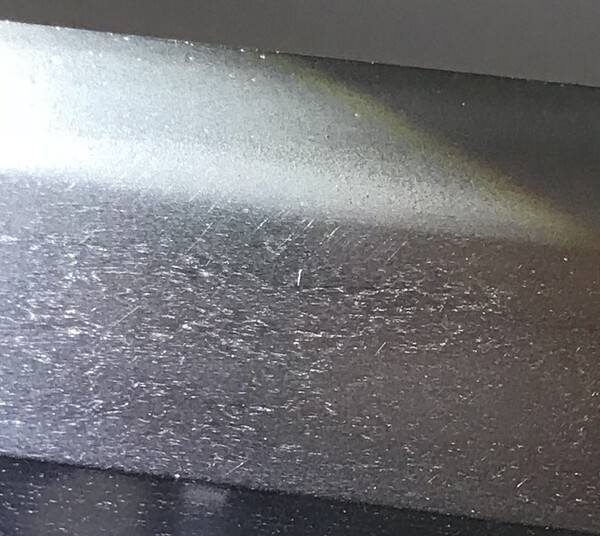
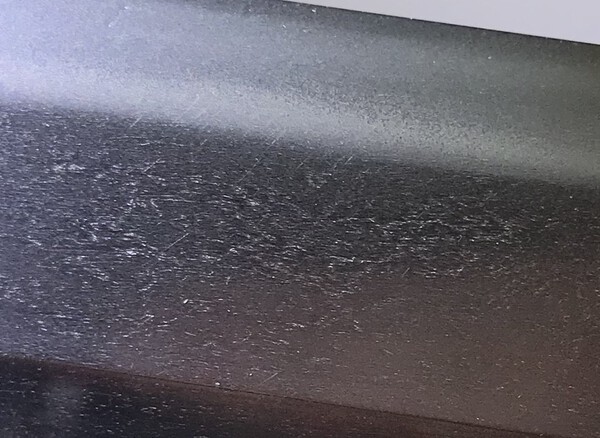
G'day Guys, I have been using my newly acquired and very limited kantei skills to identify an ubu, mumei blade I own. I am thinking it is probably Kanbun Shinto following the Yamashiro tradition. The blade came to me mounted in shin gunto koshirae. Dimensions: Nagasa 69.5cm Sori 1.2cm Motohaba 3.2cm Sakihaba 2.2cm Kasane 0.7cm Kissaki 3.0cm The boshi looks Ko-maru, thin suguha hamon with ko-nie and dense itame/mokume hada tending to masame in the ha (I think). There is abundant ji nie and chikei. I get glimpses of activity in the hamon, but because it is very fine, I can't really see it with the naked eye and it only becomes obvious when I zoom in on photos. I would appreciate any help you guys can give me. Cheers, Bryce

-
G'day Guys, This is my first ever kantei, so feel free to laugh yourselves silly. Kantei 1. Bizen Yokoyama sukenage, shinshinto about 1840. Hada looks to be very tight itame, very long sword, but doesn't look that old. Choji midare hamon. Kantei 2. Yamato shizu, Kamakura about 1340. Itame hada going to masame in the ha. Kantei 3. Yamato tegai Kanenaga, Kamakura about 1300. Itame hada going to masame in the ha. Cheers, Bryce
-
G'day Guys, Thanks for your replies. It seems strange to me that the Japanese army would leave something like saya colour up to the individual. Were most gunto sayas the standard green or brown colour and it was only the special order guntos of high ranking officers or the rich and powerful which were a different colour? Cheers, Bryce