

Steve Waszak
-
Posts
984 -
Joined
-
Last visited
-
Days Won
4
Content Type
Profiles
Forums
Events
Store
Downloads
Gallery
Posts posted by Steve Waszak
-
-
Here is Shodai Hoan tsuba with a yakite-kusarashi (or kusarakashi -- the term is often shortened in usage) finish. The recognizable motif of a kiri-mon may be seen in the lower-left quadrant, and others appear elsewhere on the plate. I believe the effects are achieved via the process I described in my earlier post.
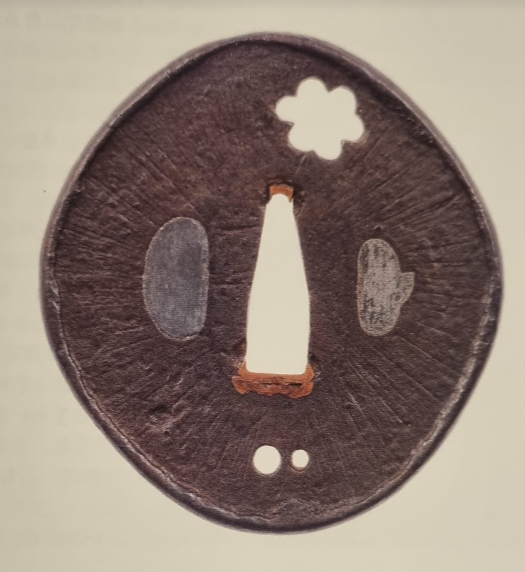
Florian, as far as I know, the creation of amida-yasurime was often accomplished by painstakingly careful application of the chisel onto the plate, at least in the tsuba I'm familiar seeing this presentation in (e.g. some of the Owari province artists and groups, such as Yamakichibei, Toda, Fukui). Attached is a Nidai Yamakichibei tsuba where the amida-yasurime was first chiseled into the plate, and then (perhaps?) there was some application of acid afterwards to soften the effect. This is how it appears to me, anyway.

![IMG_0007_front_v1[1].JPG](https://www.militaria.co.za/nmb/uploads/monthly_2026_05/IMG_0007_front_v11.thumb.JPG.a295007b3b9a3d64f986d363052dd8ec.JPG)
-
 3
3
-
-
Hi Florian,
Interesting topic. My understanding with Hoan tsuba is that he would "paint" on the motif with urushi, and then place the guard in an acid bath so that the surface of the piece around the urushi-covered areas would be affected, leaving the motif raised above the surrounding plate surface. The term often used for his tsuba is "yakite kusarashi," which implies that there is also an application of heat in some manner. However, some argue that attempting to apply heat to the surface of a tsuba to achieve "melty" effects doesn't really work, and that the surfaces that present with melted-looking areas are achieved via the acid treatments, only. I do wonder how much there is in the old ways of metal working in Japan that we do not know about or have access to.
-
1
-
 2
2
-
-
Agree with all: no worries here, John. There will (almost
) always be exceptions to the rule. Nice tsuba. 
-
1
-
-
-
Glad it arrived safely, Matt.
This tsuba perfectly exhibits the Tea aesthetics of Furuta Oribe, the leading Tea Master in Japan in the second half of the Momoyama Period. For such aesthetics, Yamakichibei sword guards (the genuine ones
) are at the top, IMHO.
Remember, Matt: right of first refusal if you decide to part with this piece!

Cheers
-
3
-
 1
1
-
1
-
-
Incredible work, Hoshi, not just in execution, but in conception. Kudos is not a strong enough word. Thank you.
-
I had the privilege to speak with him on the phone on several occasions. Just a really good human being. Down to earth, earnest, non-judgmental, and always presented a positive energy and mindset. Gone far too soon. I will miss him. RIP, amigo.
-
This sword is now SOLD.
-
-
-
-
-
-
-
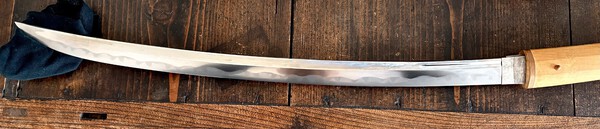
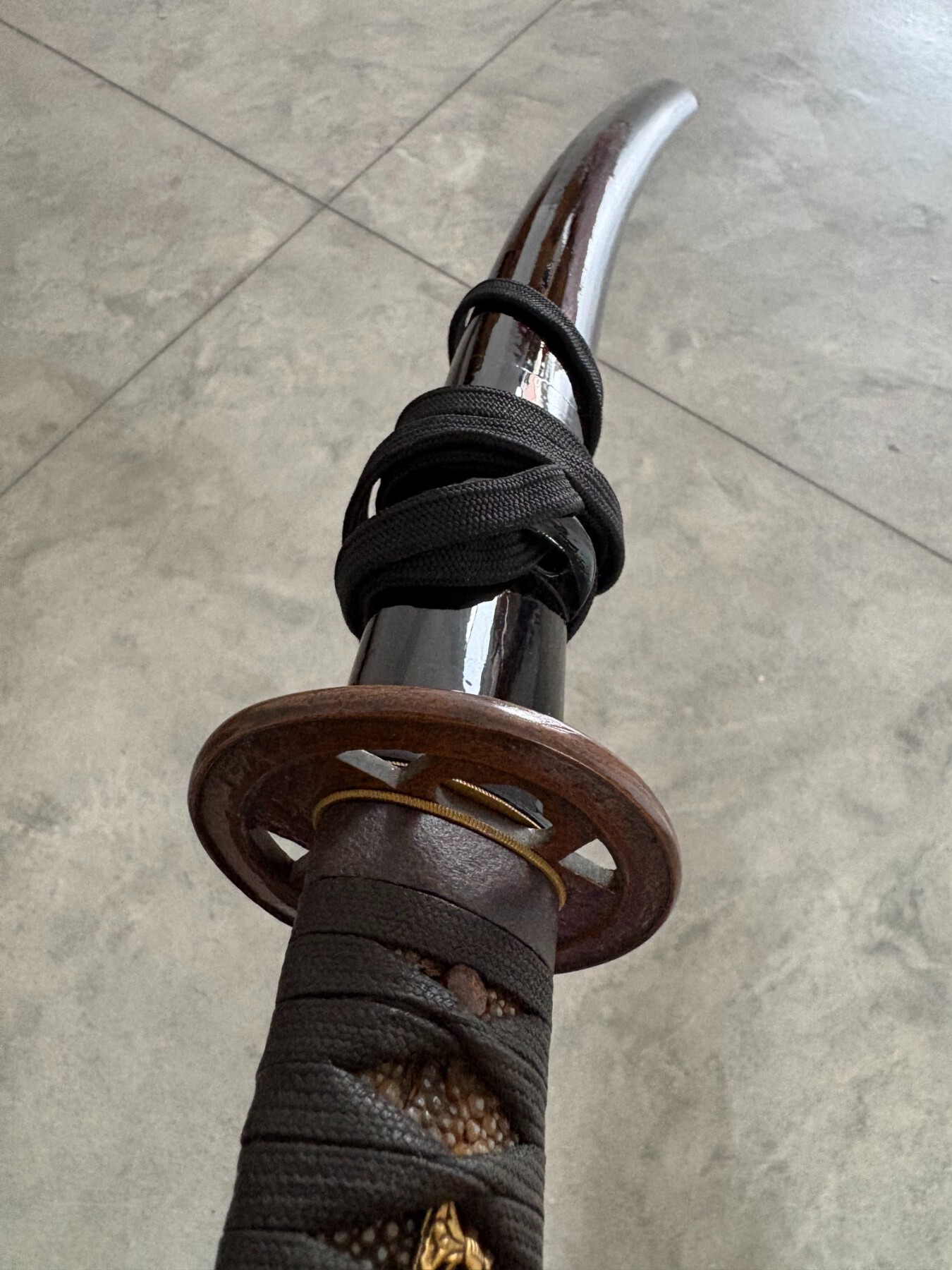
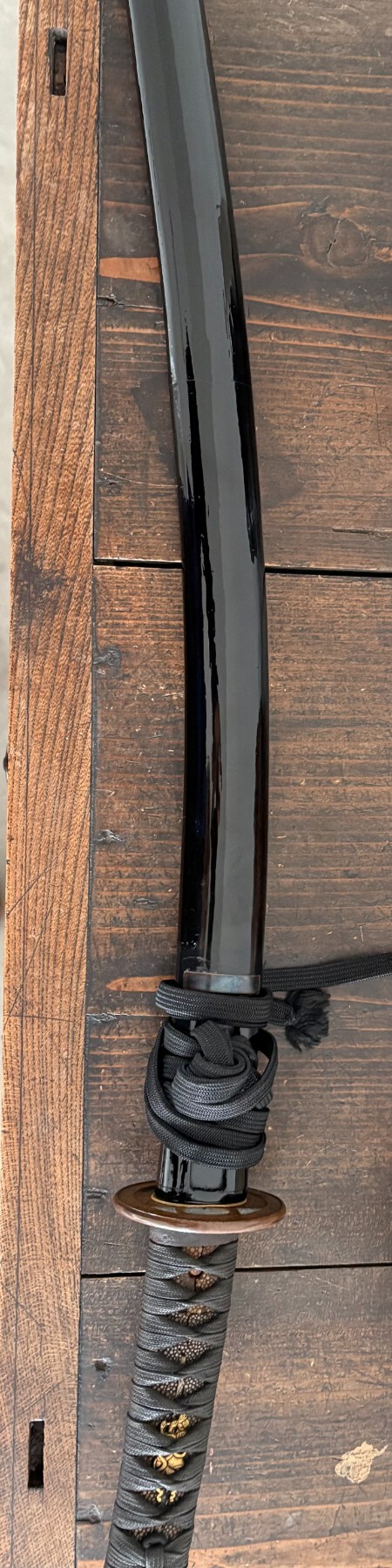
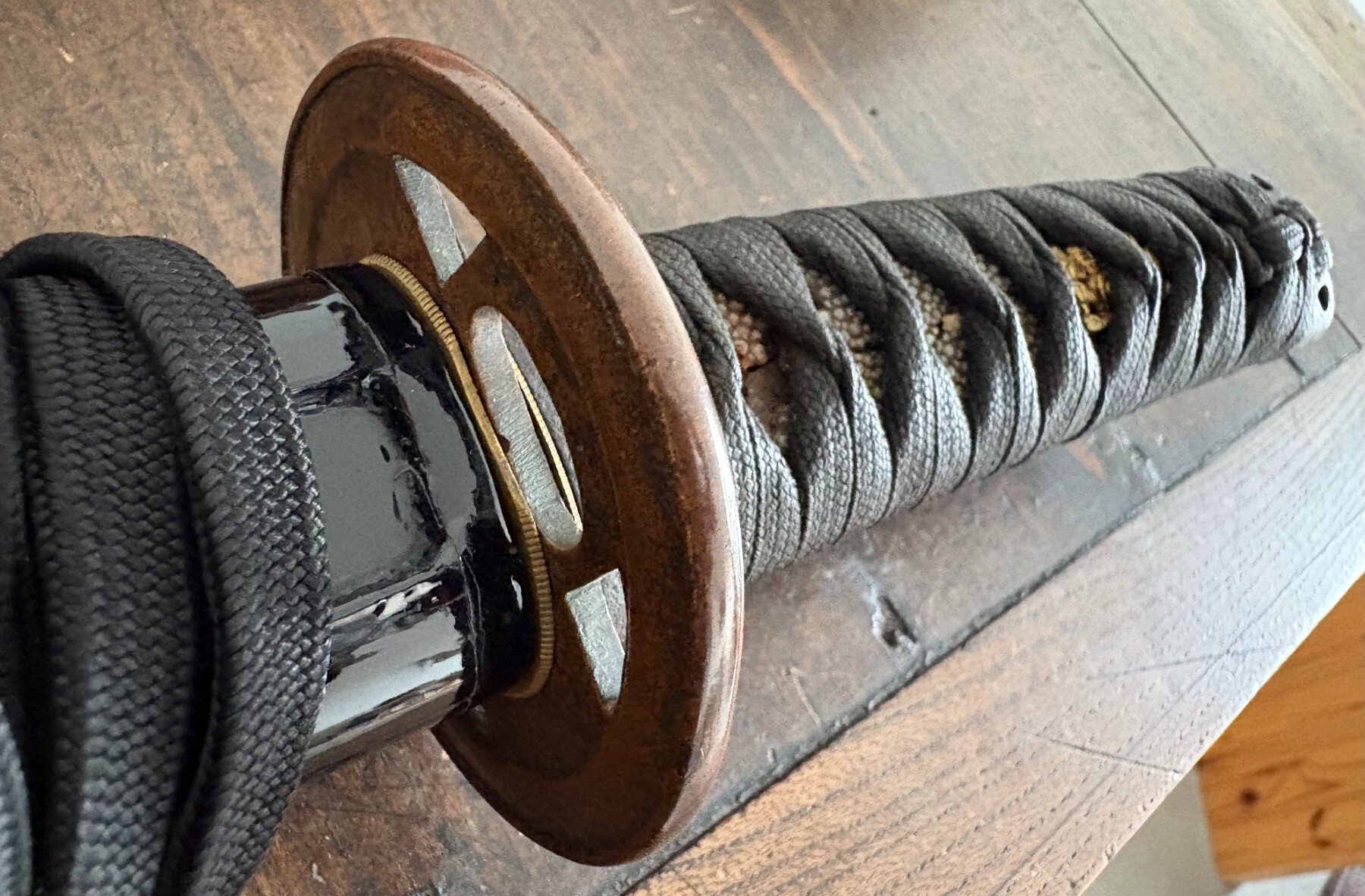
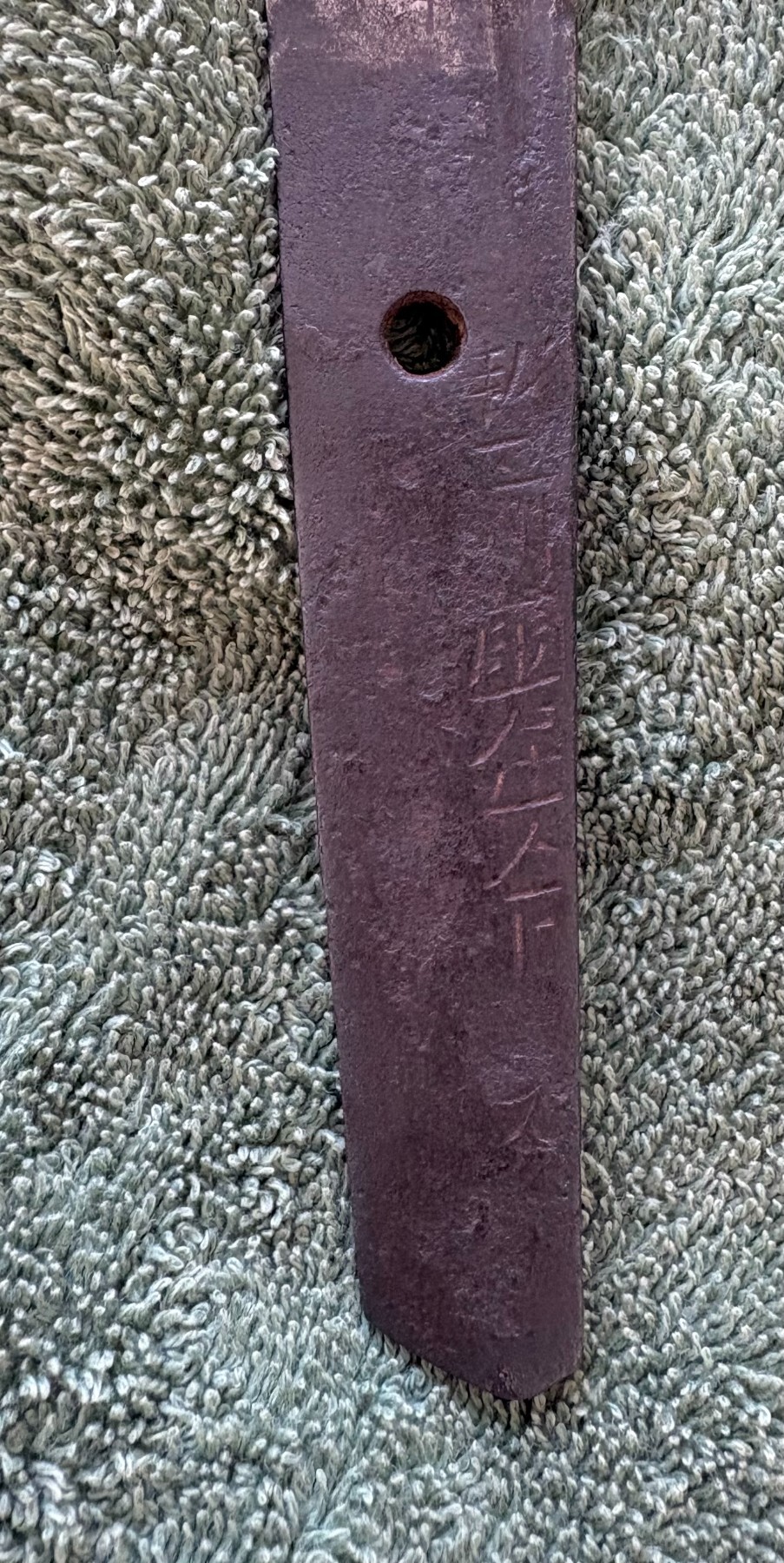
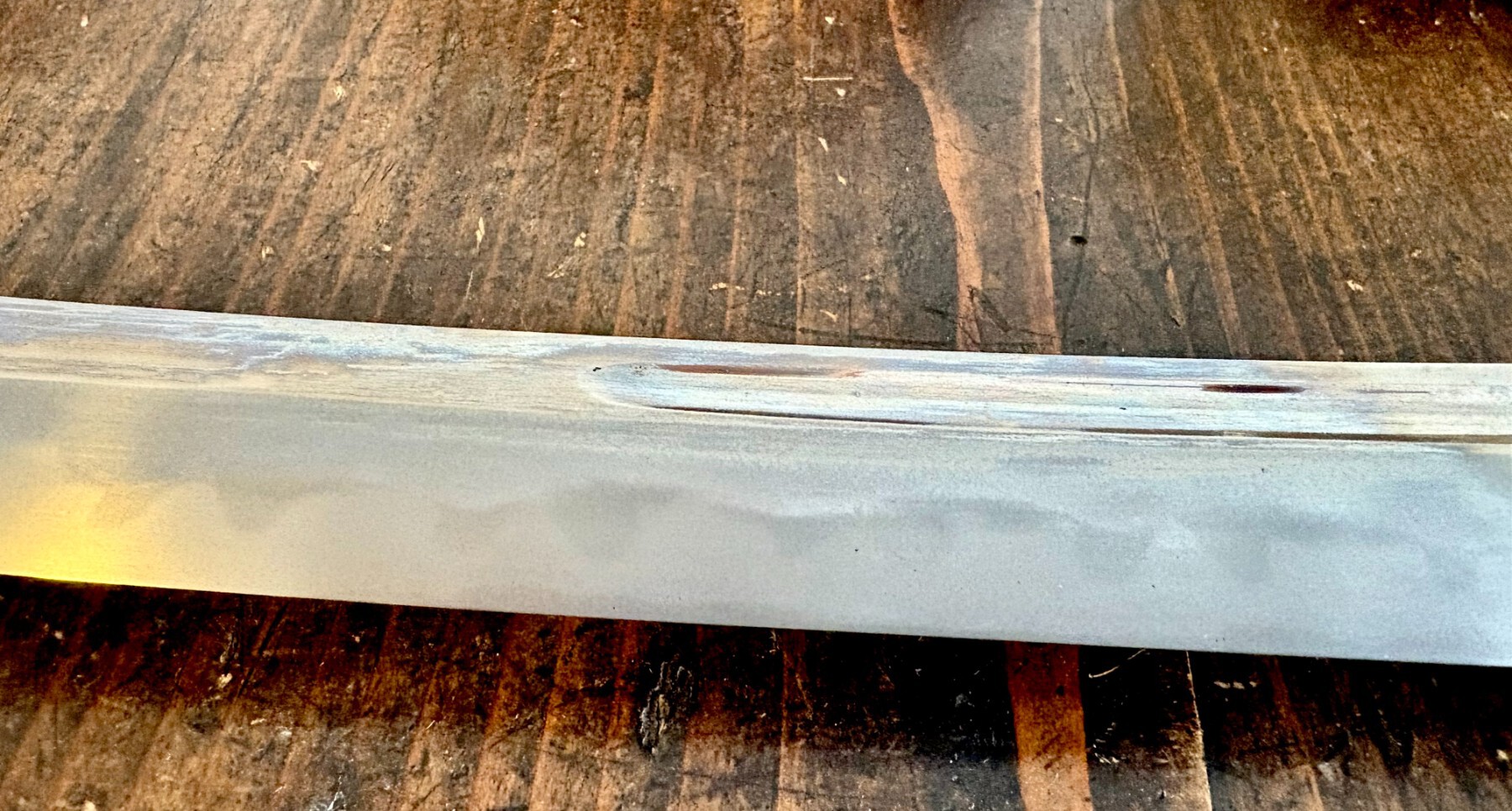
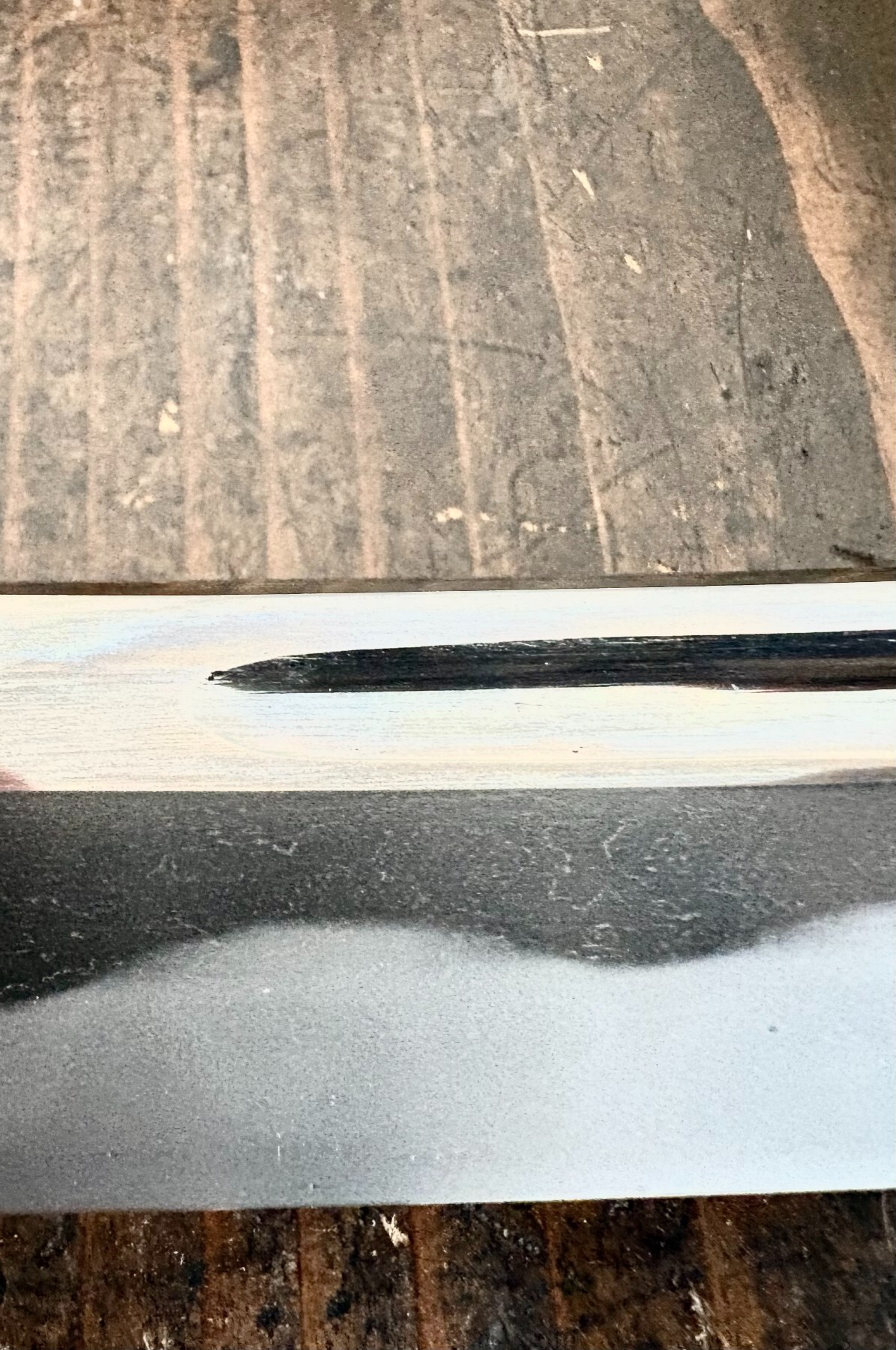
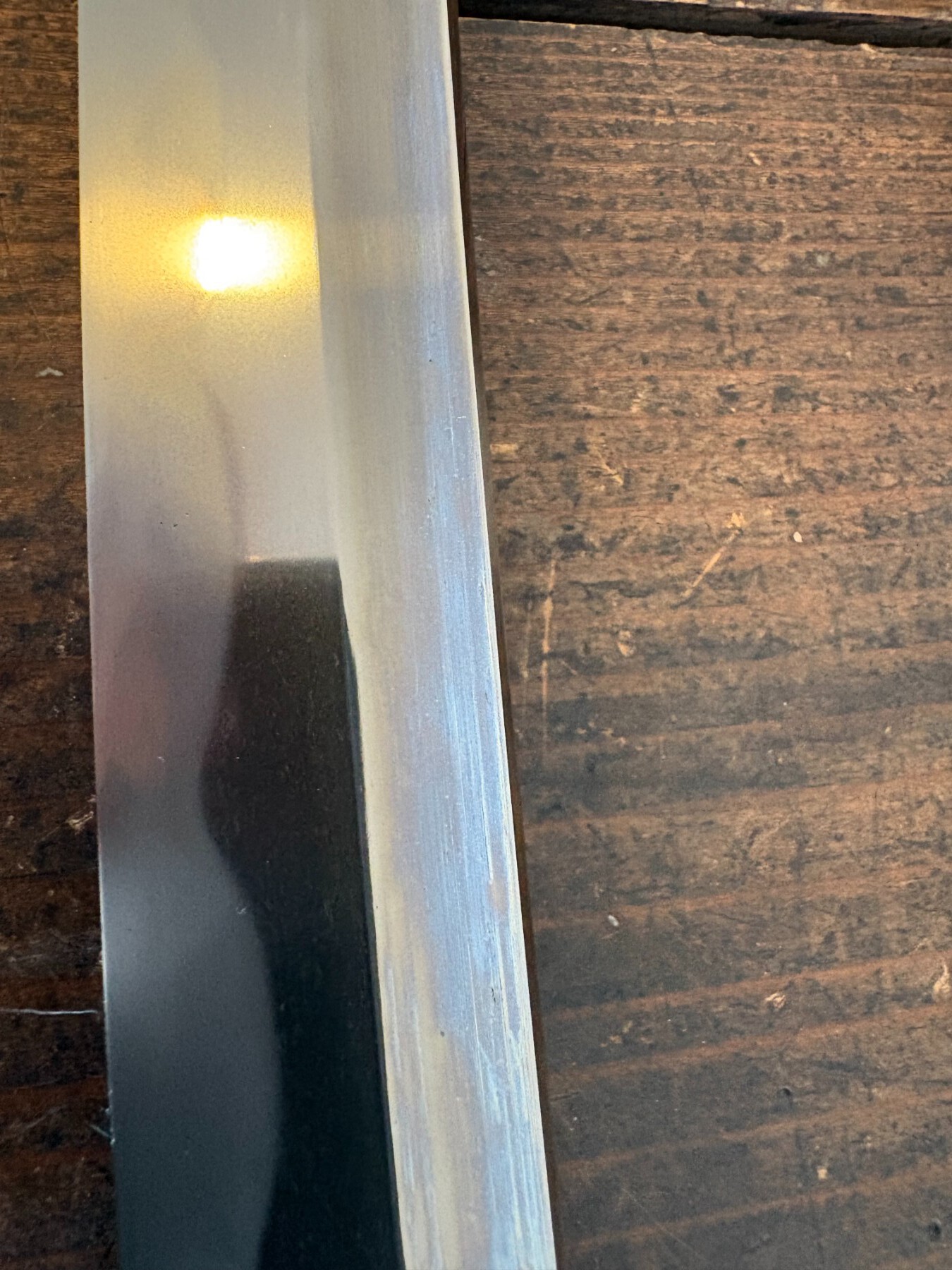
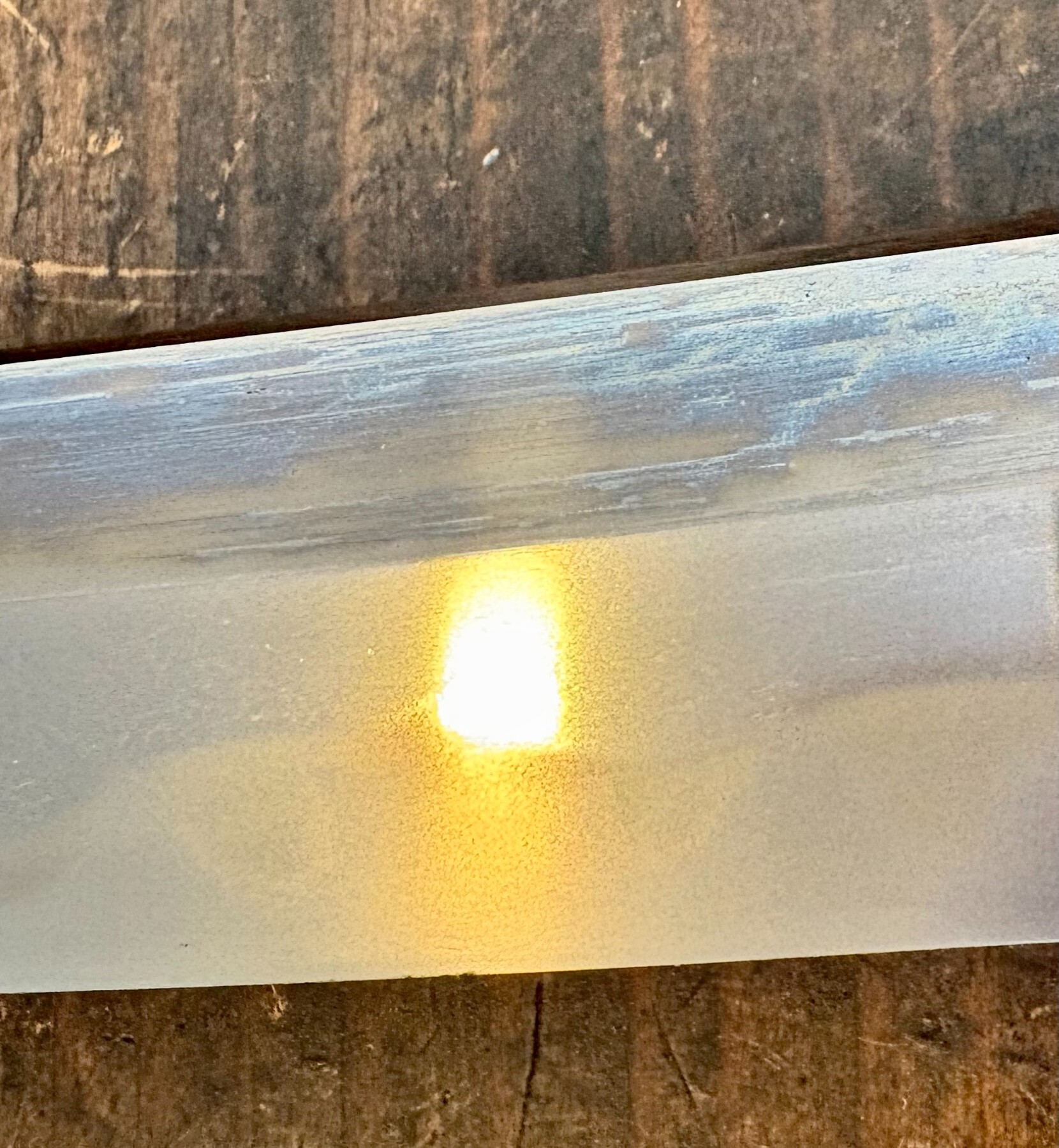
Offered here is a powerful signed Shinto wakizashi by Echizen ju Shimosaka. The blade is in excellent polish (keisho, I believe), and presents with many highlights. There are kirikomi in the mune in a few places, perhaps an indication that this sword saw some active combat. Measuring almost 55cm (21.5 inches) in length and 3cm wide at the machi, the blade is approximately 8mm thick at the munemachi. Two NBTHK papers accompany the sword, both affirming the mei as that of Echizen ju Shimosaka. One is an NBTHK Kicho Token paper, while the other is NBTHK Tokubetsu Kicho Token. While the wakizashi comes in shirasaya, there is also a koshirae, complete with tsunagi. The habaki is silver or silver foil. Priced at SOLD, plus shipping.
.thumb.jpeg.b970e5b3ceaafd55aa22fd4fe087af40.jpeg)
-
1
-
-
Also agree with Curran and Okan. To me, it looks mostly like a late (modern?) work "inspired" by Owari sensibilities. The workmanship and finished look of the piece, though, do not conform to Owari sukashi, Kanayama, or Yagyu, in my opinion.
-
5
-
1
-
-
Hi Grev,
Yes, my copy is signed. I did get the translation along with the original, but on the Itoh's website, they do make it pretty clear that the book is accompanied by an excellent translation, so, I'm not sure how this disconnect for you occurred. Sorry that happened. But get the translation: it's worth it.
-
Really appreciate (and try to share) your approach, Curran. Moving from great to sublime is hard, not only because great pieces are, well, great, but also because it takes so much focus, discipline, and patience. I believe it is worth it, though. In my experience, one great piece is worth ten good ones, and one magnificent masterwork is worth ten great pieces. Quality over quantity, when both cannot be had. Eagerly looking forward to what you'll acquire, Curran, and really pulling for you.
-
1
-
-
Very hard news. More hard news on top of so many recent and major losses in the community. I knew Richard, having seen him at San Francisco sword shows several times, and visiting him at his home in Portland, Oregon, where I saw the elaborateness of his photography set-up. Good guy. He will be greatly missed. RIP, Richard.
-
1
-
1
-
-
I have this book: HIGHLY recommended for anyone with an interest in the Nobuie smiths and the context out of which they arose. This is a lavishly done publication, highly readable, with beautiful black and while life-size images of the pieces illustrated. We desperately need more scholarship on this level in our field. Superb.
-
4
-
-
Looking forward to seeing your site grow, Curran. It also gives me a ready place to "visit" that superb Nidai Yamakichibei tsuba.
-
1
-
-
Email sent.
-
1
-
-
Tsuba are SOLD, pending funds.
-
![IMG_0007_front_v1[1].JPG](https://www.militaria.co.za/nmb/uploads/monthly_2026_05/IMG_0007_front_v11.JPG.54a4ac92ffabeea342b5542984bb9b1a.JPG)


.jpeg.ecf36f639e426cb52ce0d22644779d59.jpeg)
.jpeg.8c1cf4696a8a95ff7f328c3e088cb0f6.jpeg)

.jpeg.8460a2f3f8168d8b00cf1386e19c3f52.jpeg)
.jpeg.cee720e60cfc83e2bb498d3dd3e99baf.jpeg)
.jpeg.cd300316191fee70bbd6038a8fb54eab.jpeg)



.jpeg.edacb33e7b0e1203ce505abccb26f626.jpeg)




.jpeg.cefa688b35f788efca6268d4a3a69049.jpeg)

.jpg.b23c59be84e0a720fab6c3737aa27ae3.jpg)
.jpg.0f75e89c458022f2a30caf5d12b10577.jpg)
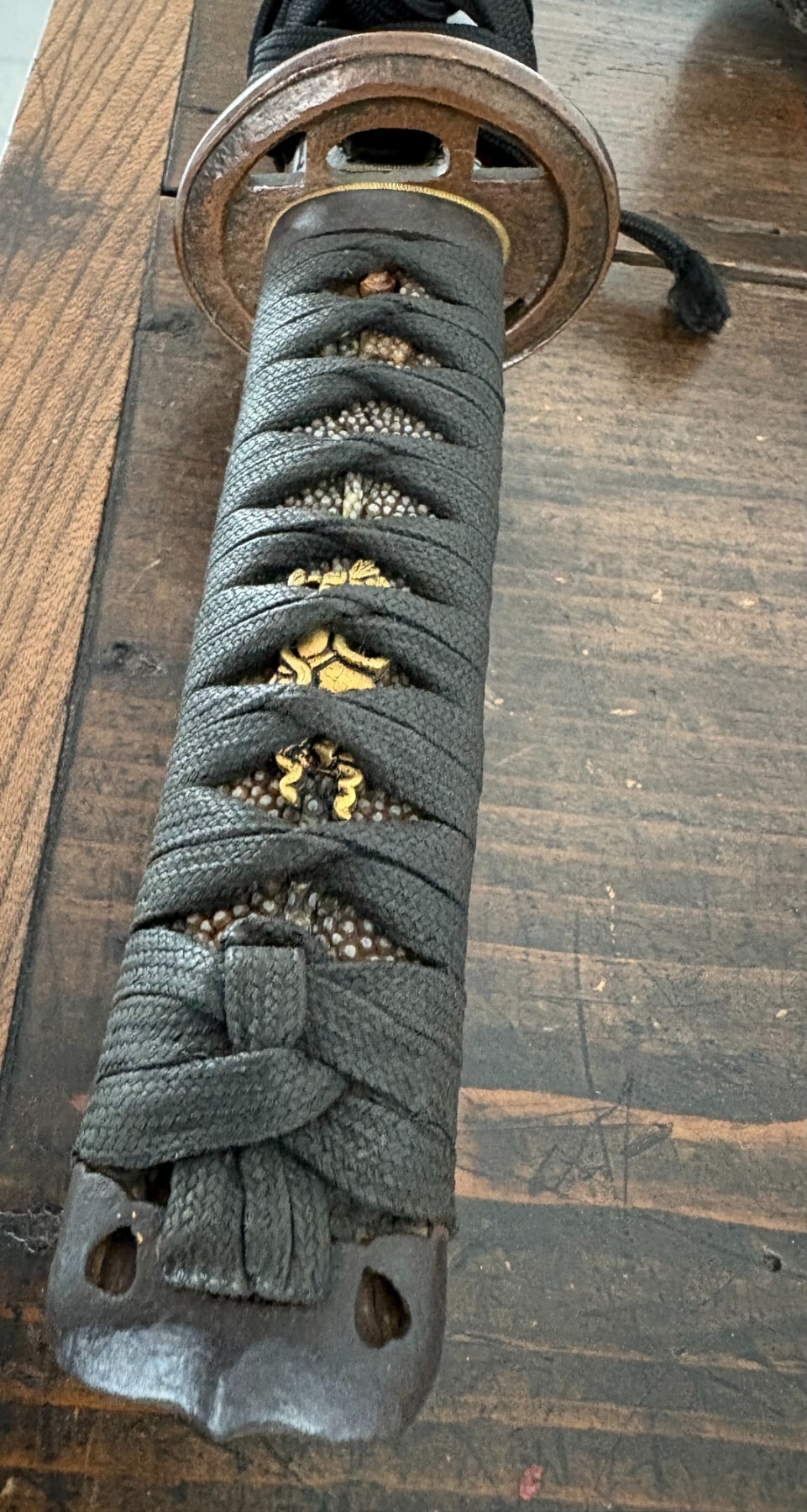
Books and articles cataloguing Koshirae styles, subvariants and regional preferences?
in General Nihonto Related Discussion
Posted
I would emphasize that the book "Uchigatana no Koshirae" -- which is the beautiful hardback and quite large catalogue of the exhibition Jussi mentions above -- is a must-have for anyone with even a passing interest in old (pre-Edo and [mostly[ intact) koshirae. Jussi's point about the social status of the owners of these koshirae is a good one, but seeing so many preserved koshirae at 400+ years of age collected in one publication is special. PM me if you'd be interested in obtaining a copy; I have an extra.