DirkO Posted May 6 Report Posted May 6 This one popped up at Aoi (and Wakeidou before) and I'm having a hard time understanding the Mino papers - I would've thought Kozenji (光善寺)? Compare to papered Kozenji - I think they went Mino on the top one, because of the nanako? 1 Quote
Geraint Posted May 7 Report Posted May 7 Dear Dirk. You may already know these links but they do point to a significant level of interaction/influence between Kozenji, Mino and Kaga works. https://www.legacyswords.com/portfolio/kozenji-school-fuchigashira/ https://www.legacyswords.com/portfolio/owari-kinko-tsuba/ Given the associations then it might indeed be a close call. I would be interested to know hat in particular sparked your question? All the best. 1 Quote
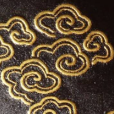
DirkO Posted May 15 Author Report Posted May 15 Dear Geraint, Rather than asking for an explanation I couldn't find, I went down the rabbit hole, researched and asked around and did a little write up - all comments are welcome! ------------------------------------------------------- Among the many attribution problems in tosōgu, the distinction between (late) Mino work and the Kozenji school is a challenging one. At first glance the two can appear remarkably similar. Both employ scrolling karakusa, shakudō grounds, gold hirazōgan, floral ornament, and richly decorative surfaces. Both participate in the broader aesthetic world that emerged from the enormous influence of Mino metalwork during the late Muromachi and Momoyama periods. It is therefore that collectors frequently encounter guards which appear unmistakably “Mino,” only to discover that the NBTHK has papered them to Kozenji. Conversely, certain highly refined Owari-style works still receive broad Mino attribution. The reason for this confusion is that Kozenji did not arise in opposition to Mino aesthetics. Rather, Kozenji emerged through the absorption and reinterpretation of Mino decorative language within an Owari context. The distinction between the two schools therefore lies not primarily in motif vocabulary or isolated techniques, but in something much deeper: the philosophy of ornament, the treatment of surface, and the emotional structure of the design itself. To understand the difference properly, we must move beyond the question of what is depicted and instead examine how the surface behaves. The Mino tradition developed in Mino Province during the Muromachi and Momoyama periods and became one of the most influential decorative metalworking traditions in Japan. Mino artists cultivated an aesthetic built around vigorous carving, energetic takabori, rich metallic embellishment, and deeply animated surfaces. Their work often possesses tremendous physical vitality. Ornament in Mino work feels carved into existence through the force of the chisel itself. Even highly refined examples retain a sense of movement and tactile energy. The plate feels worked, excavated, and alive. This sculptural vitality became enormously influential. Mino aesthetics affected not only later Mino generations but also Gotō traditions, Owari kinko, and even aspects of Kaga metalwork. By the early Edo period, Mino visual language had spread widely beyond its original provincial boundaries. The Kozenji school emerged later in Owari, likely during the early Edo period, after Mino artistic influence had already spread westward through political and cultural realignment under Oda Nobunaga and his successors. Kozenji artists inherited many elements of Mino decorative vocabulary: scrolling vines, asymmetrical compositions, gold accents, and soft-metal ornamentation. Yet they transformed these inherited forms according to a different sensibility. Where Mino prized carving vitality, Kozenji increasingly emphasized decorative integration. Where Mino celebrated sculptural movement, Kozenji pursued ornamental coherence and surface harmony. This difference may be summarized very simply: In Mino work, the carving creates the ornament. In Kozenji work, the ornament organizes the surface. That distinction explains an extraordinary number of attribution decisions. In Mino work the eye is drawn first to the carving itself. The relief possesses physical authority. Lines vary with the movement of the chisel, shadows accumulate in compressed recesses, and vegetal forms seem to push outward from the plate. Even when gold or silver decoration is present, these additions generally reinforce the sculptural structure rather than flatten it into surface pattern. The ornament feels organic and energetic. One senses not only design, but physical action. This is particularly evident in Mino karakusa. The vines tend to be deeply cut, asymmetrical, and rhythmically compressed. They twist through the surface with muscular energy. Negative space often feels crowded and pressurized. Around the hitsu-ana and seppadai, the ornament seems to gather force inwardly, creating visual tension and density. The resulting atmosphere is one of Momoyama vitality: forceful, tactile, and animated. Kozenji adopts much of this same vocabulary but alters its function. The karakusa remains recognizably Mino-derived, yet its behavior changes fundamentally. The vines become more evenly distributed, smoother in movement, and more consciously decorative. Rather than appearing as sculptural vegetation carved into the iron, they begin to resemble ornamental patterning spread across a unified surface. The rhythm becomes calmer and more controlled. Space is allowed to breathe. This transformation is central to understanding Kozenji attribution. Kozenji surfaces often possess what might be called a textile sensibility. The entire guard behaves as a coordinated decorative field. Individual motifs no longer dominate through sheer carving energy; instead they participate in an integrated ornamental structure. Hirazōgan becomes especially important in this context. In Mino work, gold inlay usually accents relief carving. In Kozenji, however, flat inlay frequently becomes structurally important to the design itself. Gold highlights distribute visual rhythm across the plate, contributing to balance and ornamental unity rather than simply emphasizing sculptural depth. The emotional atmosphere changes accordingly. Where Mino often feels vigorous and physically charged, Kozenji tends toward refinement, restraint, and composure. One might say that Mino preserves something of the energetic instability of the Momoyama period, whereas Kozenji reflects the cultivated decorative balance of the Edo period. These distinctions become especially important in modern attribution practice, particularly within the NBTHK. In practice, the NBTHK tends to separate Kozenji from late Mino not by isolated motifs but by overall artistic behavior. The central question is often whether the piece fundamentally behaves like a Mino carving object or like an Owari decorative object influenced by Mino. If carving dominates the visual experience—if relief retains sculptural authority and the surface feels physically excavated—the attribution tends to move toward Mino. If, however, the ornament behaves as a coordinated surface system, with controlled spacing, decorative integration, and ornamental calm, the attribution tends to move toward Kozenji. This is why collectors are sometimes surprised by papers. Many collectors naturally classify by subject matter: karakusa, shakudō, gold decoration, and scrolling vines immediately suggest “Mino.” Yet the NBTHK often evaluates according to broader aesthetic logic. Two guards may share almost identical motifs while embodying entirely different surface philosophies. The two example guards illustrate this distinction well: The first guard, papered to Mino, retains strong sculptural vitality. The dense karakusa appears deeply worked into the plate, and the ornament generates considerable visual pressure. The gold mon serve primarily as accents within a carving-dominated structure. The eye responds first to the physical movement of the carving itself. The surface feels excavated and tactile. Even within its refinement, the guard preserves a distinctly Momoyama-derived energy. The second guard, papered to Kozenji, employs similar decorative vocabulary yet behaves very differently. The karakusa is more evenly distributed and rhythmically organized. The hō-ō bird participates in the ornamental field rather than emerging as a dramatically sculptural centerpiece. The entire plate possesses greater decorative unity and calm. Here the eye reads not carving force, but ornamental coordination. The surface feels designed rather than excavated. The lesson is that Kozenji did not reject Mino aesthetics; it refined and reorganized them. The two traditions exist along a continuum rather than within rigidly separate categories. Indeed, the problem becomes even more difficult because late Edo Mino work itself increasingly adopted decorative refinement. As a result, there are many guards that legitimately inhabit a grey zone between late Mino, Kozenji, Kaga-influenced Owari work, and broader Owari kinko traditions. Ultimately, the distinction between Mino and Kozenji is not simply technical. It is philosophical. Mino expresses ornament through carving energy and sculptural vitality. Kozenji expresses ornament through surface integration and decorative order. Both traditions share a common visual ancestry, but they embody fundamentally different ideas about how ornament should inhabit the plate. TL;DR Summary: Mino and Kozenji tsuba can look very similar because both use decorative motifs like karakusa vines, gold inlay, and rich surface ornamentation. However, the key difference is not what is depicted, but how the surface is treated. Mino work is driven by carving energy. The design feels physically excavated, dynamic, and sculptural. Ornament emerges from deep, forceful carving, creating a vivid, almost “alive” surface. Kozenji work reinterprets this vocabulary into a more controlled, decorative system. The surface feels calmer, more unified, and patterned—like an integrated design rather than carved action. In short: Mino = ornament created by carving force and tactile energy Kozenji = ornament arranged as a balanced surface design Because Kozenji absorbed Mino aesthetics rather than rejecting them, many pieces sit in a grey zone, which is why attribution (including NBTHK papers) can be difficult and sometimes surprising. 3 3 Quote

Recommended Posts
Join the conversation
You can post now and register later. If you have an account, sign in now to post with your account.