DENihontocollector
-
Posts
75 -
Joined
-
Last visited
Content Type
Profiles
Forums
Events
Store
Downloads
Gallery
Everything posted by DENihontocollector
-
 Thank you so much for the warm words! I absolutely share your feeling — there’s always so much to learn, and this thread has already taught me more than I expected when I first posted it. I’m definitely planning to stay active here; the depth of knowledge and the openness of the members have been really motivating.
 -
Thank you – I really believe that learning and gaining deeper understanding can only happen if we remain open to constructive discussion. The exchange of different perspectives here has been incredibly valuable for me Hmm, I wanted to edit my previous post because I accidentally quoted myself :D Unfortunately, there’s no option to delete posts here, so sorry for the double post!
-
Thank you – I really believe that learning and gaining deeper understanding can only happen if we remain open to constructive discussion. The exchange of different perspectives here has been incredibly valuable for me
-
Hi Sebuh, Thank you so much for taking the time to comment – I really appreciate you jumping in and sharing your thoughts. It means a lot to hear encouraging words, especially since I’m still relatively new to collecting. Your last piece of advice – not to get too caught up in the technicalities and to simply enjoy what I have – is something I will definitely keep in mind. It’s easy to get lost in details, but you’re right: at the end of the day, my Norinaga is a wonderful blade and I should enjoy it as such. You are always welcome Thanks again for your kind words! Best regards, Dennis
-
Hi Uwe, I wanted to briefly chime in on the ongoing discussion about the generational attribution of Norinaga. I agree with many here — the distinction between Shodai and Nidai seems less crucial nowadays, and the craftsmanship (deki) is ultimately what matters most. @Uwe: I found the lineage diagram you posted particularly fascinating in this context. It clearly presents Norinaga as the founder of the Shikkake school and places his main period of activity roughly between 1311–1331 (late Kamakura to early Gentoku era). This timeframe aligns quite well with the late Kamakura dating that the NBTHK assigned to my blade. Later generations of Norinaga, according to the diagram, appear only during the Jōwa and Ōei eras (after 1340) — notably later than the period attributed to my sword. Of course, this isn’t definitive proof, and as Markus highlighted with Tanobe-sensei’s notes, generational boundaries can be fluid or even questionable. Still, I think this chart nicely illustrates why many historical references lean toward Shodai for late Kamakura-period blades.
-
Hi Jacques, I fully understand what you mean: the given nengo usually indicates the peak activity period, rather than the entire working lifespan of a smith. In this specific case, though, what led me (and some others here) to lean toward Shodai is that the NBTHK attribution clearly places the blade in the late Kamakura period. As far as I’ve seen, most research – including Tanobe-sensei’s notes and Jussi’s compiled data – aligns the Nidai’s activity more solidly with Nanbokuchō to early Muromachi, so the overlap seems minimal. That said, your point about how these attributions can shift as scholarship evolves is well taken – it’s exactly what makes studying Yamato so fascinating.
-
Hi Lewis, Thank you for pointing this out – that’s really interesting to me. It’s reassuring to hear that the typical Norinaga style is suguha mixed with ko‑gunome, which seems to fit my blade very well. The Osafune‑influenced example you mentioned makes a great contrast and helps me better understand where my sword sits stylistically within Norinaga’s work.
-
Hi Mushin, Thank you very much for sharing your thoughts and for posting about your Norinaga tanto – congratulations on acquiring such a beautiful piece! I really enjoyed reading your impressions of it, and I think it’s a wonderful example in its own right. What you describe about your own experience is almost exactly the dilemma I’ve been facing with my katana: trying to determine whether it’s Shodai or Nidai. The more I read and hear from others (including your post), the clearer it becomes to me that this distinction may not be as important as I initially thought. Your point about focusing on the craftsmanship and enjoying the blade for what it is really resonates with me. It’s a great reminder not to get lost in the generational debate and instead appreciate the sword itself. Thanks again for sharing your perspective – it’s both calming and motivating as I continue studying my own piece. Best regards, Dennis
-
Hi Hoshi, Thanks a lot for your thoughtful reply – I really appreciate the perspective you’ve shared here. Your point about Occam’s razor and the fluidity between Norinaga generations makes a lot of sense, especially when looking at the overall corpus. I agree that, from both a study and market standpoint, focusing on the deki and how the blade sits within the broader Yamato tradition is more important than worrying about Shodai vs. Nidai. Still, it’s been really interesting to explore the historical context behind the name usage and signatures. Thanks again for taking the time – posts like yours really add depth to the discussion. Best, Dennis
-
Hi Jussi, Thank you so much for taking the time to share your detailed observations and personal impressions – especially with the examples you’ve personally seen in Japan. It’s extremely valuable to get insights from someone who has studied these pieces in person rather than only through books or photos. I really appreciate the point you made about Norinaga essentially being the only recognized smith of the Shikkake school and how this impacts attributions. Your mention of the “bucket attribution” is something I’ve come across in discussions before, and it’s helpful to hear this confirmed by someone who has handled so many reference works. Regarding my own blade, I find it fascinating to compare it to the Jūyō Bunkazai and Tokubetsu Jūyō examples you referenced. Even though opinions on Norinaga’s aesthetics may vary, the rarity of works that combine Jūyō certification, strong Yamato traits, and complete koshirae with signed fittings is something I personally value highly. Your breakdown of the dated works (1319, 1338, 1340) and the broader context of the generations also helps frame my research into whether this piece aligns more closely with early Shodai output. Combined with the late Kamakura attribution by NBTHK, it’s a direction I’ll continue to explore. Thank you again for adding so much depth to this thread – posts like yours elevate the discussion enormously. Best regards, Dennis
-
Hi Markus, Thank you so much for taking the time to share this detailed insight – it really helps put the whole discussion into perspective. Your explanation about the Boston tantō and the signature conventions is fascinating, especially the point that traditional distinctions between Shodai and Nidai may need to be reconsidered. In the context of my blade, which is mumei but dated late Kamakura by NBTHK Jūyō papers, this information adds a lot of nuance. It seems that, regardless of whether we label it Shodai or Nidai, the workmanship clearly belongs to Norinaga’s high-level output within the Shikkake school – and that’s ultimately what matters most to me. I’ll definitely revisit the sources you mentioned and compare them with my own oshigata and setsumei. If you have any additional pointers on what characteristics to focus on when studying these works, I’d be very grateful. Many thanks again for your time and expertise – it’s incredibly valuable to have your perspective in this thread. Best regards, Dennis
-
Hi Rivkin, thank you for pointing this out – I completely agree with your observations regarding the chikei and the bright jigane. It’s encouraging to hear that these elements are seen as indicators of higher quality, especially since they’re not particularly common in Shikkake work. I also share your sentiment about the brevity of both the setsumei and the sayagaki. It’s a bit unfortunate that neither goes into much descriptive detail or praise. As mentioned earlier in the thread, the sayagaki was written some time before the Jūyō shinsa, which probably explains its rather cautious tone. Thanks again for taking the time to analyze these aspects – it really helps me see my blade from new perspectives. Best regards, Dennis
-
Thank you very much for this clarification – that makes a lot of sense. I also found it interesting to learn that Tanobe-sensei’s sayagaki predates the Jūyō shinsa and is therefore more reserved. Your explanation about why such inscriptions are often cautious beforehand (and sometimes more elaborate afterwards) really helps to put things into perspective. I appreciate the confirmation regarding the setsumei as well. I will definitely continue studying the blade in detail – and I’m already enjoying the process a lot. Thanks again for your kind words and for sharing your knowledge.
-
Hi Hoshi, thank you very much for sharing your insights and for attaching the Tokuju example – that comparison is incredibly helpful. Regarding the generational attribution: from what I’ve learned so far (and also confirmed in Japan at the time this sword was acquired), when neither the Jūyō setsumei nor Tanobe-sensei’s sayagaki specifies “second generation,” the attribution is by default understood to be Norinaga Shodai. This aligns with what you also described – only signed blades with specific nijimei or “Shikkake” features are attributed to Norinaga II. Additionally, when comparing the oshigata of my blade with the examples you posted, I see strong similarities to the first generation – especially in the gunome groupings and the overall balance of the nioiguchi. This was also pointed out during earlier evaluations. I’d be very interested in your view: could these stylistic variations (compared to the archetypal tight gunome) indicate an early or late phase within Shodai’s career? Or do you think they simply reflect a broader stylistic spectrum within his work? Thanks again for taking the time to contribute such valuable information. Best regards, Dennis
-
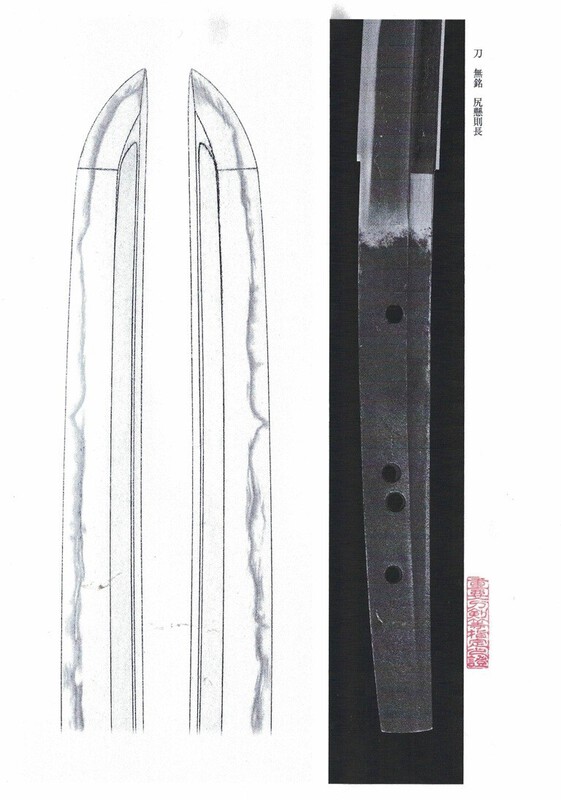
Hi everyone, I wanted to share an additional insight that might help clarify the question about whether this blade should be considered Norinaga Shodai or Nidai. I recently spoke with the previous owner of the sword, who originally acquired it in Japan. He mentioned that this exact question – Shodai vs. Nidai – was discussed there as well, and the consensus among experts was that if neither the Sayagaki nor the NBTHK papers explicitly specify a later generation, the attribution is understood to refer to the first generation by default. In addition, we compared my Oshigata with the examples Hoshi kindly posted earlier. The similarities in the hamon structure, nioiguchi quality, and hada characteristics align much more closely with known Shodai features than with Nidai examples. This comparison further strengthens the case for a first-generation attribution. I thought this might help add some context to the ongoing discussion and explain why I am leaning strongly toward Shodai attribution at this point. Thanks again for all the valuable input so far – this has been an incredibly enlightening discussion. Best regards, Dennis
-
And here again a better Scan of the Oshigata:
-
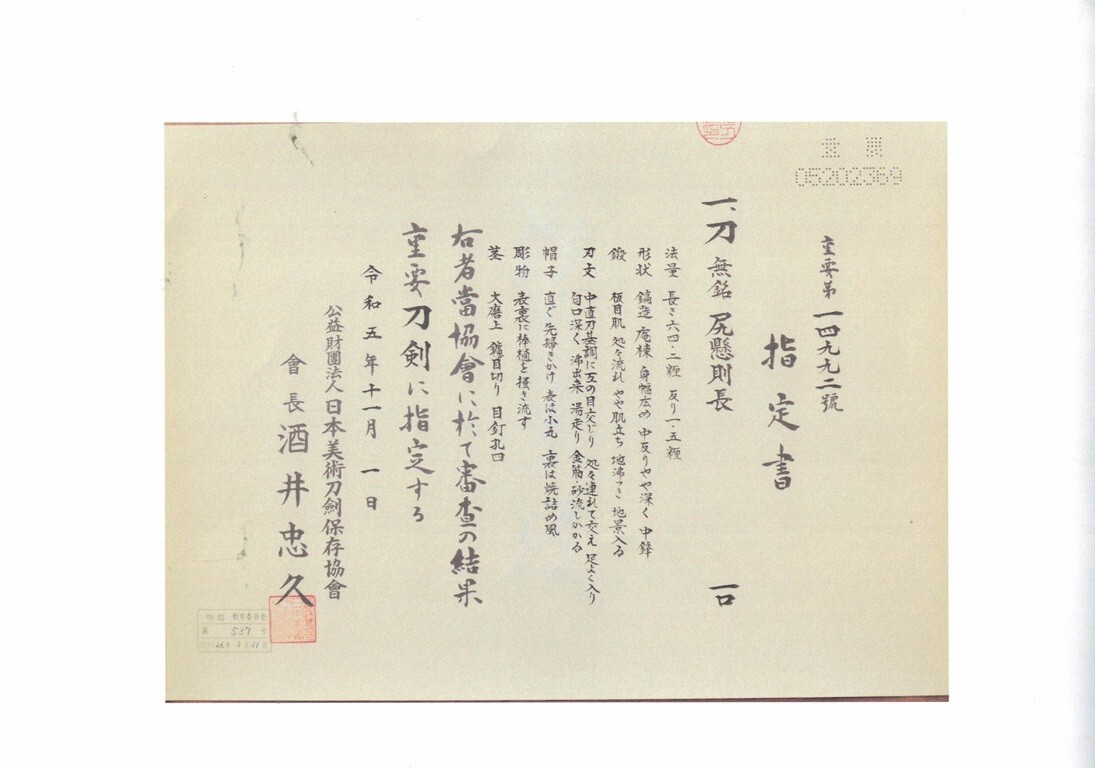
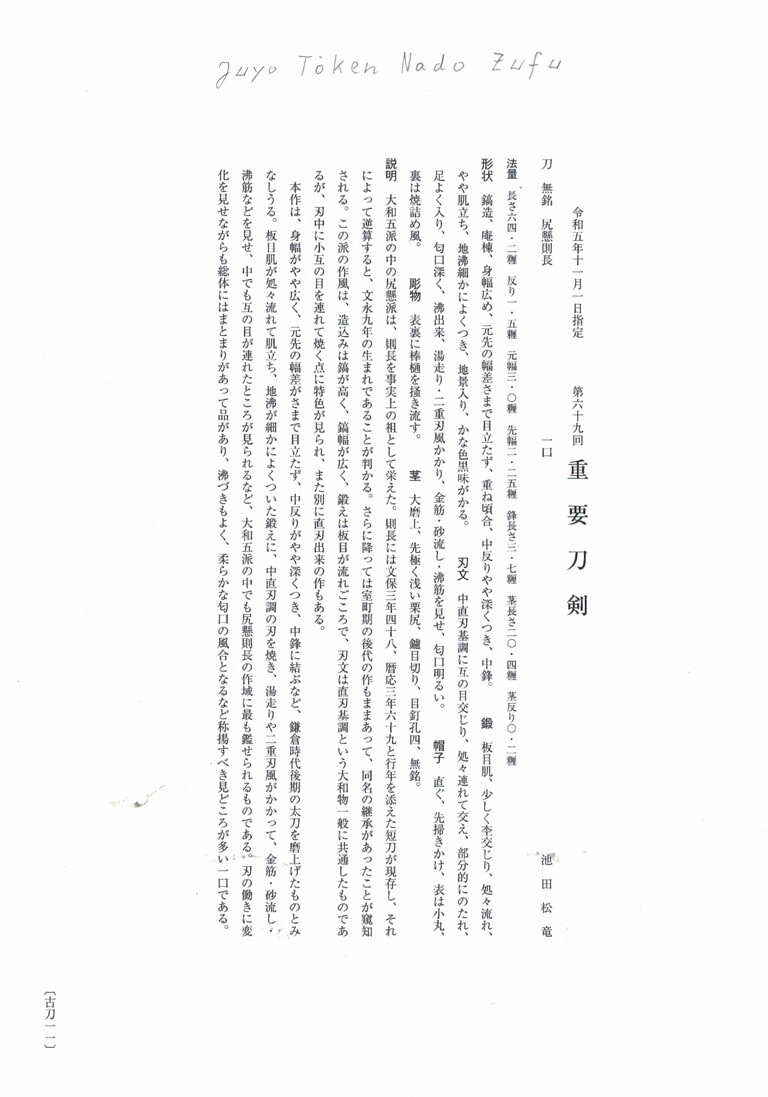
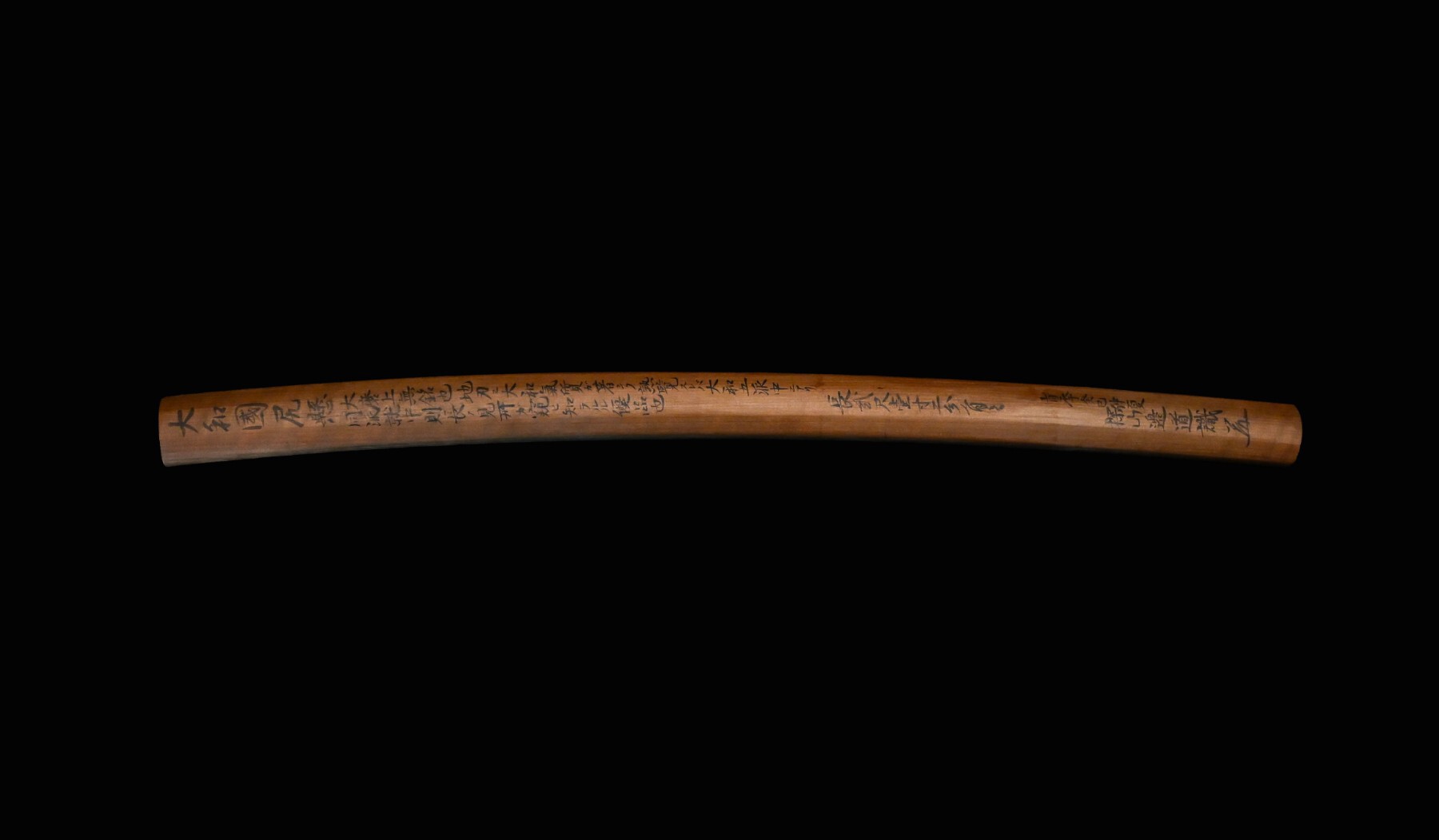
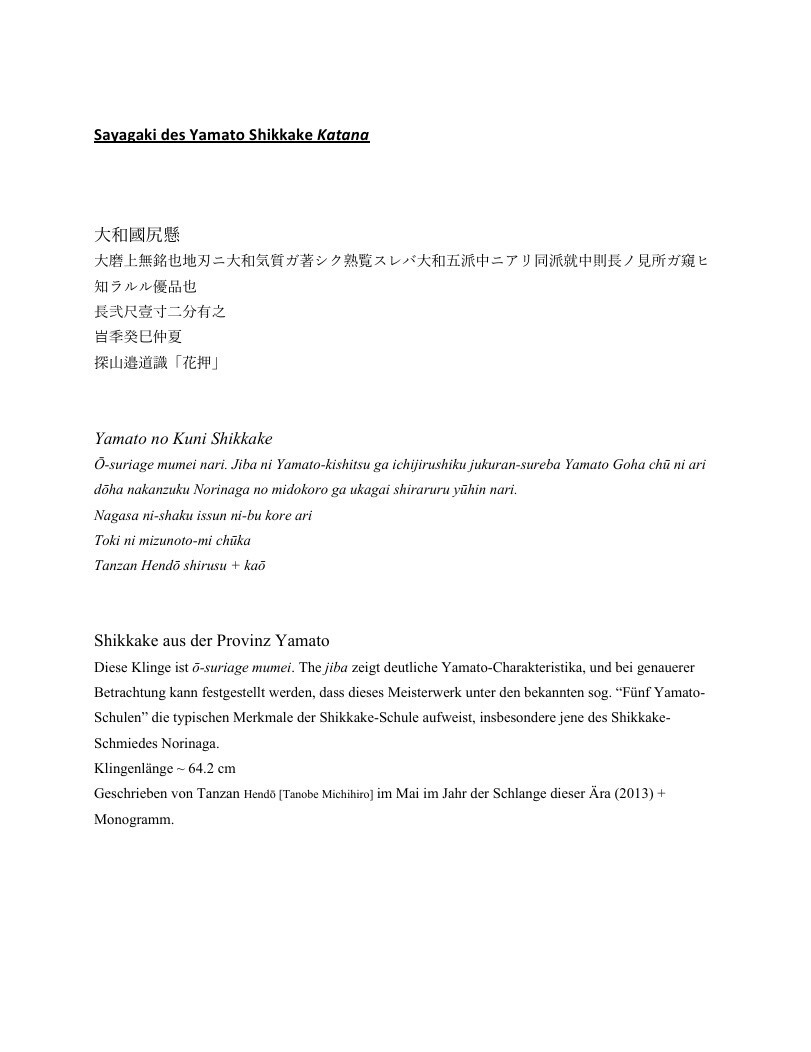
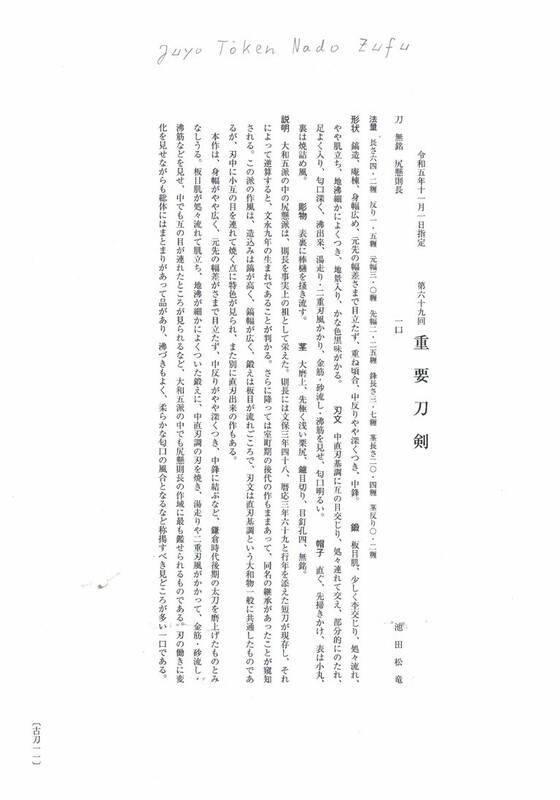
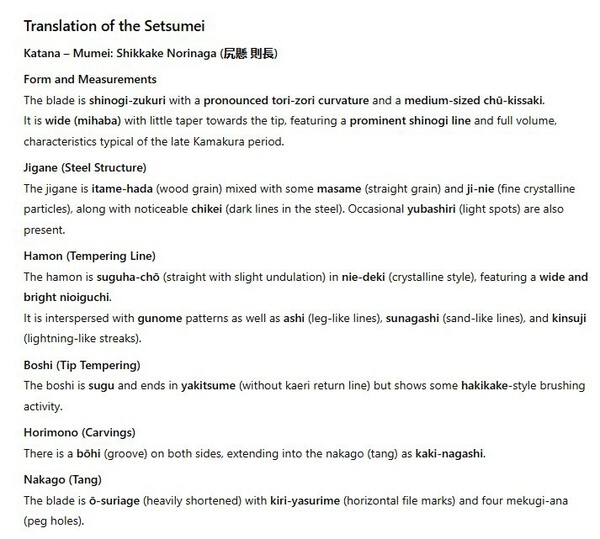
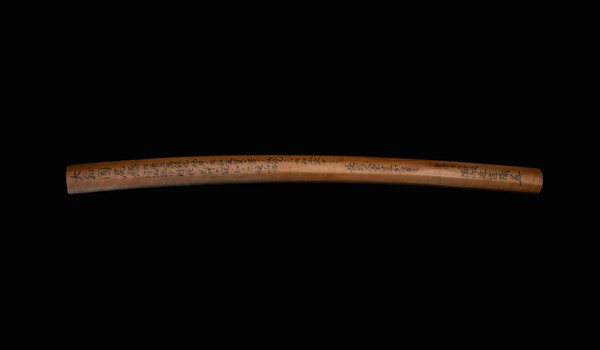
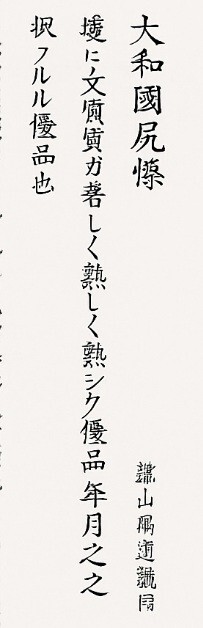
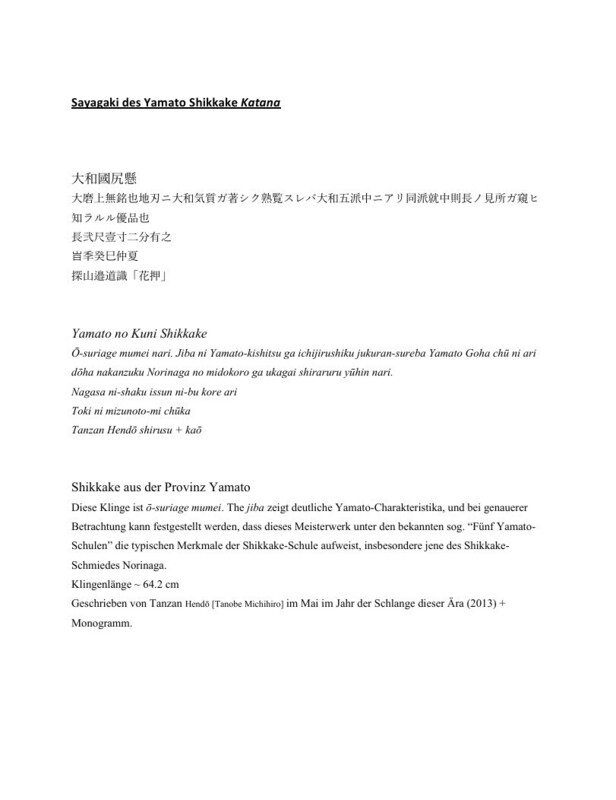
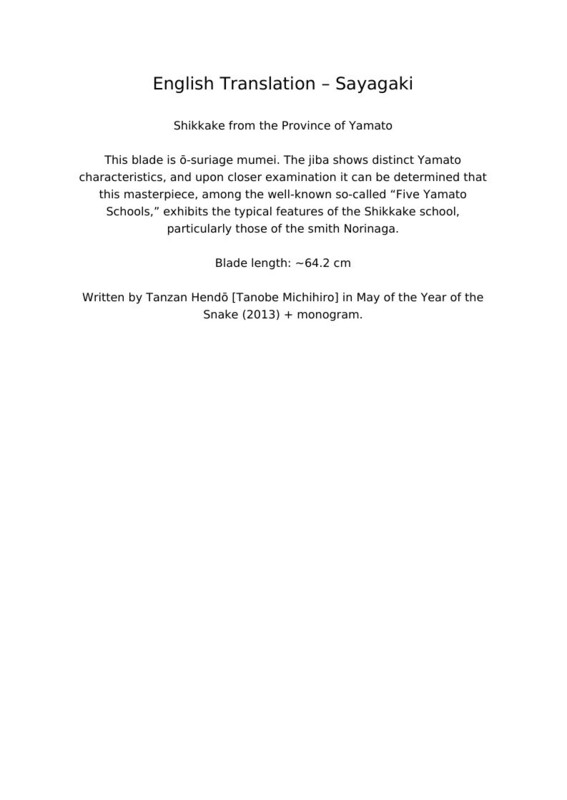
Thank you very much for your thoughtful questions – they really address the key points about understanding and contextualizing this blade. To answer some of them properly, I will share all available documents again here in this thread as attachments, including: The full Setsumei from the Juyo Zufu (with detailed technical description) The Sayagaki by Tanobe-sensei (including my translation) This should make it easier to evaluate how the attribution to Shikkake Norinaga (Shodai) was reached and how it compares to other works of the school. I also appreciate your point about market context and significance among the Yamato schools – this is exactly why I value input from experienced members here, as I’m still exploring how my piece fits within the broader corpus of Shikkake works.

-
Hi Markus, Thank you so much for taking the time to stop by this thread – it truly means a lot to me. I completely understand how busy things must be for you, especially with wrapping up the Tosogu Classroom project, and I really appreciate that you still make time to share your expertise here. I’m genuinely excited to hear your thoughts whenever you have a chance – no rush at all. Just knowing that you’ll chime in at some point already feels incredibly valuable, and I’m very grateful in advance. Best regards, Dennis
-
Hi Markus, Thank you so much for taking the time to comment here – it really adds a lot of depth to this discussion. I found your note about the transmitted dates very interesting and it certainly helps to put things into perspective. Since this thread already touches on some key aspects of Norinaga’s work, I’m curious (and I’m sure others here would be too) how you personally approach these pieces when it comes to understanding which generation they might belong to. For example, in the case of my blade, the NBTHK and Tanobe sayagaki both attribute it to Norinaga without specifying the generation, but the workmanship has certain traits I’ve seen associated with early Shikkake. I’ve also posted the oshigata here in case it offers any points of comparison with known examples. I’d be very interested in your perspective – not necessarily as a firm verdict, but just in terms of what stands out to you or how you’d frame it in the broader Norinaga corpus. Thanks again for joining in, it’s great to have your insights here. Best regards, Dennis
-
Yes, thats what I was thinking too. Thank you
-
Hi Kirill, Thank you very much for your detailed insights regarding the relative standing of Hōshō compared to Shikkake. I find this perspective extremely valuable, especially since I am still learning how these subtle aesthetic differences influence market perception and appraisal. I agree that Hōshō’s tighter hada and more subtle style are highly appreciated – in fact, when I first started looking into Yamato schools, I initially considered Hōshō blades for precisely that reason. What fascinates me about Shikkake, however, is that despite being more “rustic,” it has a strong daitō tradition and often shows bold features (wide motohaba, powerful suguha with gunome, etc.), which gives it a distinct character among the Gokaden. Your comparison also helps me understand better why Shikkake seems to have an excellent TH-to-Jūyō pass rate, even if it doesn’t always reach the very top tier like Hōshō. This adds important context when thinking about both scholarly and market perspectives. Thanks again for sharing this – I really appreciate contributions like yours, as they make discussions like these so much richer.