Slaborde
-
Posts
19 -
Joined
-
Last visited
Content Type
Profiles
Forums
Events
Store
Downloads
Gallery
Everything posted by Slaborde
-
@mecox Thank you so much! This is so helpful.
-
@mecox @Bruce Pennington I attempted to "translate" the bio piece on Kaneyoshi from the Japanese Wordsmiths in GIFU 1937 so when family read it they could understand it. Honest, I used the Encyclopedia of Japanese Swords but many of the words I wanted clarity on weren't addressed in there. First, Could you read through my interpretation of the Okada Takeshi bio below and see if I got the words(I've highlighted in bold correct)? Second, If I'm reading the section about him becoming a promoter of traditional sword making processes and leading the forging process at Seki Token... how do you think that is reflected in the swords he produced at Seki? 兼義 Kaneyoshi (岡田 武 Okada Takeshi) Born: Oct 30, 1909 Registered: Oct 20, 1939 1937: Seki-machi, Otsu 2247/3. ? 1939: Seki-machi, Yoshida-cho. ? 1942: Seki-machi, Ikuta-cho. ? History: He trained under “Mino kaji” his uncle as a child (starting in 1923) and made agricultural tools. He was making swords (independently) from 1933. Summary: He went to Oshu (Fukushima) for further training, then returned to Seki to train in tanrenjo (traditional sword making or working the forge?) He trained under Niwa Kanematsu Kanenobu (兼信) (#17). He became a promoter of traditional sword-making by koshiki tantren ("ancient style" of forging, emphasizing traditional methods and techniques throughout the entire process?) and leading the tanren-bu section (forging? in the Seki Token Kaisha company. Then he became a full employee of Noshu Nipponto Tanrenjo (Kabushi Kaisha). He was the younger brother of Okeada Kanesada (岡田兼定). Sword Exhibition – Competitions 1939: At the 4th Shinsakuto Exhibition his first submission won Kinpai (gold cup?) Then he focused on training new tosho (swordsmiths?) 1941: At the 6th Shinsakuto Exhibition there were 250 blades evaluated. He was ranked 4th level of 5 (Chu Jo Saku) (Superior medium made; above average) 1942: Tosho Banzuke (Ranking of 400 swordsmiths) 4th level of 7 (Chu Saku) (Medium made; average) 1943: At the 1st Rikugun Gunto Tenran Kai Exhibition; 300 blades were there. He won Chairman’s Award (Kaicho-sho). Listed best students: Okada Kanesada (#25; brother), Ikeda Kanetsuna, Takai Sadatsugu (#28) and Isaji Kanehiro. Kaneyoshi registered post-war in Oct 12, 1971 at age 62, but died on March 15, 1972 five months later. From: Japanese SWORDSMITHS IN GIFU 1937 (a list of 34 plus their biography); Malcolm Cox, 2021 update.
-
Done! Thank you
-
@mecox @Bruce Pennington I hope I’m not wearing out your patience. I’m reading about menuki and the tsuka… and I came across information on samegawa- ray skin wrap. Wait! I always notices the bubbly surface, and not really thinking about it I always had styrofoam come to mind. (Like I said, I didn't think about it.) But I never would have thought skate skin. I’ve checked a number of different sources and it seems that yes skate skin was used. Im checking in with you. Is this tsuka have skate skin on it? Every moment is a burst of amazing information. I understand why you enjoy mastering this information.
-
@mecox that is awesome. Thank you!
-
-
@mecox @Bruce Pennington I'll check with my brother, but I don't really remember anything like that on the saya. And now can we get to the topic I've been long waiting for... the menuki! I have been staring at that figure and looking at pictures of various menuki thinking of course I would see resemblances... Earlier you said that it has a menuki design of helmet/armour/tachi. When I search for that I get lots of images of helmets and masks. Do you have a picture of what that menuki looks like?
-
@mecox @Bruce Pennington So Dad's sword is a katana. and originally looked more like this? (Is that the gunto tsuba on this pictures sword? And then do I refer to Dad's sword as a Shin-gunto katana?
-
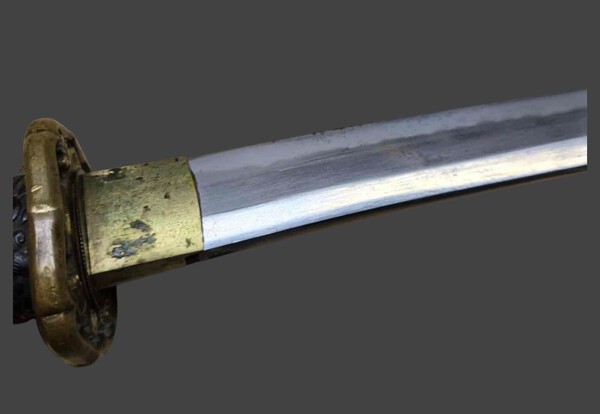
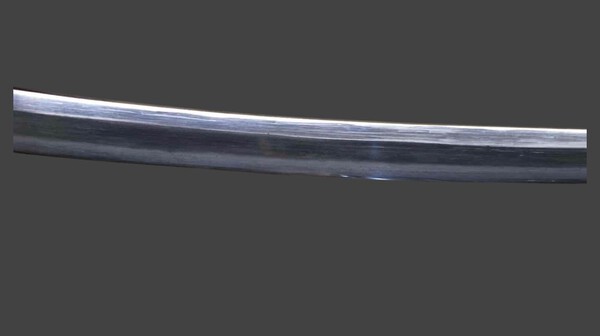
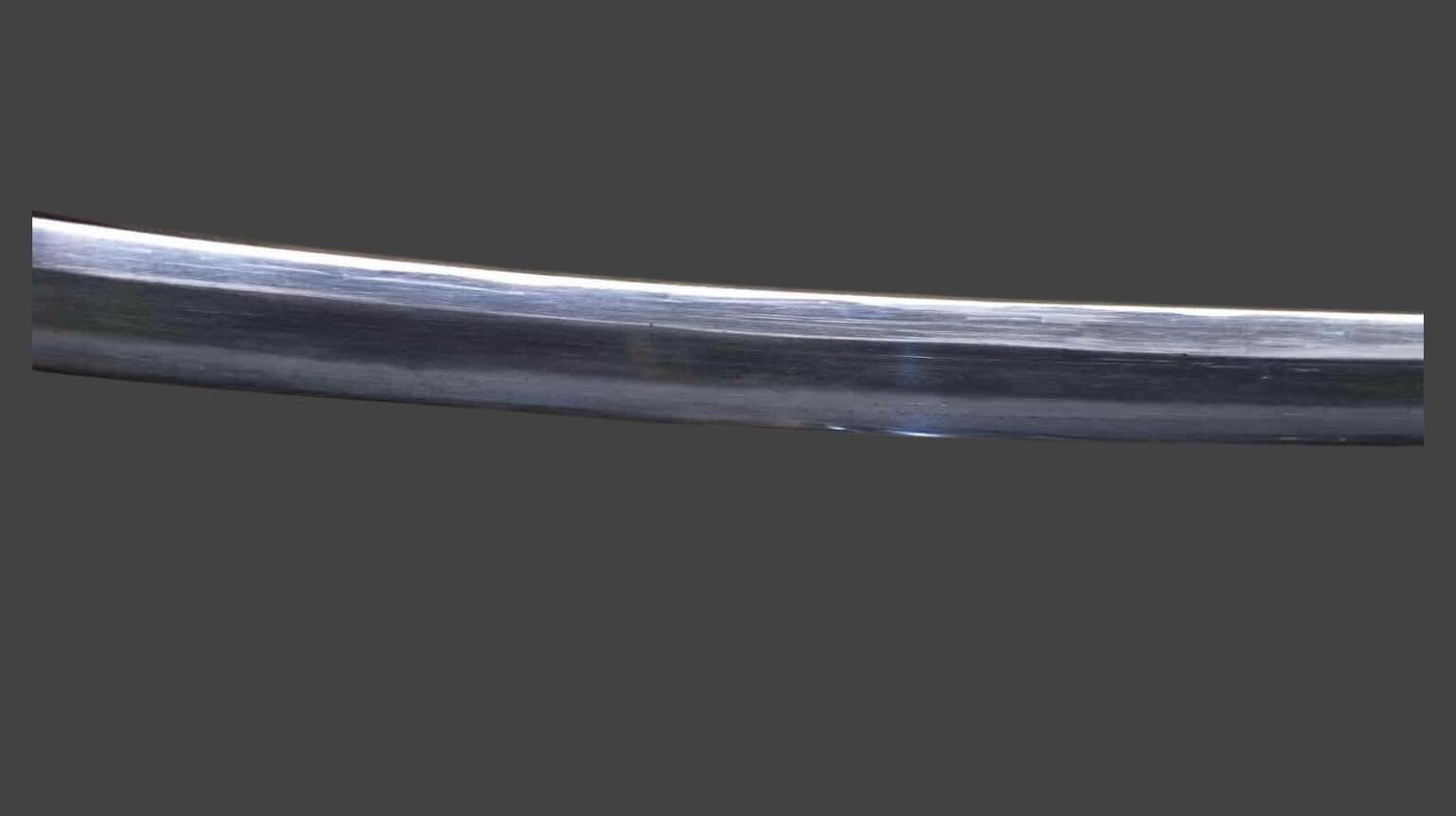
@mecox @Bruce Pennington Ok, here are pictures of the blade and a better pic of the tusk. This looks to me like there is a hamon, but it doesn't have a real wavy appearance.



-
It is comical, if you could see me reading your posts, stopping at every other word - checking my "parts of a Japanese sword" diagram - then refinding my pictures and going over them for tell-tale signs. I'd be more confident if I had the sword in hand and could stare at every piece again. (We're working on getting it here of the PNW December meeting.) I doubt Dad did anything to the sword when he got back, but I could see the boys sitting in the barracks thinking the plain iron tsuba just didn't look as cool as those more decorative tsubas. But then I could also see him, at 19, being glad he had a sword to bring home and making sure it fit in his duffel bag. I now have additional pictures of the blade and will post them as well. I so appreciate all your thoughtful guidance and discussion. Thank you.
-
Kashira: the end cap? It is very simple.

-
Habaki update: Removed the habaki. I can’t see a stamp. (I know you also want a picture of the blade. I should have been clearer with my request for a picture of the “entire sword.” Will work on blade pictures tonight! Thank you!


-
Sam... The habaki comes off! The habaki is the brass-colored piece next to the Tsuba, right? Dang the sword is in Wisconsin. I thought I completely took it apart and photographed all the pieces! (Ha, when I researched my dad's Japanese rifles, I was forever finding another place to look for a stamp!) Will get my lil' brother on this right away! Im very interested in your December meeting. Will look into getting the sword shipped. thank you.
.zip-1.thumb.png.a8e4b1010204fa59ccb5cad9fe8e732b.png)
-
FYI, I have found the "Downloads" section of the group. Found Primer on Shingunto; and am starting to read Japanese Military and Civil swords.. Fuller /Gregory. Any suggestions are very welcome!
-

-
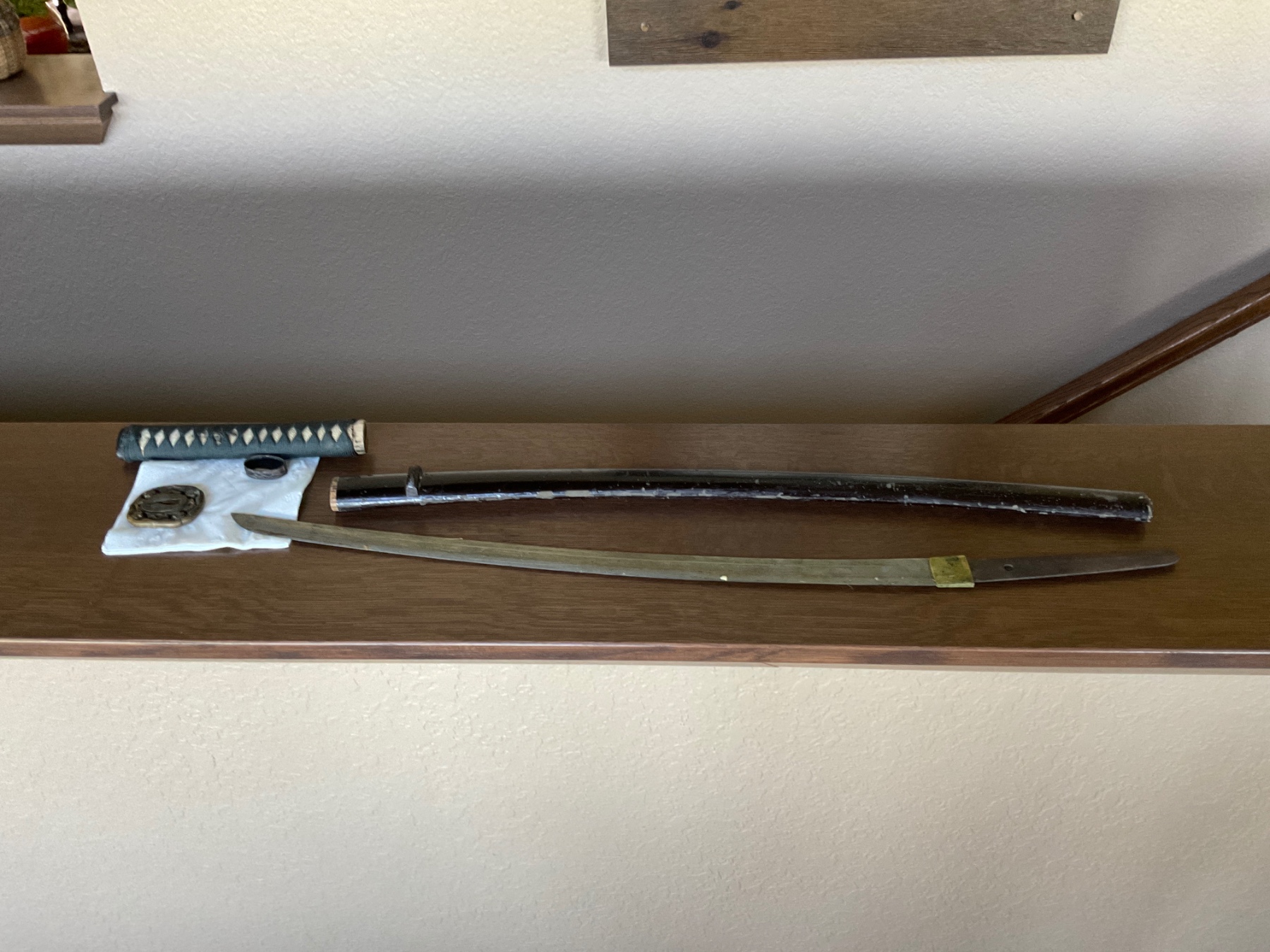
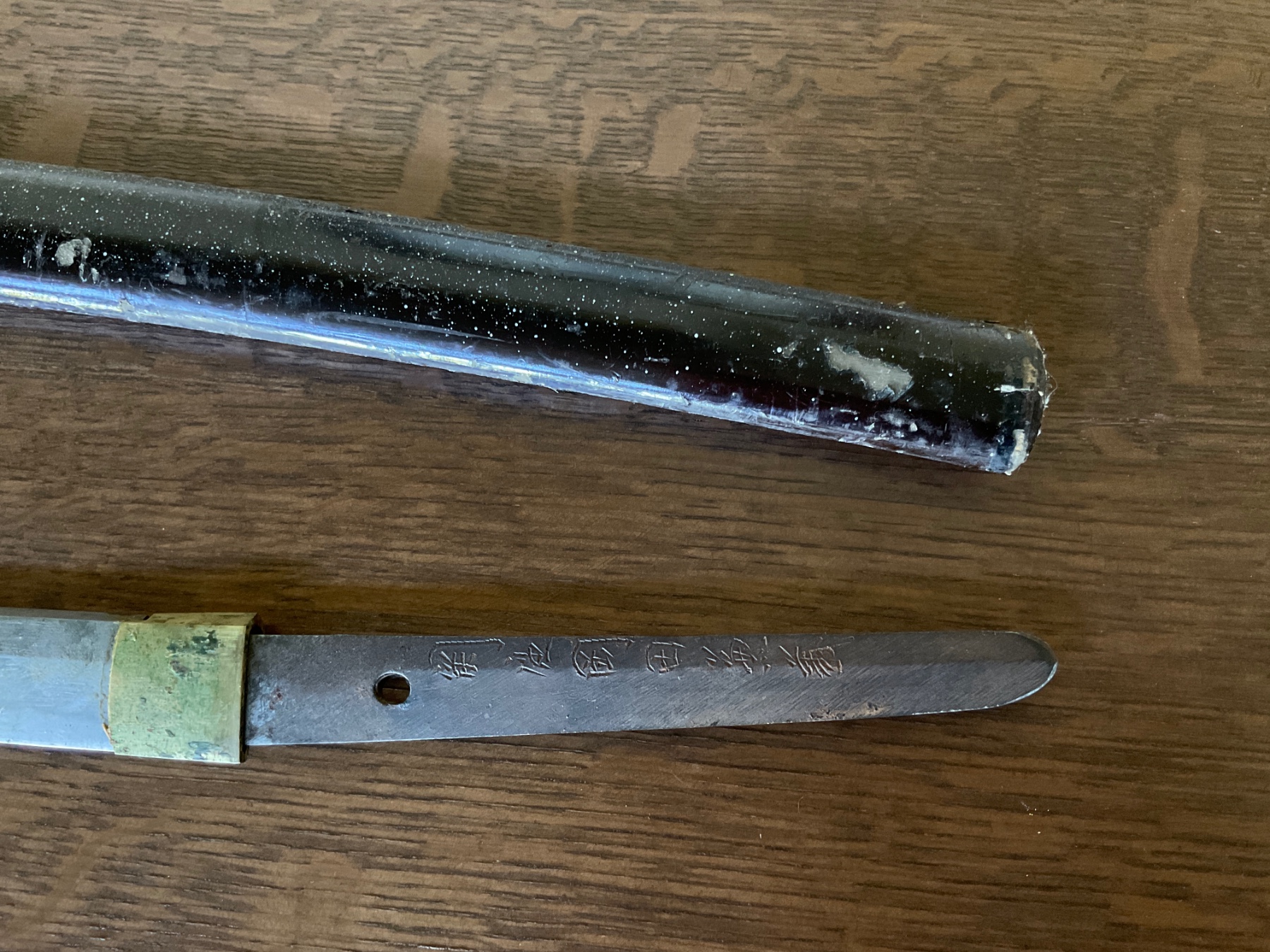
I started pulling information together on this sword 3 years ago - and got pulled away. Folks here helped with the translation on the meh of Seki jū Okada Kaneyoshi saku” (関住岡田兼義作). I have been staring at this all day and the numerous support tables and my brain just doesn’t do well with kanji. I promised my family I’d put together a little write up on dad’s sword. He brought it back, like many, from Japan in 1946. Can you tell from the pictures if it’s a fake? Manufactured? I did not find serial numbers or arsenal stamps. There is the number 26 on the collar Tsuba. Thank you! Sword (1080 x 1350 px).zip


-
Assistance request in translating sword tang
Slaborde replied to Slaborde's topic in Translation Assistance
Thank you Steve. I will read the thread. -
Assistance request in translating sword tang
Slaborde replied to Slaborde's topic in Translation Assistance
Picture of sword…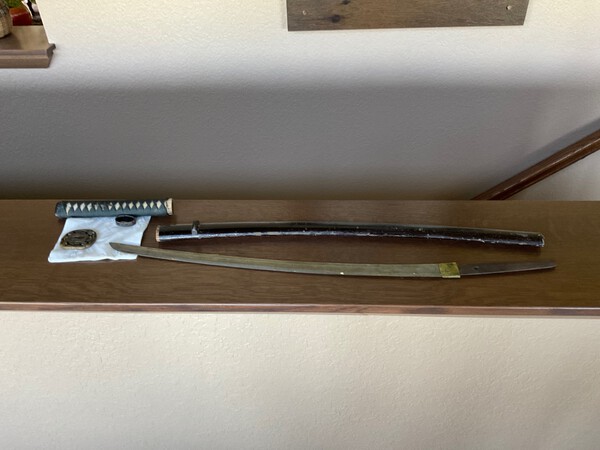
-
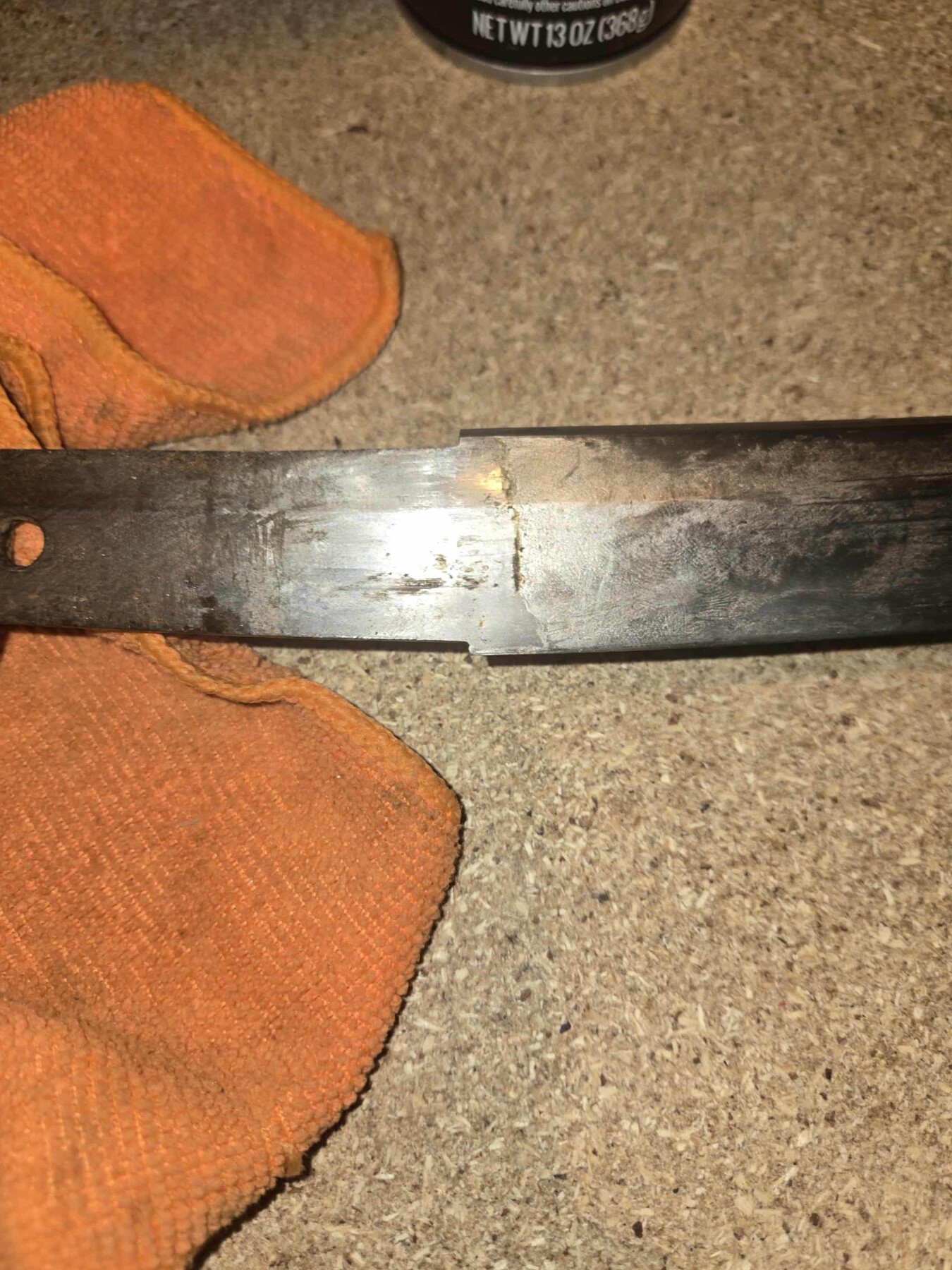
My family has a Japanese sword that my father brought back with him from WWII. We are not looking to sell this. We are trying to understand what it is. I have tried to translate myself and I’m not having much luck. Thank you! Sara
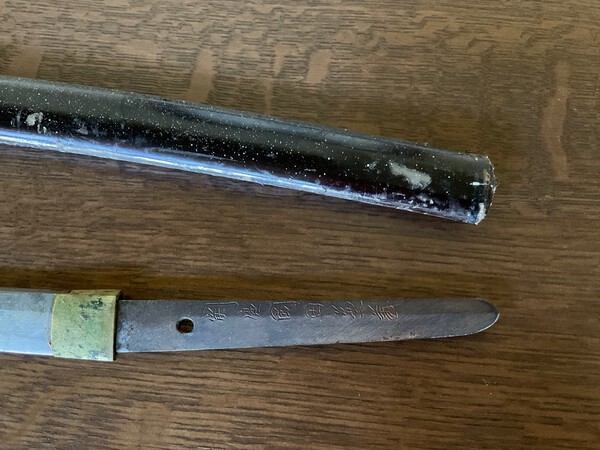


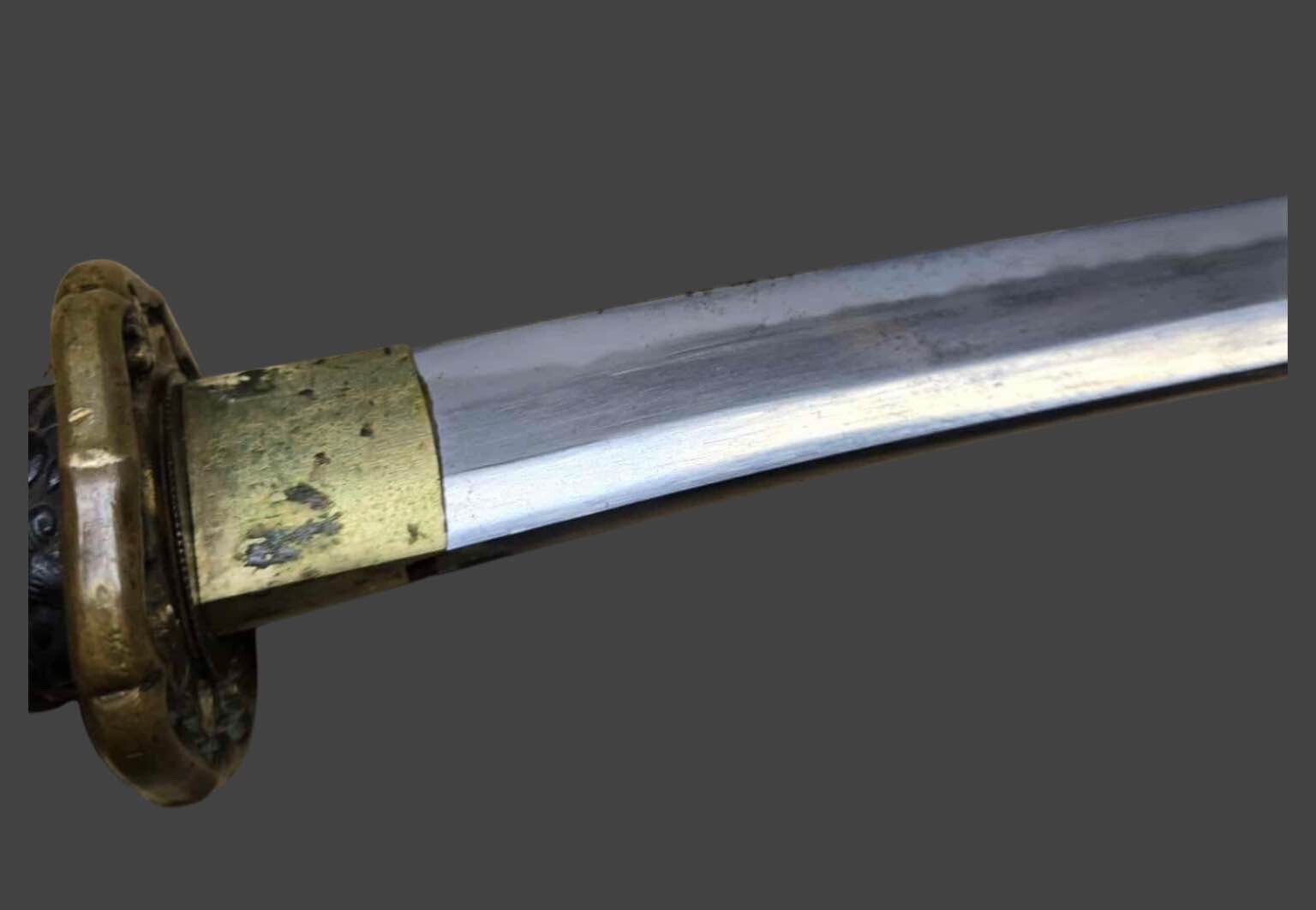
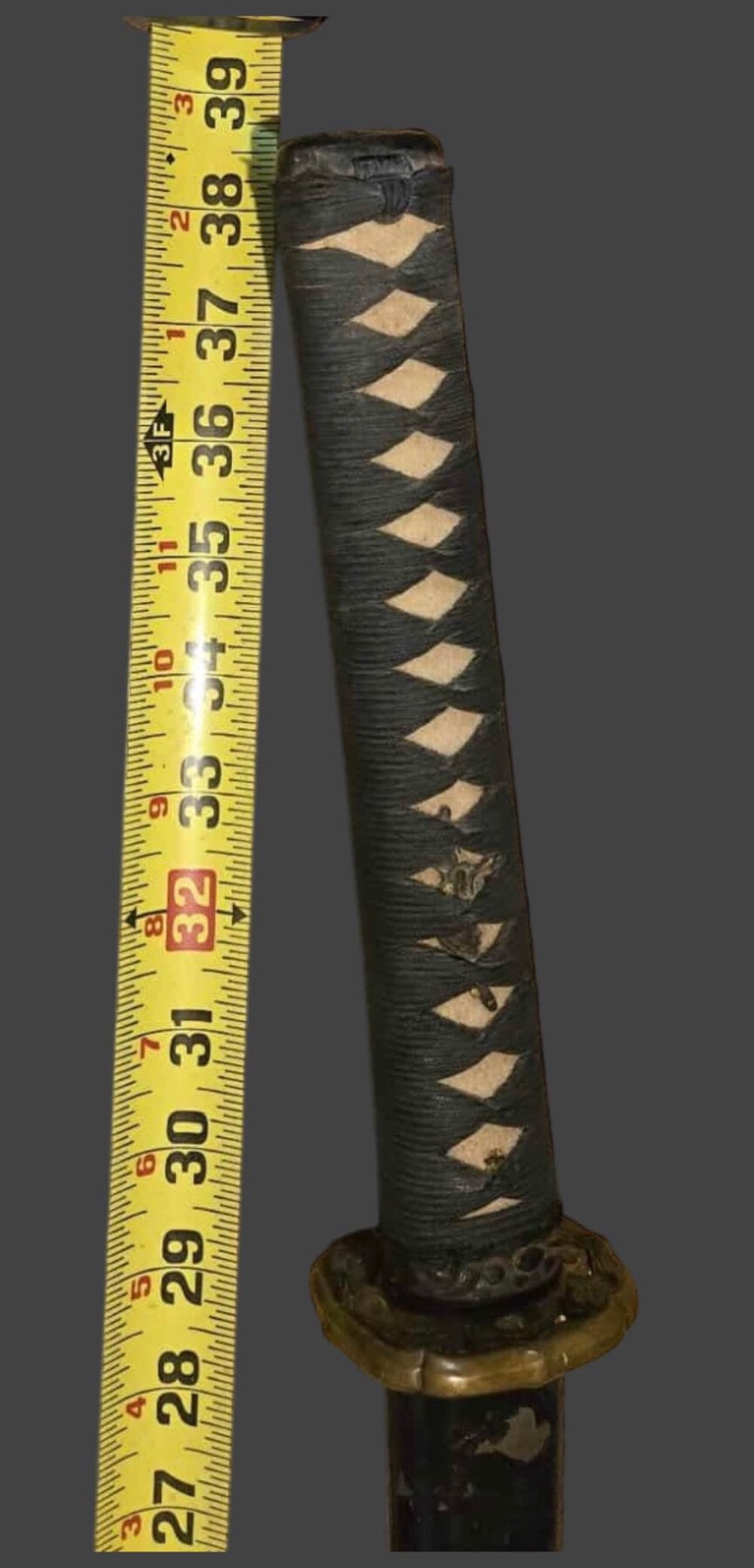






.zip-1.png.0419c4dac23f519022cb3bc3567b005f.png)