Jaron
-
Posts
55 -
Joined
Jaron's Achievements






-
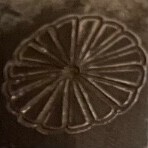 To put it in more kantei type language: 相州伝風の働き盛んなる出来にして、沸強く付き、葉よく入り、金筋・砂流し頻りに現る。 It is a workmanship displaying vigorous Sōshū-style activity, with strong nie, abundant yo, and frequent appearances of kinsuji and sunagashi. or 荒々しい出来 (araarashii deki) Bold, turbulent workmanship. It’s that odd mei………..
 -
Yes now I see exactly what you are talking about. It certainly is a possibility. This is a real stumper. It’s a highly aggressive forge with much hataraki and a beautiful hamon.
-
Thank you Jussi. That’s an interesting thought. Unfortunately I could not see them so well. I have some better shots of the hamon for analysis to go along with the full side shots for the sugata above. Maybe it will help. They’re not great definition as I cut them down to post but a good enough idea.
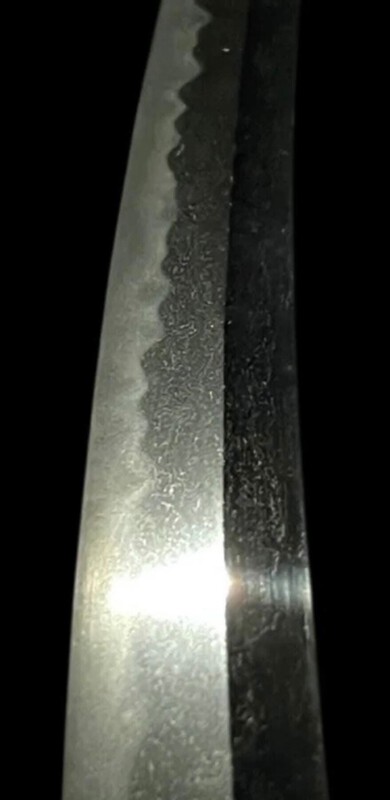
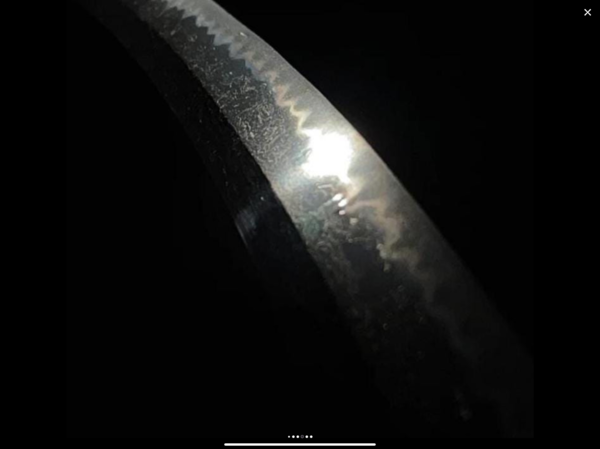

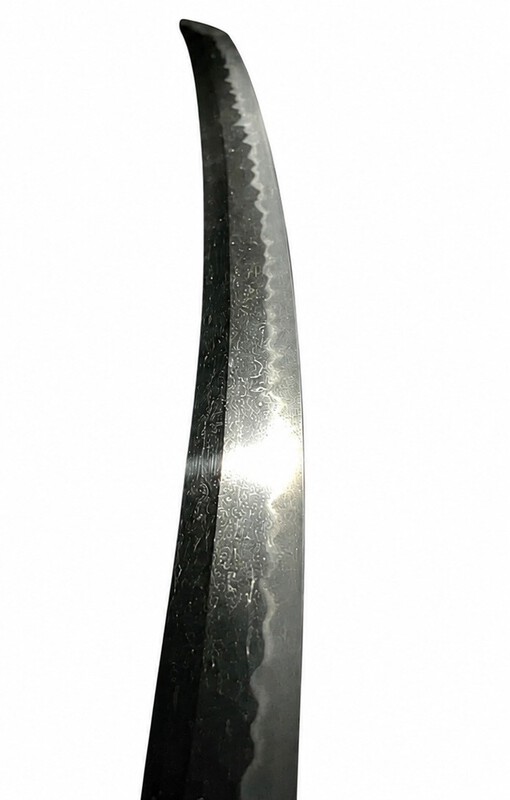
-
You’re absolutely right. I should have caught that. If you put a hole in a large portion of it I wishfully thought it would form two isolated strokes but there is no room for the vertical line, even if distorted by fire from the cut. Back to the start.
-
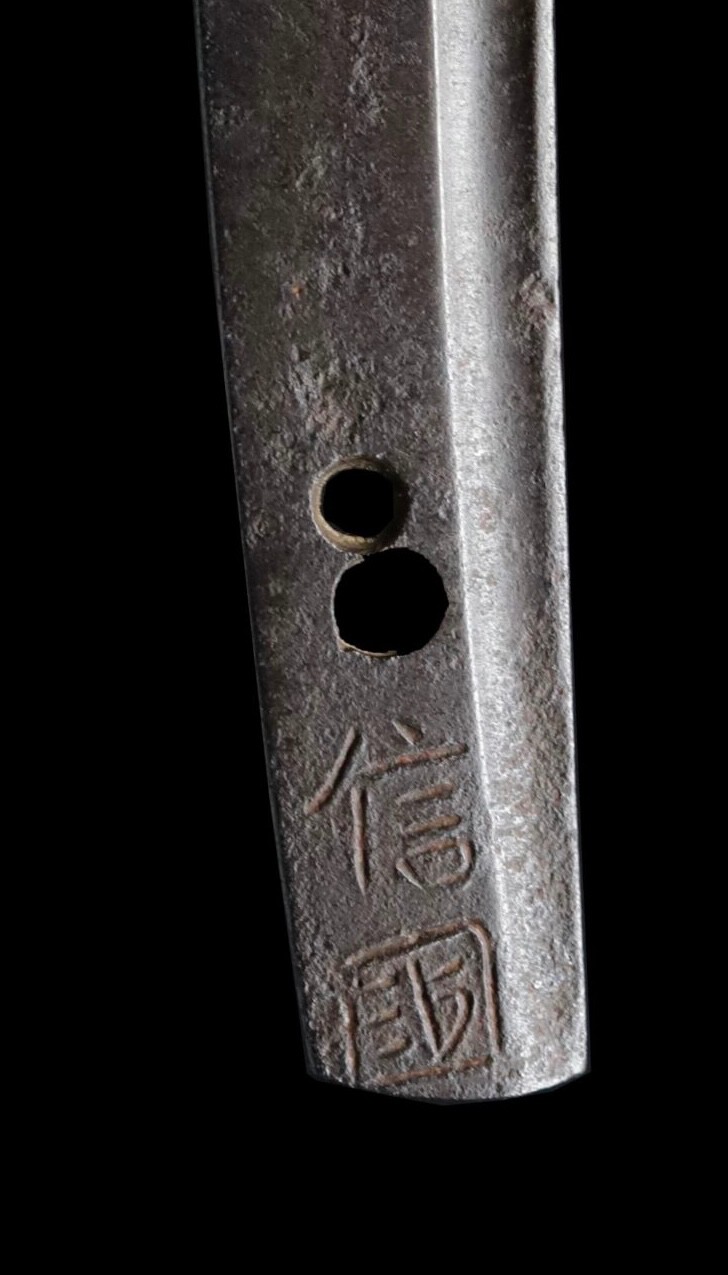
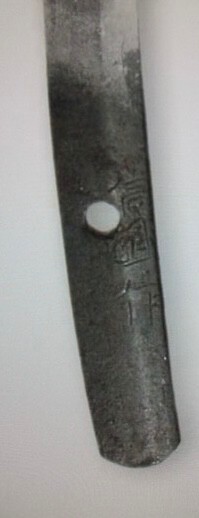
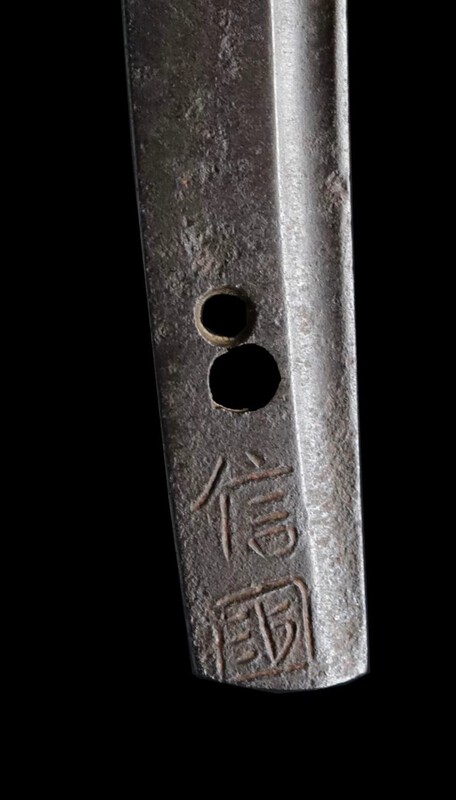
I am thinking now after looking over the hamon closer, and the mei that this is a Nobukuni, with yahazu tendencies. You could almost see it as a rough sanbonsugi but the string of high peaks or “notches” look more like similar OEI Nobukuni. The forge is very aggressive and the hamon has another gunome bump entering into the kassaki on both sides with a pointed midare-komi on one side and a broken up hakikake streaming up toward the tip that fits some of the oshigata I have seen in the Koto Zuikan, Fujishiro, etc. I also found a few examples from some papered wakizashis that are very similar hamon. It’s those deep straight lines of the top part of the “Nobu” with the opposing angled strokes up that were the key. Put a hole right in the upper corner of the “Nobu” you can have something like that. Thanks for those that replied.

-
Yes typo, my apologies. I didn’t catch that and grammar check red flags that word for all spellings so I just didn’t. Thank you for pointing that out. It is now edited and correct.
-
And actually Jean my best guess at this point is a fractured 濃 as part of Noshu 濃州 which would fit with a Mino blade. Perhaps a Magoroku disciple or the man himself. It’s interesting as the hamon moves toward the Monouchi, the sanbon-sugi becomes very structured for 4 or 5 “cedar patterns”
-
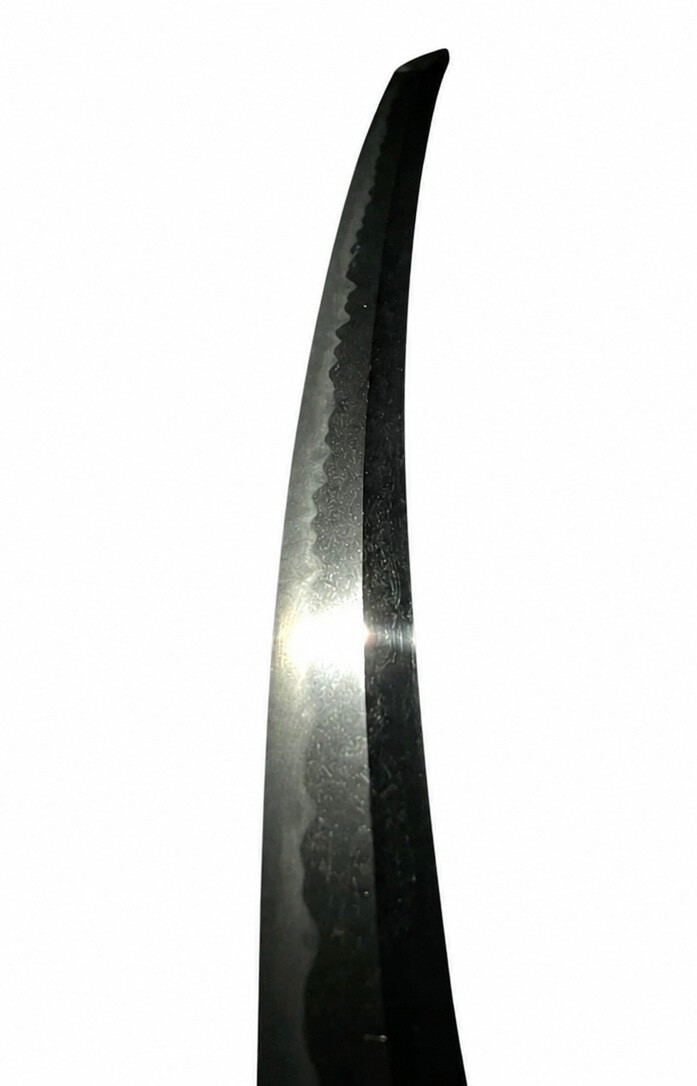
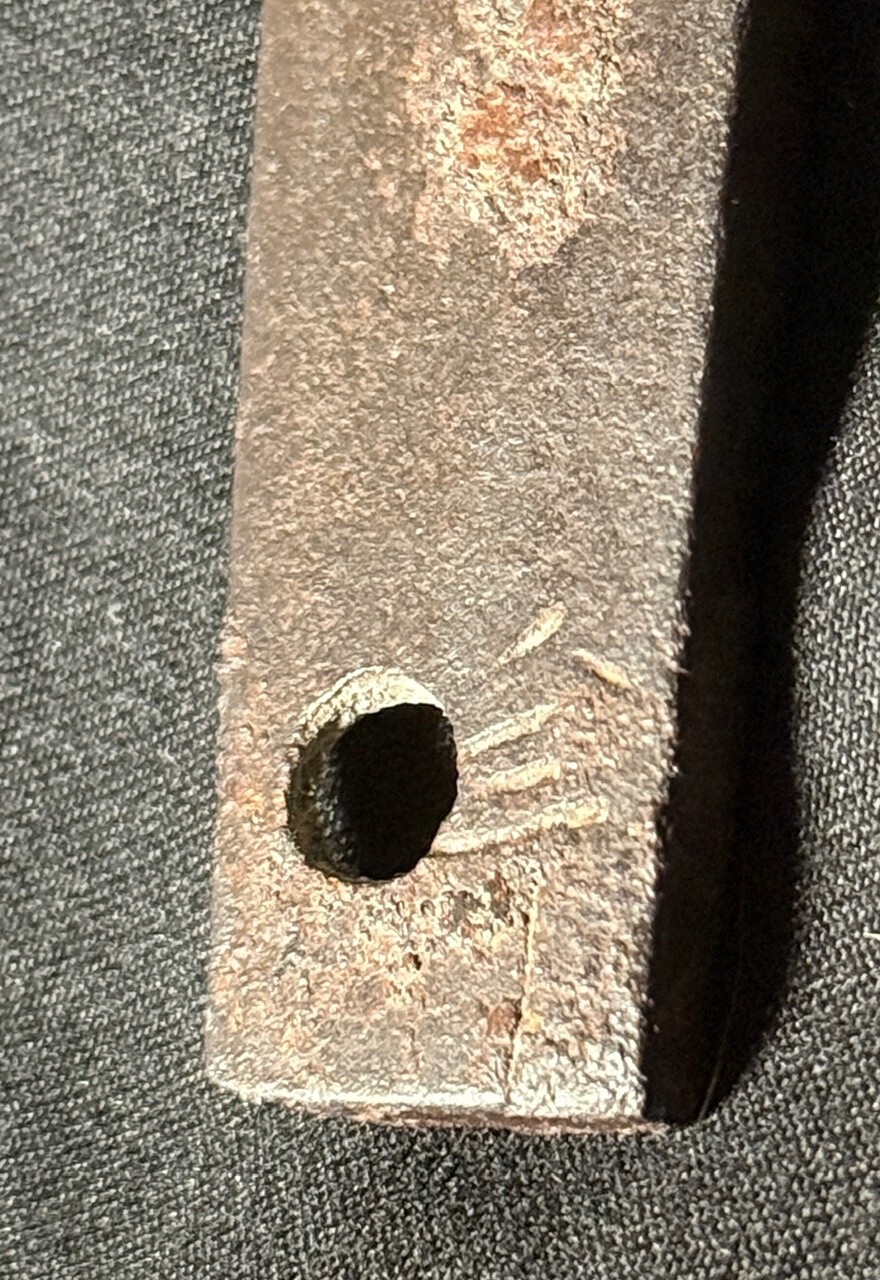
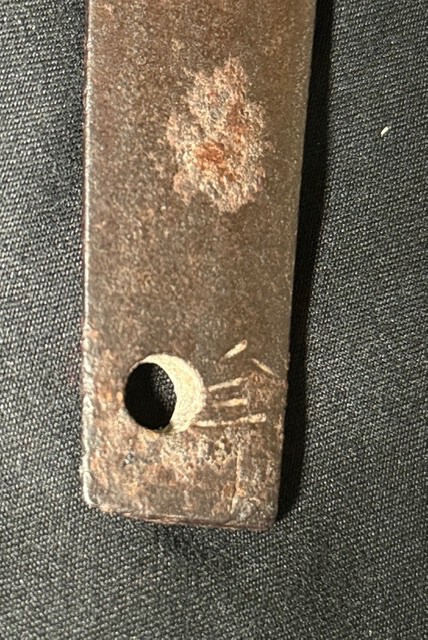
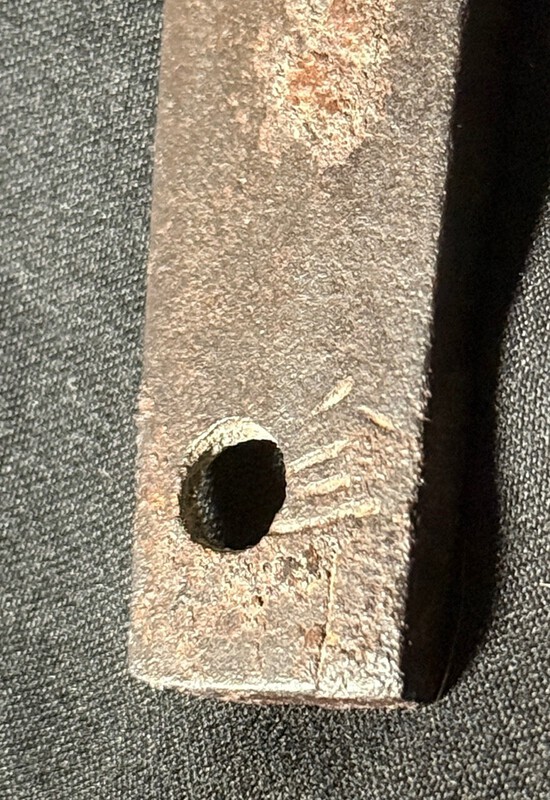
Hello NMB, I originally posted this in the Nihonto section as I forgot this was here. My apologies. Any thoughts would be greatly appreciated. Hello NMB, I was given this sword as it is tsukare and has plenty of ware, none fatal, and it still is very much alive with a vibrant hamon and well defined nioi-guchi, tobyaki everywhere when lit up properly, very clear and wet looking, and a tight itame nagare. Boshi continues the midare pattern into a jizu/kaen that reaches up high. The hamon looks very late Muromachi Mino Sue-Seki with a rough, inconsistent sanbon-sugi pattern, very Magoroku-esque. It has a double gold-foiled habaki so it was well thought of at one time. It looks like it was forged on the edge of explosion with all the activity. Like a storm and see something new every time you look at it in different light. The nakago is very short from the suriage but there is about half of the top of a kanji. It looks like it could be the beginning of Kane, maybe Noshu. I’ve looked through Fujishiro, the Zuikan, and Sesko’s Zenshu as well as the internet resources, and I can’t find anything close to these straight lines with two opposite strokes up. It looks like Kaneuji did something similar for Kane bu with out those upward strokes. Maybe a province? I assume it was likely a higher end smith to accomplish all the lively activity that this has, and I was hoping to figure out this kanji. Maybe someone unknown but they did a heck of a forging effort on this when it was new. I’ll include a couple of pictures of the Kanji at the edge and a couple of sugata shots so you can see the pattern as well. It’s tired but still beautiful. I really cut these pics down so I hope they are good enough. Thank you in advance for any thoughts


-
Great idea Jean. I should have done that to begin with.
-
Yes Rohan, and I agree. The other katana I have looks more similar to that actually. But from what I have seen Magoroku had many different styles of it and even Fujishiro said that often the sanbon-sugi either wasn’t easily seen or really didn’t exist on some. The one I have is a bit more structured but still hard to see the pattern but once you do, it’s hard not to see it. The hamon on this one is similar to the other Magoroku in that the actual hamon is more of a togari-ba with short ashi legs.
-
Thanks everyone so much thus far. And thanks Jean, I wasn’t going to say it but I thought it might be too. I have a suriage katana that is Magoroku, but mumei, and I was able to break his “code” of inconsistent Sanbon-sugi but I have not found his mei to be anything like this that I have found in my research. I thought it might be a top student of his?? I have found some mei starting with Noshu that might be right, and none of the “Mino” beginnings look close. The only one I have found that is even a hint of being close is Kaneuji with his straight, deep 3 chisel lines but messy, and this is not Kaneuji. It has those two flipping up and opposing strokes above the straight lines that are the mystery, I have used AI extensively to try and track this down but basically the same place I am at now. Definitely Mino I think. I know also that Magoroku pushed the limits of forging, which is obviously this blade. It looks like it should have exploded.
-
Hello NMB, I was given this sword as it is tsukare and has plenty of ware, none fatal, and it still is very much alive with a vibrant hamon and well defined nioi-guchi, tobyaki everywhere when lit up properly, very clear and wet looking, and a tight itame nagare. Boshi continues the midare pattern into a jizu/kaen that reaches up high. The hamon looks very late Muromachi Mino Sue-Seki with a rough, inconsistent sanbon-sugi pattern, very Magoroku-esque. It has a double gold-foiled habaki so it was well thought of at one time. It looks like it was forged on the edge of explosion with all the activity. Like a storm and see something new every time you look at it in different light. The nakago is very short from the suriage but there is about half of the top of a kanji. It looks like it could be the beginning of Kane, maybe Noshu. I’ve looked through Fujishiro, the Zuikan, and Sesko’s Zenshu as well as the internet resources, and I can’t find anything close to these straight lines with two opposite strokes up. It looks like Kaneuji did something similar for Kane bu with out those upward strokes. Maybe a province? I assume it was likely a higher end smith to accomplish all the lively activity that this has, and I was hoping to figure out this kanji. Maybe someone unknown but they did a heck of a forging effort on this when it was new. I’ll include a couple of pictures of the Kanji at the edge and a couple of sugata shots so you can see the pattern as well. It’s tired but still beautiful. I really cut these pics down so I hope they are good enough. Thank you in advance for any thoughts.
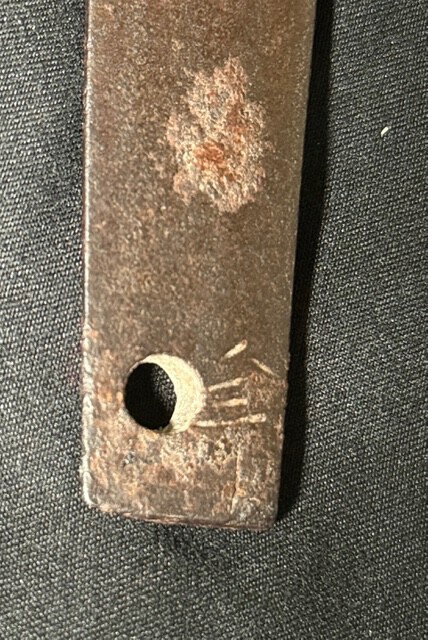
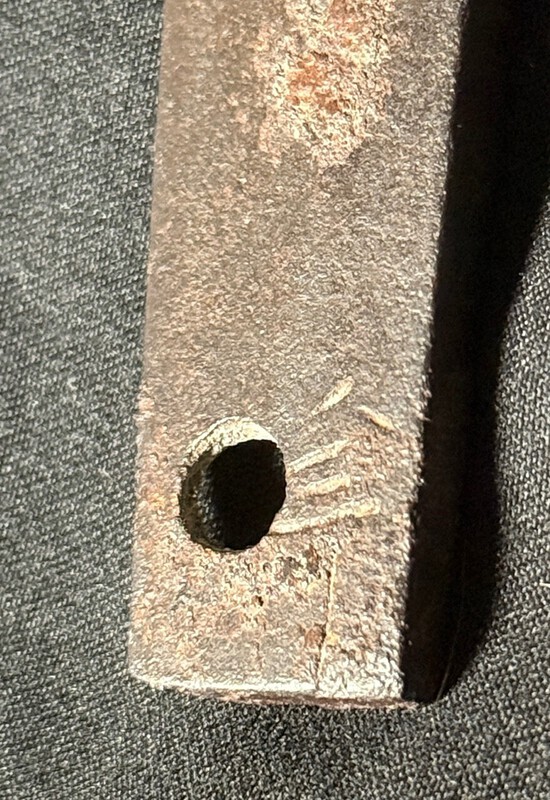


-
Please let me know if you know where I can find one or you may have one to sell. I have been looking for a while. Thank you.
-
Thank you Steve. I did read somewhere that the he was fairly liberal with ways he signed the second character. It’s a funky way to write the Mitsu as well. More like a Z shape with an offshoot for the other leg. Jeff
-
Also, Richard Turner used to have a blog that looks like it stopped in 2015 but had a paper by Mosle on the Goto Shirobei family that had many examples and a chart of the Goto Shirobei Pupils that I have not been able to find any where else. The chart on the website is too small to read and used to have a link to a site where it was larger but obviously no more. Here is the page, Part 3” that has the chart. https://richardturne...ily-by-mosle-part-3/ Would anyone know where this chart can be found? It is a valuable chart that should be out there. Jeff