Maxime Chouinard
-
Posts
38 -
Joined
-
Last visited
Maxime Chouinard's Achievements






-
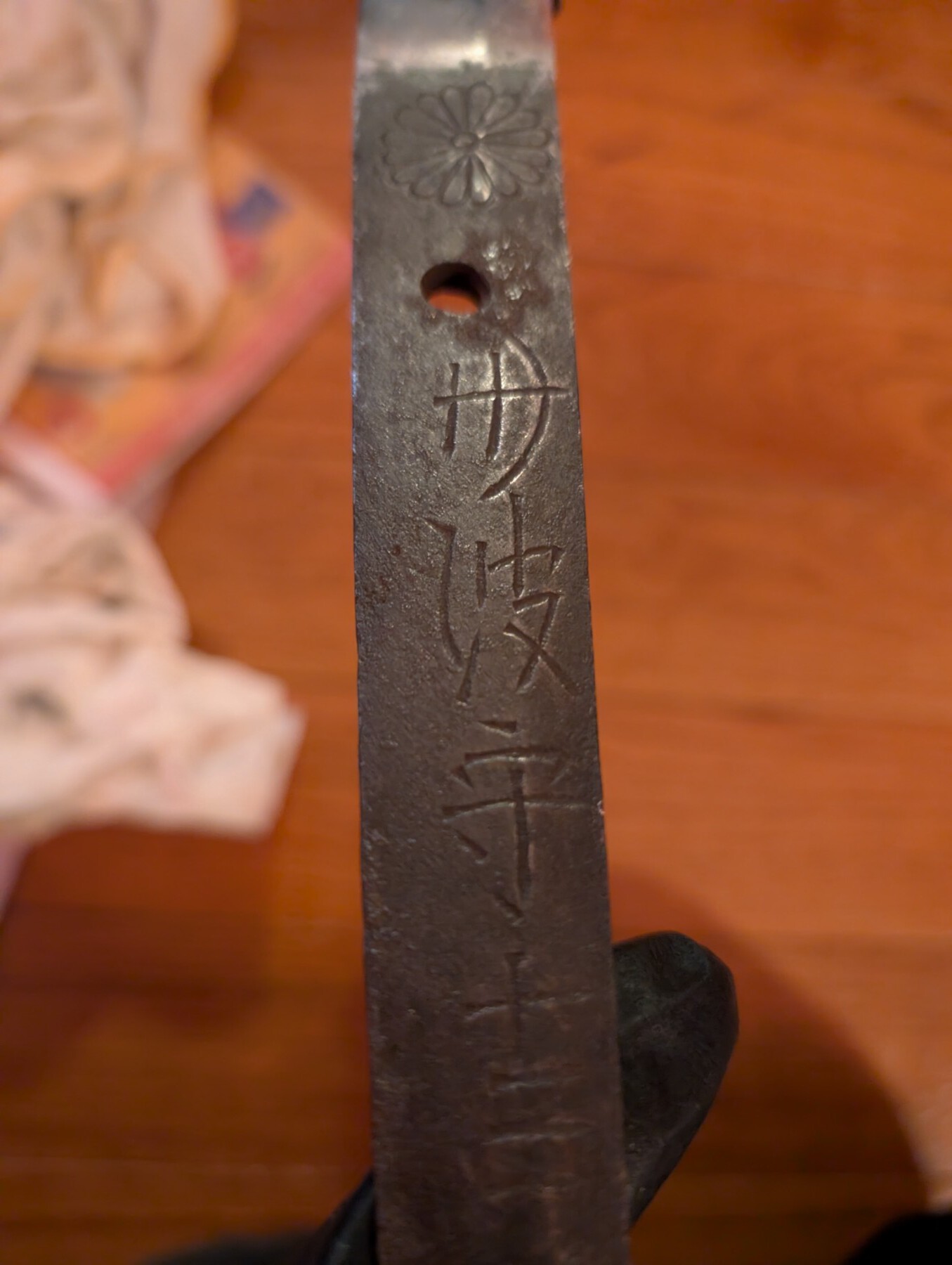
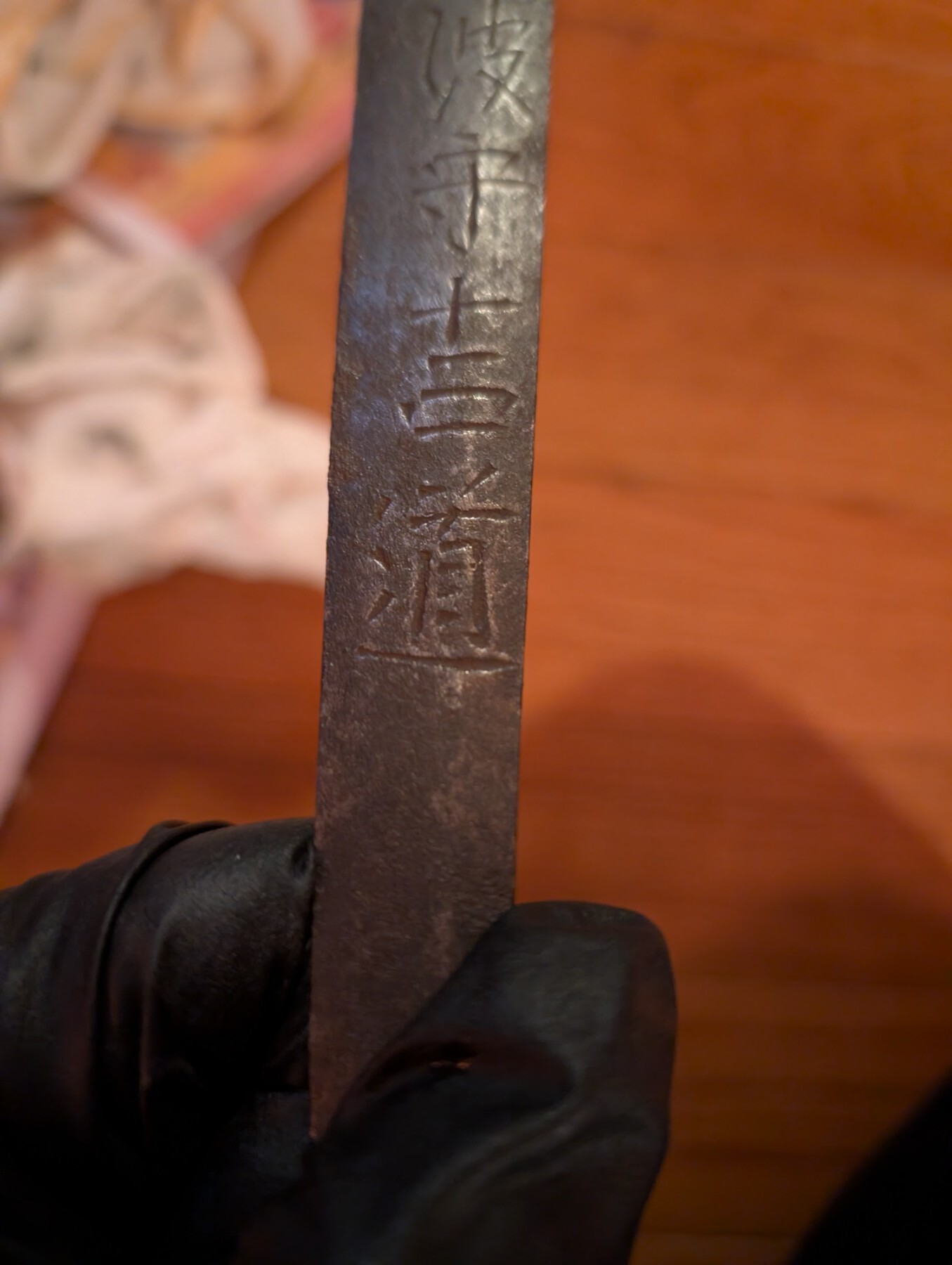
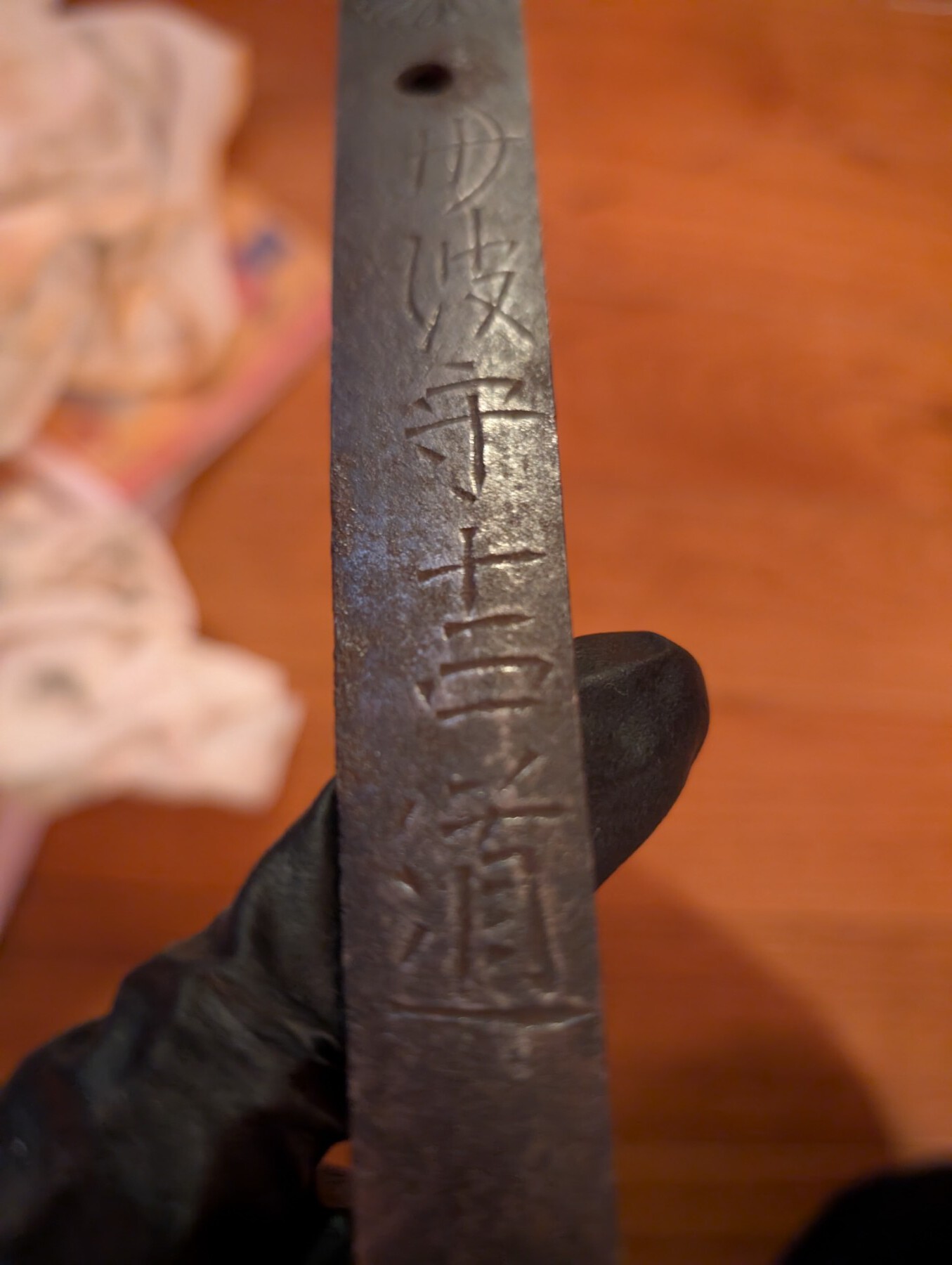
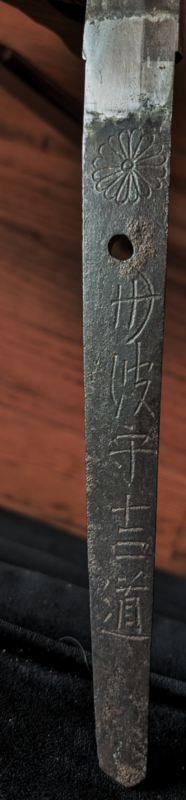
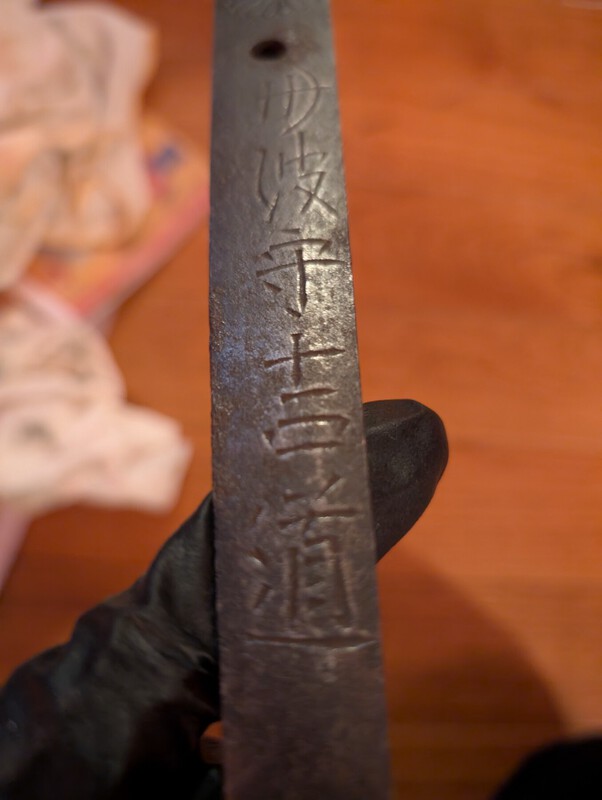
Thank you Jean. The photo is making a lot of details look very off, chiefly the kiku which looks much more amateurish than it really is. The link is showing a blade by the first generation Yoshimichi, but I think mine is from the 4th Kyoto generation. I have compared it to many blades by that specific smith, and find the characters to be an exact match, with the kiku being the one detail that varies the most among different examples, namely the way the button is carved in. To illustrate my point, I made a superposition of this oshigata and the mei of the present sword. https://www.aoijapan.net/katana-kikumon-tamba-no-kami-yoshimichi-kyo-fouth-generation/

-
Thank you!
-
I also forgot to mention that I am not looking to sell this sword nor its fittings.
-
For added attention, here is the tsuba that came with it. Any ideas on which maker or school this may belong to would be very welcome.
.thumb.jpg.2c8bf14a3253f7d083fa3fb696ace2cd.jpg)
.thumb.jpg.a98258a868a51e576056413c82823b4d.jpg)
-
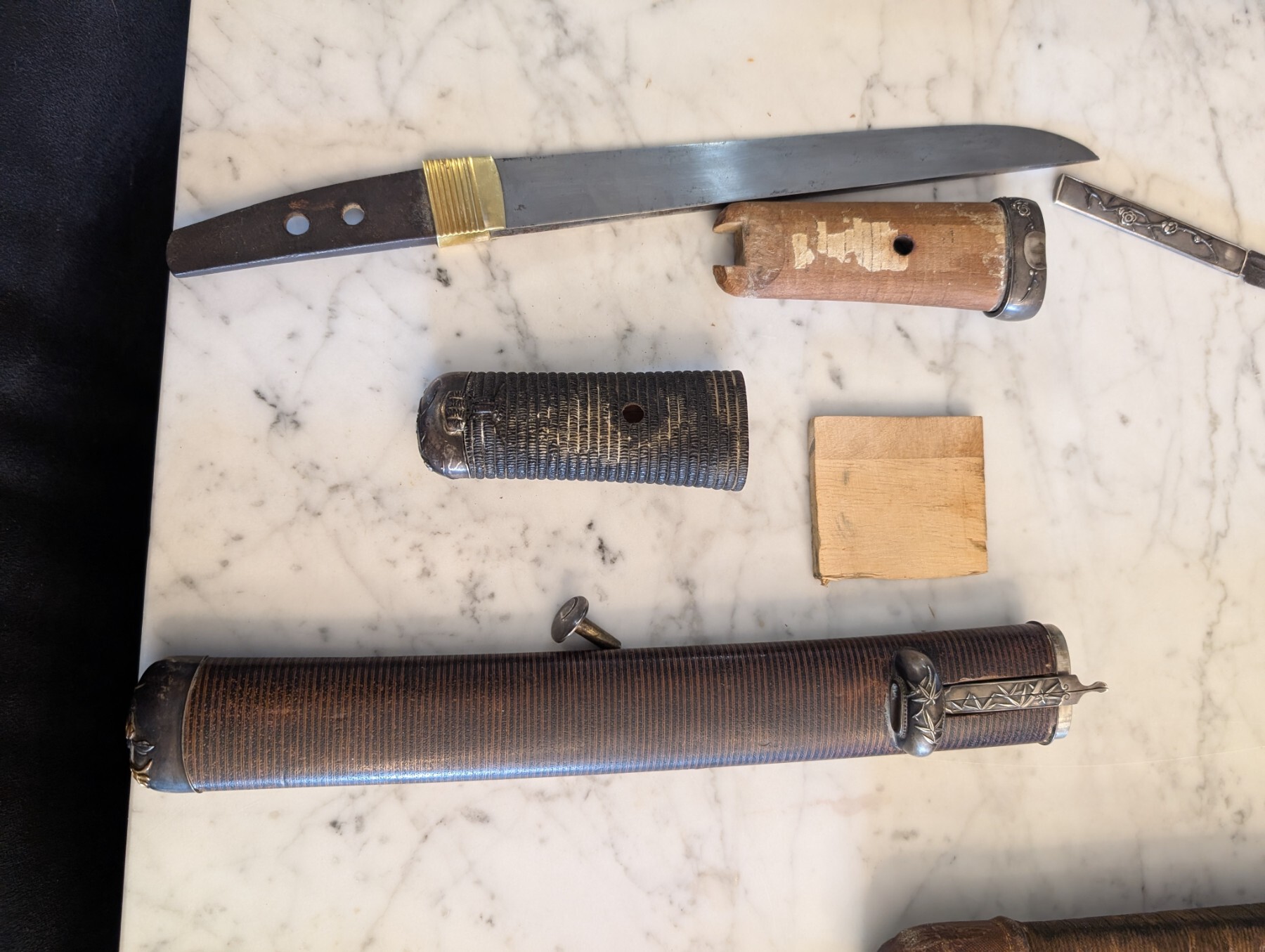
Indeed I was quite surprised to see that when I removed the mekugi. Having a screw mekugi seems essential here to maintain the pressure on the wrap. The backing paper may have been there to help stabilize the sleeve through pressure or glue. I'm also unsure about the lines. Perhaps the remains of a previous tsukamaki that was undone and replaced? Perhaps a way to measure where the lines would be placed on the sleeve? As for the reason why, I'm am equally puzzled. It does make for a fairly tough grip. Perhaps a way to allow someone to change the cover for another? Though at that point an extra tsuka may have done the job. Maybe as a layer of protection to be certain that water would not affect the blade? Maybe the artisan simply wanted to show off their incredible skills and creativity by designing such an intricate koshirae? Who knows!
-
I have examined it myself, and I can tell you it is exactly as I described it. It is a thin tube of wood on which a mock ito was made out of lacquer. If a textile wrap was present underneath the urushi it would be much thicker than this one is. This is only a few millimeters thick, barely the size of a very slim cord. It is possible though that the ito was carved out of wood or paper and then lacquered though, but it's not like standard lacquered ito I have seen in the past.
-
Thank you!
-
Thank you for the feedback. Could it be gimei? It's a bit rusted out, but it's not quite the general shape or positioning of a Muramasa mei, at least for the little I know on the subject.
-
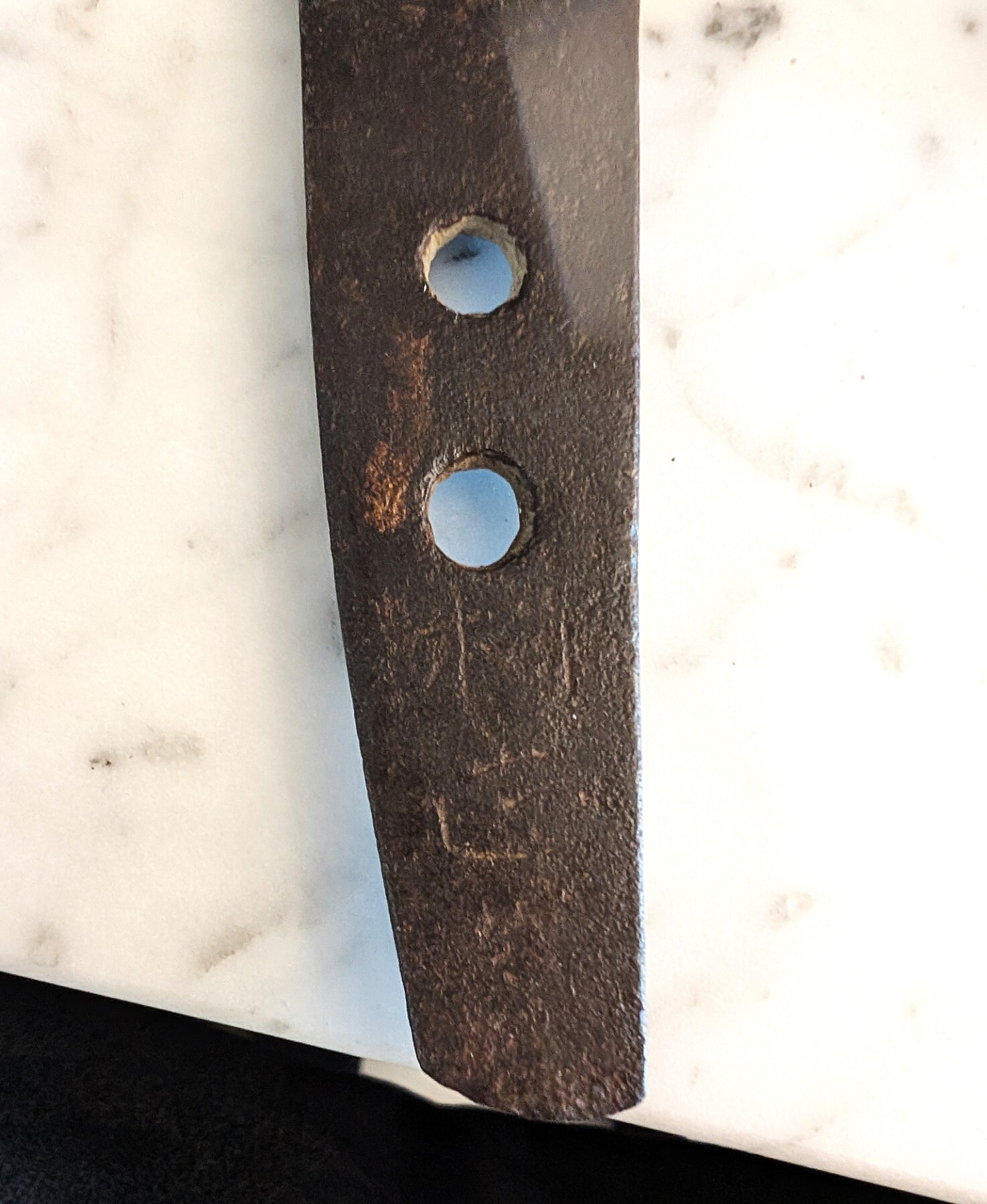
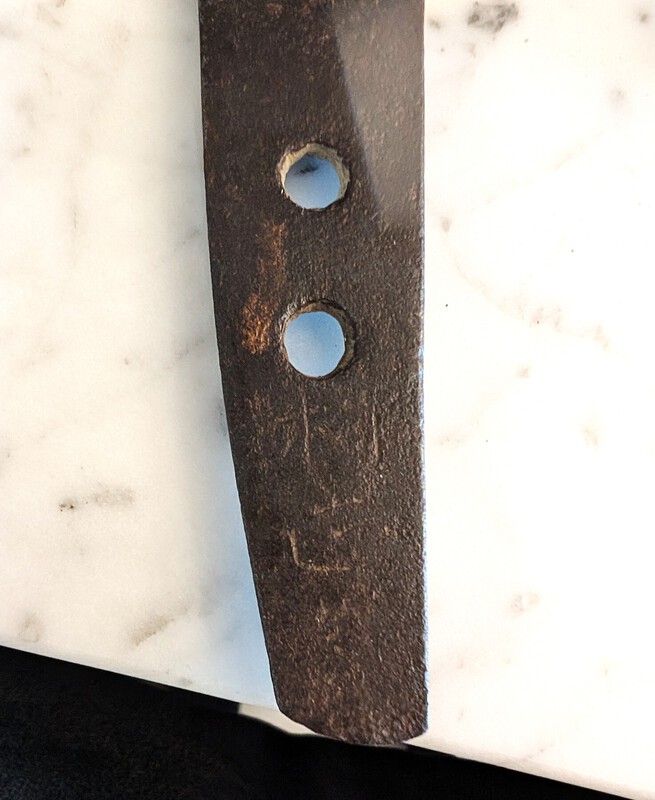
Hello everyone, A friend recently showed me this tanto for which I cannot quite make out the signature. I'm working very hard to convince myself that it is not Muramasa though, as the characters certainly look very similar. XD The blade comes with a very high end koshirae. Almost every single feature that can be silver is made of that metal, even down to the koiguchi, over which the fuchi slides to almost hermetically enclose the blade in the saya. The only exception is the habaki... which is wrapped in gold foil. Also, I am curious if there is a name for this type of tsukamaki. It appears to be a sheath of wood over which someone created a mock tsuka ito using urushi. Thanks in advance for anyone willing to help!

-
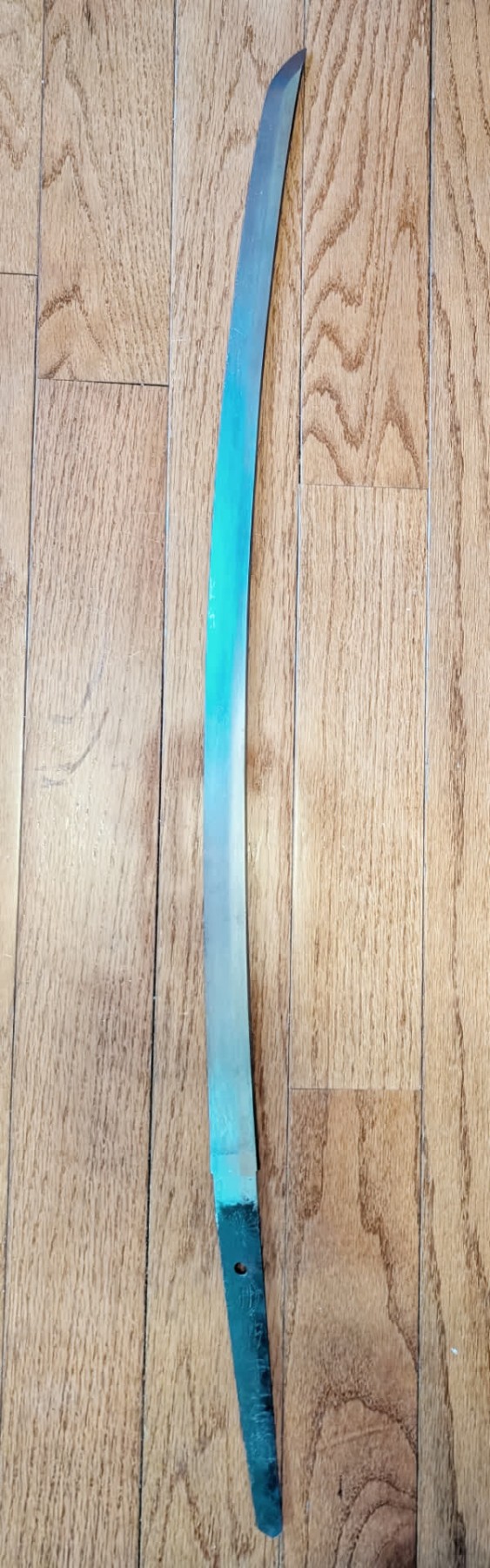
Hello everyone, I have recently found this katana which bears the signature of Tanban no kami Yoshimichi. It seems very similar to the mei of the 4th generation Kyo, but I would I am wondering if more experienced members could chime in. Unfortunately, the blade was heavily scratched and tarnished, so it is almost impossible to see any grain or hamon. It looks to have been polished quite a few times during its lifetime judging by the fairly small ha machi. The yasurime is also difficult to see due to the thick patina on the nakago, but it looks sujikai/o-sujikai. Thank you in advance.



-
I am raising the question again, is there any expert that anyone could suggest to authenticate these blades and who might be willing to travel to Quebec?
-
Thanks! Here are two close ups of this last blade.
-
Well I wasn't expecting that! Of course the next step would be to show it to an expert, I am would never feel confortable to officially identify this. Could anyone suggest someone able to authenticate this piece? It is located in Quebec City, Canada.
-
Any other guess on the second tanto or the wakizashi tsuba mei?
-
Naval Gunto (Nihon to?)
Maxime Chouinard replied to Maxime Chouinard's topic in Military Swords of Japan
Thank you Thomas. It appears that the blade has a couple of kitaeware. I believe this would be indicative of a folded (if somewhat badly) blade?


.jpg.00539b36e3fa8355361e909a9e729727.jpg)
.jpg.2da37b3bc661503608ba7c51bd525689.jpg)