tetsugendo11
-
Posts
45 -
Joined
-
Last visited
Content Type
Profiles
Forums
Events
Store
Downloads
Gallery
Everything posted by tetsugendo11
-
To all that attended lasts night benkyokai. I hope you enjoyed the lecture and thank you for coming. We had quite a good turn out and it was great to see everyone. We even had some visitors from Arizona that came to hear the lecture! If anyone is not a member of the Nanka Token Kai, if you want to see the study notes that I made, it most likely will be published in one of the upcoming newsletters. Mike
-
Ok just for those that cannot attend, my new toy for the lecture. Mike

-
I will be doing a special lecture on kinzogan saidan mei blades for the members of the Nanka Token Kai. There was no time for a mailer so the reason for this announcement. M Yamasaki
-
as there was limited time, this time there were no study sheets, that is why I posted the kansho sheets for download for all. Usually these are reserved for NBTHKAB members only, but I made an exception this time. Musashi: I was going to talk about the kantei points at the session, but we unfortunately ran out of time (we only had 1 hour but we went over....) So I am now thinking of doing something at the SF show, or possibly an article as between myself and my friend we have access to 3 Musashi pieces. Just for your personal knowledge Mr. Craig, the writeup wasn't supposed to cover the kantei points, just supply info for the kansho section of the lesson as an introduction about the tsuba. On the last trip to Japan, I spent an hour with a sensei from the NBTHK on the subject of Musashi, and it was quite interesting. If you have a different opinion about the Musashi tsuba that was displayed, I would be happy to hear your thoughts. And just for conversation sake I had bought the tsuba from someone (who of course shall be nameless) who had gotten it from one of the most famous fittings collectors who had gotten it apparently from someone associated with the Hosokawa. But if one studies hard enough, with a good teacher that knows the "key" points and history of the Higo kinko school, one can see the differences between the tsuba considered Musashi, and those that are considered copies or utsushimono. My Musashi menuki also came from old collection and Sato sensei did a hakogaki a long time ago, and they have 2 sets of papers as well. I have no question as to the authenticity of them - their expert opinion is more than good enough for me, as well as I know the provenance of the menuki as well. mike
-
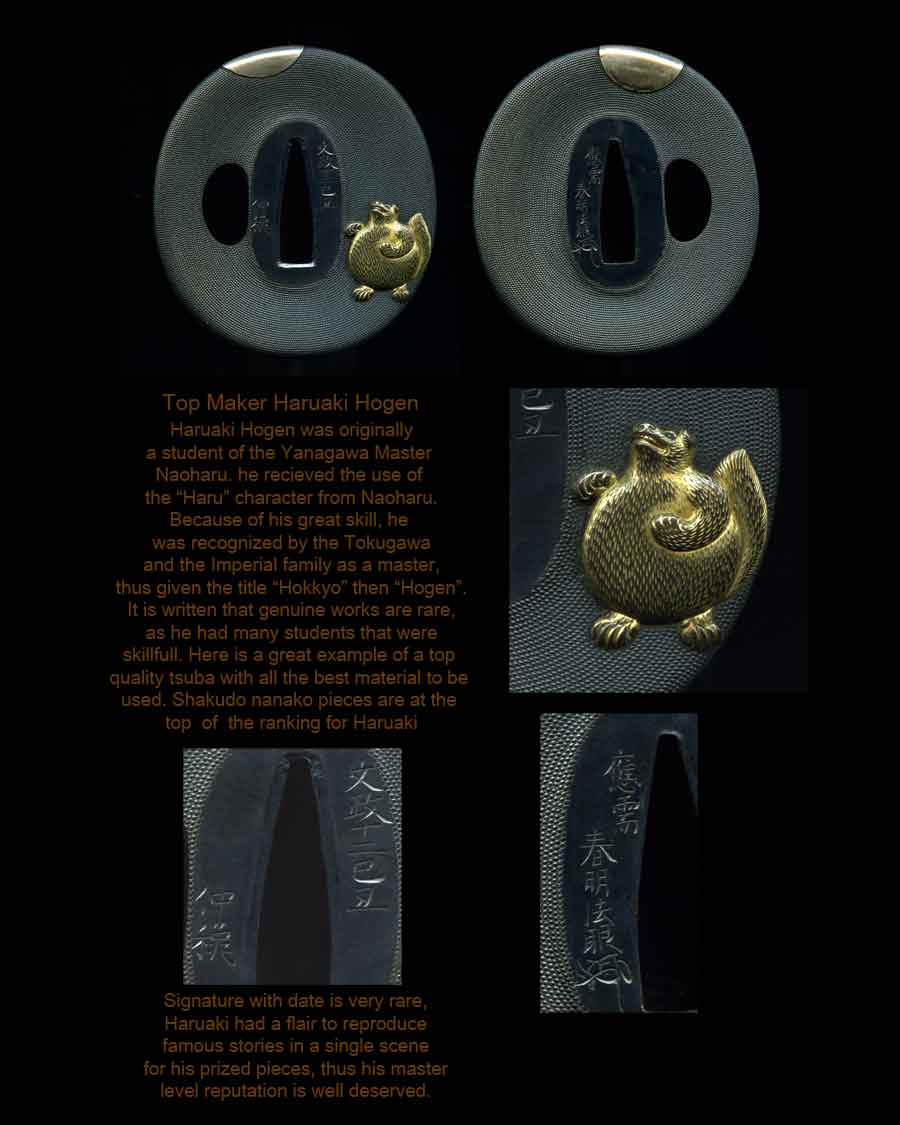
In my opinion, the 2010 chicago show was a success.Especially when considering the economy and the placement of a new location, the show was actually quite fun and enjoyable. I talked with many of the attendees, and all seemed to have a good time, both enjoying the show and the lectures. Many were looking foward to the SF show which should be a great event as usual, especially this year with the shinsa. My lecture seemed to be well recieved, and I thank all that attended. The subject was how to judge fittings as a shinsa team. This gave everyone a different view from the "good seats" by being the "judge" After which I gave out the results that the NBTHK or a well known sensei had attributed the piece to. Followed by an explanation of why the result was had. Also on display, were some very rare and excellent examples for appreciation whcih is the norm in Japan at a study group meeting. I will try to post some of the explanation sheets I made for everyone to use if they wish for study.The sheet for the Haruaki is already posted under the string for Haruaki M. Yamasaki
-
For all, I will be having an informal study session on saturday may 1st (time to yet be determined) on shinsa and kodogu kantei. We had this session a few years ago and it was requested by many to do it again. On behalf of the NBTHKAB branch.BTW the Haruaki will be there as well as a few other surprises (Musashi?) I will be busy getting ready for the show, so any questions please send to mike@tetsugendo.com http://www.tetsugendo.com Mike Yamasaki
-
some info that I made for an article Mike Yamasaki

-
Just for kicks, I have a very nice Haruaki that I will be taking to the Chicago show. NBTHK certified, and excellent piece that has a sense of humor! Mike Yamasaki

-
kokinko tsuba and shonai kinko kashira


-
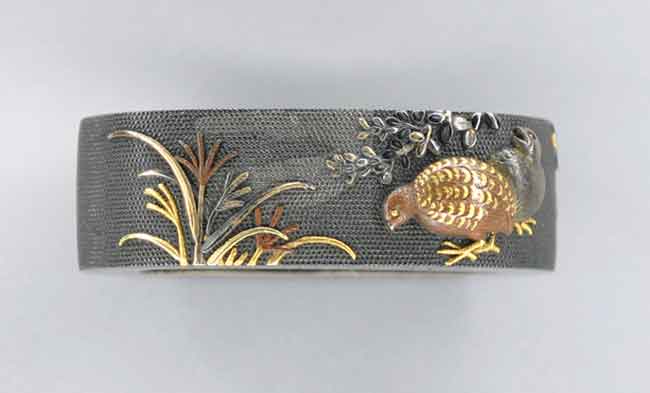
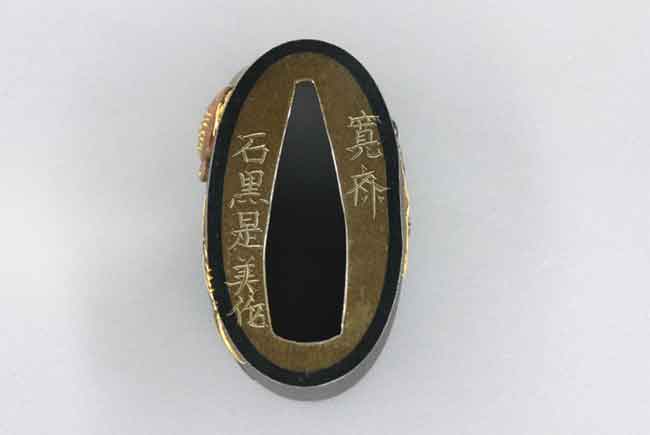
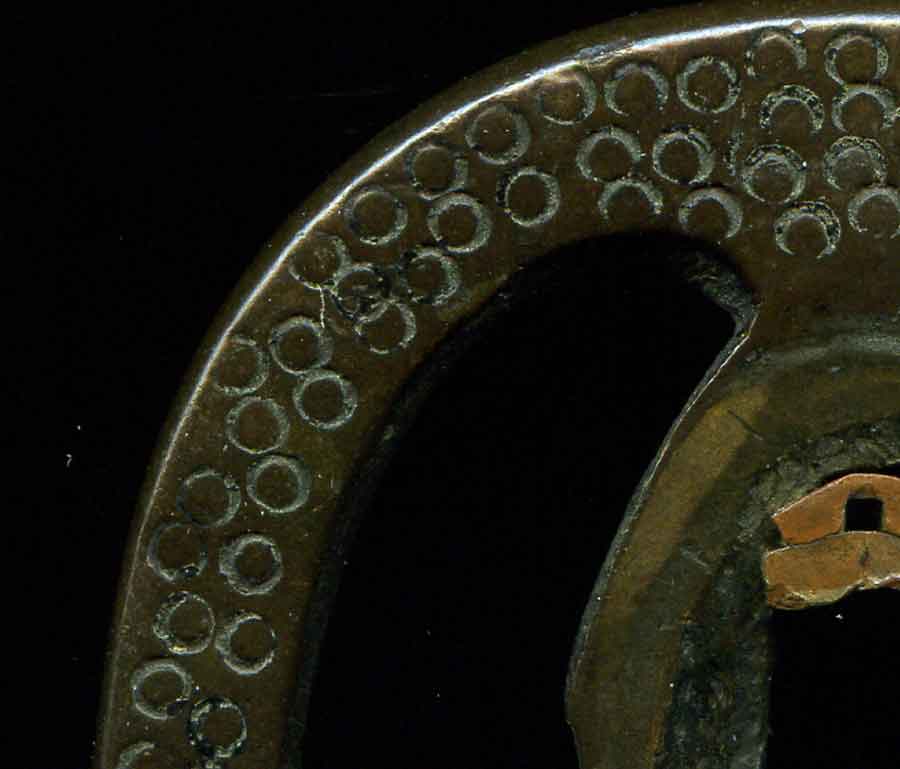
Wow, looks like Ford has been busy while I was away. Sorry for the ultra late response, but I have been busy with work. I guess I don’t have as much free time as Ford to post things on the board. Speaking of which, as simple question for Ford, since he can do “Kantei” from pictures, Ford, you never really said who you thought made this set of Fuchi Kashira that is signed by Ichijo. Your answer would be very educational for all. As for me , I was taught to only kantei items in hand only as there are always things that cannot be seen by pictures alone, but as I have seen this set in hand, I have an opinion of who made them as well. I think that of course the signature is suspicious (easily guessed from comparison to proven examples), but I was taught to be very polite when publically asked about a sword or fitting (privately is different). We must respect other collector’s feelings as they are the ones that appreciate and collect these items. Also I have uploaded a picture of a similar surface texture from a kokinko tsuba that resembles that of the “Ichijo” fuchi kashira in question. Of course the tsuba texture is a bit more primitive, but considering the age, it is understandable in my opinion. Perhaps this type of texture wasn’t meant to be nanako, but I believe only the original artist can answer this question. Also a Shonai kinko kashira that has a similar feeling, but in truth, I have yet to see a modern piece with this type of texture. Perhaps someone was trying to be innovative, either way an attractive set regardless of the signature. But most likely student work in my opinion. As for the application and style of the design, a similar in feeling NBTHK papered signed Ishiguro set seems good for comparison of the MAIN DESIGN style only. Also for those that are interested, this tanto that Ichijo is wearing in the photo that Ford posted has all of the fittings made by him, this mount and blade was in the collection of the late director of the NBTHK Suzuki Kajyo sensei and I believe has been donated to the NBTHK by Mrs. Suzuki. He had an incredible collection, and I am fortunate to own a piece from his collection. For Mr. Jean. I really had to be misunderstood, I prefer to speak in person rather than post typed opinions that can be misinterpreted or turned around. I will post a separate subject in regards to my feelings about modern artist in the sword world. Please read it carefully, and if you have any questions, please e-mail me at my website tetsugendo.com. Ford, I will be in Japan at the November show if you would like to continue the discussion about this set of fuchi kashira. I hate typing!!! Also I would be very interested to see in hand a tsuba you made at the show.


-
For Mr. Jean: My take on modern swords and tosogu. Personally I love all swords and kodogu, regardless of age or school. However, I prefer Koto Soshu, and Higo Kinko as some of my favorites, bit that doesn’t deter me from appreciating or collecting modern swords or fittings. In turn, I was probably one of the top importers of modern swords in the US in the past 5 years. I even bought the tokusho (NBTHK contest winner sword for modern Tosho) of Okubo Wahei (Kazuhira) that was polished by living national treasure Honnami Nisshu. And yes it is true that I also feel that modern artist are under appreciated in the sword world, especially outside of Japan. So I have spent the last 6 years or so trying to show people outside of Japan the high quality that the shinsakuto makers have achieved in making their blades. I have not yet have had the time to fully appreciate the modern fittings makers as much as I would have liked to yet, but I do own 2 pieces in my collection as examples of good work by a modern fittings artist. One tsuba (pic uploaded) is by Naruki Issei, iron sukashi with Bonji, iron resembling that of good Owari. The other is by the well known Tosho Yoshindo Yoshihara (a friend of mine), a Tosho tsuba made with excellent iron with fantastic sukashi work. I received this tsuba as a prize at last years convention when I placed 2nd in the NBTHK Ippon nyusatsu kantei challenge. I really like this tsuba and it rivals any other Tosho tsuba that I have had in hand. I wish they gave tsubas as prizes when I won the contest in 2001!!!! I have since given this tsuba to my oldest son as he has shown an appreciation of tsuba recently. I have also just bought a sword by Nisshu Kunimasa for his 15th birthday done in the style of Osafune Chogi. A very beautiful sword that I used for a kantei challenge at the local club meeting. Many thought the blade was a Juyo Koto blade. I own presently 5 modern blades and 2 tsuba, but I hope to buy something else in the near future. Ok, here we go…I believe that modern artist cannot become exceptional in their work if they continue to do utsushi (copies of older masterpieces). By keep doing this, they will lack the life they need to input into an original piece of their own. Masters such as Ichijo, Natsuo, Somin, who broke away from the stiff tradition made by the mainline Goto, to do their own pieces their way, with their ideas are masters because they did what they did. Japanese have always been known to take something good, and make it even better. This I believe are the ideals of a master.That is why Sukehiro is considered a master when one see his original hamon of toranba., Masamune, by creating his own original style…pioneers, all of them, the modern artist need such a thing in their ranks, they have the talent, I believe they are skilled enough, but can they once again break from tradition to create a new original style? One thing that I have noticed in my studies of the sword and fittings, is that masterpiece works do have “life” to them, that is what separates them from all the rest. That is why I also believe that there has only been one Ningen Kokuho (Living National Treasure ) modern tosogu artist. I also wonder how many members of the NMB Actually, have modern pieces in their collection? A good sword is a good sword! Mike Yamasaki


-
oh i forgot the happy face thing
-
OK Since this is getting more attention than it should for a set of Fuchi Kashira that should only be judged when in hand rather than by pictures, I decided to take the time and contact the previous owner of the set and it seems that they came off a handle from a sword with original bakumatsu period mountings. So you guys figure it out!
-
Some artist with talent would tend to do their works in such a careful precise manner, as they became higher in skill and talent their work takes on a natural tone. Too see such differences, one has to see many, many examples in hand that are deemed genuine. In Japan, study groups provide such experiences, with Q & A sessions afterward. In the case of this set of Fuchi Kashira, the workmanship is precise, and has a flair of being original in its design. Many so called contemporary pieces tend to have a feeling of being a copy of something more well known, rather than being a original design. Contemporary pieces also are made in a different manner, but some trying to use the older techniques.This is easier explained by "example in hand" , as I did at the 2009 Chicago Token kai, where I had an original piece (NBTHK certified), and a modern example of the same design. I first put out the modern piece, and asked the questions typical of any kantei session. It was deemed by all to be genuine and a very top grade example. Then the other shoe dropped when I said that this piece was a modern copy of an older piece. Silence and disbelief came over the room. Then I produced the certified example, and passed it around for all to see and compare. Immediately everyone understood the differences without further words. Then I went on to point out the finer details for further education. In the future, I will do such a study session again, and I hope you all can attend. Mike
-
well since I have had the pleasure of seeing this set in hand. I can tell you all that in my opinion, the work is quite nice, and definitely NOT modern. Most likely from around the mid 1800's. The workmanship is done with skill, not a top level piece mind you as my Ichijo kozuka (NBTHK certified), but still nice work. There is attention to fine detail, carving is clean and iroe is done well. contemperary pieces are usually not done in this fashion as well, if one has studied kodogu in Japan, one can see the differences easily. Perhaps serious judgement about kodogu and blades should be done when the item is seen in hand rather than 1 dimensional pictures. Oh , btw the signature is cut well, but would require more study as to its authenticity. M. Yamasaki


-
Oh and by the way, all items we displayed for everyone that were of high level craftsmanship were all NBTHK certified! So excellent study pieces for everyone at the show.
-
To All, I just wanted to thank everyone who came to our table at the sf show. We had a wonderful time and did very well in both selling and buying. In truth we probably did better than last year even though many were worried about the economic situations. We also decided to show items, not only for selling, but to display high end fittings so that everyone could see the real items in hand for appreciation and education. nothing was left "under the table" this year,so all could see an learn. For example we displayed Yashiro Jingo tsuba a first generation, three signed 3rd generations, and a 5th generation signed with personal name and age. A Rare Tanaka Kiyotoshi, an excellent pair of Nakagawa Issho menuki, a Goto Ichijo kozuka, 2 pairs of solid gold Goto Joshin menuki, a pair of solid gold Goto Tokujo menuki, and about another 60 pieces as well. I will not be answering posts, I just wanted to express my thanks to everyone involved, and for the people who put on such a wonderful show every year! Mike Yamasaki http://www.tetsugendo.com
-
This is just a note I am writing after reading everyone's post about the show. As always, i believe that quality is better than quantity, and I saw that we had a very nice group of collectors from various different levels of experience that had attended the lecture that I presented on behalf of the American Branch of the NBTHK. Education about swords and fittings is more available nowadays due to such organizations such as the NBTHKab, thus hopefully making not just new collectors aware of the "dangers" of collecting without the proper knowledge, but the more seasoned collectors as well. I believe that many that had attended my lecture left with at least one good point learned about tsuba that will help them in the future. In my home area, we often hold seminars and lectures for the new collectors as well as the old. But I agree, new and younger people need to be introduced to this outstanding hobby, and it is the job of all that have carried the torch til now to help those that will be the next generation of collectors. That is why we hold these lectures and seminars, to help the new and keep the interest and appreciation of Japanese swords and fittings alive, just as they have been for the past 1000 years or so. Also, a quick note for those that are NOT members of the NBTHK, but did not pay the $10 to attend the lectures offered, $10 is a very reasonable amount to pay I believe to be able to learn, and handle in hand items such as a Juyo Token katana, or a really rare tsuba and learn about it as well.Do you realize how much a ticket to Japan is? Or admission to a museum? I thought the show was great, especially in these times of economic strife, and I commend Mark Porpora for a wonderful job!
-
Koa Isshin Mantetsu in Tachi Mounting
tetsugendo11 replied to Carlo Giuseppe Tacchini's topic in Nihonto
Hi Guys, Not sure if anyone will be interested, but i have a Manchurian tachi blade (yes tachi mei signed) with the original tachi habaki but, it is in its ww2 original mount. probably had the tachi mounts and a set of ww2 mount for war. It will be up for sale soon, contact me at Tetsugendo2168@gmail.com if you are interested. Mike