FletchSan
-
Posts
356 -
Joined
-
Last visited
-
Days Won
6
Content Type
Profiles
Forums
Events
Store
Downloads
Gallery
Everything posted by FletchSan
-
Hi Franco, If I measure 3 finger widths above the bottom mekugiana to the tip of the sword it is 75cm.
-
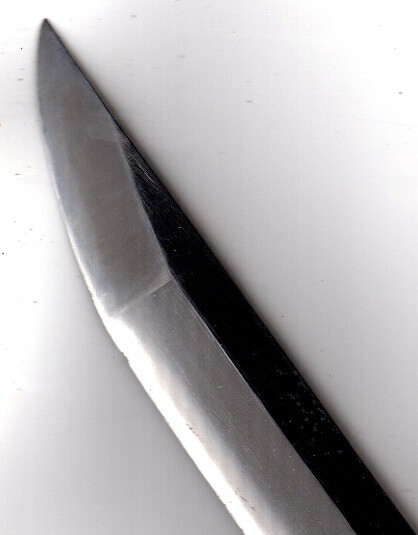
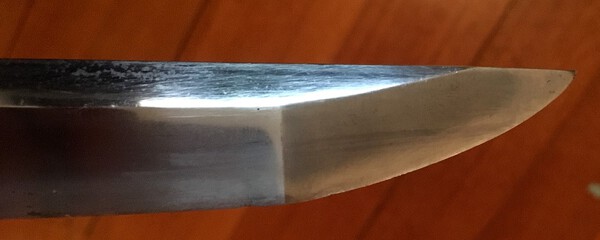
In the later pic of the kissaki I was angling the sword to try and get the light to hit the boshi which may explain why it looks a little odd. This is a scan of the kissaki which shows the proportions more accurately.
-
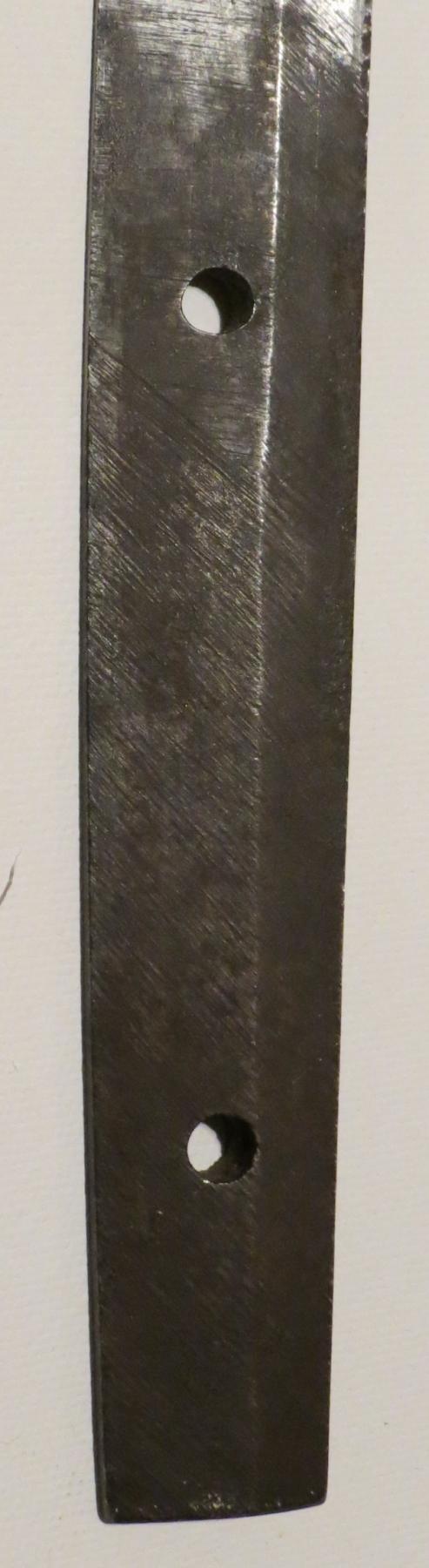
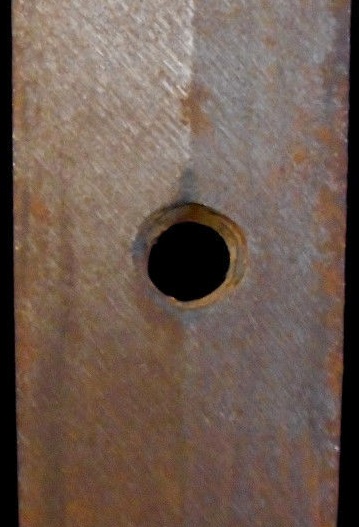
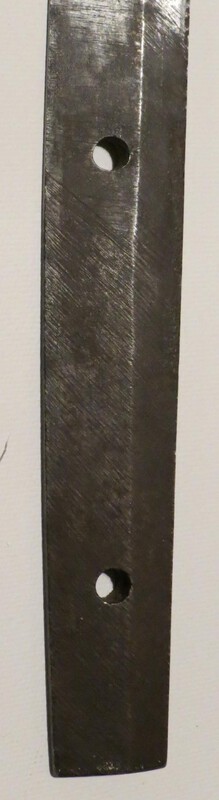
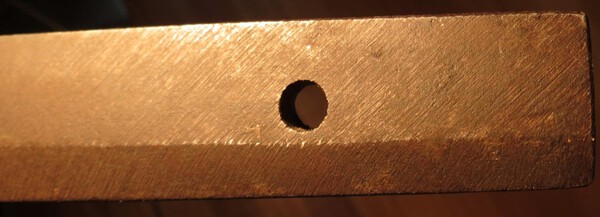
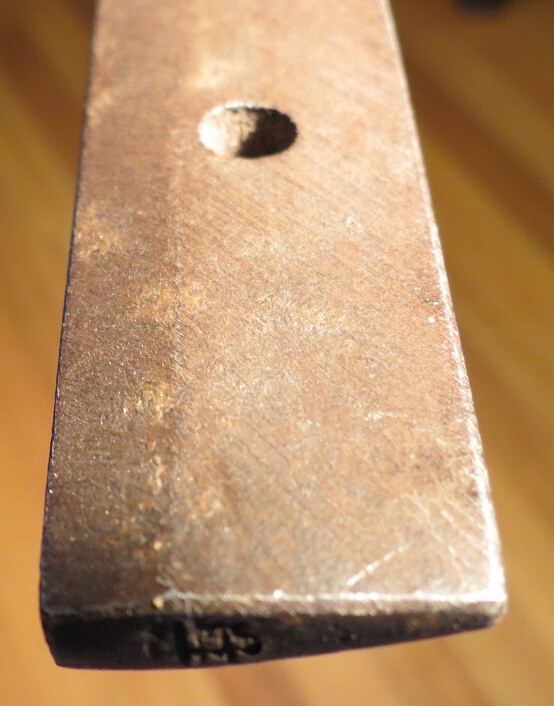
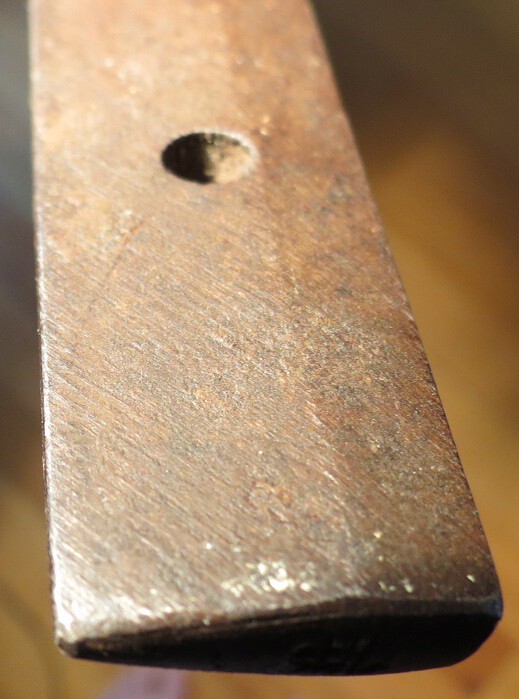
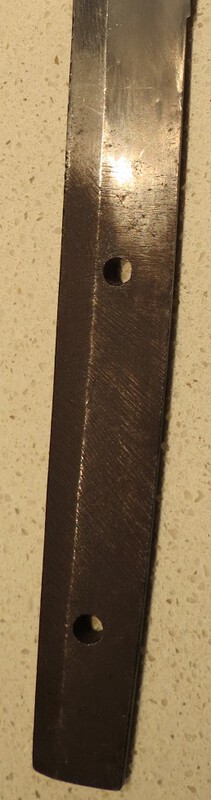
More detailed photos of the nakago as requested.
-
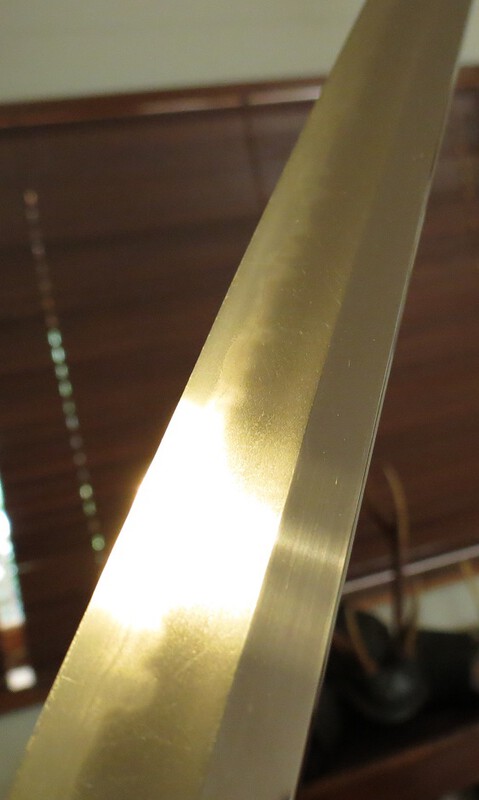
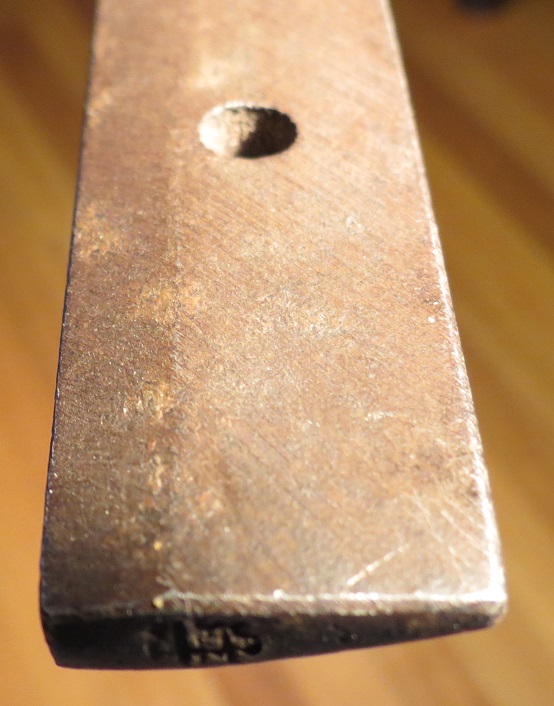
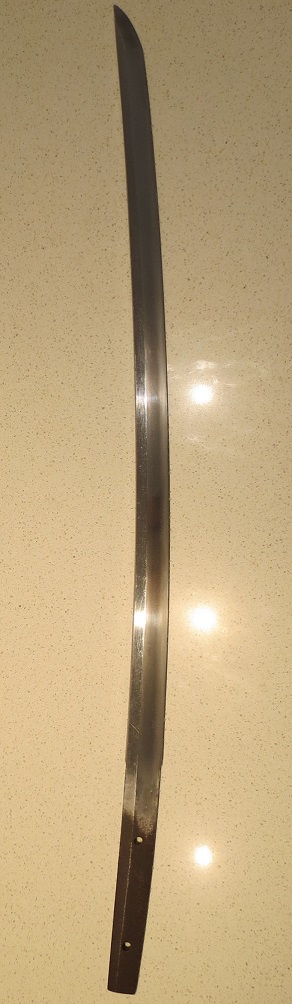
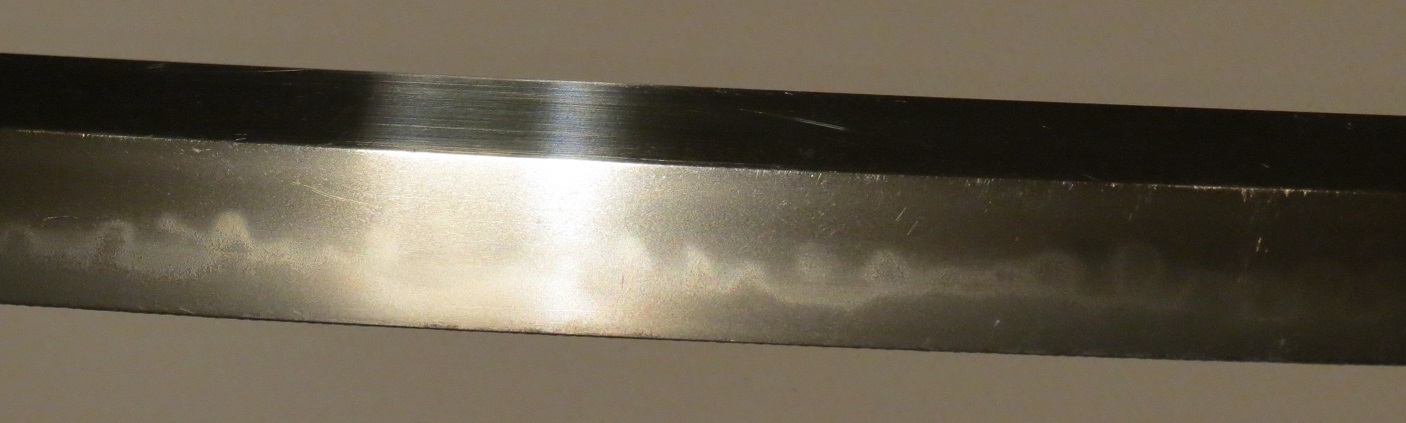
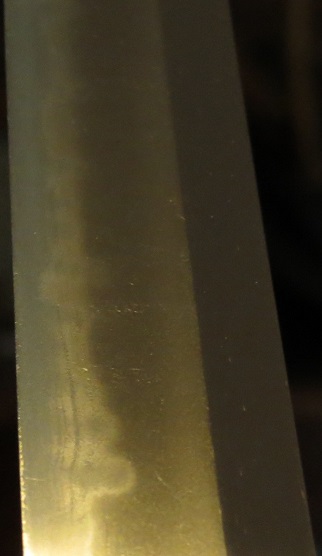
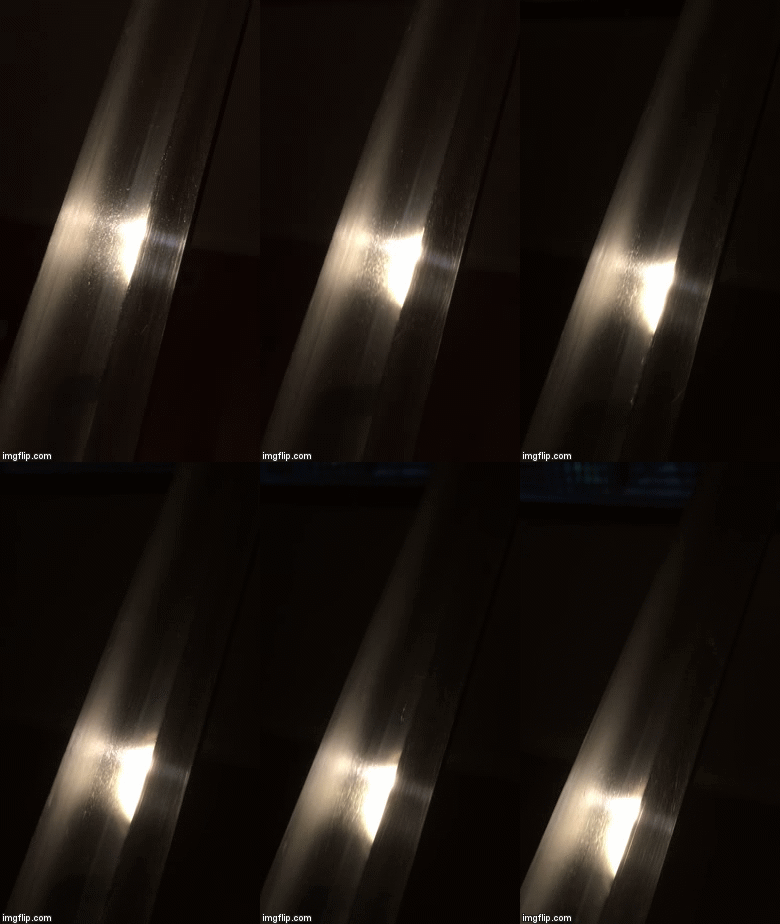
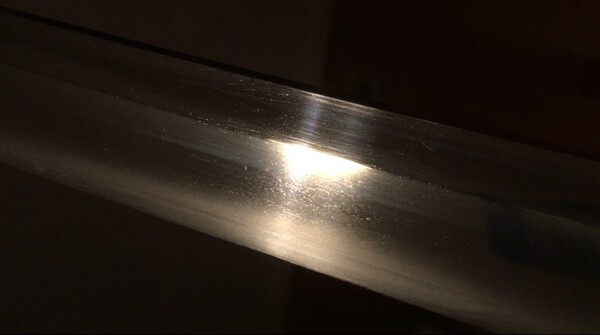
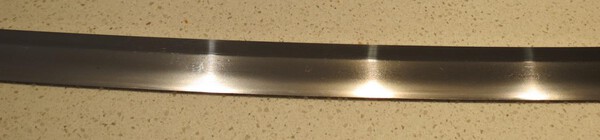
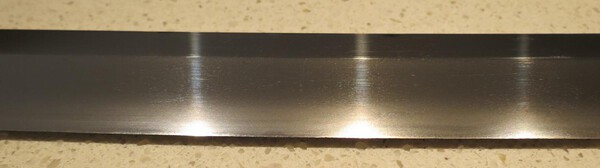
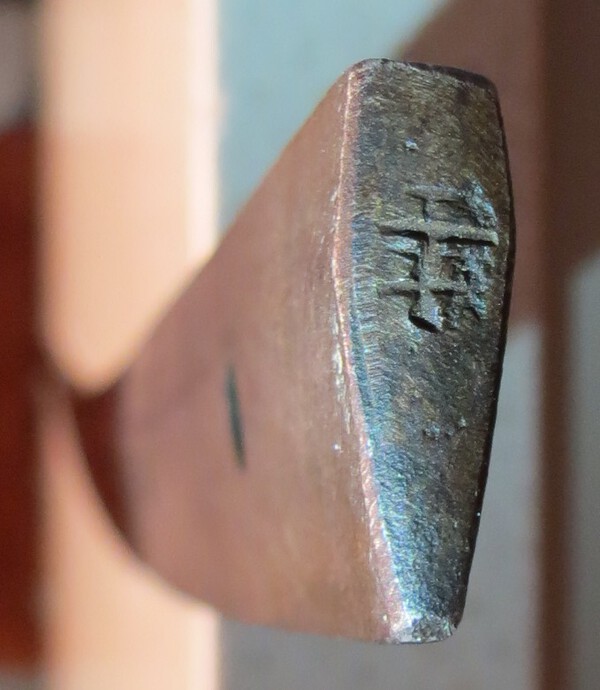
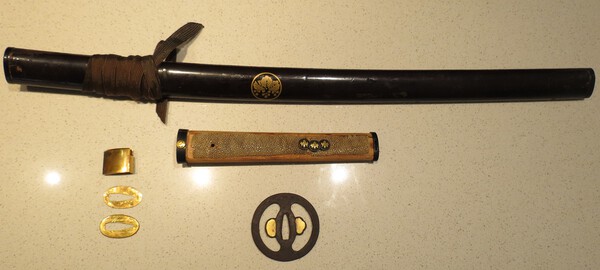
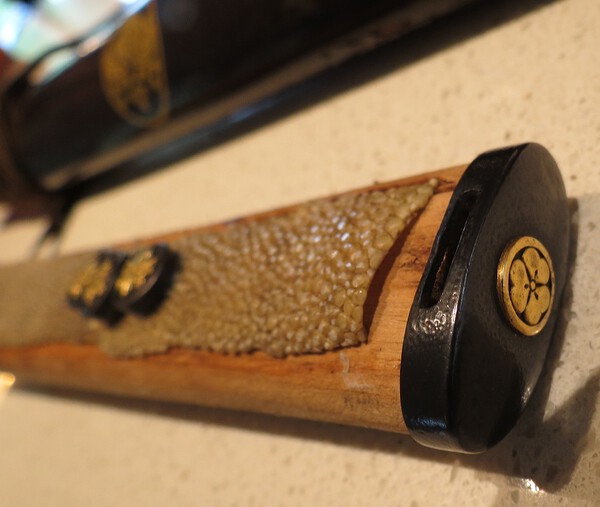
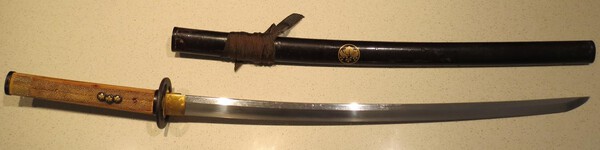
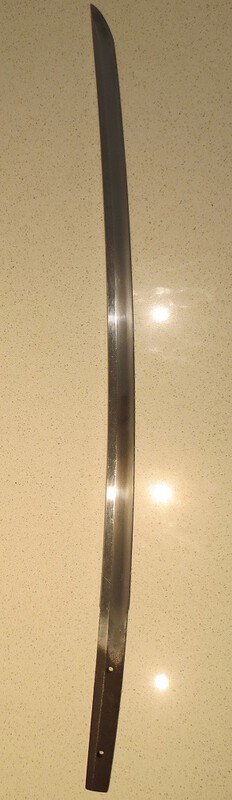
I tried to get a clearer image of the mark - though not sure if this is the right way around or not. Also tried to get a clearer image of the hada and boshi. Other than the sugata, what else do you think points to a later copy Franco? To be honest, It did feel different to my other koto swords - a bit heavier and seems to have had less polishes in its lifetime. A few more measurements Nagasa 66.5cm Sori 1.3cm Width (motohaba): 3cm kasane 0.7cm kissaki 5cm Could the kanji be this? 寺 Apparently translates to Buddhist temple?



-
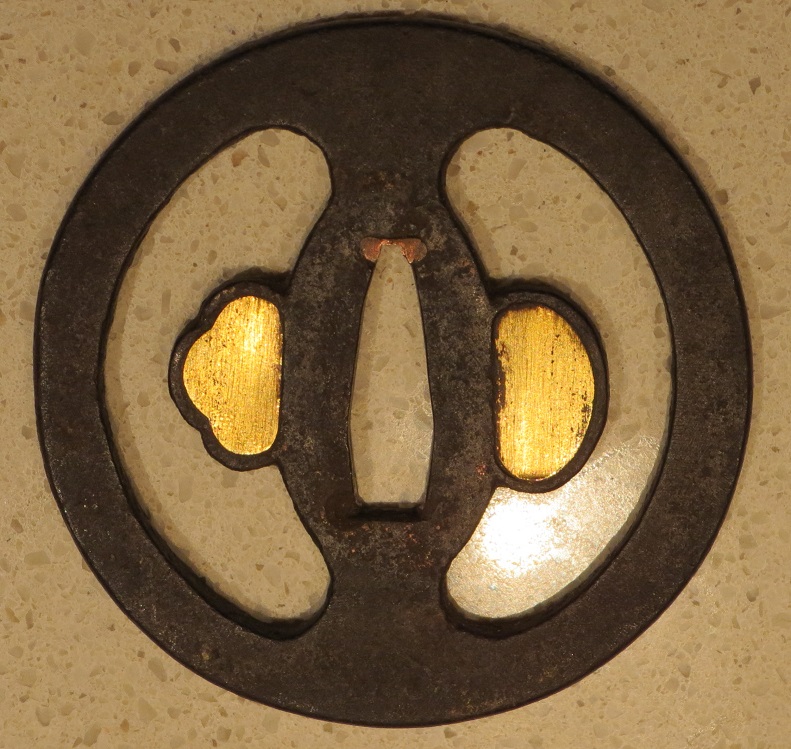
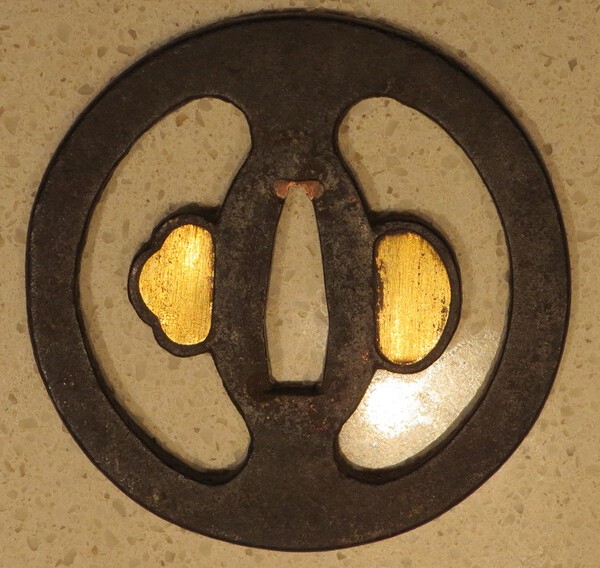
Hi All, I picked this up today and would like some guidance as to what period and school it may be. It doesn't appear to be koto based on the sugata though does have utsuri. The hada is clearly visible and it has a nice straight hamon. It is mumei though at the base of the nakago seems to have a signature / stamp though i can't make it out. Has anyone seen this done before? It seems to be in reasonable polish and very healthy. No idea about the fittings and what was original to the sword though it all fits together very nicely. Nagasa is 66.5cm. cheers, Ben

-
I was wondering the same thing and also how much detail you may lose in a polish.
-
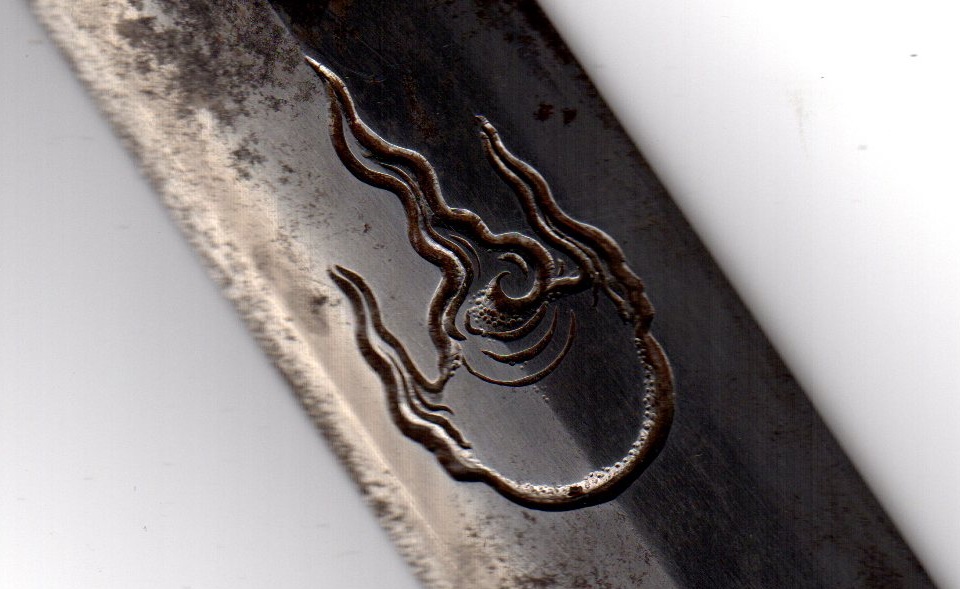
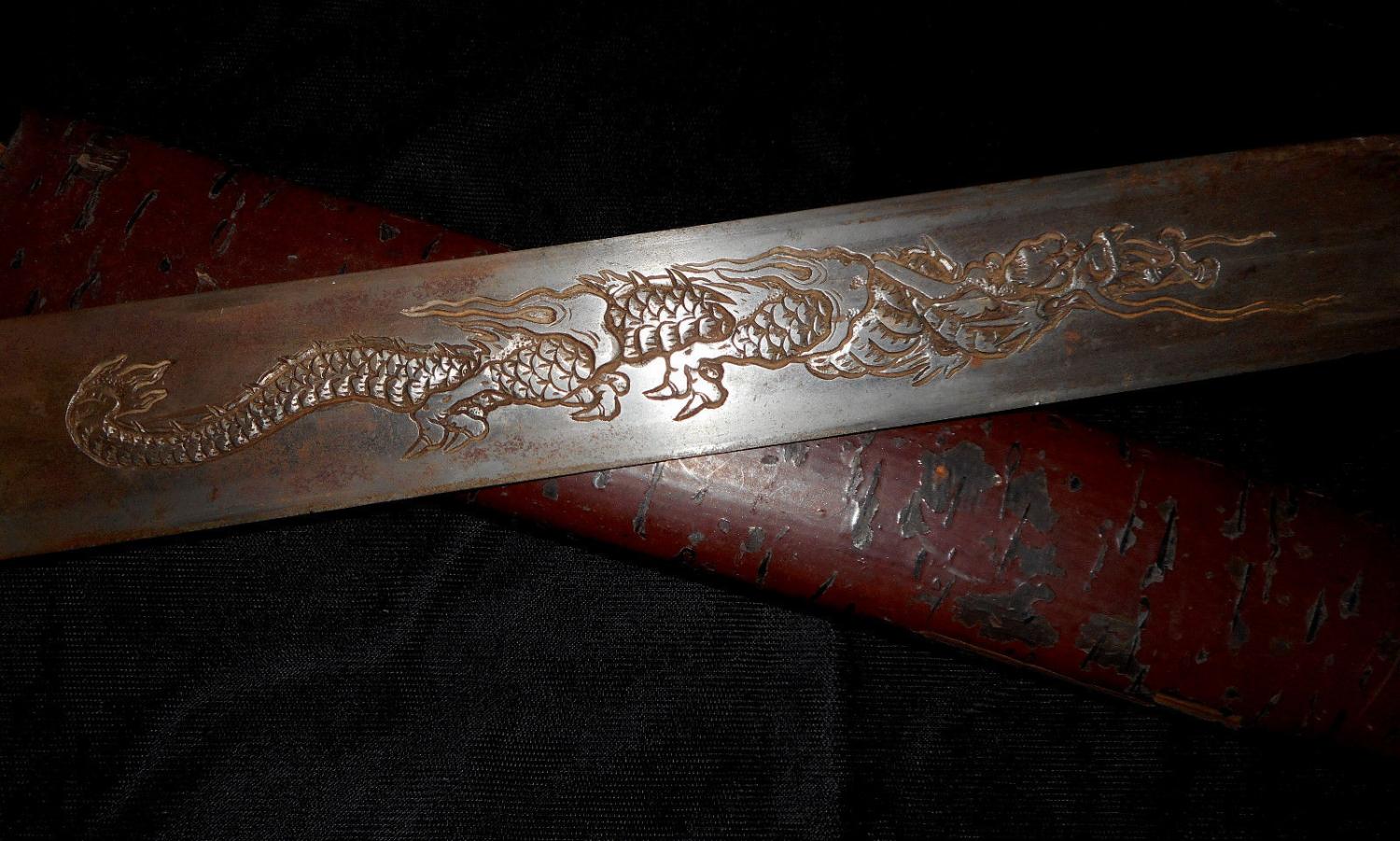
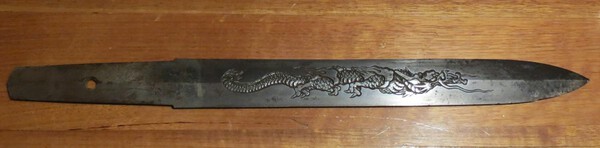
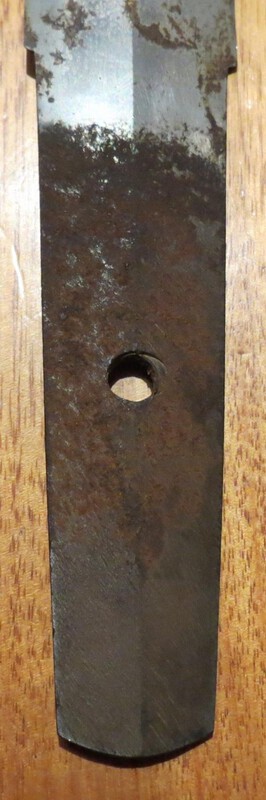
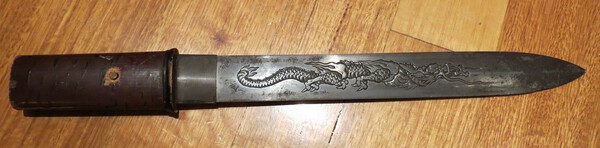
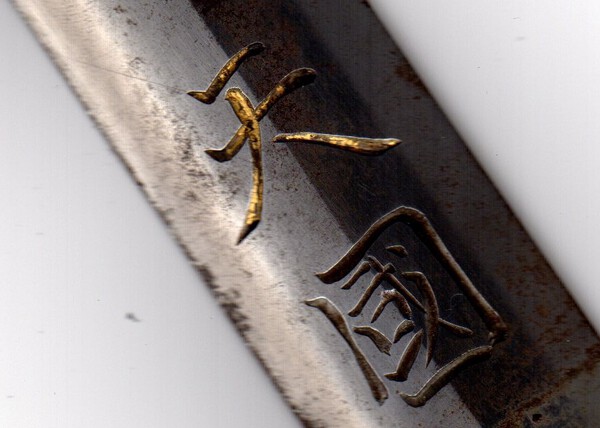
Hi all, I received the very interesting tanto / ken that was originally discussed here in respect to the translation of the horimono. http://www.militaria.co.za/nmb/topic/21026-horimono-translation/ The dragon horimono in particular is very impressive in hand. I've taken a few more photos which reveal a little more detail. The nagasa is 31cm and width motohaba is 3.7cm I'm guessing the only way to really identify the smith in this case would be from the horimono (assuming the smith did the engraving). Is anyone aware of any good references of horimono dragons? I'm assuming the blade is probably meiji period based on the nakago patina alone. thanks, Ben





-
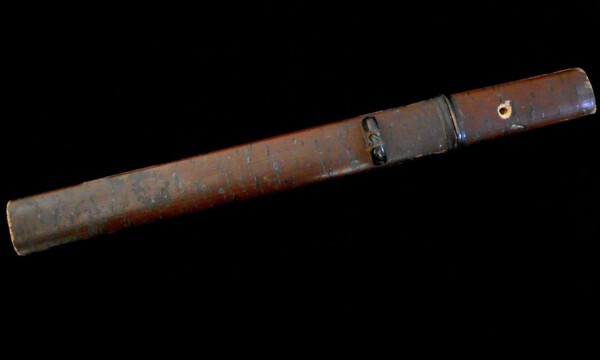
Thanks Guido - makes sense in regards to their rarity if treasured as Shinto or Buddhist totems. I wonder if they were exempt from being confiscated after the war and remained with the families. I love how unimposing the Koshirae is in contrast to the sword which seems to have everything going on with the gold filled characters and horimono. I wonder if the dragon scales were also highlighted with silver - might just be the light. Hard to tell how well forged it is though there are yasurime on the nakago and the hamon is clearly there. It has a reasonable length with a 30.8cm nagasa. I'll arrange for a window and give it a careful clean and uchiko and take some better photos. Cant wait to have it in hand.


-
I was thinking no earlier than late 19th century based on the patina on the nakago. Does anyone have any reference photos of similar tourist items sold at this time ? I've seen the Meiji bone carved ones with poor quality blades though can't find any quite like this one. I would have thought if they were tourist items then they would be fairly common.
-
Interestingly when I google for those Kanji exactly using quotes a Cambridge article comes up about an Edo sword cult - The Narita Fudō cult of Shinshōji Temple. I've requested a copy of the article for research purposes - I'm sure a coincidence but interesting nevertheless.
-
Not sure if it becomes wider at the end - will know more when I have it in hand and will take some detailed photos for the nihonto forum to discuss the sword. Will try to keep this thread on the Kanji translation. I'll PM Morita San as suggested. Thanks!
-
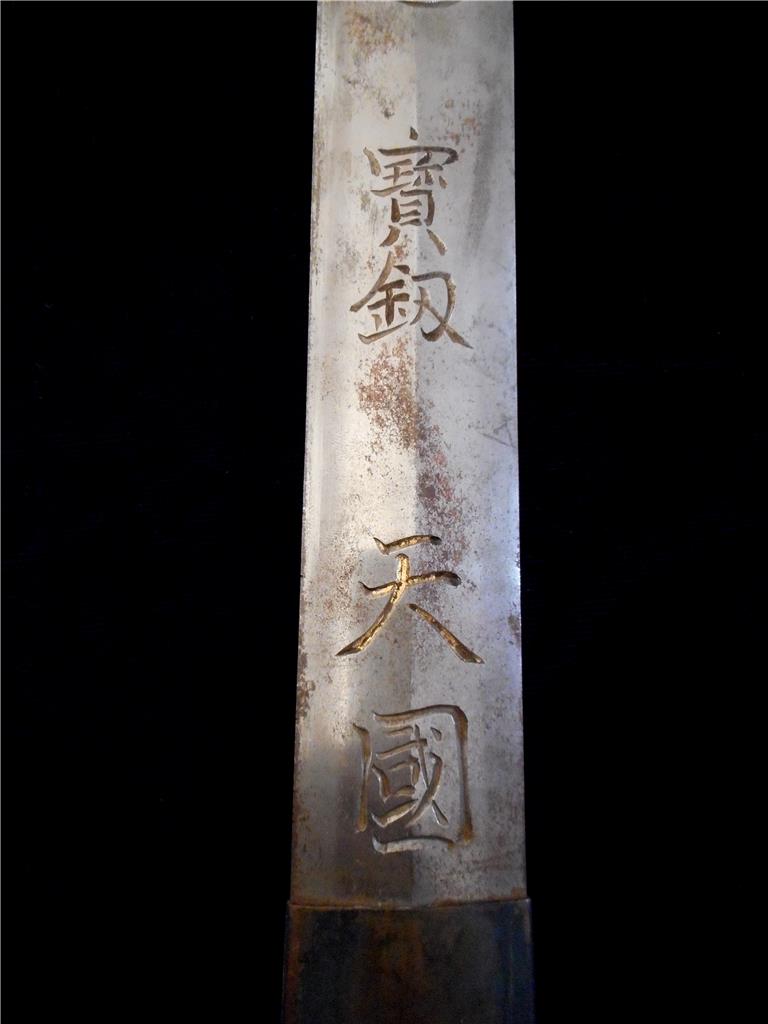
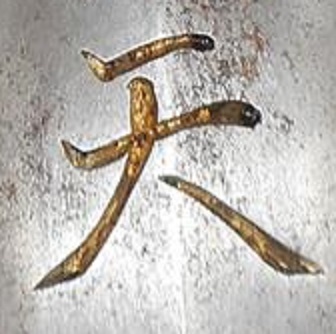
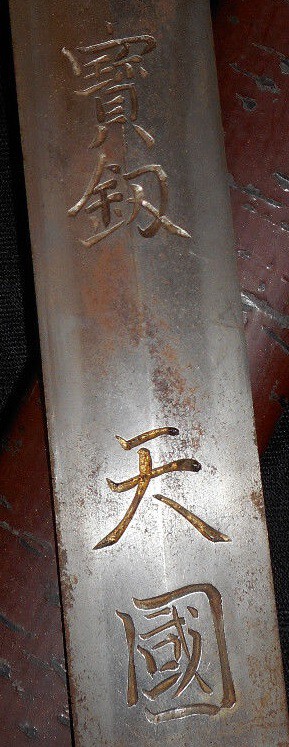
When I google "寳釼" "天国" there aren't a huge amount of results, though google images shows images of temples or shrines. I can't translate the Japanese and google translate doesn't help a whole lot - though I think there's a clue there. Grant, I think you are right about the kanji being filled with gold at one point, I hadn't noticed it previously. Is this unusual? I think I've seen horimono painted red before.


-
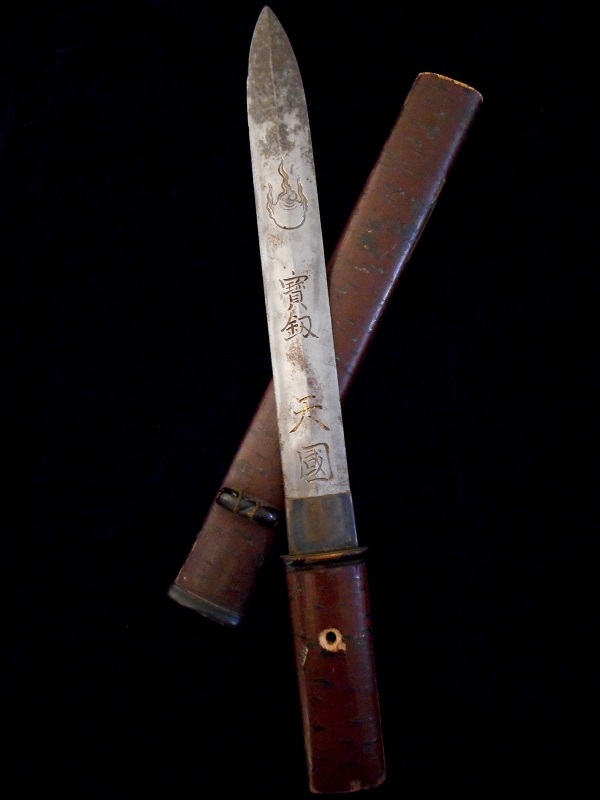
It was a ww2 bring back - so it sounds like the vet found it in either a temple or a gift shop I really like it - so glad there's no consensus of it being fake, and I'm sure the Kanji threw people off which suggests it may be unusual Kanji for horimono? Looking forward to receiving it as it'll be a fun one to research. I paid about half of what the seller originally wanted - so don't feel that I overpaid . I'll get a window done. I couldn't find too much about Ken other than a few one sentence mentions in books or online about them typically being Buddhist temple offerings from smiths and examples being either shinshinto or gendai. Anyone have any good references on them?
-
Ugh - I hope it isn't a fake. I don't think it is? Hopefully not another lesson learned I'll take some more photos when I receive it in a few days.


-
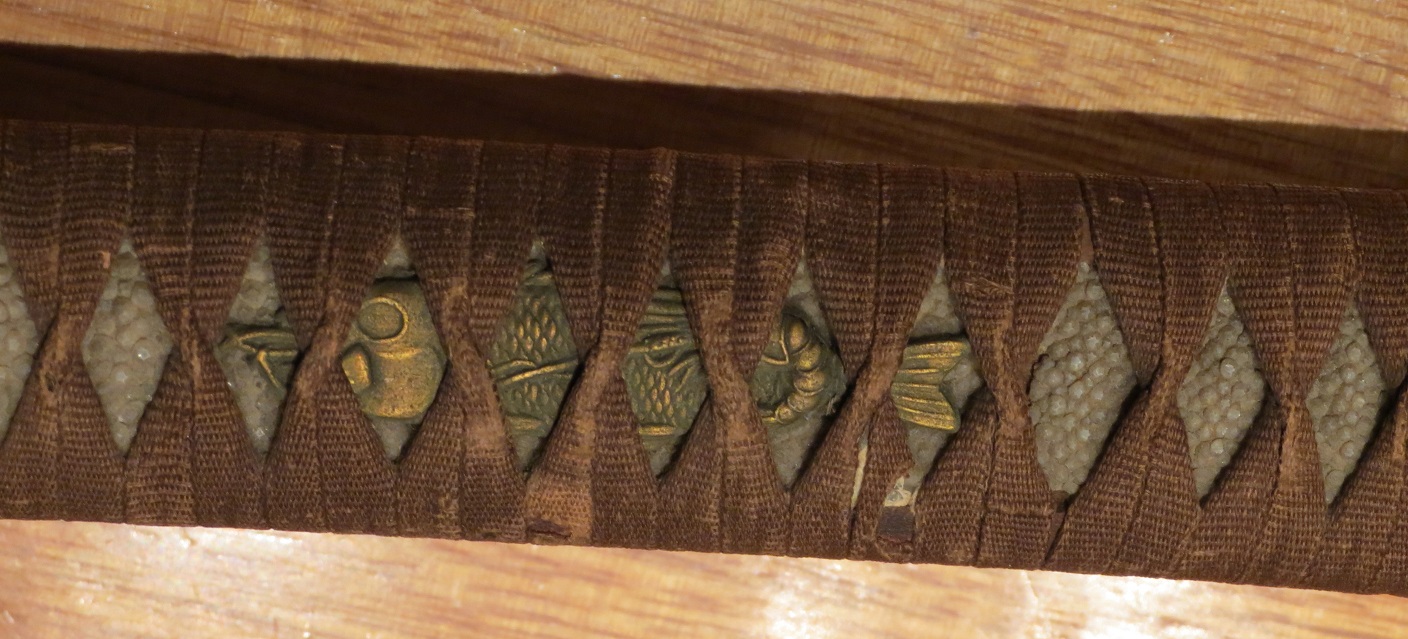
Hi All, I picked up this tanto which I believe is a Ken which has hormiono on both sides. Kanji and a flaming ball on one side and a dragon on the other The Kanji I've determined may be 寳 釼 天 国 This may be a literal translation - but do the first two characters mean Treasure Sword and are the last two a reference to the famous smith Amakuni. Could be a homage to him and a temple offering? or does it translate to something else? thanks, Ben
-
Yes, Andrew did the polish. https://touken-togishi.com cheers, Ben
-
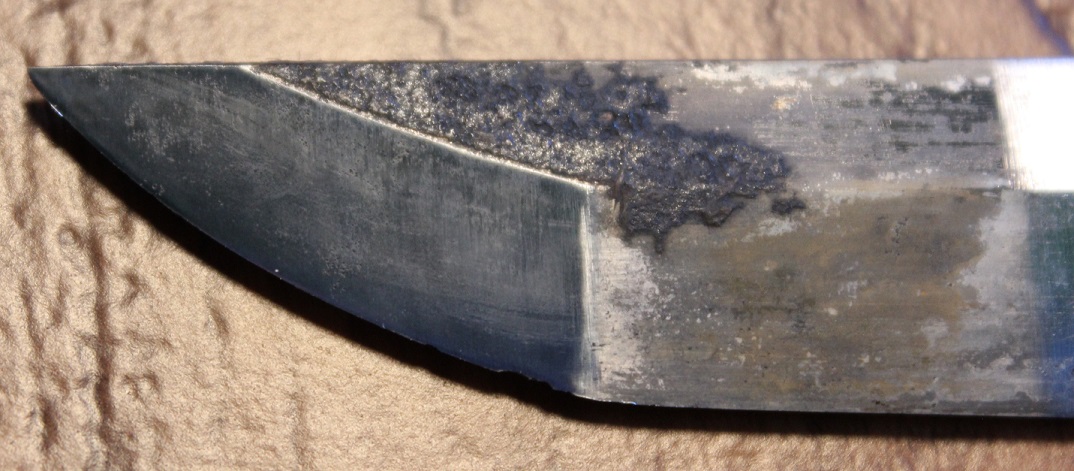
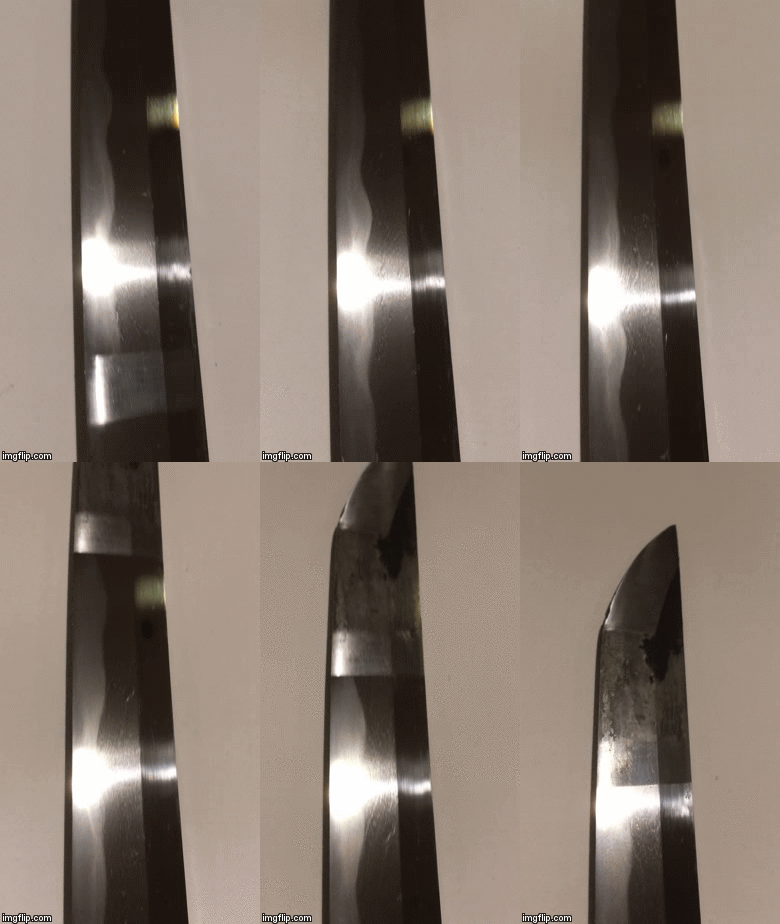
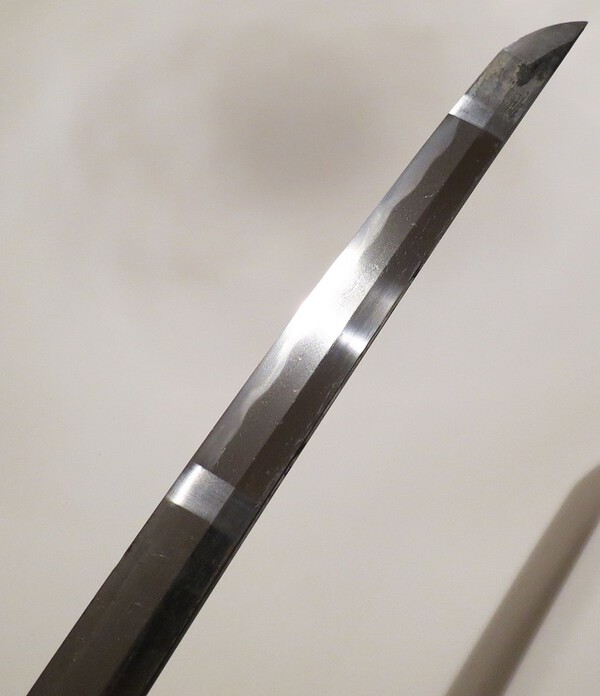
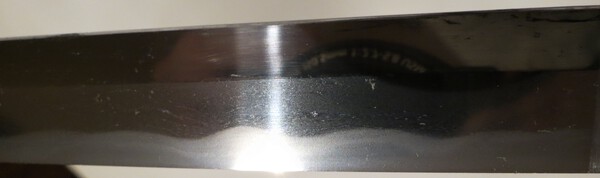
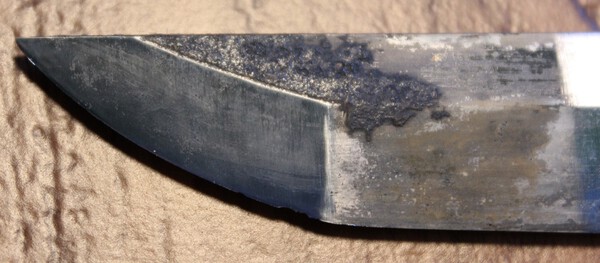
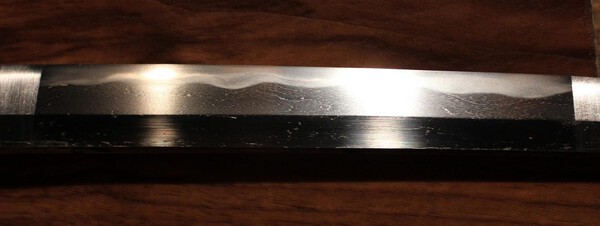
I'm very lucky to have a togishi live so close to me and the small investment into a window can save you some heartache if the full polish reveals some issues. The window in this case did in fact reveal an issue, so I most likely will not do a full polish on this one but keep it for study as is. It's a bit hard to see in the photos though the hamon dips to the edge and fades near the kissaki. The feedback from the togishi was that it was most likely late muromachi mino den due to the tighter hada, lack of masame, harder/stiffer hamon, course nie and lack of activity in the hamon vs. an earlier muromachi blade. Its a nice sword - just a shame about the flaw with the hamon. I still have a nice little window to peer into and appreciate it though Ben
-
I received the katana back today and was able to take some better photos including the newly opened window and nakago. The kissaki looks to be okay under that rust as well. Measurements Nagasa: 68cm Mihaba: 2.8cm Sori: 1.8cm Kasane: 0.5cm Ben
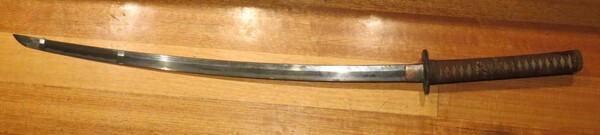
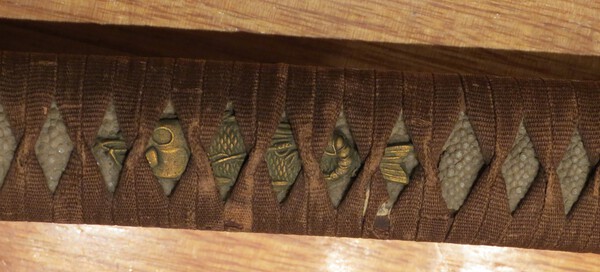
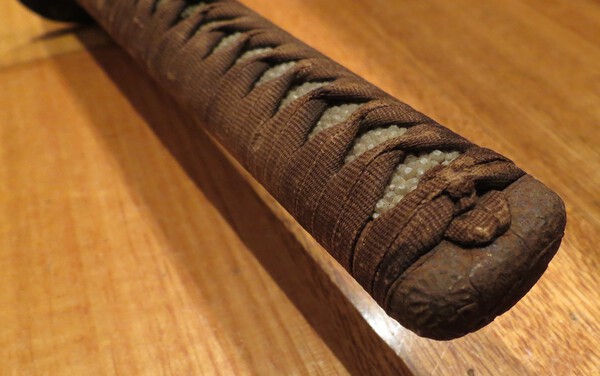

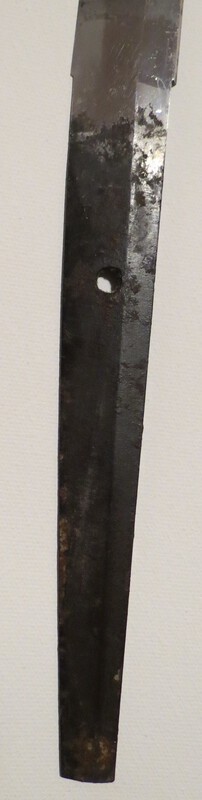
-
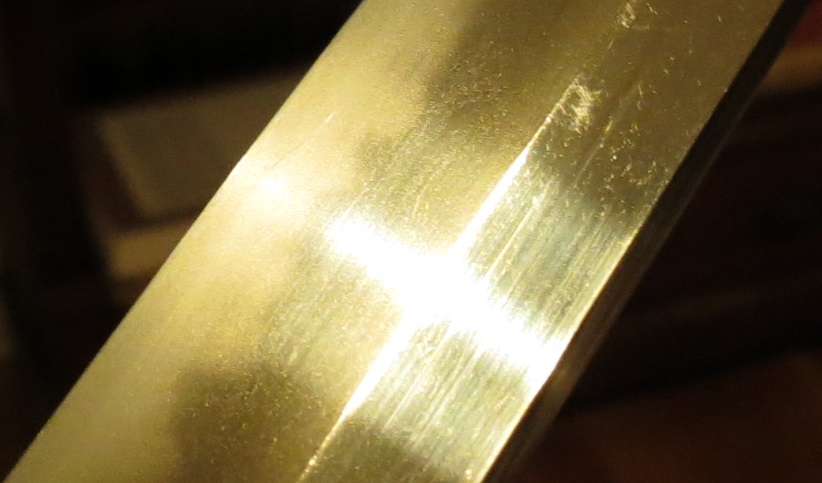
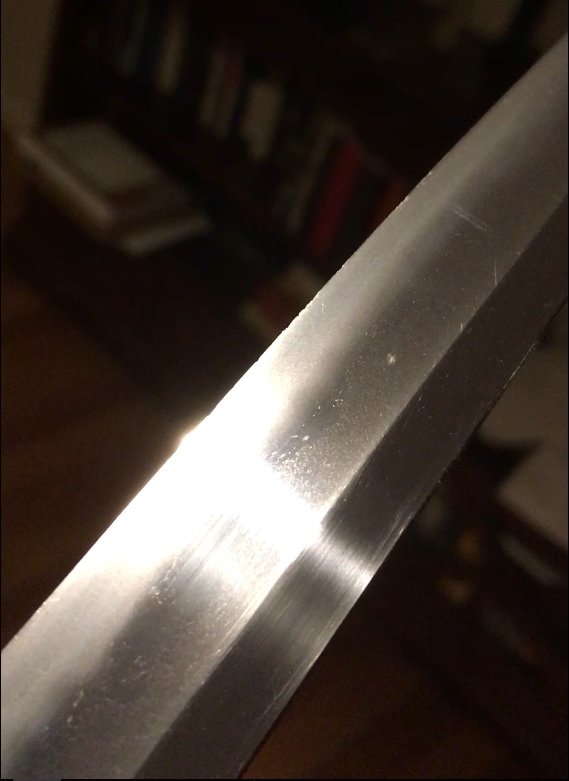
Hi Paul, Very hard to tell with the naked eye - to me the shinogi-ji just appears as a mirrored surface with no noticable hada at all compared to jihada which is clearly visible. This photo may suggest it is masame though not sure if thats just a trick of the light. thanks, Ben
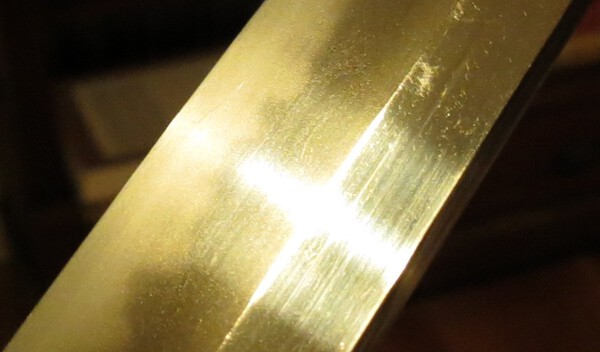

-
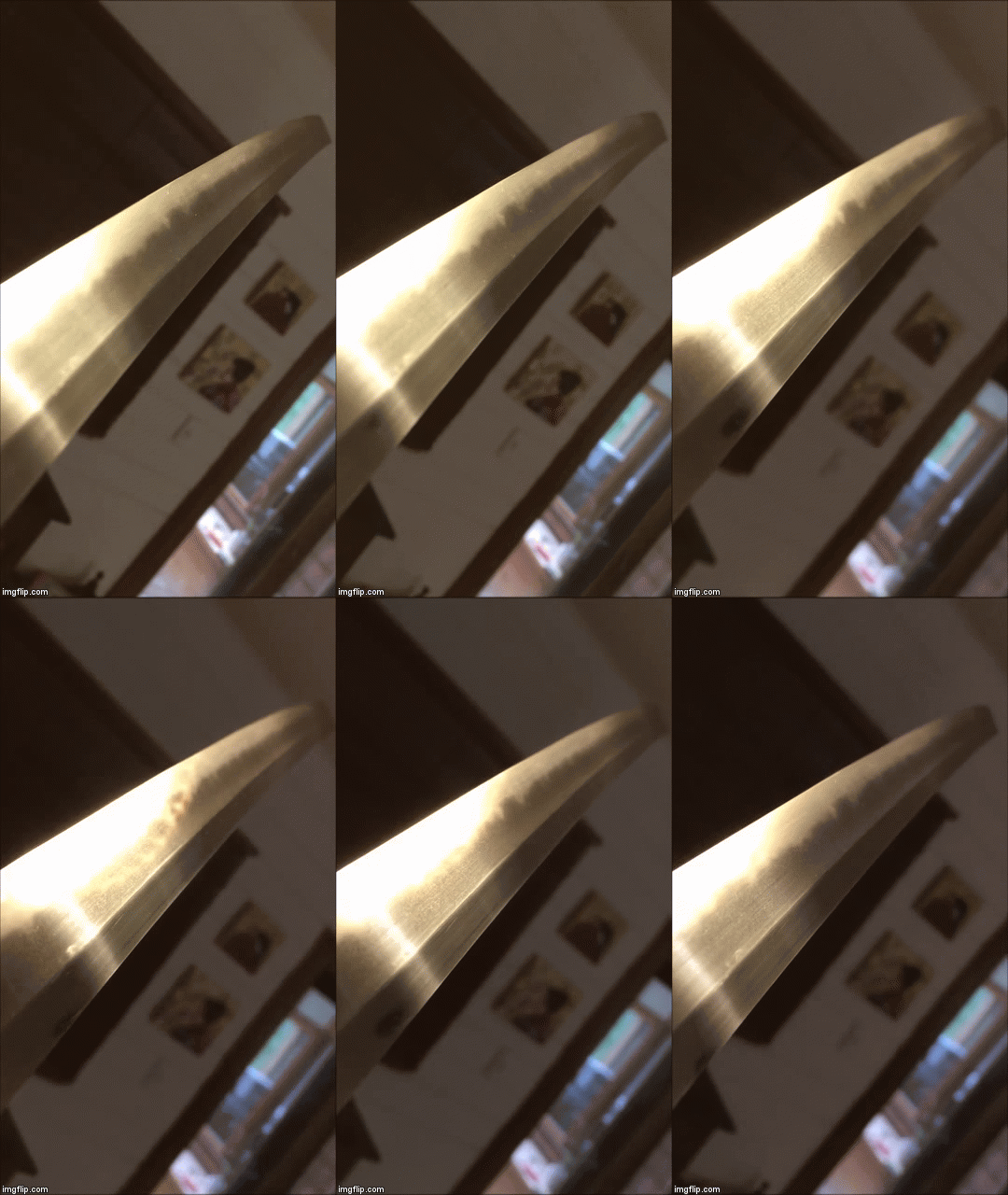
Hmmm. You know I never considered that it could be anything other than Shinto, though now you have me thinking. The main reason I think I've assumed Shinto is the mei is a Shinto smith - though gimei and has been discussed previously. The sori is also pretty shallow at 1.0cm and the shape looks Shinto to me at least. Okay - this is probably a naive question though if it is gimei could it be possible that a Shinto smith reshaped / shorted a Koto sword to try to pass it off as a well known smith? I would find this surprising though given it is a quality blade? Did this happen or was it more likely a lesser smith signing a false signature for a contemporary smith? Don't want to go too far off topic though interested now that maybe it was a koto sword given the utsuri, and the mei and sugata are throwing me a curve ball.. Measurements Nagasa: 56 cm Mihaba: 5 cm Kasane: 0.5cm Kissaki: 2.5cm Sori: 1.0cm A few more pics to both help determine whether it looks like Koto or Shinto work and an excuse for me to upload another animated gif Ben


-
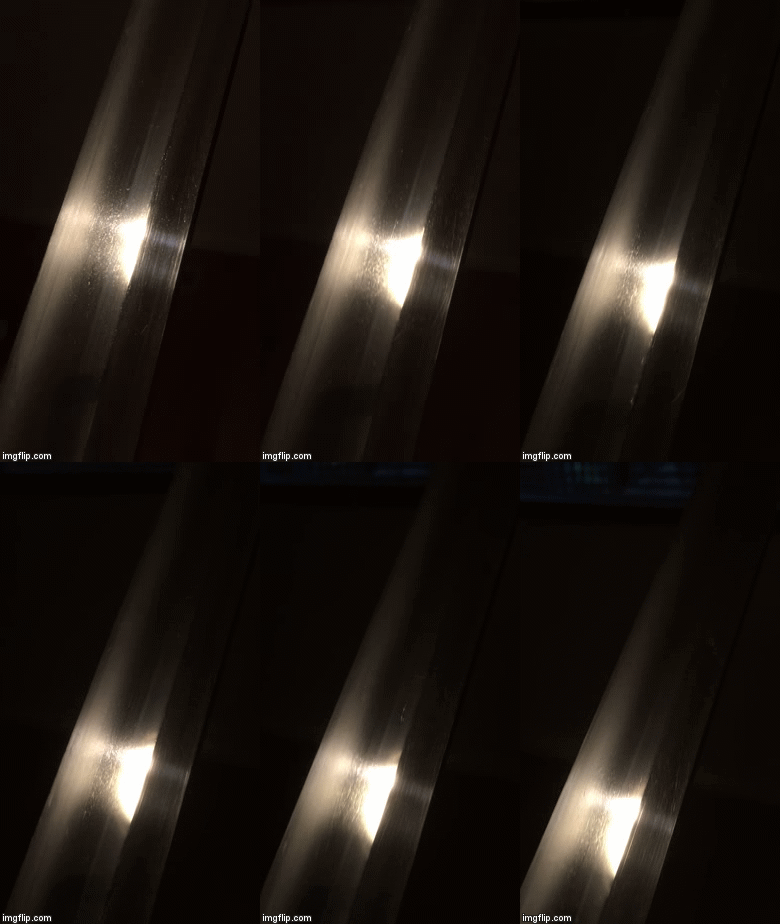
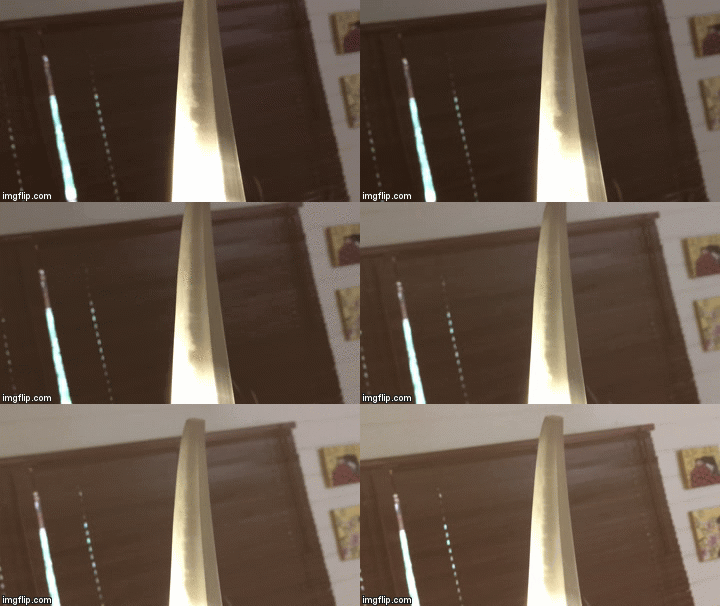
Hi Brian, Yes, remember when they were all the rage It was actually a lot easier than I expected and given the small file size agree that it would be great to see a few more swords like this and helps a lot with the challenge of photographing swords given you can subtly move the light across the blade. This is how I did it. 1. Shot a few short videos of the blade with my iPhone using a single hanging light above the blade in a fairly low ambient light room. 2. Copied the .mov files to my PC 3. Used a free online converter of .mov to .gif (there are several though this one worked well and created small files. Limited to 5 seconds). Make sure you check the make private option if you don't want them stored on the site. https://imgflip.com/gifgenerator 4. Uploaded them as regular images to the post. Cheers, Ben
-
A few more in different lighting - still hard to see I know but definitely more obvious in hand. Also - thought of a novel approach converting movs to images. Ben


-
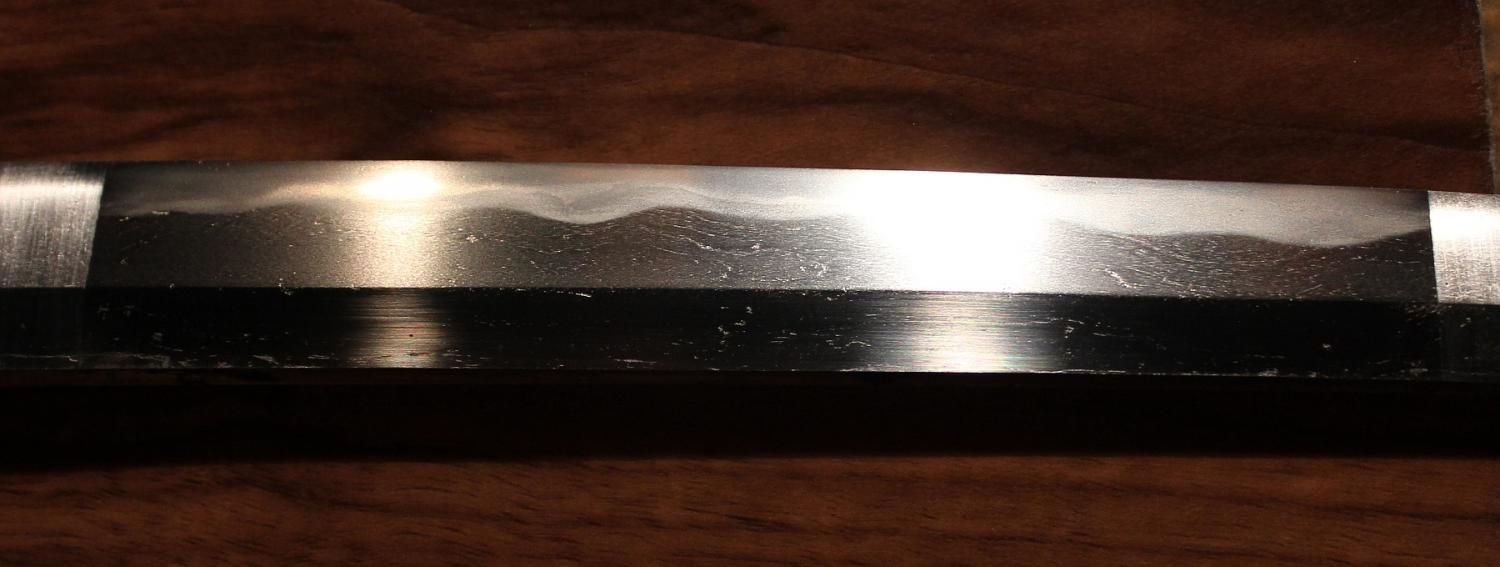
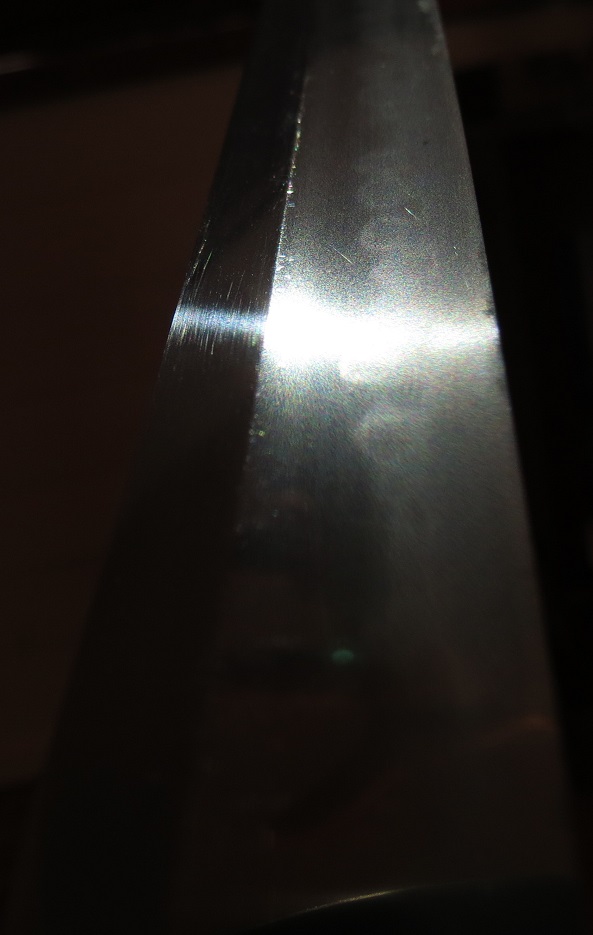
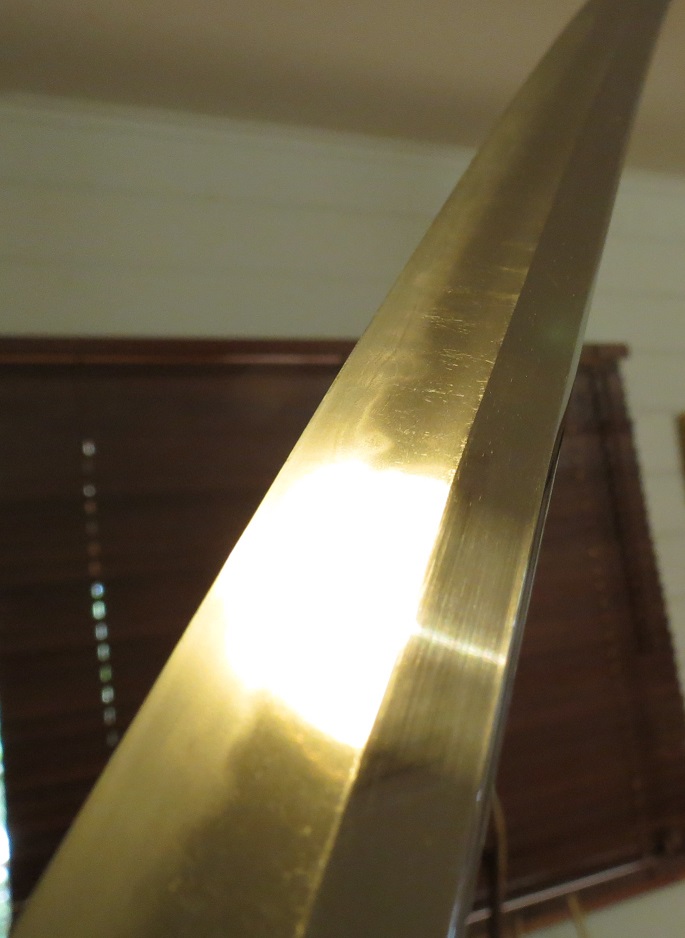
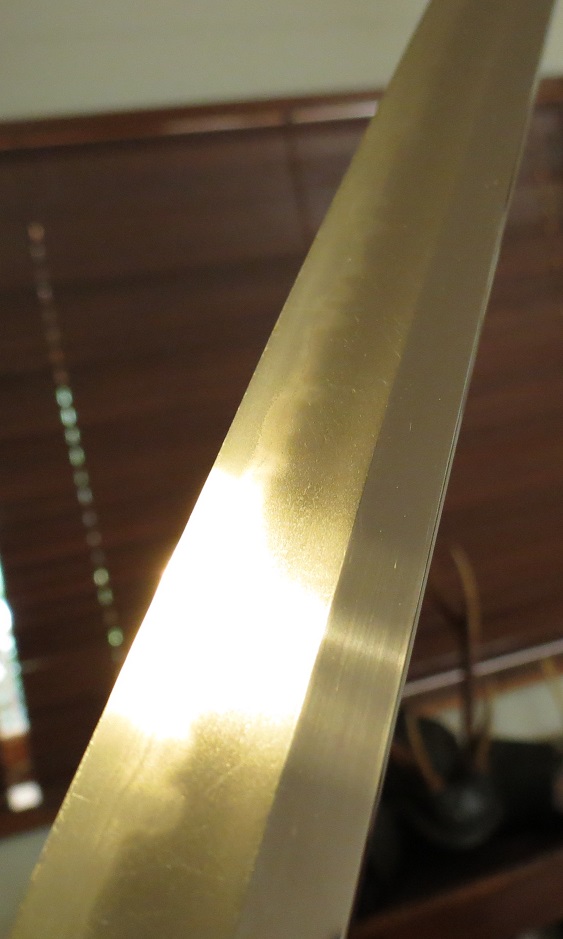
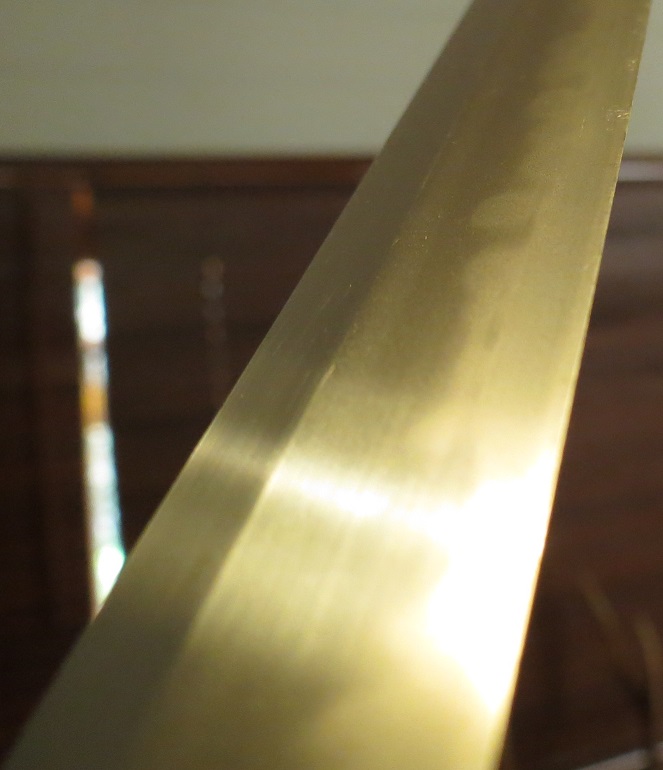
Hi All, I recently took a shinto wakizashi to my local togishi and he pointed out a subtle but beautiful feature of the sword - utsuri. I hadn't noticed it before though it can be seen clearly as a misty reflection parallel to the shinogi if captured in the right light at an angle. I tried to photograph it. Is it fairly common to see utsuri in Shinto swords and is it an aspect of kantei that can help attribute to a particular school or smith? thanks, Ben