RobDam
-
Posts
27 -
Joined
-
Last visited
Content Type
Profiles
Forums
Events
Store
Downloads
Gallery
Everything posted by RobDam
-
 Thank you Kevin, the blade is stunning congratulations! About the Kiyomitsu I'd expect to have some news about the new Koshirae after the summer!
 -
These cases are amazing Thank you!
-
So they answered (about the tsuka and tsunagi): "We ordered Tsunagi for the Koshirae as well. They are specialized in making Koshirae with Traditional way. So we do not worry about it. They will make the best, always." Just FYI
-
Sounds like a plan! Looking forward to seeing your catches! For me a tachi possibly ubu from early muromachi would be my next goal, but I know pretty much nothing about tachi still studying 😅 also it looks like a bit less accessible as a category
-
Beautiful pics 😍 thank you for sharing. the jigane seems awesome and the geometry around the yokote/kissaki looks very crisp and elegant. Very appealing blade.
-
Thank you for taking the time to provide such detailed advice. I have asked them for a traditional tsuka shape, not too large, thick, or bulky, and well proportioned to the blade and fittings. I fully trust the craftsman’s judgment, but I also understand limits and challenges. Let's see what will be the result! Also Thank you for the tsunagi advice! I've asked them about it too. This is my first full koshirae project (and first blade, also) so my aim is to keep it simple, restrained, and coherent, without adding too many extra elements. I am mainly hoping for something respectful to the blade and traditionally balanced.
-
Thank you again, super appreciated. BTW I've NO idea what's the diameter I want :p
-
the more I look at your blade the more I like it I'd love to see more pictures once you get it (the same when I look at mine tho )
-
Last question: can you be more specific? What should I ask them exactly?
-
Hey George, Super appreciated, thank you! YES! First time (newbie here) I actually went through the thread you pinned about oversized tsuba a few hours ago, so now I have an additional concern, lol. That said, I assume AOI is quite serious when it comes to commissioned koshirae. I need more time to fully digest your comment, but meanwhile let me explain the rationale behind this project. 1. The idea is to take a “war period” blade and dress it in a calmer, more restrained Edo-period style, using authenticated antique tosogu where possible. I am not trying to recreate a battlefield mounting. 2. I want something respectful, austere and historically plausible for a blade that has survived into a later peaceful context. 3. A calm, nature-based theme. Austere rather than flashy or over-coloured. 4. The koshirae cost should remain reasonably below the cost of the blade. 5. The overall feeling should be quiet, strong and understated. This is what I literally requested from AOI: Your point about tsuka size is very useful. I definitely do not want a modern oversized martial-arts style tsuka. I didn't know this should be specified to them, I was assuming they will be respectful of the traditions. Regarding kozuka/kogai, I had not planned to add them. The tsunagi point is also very helpful. I had not thought enough about that, and I will ask whether one is included or recommended. BTW I also have a name for the Koshirae: Kage-Aki Koshirae and blade = Kagemasa Finally AOI art acknowledge everything and the work started 31st of March with an ETA of 7 months. MAybe too late to ask for changes? Thanks again. This is exactly the kind of practical advice I need before the work is finalised.

-
I'm not a fan of the full length bo-hi, but would you mind to post some pictures? Curious to dee the blade anyway What would be your ask?
-
This is gold dust thank you The Gorōzaemon/Magōemon question is still very valid
-
Of course, the difference is that the Token Bijutsu example has the full Gorōzaemon no Jō name in the mei, while my blade has the more general Bizen Kuni jū Osafune Kiyomitsu saku kore signature. So perhaps the real question is not only chronology, but whether workmanship and mei style are enough to narrow a general Kiyomitsu signature to Gorōzaemon, or whether Magōemon remains more likely. (And if a consequence I potentially overvalued the blade)
-
Ok - this is actually interesting: Bizen Kuni jū Osafune Gorōzaemon no Jō Kiyomitsu Eiroku 5 nen 8 gatsu kichijitsu August 1562 If I understand correctly this invalidates the assumption Eiroku 5 is “too late” for Gorōzaemon.
-
found this mention (not sure it refers to "my" Nisshu) here "Honami Nishu sayagaki. Wrong attribution in 40% of cases, though his supporters argue that there are many fakes. Because Honami Nishu was the next best choice after Dr. Sato Kanzan (who was a prolific sayagaki writer), his sayagaki tends to be associated with lower grade and more questionable blades, though he did polish and wrote sayagaki for a few masterpieces. Often he assigns very famous names to average blades from roughly the same school"
-
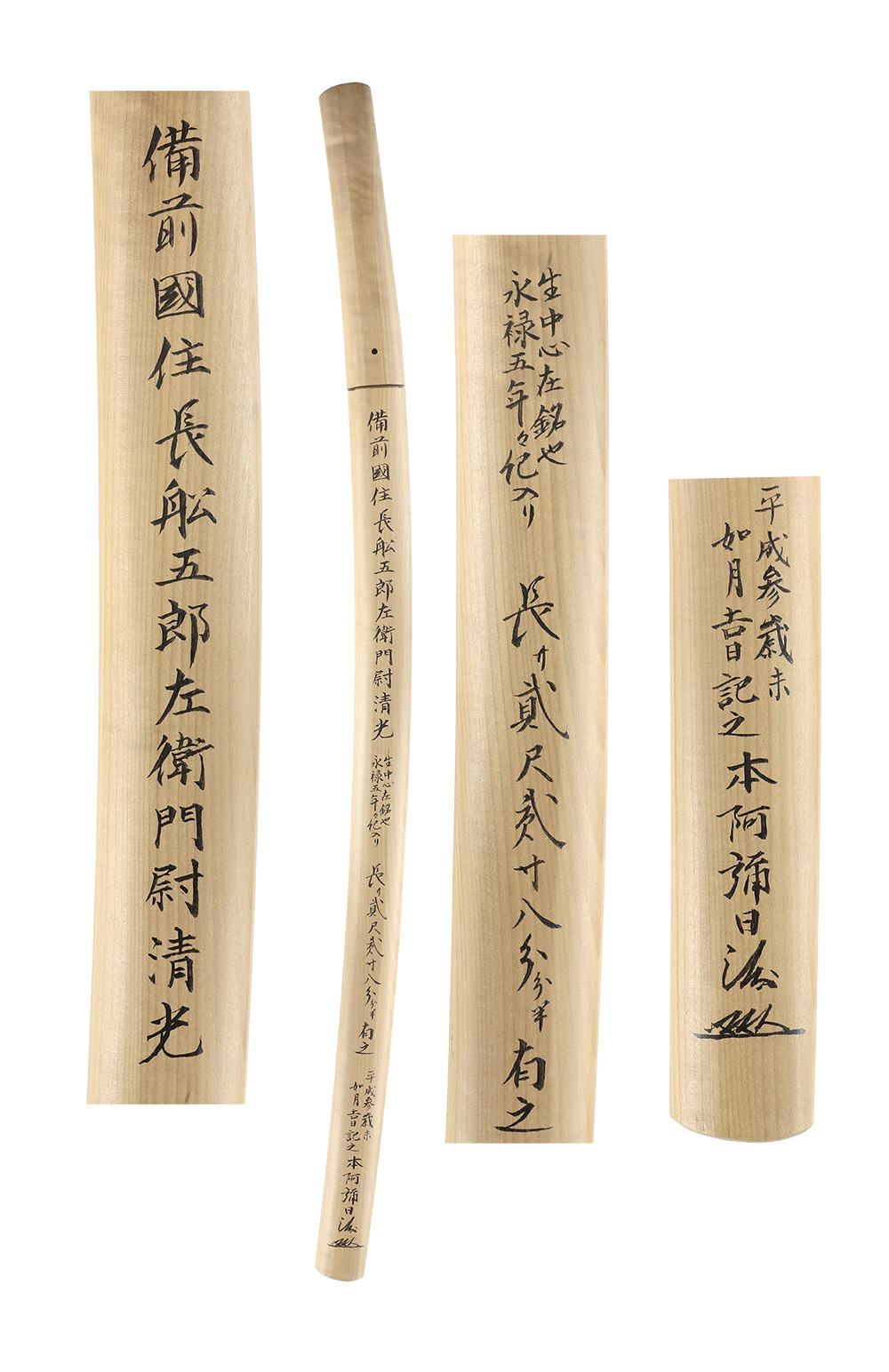
thank you! Now I'm wondering how can I distinguish between the two, and why Nisshu decided to attribute this work to Goro I am also curious how to interpret Hon’ami Nisshu’s decision to write Gorōzaemon no Jō Kiyomitsu in the sayagaki. If the date is relatively late for Gorōzaemon, would that suggest that Nisshu saw workmanship strongly reminiscent of Gorōzaemon, or could he have been using the name more as a quality/style attribution rather than a strict chronological attribution?
-
Ciao Leonardo, welcome! I’m new here as well. Out of curiosity, from a koryū perspective, would you actually use antique nihontō for training, or only modern-made / dedicated practice blades? I would personally be very hesitant to mechanically stress a blade that is several hundred years old, even if it is still structurally sound. But I’m genuinely curious how this is viewed from the practitioner’s side: is an old blade still considered “usable” in a practical sense, or is the risk of fatigue, hidden flaws, or damage to the polish generally too high? I’d be very interested to hear your perspective, especially regarding balance, geometry and handling compared with modern training swords.
-
Thank you, that makes sense. I liked the bo-hi mostly for aesthetic reasons, especially the maru-dome ending above the habaki, but I understand now that it should not be overinterpreted for attribution, especially if ato-bi is possible. The ryō-chiri point is very interesting, I didn't know that distinction before Thanks again, this is very helpful!!
-
Thank you very much, that is extremely helpful! It is reassuring to hear this from someone who has collected several Kiyomitsu blades For me the main takeaway is that there is no contradiction with the mei, but rather a question of which Kiyomitsu within the lineage is most appropriate. I will treat the Hon’ami Nisshu note as valuable context, but not as final authority. About the bo-hi: I understand it is a matter of personal taste, but in my case I actually really like it. One feature I especially liked is that the hi appears to stop above the habaki rather than running down into the nakago. I have not seen many Kiyomitsu examples with this exact appearance, so it was one of the details that attracted me to the blade. Can you confirm it's not common? Very interesting that you currently have a similar Kiyomitsu in Japan attributed to Magōemon by NBTHK! I would be very interested to hear what Tanobe sensei says if you are able to get a sayagaki! Thank you again, this helps me understand the blade much better.
-
Hi Hoshi, Thank you very much for taking the time to write such a detailed and helpful reply. This is exactly the kind of context I was hoping to understand. Your explanation of Sue-Bizen and the Kiyomitsu lineage helps a lot. I also take your point regarding Nisshu and the need not to treat every sayagaki as final authority. In this case, I see the NBTHK Tokubetsu Hozon paper as the main formal confirmation, and the oshigata/sayagaki as an additional historical/contextual element. I also appreciate your comments on the koshirae. My aim is definitely not to create anything flashy or “koshirae americana”, but rather something restrained and respectful to the blade. I understand that this will not be an NBTHK competition-level koshirae, the quote for the habaki+koshirae with AOI is 310k jpy. I see it more as a long-term labour of care around the sword. Regarding the cost, the blade itself was a significant investment, and the remaining amount is for the selected fittings, new koshirae work, custom habaki, import and transport. The work is being handled through AOI in Japan. I realise that a full art-patron approach with a top craftsman and competition-level ambition would be a different category altogether, perhaps something for a future project if I ever reach that level of collecting. Your point about tosogu not being modular is also very useful. In fact, one of the fuchi-kashira sets I originally selected was rejected by the workshop because it did not fit the project well, and they proposed another one from their own stock. That now makes much more sense to me. Thank you again. I will continue studying the Osafune/Sue-Bizen context and the Kiyomitsu lineage, and I look forward to sharing the completed koshirae when it is finished.
-
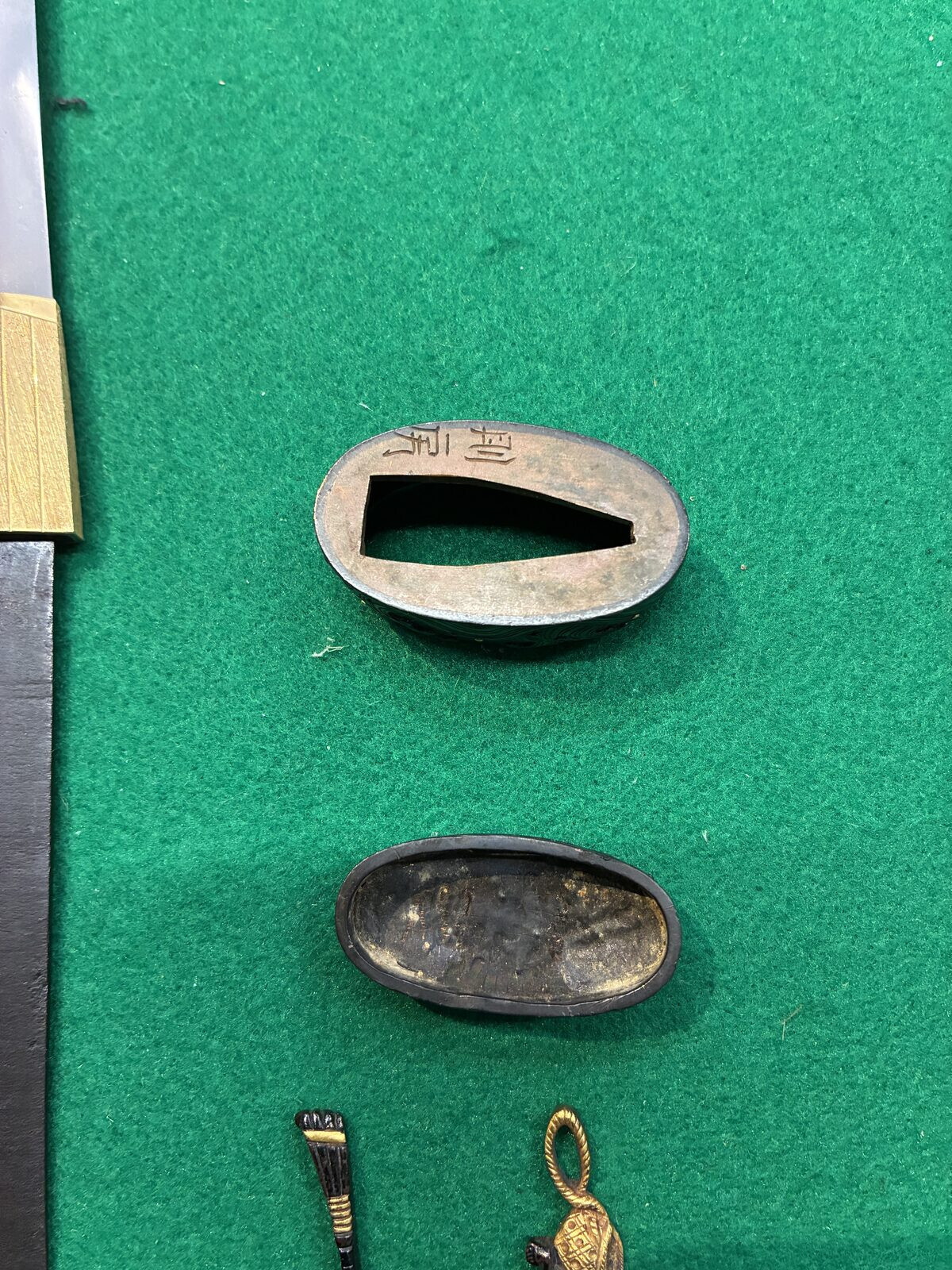
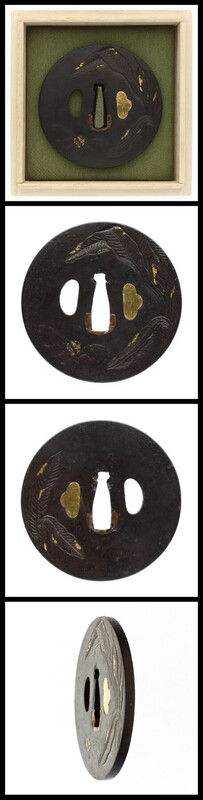
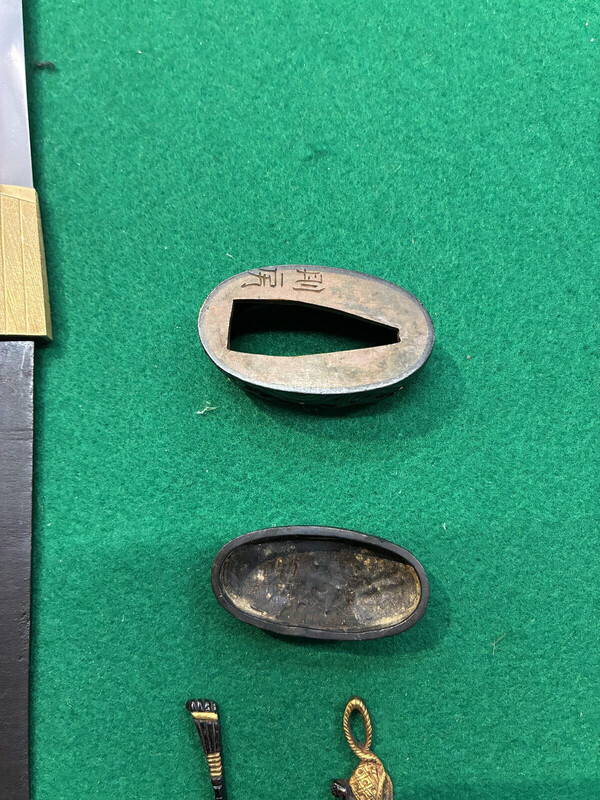
I want to post some details of the fittings. Originally I wanted this fuchikashira: https://www.aoijapan.com/fuchikashira-bushu-ju-harima-taisei-kouchinnbthk-hozon-tosogu/ But the lab told me it was not fitting well and the lab proposed the one in the picture below "found in their treasure box" - however this one is not papered (the others are all papered) I would be interested to hear any thoughts on whether this seems like a good decision aesthetically and historically. This is a very special project for me. I spent around a year saving before being able to afford the blade, and now I am waiting more than six months for the koshirae to be completed. I still have not seen the blade in person, so I am trying to use this waiting time to study and understand the sword and fittings as much as possible. Thank you again for any comments or guidance.

-
Thank you, that makes sense. So the mei gives the broader Osafune Kiyomitsu signature, while Hon’ami Nisshu’s sayagaki identifies it more specifically as Gorōzaemon no Jō Kiyomitsu. That is exactly the distinction I was trying to understand. I will read the references carefully, especially the point about Gorōzaemon and Magōemon being considered among the best Sue-Bizen Kiyomitsu smiths.
-
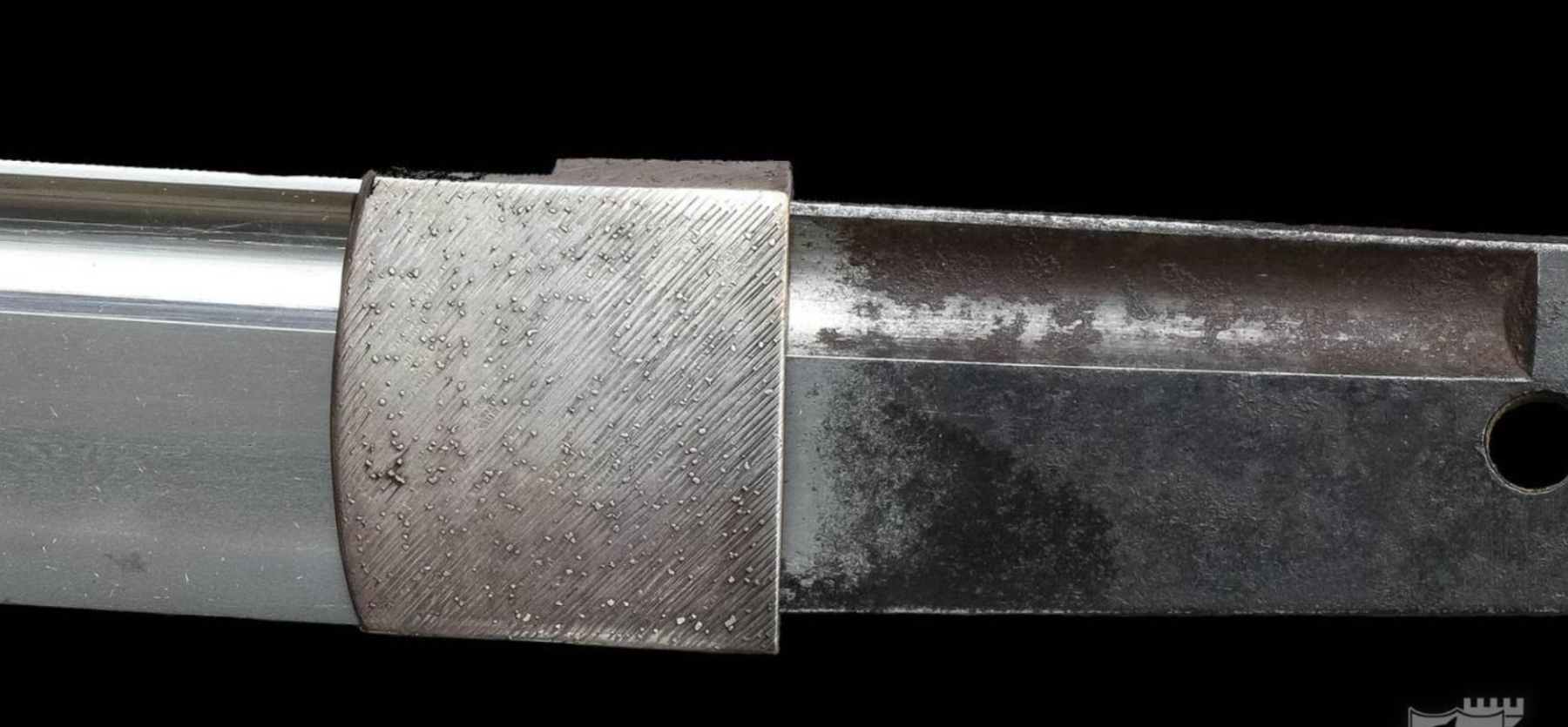
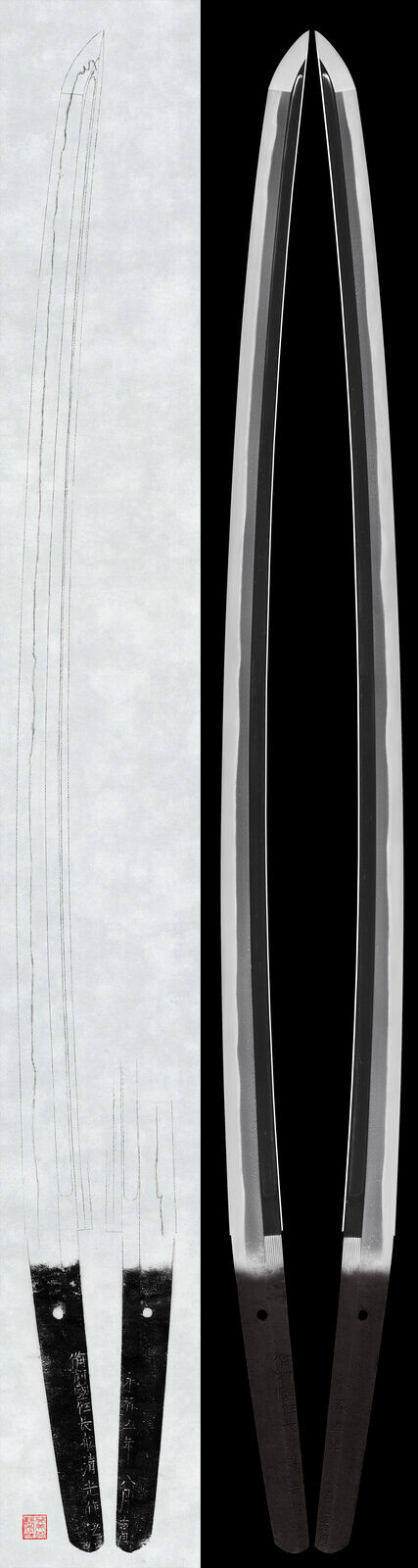
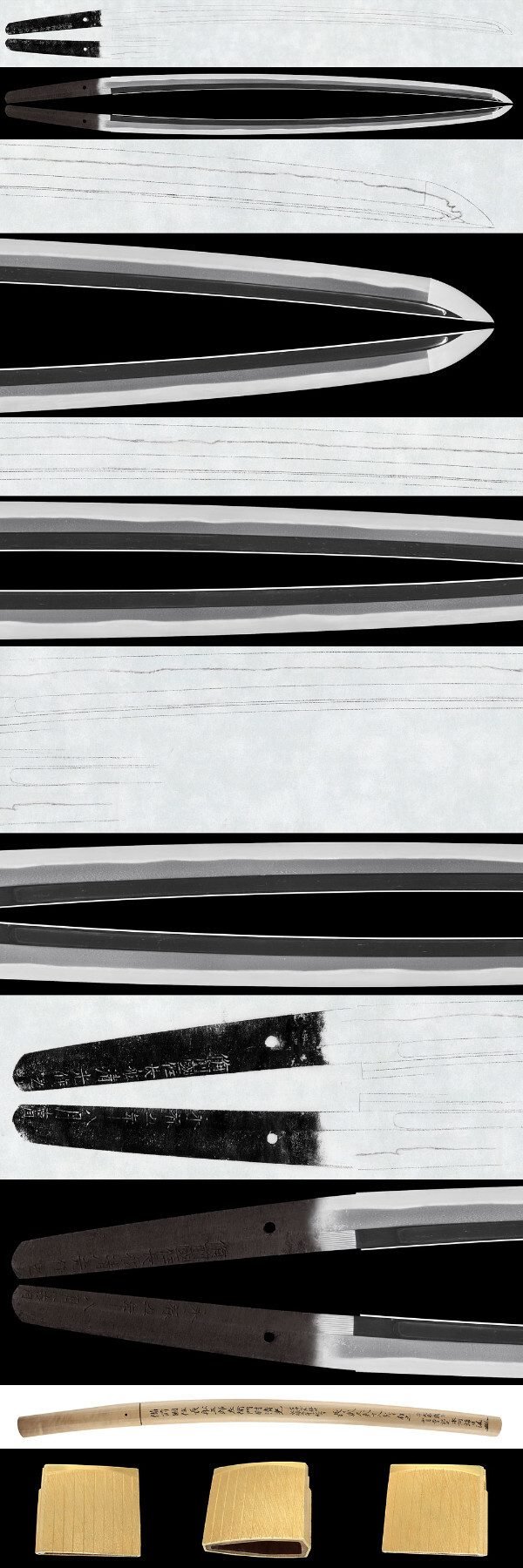
measures and description: Blade Length: 69.2 cm (27.24 in) Curvature: 1.7 cm (0.67 in) Mekugi Hole: 1 Width at Base (Motohaba): 3.14 cm (1.24 in) Width at Tip (Sakihaba): 2.00 cm (0.79 in) Thickness of Rim (Kasane): 0.74 cm (0.29 in) Sword Weight: 780 g Shape:This sword has a robust width, with a bo-hi (groove) carved on both sides.The kissaki (tip) is slightly extended, presenting a solid and well-balanced appearance. Jigane (Steel Surface):Well-forged ko-itame hada, showing a faint utsuri (shadow-like pattern). Hamon (Temper Pattern):Confirmed by Hon’ami Nisshu. The jigane is beautiful, and the hamon complements it elegantly. It begins with a straight temper line (suguha) transitioning into a mild notare, then a gentle gunome-midare with small ashi included—rich in variety. Something I really like is the bo-hi not going below/inside the habaki
-
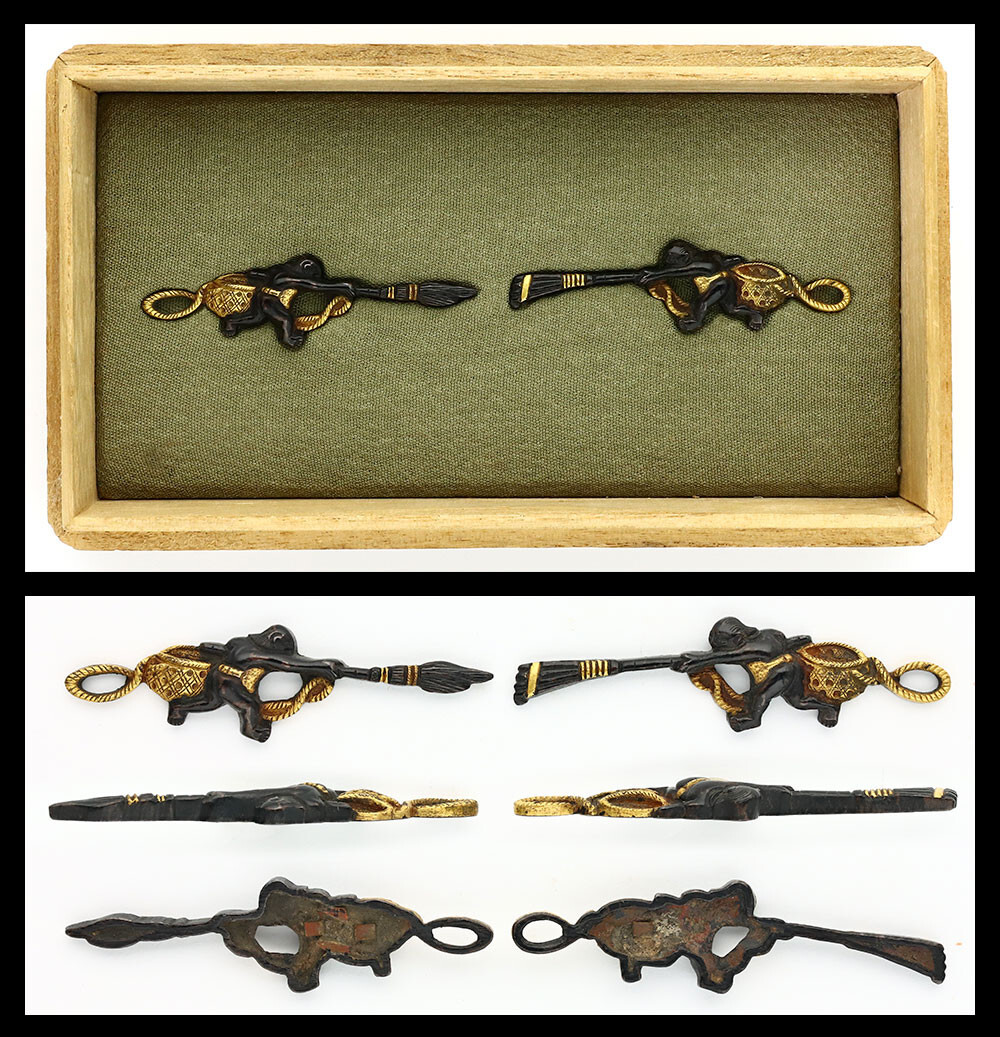
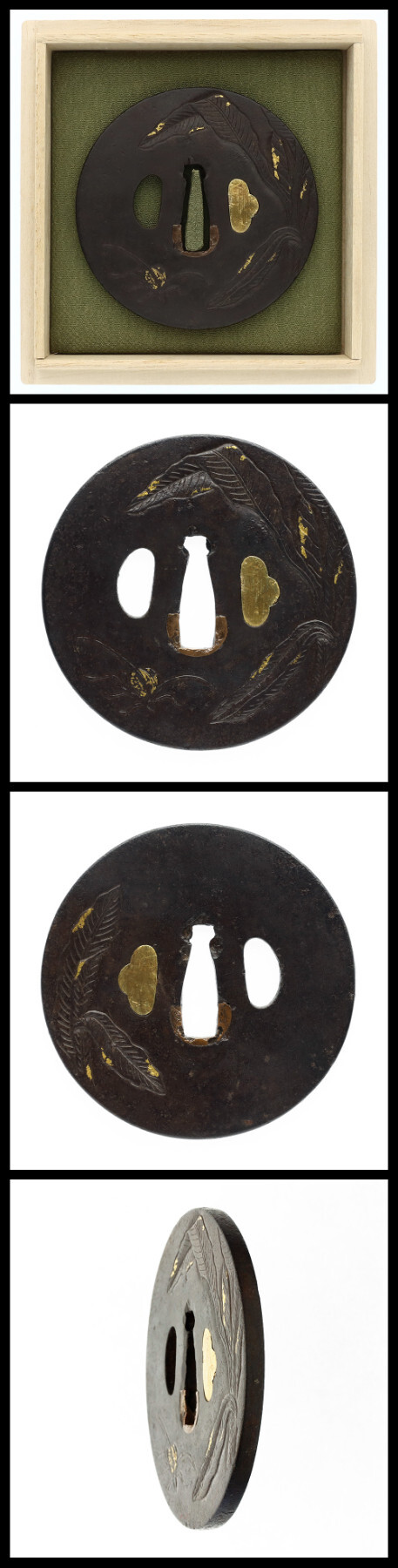
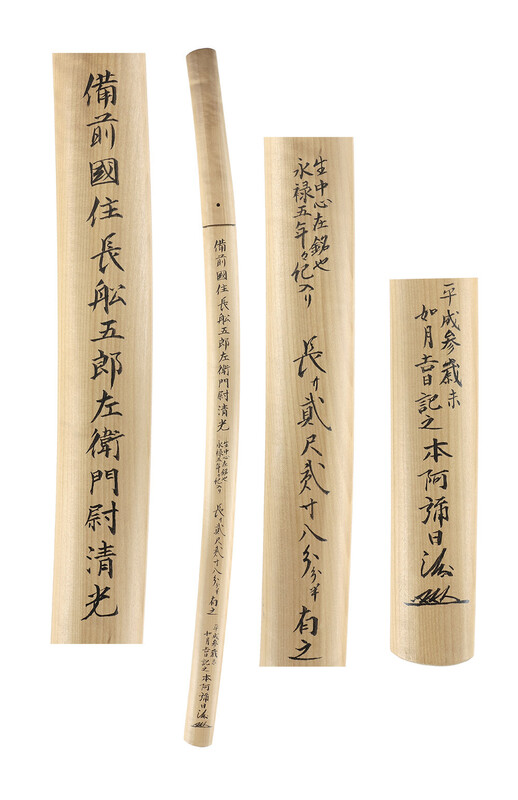
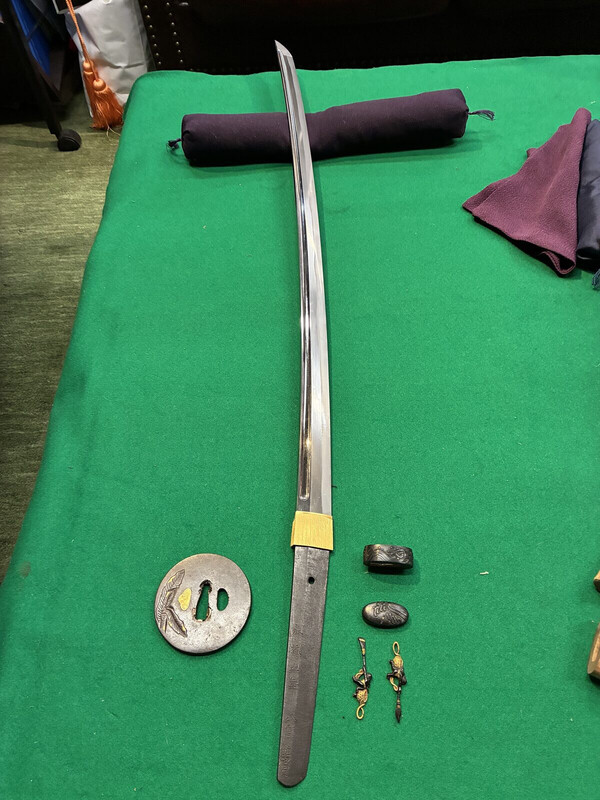
Hello everyone, I am currently working on a full koshirae project around a katana signed: Bizen Kuni jū Osafune Kiyomitsu saku kore 備前国住長船清光作之 The blade is dated: Eiroku 5 nen 8 gatsu hi 永禄五年八月日 August 1562. It has NBTHK Tokubetsu Hozon papers. The blade length is noted as 2 shaku 2 sun 8 bu han, approximately 69.2 cm. There is also an oshigata / sayagaki by Hon’ami Nisshu, dated a lucky day in February 1991, Heisei 3. The sayagaki describes the smith as: Bizen Kuni jū Osafune Gorōzaemon no Jō Kiyomitsu. I am trying to understand the blade and the project as a whole, not just the mei. I would be grateful for any opinions on the following points: How should I understand this blade within late Muromachi / Sue-Bizen production? I understand that many Sue-Bizen blades were made during a period of heavy demand, but this example is signed, dated, Tokubetsu Hozon, and appears to have been considered worthy of a Hon’ami Nisshu oshigata. Does this place it above ordinary wartime production, or is that still too broad an assumption? Why does the sayagaki use the fuller attribution “Gorōzaemon no Jō Kiyomitsu”, while the mei itself reads “Bizen Kuni jū Osafune Kiyomitsu saku kore”? Am I correct in thinking that the sayagaki is identifying the specific Kiyomitsu generation/title, rather than contradicting the mei? I am also commissioning a new koshirae in Japan using selected antique fittings. The planned fittings include an Aizu Shōami iron tsuba, shakudō fuchi-kashira, antique menuki, black samegawa, dark brown silk tsuka-ito, black lacquer saya, and a custom satin silver habaki. I will attach some pictures below. As a general sanity check, does this seem like a coherent project for this type of blade? I am aiming for something understated, historically respectful, and not overly decorative. Finally, I would appreciate a market perspective on the total cost. The whole project, including the blade, koshirae work, fittings, habaki, import and transport to Europe, will likely be around 1.750.000/2.000.000JPY all-in. I am not asking because I intend to sell it; I see it as a long-term collection piece. I simply want to understand whether this total cost seems reasonable for a complete, papered, signed and dated Kiyomitsu project in the current market. I know that value depends heavily on condition, polish, workmanship, papers, fittings and overall quality, so I am not looking for a precise valuation. I would just appreciate informed opinions on whether the project and budget make sense. Thank you very much for any guidance, corrections or references.
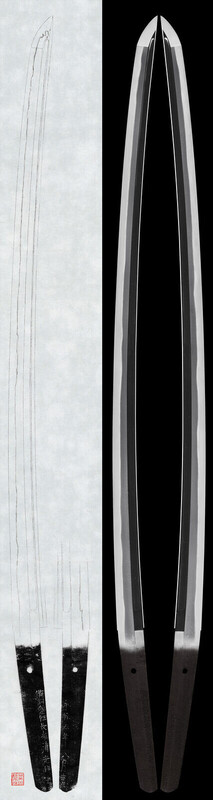

-
Hey Bugyotsuji, sure, and thanks for the question. I'm a newbie so it's been quite a challenge so far and always looking for feedback Here a few pics from the lab in Japan working on the habaki, koshirae and fittings. I'm adding a picture of the sayagaki, seems like signed by Hon’ami Nisshu I decided to ask for a new habaki in silver satin the blade is authenticated also with a Tokubetsu Hozon Token here below the measures: Blade Length: 69.2 cm (27.24 in) Curvature: 1.7 cm (0.67 in) Mekugi Hole: 1 Width at Base (Motohaba): 3.14 cm (1.24 in) Width at Tip (Sakihaba): 2.00 cm (0.79 in) Thickness of Rim (Kasane): 0.74 cm (0.29 in) Sword Weight: 780 g Signature: Bizen Kuni jn Osafune Kiyomitsu saku kore