J Ambrose
-
Posts
72 -
Joined
-
Last visited
-
Days Won
1
Content Type
Profiles
Forums
Events
Store
Downloads
Gallery
Everything posted by J Ambrose
-
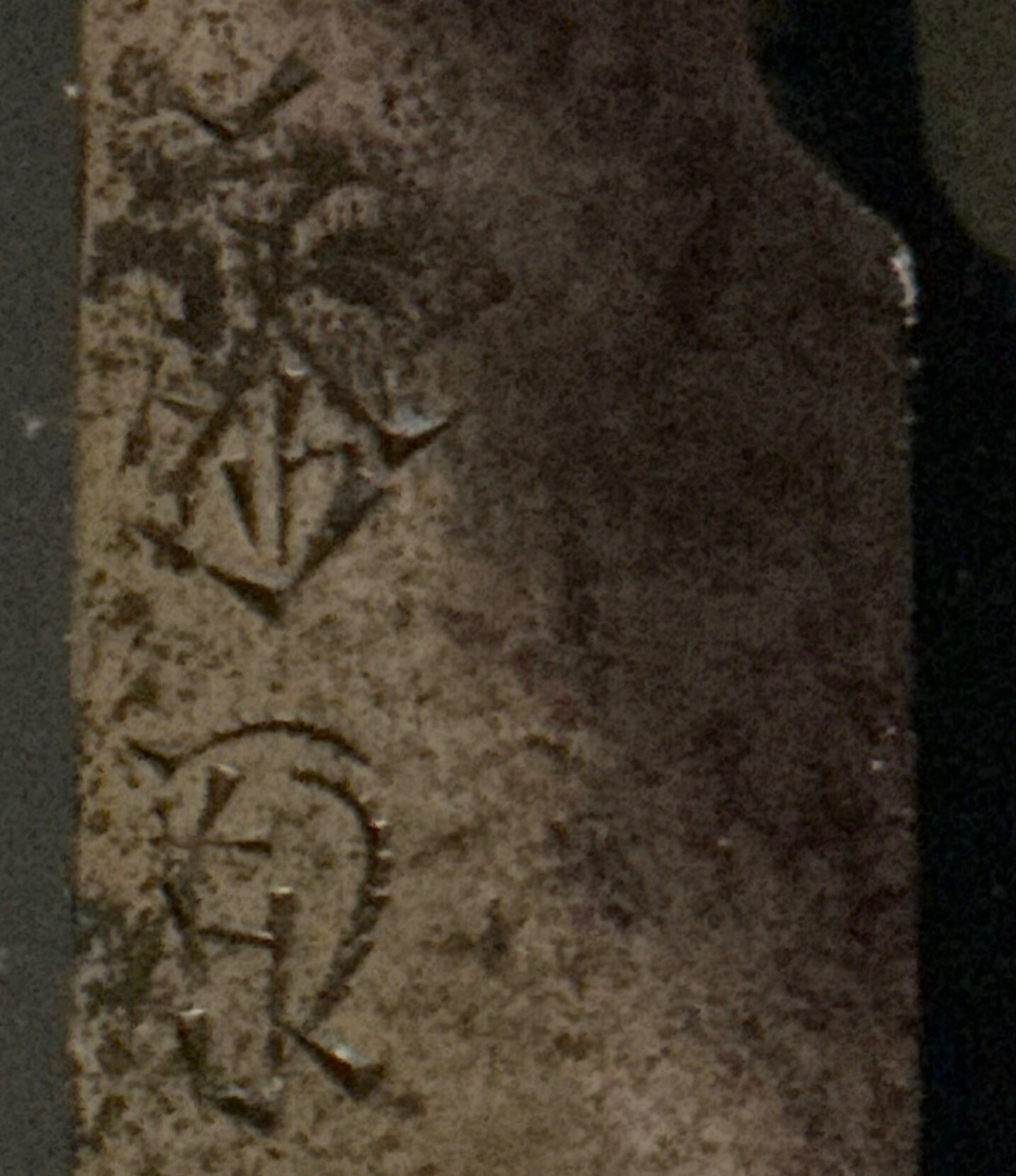
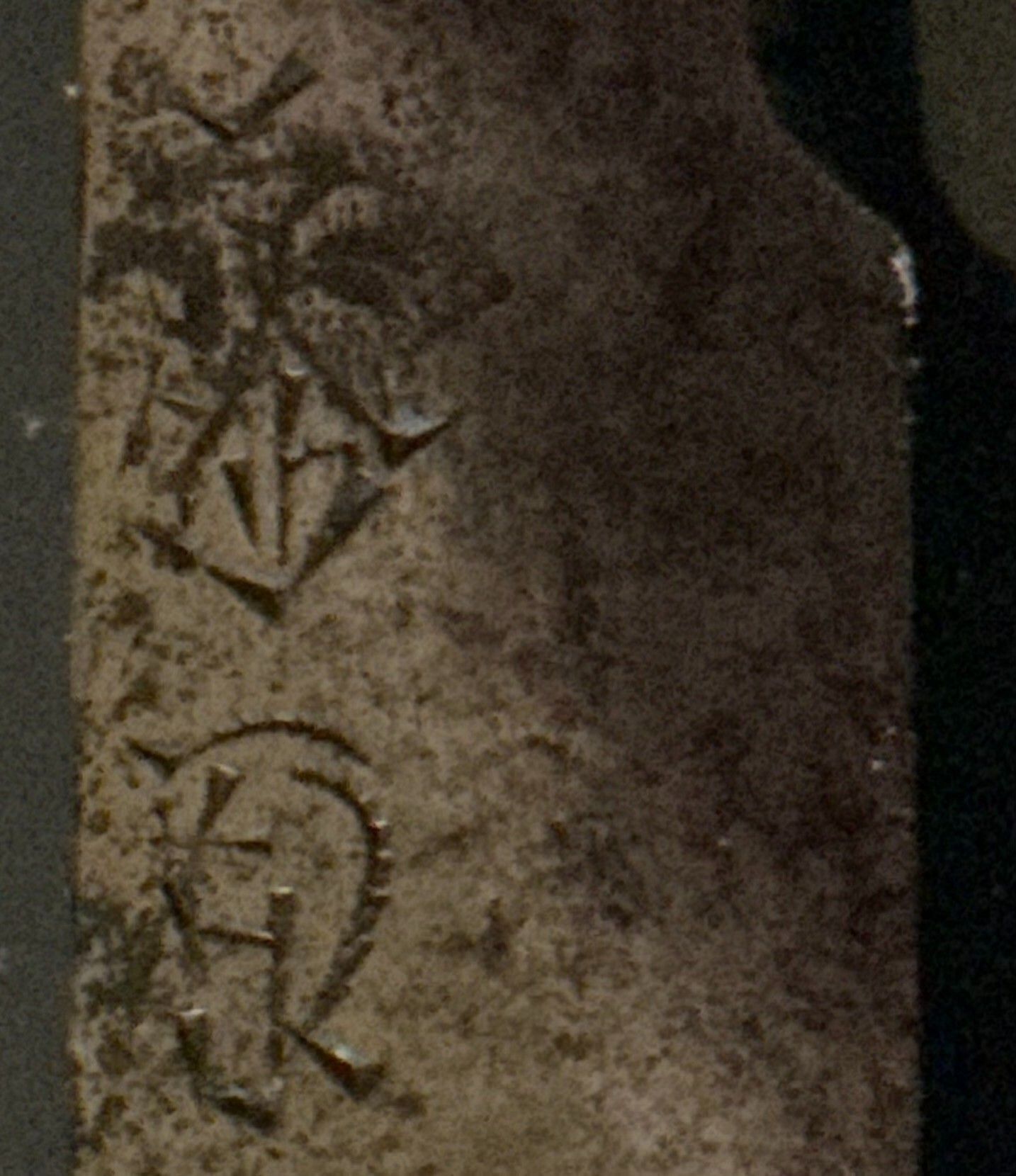
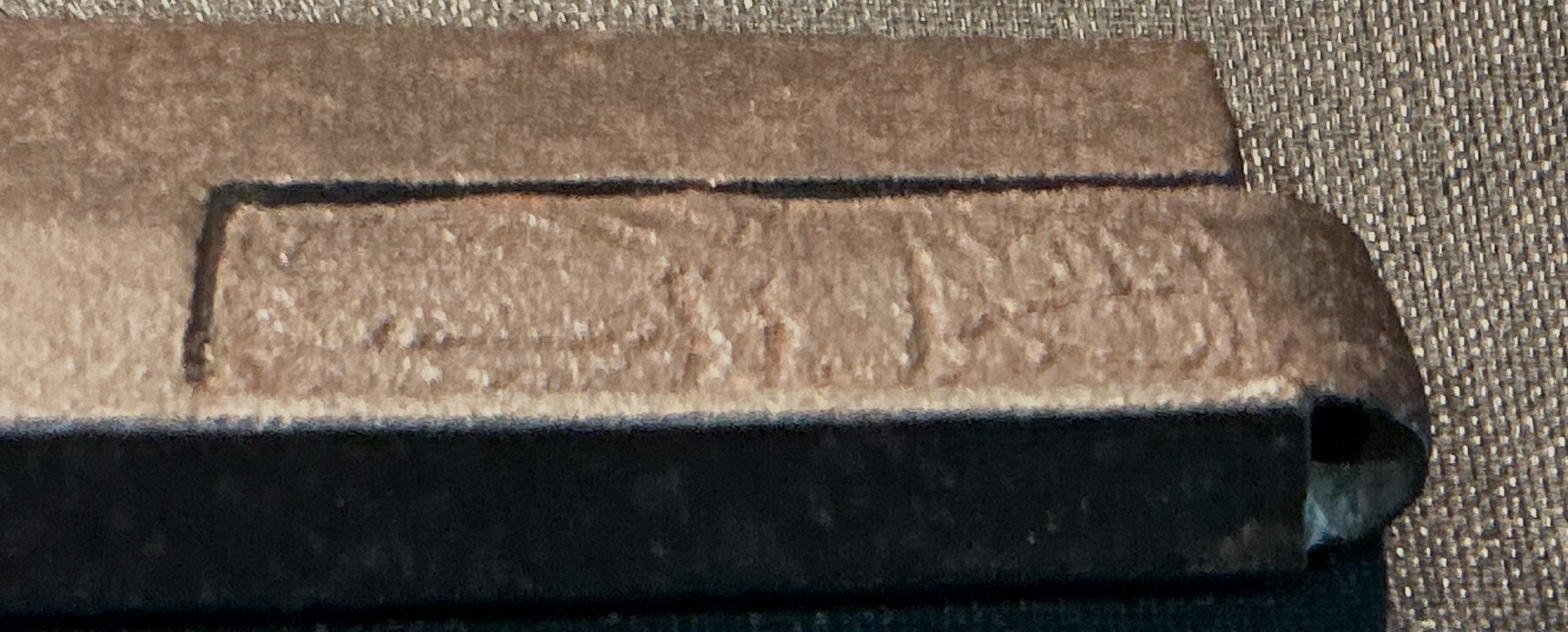
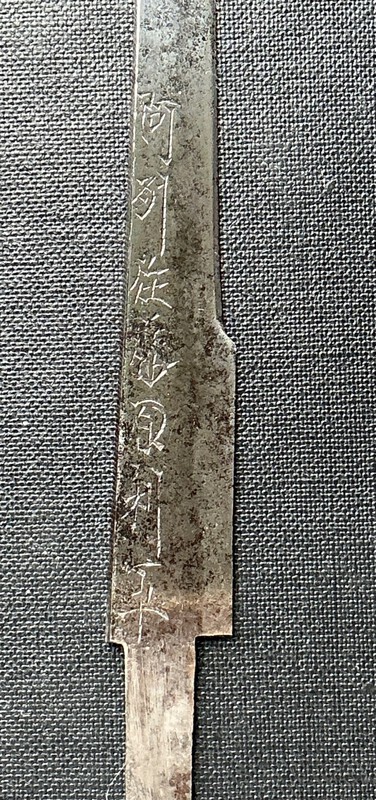
Please translate the Mei of this knife.
J Ambrose replied to J Ambrose's topic in Translation Assistance
Thanks Ray. Can you translate that to English, or is it all a proper name? -
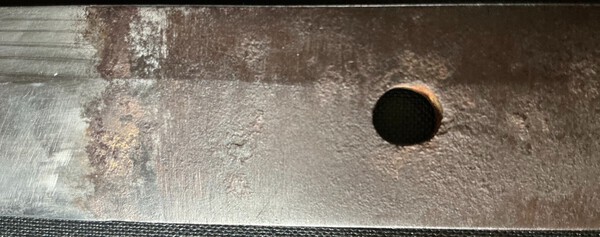
Hello all, I have been unable to find anyone that can translate the mei on this little knife. Seems like a couple of the Kanji are either too marred, or too weirdly styled. It came with a nice Kozuka, and I hope that this mei will inform me as to its maker or era. Please take a look and tell me what you think. It came with a nice Kozuka. Thanks for any and all comments,


-
Hello to all, I have been unable to find anyone that can translate the mei on this little knife. Seems like a couple of the Kanji are either too marred, or too weirdly styled. It came with a nice Kozuka, and I hope that this mei will inform me as to its maker or era. Please take a look and tell me what you think. It came with a nice Kozuka. Thanks for any and all comments, James A


-
Many thanks to you both for commenting. James A
-
-

-
-

-
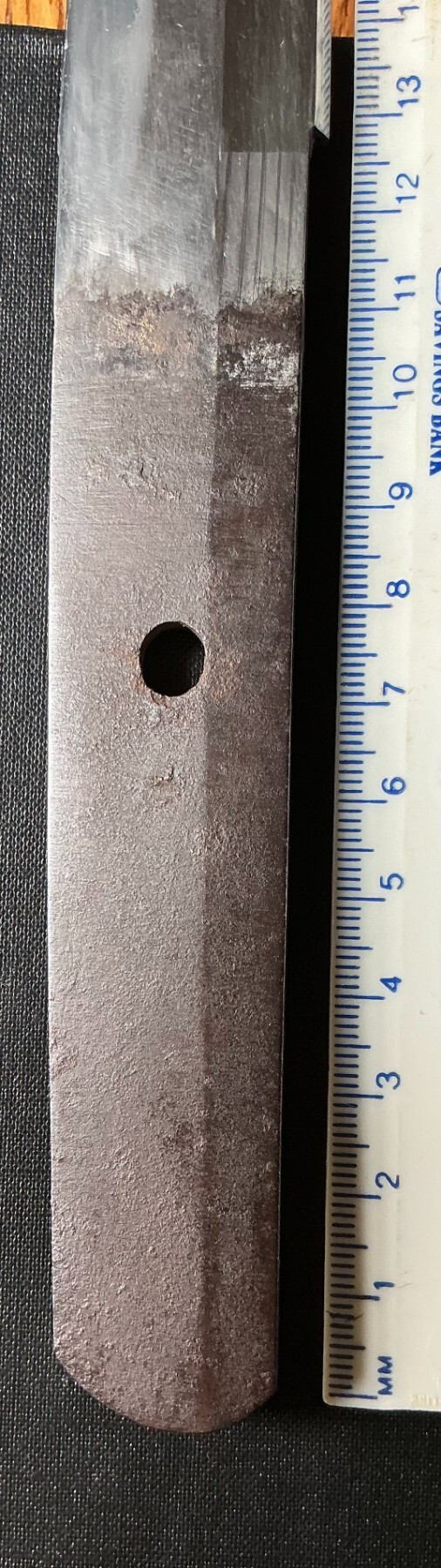
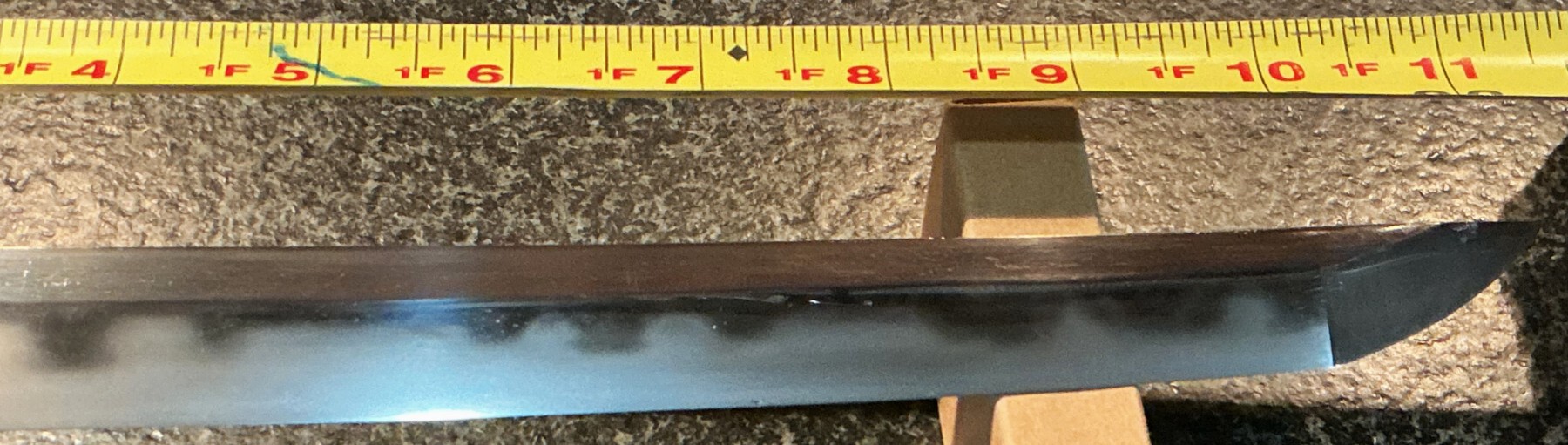
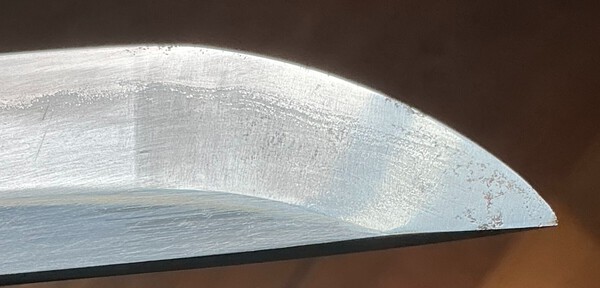
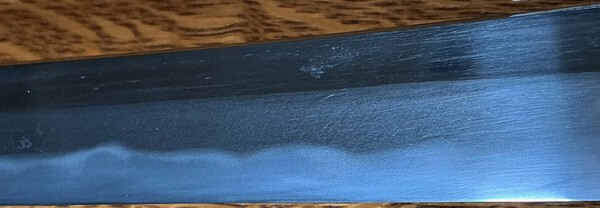
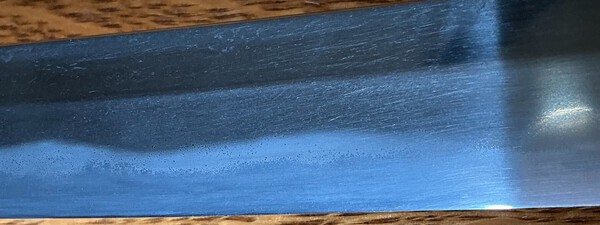
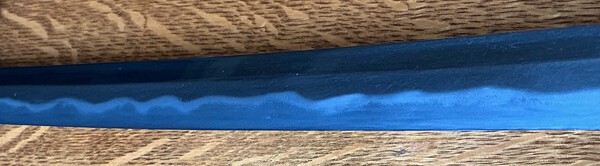
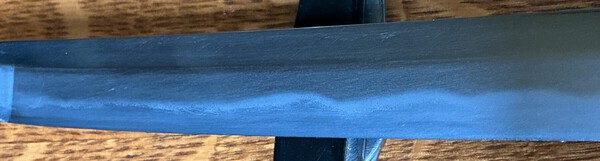
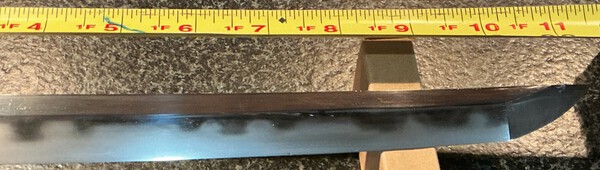
Hello to all, Please forgive my recent multiple posts of less-than-fascinating swords: it's just that I am glad to have finally discovered a forum that can provide good information regarding my small collection. I ask that you view these images of a long wakizashi which I purchased a few months back. I would appreciate any and all comments that you might provide; especially if you have an opinion as to possible School, Smith, or Period of manufacture. Nagasa = 23.75" Nakago = 6" Width at Munemachi = 28mm Width at Yokote = 20mm Thanks for looking, James A

-
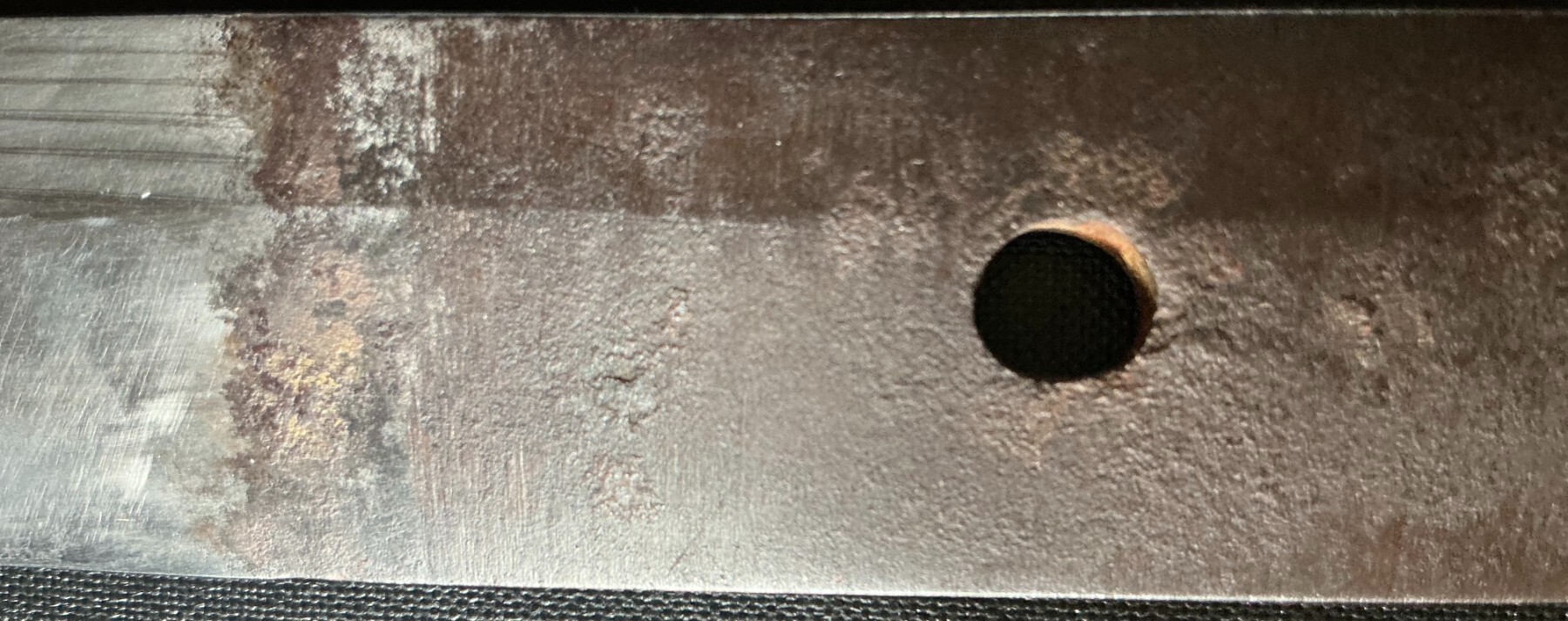
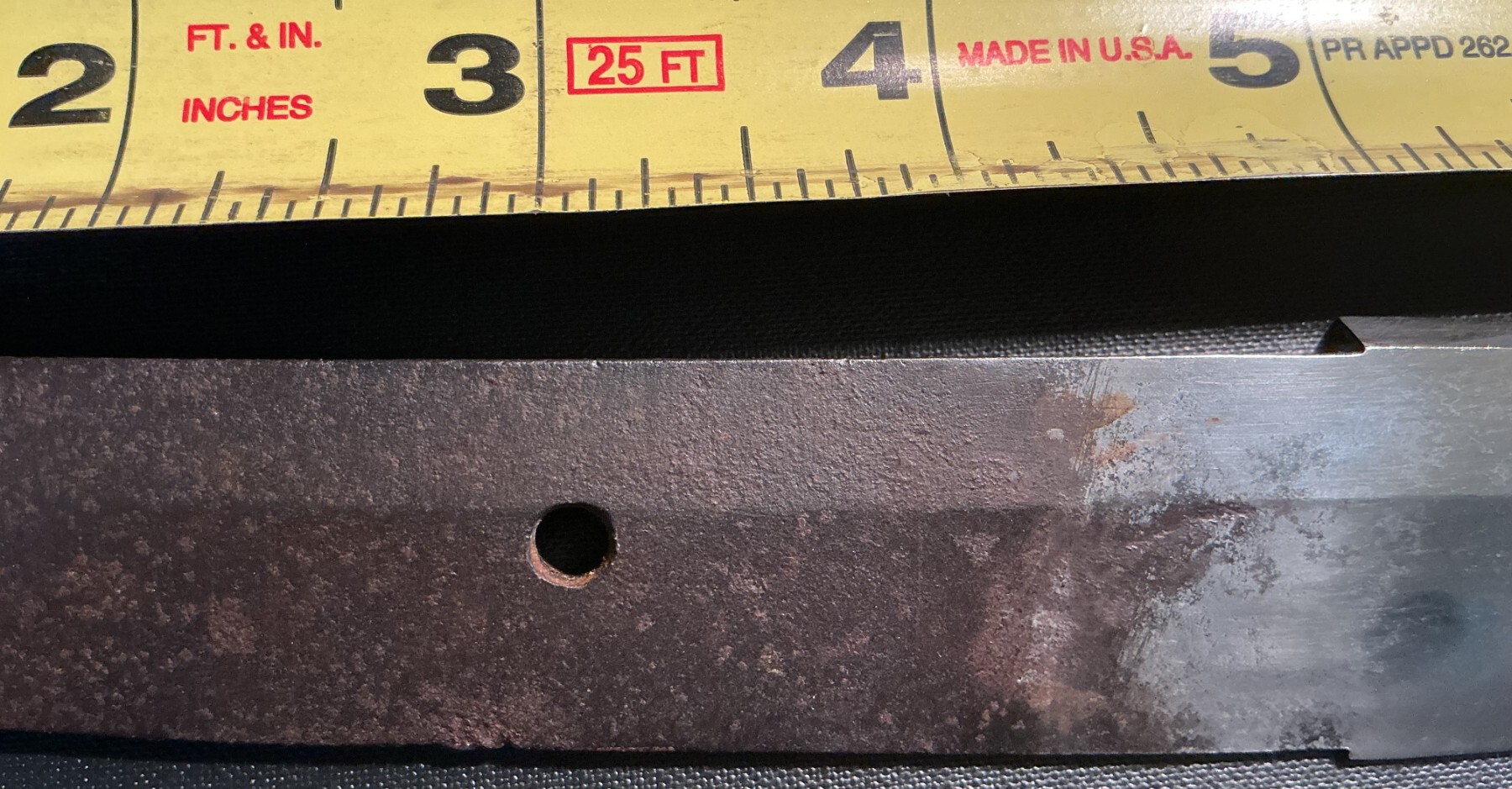
Rivkin, Thank you very much for your comments. I want to be certain that I understand your comment "The work has distinctive,...." With this comment are you describing characteristics of my sword, or characteristics to be expected on a sword by the Rai Kuniyuki? Also, I have been unsuccessful in attempts to see images of the mei of the Rai Kuniyuki. Can you send a Link or suggest a source? Additionally, I failed to mention that the Nagasa of my sword is currently 18.5". Since the original Mekugki hole was 3 1/16" from the newer hole, the original Nagasa would have been 21 9/16". I suppose that means this was either a long(ish) Wakizashi or a short (one-handed) Tachi. The blade is 21mm wide at its Yokote and 30mm wide at its Munemachi. I add this information since it might perhaps aid a knowledgeable person in determining whether the sword is Edo or pre-Edo. Finally, the only reference book I have for Japanese swords is "The Samurai Sword" by John M. Yumoto, which I purchased in the early 1980s. I could probably benefit by purchasing a more exhaustive reference book. Do you recommend a good reference book for an old man wanting to learn new things? Thanks again, James A
-
Thanks for confirming KUNIYUKI. Since most items I typically collect are no older than the American Revolution, anything older than 400 years seems old to me. However, I am hoping that this sword is older still. James A
-

-




-



-

-

-

-
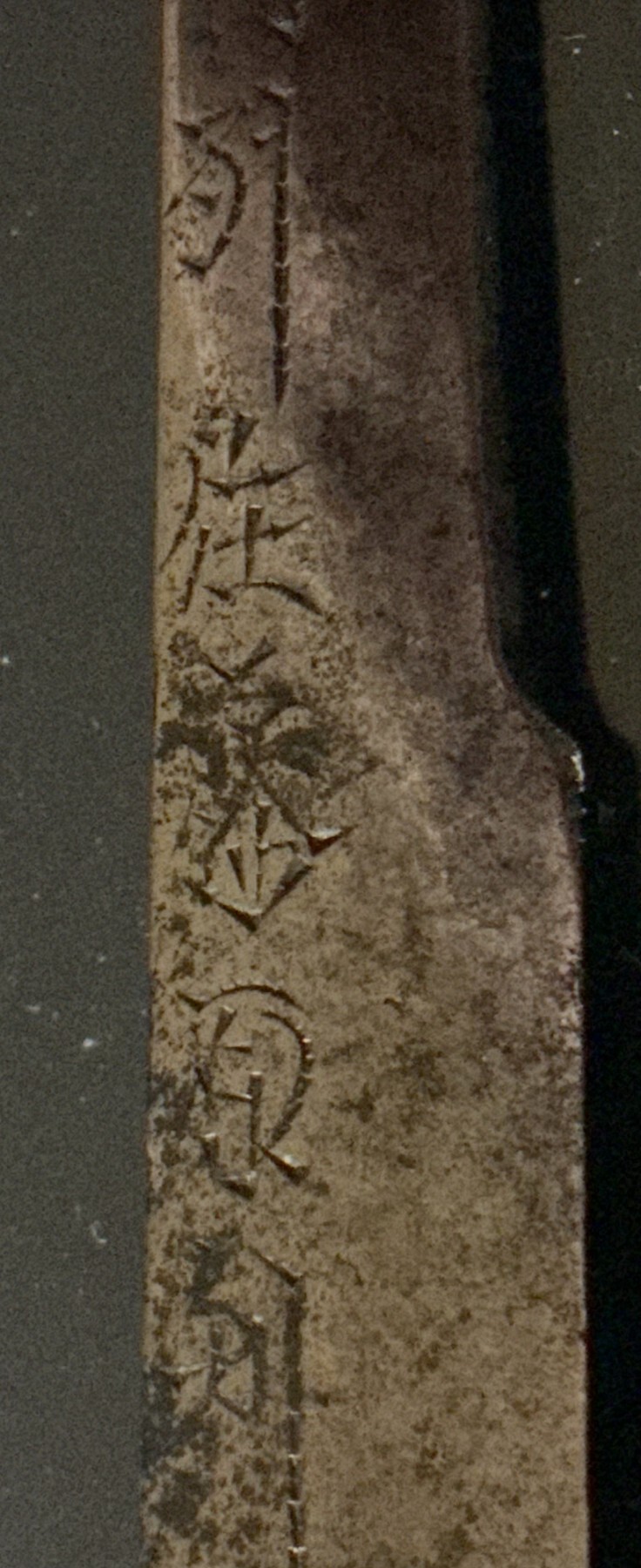
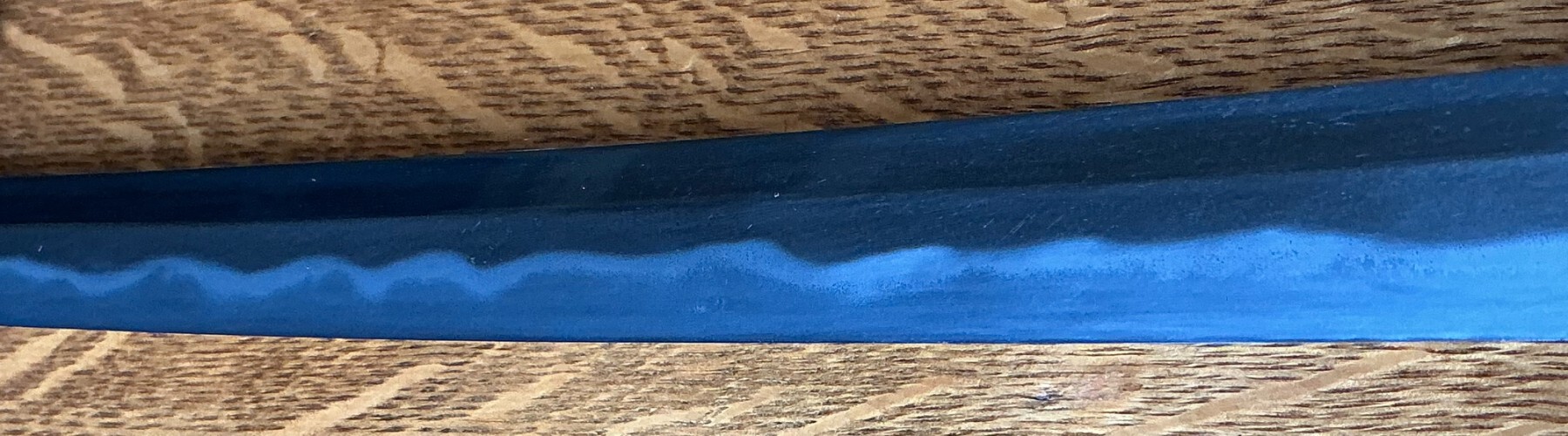
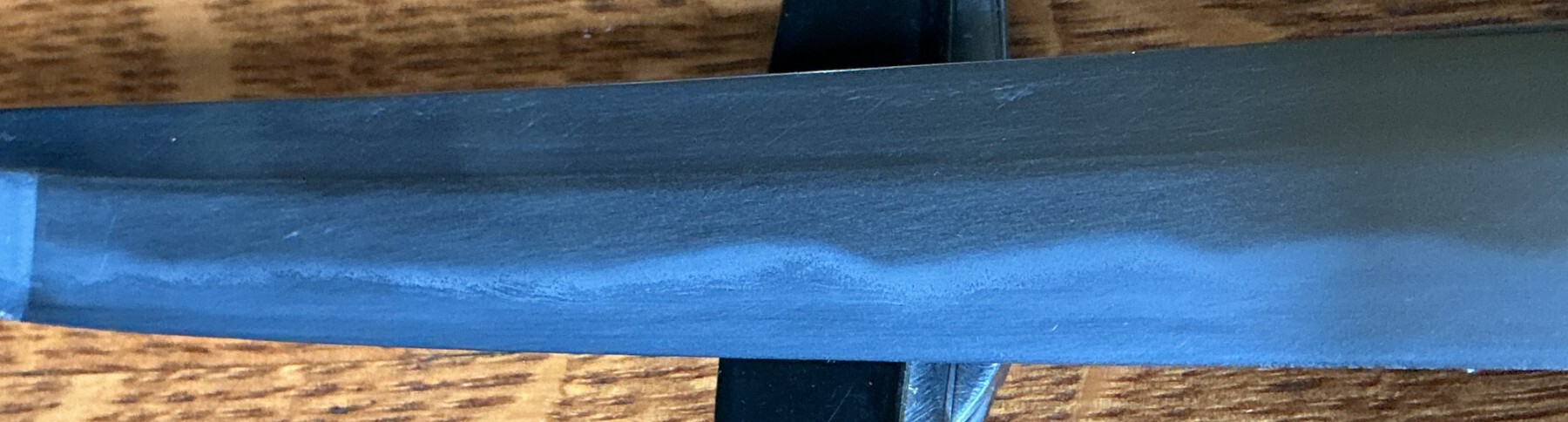
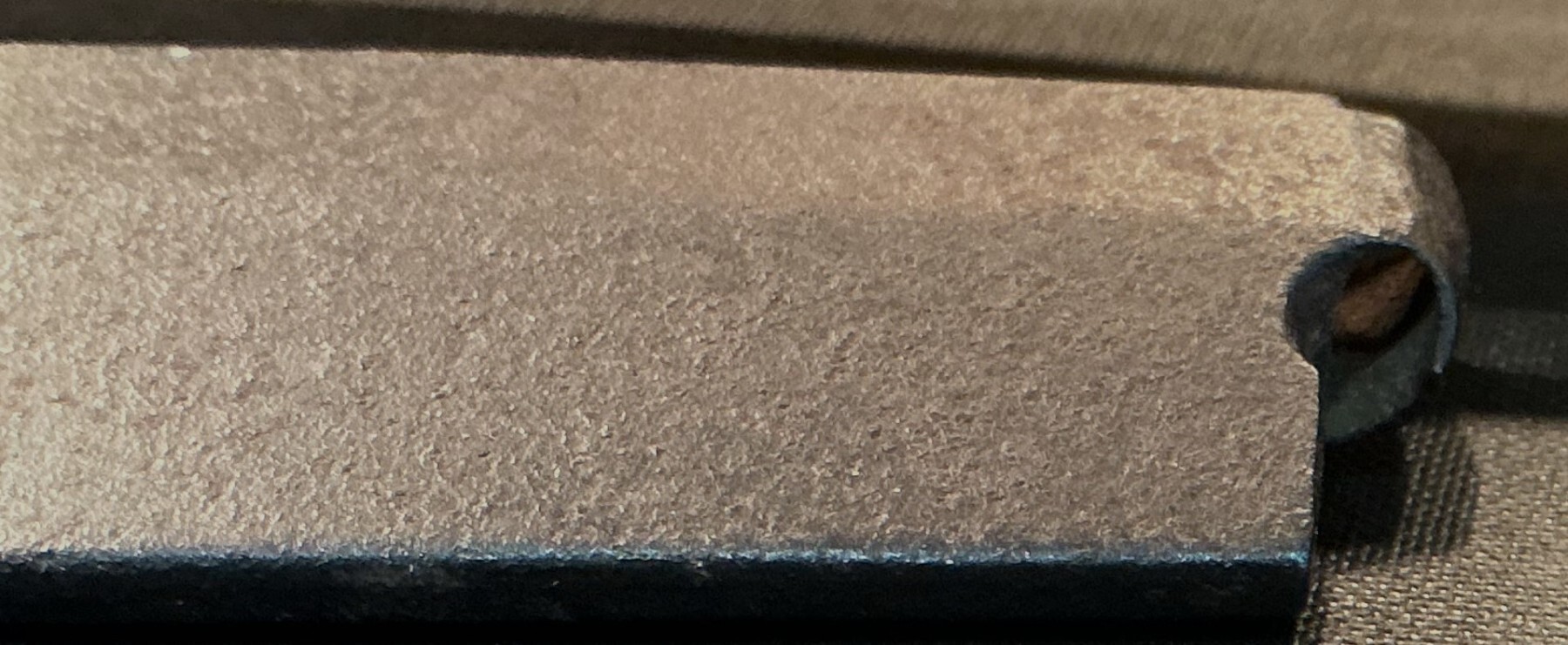
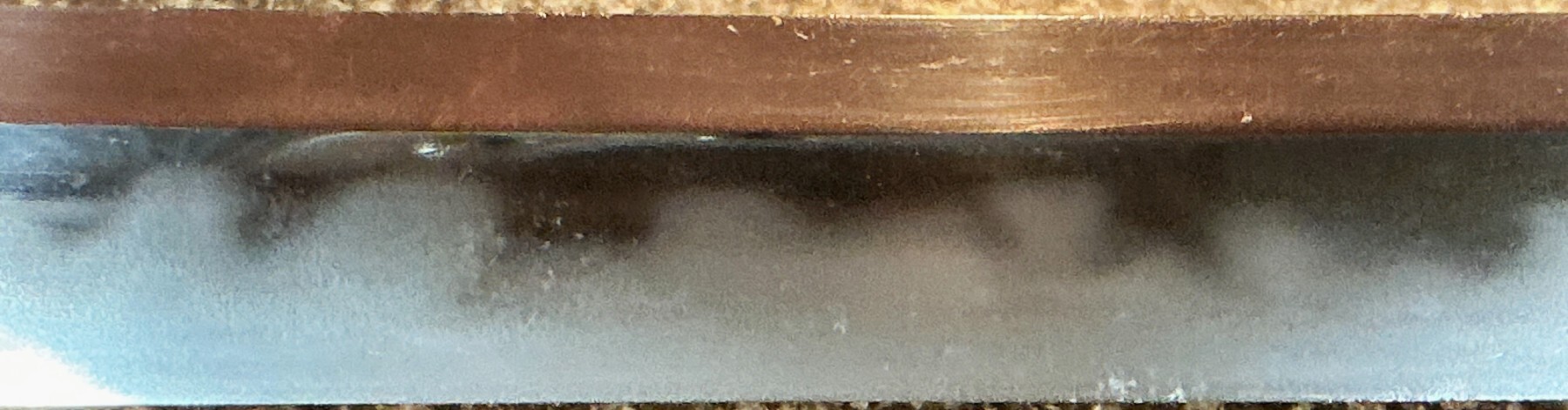
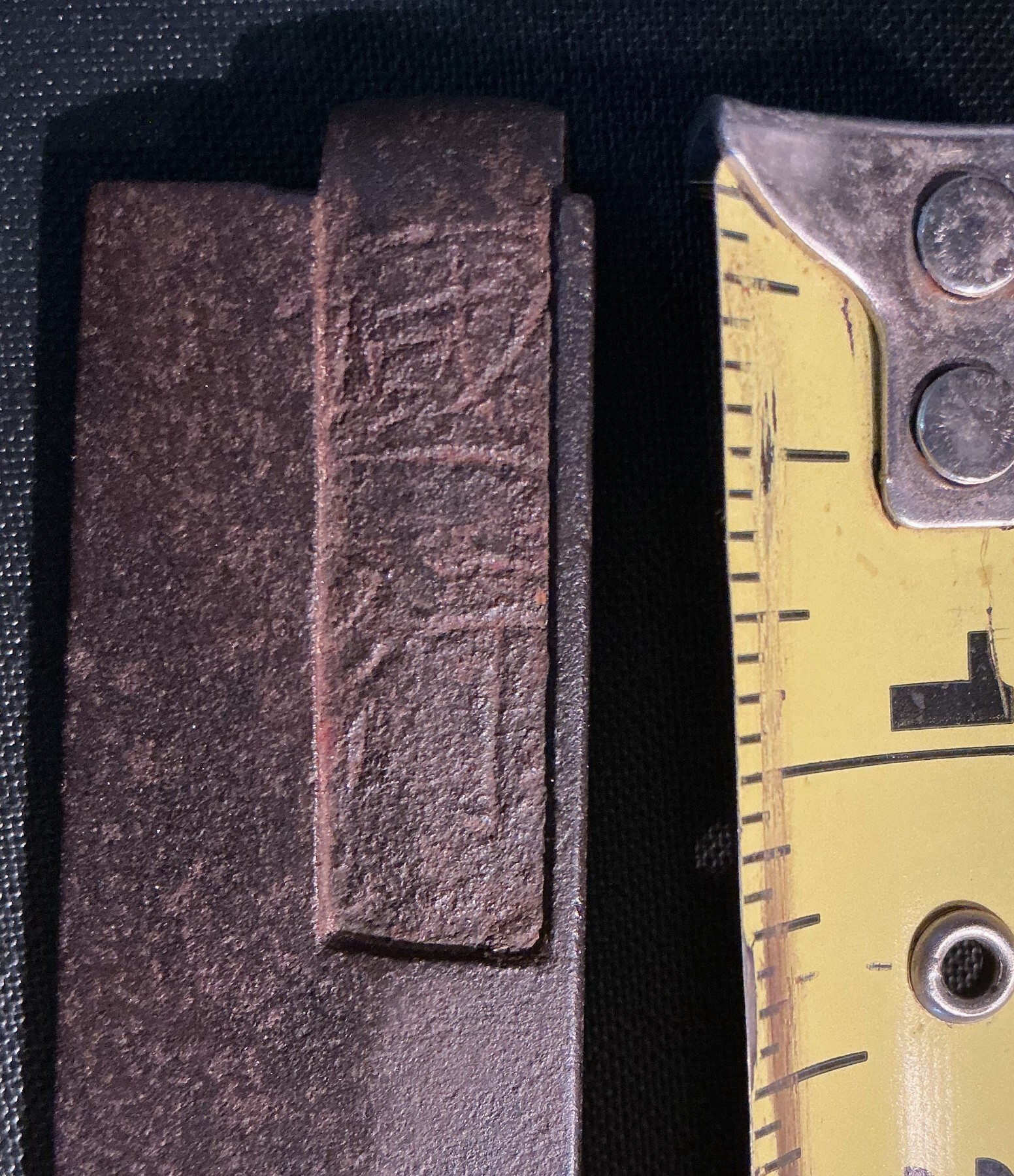
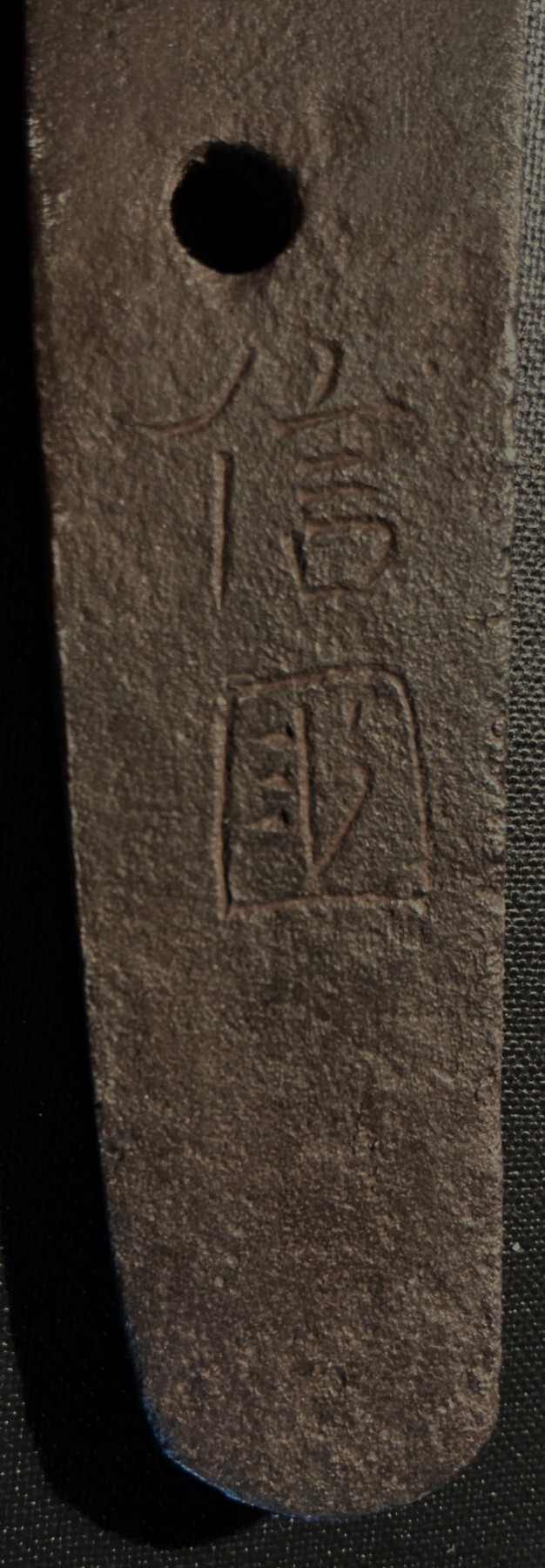
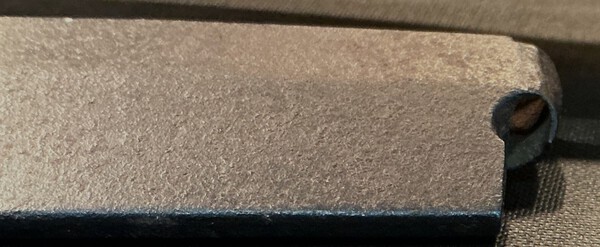
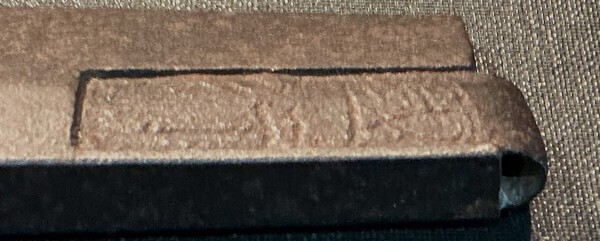
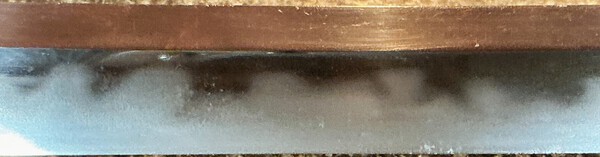
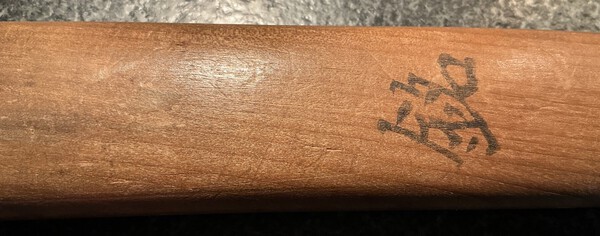
Good day to all, I seek comments on this wakizashi: a recent purchase. I liked the looks of its orikaeshi-mei, and also the style of its hamon. Both features suggest to me that it is old. Part of what interests me in Japanese swords is their age. Please let me know your opinions as to its approximate age, and also whether or not you believe that its orikaeshi-mei reads "Kuniyuki" (my eyesight is too far gone). Thanks for looking and commenting, James A


-
Thanks, Muromachi Period sounds good to me. Harvey
-
Thanks Chandler, To my untrained eyes, the character on your sheet located on the third row from bottom, all the way to the left, looks most like mine. Both of my characters appear to be about the same size as each other. The vertical chisel mark on my Kuni character looks similar to several on your sheet. I can't read Japanese. Are there approximates dates (in parentheses) on your sheet, below the characters?