anguilla1980
-
Posts
47 -
Joined
-
Last visited
Content Type
Profiles
Forums
Events
Store
Downloads
Gallery
Everything posted by anguilla1980
-
 This launched around a similar timeframe: https://nihonto-db.com/
 -
As a tax ID for US customs. Since I didn't buy this as a business, my SS is my tax ID.
-
I wanted to provide an update to this thread as it's the most recent one on the topic in the forum, and I just received a sword a couple of weeks ago. To be clear, this was a shipment to the USA. It was shipped by AOI Art via UPS. Here is the UPS tracking link so you can see all of the hoops it went through. It was categorized correctly as: "HS Code 9706.10 (Antique Japanese sword, made more than 250 years ago)" Then someone at UPS along the way added this "Made in Japan" notation to the paperwork: The UPS automated system emailed/texted me 3 times for my social security number, which I provided immediately via the link each time. But it just keeps doing it until their system finally applies it upon arrival and submission to customers. Annoying, but whatever. On March 4th when my government import charges were assessed, the exchange rate was 1 USD ≈ 157.11 JPY and based on the declared JPY value of my sword, I was assessed exactly a 10.83% fee. On top of this was a $40.33 UPS brokerage fee, which is a fixed tiered fee, not % based. An effective duty of 10.83% strongly suggests the shipment was processed under a standard collectible / weapon tariff category (possibly HTS 9307.00.00 — Swords and similar arms), not the duty-free antique category (HS 9706). As such, after paying online as usual to avoid further delays, I then sent the email to UPS (who knows if anything will come of it, but it never hurts to try): usspdutydiscrepancyreview@ups.com *formatting condensed to save space, and XXX used to protect the innocent :D At a minimum, I should get a response back confirming exactly what HTS classification it was actually brought in under that triggered that 10.83% charge. At best, who knows, maybe I can get the free reversed. You never win the lottery unless you buy a ticket right lol. -------------------------------------------- Dear UPS Post Entry Duty Discrepancy Review Team, I am writing to request a review of import duties assessed on the following shipment. Tracking Number: 1Z7V869VDH17427509 UPS Invoice Number: 209344XXXX Import Date: March 4, 2026 Importer: XXXXXXXXXX XXXXXXX Delivery Address: XXXX XXXXXX XX XXXXXX The shipment contained an antique Japanese sword purchased from AOI Art in Tokyo, Japan. The commercial invoice provided by the shipper declares the item as: “HS Code 9706.10 – Antique Japanese sword, made more than 250 years ago.” The declared value on the invoice is XXX,XXX JPY. Despite this classification, I was assessed XXXXXX in government import charges, resulting in a total payment of XXXXXXX including UPS brokerage and partner government agency fees. Because the item was declared as an antique exceeding 100 years of age under HS 9706, I would like to request a Post Entry Duty Discrepancy Review to determine whether the shipment was entered under an incorrect tariff classification or whether the HS code provided on the commercial invoice was not applied during customs processing. For clarity and verification, I would also appreciate it if UPS could provide the customs entry summary and the HTS classification used for the entry, including the duty rate and calculation used to determine the government charges. I have attached the following documents for your review: • Commercial invoice from AOI Art showing HS Code 9706.10 and describing the item as an antique Japanese sword more than 250 years old • UPS payment receipt showing the assessed government charges • Shipment documentation If the entry classification was incorrect, I respectfully request that UPS initiate the appropriate Post Entry Correction or refund process with U.S. Customs and Border Protection. Please let me know if any additional documentation is required to complete the review. Thank you for your assistance. Sincerely, XXXXXXXXXXXXXXXX --------------------------------------------

-
Hmm, this had not yet occurred to me, but it makes perfect sense that it's possible.
-
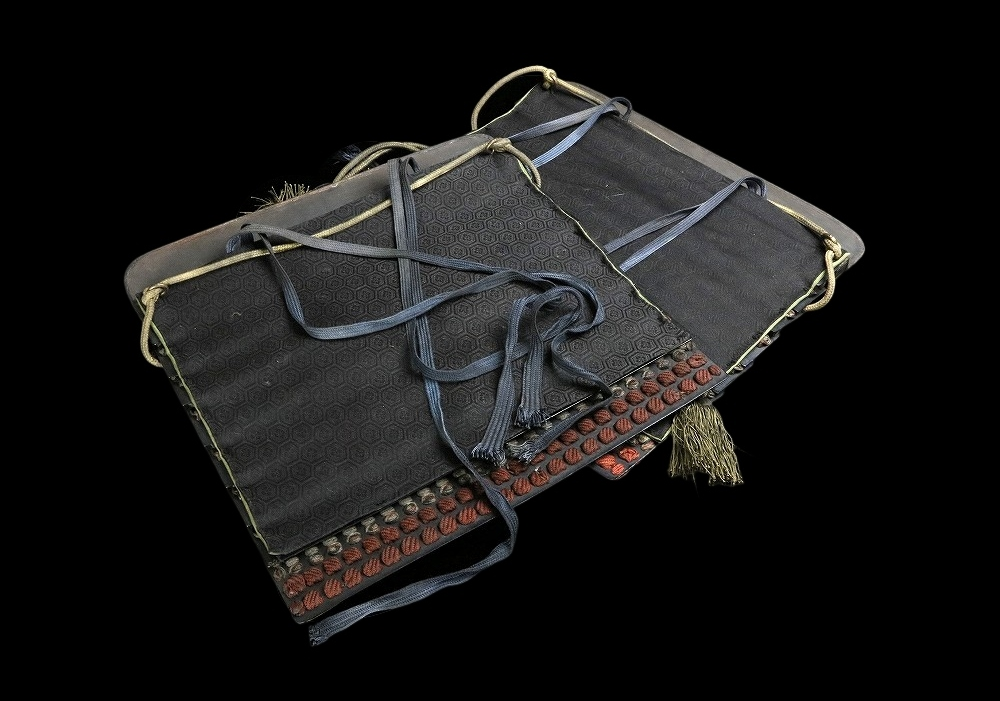
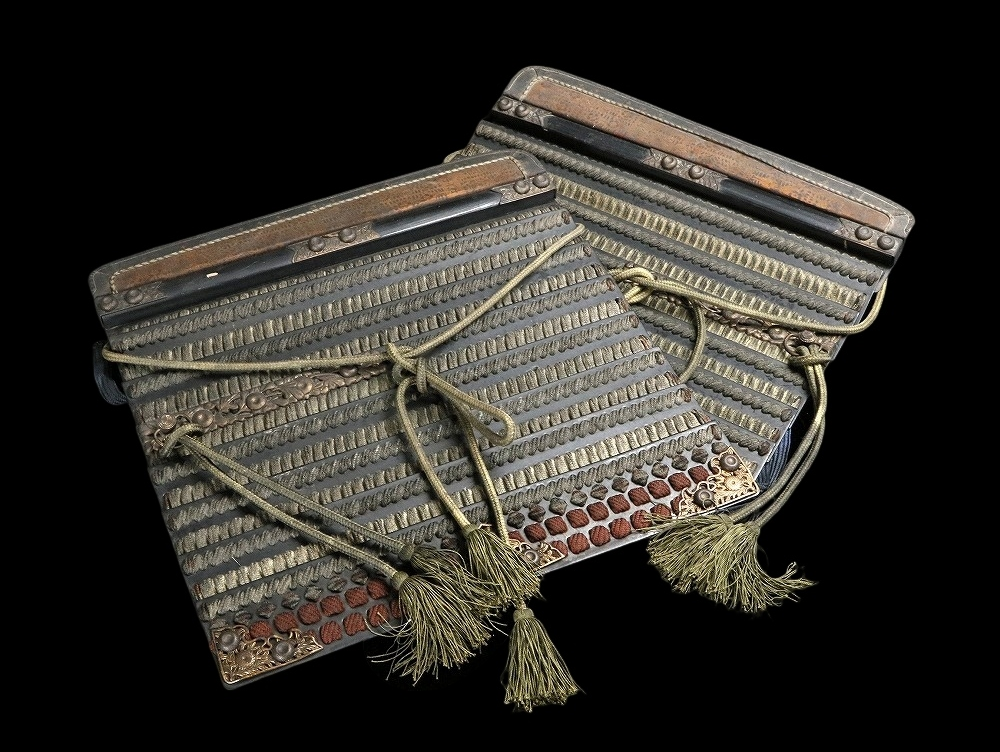
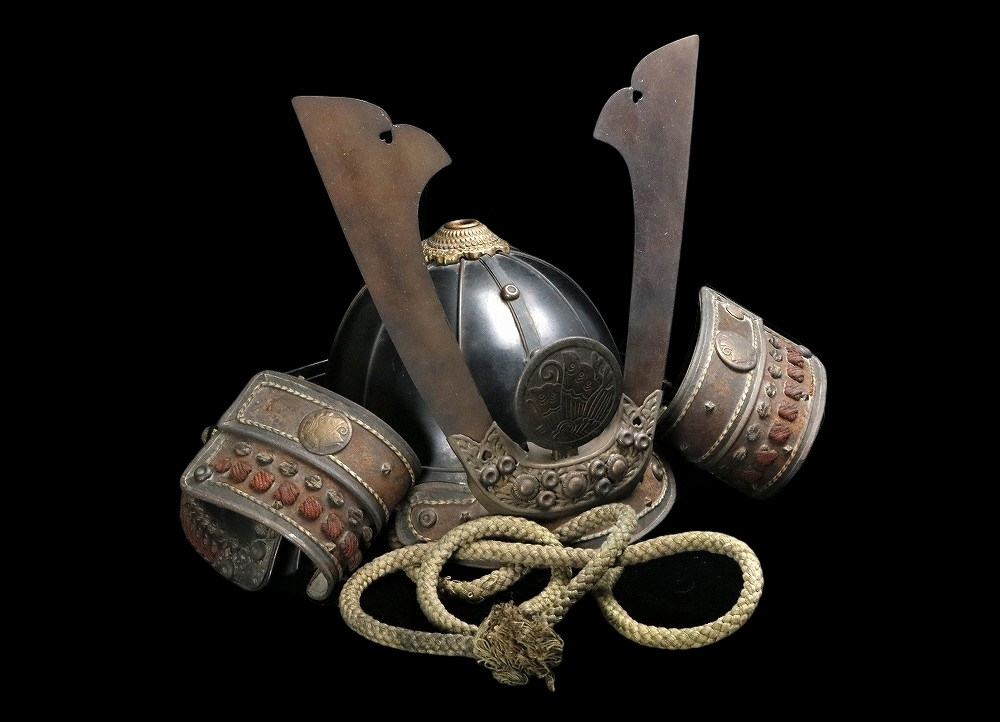
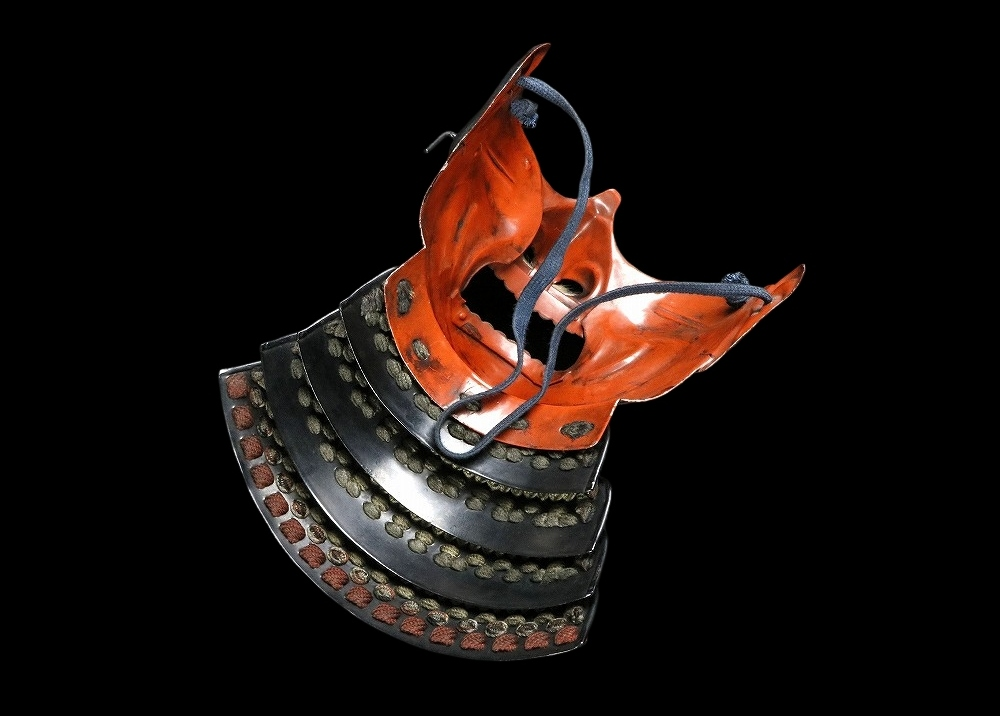
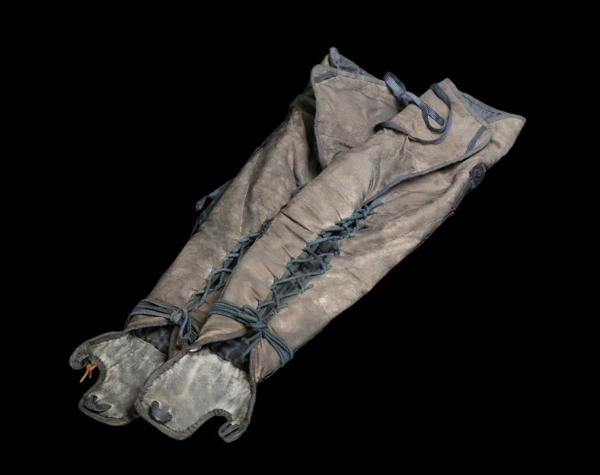
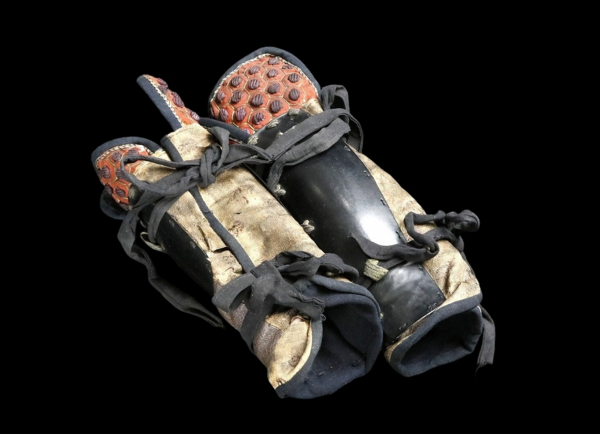
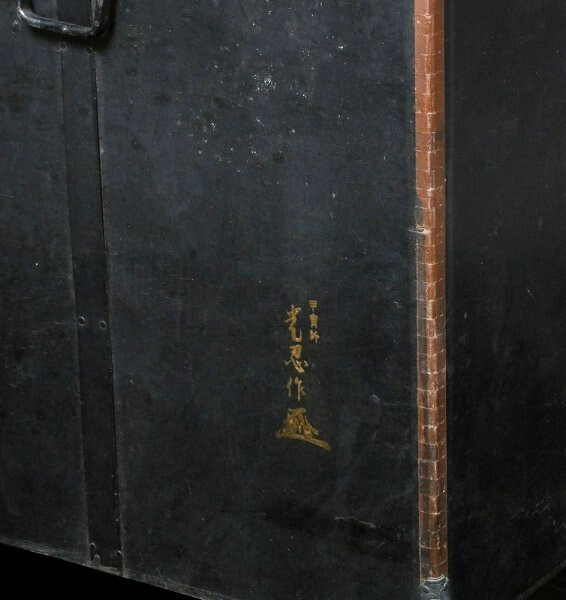
After posting this armor originally I ended up digging into it quite a bit deeper, so I thought I would share a short update with some of the things I have learned since then. The biggest clarification is the signature. The gold inscription on the armor chest reads: 甲冑師 光忍作 丸武 Which translates to “Armor craftsman Mitsunobu made this — Marutake.” The inscription identifies the individual armorer Mitsunobu working within the Marutake workshop founded by Shinobu Tanoue. This means Tanoue was the founder of the workshop rather than the person who made this specific suit. Looking more closely at the construction also helped narrow down the production period. The kabuto liner style, rivet geometry on the helmet plates, the vermilion lacquer interior of the menpō, and the style of the armor chest all correspond most closely with Marutake production from the late 2000s into the early 2010s. The most likely window appears to be roughly 2009–2012, with around 2010–2011 as a reasonable midpoint estimate. I also spent some time studying the construction in a bit more detail. The armor follows the classic Tosei Gusoku configuration, with what appears to be an okegawa-dō cuirass built from horizontal plates and a multi-plate suji-bachi kabuto. The kote, haidate, and suneate also use the traditional splint and chainmail style construction. Based on those details it seems to fall somewhere in the middle of Marutake’s production spectrum, more complex than entry-level display armor but below the high-end museum-level historical replicas. One detail I found interesting is the finish used on the armor. The workshop refers to this type of surface treatment as an “antique finish” (古色仕上げ, koshoku shiage) or sometimes a “period-style finish” (時代風仕上げ, jidai-fū shiage). It is a controlled patination applied during finishing to give the armor a more subdued appearance similar to historical pieces rather than the bright look of newly lacquered armor.
-



-
Thanks for pointing that out. I did notice the missing gyoyo, and I emailed Marutake to enquire about purchasing a replacement (or close matching pair). If I can't source a replacement or set, it honestly won't bother me that much. I don't see much on their website about the artificial ageing/patina process that has been done to mine, but I have read that they offer it. Would be a bit ridiculous to have a brand new looking gyoyo. Far as how the sode are attached, something did seem off with how they were tied/held up, but admittedly I don't know the right way to attach them yet, so I'll have to research that for when it arrives. Here are some more images


-
https://www.shoppopdisplays.com/
-
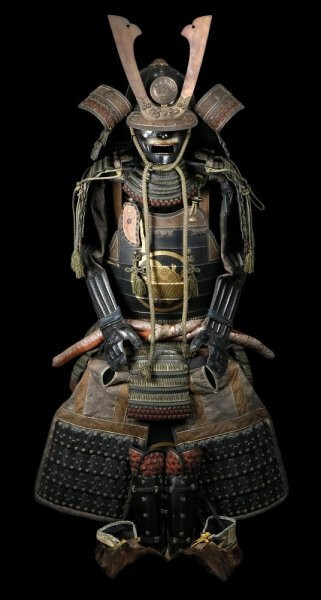
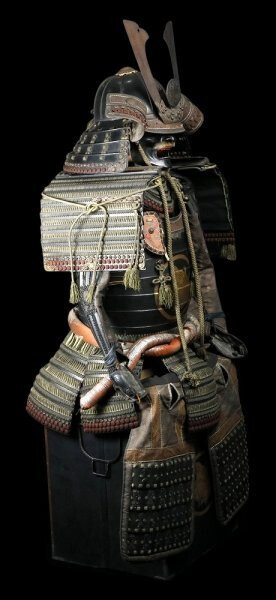
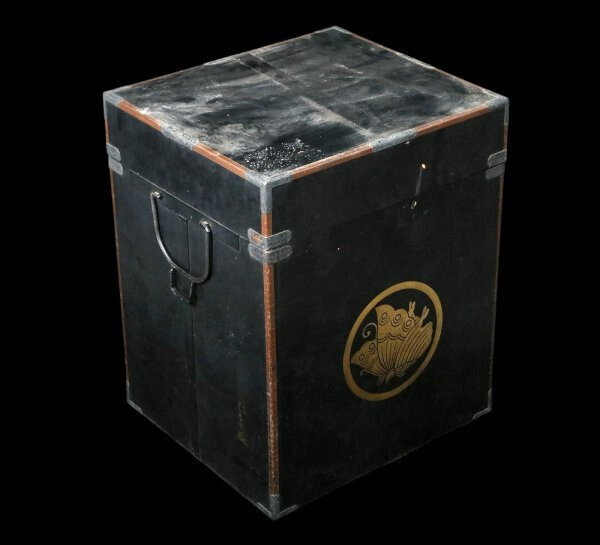
Hopefully it's not taboo to post about repros in this sub, I did see another thread on the main page that was so I figured why not lol. I just bought a full suit of samurai armor that appears to be a modern example of gendai katchū associated with the Marutake / Kōnin workshop tradition. The armor came with documentation describing the workshop history and identifying it as a modern handcrafted suit rather than an antique piece. From what I understand, the Marutake workshop began producing armor in the 1970s under Shinobu Tanoue using the art name Kōnin. This suit seems to fall into that lineage and is likely a relatively recent production, somewhere around 2006/7 I believe. The set appears complete with kabuto, menpō, dō, sode, kote, haidate, suneate, and the yoroi-bitsu storage chest. The chest has a gold inscription and crest on the exterior, which I’m told is typical of modern presentation sets rather than historical armor where signatures were usually hidden. One thing that stood out to me about this workshop, compared to cheaper reproductions, is the materials and construction approach. Marutake armor is generally built using lacquered metal plates, real silk odoshi lacing, and traditional assembly methods rather than the synthetic cords, thin stamped steel, aluminum, or plastic components that are often used in lower-end decorative suits. The fittings and hardware also appear to be properly made rather than cast costume parts, which gives the armor a much more authentic weight and structure. Another interesting aspect of the workshop is that they have produced armor used in Japanese film and television productions. Their work has been used in several historical films and NHK Taiga dramas, including productions such as The Last Samurai and Sekigahara, which I thought was a neat connection between traditional craftsmanship and modern media. Although this example is firmly a collector display piece and not a prop or museum quality recreation. What really drew me to this one was how cohesive the whole suit is, but most especially, the color palette is spot on to my taste. The lacing, lacquer, and fittings all match well and the overall look is very striking when assembled. It has some light handling and storage wear, but overall presents well. I know it won't be everyones taste as the suit is a bit of a mish-mash of periods/armor types for sort of a greatest hits suit of armor. I paid what I think is a good price so I'm happy with it all around. For me, buying a real katchu would divert funds from other collectables, and I'd rather not be the caretaker for fragile textiles that are hundreds of years old. I’ll attach a few photos below showing the armor and some close details (sadly the forum won't let me attach the high-res files). I also purchased an armor display stand. I have the perfect spot in my living room for it right next to my sword display.
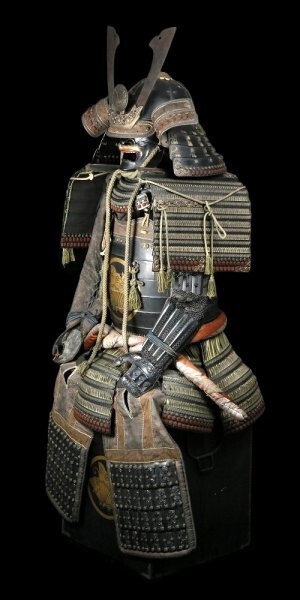
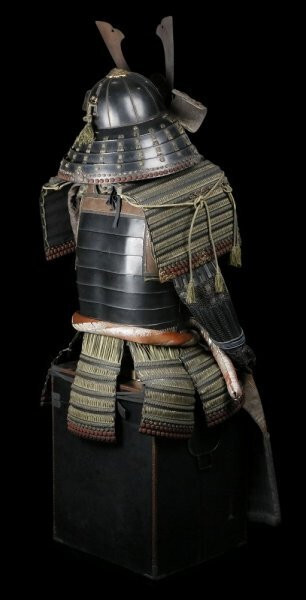

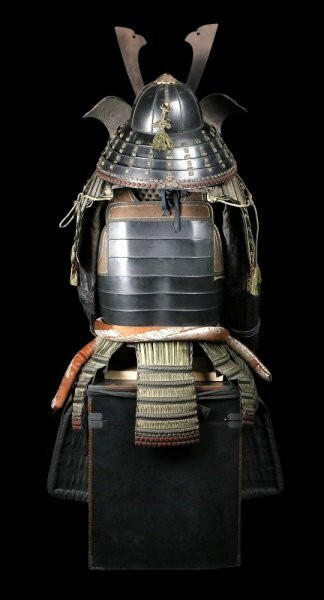
-
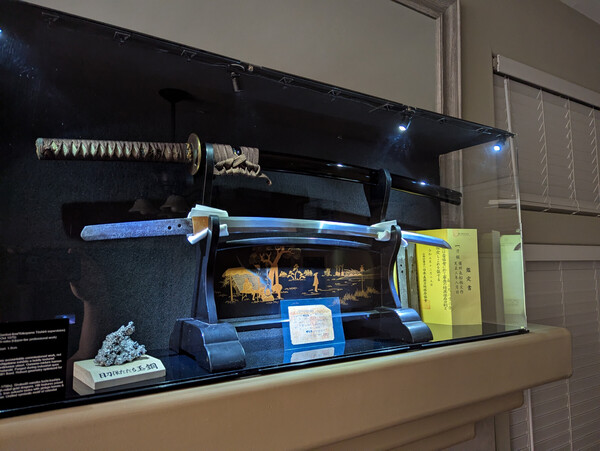
Here is mine. I ordered it online to custom dimensions, then added the black felt and LED lights. My stupid phone started doing this thing months ago, where it adds yellow or blue thick ghost stripes to an image, so forgive the blue tinge everything has - totally not like that IRL. Also weird how my plastic Torokusho sleeve fluoresces. I live in the California desert so humidity is not a problem and it's super easy to raise the left side of the display cover up and remove the blade as needed to oil. It's not a perfect seal so it won't develop its own micro-climate, but it's sealed enough that it should be near dust-free (which my whole house nearly is anyway since I have no pets). Anyway, the LED spotlights do an amazing job making the contrasts and textures of the blade stand out, even from across the room. This is on a mantle above a fireplace I don't use (there is a Ducati SBK parked in front of it), so the display is at eye level and higher, so you can walk right up to the blade and it's perfect height to let the light play off it as you move around.
-
Lmfao, brutal but so true lol.
-
Oh yeah, great channel. I came upon it myself only several months ago.
-
Wow, very beautiful! Thanks for sharing and uploading that document.
-
Very much agree. I consider the upper-tier Tensho Bizen-den blades to be peak Koto sword making. Bizen had some of the best local materials and culminated knowledge from generations of master smiths, combined with the mastery by that time to forge blades for maximum damage and survival in combat when they had to be used. Then the mudslide of 1591 came along and basically reset sword making in the region. While earlier Heian/Kamakura and later Edo period upper-tier blades are rightly treasured for their beauty, personally, I believe the late-Muromachi>Azuchi-Momoyama>Early Edo blades to be peak functional craftsmanship and metallurgy. Everyone has their favorites for sure and reasons behind that. For me, history is the major driver, so late Sengoku is where it's at (it has to be for most that are drawn to the history of true samurai warriors). Combine that with the beauty of the Bizen-den jitetsu, jigane, and utsuri ..... and I get excited :D The longer this period is looked down upon in nihonto collecting for all of the mass-produced lower-tier swords that it keeps the pricing of the upper-tier blade reasonable, the more I'll be able to collect. Just as taste in the shape of the hamon has ebbed and flowed with the centuries and even recent decades, this too may perhaps change. Now that I have my feet wet after years of study, I'm feeling cautiously confident to spend much more on the next one I acquire on perhaps a juyo blade.
-
I wanted to share a picture now that everything has arrived and I've had time to go through it all. Close-up images of the blade will have to wait until I get some appropriate lighting just for that. I've built a custom display in my living room with lighting that I'll post images of once it's all set up in there.

-
I too would shy away from this one for the reasons stated.
-
Baltimore Arms Show
anguilla1980 replied to drb 1643's topic in Sword Shows, Events, Community News and Legislation Issues
Dang it, I'll just miss it. I'll be in town 11-13th for work, but can't stay through the next week. -
Package stuck in Japan, need some help
anguilla1980 replied to Tim Evans's topic in General Nihonto Related Discussion
I wish you luck on finding a proxy in Japan. For shipping, you will need to use UPS, as of today, that's the best option. -
I can confirm that UPS will ship swords no problem. I have one entering the US via UPS today, and the process for the shipper was standard fare. I've been able to track everything and respond to UPS with my tax ID upon request, etc., and all inspections/holds were processed without issue thus far. - I thought to mention it since you said you may be selling others from your collection in the future as well. To assist, if you do happen to use UPS for a US buyer, the correct classification is "HS Code 9706.10 (Antique Japanese sword, made more than 250 years ago)". I know you don't have UPS stores there in the UK, but hopefully walking the parcel into any UPS affiliate, they should know how to do this process with ease. Sometimes, making UPS labels on their website doesn't always allow for using the right customs code, and it's not always clear how many copies of the shipping invoice need to be printed, signed, and kept vs. included with the parcel.
-
I'm VERY new to the hobby, and only recently made my first purchase, so take what I say with a grain of salt for sure... That said, when I look at those images of each blade, both appear to show little to no clearly defined utsuri (very fine pearlite and like an echo of the hamon in the ji). In the first link (Kaneuji) blade image, the ji appears relatively uniform without the characteristic pale, shadow-like reflection pattern running parallel to the hamon. There are activity lines and some surface texture, but I do not see a distinct midare-utsuri, bo-utsuri, or shirake-utsuri formation. If present, it is extremely faint. In the second link (Fuyuhiro) blade image, especially in the full-length composite views, the ji also looks clean and fairly homogeneous. The hamon is visible and active, but the area between the hamon and the shinogi does not display the soft, misty secondary pattern typically associated with strong utsuri. Again, if any utsuri exists, it would be very weak. My taste, especially appreciating in person, swings towards enjoying a very dense and active jihada and lots of utsuri. So I would pass on these, mostly due to the lack of utsuri. Speaking to Adam's comment about the hamon being very one-dimensional, I absolutely agree. The hataraki within the yakiba of the hamon is very restrained and nearly non-existent. Another huge knock in my book. Again, all personal taste. But me, I always would put these attributes over the shape of the hamon line, as they are far more fascinating to study in person and in different light. You always see something different. To me a fancy hamon line is like "eh", sure it's striking from a distance, but if the blade lacks depth in the other aspects I mentioned, I pass. Rohan is absolutely right, with your budget, you can find many really great blades. So continue to be patient and persistent in your search. I'll lastly say that there are other, more technical attributes to a blade that I personally look for to tick my boxes, that being an ubu nakago (un-cut tang, so none of the mei is missing), and a date. A date is usually, from what I've read, an indication that it was a commissioned blade of higher craftsmenship in the workshop. A blade that also includes a really good quality and period Koshirae can be a big plus if you are going to display it (for me anyway), but by all means, always buy based on the blade attributes.
-
Thank you, appreciate the clarification.
-
Neither am I. But Google returns images in their search results too, and they haven't been sued yet as a violation of fair use. I was just pointing out the similarities.
-
By not obvious, I meant there is no link anywhere that says "register", so I never even tried to log in, because I didn't have one yet. Only after thinking to try it as a last ditch effort to get forwarded to a registration page, did I even try. The code then came immediately. I'll PM you another seller I search often. Thanks. Again, great work and super appreciate the effort!
-
I think you are believing it to be more ambiguous than it is. I get that the shipping companies are the ones who collect upon import clearance into the US, as they have been and we just pay online. But I see not how "who" is selling the swords has anything to do with it. The shipping companies have clear procedures to follow when completing the paperwork when the shipment is generated by the seller in Japan - just like any other country or even us when we export. IE; they classify it for what it is and the price, then the shipper applies the US customs import product code category to it.
-
So as of today the SCOTUS, as I understand it, said that many of the reciprocal tariffs imposed by the US administration were illegal. Meaning for us I believe, that the 15% reciprocal on items like our swords from Japan is void. (Don't get me started on how they shouldn't have applied to 100+ year old antiques anyway) BUT, then he just a few hours later today, imposed a new 10% tariff citing a different legal framework that allows him to impose them for 150 days or something like that under section 122. Help me make it make sense here lol. So if I have a sword that I expect to ship next week or the week after, I'm looking at 10% instead of 15%, right? Will UPS/FedEx/etc. automatically have to refund the tariffs they collected illegally since last summer, or do we need to call and initiate that refund? Thanks!