Clark
-
Posts
7 -
Joined
-
Last visited
Clark's Achievements





-
The value of friendship cannot be measured in money. If this piece brings you beautiful memories, then it is worth it to you. However, I must also kindly remind you that the replicas from Chinese workshops are not worth your subsequent investment. This is something I found at a Chinese second-hand market at random, and it is exactly the same as your Kusari. The price is also very high (relative to Chinese consumers). I guess these are mass-produced for export, please make sure to identify them.

-
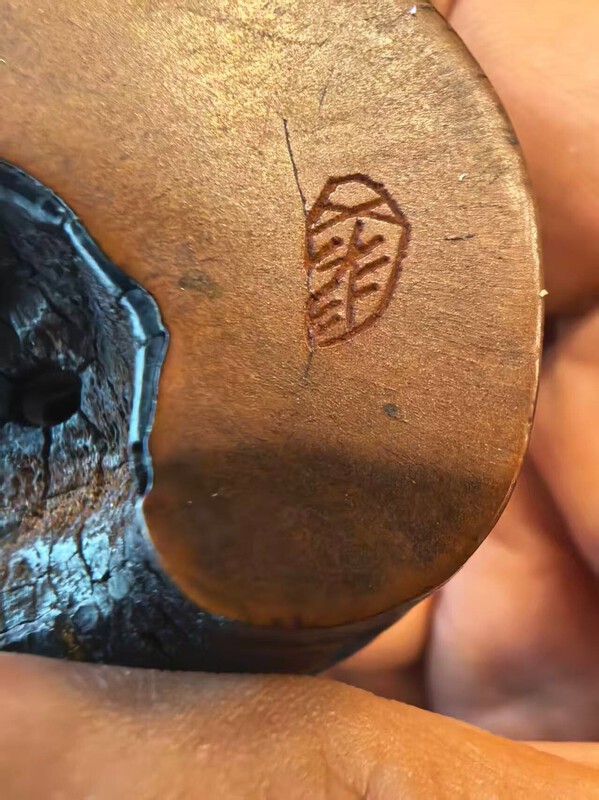
I can be quite certain to tell you that this piece comes from a modern Chinese workshop, and its signature, "正重," is a representative signature of a large number of modern Chinese workshop works. In fact, the traces of mechanical processing by modern workshops can also be seen from the carving style. If you browse the second-hand market in China, you will see a large number of works with similar signatures, which are not uncommon. I highly recommend against purchasing works with such signatures, regardless of the price.
-
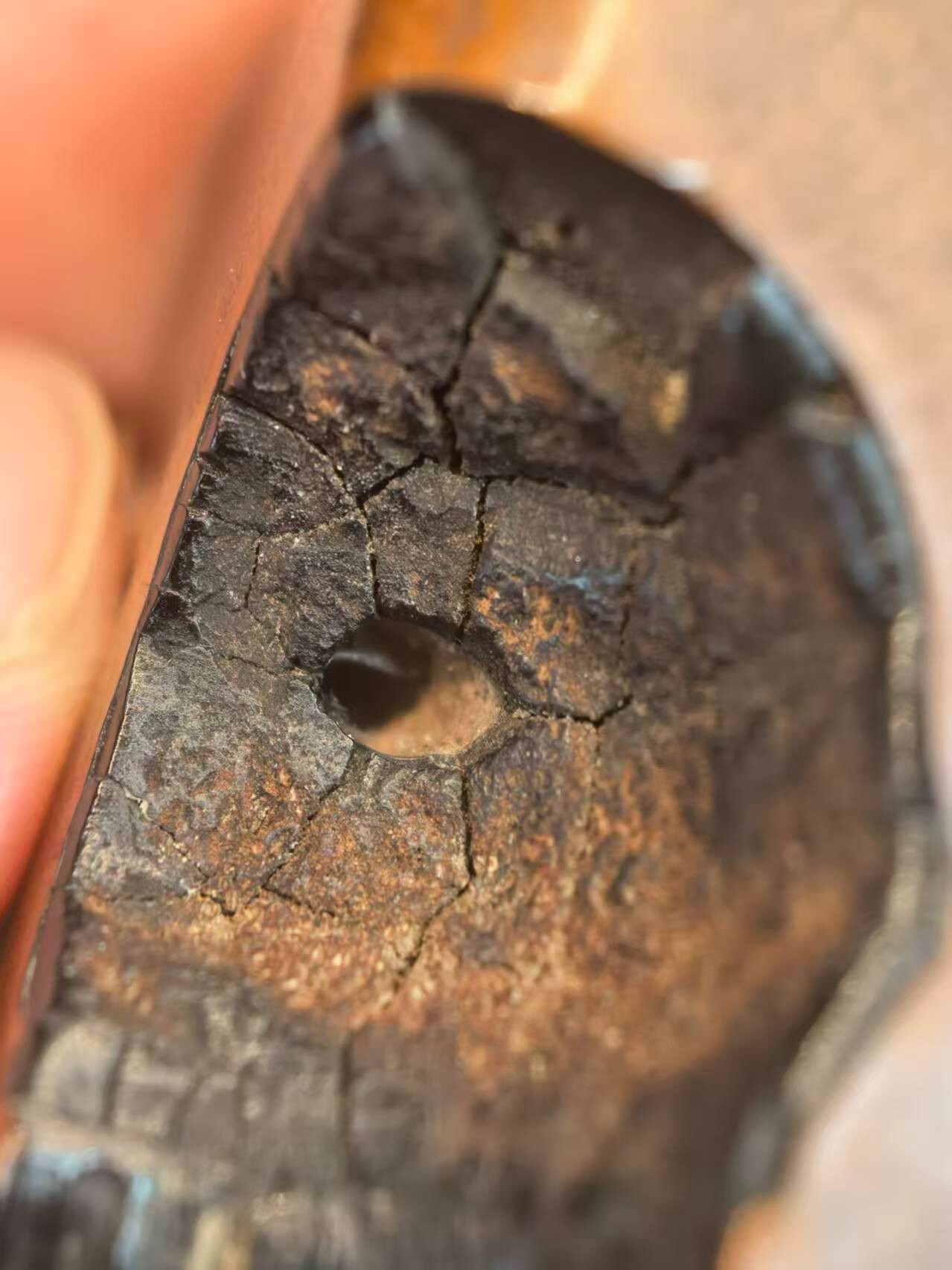
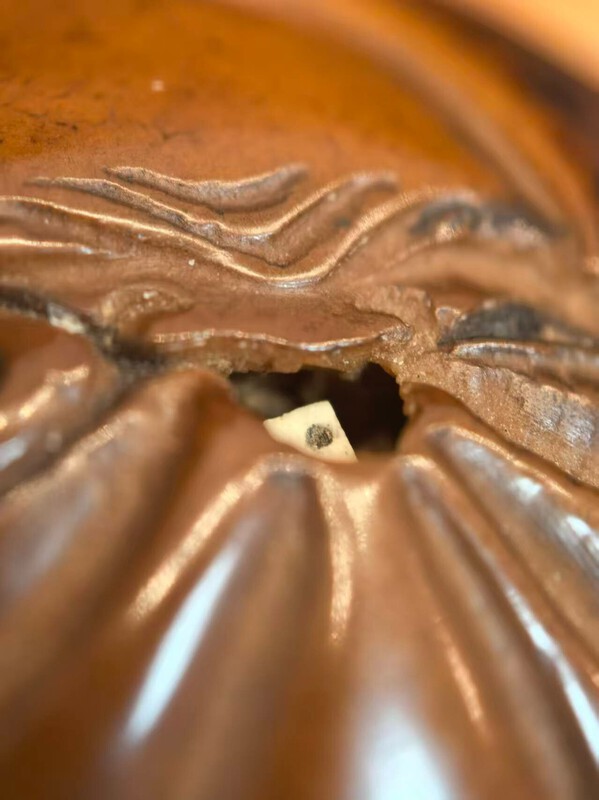
No problem, this is the supplementary photo, including the holes, signature, and details. The coloring of the dice is rather primitive, which to some extent excludes the possibility of being made in a modern workshop, but the red cinnabar in the signature is still quite obvious, which somewhat increases the likelihood that this is a modern work. But the most important aspect is the design. The mechanism of the root attachment, as pointed out in the following post, is not uncommon, but the root attachment with an embedded die is indeed rare. One theory is that this root attachment corresponds to the gambling habits of small Japanese merchants during the Edo period. If it were a work of a modern workshop, there should be many similar designs, at least not uncommon.


-
Unfortunately, due to the deterioration of Chinese-Japanese relations, it is increasingly difficult to find high-quality netsuke in China today...
-
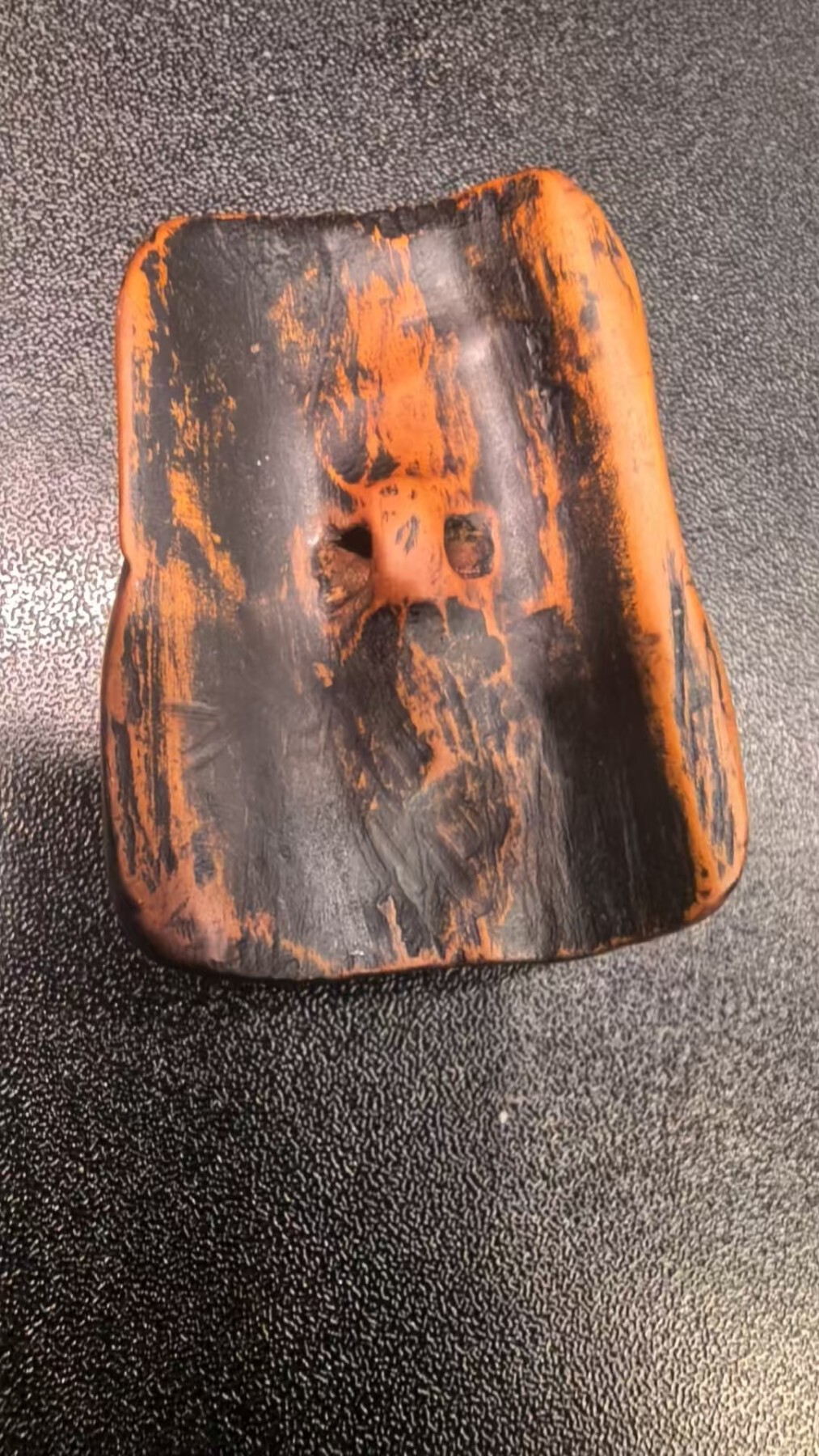
I would like to share another rare piece from my collection: a mechanical netsuke. In fact, I have never seen anything like it before. This netsuke is shaped like a Daruma, made from ivory nut, and features a movable die inside its mouth, which still functions perfectly—allowing you to shake it and see the number. The die itself appears to be made of bone. There is a signature or mark on it, but I am unsure of its origin. It’s possible that this is a modern workshop piece, but I have never encountered any similar design. I’m not very familiar with ivory nut netsuke, and I suspect it may not be very old, though I could be mistaken.


-
I apologize for the late response. There are indeed very interesting discoveries on the back of these two kozuka. One of them has a signature that reads "水山," which has been forged on works by Chinese workshops, so I'm not sure of its authenticity. The other back is very plain. I believe the year of the other kozuka may be earlier, possibly around the middle of the Edo period, and its style follows a relatively plain and reserved craft, not yet entering the pursuit of exquisite shapes during the Meiji era, with practicality outweighing decorative value. Such kozuka are often undervalued in the market, but that is precisely where they are very interesting.


-
It is a great pleasure to meet you all here. I am an independent amateur netsuke collector from China. Inspired by the insightful contributions from the members of this community, I would like to share some observations regarding the netsuke market in China. Due to complex historical and cultural factors, there are virtually no large-scale forums or dedicated platforms for netsuke collectors in China, leading to a significant lack of information sharing. However, because of our linguistic and cultural affinities with Japan, the Chinese market sees a large volume of netsuke "re-imported" from Japan. Unfortunately, about 95% of these are fakes. The notorious "Shozan" and "Gyokuseki" signatures frequently discussed here are, in fact, ubiquitous on the Chinese secondhand market. Setting those aside, there are occasionally hidden gems to be found. (It should be noted that China maintains very strict regulations on ivory; therefore, I personally only collect boxwood netsuke). I have acquired a few representative pieces that I would like to share with you. The first is a Japanese Hyottoko mask netsuke, and the second is an Okame mask netsuke. While the craftsmanship of these two pieces may not be considered exquisite, they both possess a distinct patina that suggests a clear sense of history. The Hyottoko mask is signed "Suizan" (水山). I am quite unfamiliar with this name and am certain it does not belong to a famous master. The other piece is unsigned. Regarding their age, I personally date them between 1850 and 1920. While this period may not be the most "ideal" for some collectors, it is quite acceptable given their acquisition price. Regarding the mass-produced forgeries, I have learned that they largely originate from provinces in Southern China. There are specialized sellers in our secondhand markets dealing specifically in these items, priced anywhere from a few dollars to tens of dollars. Many people fall victim to these scams, and it is a great pity that we lack a platform like this one to help collectors identify and correct such errors. Thank you once again for your sharing. Greetings from China.