Jnuzzo
-
Posts
37 -
Joined
-
Last visited
Content Type
Profiles
Forums
Events
Store
Downloads
Gallery
Everything posted by Jnuzzo
-
I have to get a macro lens for better photos, but what I’m seeing with a 5x magnifying glass is actually the scratches not cutting through the rusted areas. Maybe scratches through oxidation would have gotten blended out and faded with cleaning / time though. But that also poses the question of: If the oxidation is edo, why does cutting from 1940s exactly align with it? That’s the only area of the blade with oxidation and / or cutting scars. Big coincidence if those circumstances occurred 150-200 years apart yet aligned almost perfectly within the last 7” of the blade. The tone of oxidation in cutting area is also way off from the ww2 blades I have. I dunno, just doing diligence while I have it in hand.



-
I did realize that the tsuba photo was upside down after the post … was not happy about it and am trying / learning to be better 😔. Honestly, I’m incredibly intrigued and attracted to the discipline within this art form and the reflections of it. Thank you for your patience with me.
-
That makes more sense than edo period abuse left in original state (from what I can see with 5x magnification the chips were never reshaped / resharpened) … I have a couple WW2 blades that were cut with to compare to (traditionally and machine forged). Will do due diligence. *if I had no cares for the piece n didn’t pay for it I’d try to cut some crazy stuff with it too lmao
-
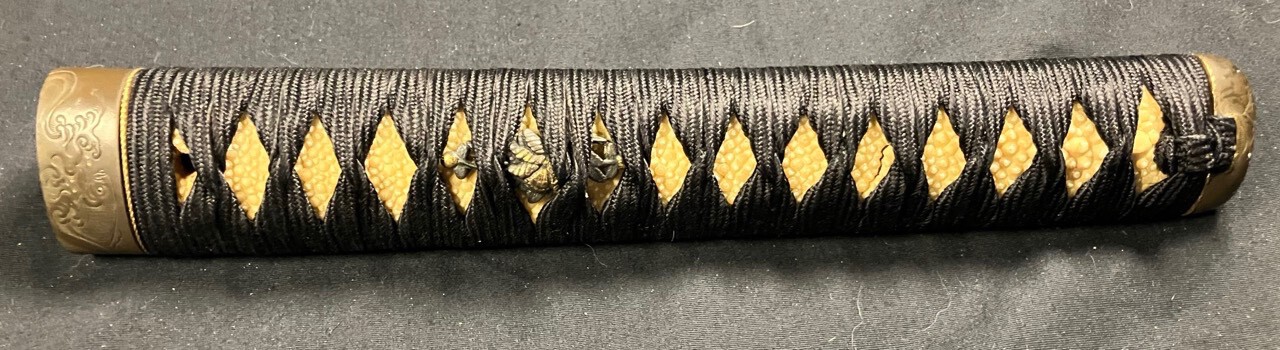
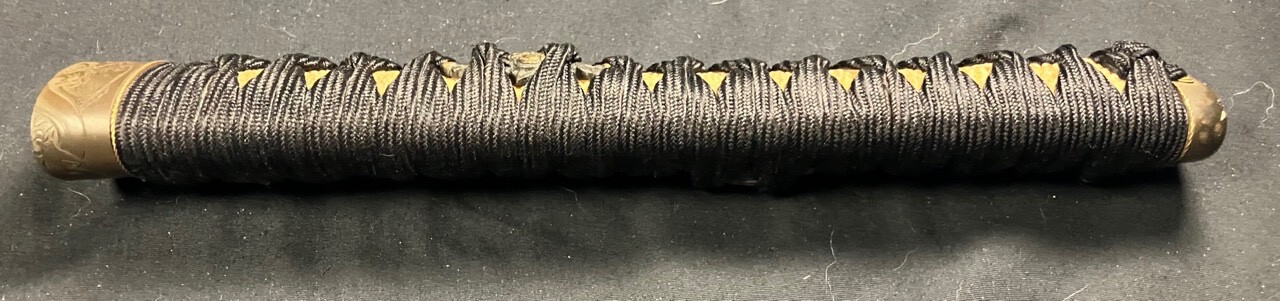
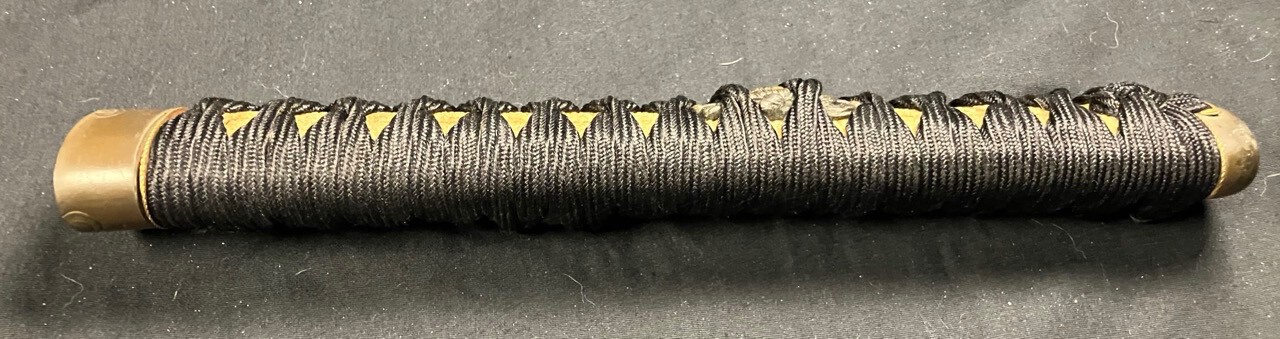
The tsuba was also engraved with five maru ni agehacho mon on each side (which could have been a purely decorative decision or a nod to more violent times). Fittings were made by Kikuchi Tsunekatsu. Blade only has one mekugi-ana and koshirae is possibly original to the blade. So I’m entertaining the possibility that the blade encountered these cutting remnants within the late edo period swordplay as opposed to Meiji or later. Don’t really care either way, just trying to discern the history properly and not call something like it is or isn’t without due diligence.

-
Found this article on late edo tameshigiri and aratameshi that I thought was interesting (albeit possibly not pertinent to subject blade): http://www.nihontocraft.com/Aratameshi_Nihonto.html
-
Overall the feeling I get is that the blade was repeatedly subjected to cutting some harsh materials. Bamboo seems like a fit in-part. Possibly even bent and straightened in / after the process. I have to look deeper / more thoroughly but I see evidence for at least 6 different harsh cuts. My gut says someone pushed this thing late edo timeframe and I’m looking at the fallout from that intentionally destructive endeavor. Blade is gimei Okimasa (I’ve analyzed the mei pretty thoroughly and it’s obvious gimei to me) … but it’s still pretty impressively crafted, and given the koshirae, it would have been expensive. In modern context, to me, it screams “rich person gets nice car and wants to floor it / play with it to see what it can do”. Or perhaps a WW2 soldier who was given it by a family who cared for it said “I might die here, I’m gonna cut some crazy stuff with this fancy sword before I go”. It’s almost definitely a WW2 trophy, as there’s a USN member enlistment number engraved into the habaki.
-
Blade was used for tameshigiri and not re-polished after, ripples in shinogi-ji from this makes sense.
-
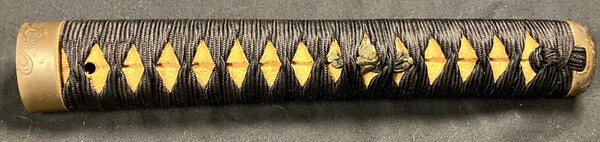
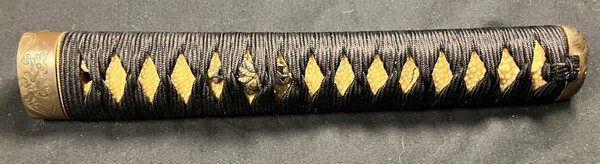
Thanks for the educated input guys, my wife would have killed me if she caught me with a new sword, 900 mats, and 50 books trying to figure out how to do tameshigiri to figure it out myself lol. Last question - in your opinion if someone did a bunch of cuts post-WW2 with late edo koshirae on the blade, would it show? Koshirai looks relatively untouched to me, is signed late edo, and the ray skin is cleanly dried out and shrunk. I don’t see any signs of abuse, significant wear, or anything on the tsuka. Only one mekugi-ana so I don’t believe the blade was refitted past this koshirai. My gut tells me that the ray skin at least would have cracked up a bit with a bunch of swings on hard targets if done any time recently, but ?


-
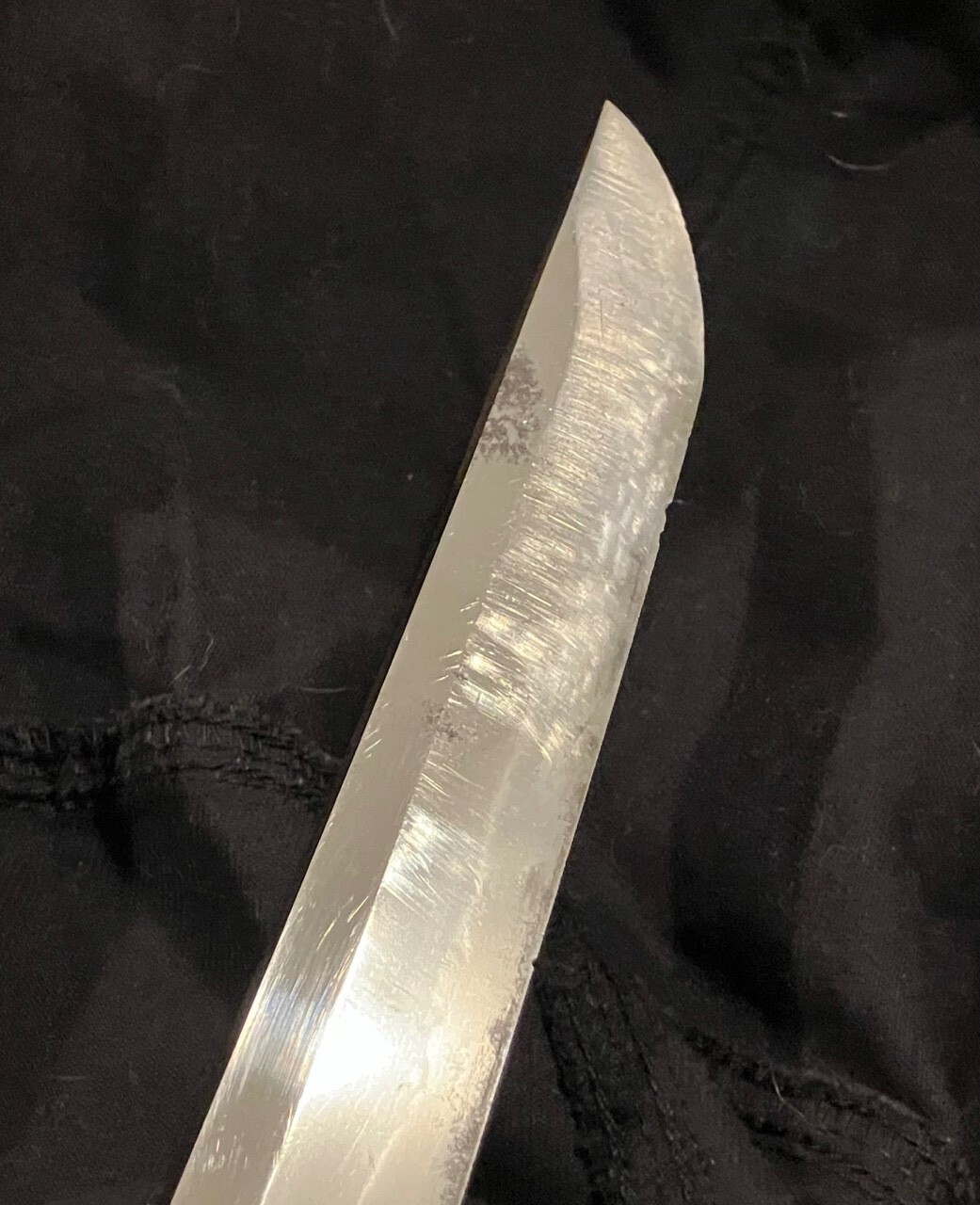
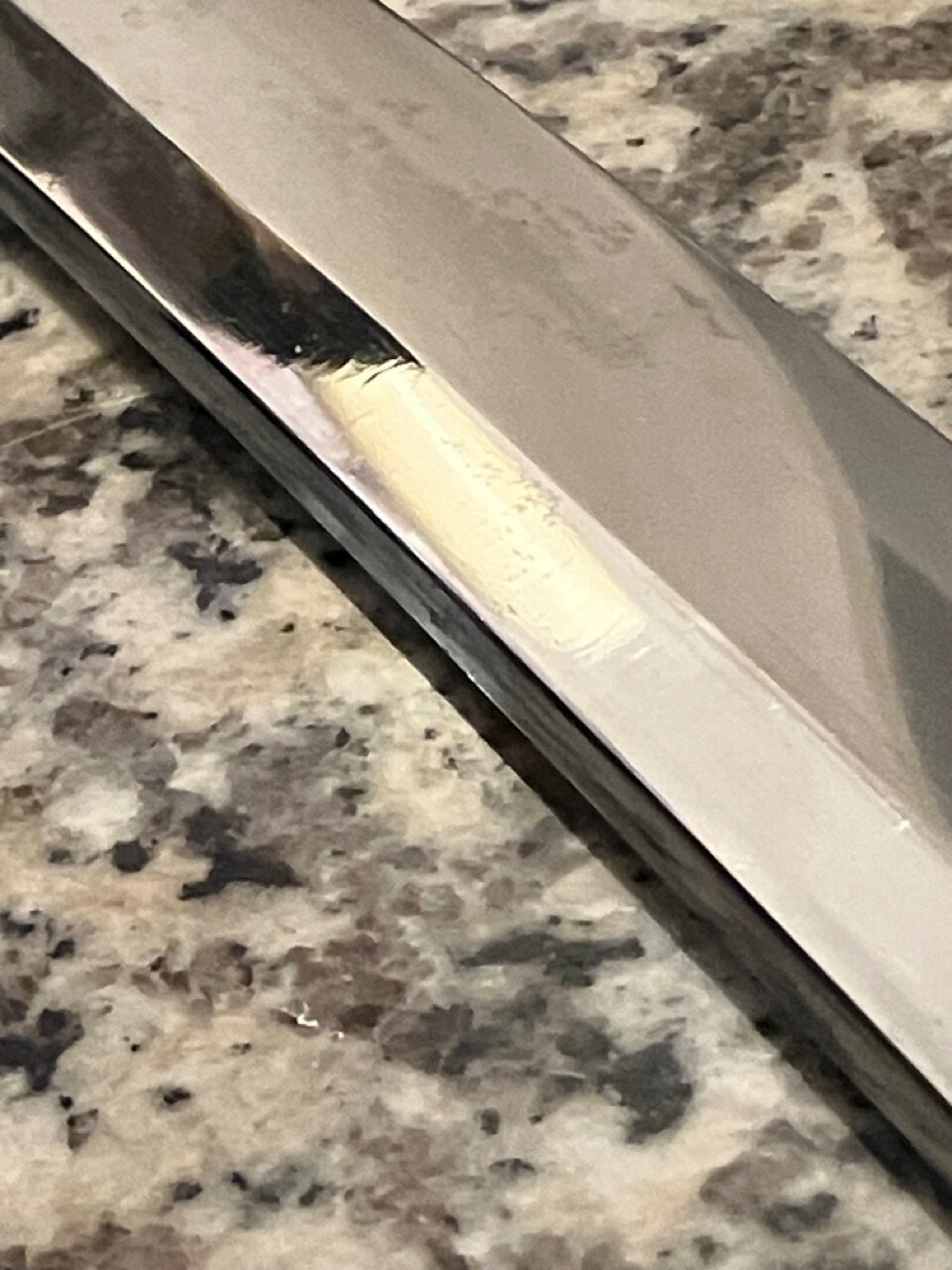
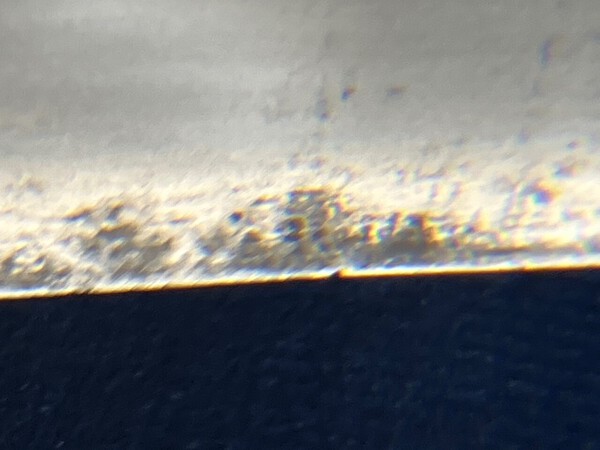
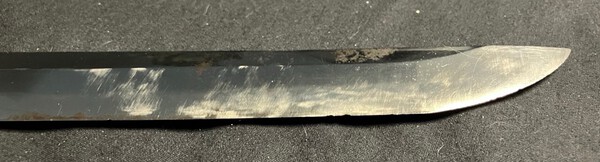
One more photo angle that looks to me like the blade was pushing through targets at speed, rather than being scuffed up by hand.
-
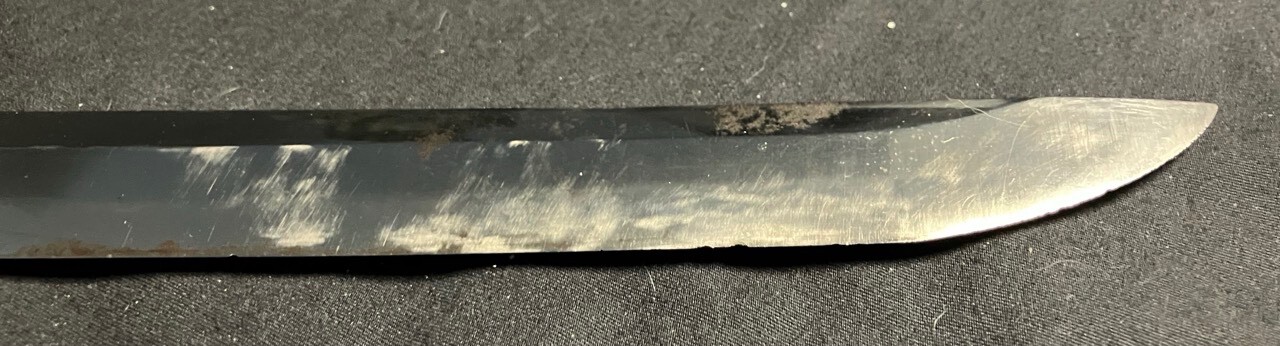
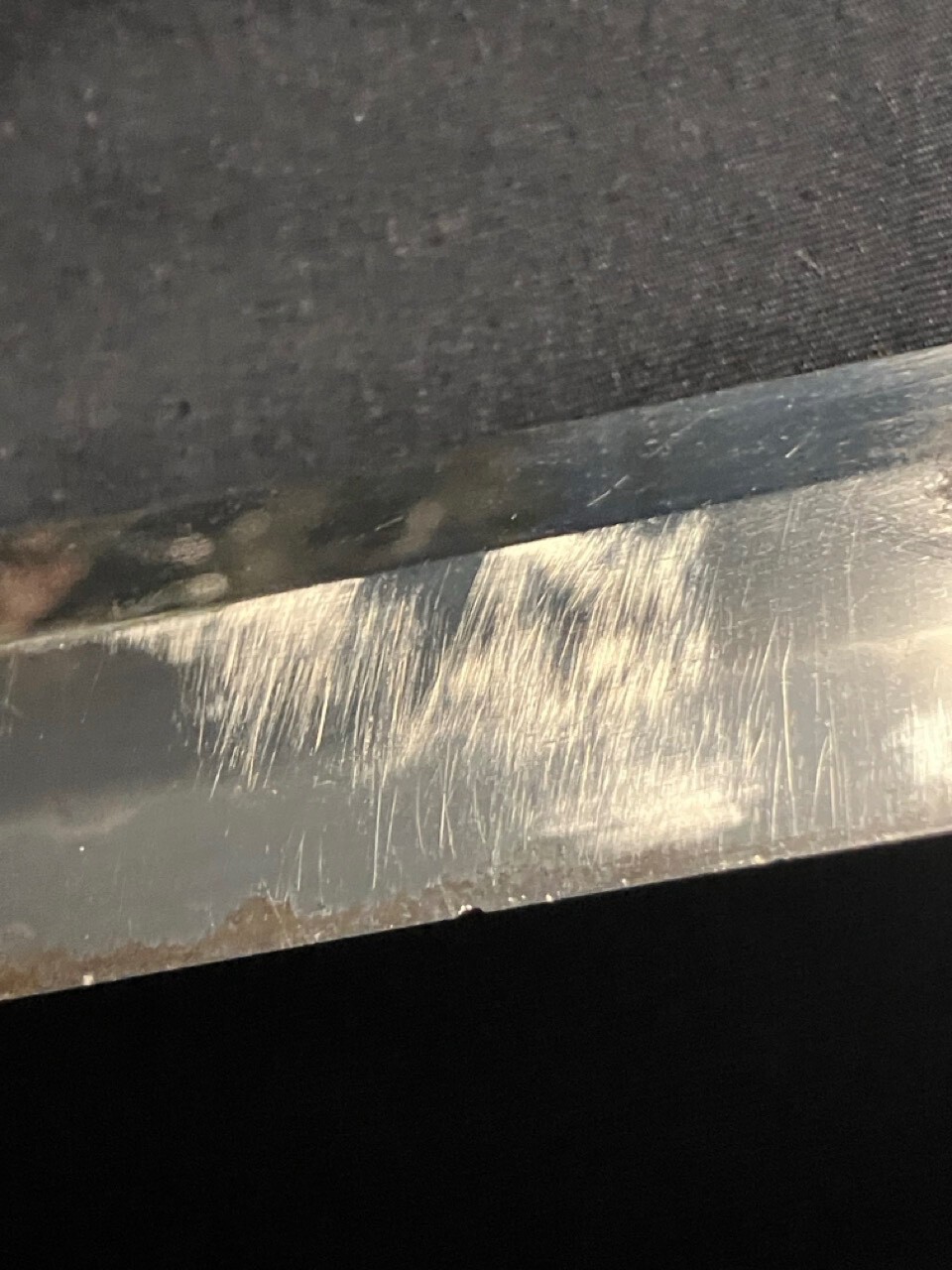
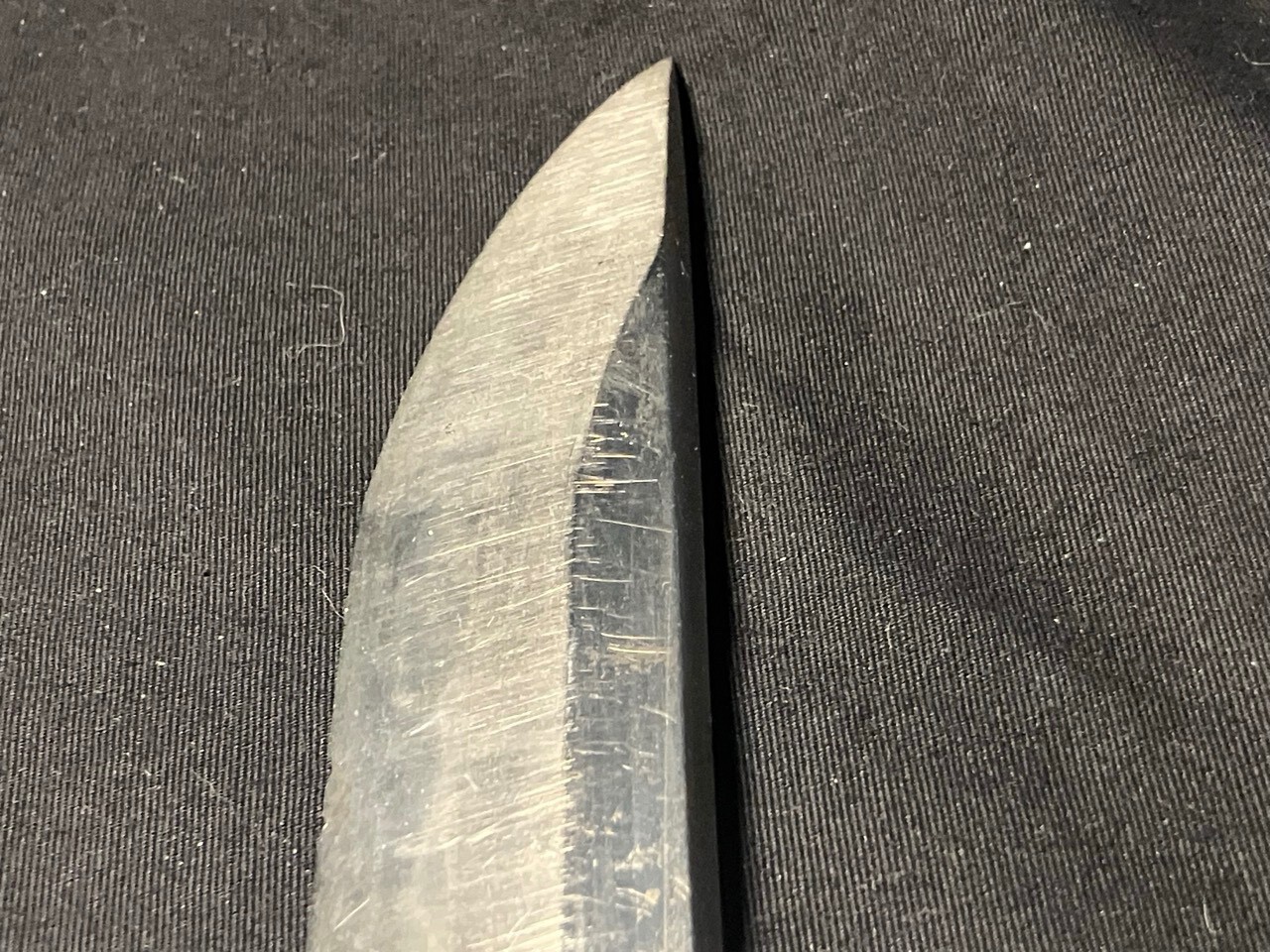
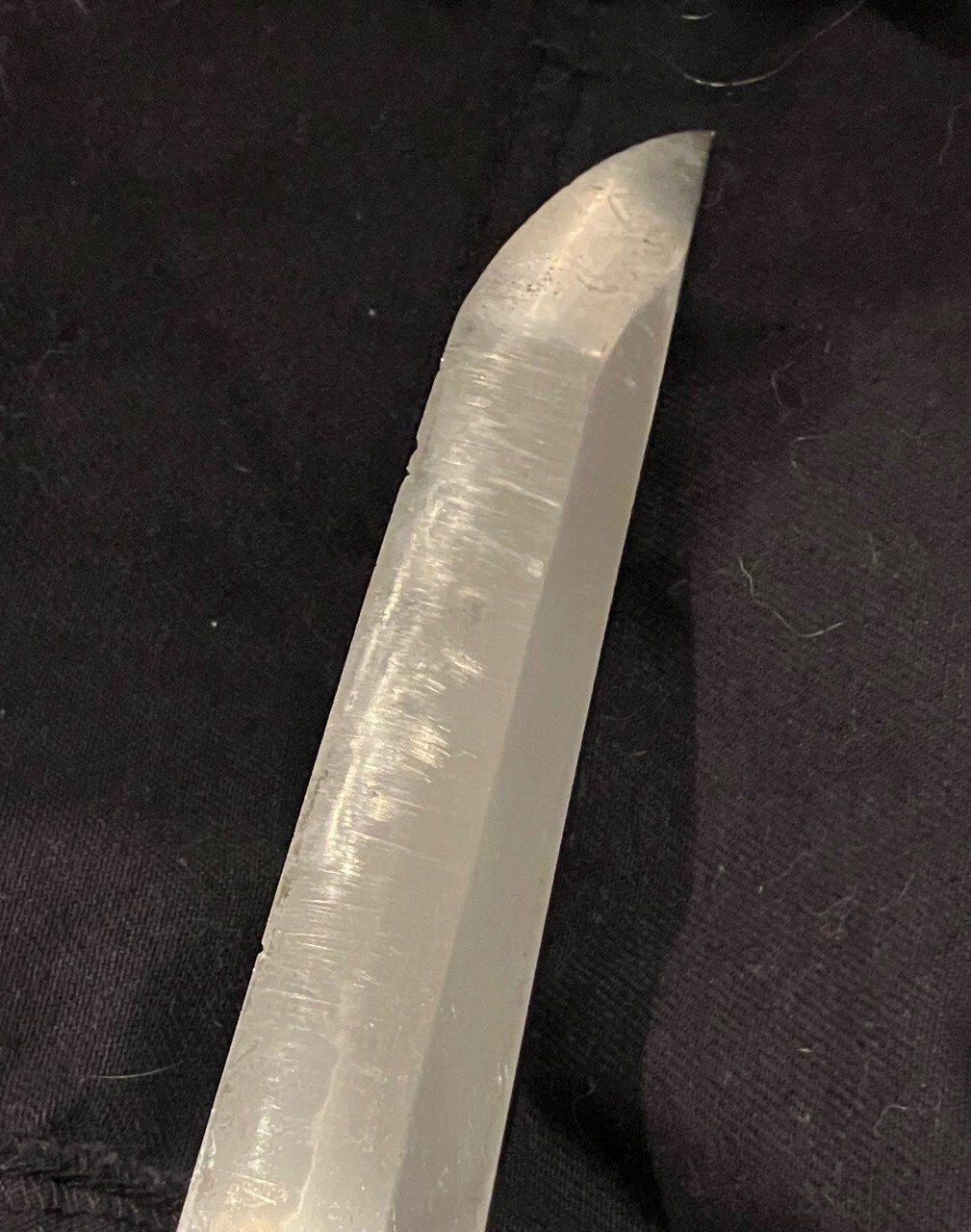
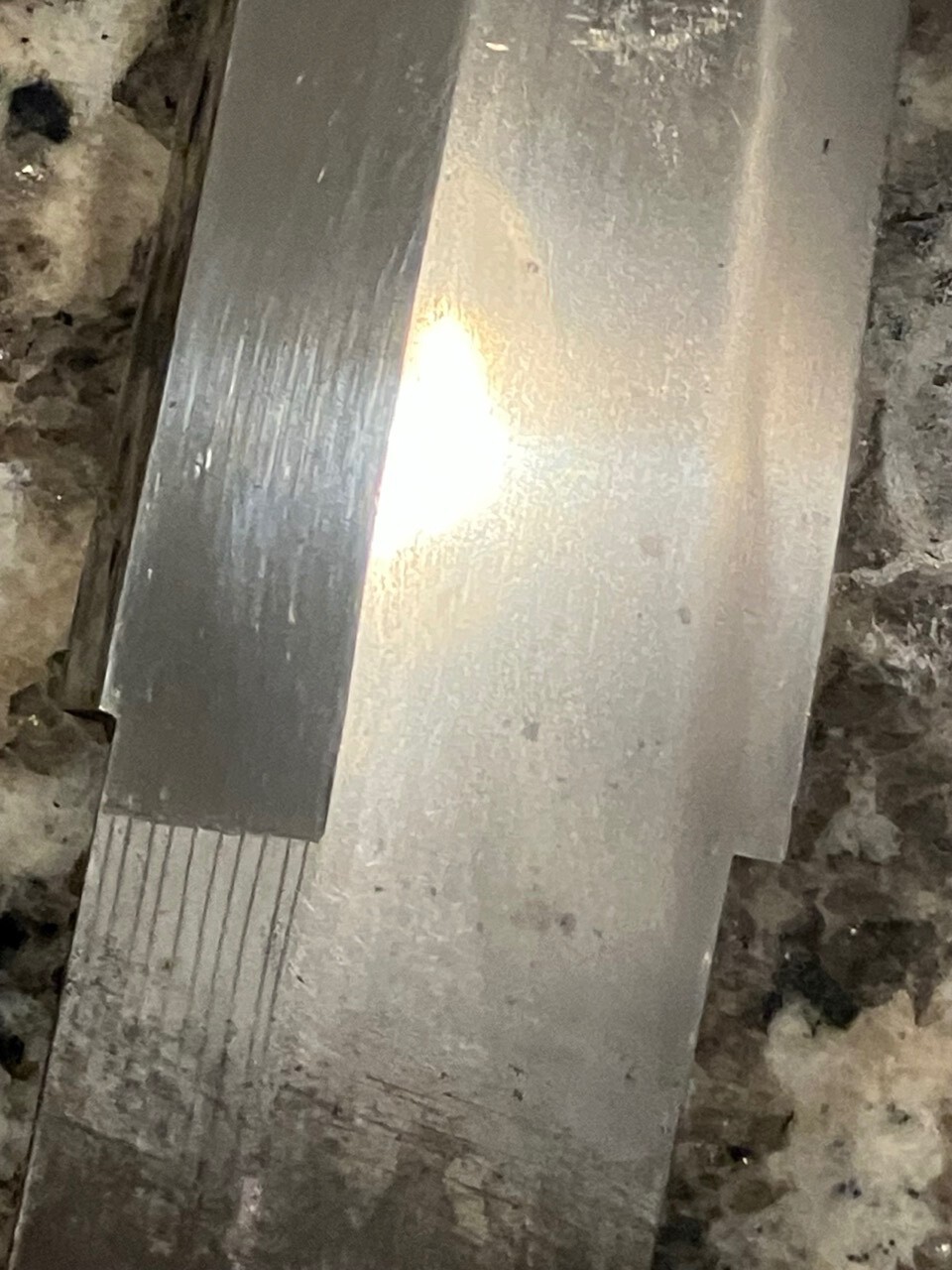
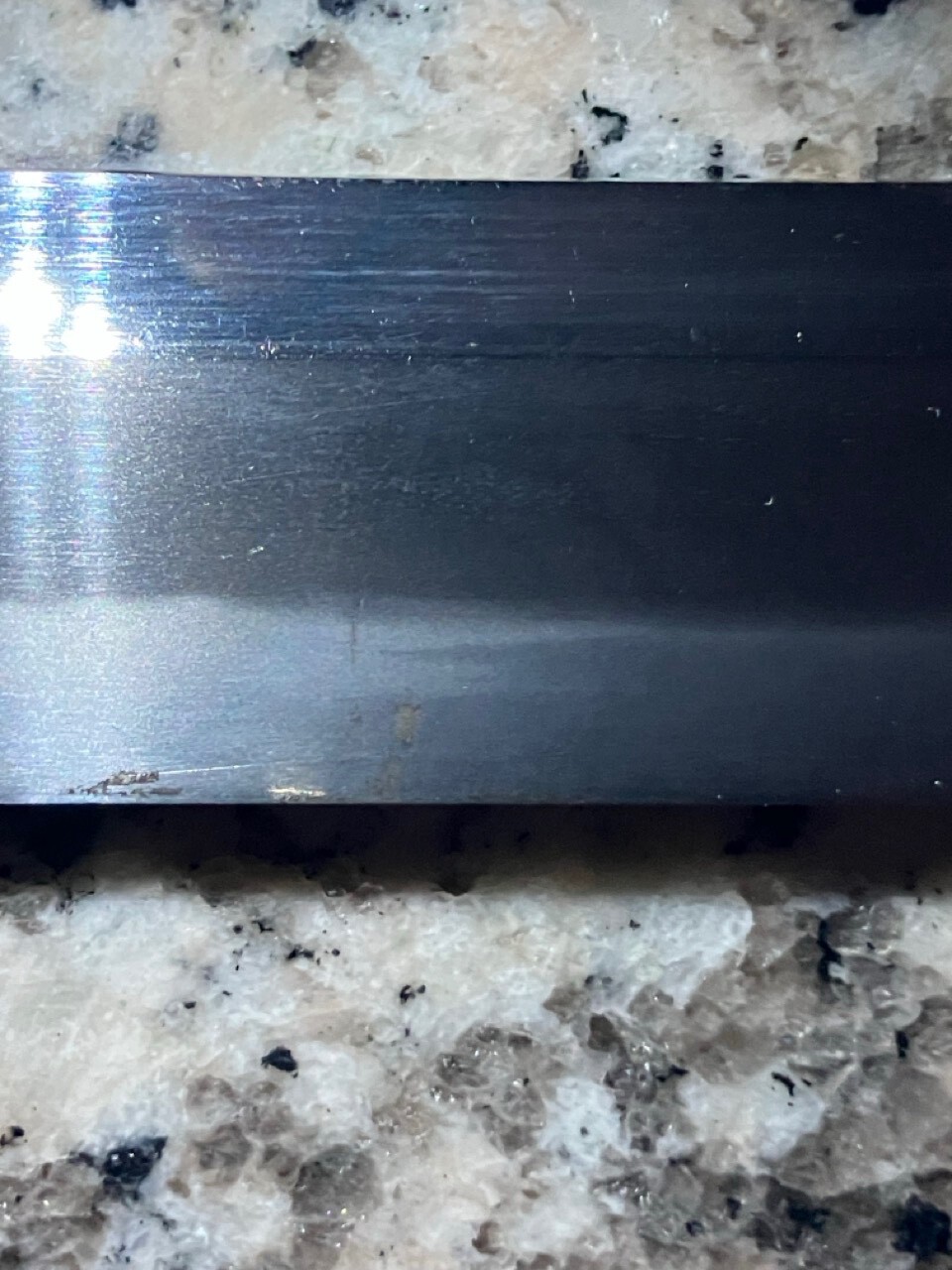
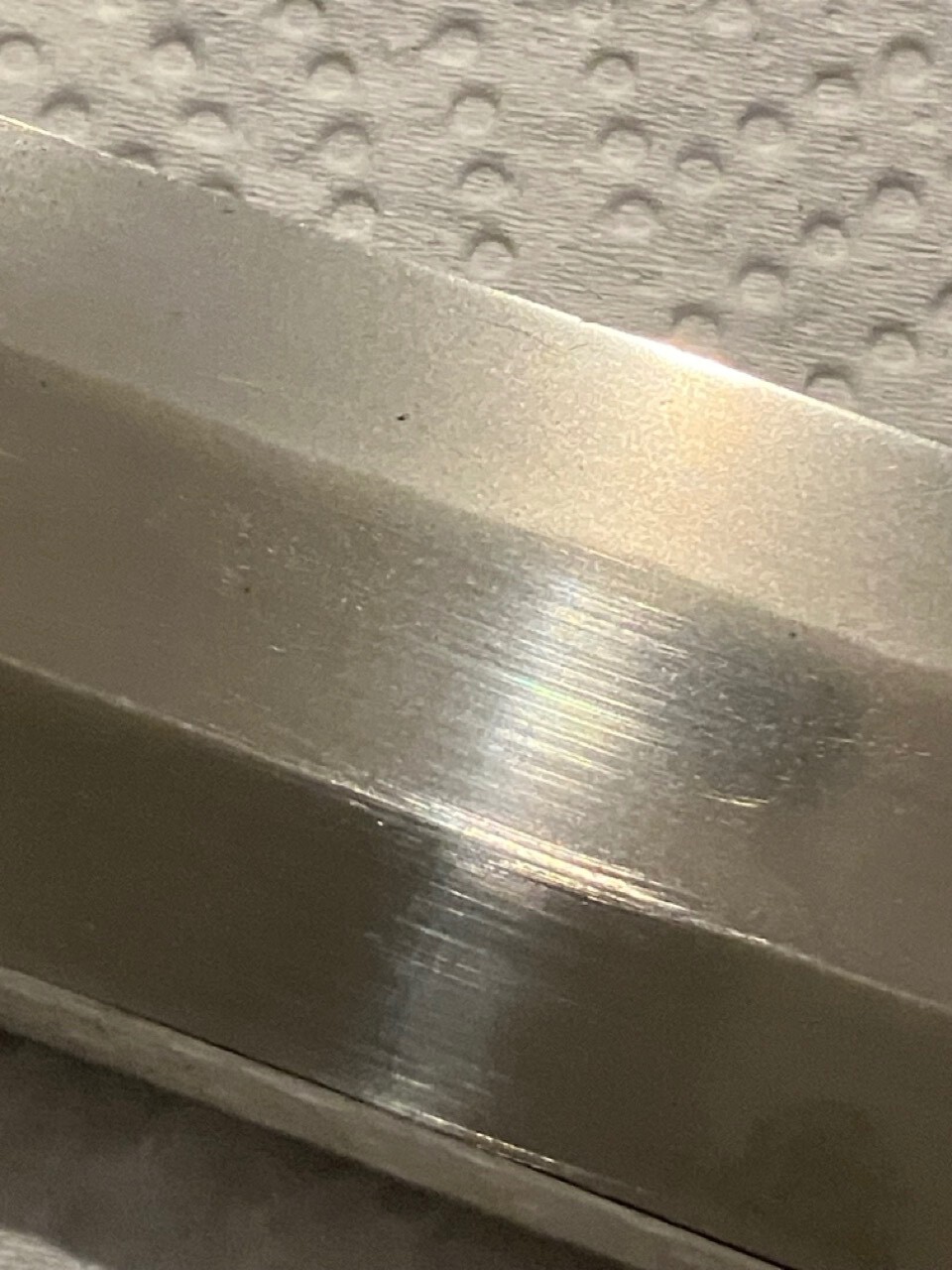
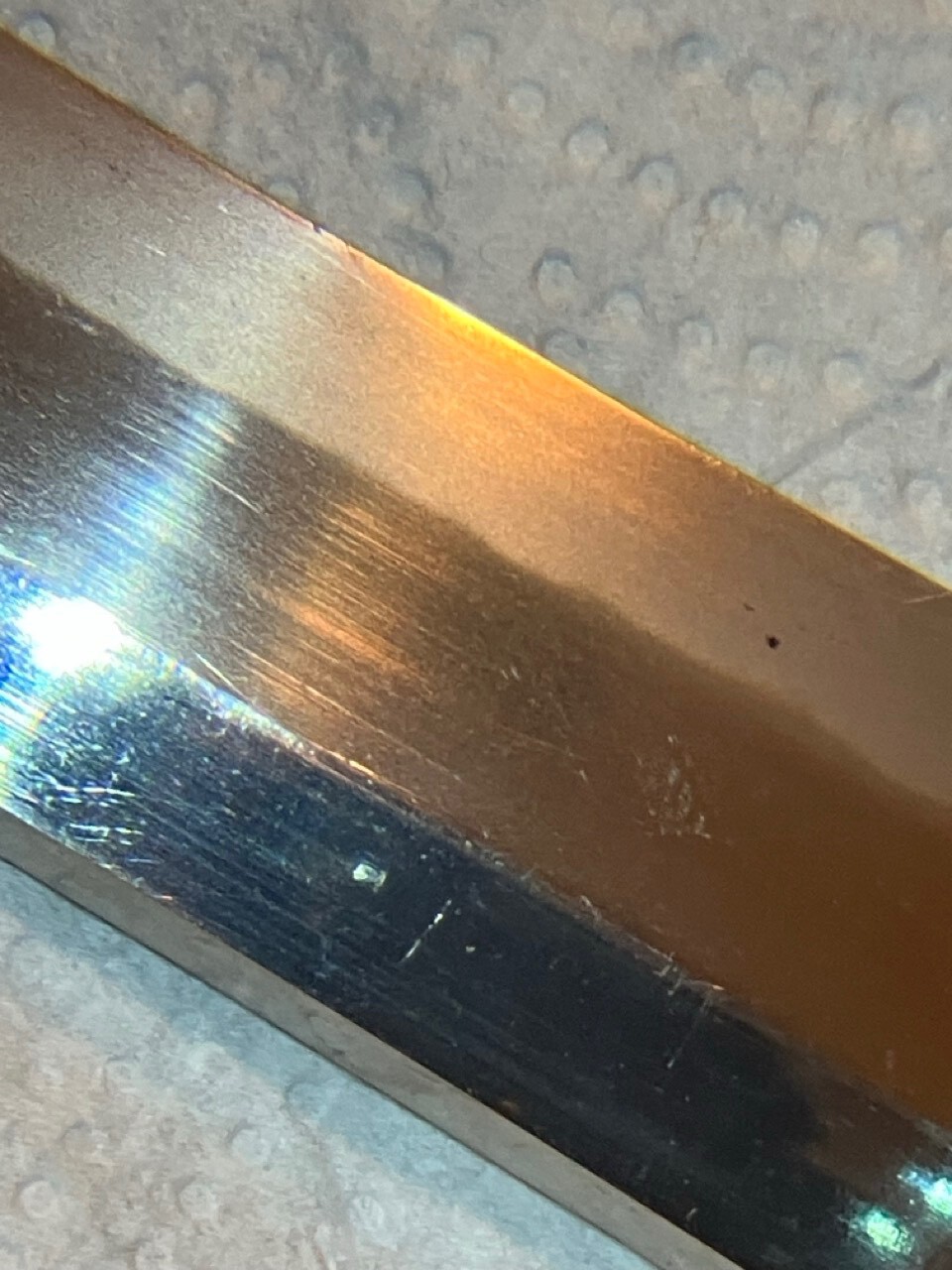
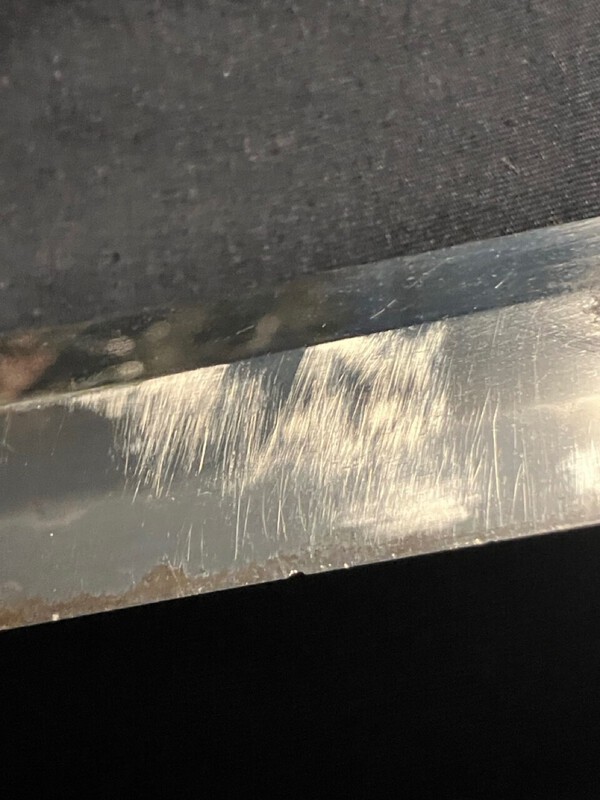
Thanks for all the info and opinions. I’m more and more convinced that the bulk of the scratches are from tameshigiri use. The practitioner easily could have also added some by hand. Could have been some bamboo cutting in the mix as well. The pattern doesn’t match what you would see with sharpening or cleaning, as some scratches do carry over the shinogi, but not completely. Some also only begin past the hamon. Some patterns are in slightly different directions, but are still in a direction of what a cut would be. Blade is long, wide, and heavy … would have been ideal for a practitioner. A few more detailed photos:

-
I ended up watching a bunch of tameshigiri demonstration videos, and on a lot of occasions the full kissaki does end up passing through the tatami or other materials. But details / experience with tameshigiri are outside of my knowledge base. I’m a craftsman and metalworker though, and none of the abrasive methods / tools we use seem a match to what I’m seeing, which is what had me looking for other answers. The pattern and texture doesn’t match sandpaper, wet sand, angle grinder, buffing / grinding wheel, sharpening stones, files, wire brush, wire wheel, or any other abrasive tool that I can think of. I’m not too concerned about it as the blade could eventually use a polish anyway and the scratches are superficial, but curious to find a match for the cause
-
I’m finding mixed info on whether or not the boshi typically passes through tatami while properly cutting (and would show the respective scratches from it) … from your experience, do you know if it does / doesn’t?
-
First thing I thought when I saw it and subsequently wanted to swing it at something myself lol. But the angles aren’t right for a grinder and scratches aren’t deep at all, just plentiful. I thought maybe buffing wheel, as there are signs of corrosion in that area, but the spots on the shinogi-ji weren’t worked. Only a handful of the scratches carry over the shinogi. The scratches that do carry over made me think no to sharpening, as the stone wouldn’t roll over the shinogi like that. Noticed the three to four edge nicks in that section, and thought maybe someone could have been practice or test cutting with it. But I don’t know what that looks like entirely.
-
I forgot all about baseball … “this sword chopped a baseball clean in half at Iwo Jima” … that’s my story n I’m sticking to it lmao
-
The ol’ “let’s see what this’ll chop” syndrome lol. I guess what caught me on it was if I were a dude who knew nothing about swords or physics and wanted to chop something for fun, I’d hit it with the meat of the blade, not the monouchi. Or I’d give it repeated strikes, or my buddies would want a swing too, but not have enough control to land em all within a 6-7” section of the blade. I don’t know what scratches on a polished blade look like after cutting something either so figured I’d see if someone knew or had an example.
-
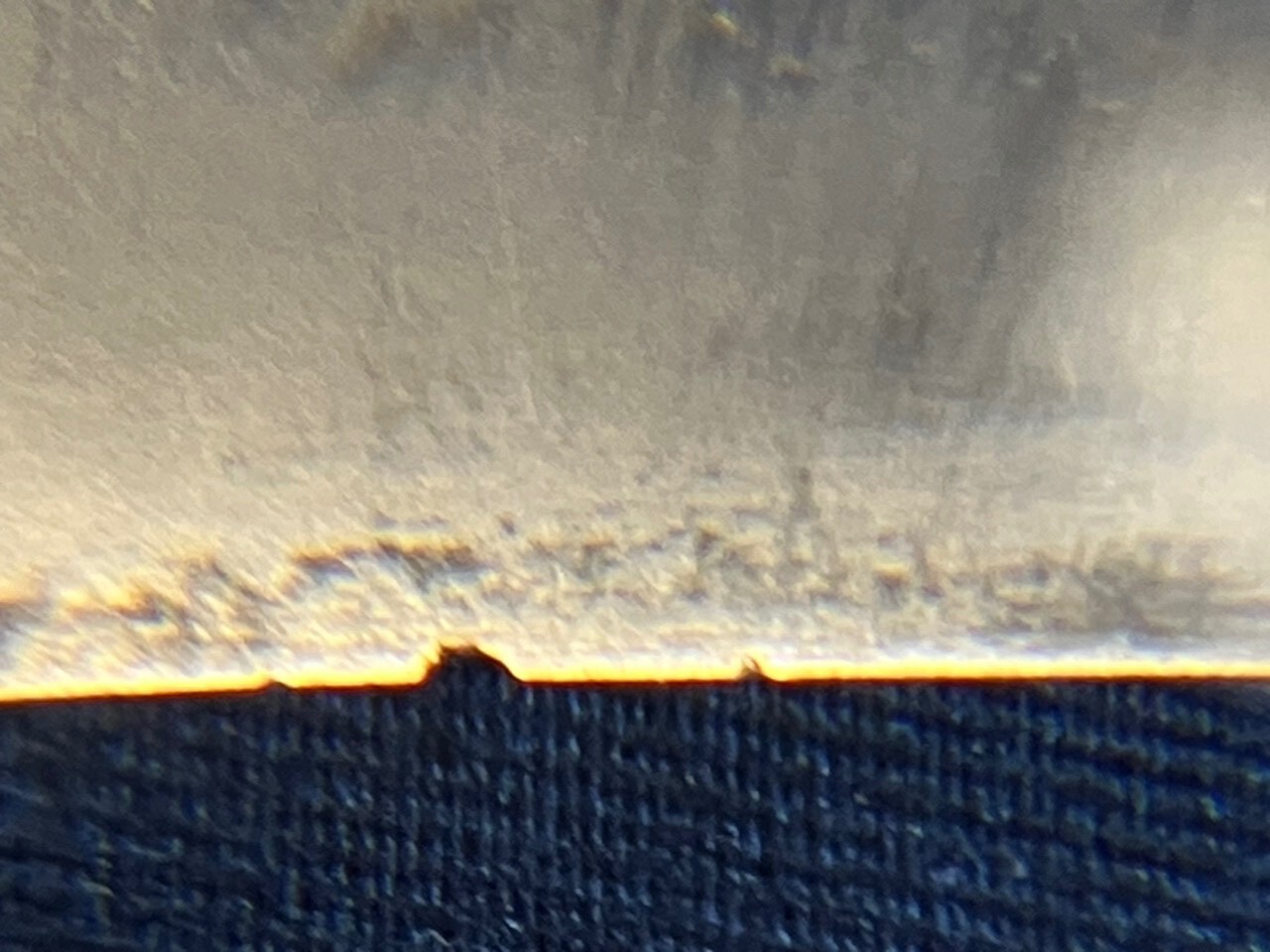
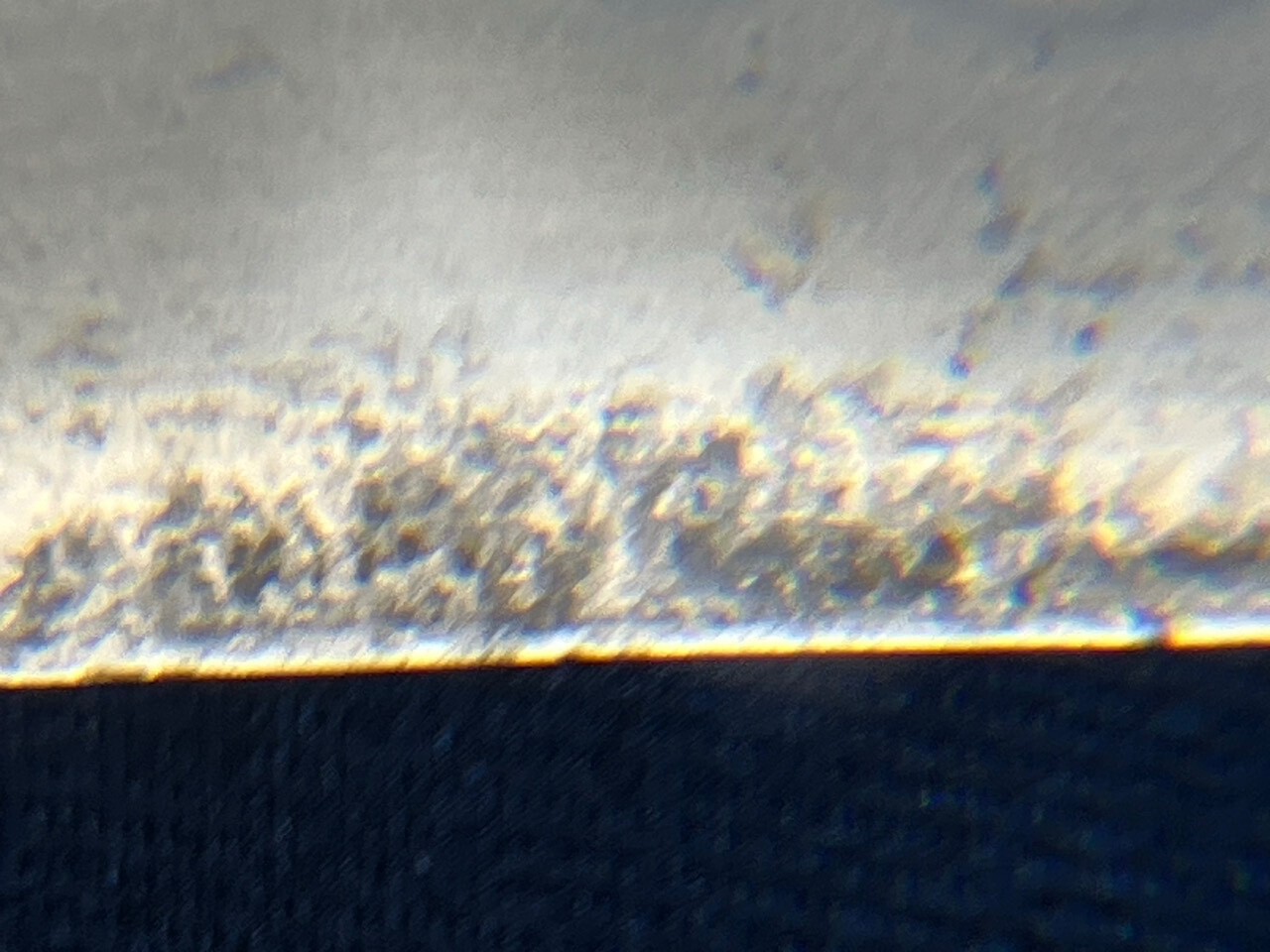
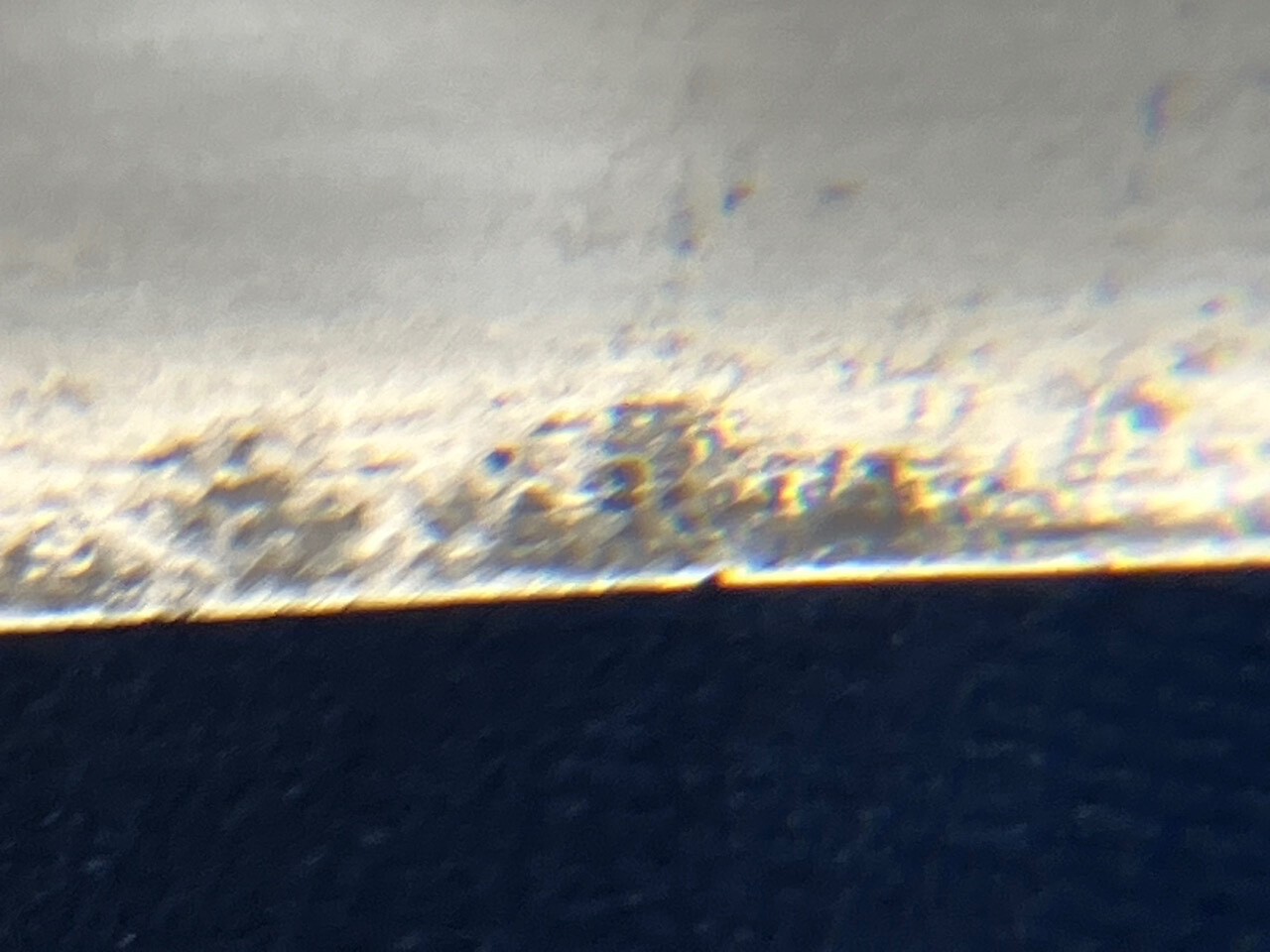
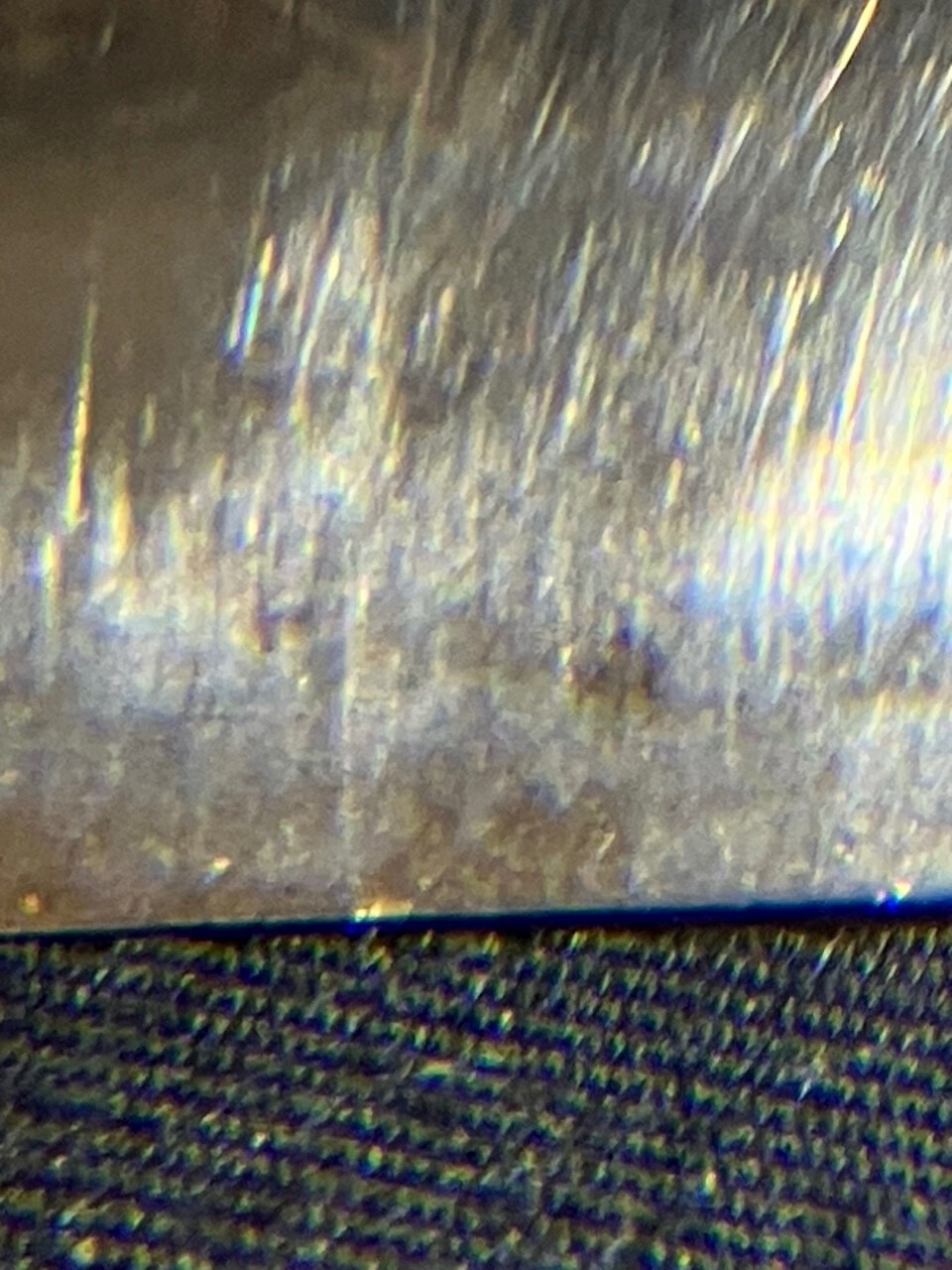
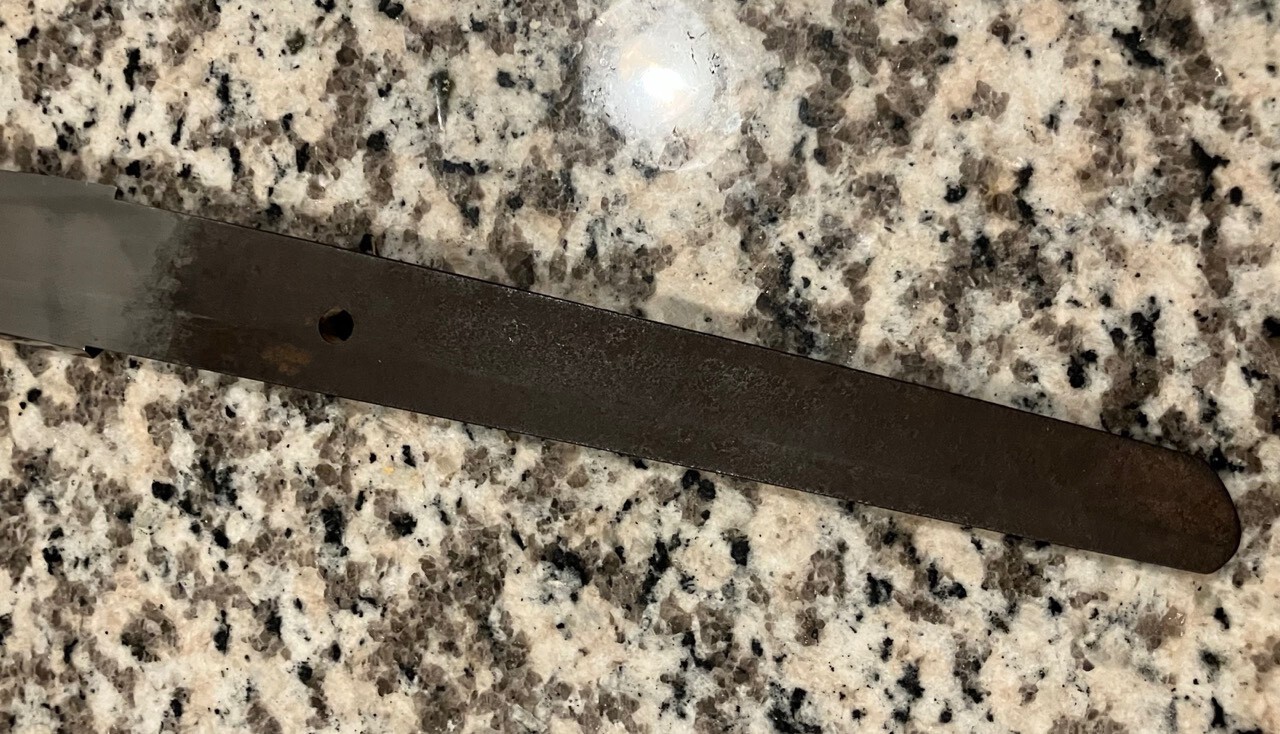
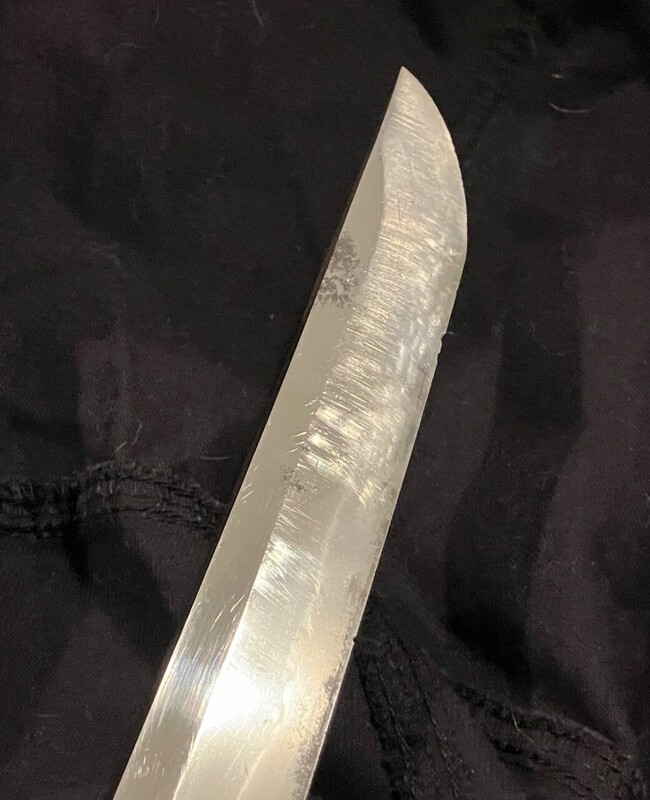
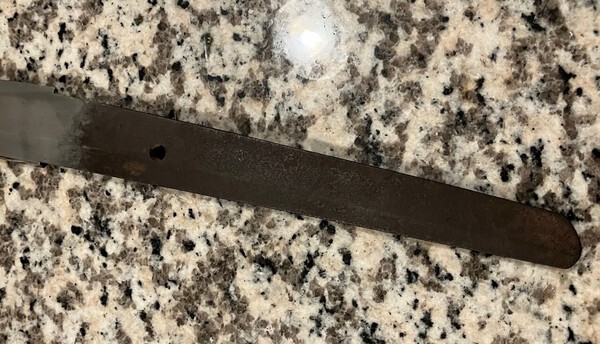
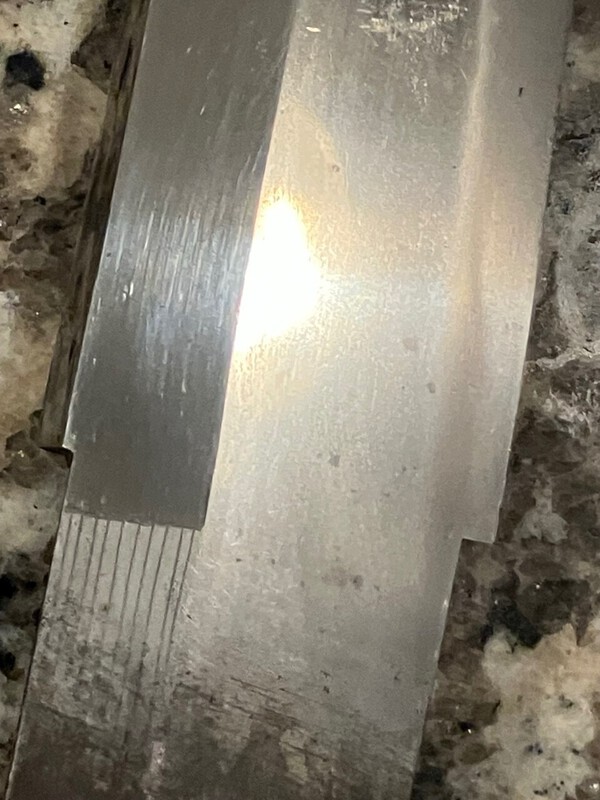
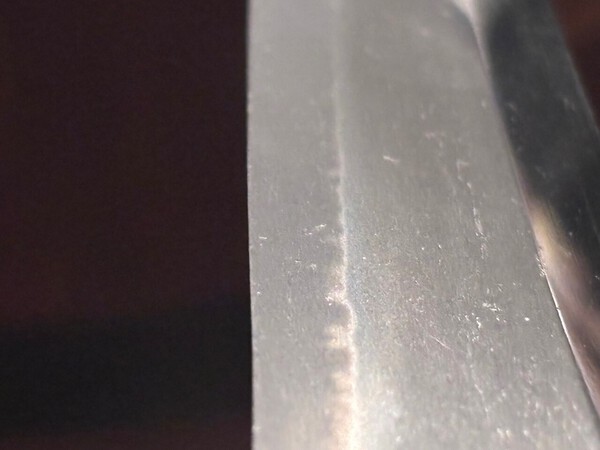
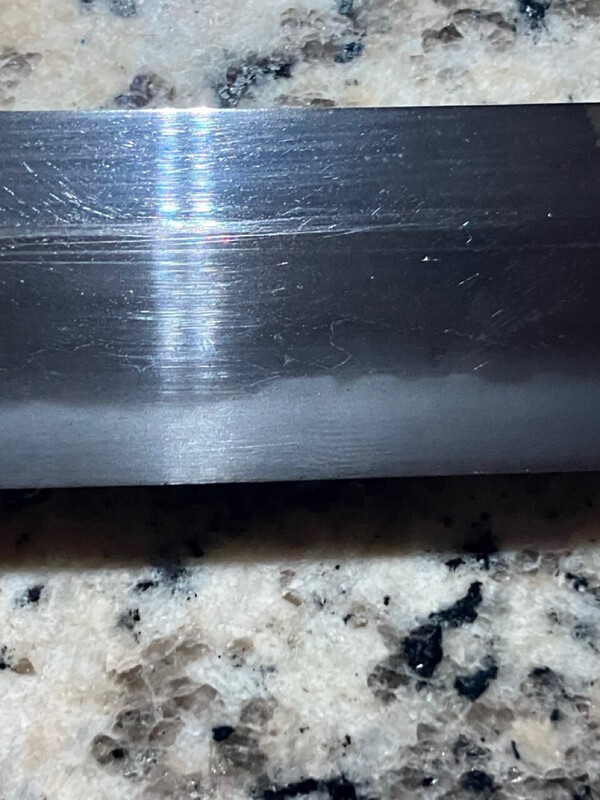
I’m digging into my first clean nihonto, and am finding some things that are leaving me with questions, so I’m asking here the ones that I can’t find clear answers for on my own. Tonight’s question is what the remnants of tameshigiri testing looks like on the monouchi section of a blade? This blade I’m looking at appears edo period, was fitted in very fine late edo koshirae, is on the very long / wide / heavy end of the katana spectrum, and is pretty clean except for a few small nicks at the monouchi area combined with a corresponding section of dense scratches in that area that are entirely uniformly perpendicular to the cutting edge. It’s also a WW2 US vet trophy. It definitely looks like someone cut hard on a strike or two with this thing, but only in the monouchi area … so I’m wondering if someone got too playful with it during the war and happened to know the sweet spot to strike with, or if someone did test-cutting with it pre-war? Any thoughts n opinions appreciated. Couple photos attached. thx, Jeff

-
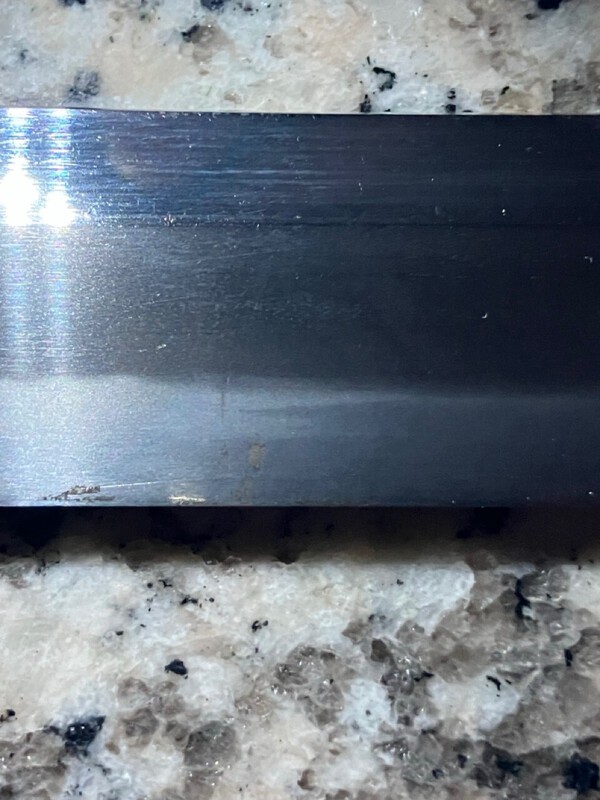
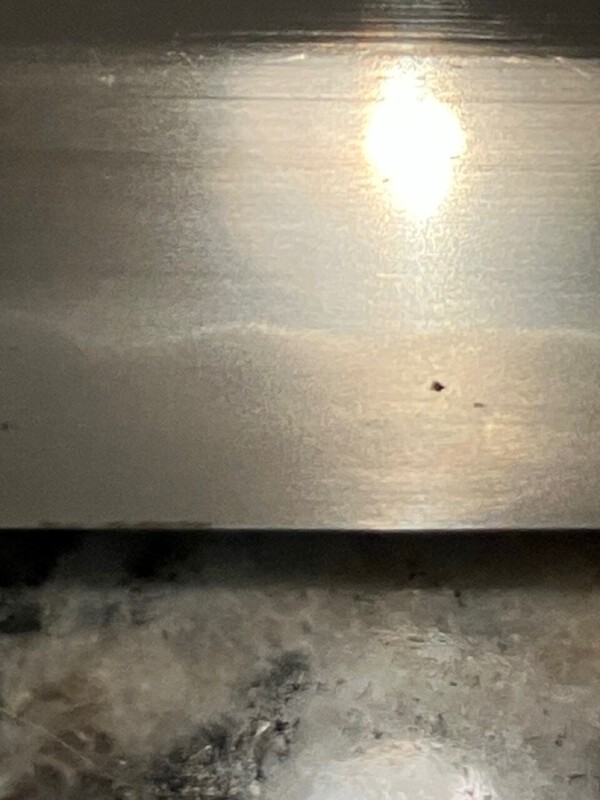
Photos. I’ll get better at capturing hamon in time lol. I haven’t learned enough to know what I’m talking about with hamon yet, but it looks at least true to me …


-
It looks like a real and active hamon to me, and looks like a hand polish as the polisher marks are there under habaki. It’s definitely a hand made blade though. The light n focus angles I had to use to try to get the shinogi-ji texture might have muddled the hamon a bit. Looks edo to me, and is an Okimasa gimei. Large and meaty, with a 29 1/4” nagasa and 1 3/8” width. I mainly grabbed it because the size was pretty cool and it had a full set of nice Kikuchi Tsunekatsu fittings with interesting properties. Really pretty mottled lacquer saya as well. WW2 trophy and pretty clean / well-kept, so I thought it would be a nice piece to learn more on (my others aren’t that great and not in good enough polish to really see the things I want to learn about). I’ll take some pics when home later tonight. Thank you for the guidance.
-
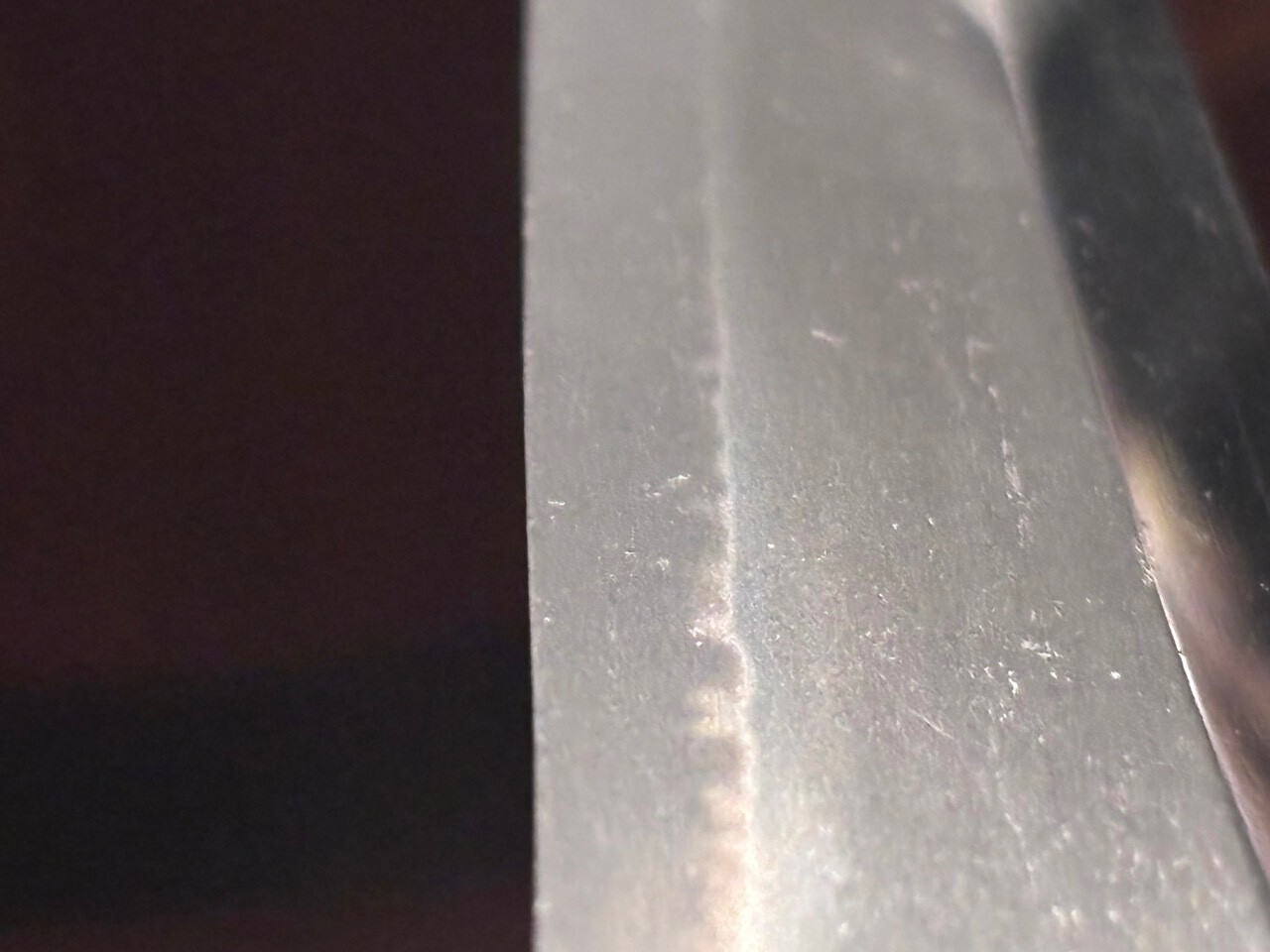
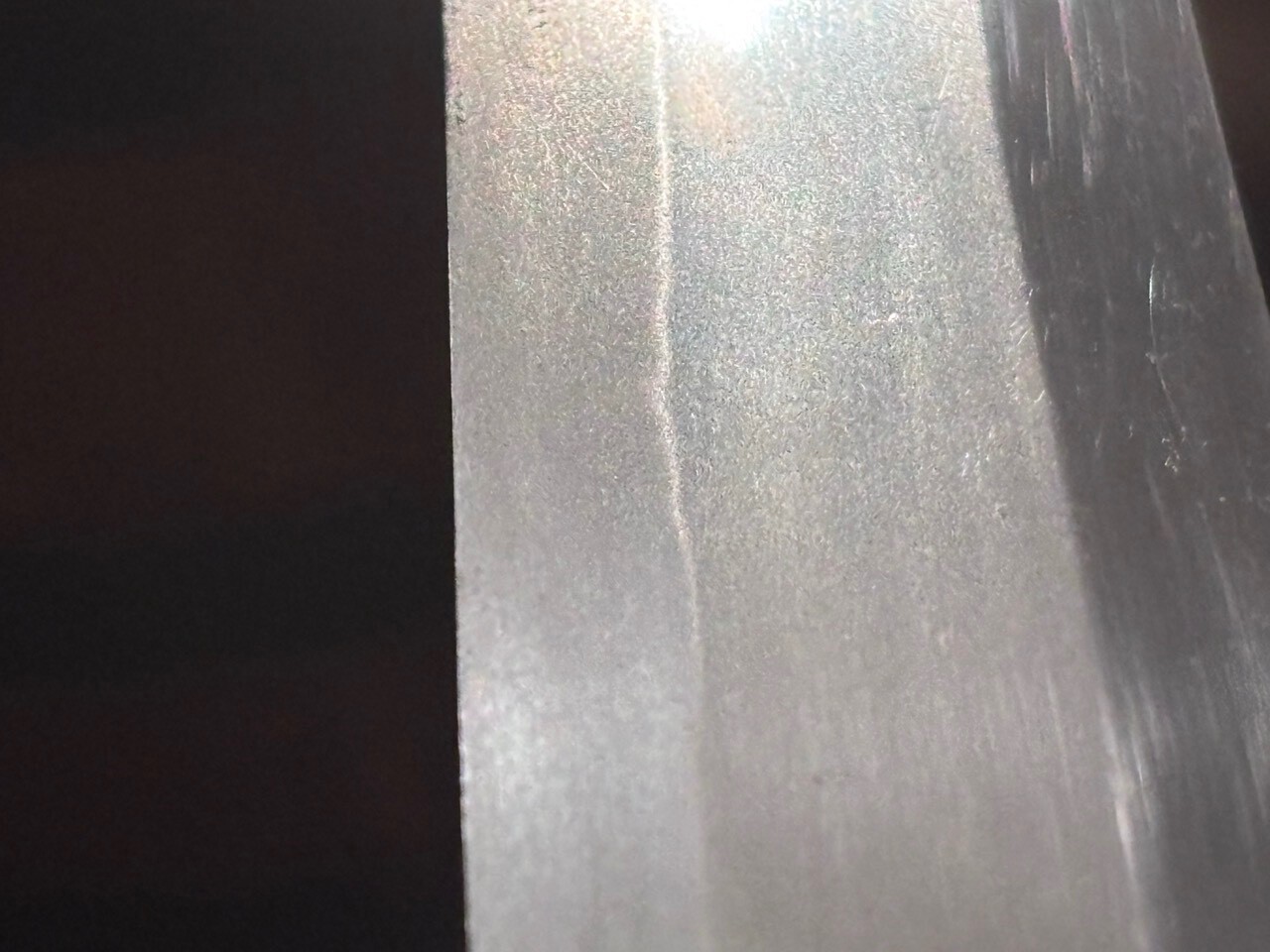
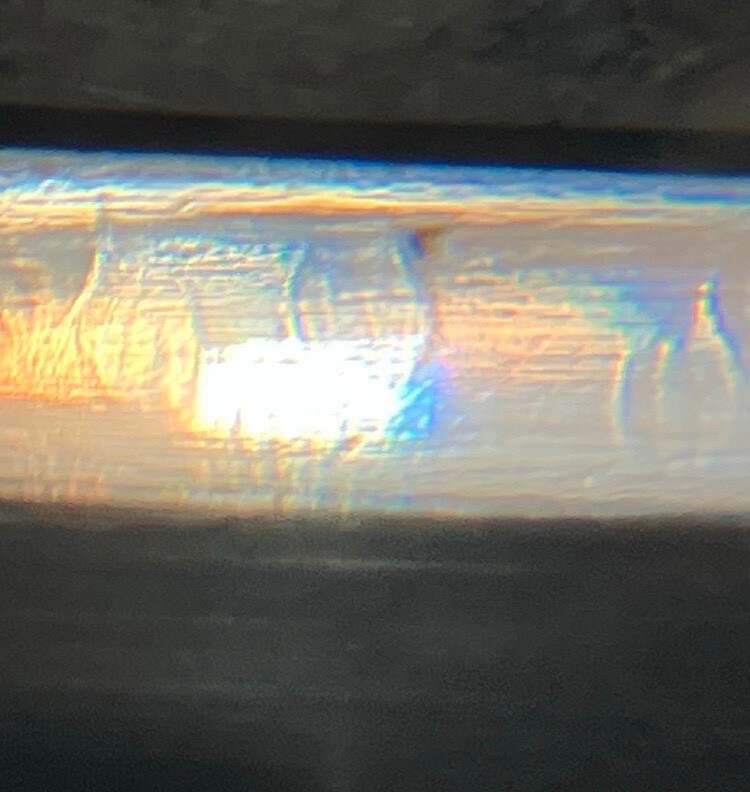
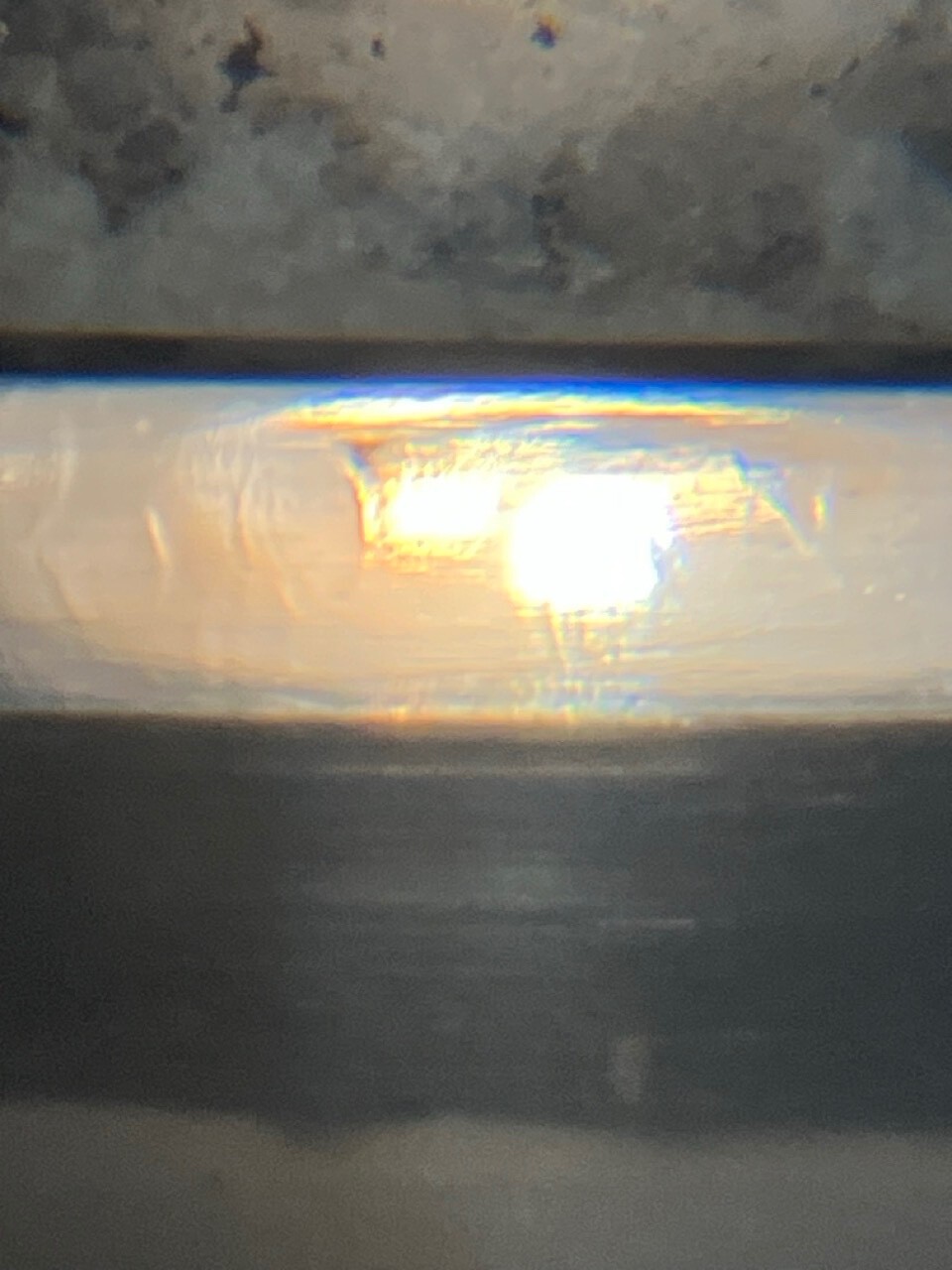
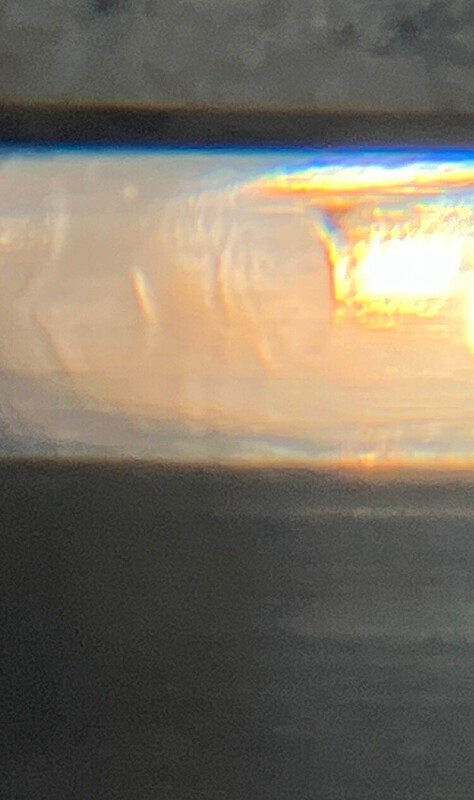
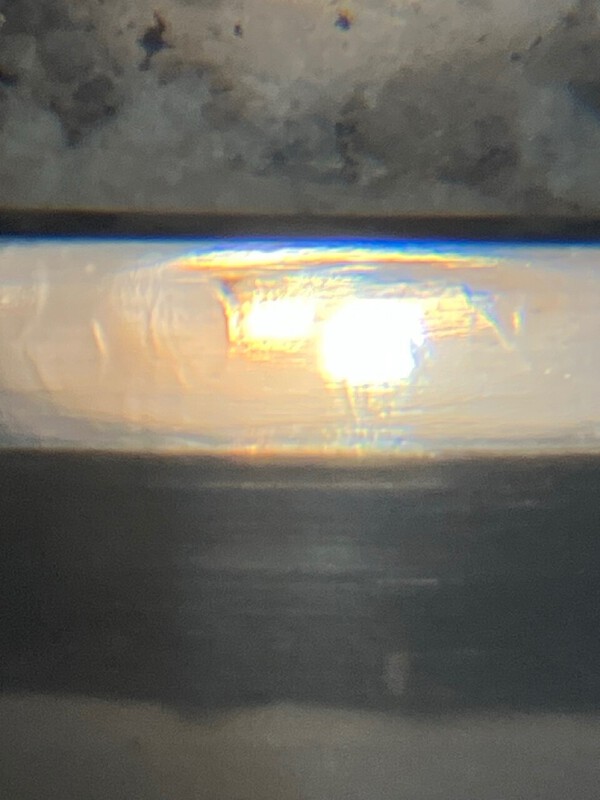
On subject blade it’s not cracks at all, but the mukade-shinae wrinkles could be a culprit, though I’m having a tough time finding clear photo examples for comparisons. I’m finding some areas that have a rounded / circular pattern of it as well, and it looks to be somewhat present throughout the Ji on both sides of blade to varying degrees. It’s hard to clearly see even with a magnifying glass (and my eyesight lol), but I’ll get some better magnification and keep inspecting it / reading about it. Couple photos of the circular ones just for the heck of it as well as a non-magnified shot.

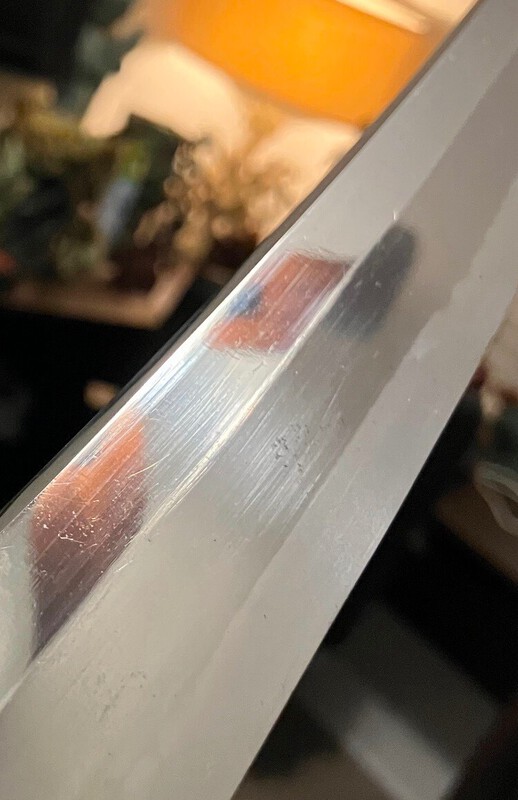
-
Ah that makes sense. Is shinae supposed to be able to be blatantly seen with the naked eye or should you have to hunt for it with lighting angles and magnifying lenses etc? Or just different degrees of it present themselves differently?
-
This is probably a really dumb question, but curiosity hasn’t killed me yet lol … if a shinae developed during forging, and the pattern of the minuscule creasing all ran mostly perpendicular to the cutting edge and curvature of the blade, what structural instability would that cause during a strike? i.e. how does that flaw progress into failure of the blade?
-
Knowing the terminology really helps with knowing what to search for, thx again!
-
That makes perfect sense, thank you! And thanks for the link. I’m guessing when it’s on both sides of the blade it could stem from the forging or tempering bend in that axis?
-
Noob to nihonto, and not fully understanding what causes a ripple effect of a mirror polished ji in certain light? I get that the folding could give you waves, but wouldn’t the polishing take that out? … or does differential hardening remain as a slight topological pattern on the ji post-polish? Sorry if it’s a dumb question, I just don’t want to self-educate incorrectly so I thought I’d ask you guys. Photos aren’t great but should give you an idea of what I’m talking about. thx, Jeff


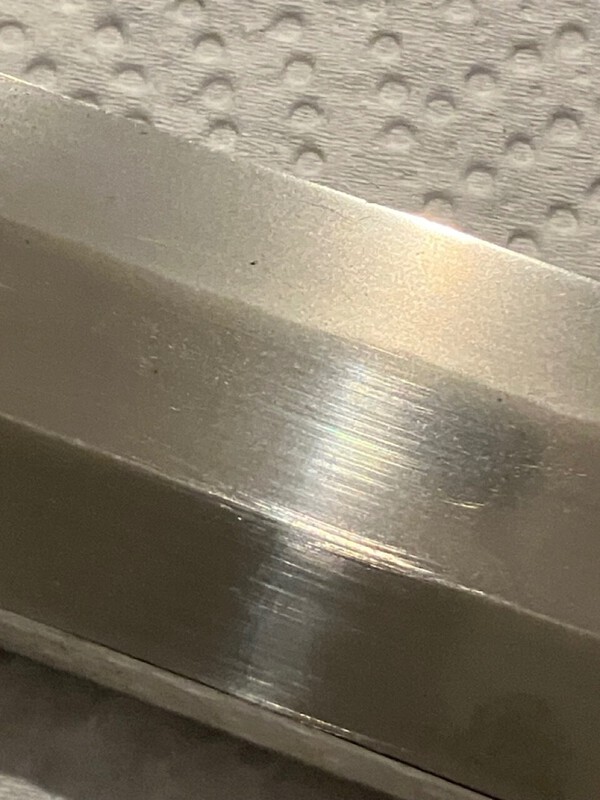

-
Tbh I actually enjoy questionable pieces as it’s interesting to me to try and decipher them. I have an “Okimasa” on the way that I’m so looking forward to getting to pick apart in-hand even though I’m sure it’s gimei and can’t tell much of anything on the blade by the photos. Rum time on my end, lol, thanks for the chat!