Jnuzzo
-
Posts
41 -
Joined
-
Last visited
Jnuzzo's Achievements






-
Gotcha! And yes I totally misused the term tempering 🤦🏻. Does the kawagane fully encapsulate the shingane on a nihonto, or are sections of the ji / mune left as shingane? I.e., does an ichimai boshi create a distinct look on the ji / mune portion of the steel that is hardened via yakire?
-
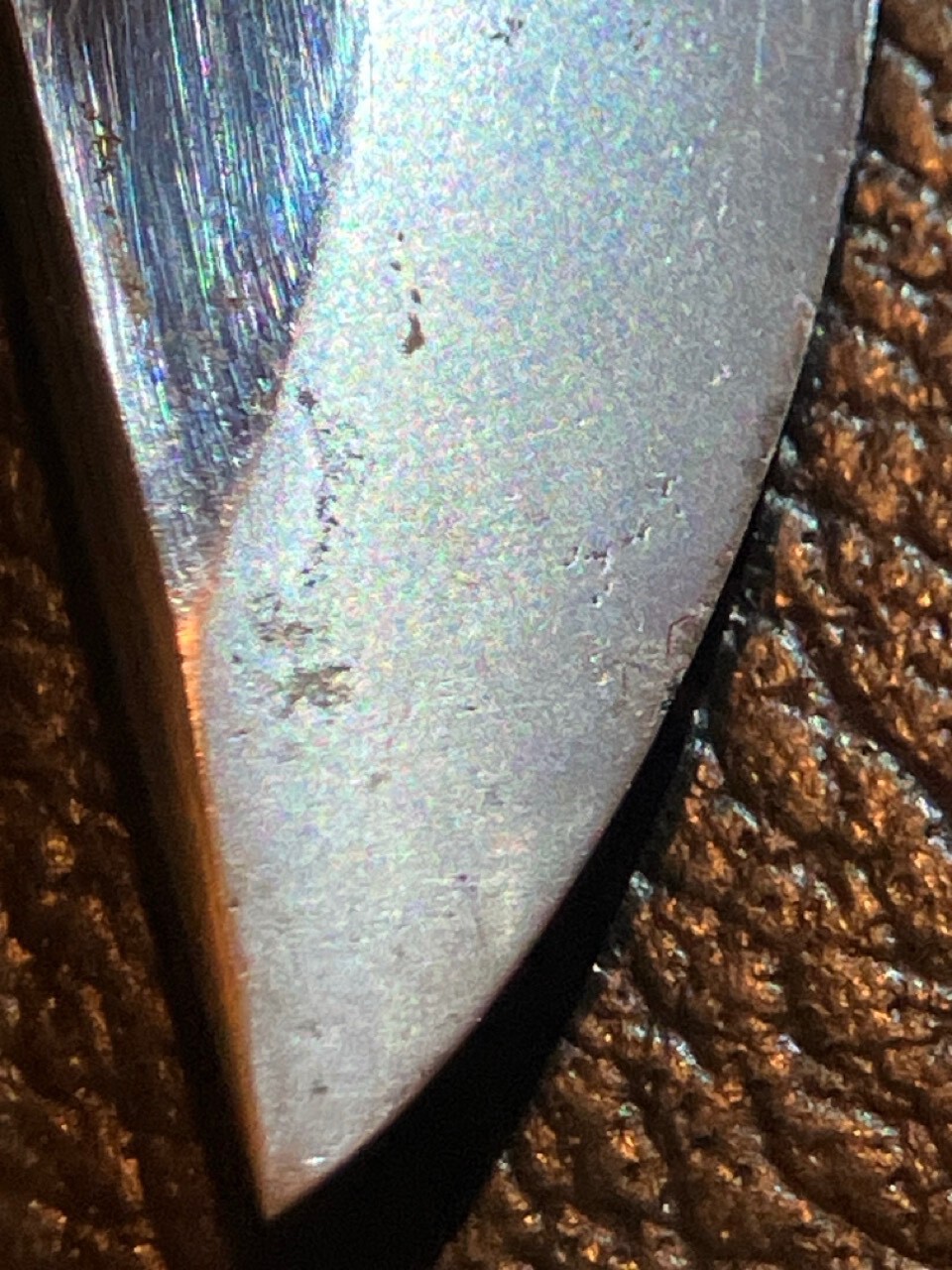
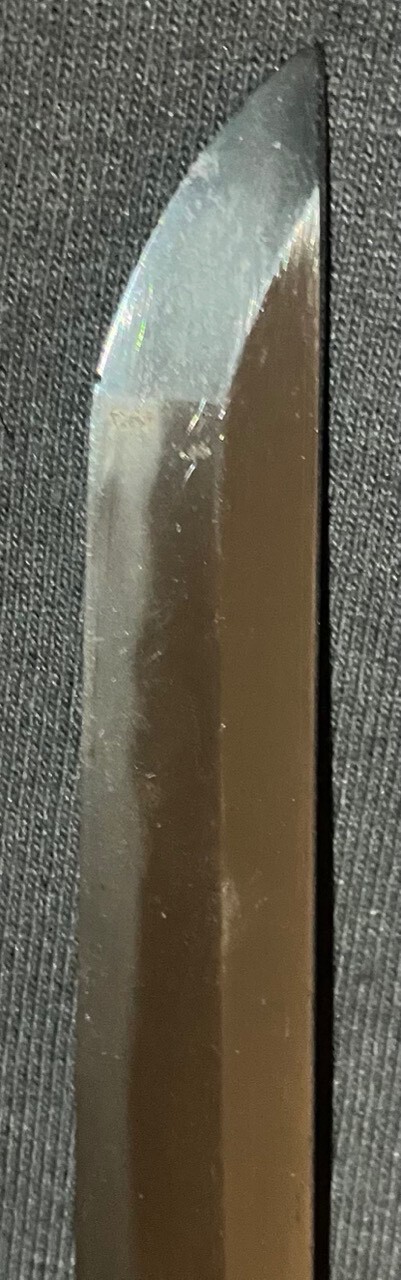
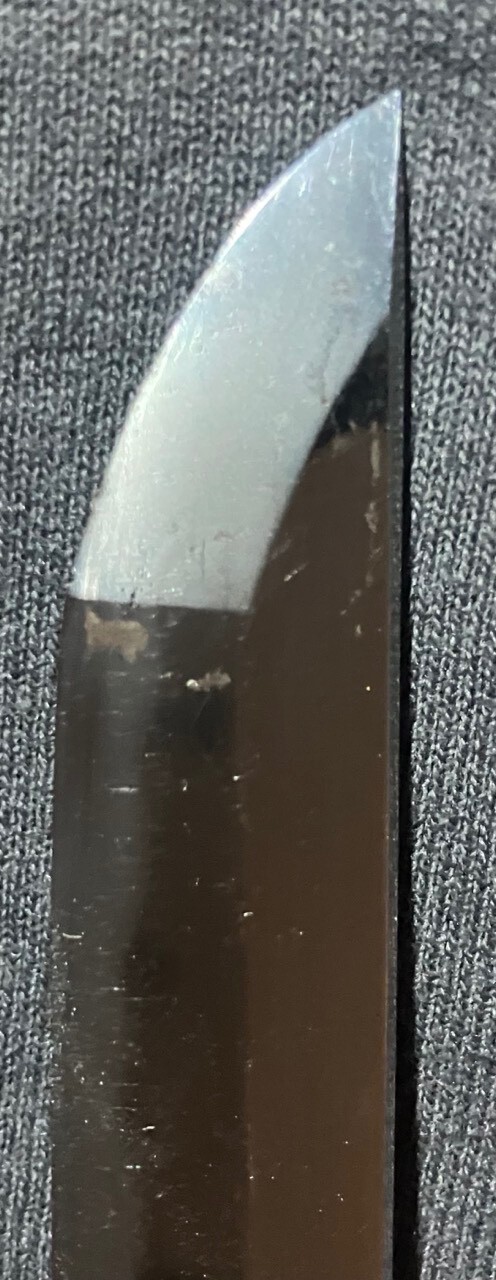
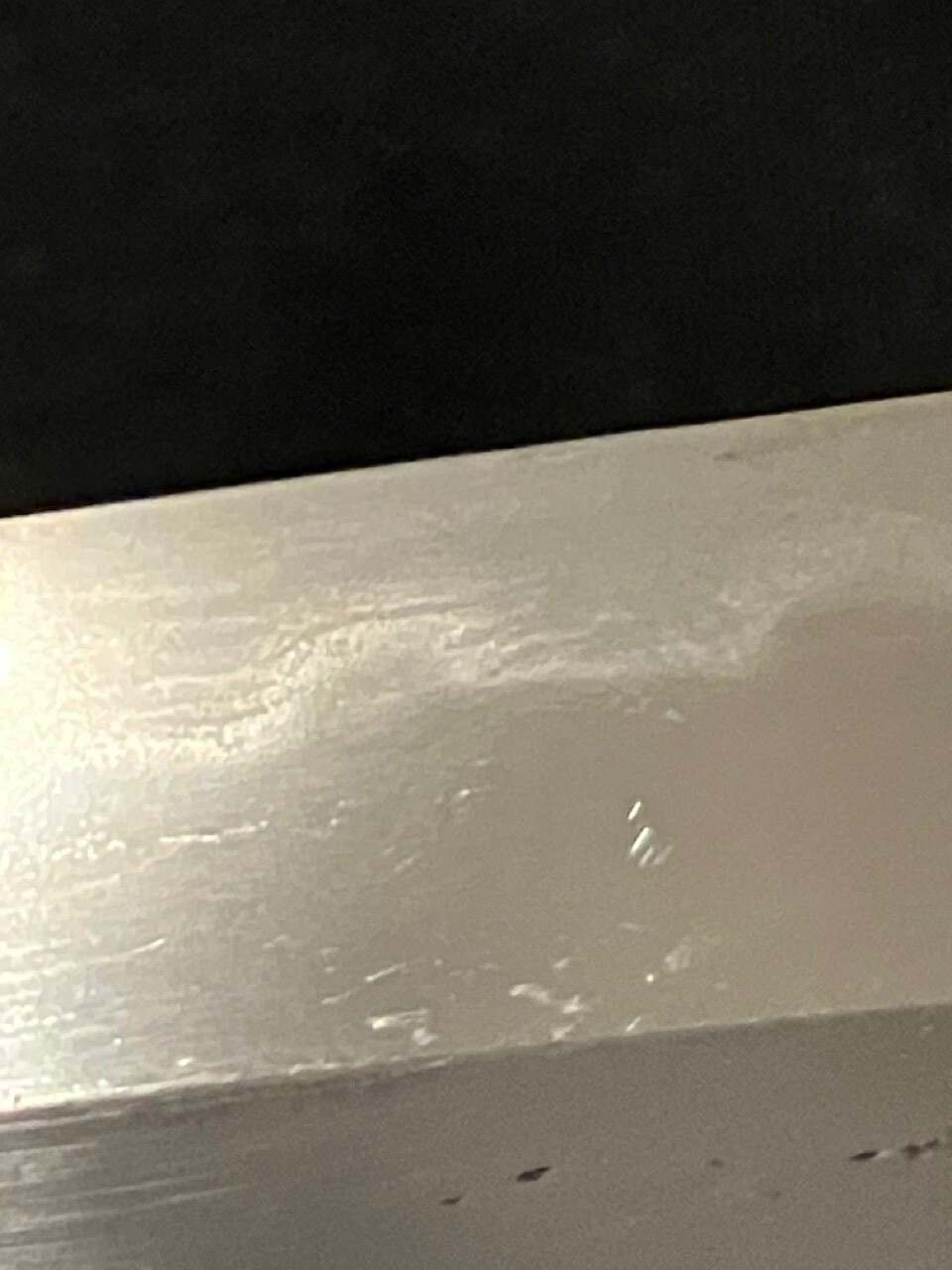
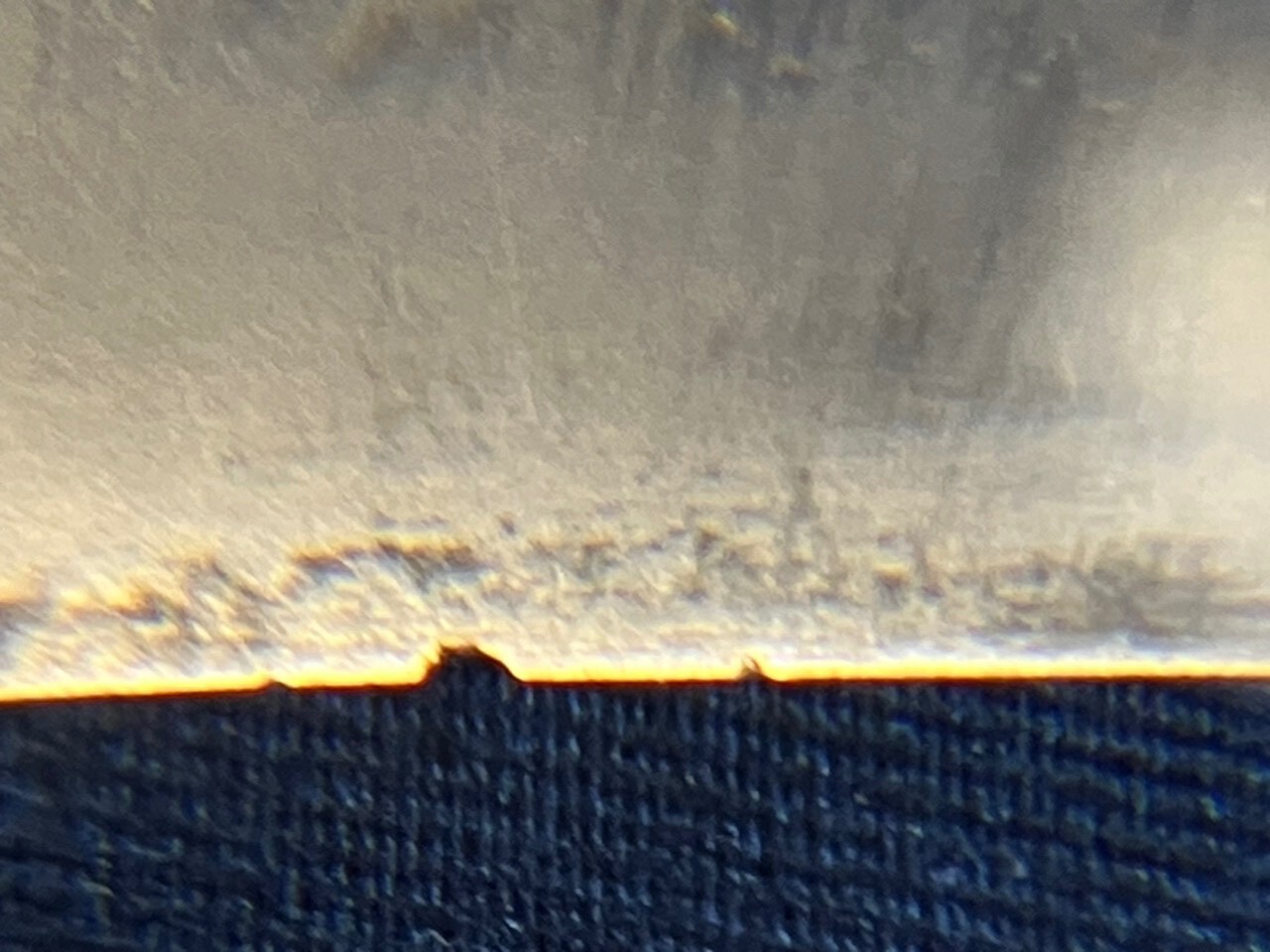
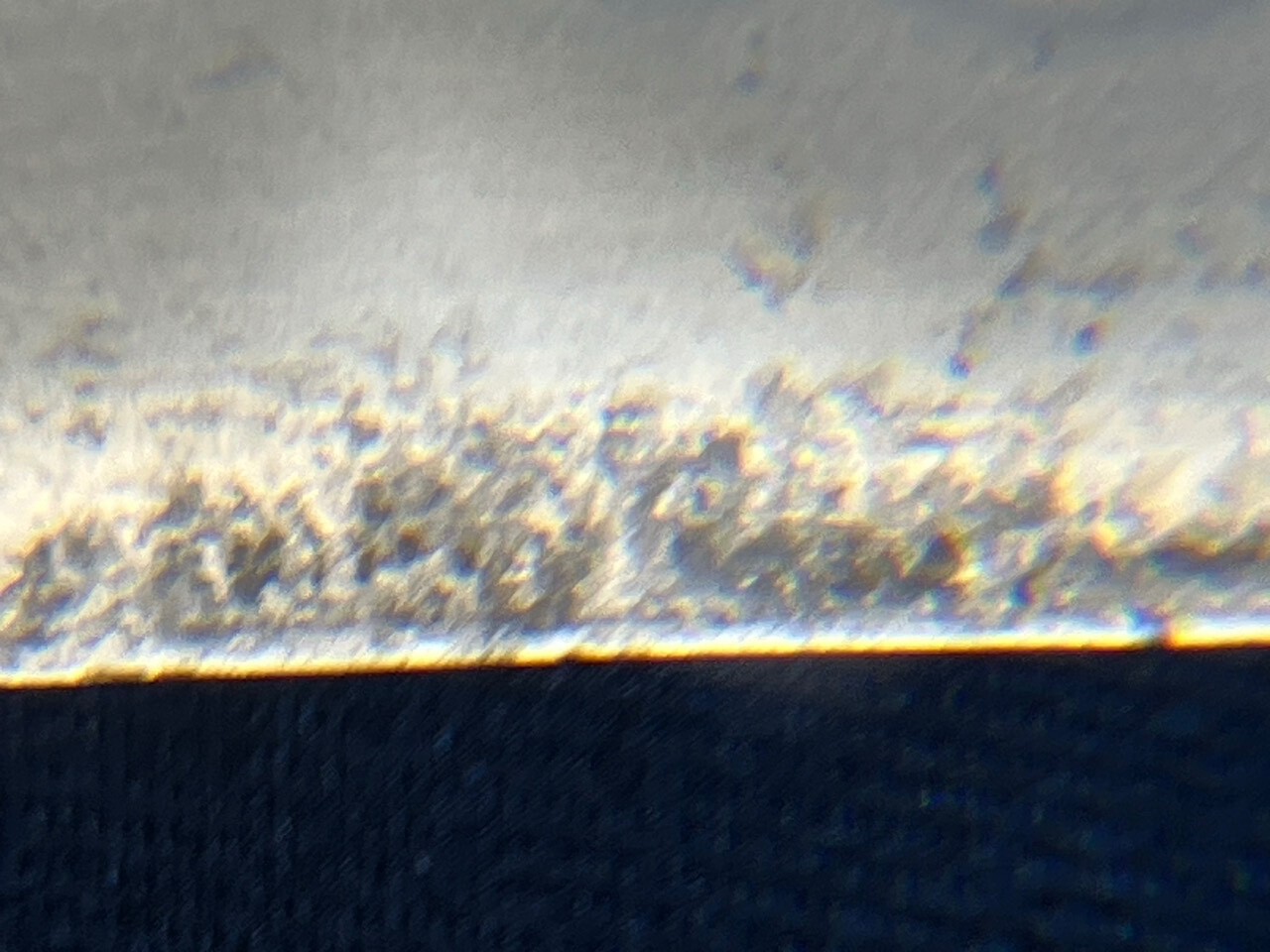
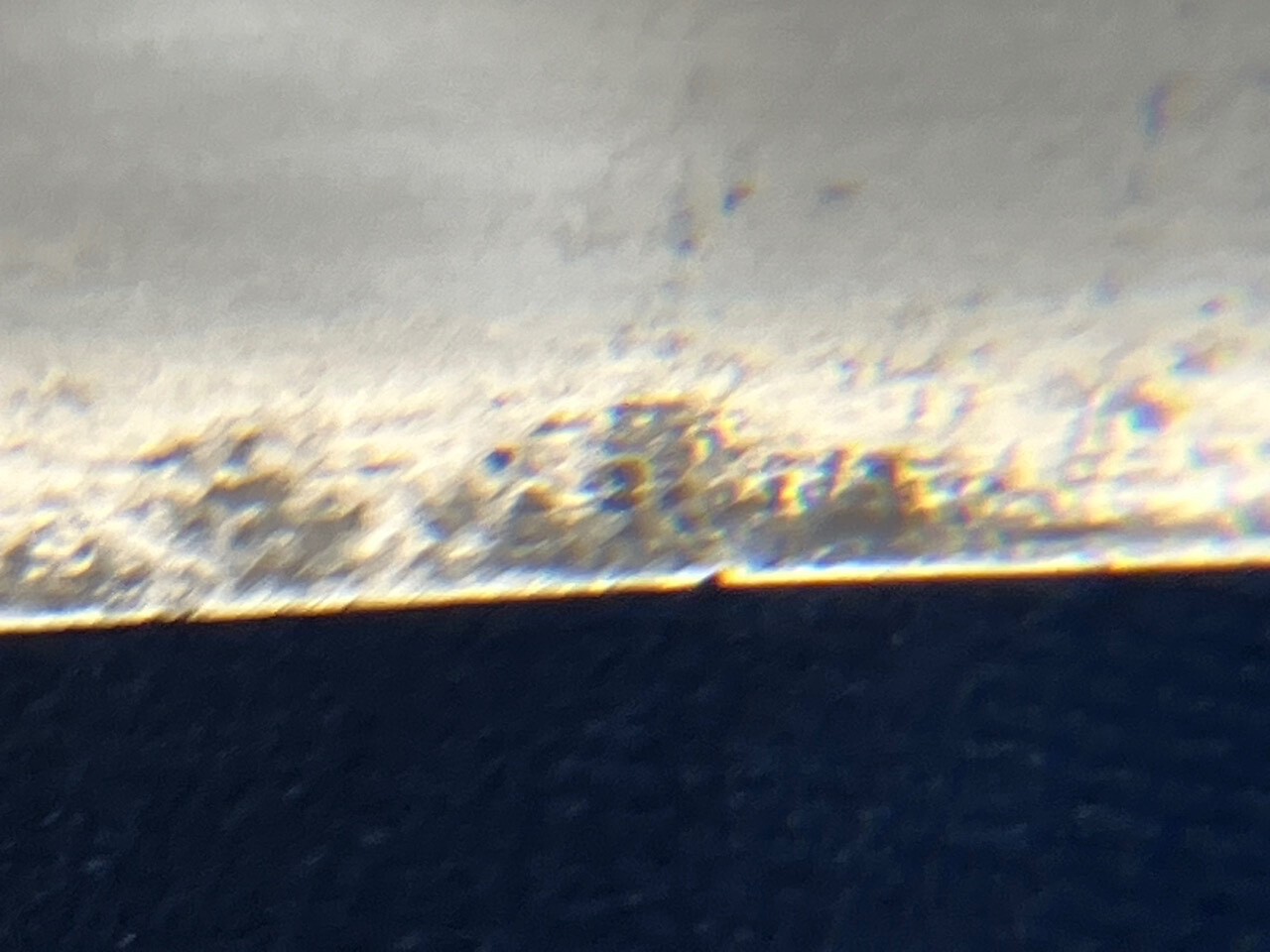
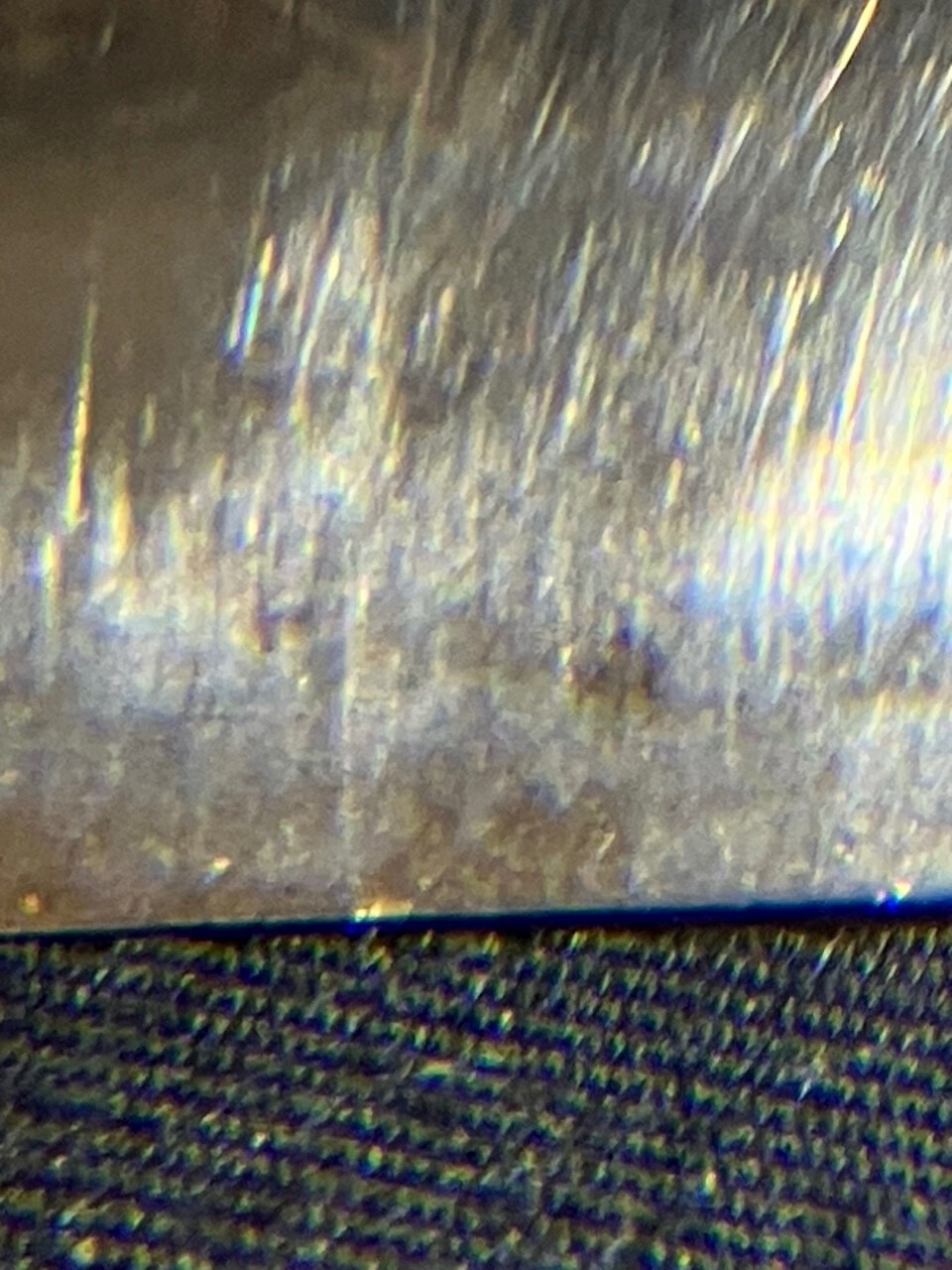
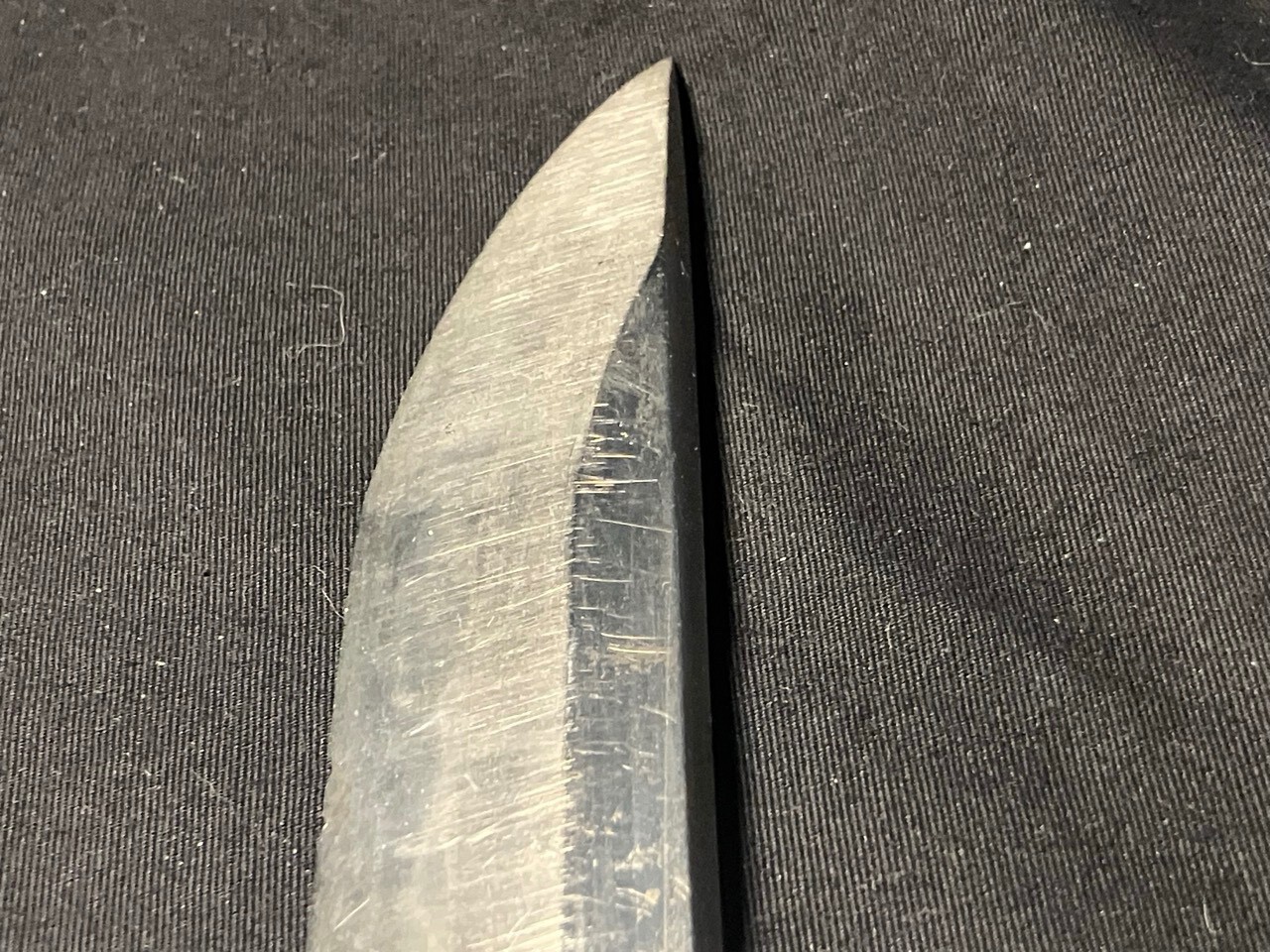
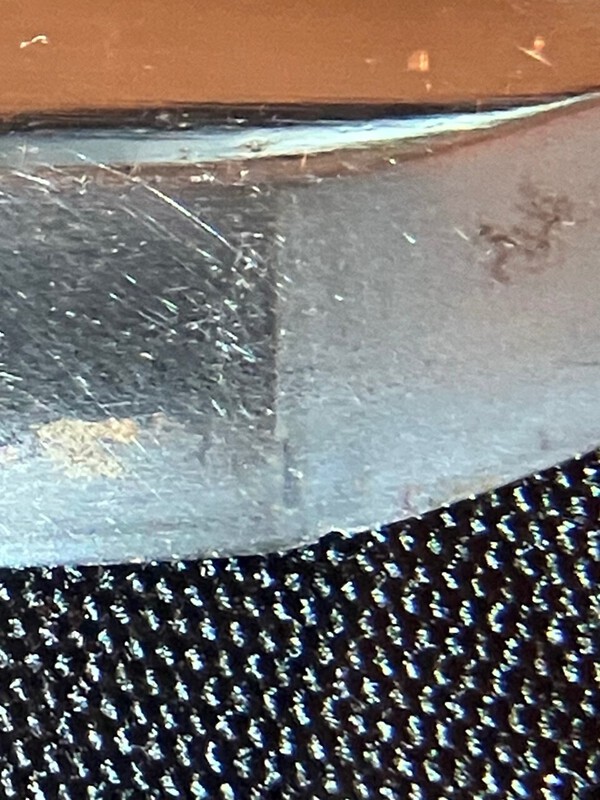
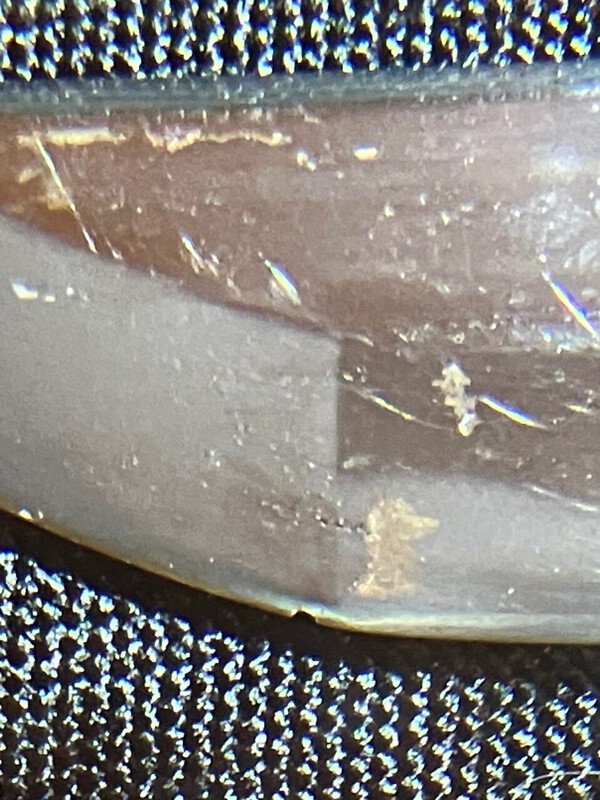
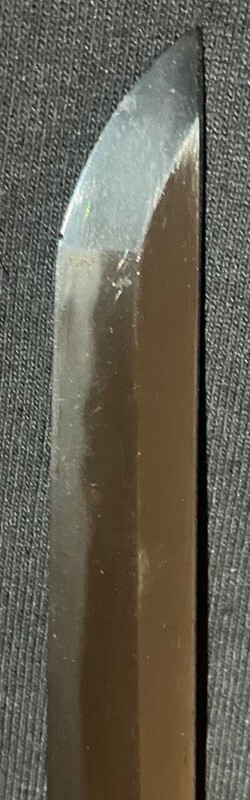
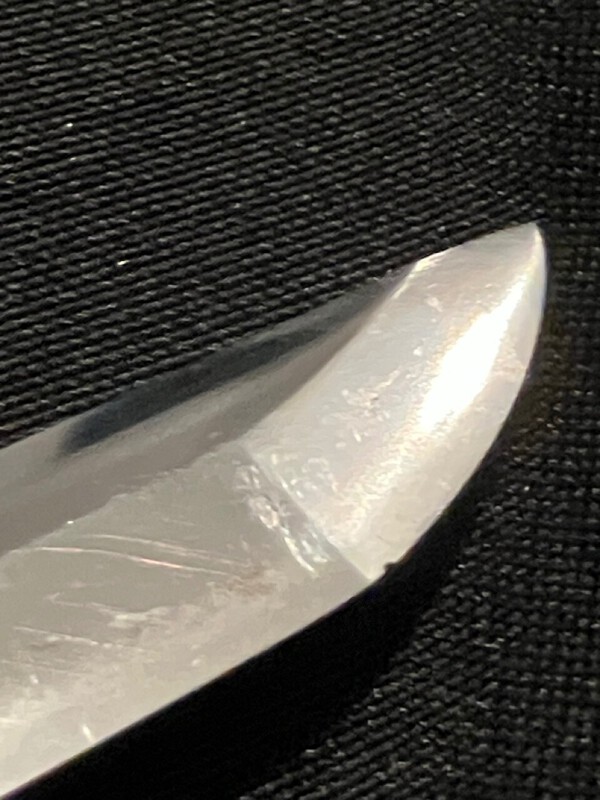
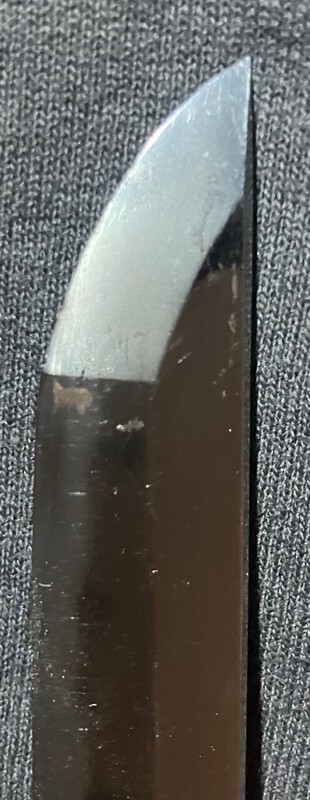
Ah I can kinda see … granted the polish and tiny kissaki make it rough on this one (along with my eyesight lol). But it’s almost like you have to look through the metal in a way to see how it luminesces? Educational question … is it always apparent in the topology of the metal as to how it was tempered, or do some things not show through in that manner when the polish is off, and you have to look to lighting to “see through it” so to speak? Like when I see blatant nie or hada grain or a distinctly differential nioi … it’s apparent in the topology even in a tired polish … but like with this boshi, in some light the topology looks congruent, and in other lighting there are patterns and differentiations that seem to emerge. Like am I missing something when I look at the metal in the lighting of these attached photos, or are the things I’m looking for just not apparent here? Thx, Jeff

-
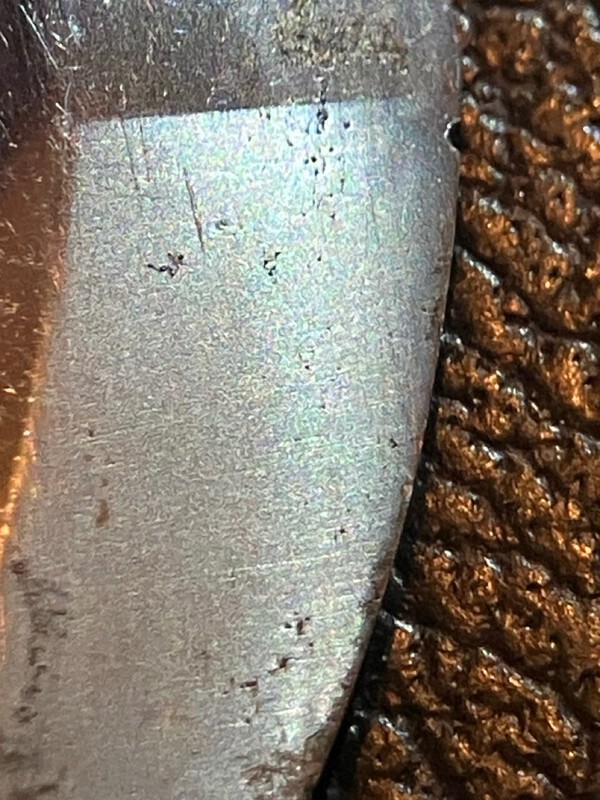
Would it be where the light / dark sort of reverses in that photo (darker areas of kissaki are the boshi outline)?
-
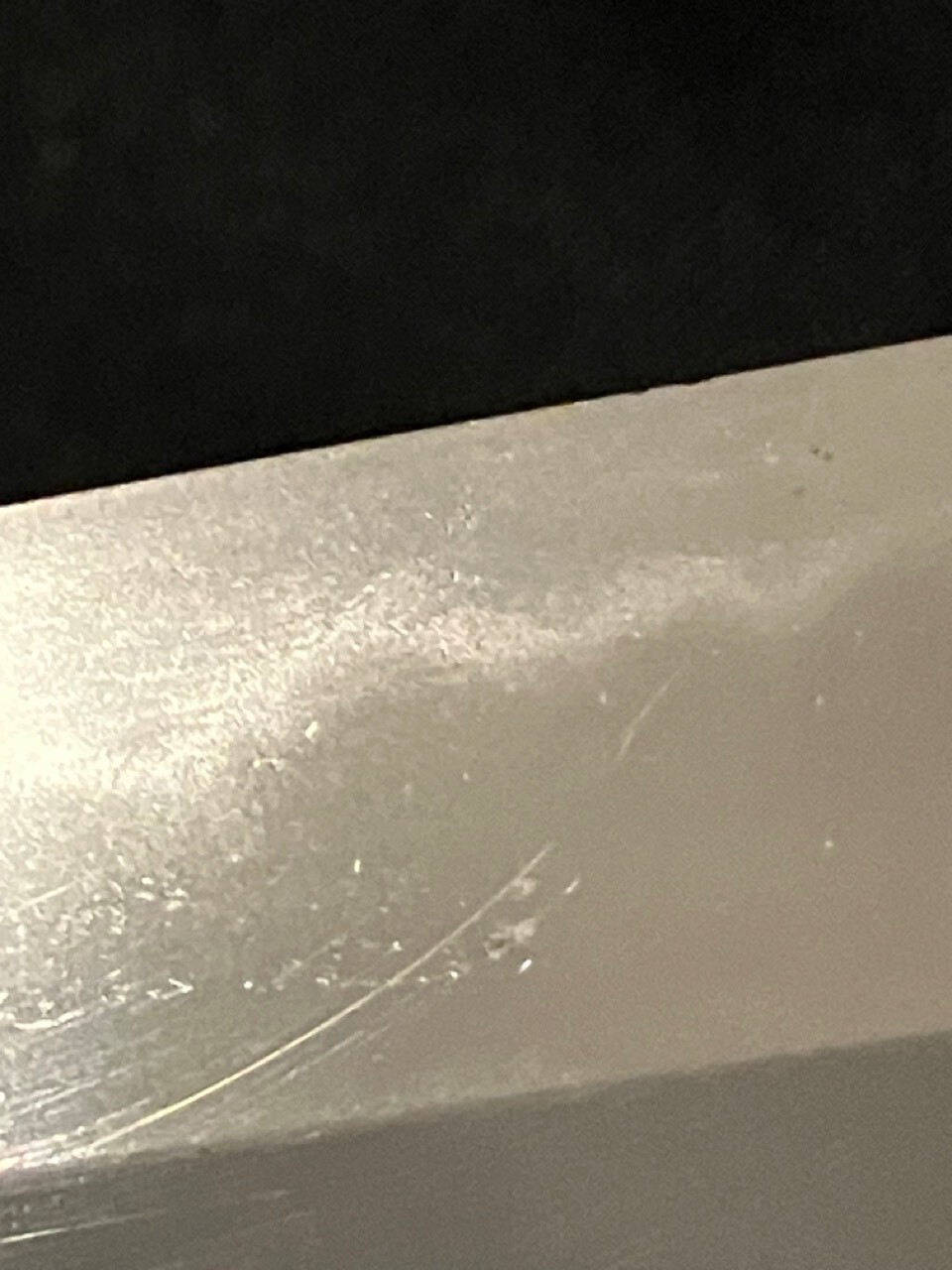
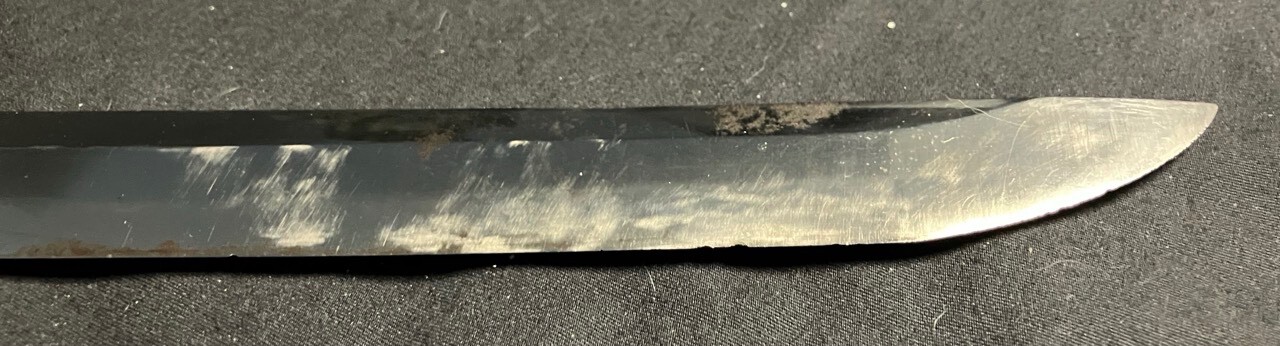
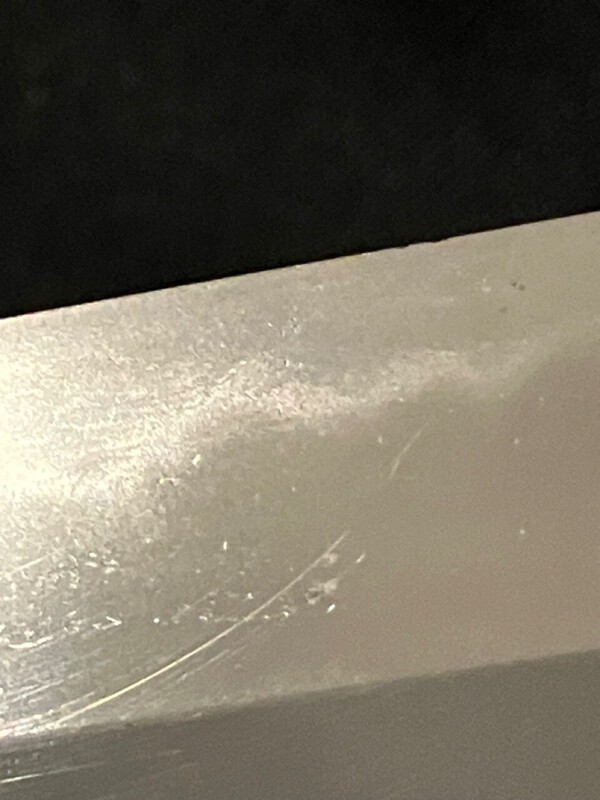
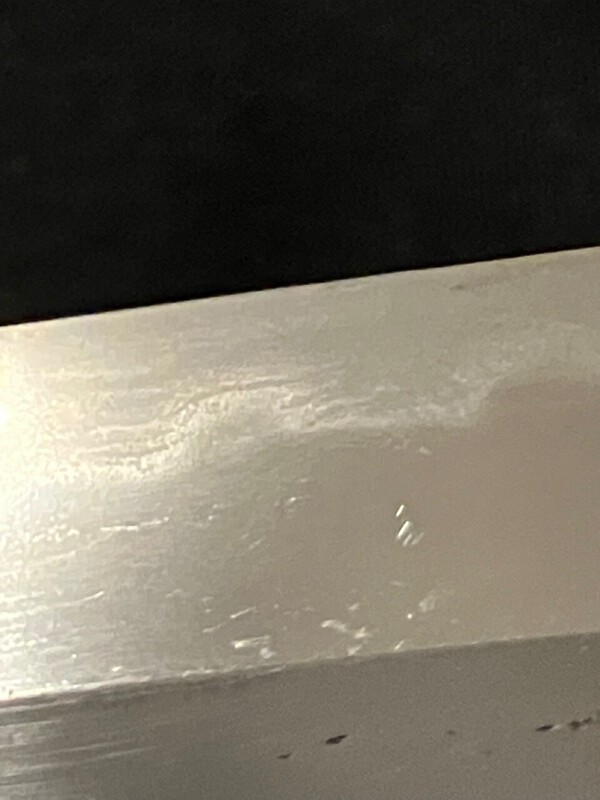
Just got this in hand and a little stumped on the boshi. Hamon seems to vanish at the yokote, but kissaki seems uniform and more matching of the yakiba than any other metal of the blade. Is this what an ichimai boshi looks like or is this just an effect of polish? Added a couple close up photos of the hamon as well. apologies n thanks, I’m a noob.


-
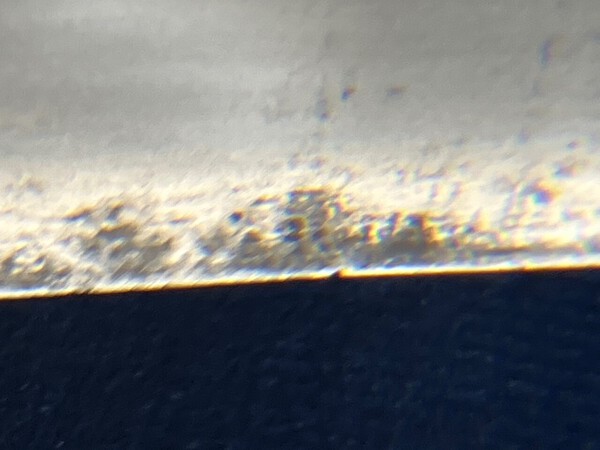
I have to get a macro lens for better photos, but what I’m seeing with a 5x magnifying glass is actually the scratches not cutting through the rusted areas. Maybe scratches through oxidation would have gotten blended out and faded with cleaning / time though. But that also poses the question of: If the oxidation is edo, why does cutting from 1940s exactly align with it? That’s the only area of the blade with oxidation and / or cutting scars. Big coincidence if those circumstances occurred 150-200 years apart yet aligned almost perfectly within the last 7” of the blade. The tone of oxidation in cutting area is also way off from the ww2 blades I have. I dunno, just doing diligence while I have it in hand.



-
I did realize that the tsuba photo was upside down after the post … was not happy about it and am trying / learning to be better 😔. Honestly, I’m incredibly intrigued and attracted to the discipline within this art form and the reflections of it. Thank you for your patience with me.
-
That makes more sense than edo period abuse left in original state (from what I can see with 5x magnification the chips were never reshaped / resharpened) … I have a couple WW2 blades that were cut with to compare to (traditionally and machine forged). Will do due diligence. *if I had no cares for the piece n didn’t pay for it I’d try to cut some crazy stuff with it too lmao
-
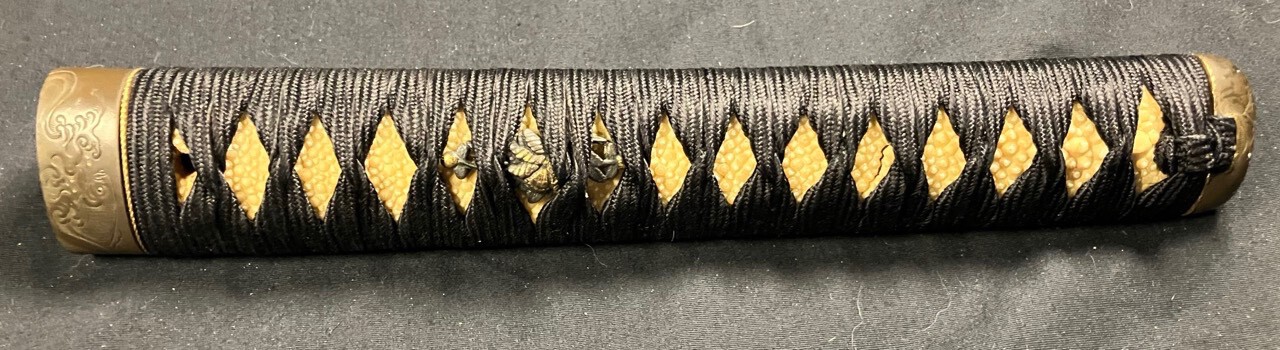
The tsuba was also engraved with five maru ni agehacho mon on each side (which could have been a purely decorative decision or a nod to more violent times). Fittings were made by Kikuchi Tsunekatsu. Blade only has one mekugi-ana and koshirae is possibly original to the blade. So I’m entertaining the possibility that the blade encountered these cutting remnants within the late edo period swordplay as opposed to Meiji or later. Don’t really care either way, just trying to discern the history properly and not call something like it is or isn’t without due diligence.

-
Found this article on late edo tameshigiri and aratameshi that I thought was interesting (albeit possibly not pertinent to subject blade): http://www.nihontocraft.com/Aratameshi_Nihonto.html
-
Overall the feeling I get is that the blade was repeatedly subjected to cutting some harsh materials. Bamboo seems like a fit in-part. Possibly even bent and straightened in / after the process. I have to look deeper / more thoroughly but I see evidence for at least 6 different harsh cuts. My gut says someone pushed this thing late edo timeframe and I’m looking at the fallout from that intentionally destructive endeavor. Blade is gimei Okimasa (I’ve analyzed the mei pretty thoroughly and it’s obvious gimei to me) … but it’s still pretty impressively crafted, and given the koshirae, it would have been expensive. In modern context, to me, it screams “rich person gets nice car and wants to floor it / play with it to see what it can do”. Or perhaps a WW2 soldier who was given it by a family who cared for it said “I might die here, I’m gonna cut some crazy stuff with this fancy sword before I go”. It’s almost definitely a WW2 trophy, as there’s a USN member enlistment number engraved into the habaki.
-
Blade was used for tameshigiri and not re-polished after, ripples in shinogi-ji from this makes sense.
-
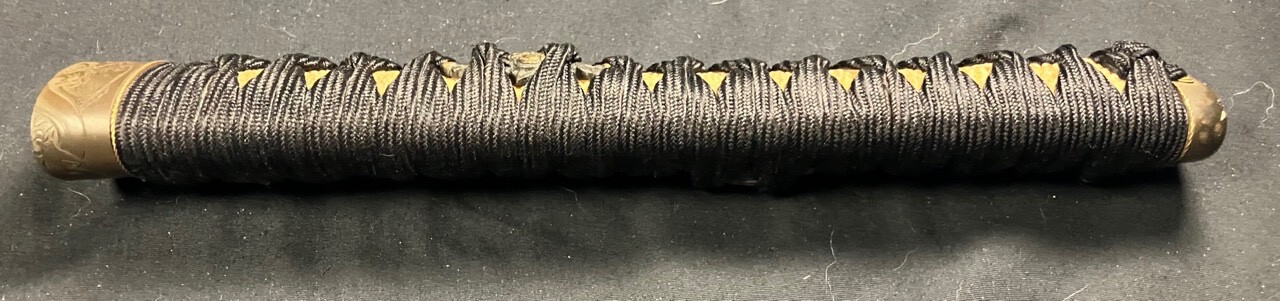
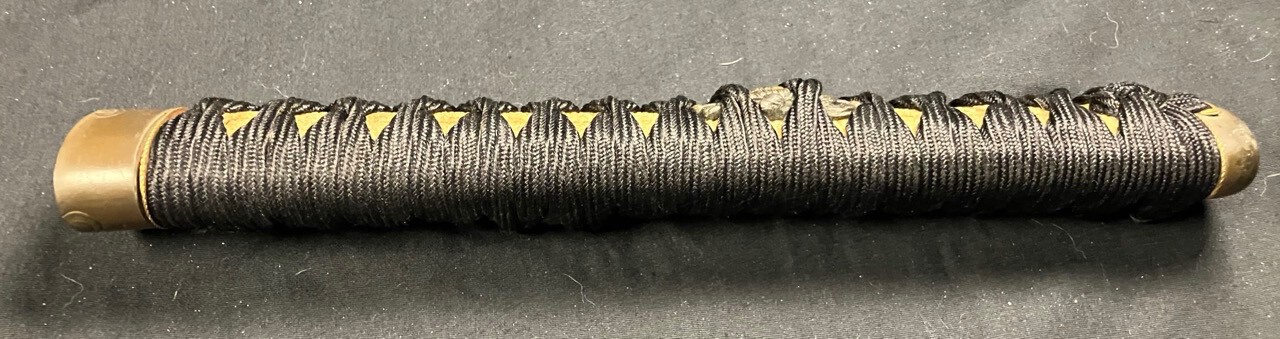
Thanks for the educated input guys, my wife would have killed me if she caught me with a new sword, 900 mats, and 50 books trying to figure out how to do tameshigiri to figure it out myself lol. Last question - in your opinion if someone did a bunch of cuts post-WW2 with late edo koshirae on the blade, would it show? Koshirai looks relatively untouched to me, is signed late edo, and the ray skin is cleanly dried out and shrunk. I don’t see any signs of abuse, significant wear, or anything on the tsuka. Only one mekugi-ana so I don’t believe the blade was refitted past this koshirai. My gut tells me that the ray skin at least would have cracked up a bit with a bunch of swings on hard targets if done any time recently, but ?
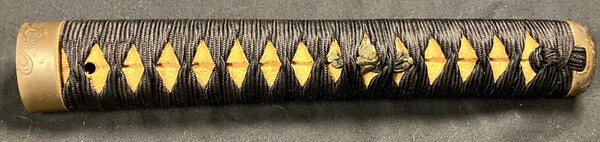
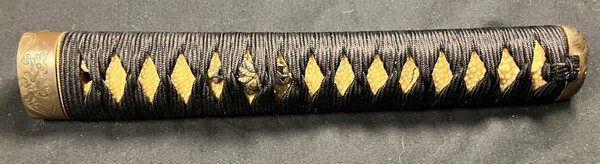


-
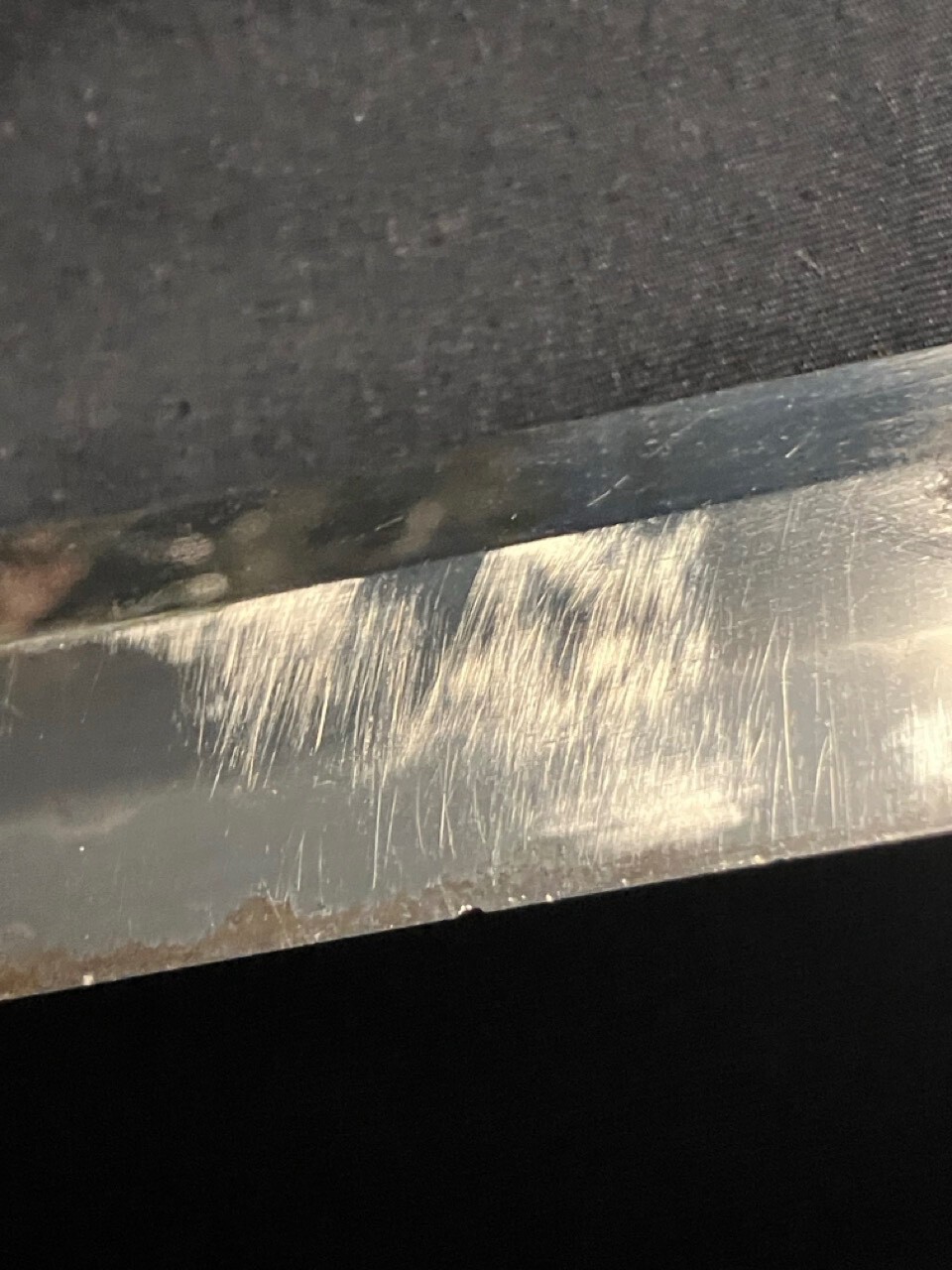
One more photo angle that looks to me like the blade was pushing through targets at speed, rather than being scuffed up by hand.
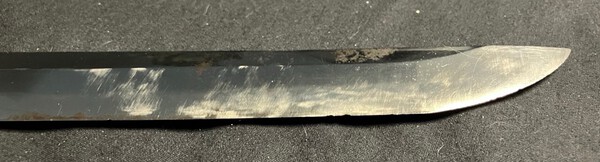
-
Thanks for all the info and opinions. I’m more and more convinced that the bulk of the scratches are from tameshigiri use. The practitioner easily could have also added some by hand. Could have been some bamboo cutting in the mix as well. The pattern doesn’t match what you would see with sharpening or cleaning, as some scratches do carry over the shinogi, but not completely. Some also only begin past the hamon. Some patterns are in slightly different directions, but are still in a direction of what a cut would be. Blade is long, wide, and heavy … would have been ideal for a practitioner. A few more detailed photos:
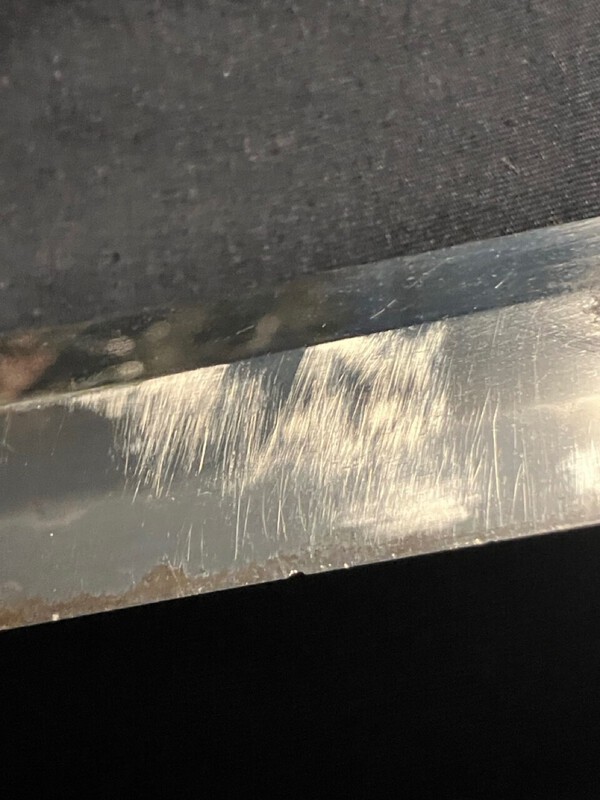

-
I ended up watching a bunch of tameshigiri demonstration videos, and on a lot of occasions the full kissaki does end up passing through the tatami or other materials. But details / experience with tameshigiri are outside of my knowledge base. I’m a craftsman and metalworker though, and none of the abrasive methods / tools we use seem a match to what I’m seeing, which is what had me looking for other answers. The pattern and texture doesn’t match sandpaper, wet sand, angle grinder, buffing / grinding wheel, sharpening stones, files, wire brush, wire wheel, or any other abrasive tool that I can think of. I’m not too concerned about it as the blade could eventually use a polish anyway and the scratches are superficial, but curious to find a match for the cause