cglog254
-
Posts
23 -
Joined
-
Last visited
Content Type
Profiles
Forums
Events
Store
Downloads
Gallery
Everything posted by cglog254
-
Thank you!
-
Thank you for the information! I had seen similar haidate but I did not know that is what they were indicative of?
-
That is so cool! I had figured the armor's original owners had above average means from the gilded decoration and the byakudan nuri on the inside of the tare and the inside of the sode. The haidate plates are indeed lacquered iron, but I thought that was standard? Is it something about the layout or construction of the rest of the piece that suggests it was meant to be worn on horseback? I was able to find information on the suneate suggesting horseback riding, but I haven't been able to find any other information on distinguishing armor designed to be worn on horseback and armor designed to be worn on foot. Are there any other distinguishing features that are unique to or indicative of armor designed to be worn on horseback that I should look for?
-
Thank you for your response! Do you think these details represent anything unique, such as use or status, or are they simply unique personal design choices? Would having extra long frontal kusazuri serve any purpose beyond added protection? What is different about the haidate?
-
I do not have access to the whole suit at this moment, but I will upload the pictures that were when it first arrived (the helmet and hanbo are the ones I have previously posted about, so I have not re uploaded their pictures here). They are not the best quality as they were not meant for documentation. If you are interested in specific pieces, sections, or require better images of everything all together, I would be glad to take new/better pictures of the whole suit and/or pictures of specific locations or pieces next time I have access to them (Monday). We are working through it piece by piece, so I will likely have more questions on all of it. Your expertise and insight has been invaluable for me and my efforts. The lacquer on the inside of the sode appears to be the same byakudan-nuri as on the plates of the face mask. Thank you so much for your help and let me know if you would prefer better or more specific pictures.


-
Thank you! I had noted the lack of the kanmuri no ita when comparing it to other kote examples. I am enjoying the multitude of decorative features on these kote. Along with the kirigane, the silk fabric is also very decorative, but it has worn or faded on the exposed parts under the chainmail. The fabric under the plates still has this decoration, and the motif includes small birds. The haidate of this armor has the same fabric decoration. I attached a picture if you are interested.


-
Hi Uwe, Thank you for your response! Your information is very helpful and it is cool that this appears to be a rarity. The one compartment had not been opened since it came to us, and I was hoping something would be inside... sadly but unsurprisingly it was empty. They very intriguing to me, especially with the gilded interior. Also, do you know of any way to date kote, or is it not reliabbly possible without makers mark or other information?
-
Hi all, This pair of kote have hijigane that have an internal storage space inside. They have a simple latch and hinge construction, and are gilt on the interior. I have not been able to find any mention of hijigane opening or having compartments within. Is this a common feature? What would have been stored inside the hijigane? Is this construction indicative of a special use, manufacturing timeframe, or other unique feature? I have attached photos of the kote below, as well as close ups of the hijigane (sadly, one is missing but the interior container is still there). Please let me know if you have any information regarding the hijigane or the kote as a whole (anything unique or indicative to a particular time or place) . Thank you for your help!


-
Piers, thank you for the response and information!
-
Thank you for your response John. Was the replacement or swapping out of armor features a common practice in the Edo period? I know that armor would often be compsoed of pieces made by multiple different craftsmen at various times, but I lack background knowledge regarding the extent that this occurred and that it applied to even small pieces of the armor. Also, thank you for the image! It makes the guruwa absence much more understandable.
-
Thank you for your response Piers. Do you know if Byakudan-nuri was a relatively common practice, and if not, is it indicative of the social status of the owner? Is it a particularly difficult technique to utilize? I suspected the tare may not be original to the because of the difference in lacquer (as the metallic sheen seemed like something that would be difficult to achieve). The interior of the hanbo has smudges of black lacquer (which seem to be accidental by there erratic placement and imprinted fingerprints), which seemed to indicate a different skill level in production between the body of the hanbo and the tare.
-
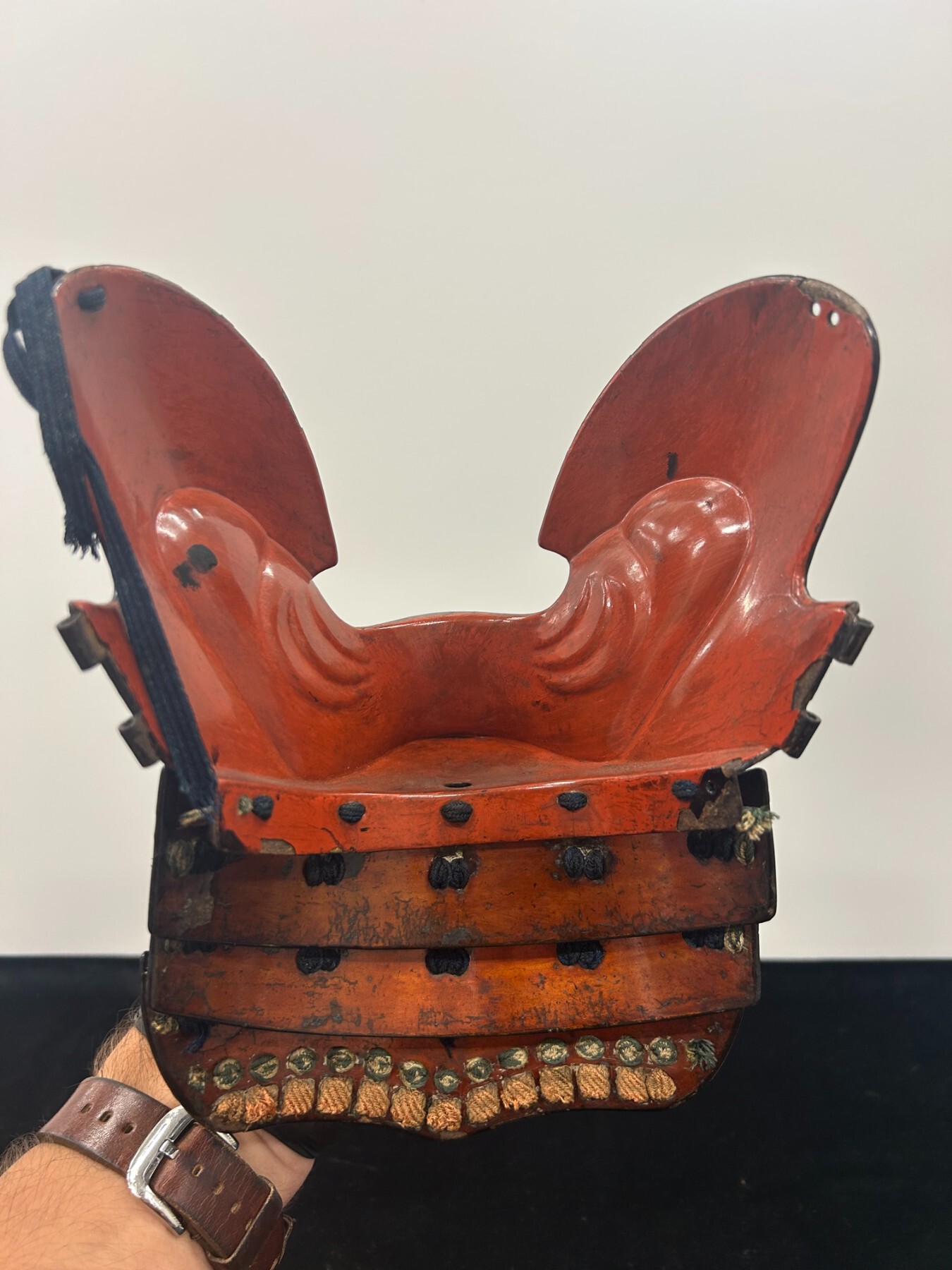
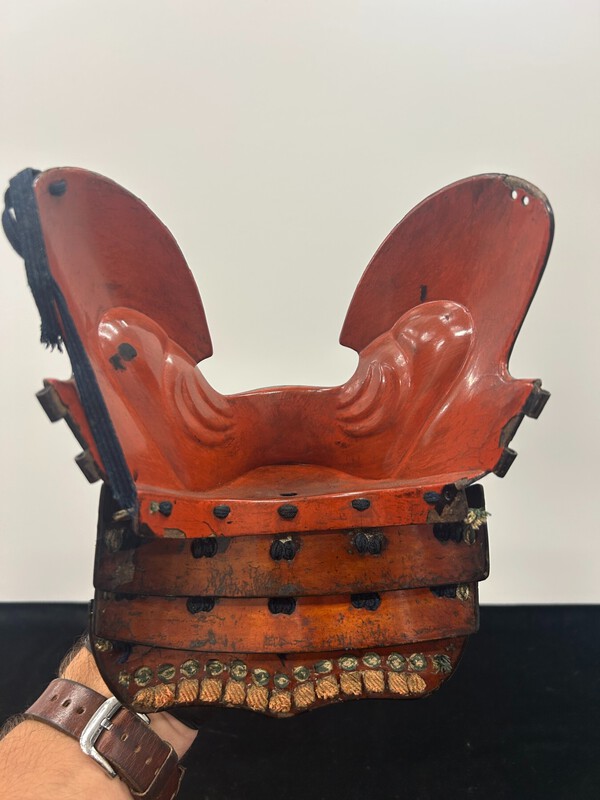
Hi all, I was wondering if anyone could help explain material differences on a hanbo I am working with. The interior of the tare is coated with a metallic copper red material (I think it may be lacquer, but I have not found any examples that have the same sheen/color), and I am curious as to what the material is. It is flaking in some places and it appears that a thin layer of black lacquer is underneath it. The tare coating is also different from the lacquer on the interior of the hanbo itself. Is there a reason for this? Is there a chance the tare are not original to the hanbo, or is a later repair? I am attaching a picture and please let me know if I should send any more examples or angles. Thank you for your help!
-
That is fascinating. We sadly do not have any guruwa in our collection. Do you know of other examples of hanbo with guruwa/why they were an uncommon feature?
-
Uwe, thank you for the photo of the mei. Is that kabuto in a private collection? Do the additional pictures reveal anything else about the helmet/hanbo regarding date range or any other unique information? Thank you for all of your help, I will keep updating on my project if people are interested.
-
Thank you so much! Would love to eventually see the official version
-
That is what I thought. Thank you for clarification!
-
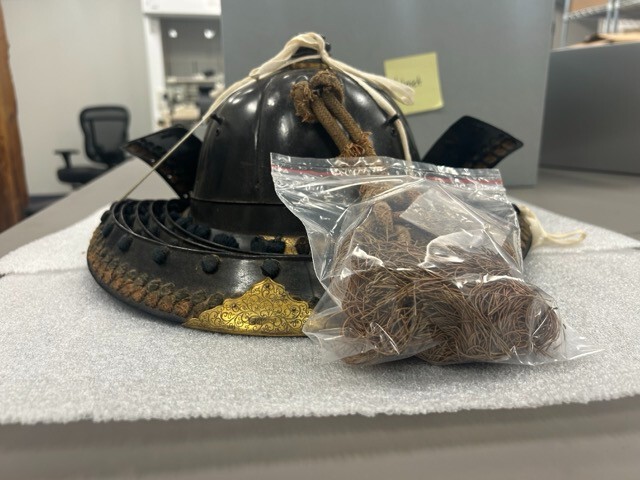
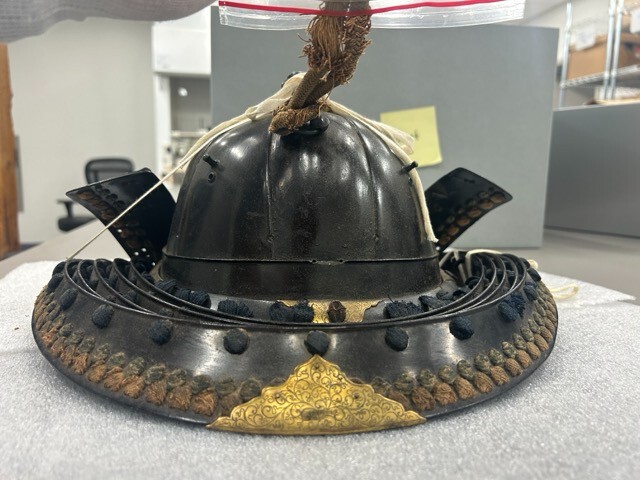
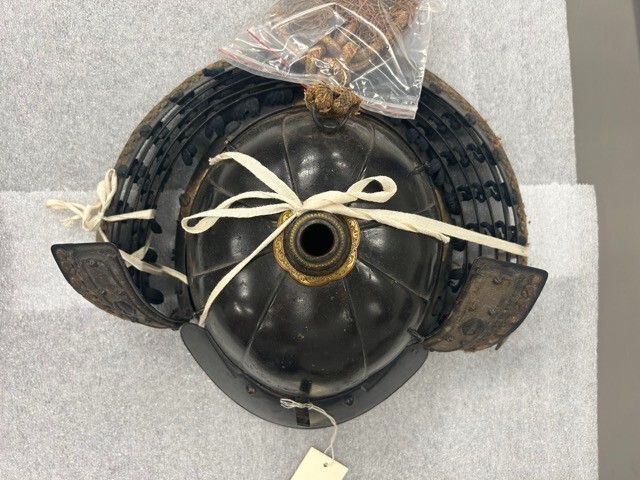
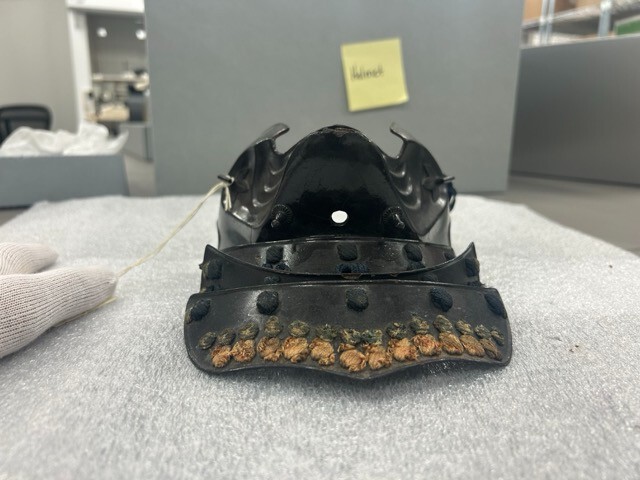
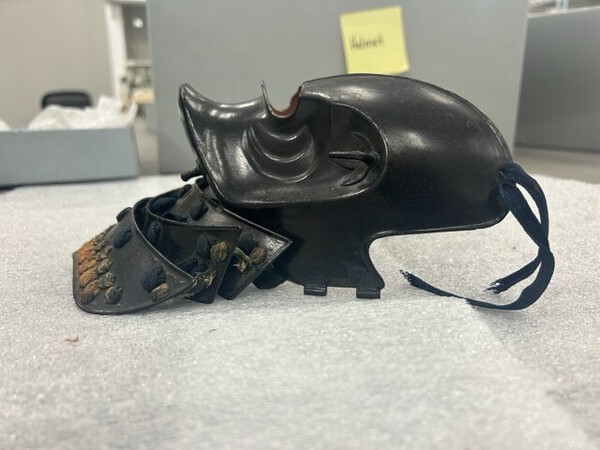
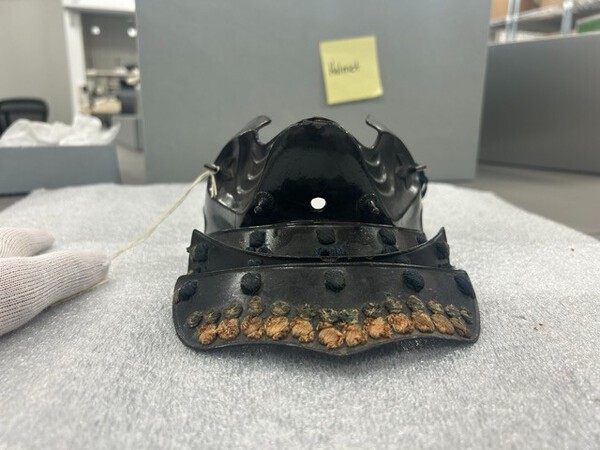
Uwe, I have attached pictures of the helmet from all angles except the bottom. I have also attached images of the mengu which was with the armor from all angles. The kabuto weighs 3.29 kg. Please let me know if there is any other information/images you need. Thank you!




-
Thank you for sending pictures of the map and going out of your way to locate the smith's name! I am curious where this map came from/how it was produced if you have any more information.
-
This is another Hideshige? Do you have any more information on this particular example and/or image of the mei? We are trying to compile as much information as possible on our kabuto, and this would be extremely use for comparison! I am also attaching image of the hanbo that was acquired with the helmet. There was no visible mei on first inspection. Do you have any ideas where one would be if it existed on the hanbo? Would mengu/hanbo have traditionally been made by the same craftsmen? Once again, I am sorry for so many questions! There will probably be more as we attempt to document both sets of armor in our possession. Thank you so much for all your help!

-
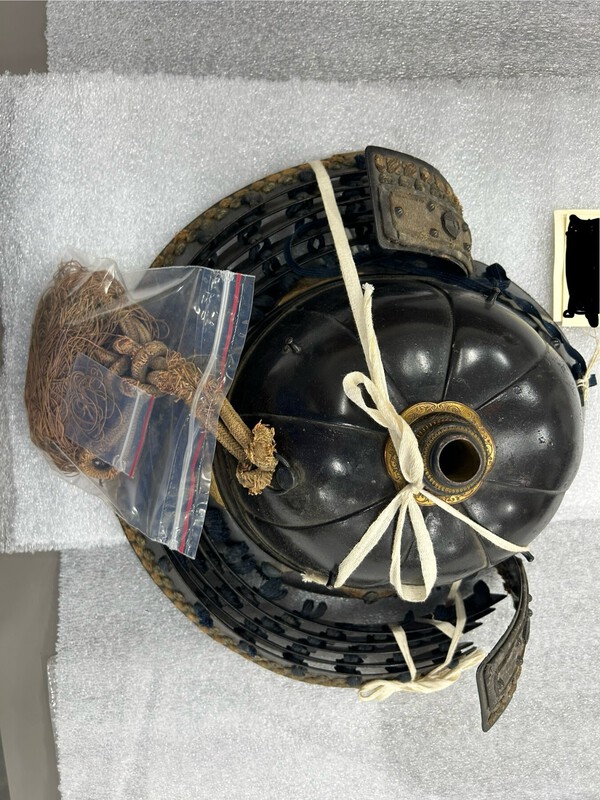
Thank you for the information! I am not very well versed in this so I am sorry if my questions seem basic or redundant. Do you have any sources where I may find references to Hideshige of Bushu Province, or more information about him? I do not have pictures from all angles at the moment, so I am attaching what I have on hand. I will photograph from all angles tomorrow and post them to this thread. I am unsure if I will be able to photograph the inside of the helmet tomorrow because the shikoro is very poorly attached due to degradation, and we are trying to avoid causing any unnecessary strain or damage. We are looking at methods to properly document the interior of the kabuto without damaging the shikoro, and I will send pictures when this is achieved. Your help is greatly appreciated! Your information regarding the mei has made my week!

-
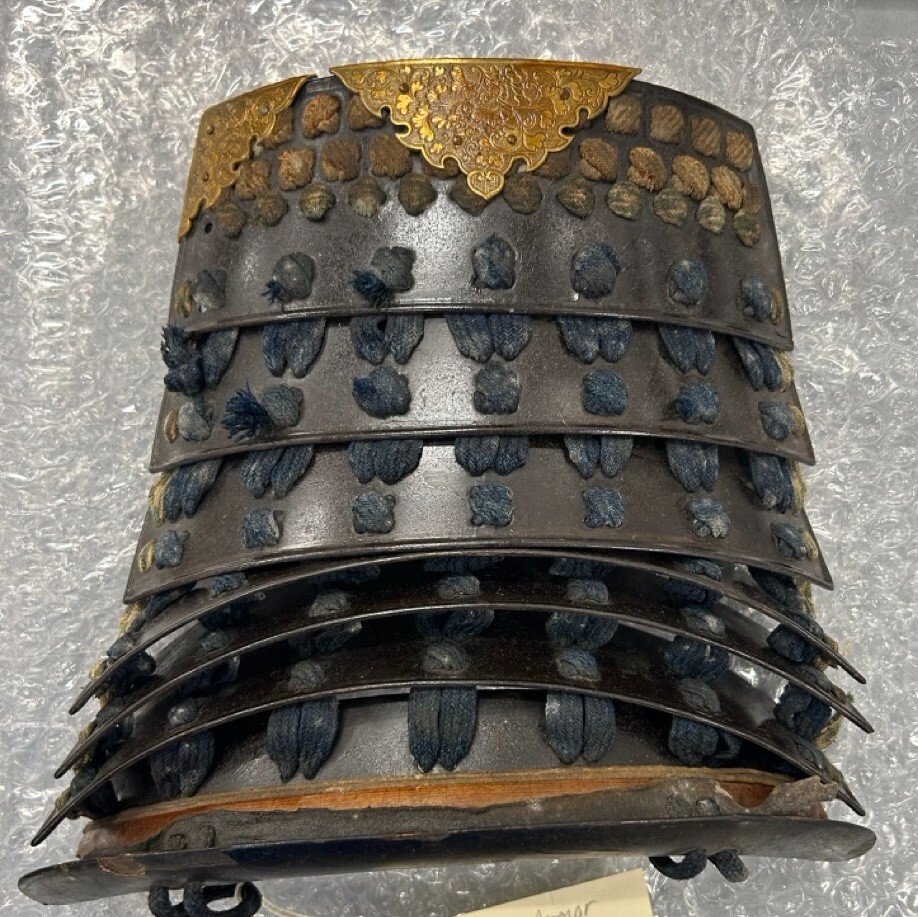
Thank you so much for the reply and the additional information! The reference to the armor smith on the bell is very cool and could potentially be very critical in my research. I was under the impression that the kabuto was much younger than 1630, and I have attached a picture of it to this message. Do you think it could fit the date range that would be provided by the bell? Also, is it possible to share this map of armorers? Thank you! This is very exciting!

-
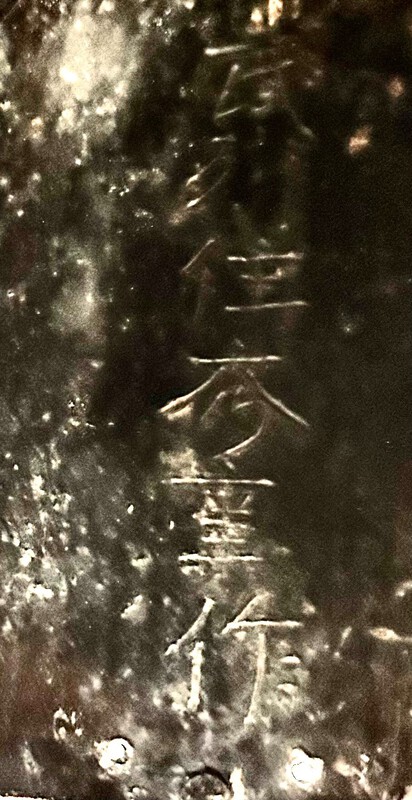
Thank you! Do you have any idea why the Kanji in the kabuto is so different, particularly 武 and 秀. Is it just practicality in the act of etching, or is it a difference in Japanese language between the Edo period and today? I have attached an image of the kabuto to this message. It is not in the greatest shape. If you can determine anymore information from the picture, please share!

-
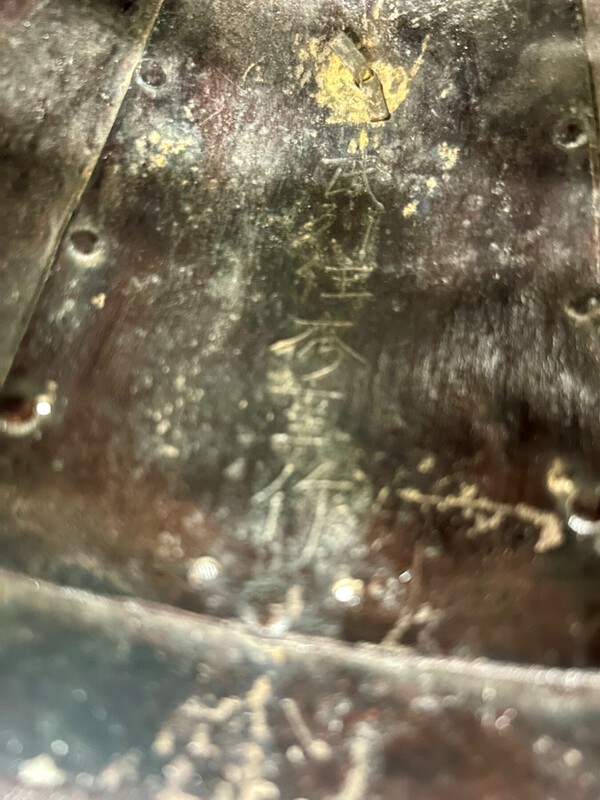
Hi all! I am researching on two suits of samurai armor that were acquired by my institution. I have very little familiarity with this field but have put together a decent amount of information. There is a makers mark on the inside of one of the kabuto, and I have only been able to firmly make out the kanji for 作 and 住 (though I am not entirely sure about the second one). I showed two of my Japanese colleagues images (which are low quality, as they had to be taken through a tear in the interior lining of the helmet) and they came to the same conclusions, and told me to seek out someone who may have more familiarity with older Japanese. I am attaching those same images here in hopes that someone can point me in the right direction. We are waiting for some specialized equipment so we can get better images of the makers mark. Thank you in advance for the help!