hopeforthebest
-
Posts
3 -
Joined
-
Last visited
hopeforthebest's Achievements




-
Help with identification of my grandfather's sword
hopeforthebest replied to hopeforthebest's topic in Nihonto
Thanks, Bruce and great eye! Very cool and I will research this further based on the information you provided! -
Help with identification of my grandfather's sword
hopeforthebest replied to hopeforthebest's topic in Nihonto
Thanks for replying, chinaski. The tip of the blade has almost certainly been chipped off at some point in time, so you are right. From what I gather, the symbol for "Kuni" changed after WW2 when the Kanji were simplified in Japan, so there are multiple ways that "kuni" is represented depending on time period. The "Kuni" symbol in the picture was used in Japan, China, and Korea prior/during WW2. -
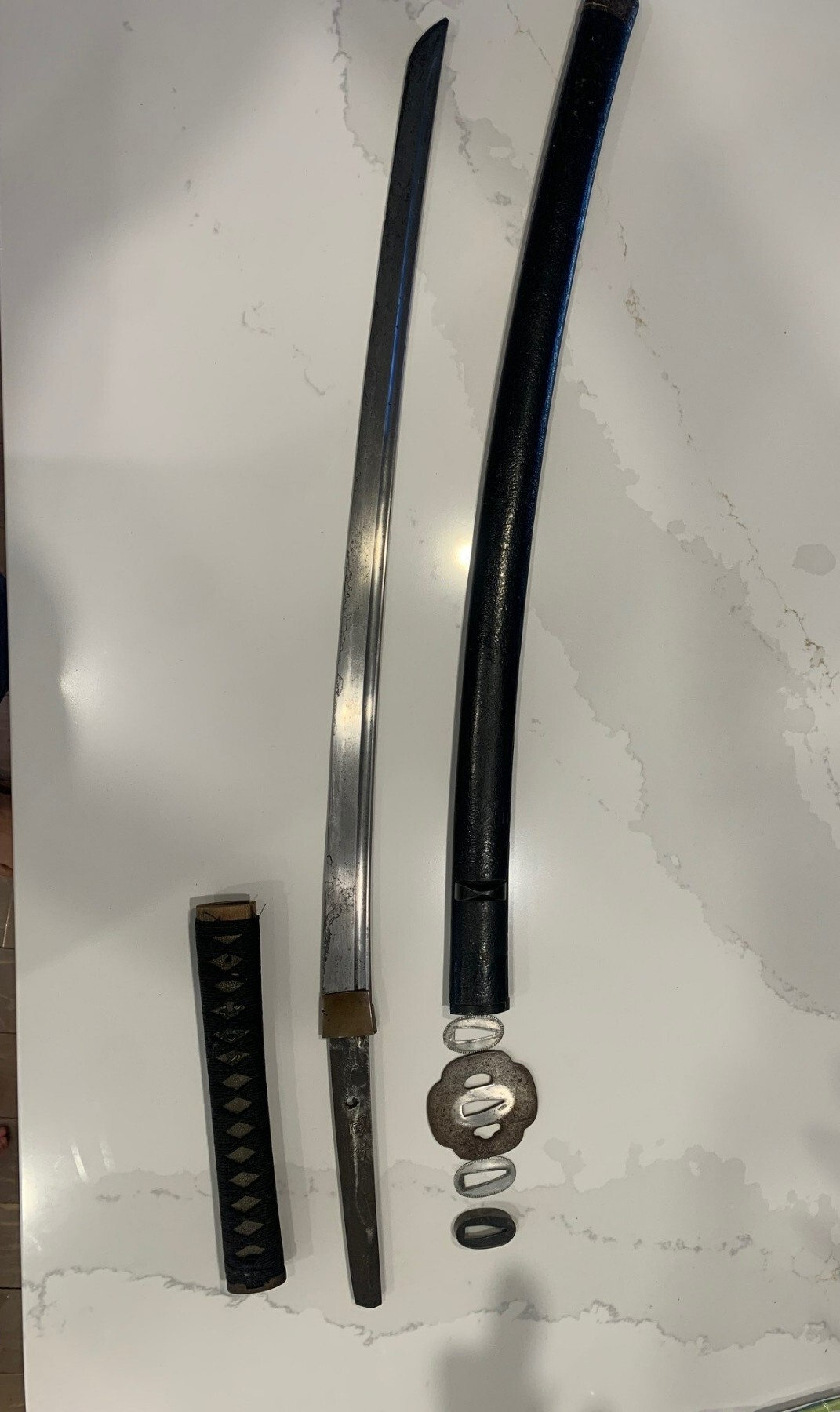
Hi All - I am new here and this is my first post. My father recently gave me my grandfather's katana and we've been trying to research it. I think he actually posted on this forum in the past, but I cannot find his post. I am hoping that I can get some insights from this knowledgeable community. Thanks in advance for anything that can point me in the right direction! A little background: 1) My grandfather purchased the sword sometime in the 1960's from a Korean war veteran. The veteran either purchased the sword in Korea or in Japan (while on leave). We are not sure. 2) The Mei appears to read "Kuniyuki" and is made up of two characters 國行. I have found swords online with a similar Mei, but it doesn't look exactly the same. 3) The handle and Tsuba look ~WW2 to me. 4) The Saya fits the length of the sword, but maybe due to age or warping of the wood, it is a little more curved than the sword 5) The blade (sharp part) is ~25.5" I also found a list of reference materials that discuss this Mei that could help me with a lead, but unfortunately I couldn't find these materials readily available online anywhere: Nihonto Koza Volume NK-2-F14 NK-2-F28 NK-2-11 NK-2-55 The Japanese Sword: A Comprehensive Guide JS-102 Albert Yamanaka's Newsletter NN-2-3-14 NN-2-1-17 NN-1-8-10 NN-1-8-10