Marcel
-
Posts
42 -
Joined
-
Last visited
Content Type
Profiles
Forums
Events
Store
Downloads
Gallery
Everything posted by Marcel
-
Thanks! Very interesting. Now I'm wondering who made them? Did they bring Japanese blacksmiths to the Dutch East Indies for this, or was this something local metalworkers could also make?
-
Thanks for your reply Kiipu , that explains a lot.
-
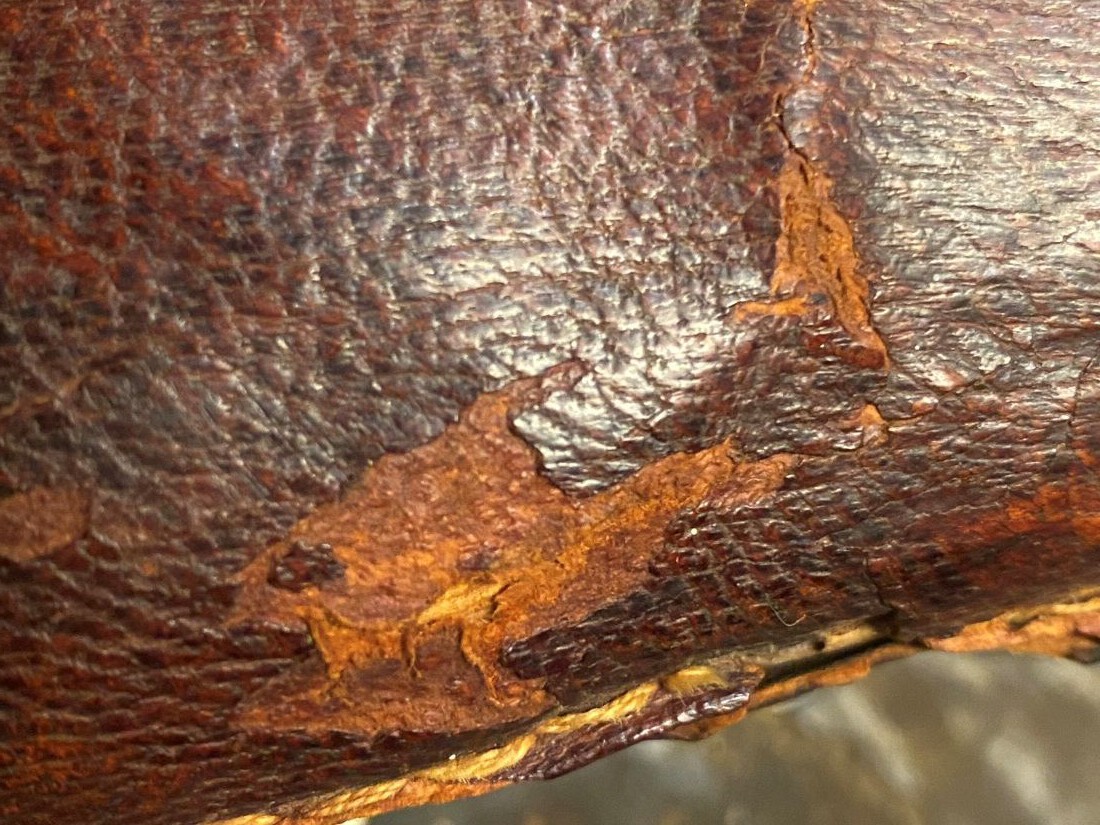
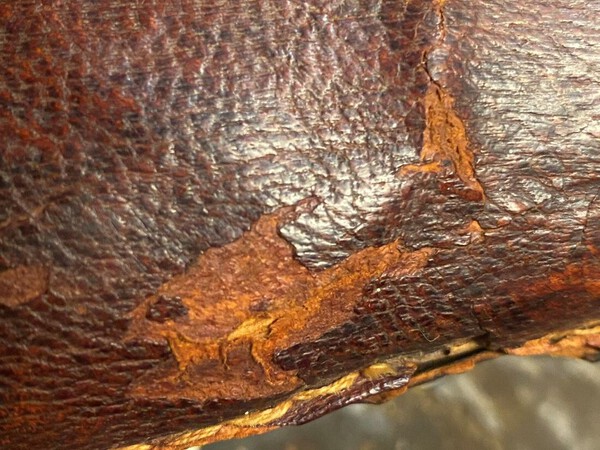
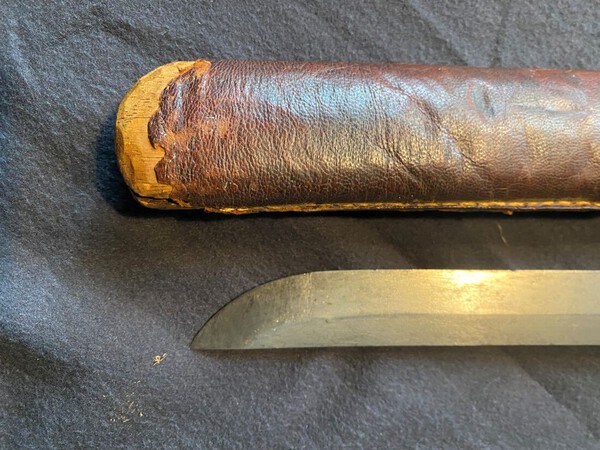
I took a close-up of the leather. I wouldn't dare say whether it's artificial or real leather.
-
I've been wondering, since two of the three have surfaced in the Netherlands. Could it be possible that these were made in the former Dutch East Indies during the Japanese occupation? I know that a large number of the Shin Guntos found here in the Netherlands were brought from that region by Dutch soldiers after the war.
-
That is correct Ed. I borrowed it to demonstrate the resemblance.
-
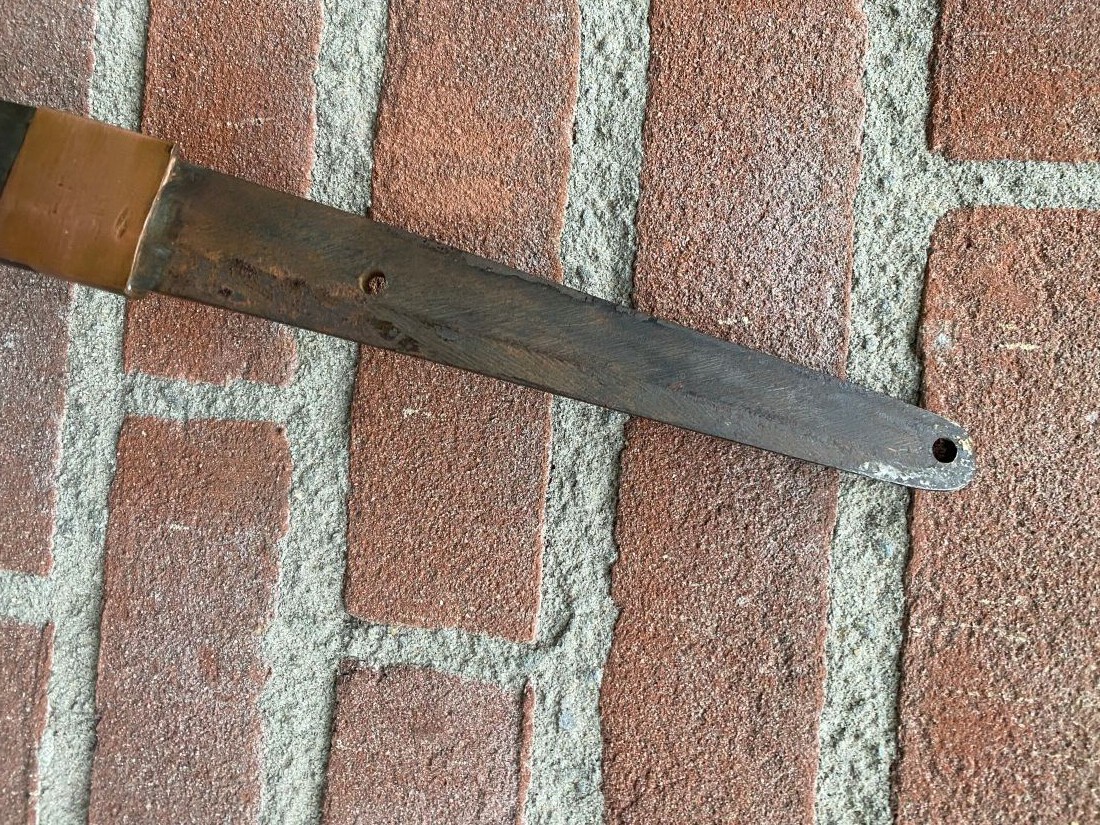
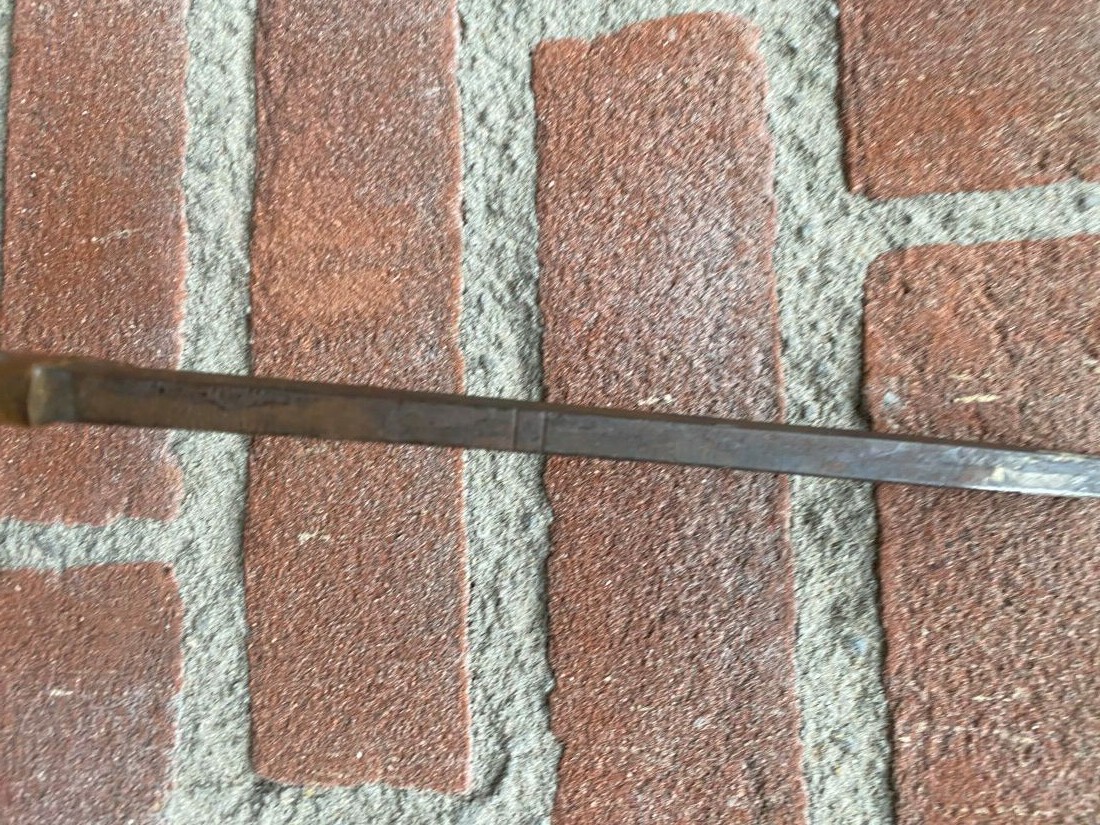
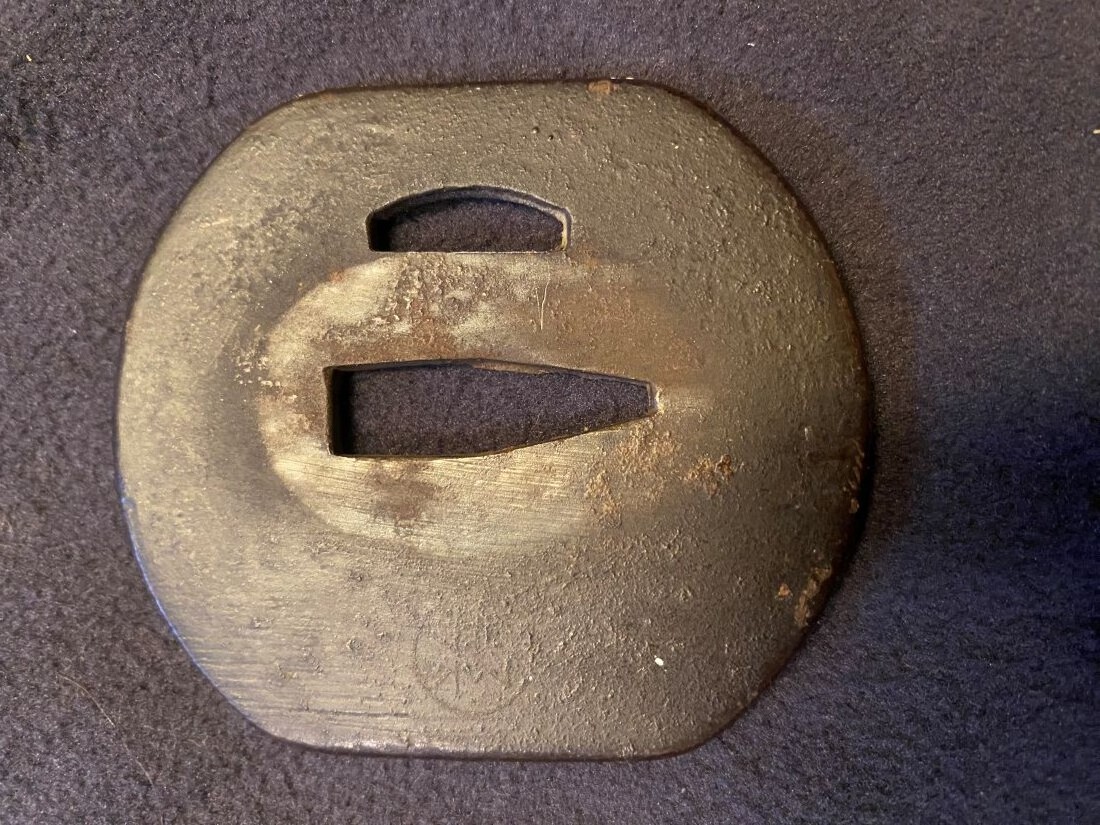
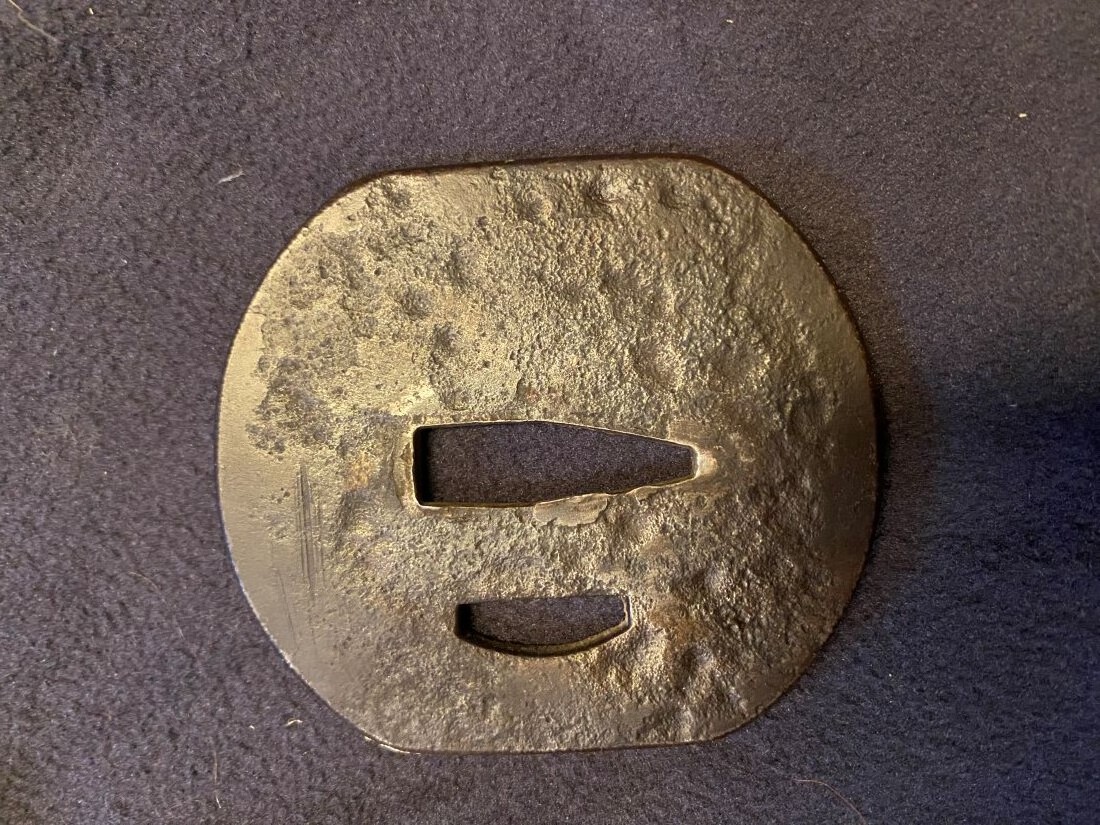
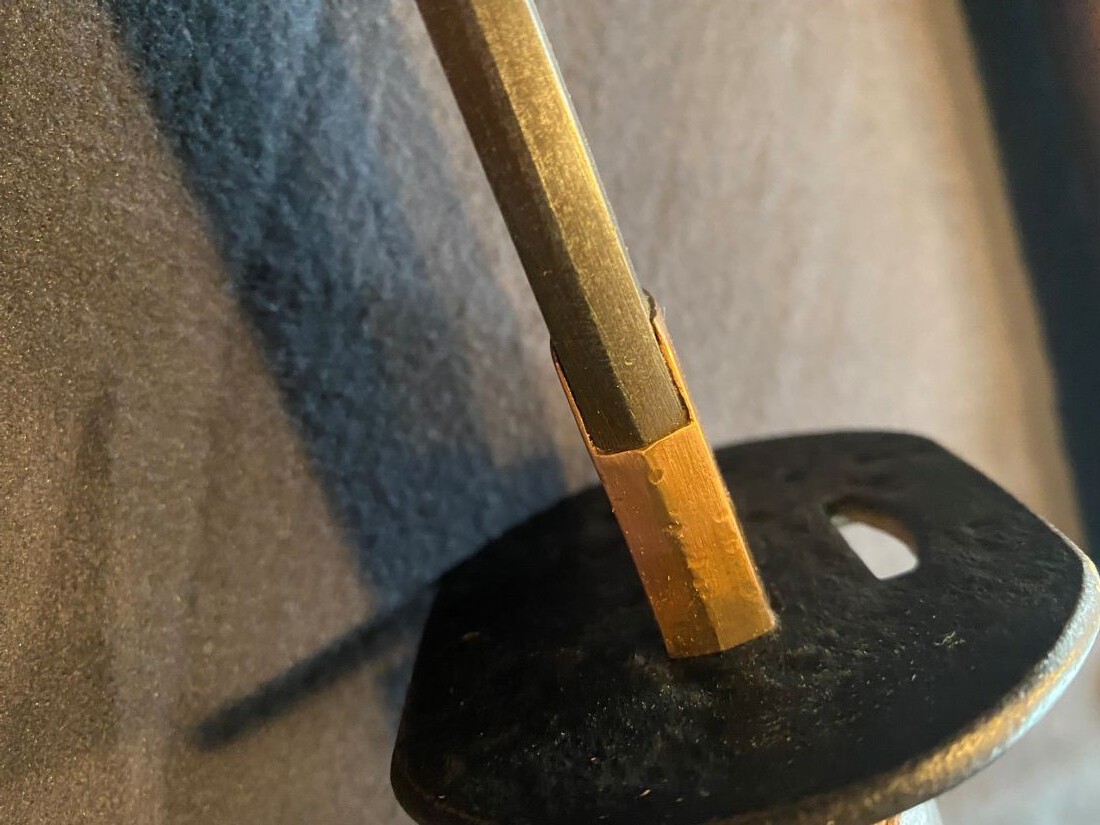
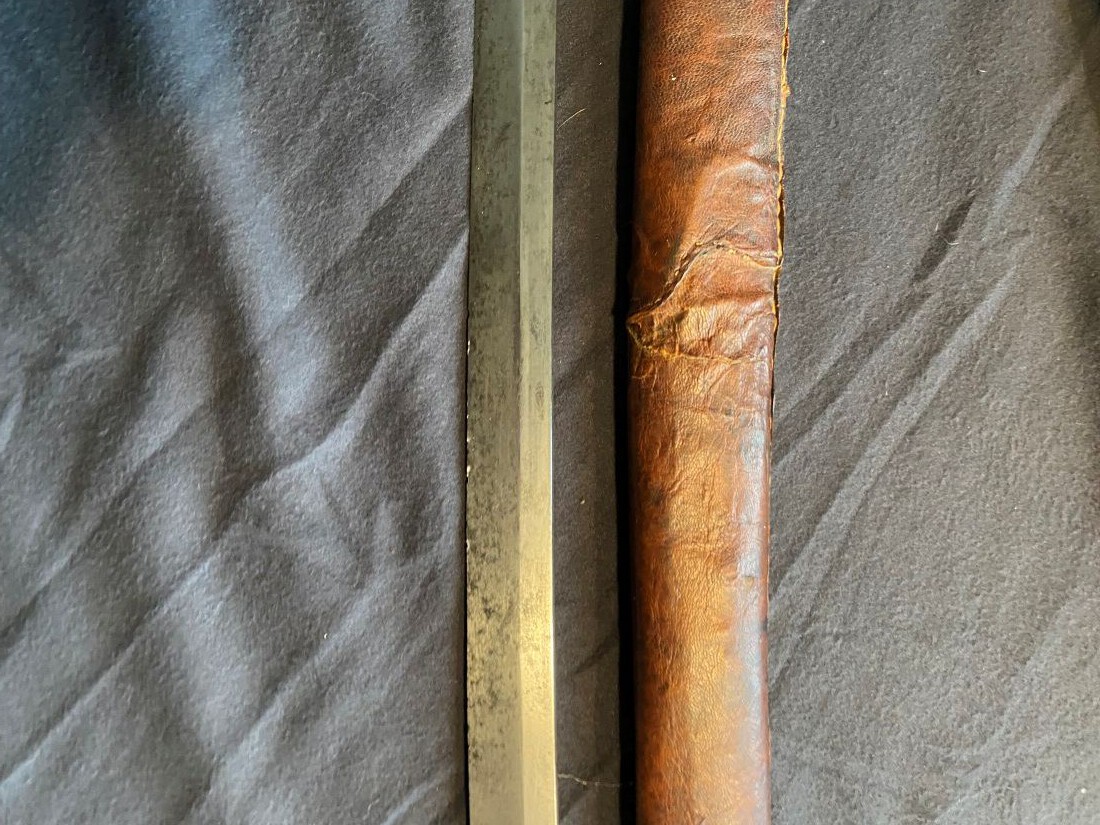
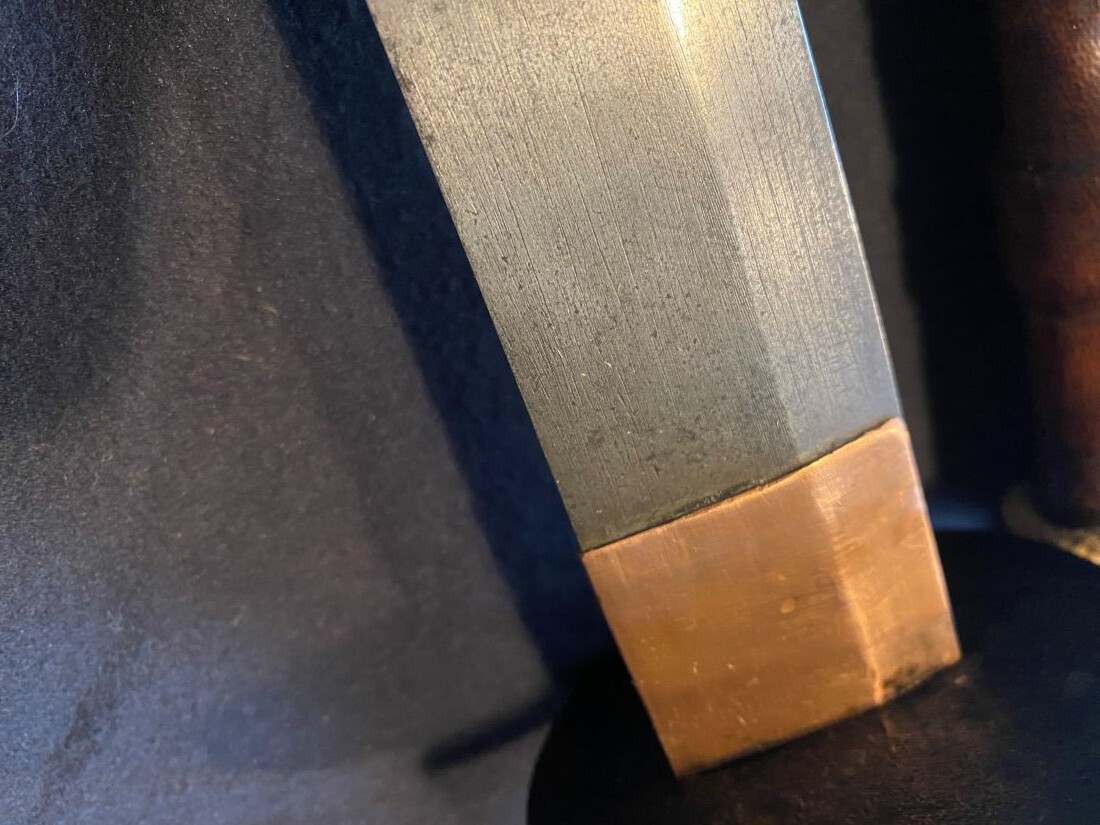
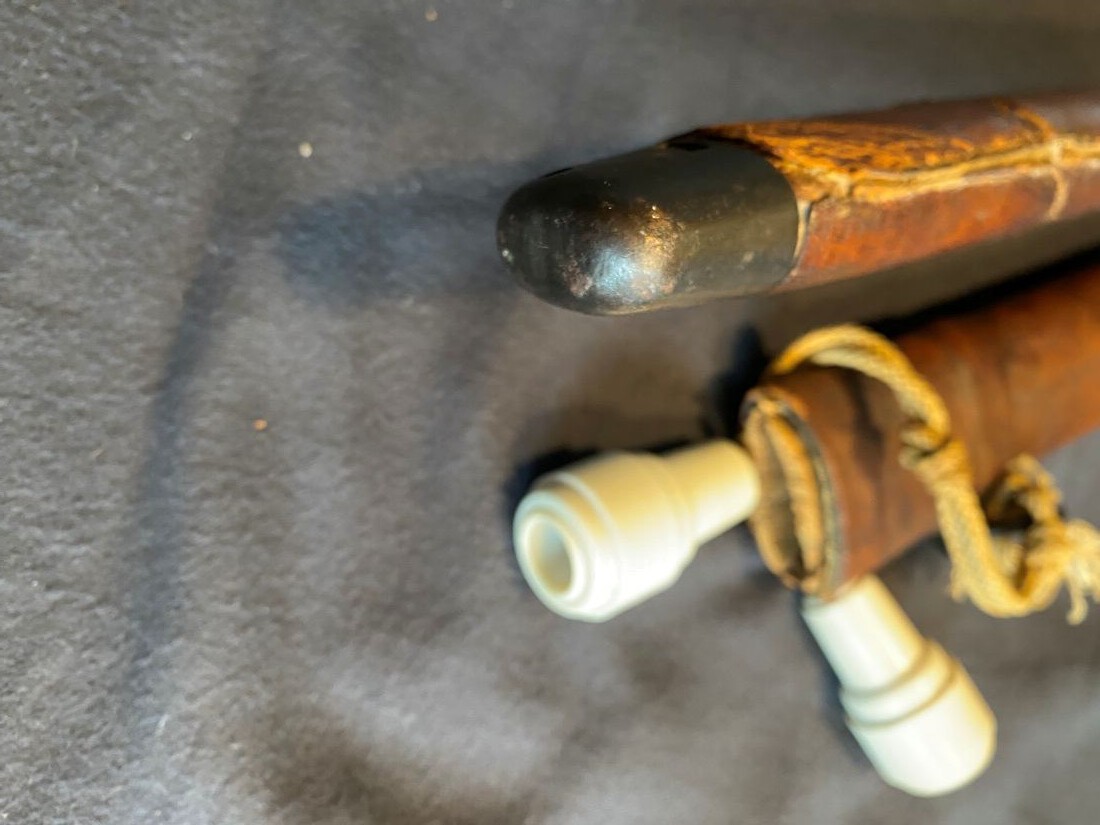
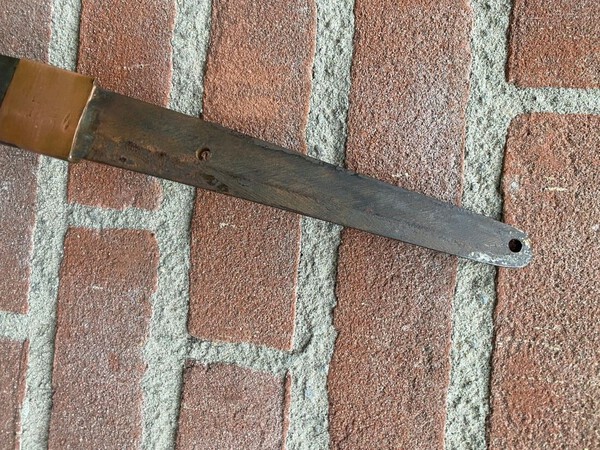
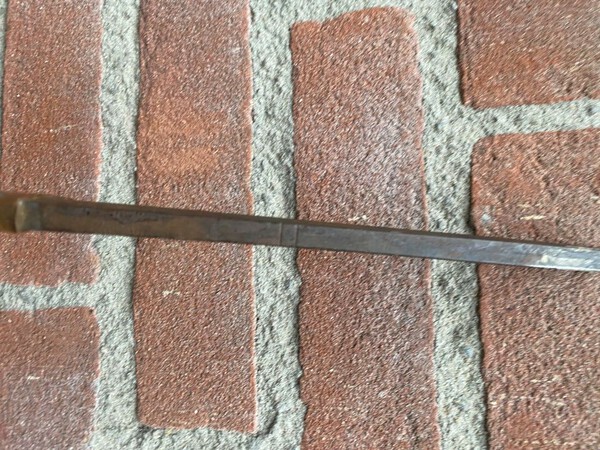
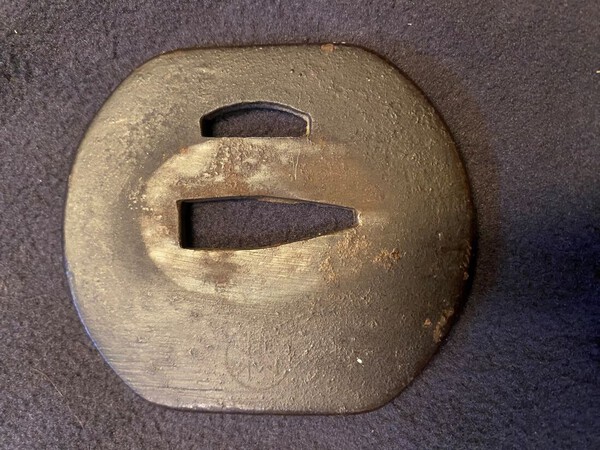
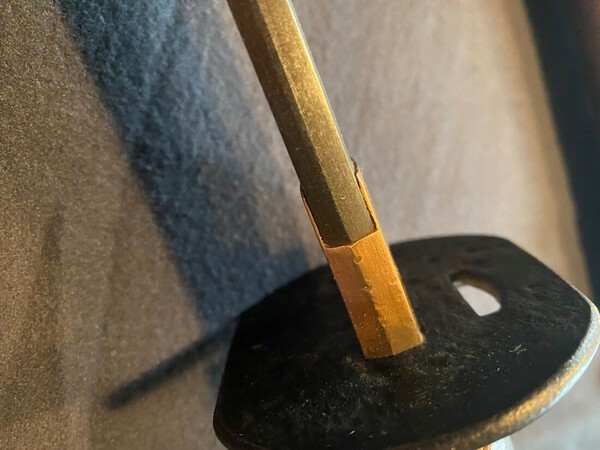
For the sake of science, I took it apart. That wasn't so easy, by the way. The tiny piece of leather I'd cut broke off immediately; it was bone dry. The peg was rock solid and split in half after a little persuasion on my part. After removing the peg, it turned out the tsuka wouldn't come loose because someone had poured glue into it at some point. So, unfortunately, some brute force was needed there as well. The tang isn't marked. It does have two parallel notches on the spine. The tsuba is very rough on the blade side and completely unfinished. The mark appears to be the same as the one Bruce has already shown, which is also on the tsuba of the other sword.


-
Thank you, Bruce, that's the exact same tsuba. So perhaps a last ditch sword after all.
-
That's exactly what I was planning to do: make a small cut to see what the tang look like. Thanks for your reply.
-
and a photo of the mark on his twin brother's tsuba.

-
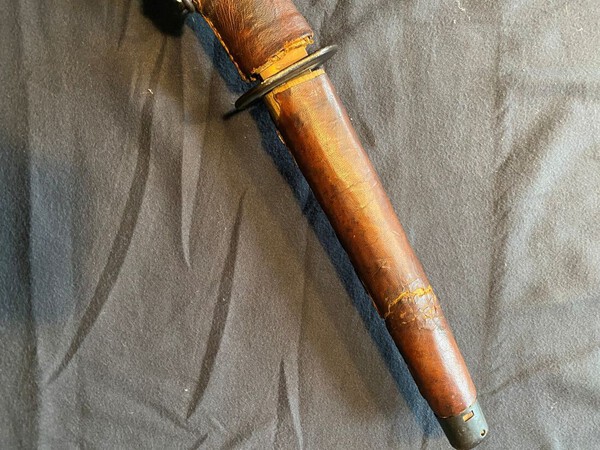
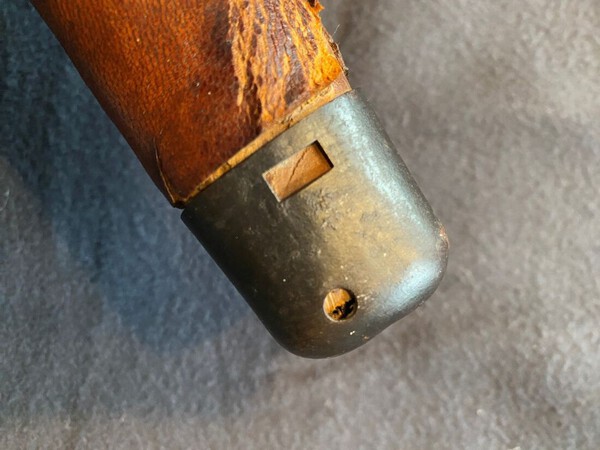
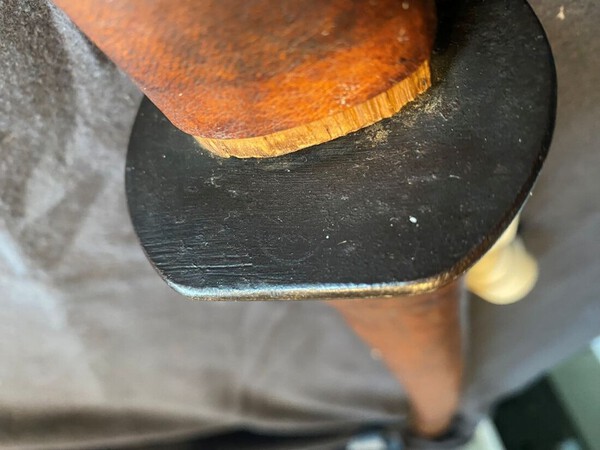
Just picked it up and took some pictures. I have no idea what to make of it except that it has a certain age. The tassel looks like a fantasy addition, made from drawstrings from a 1960s toilet. The blade looks very gray, unpolished. The tsuba is loose. A small round mark is faintly visible. The other example I found online (as I mentioned in a previous post, exactly the same) also has a round mark. I've taken the liberty of adding a photo of it.
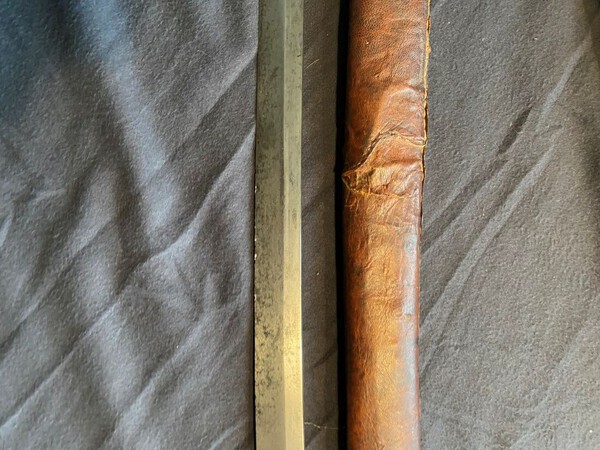
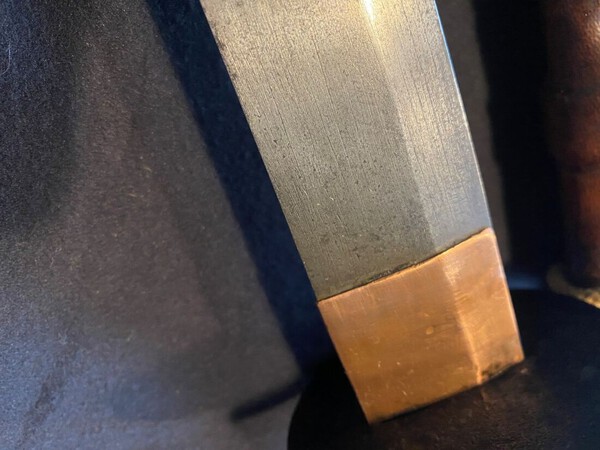
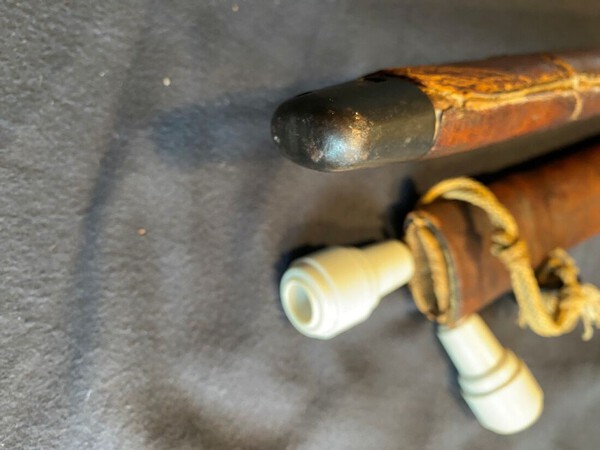
-
I'll post some good photos when I pick up the sword, probably tomorrow. Thanks for sharing your knowledge!
-
In the meantime, I've bought it (I just need to pick it up), so I think it's legal to display it here. After some searching online, I managed to find an exact copy. The tsuba and the marking on the tsuba are also the same. I don't think this is a field modification. Perhaps I bought a pig in a poke, in which case I'll just consider it a learning experience.
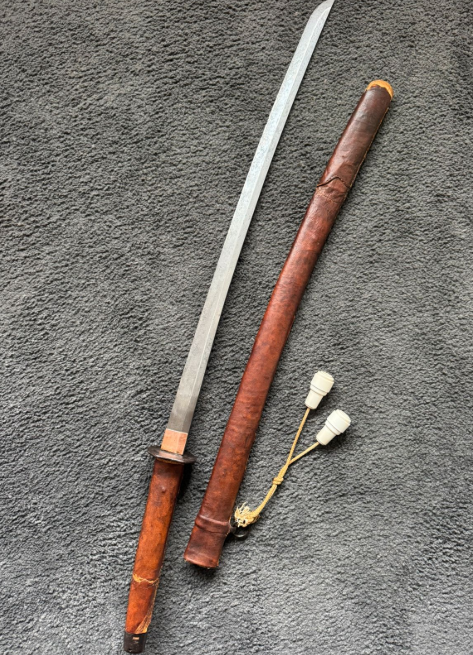
-
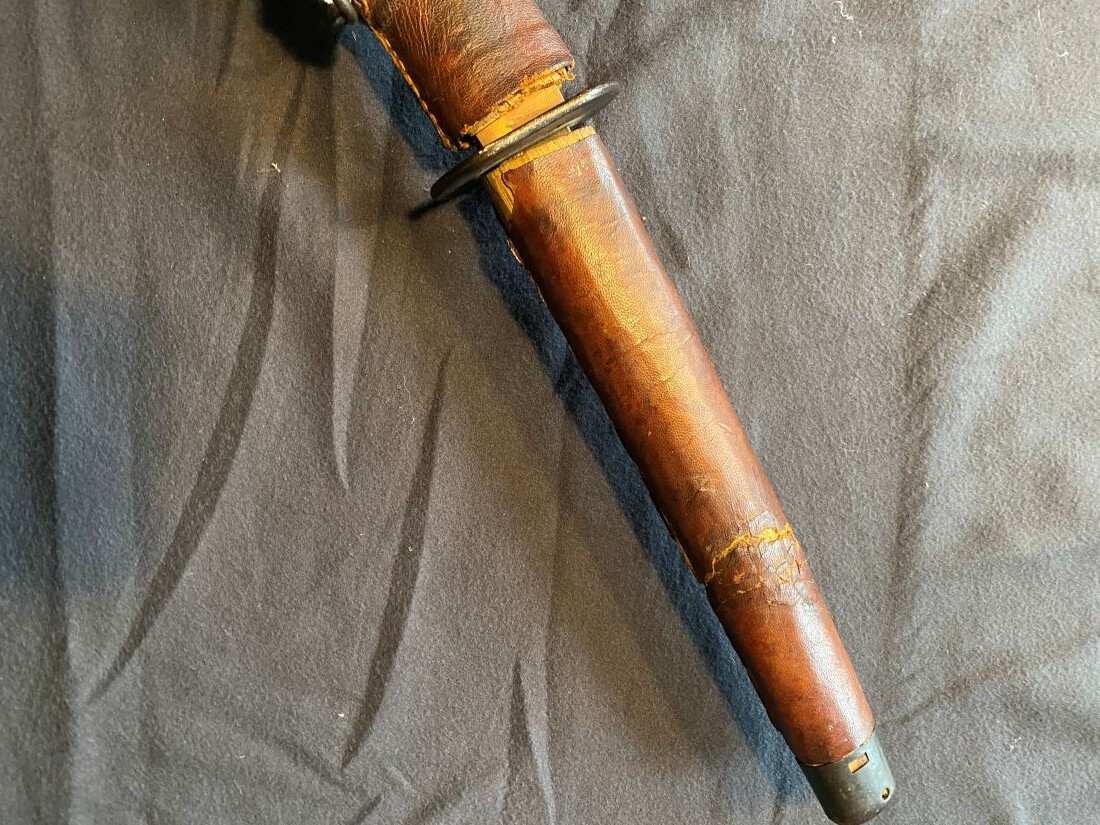
Someone is offering a "shin-gunto" with a leather-covered saya, but the tsuka is also completely covered in smooth brown leather (not a removable protective cover as you sometimes see). The tsuba is made of iron, simple, round with one side slightly flattened. A round stamp is faintly visible on the flattened side. Unfortunately, I can't make much of it. According to the seller, it's supposed to be late war. A search on the forum hasn't yielded anything yet. Does anyone know if these versions existed? Since I don't own the sword, I don't think it's appropriate to post the photos here.
-
Thanks again, I owe you one!
-
Thank you Bruce for your excellent explanation. My first book is on its way so I don't have to ask any more beginner questions here .
-
Hi Bruce, you wrote that this one might have been made initially for the civilian market. Could swords for the civilian market also have a Showa Arsenal mark, or could it have been stamped on later?
-
Your welcome
-
Thank you for your honest opinion! I don't know anything about it myself, so I value it very much.
-
Thanks Kiipu, I posted the question on the Tosogu forum.
-
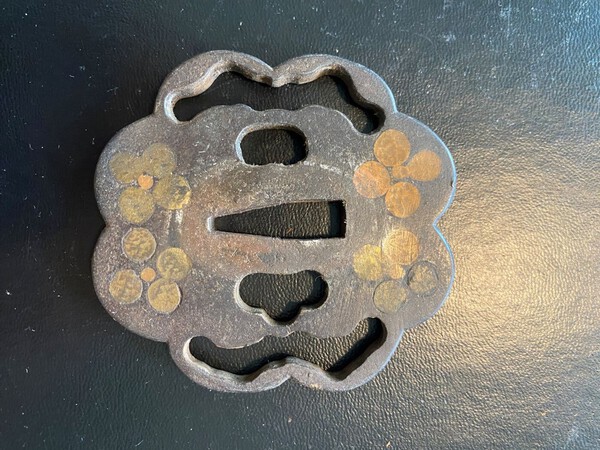
Hi, This morning I showed a Shin gunto type 98 with a different, non-military tsuba on the military swords forum. Since I don't know anything about tsuba, I'm asking here. Does anyone know what kind of tsuba this is and what period it's from? It is made of iron with copper or bronze inlays. Its dimensions are 78mm by 6mm. Thanks in advance!

-
Here is a better picture of the kabutogane.

-
Actually, it was the simple, undecorated kabuto-gane and fuchi combined with the leather-covered wooden saya. All of this made me think it was late war.
-
Thanks, Mecox! It's great that there's so much expertise here! I'm pleasantly surprised; I thought the blade, like the mount, would have been produced late in the war.
-
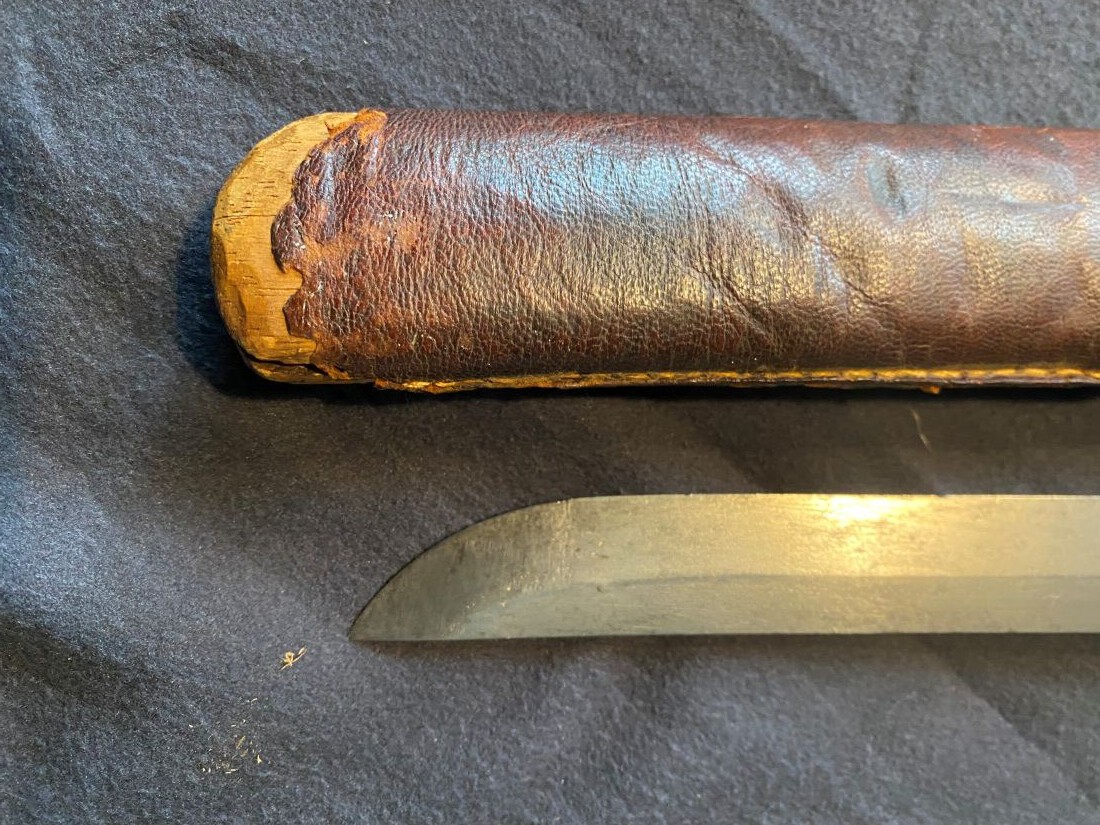
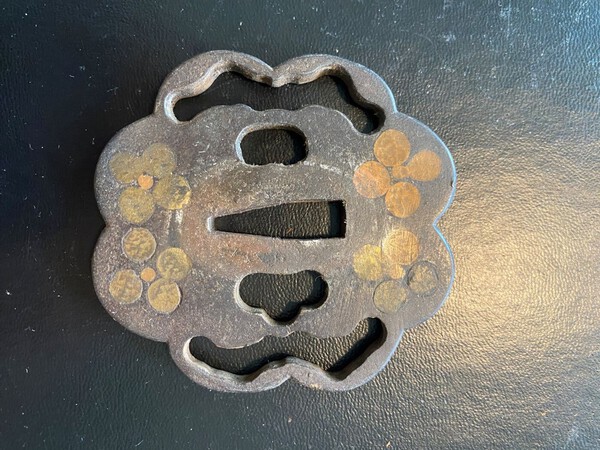
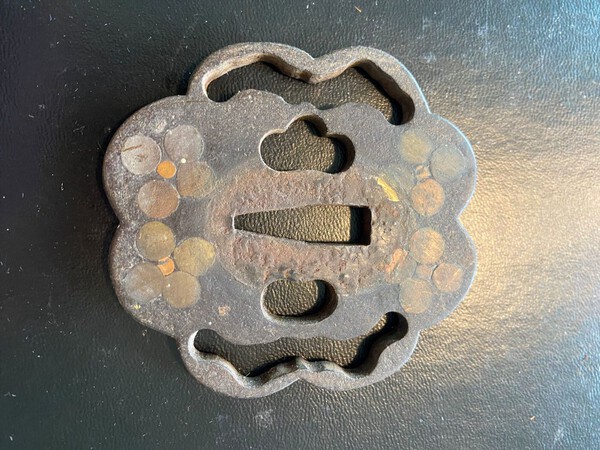
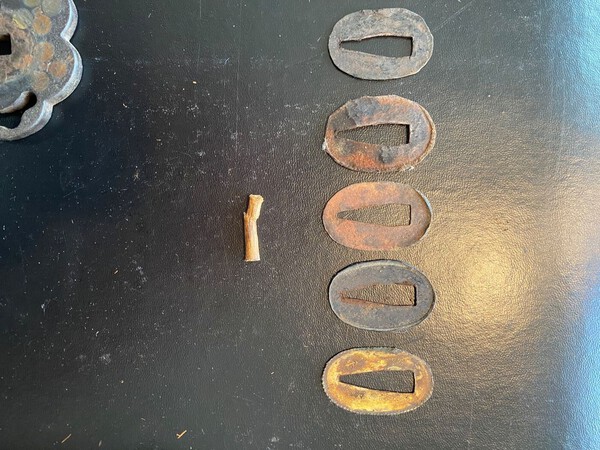
Hi, This arrived this morning after I won it at an antique auction. A late-war Shin gunto. The saya is made of wood and covered in leather. Unfortunately, the leather is in very poor condition and a large piece is missing. A pleasant surprise, however, is the tsuba. I had seen in the auction house photos that it had a different type of tsuba, but those photos didn't show any details. I suspect the tsuba is older than the sword, perhaps a family heirloom? Speaking of the sword itself, it was covered in a tough layer of old grease. Still quite sharp and in good condition. It only has one original seppa, the others are leather plates. The nakago has a showa mark. According to "leen" on this forum, the smith could have been Kanemichi, but I'd love to hear your opinion.



-
Thanks Jean, I learn something everyday!