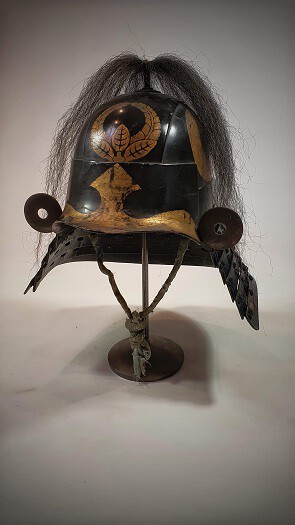
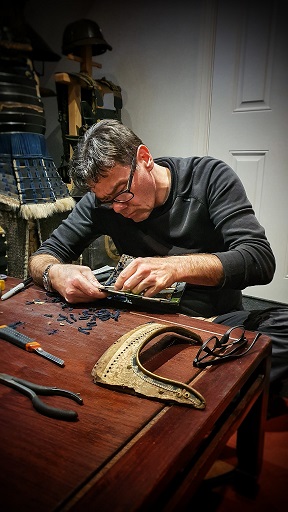
Allow me to interject the following three principles according to David Thatcher's Katchushi Koubou about preservation,restoration and replacement wich I myself abide to,using this Kabuto Dave recently did,as an example of the first step any restorer should take.
Step 1) Preservation.
Conservation work includes cleaning,repairing and consolidation of Urushi laquer.
Step 2) Restoration.
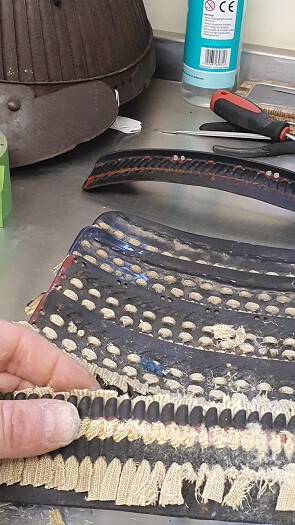
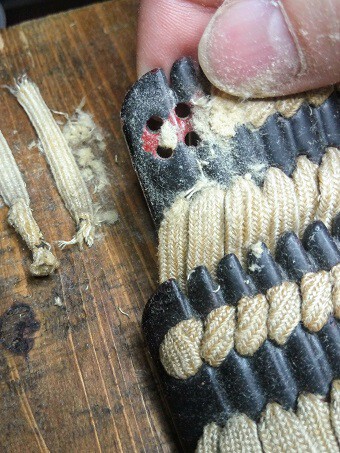
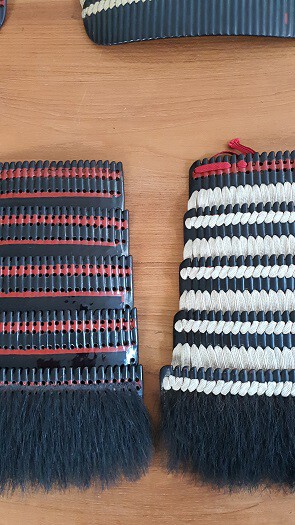
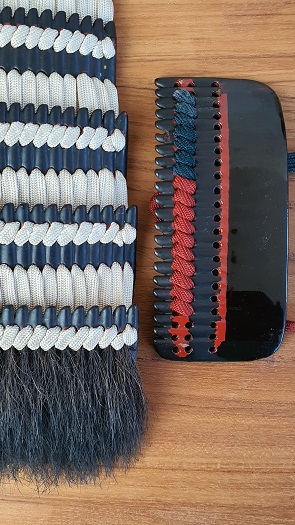
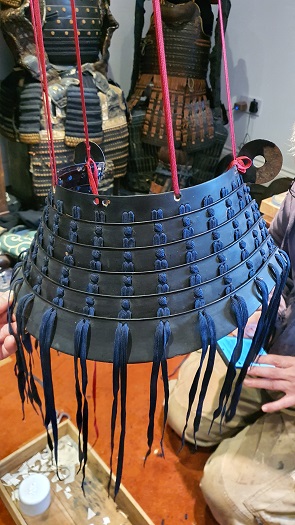
Where damage has exceeded any preservation process,thethe item can be restored,for example,rebuilding damaged Urushi,or in this case restoring the Odoshi.
Step 3) Replacement.
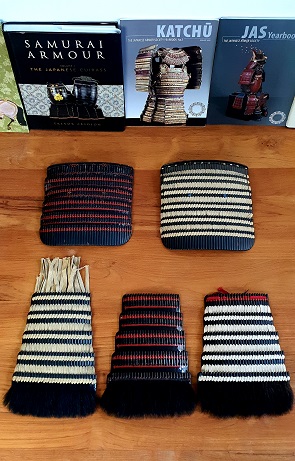
When an item has parts that are either missing or too severely damaged to repair,they can be replaced.This is the case with silk lacing and the silks used
on armoured sleeves and thigh guards.Often with helmets,the original liners and cords are missing.Vintage materials or authentically produced substitutes
can be sourced for missing components.
I think this Kabuto is an excellent example of history being preserved.With the Hachi having it's Urushi carefully consolidated to prevent further damage from
occuring,yet the Odoshi has been symphathetically replaced and aged to look in keeping. I totally agree with Dave's approach and adopt the same priniples.
I also believe we have to use restoration procedures that are correct and unique to Japan.Not the West.This again reflects the skill of the sword polisher,
or the Katchushi,it only becomes a form of vandalism when the untrained attempt such things.