fikira
-
Posts
10 -
Joined
-
Last visited
fikira's Achievements






-
Japanese Razor (Orihi) Which Era Or Japanese Sword Smith?
fikira replied to fikira's topic in Translation Assistance
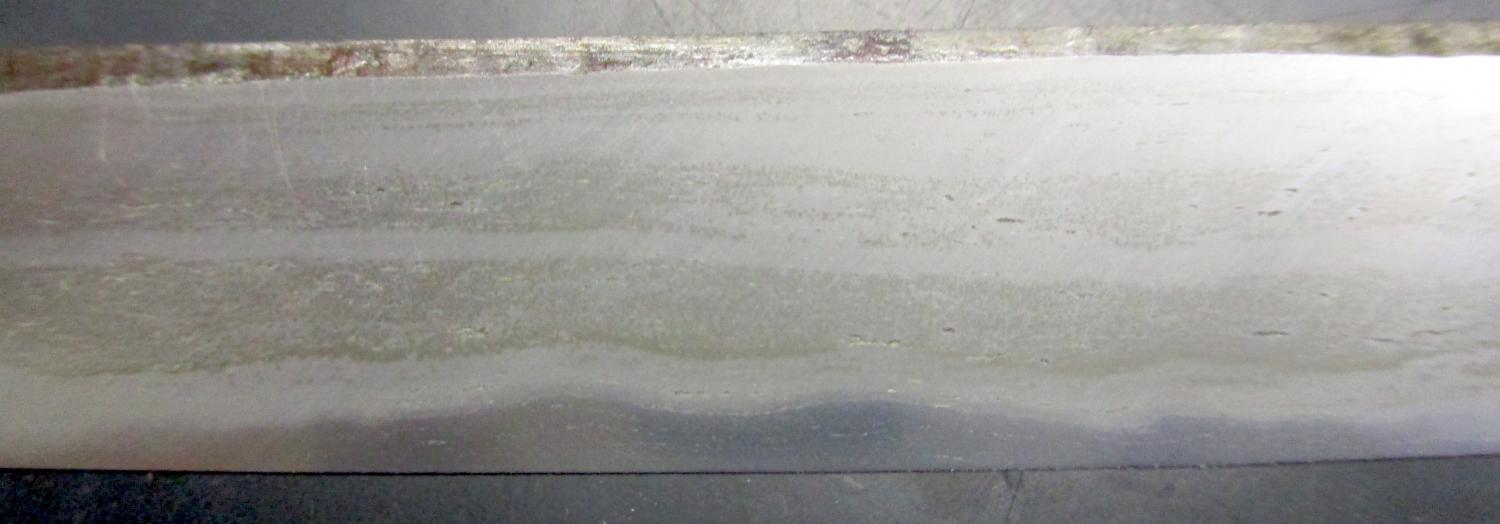
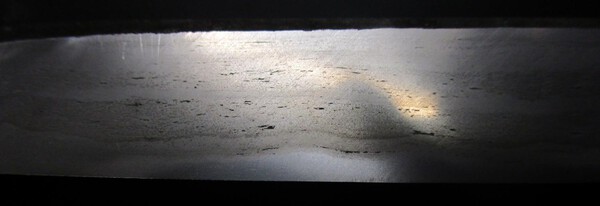
Could be, I still don't think that this is forged out of a sword piece, but I surely believe steel from sword, nails, ... could be recycled, and maybe into this Orihi, there is indeed no simple way of telling, but thank you for your reply and explanation! About the longitudinal lines, on the Ura side, I don't know, I see this often at other Orihi, even on some kamisori (especially the elder). They could be grind marks. I believe the Omote side is more interesting, further polishing (still not there where I wish it to be) reveals these multiple lines: Is this recognisable? Thanks!




-
Japanese Razor (Orihi) Which Era Or Japanese Sword Smith?
fikira replied to fikira's topic in Translation Assistance
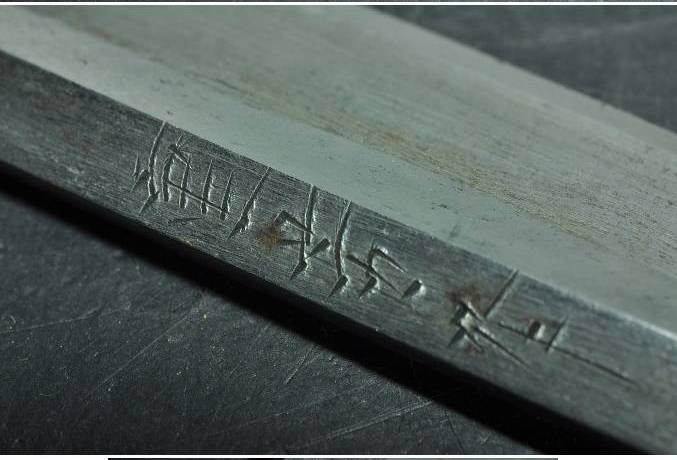
It depends, if there is a sword smith named Shigefusa who's mei 重芳 is we're there! Thank you very much for the interpretation and the effort! Really appreciate it! -
Japanese Razor (Orihi) Which Era Or Japanese Sword Smith?
fikira replied to fikira's topic in Translation Assistance
No problem, thank you anyway! It seems to be a difficult one... -
Japanese Razor (Orihi) Which Era Or Japanese Sword Smith?
fikira replied to fikira's topic in Translation Assistance
-
Japanese Razor (Orihi) Which Era Or Japanese Sword Smith?
fikira replied to fikira's topic in Translation Assistance
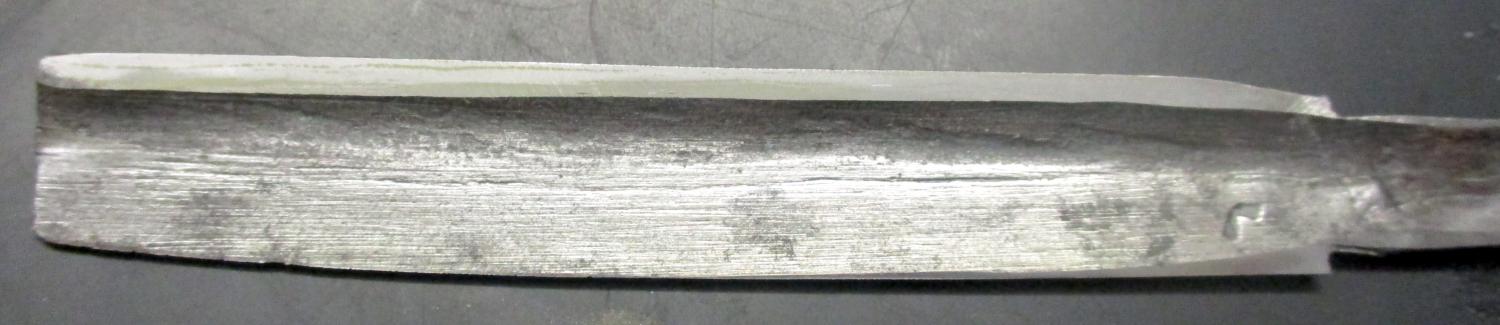
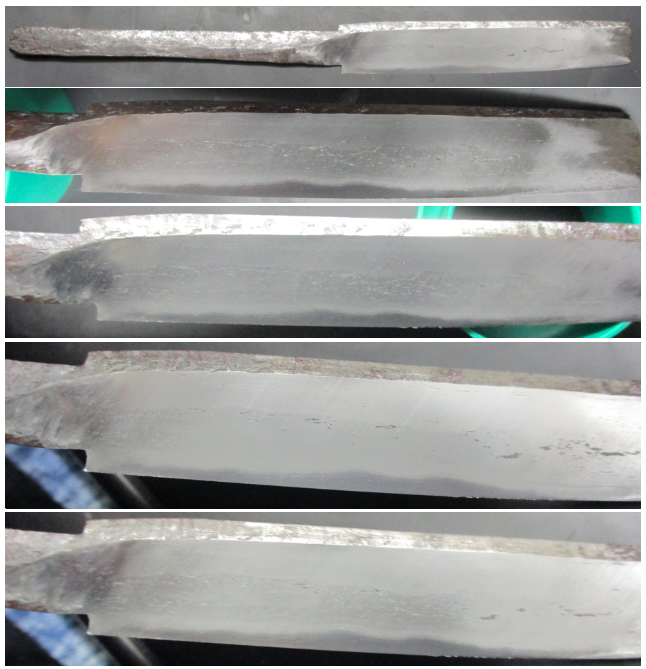
Hi, as I said: "with the machines we have today, it is possible." In modern times this could be done, I'm sure, but we're missing the point a bit. My thread is about my 2 Orihi, of which I'm pretty sure they are made before 1800's. In those days swords and Kamisori/Orihi were made of Tamahagane combined with their sideproducts or other steel. I don't know why we need to ask ourselves the question if these are razors made out of a sword piece. In that period they were used making these razors out of Tamahagane... (see my article, these Orihi were very typical and in use for a very long time). After some more work on the second Orihi, I've seen that the Hagane part also has different layers, this together with my previous made arguments are proof for me that these Orihi are made by a sword smith. Also, isn't it more obvious that a sword smith stamps his work when it is truly made by him, and not forged out of a sword piece? My questions are merely: is there knowledge about a sword smith with mei 重芳作, and is the does anyone recognise this way of forging? Thank you very much for your efforts! Really appreciate it! -
Japanese Razor (Orihi) Which Era Or Japanese Sword Smith?
fikira replied to fikira's topic in Translation Assistance
Hi, yes indeed, that is true, but made at present-ish time. They don't look like the original Orihi as well. Also, with the machines we have today, it is possible. But this Orihi, with its dark oxidation, very old rust, yasuri-me, mune-machi, and so on, is for me more then evidence enough to say that this isn't a presently made Orihi, it is a genuine ancient one. In those days, it seems a lot more difficult to make an Orihi out of a sword piece. It would have been easier just to forge a piece of Tamahagane onto another piece of softer steel. -
Japanese Razor (Orihi) Which Era Or Japanese Sword Smith?
fikira replied to fikira's topic in Translation Assistance
Great! Thank you very much Jean! -
Japanese Razor (Orihi) Which Era Or Japanese Sword Smith?
fikira replied to fikira's topic in Translation Assistance
By the way, my signature wasn't showing, not because of me I'm afraid... -
Japanese Razor (Orihi) Which Era Or Japanese Sword Smith?
fikira replied to fikira's topic in Translation Assistance
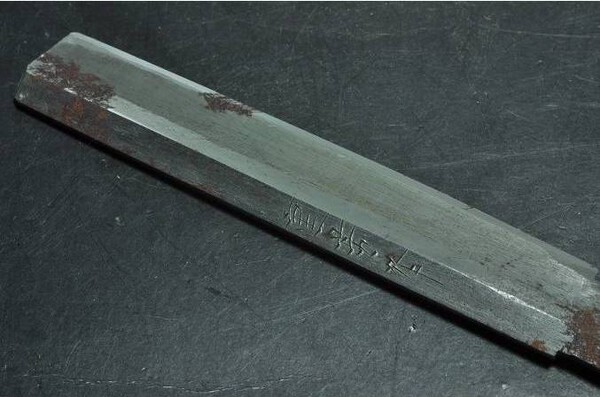
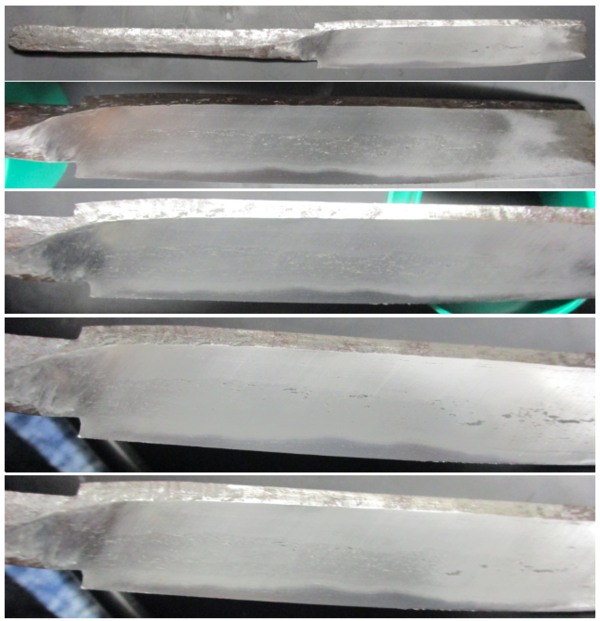
Thank you for your responses! So, for the first one, it is confirmed to probably be 重芳作 Shigeyoshi. Anyone knows who he is, and when this Orihi could be made? The second one is trickier indeed... The shape is definitely typical for the old Japanese kamisori - Orihi, I've made an article of them: https://historyrazors.wordpress.com/2016/05/28/history-of-orihi-type-kamisori/ (also see the Ukiyo-e) IMHO I don't think it could be a piece of sword, because of the tremendous effort to grind the sword piece into this very fine razor. I rather think it is forged that way, that said, it seems like a very simple mark, isn't it? Have you seen something like this before? Thank you very much! Regards, Jethro DK -
Hi, I have 2 Orihi of which I would like more information about its age and maker. I know these razors where made by Japanese sword smiths, hence my question here Does anyone knowns more about these? First is most probably signed [重芳作] Shigeyoshi (not sure though). I haven't found anything about him... Second one is (for me) a special one, not only the very simple stamp, but also the Omote side reveals more then one "layers". Normally, a piece of Tamahagane is forged onto a layer softer steel, giving a line at the edge between Hagane and Jigane. Here it appears to be more layers of steel, never seen anything like it Does anyone recognise these marks or way of forging? Thank you very much!