ColoradoDave
-
Posts
6 -
Joined
-
Last visited
Recent Profile Visitors
343 profile views
ColoradoDave's Achievements






-
Help With Identifying A Sword
ColoradoDave replied to ColoradoDave's topic in Military Swords of Japan
It can still be put back together the way it was before, less only the heavy oxidation. I thought it would be irresponsible, though, to keep it around, or even give away knowing it is dangerously defective. I keep imagining a kid smacking it against something and half the blade goes flying into his friend. Aren't Nihonto supposed to be destroyed if a fatal flaw is discovered ? I apologize for taking up so much bandwidth for an off topic subject. -
Help With Identifying A Sword
ColoradoDave replied to ColoradoDave's topic in Military Swords of Japan
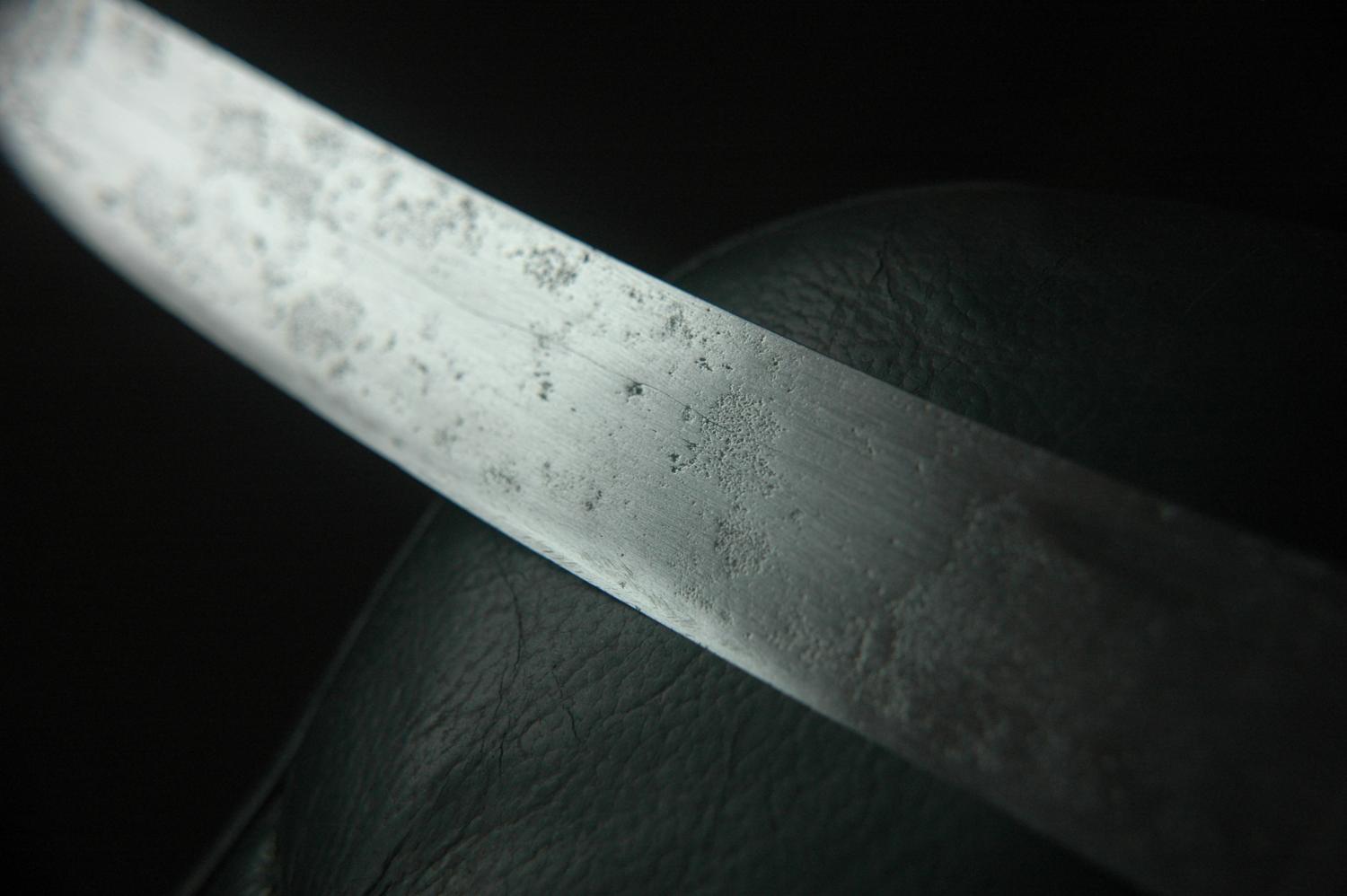
I'm afraid the story has a sad ending. When I removed the heaviest of rust from the blade it revealed a crack fracture. Something had struck the blade hard enough to radiate the crack about 3" in either direction up and down the blade from approx. the end of the blood groove to the back edge about 1/2" from the tip. So, between the damage to the brass guard, the sword having been taken apart in the past, damaged and hobbled back together, and the crack in the blade, I can't think of any use for the sword. I'm glad I didn't sell it and could never count on it not to break completely if ever used. I'll have to destroy it.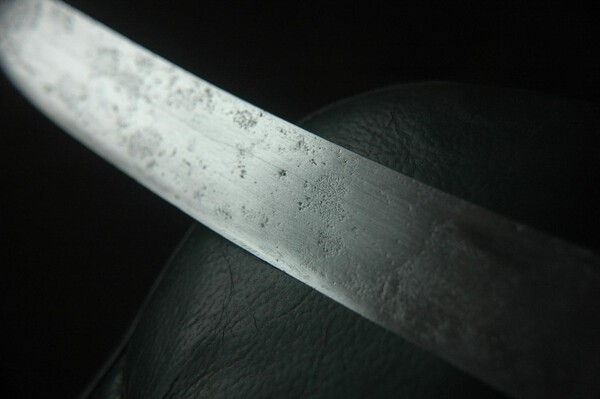
-
Help With Identifying A Sword
ColoradoDave replied to ColoradoDave's topic in Military Swords of Japan
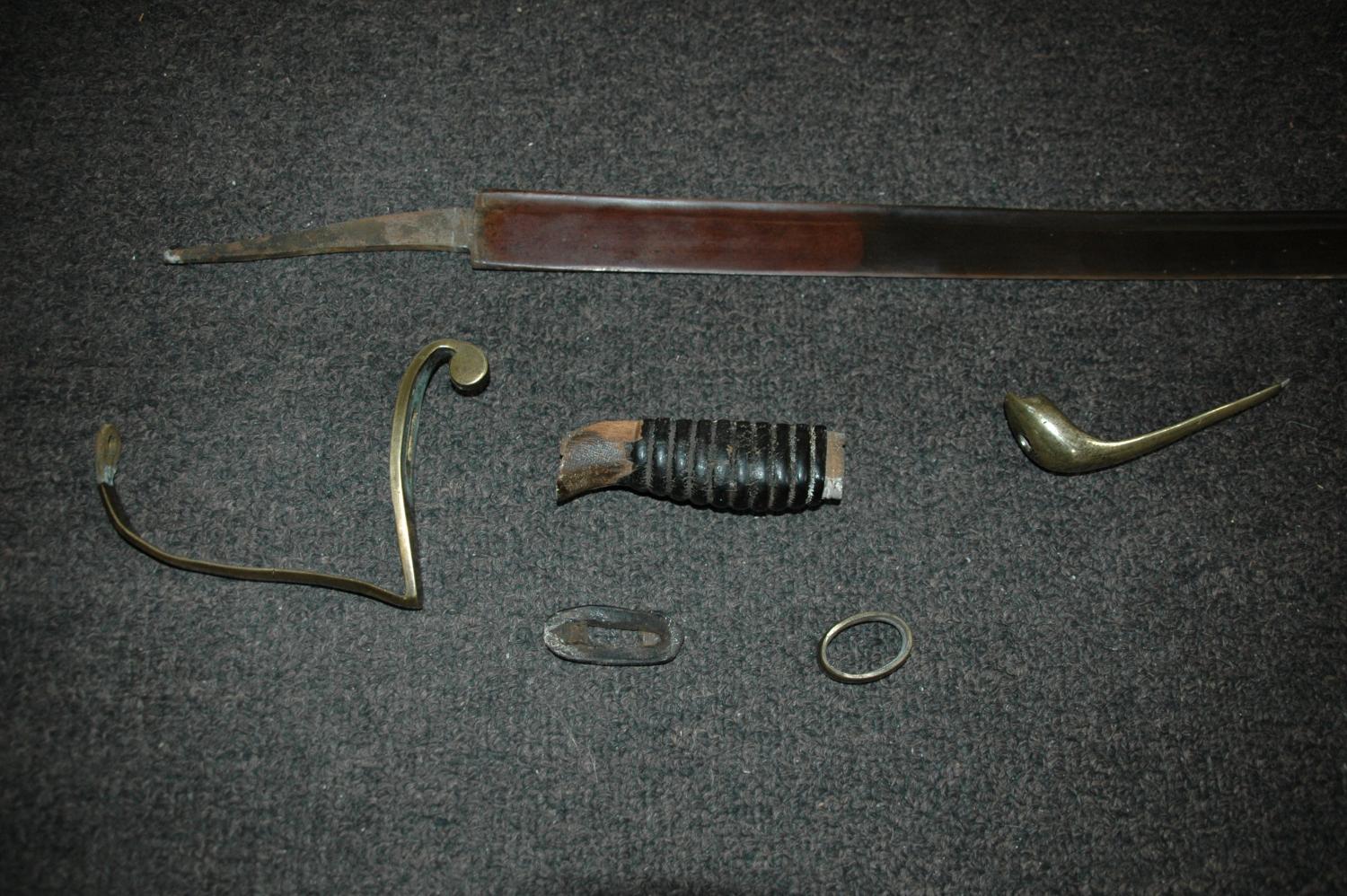
It came apart very easily. There was a piece of wood wedged inside to apparently keep it from falling apart due to the peen being gone. No markings still.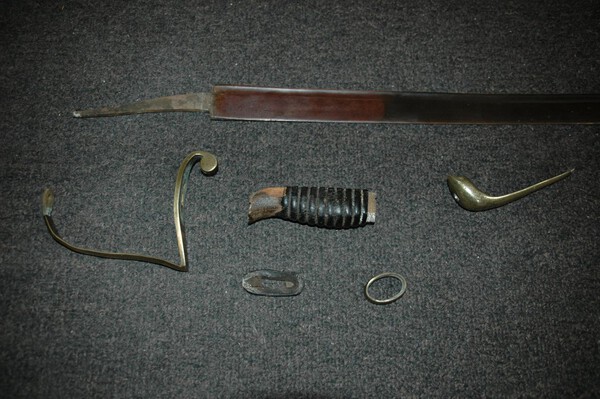
-
Help With Identifying A Sword
ColoradoDave replied to ColoradoDave's topic in Military Swords of Japan
I inquired again about dis-assembly. The answer was to dremel the steel ' pin part ' down to get the handle and other pieces off the blade, then build the pin material back up at the rear of the blade to be able to once again protrude back through the hole in the pieces and get peened down to fasten the whole thing tight. I think the leather gasket on the front served as a sort of spring that gets compressed while peening to help maintain tightness. Right now, since the peened part is gone, it is totally loose as well as all the other parts. I can't imagine a collector wanting it ' as is '. I may try restoring it somewhat to at least have a working sword and keeping it. Remove the handle and pieces, Straighten the Brass while heating, polish the blade, then removing 1/16" or so off the handle so the rear of the blade protrudes through enough to peen tight again, then re-wrap the handle. I believe I can take it apart easily the way it is by lightly prying the brass up and over the stub of the pin without any further metal removal. -
Help With Identifying A Sword
ColoradoDave replied to ColoradoDave's topic in Military Swords of Japan
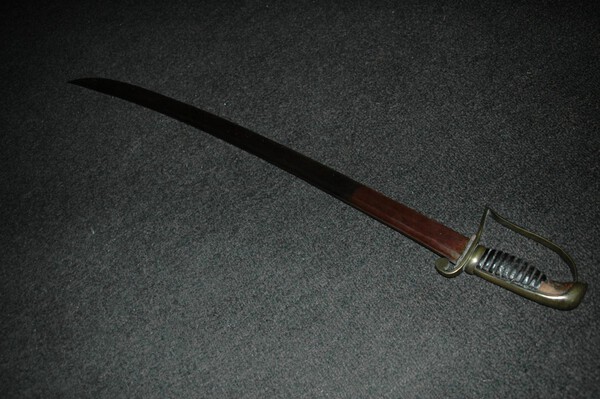
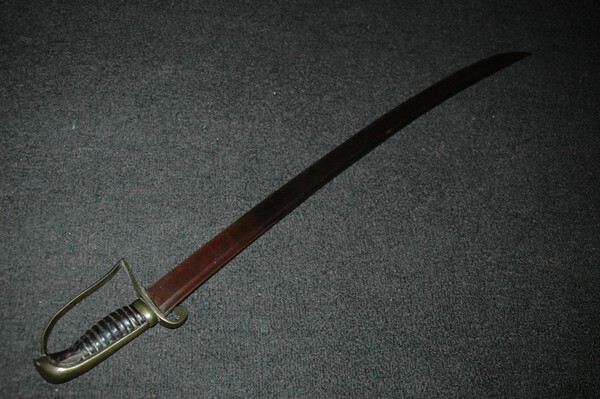
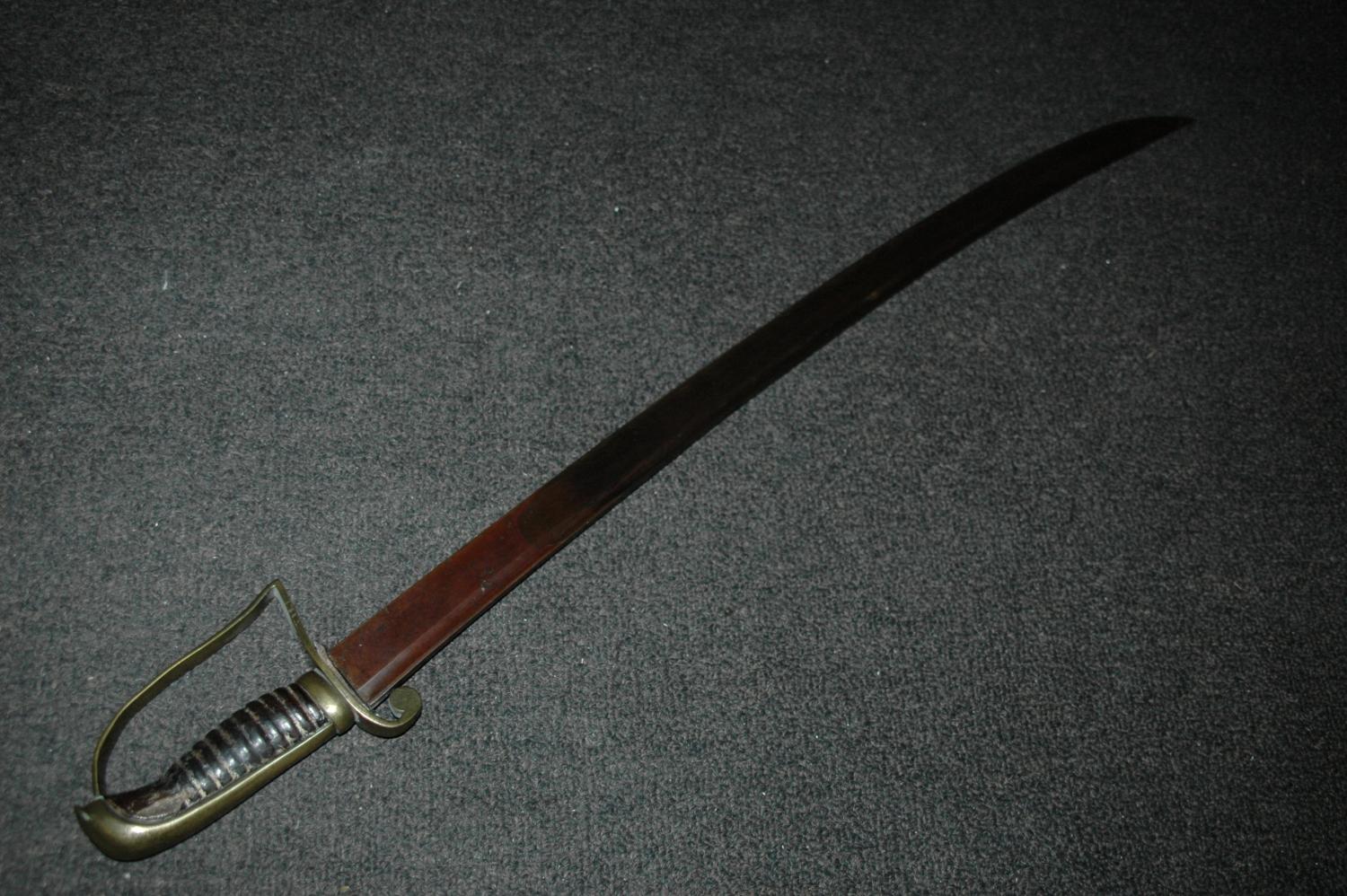
That last link looks a lot like it. The blade shape is right and I think on this one, both the hand protector and the finial are bent in towards the center.The curve of the finial takes an abruptly sharper bend at one spot and the handle has several spots where the curve is either flattened, or sharper indicating it was smashed inwards. If they were bent back outwards, they would look like the sword in the link. The butt end looks the same too with the peg and the roof-like overhang above the hand guard. I searched carefully and there are no markings at all. The only other things I noticed is that there is an old leather disk pressed in around the blade into the front of the hand guard where a brass habaki would be on a Japanese NCO sword. Like a gasket between the hand guard and the blade. I can see that the rear of the blade stops at that point for the distance to the bottom of the blood groove then that line continues into the handle. This one looks like it too, but there is no leather disk : https://isellswords.com/2016/06/01/1800-british-hangercutlass/ Mine is also exactly 27" long blade and 31 1/2 total; as well. I sent him an Email to try and find out more. Thanks everyone for the expert assistance. I had been stumbling around this site learning more about a NCO sword I have and saw some of the Japanese Officers Swords and saw a semblance of this older sword in them so thought I would ask. Apparently all short swords have the semblance of a finial, ringed grips, hand guard, etc. Edit : Reply to Email : this type of sabre seems exclusively Canadian, as they are found nearly entirely here. Nobody knows what they are exactly, but they seem to be from the early 1800. So, likely Circa War of 1812.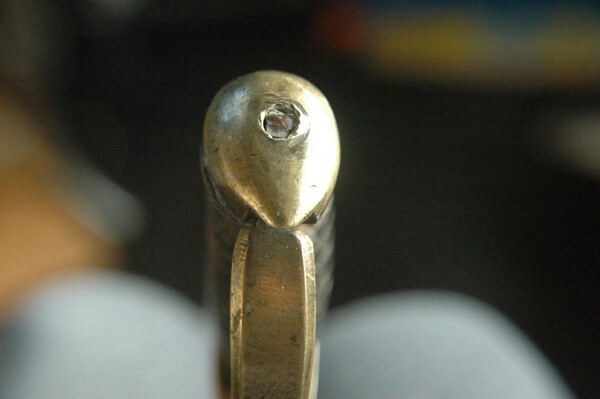
-
I've been husbanding this sword for years for a friend who is unlikely to ever return. If I sell it, I owe him half if he ever claims. It looks Japanese. Feels like a solid, forged blade. Original polish under the patina. Oddly crooked if looked at length-wise. But I'm drawing blanks on the ID. Maybe not looking hard enough. It has a good feel to it, though. Very solid and good balance. It is definitely a real sword. Not wanting to go blazing in and try to take it apart, I notice the blade is attached to the handle more than anything. The rest of the pieces seem to be attached. I see no markings whatsoever externally. Should I take it apart to see if there are any markings there ? How do I do that ?