Kaptain_Klink
-
Posts
7 -
Joined
-
Last visited
Kaptain_Klink's Achievements






-
I was told it was in a house fire a few years ago. Though it was protected from the flames, it was exposed to water or so the story goes. I figured, like the other items I got it with that someone tried cleaning them up. I know from a few other things I collect that patina is important. It's a shame that it was removed but what can you do sometimes. Thank you for your incites. Ryan M
-
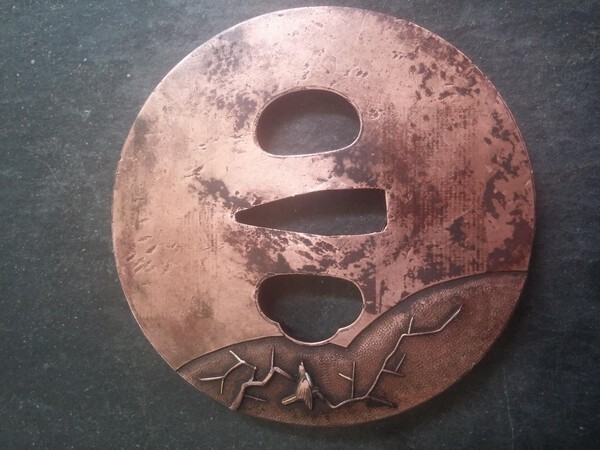
Hello again, I posted here a few days ago about a katana and tsuba I happened to get my hands on. The incredible members of this forum were so helpful and I truly appreciate everyone time and expertise. I come to you today with a extra tsuba that came with the sword. There is no mei to base my own research on and the world of tsuba's is a extensive one that I'm just entering. I am finding it hard to find this style and quality. I believe it to be bronze as it has no magnetic pull. It contains both copper, silver and gold inlays. The subject matter seems to be a boy or man catching ( front facing ) a bird ( back facing ). Most of the tsuba I see are iron for obvious reasons but how common were bronze tsuba? I figure this most of been made sometime in the Edo period as it is very artistic and doesn't seem meant for combat. What tsuba schools or makers would of done this kind of work without signing it? Are unsigned tsuba common? I see a lot of unsigned iron tsuba but I can understand those not being signed as they were meant for combat, not fashion. I have a million questions but I am mostly looking for a general opinion on this tsuba. I am hoping to pick up some books on the subject of tsubas at the sword show in Chicago this coming week but I'm finding it hard to wait that long. The subject of nihonto art is consuming me and my pocket book is trembling at this prospect. So, I come to you to quench my thirst for knowledge and approval. All opinions and references welcomed, good or bad. Sorry about the orientation of the photo. I am still finding out how to flip the photos. My internal photo editing software's flipping of the photo doesn't seem to register on the forums upload. Thank you all for your time, Ryan M

-
I have included better photos. I felt the same about the tsuba when I first picked it up. Apparently it had a good coating of rust that was removed by soaking it in a high quality gun oil over night. It was then rubbed with a rough wool cloth. You can see some of the pitting and rust better in these photos. One thing for sure in that it is those are gold inlays. The man holding the bird body is bronze. I was able to remove some of the black over the bronze by rubbing his face with my finger. I figure the sharpness of the mei strike marks were softened by the removal of rust. I have worked with other signed cast iron objects that have had a similar thing happen. Rust is a nasty thing! I would love to clean it further but I don't want to remove anymore detail. Is cleaning rust off a tsuba considered a bad thing? Ryan M


-
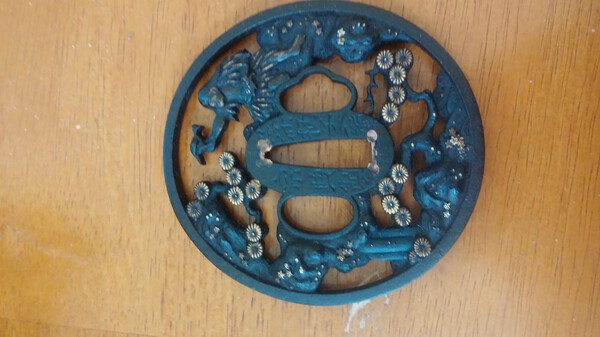
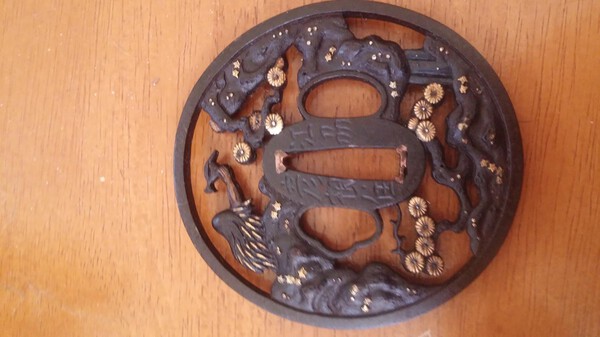
Here is the the blades tsuba. I yet to attempt to translate it because of the madness the swords mei caused me. Ryan M
-
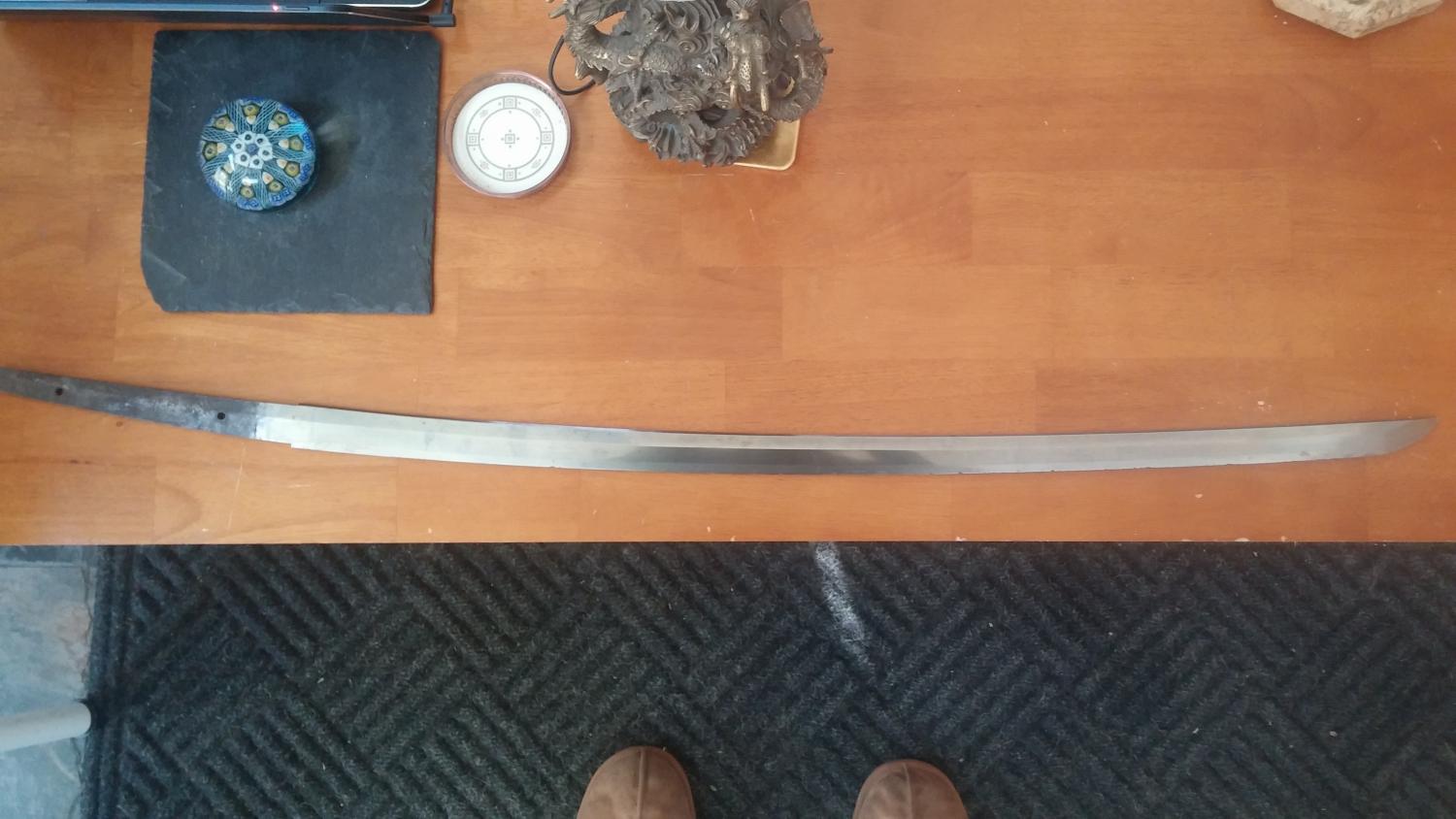
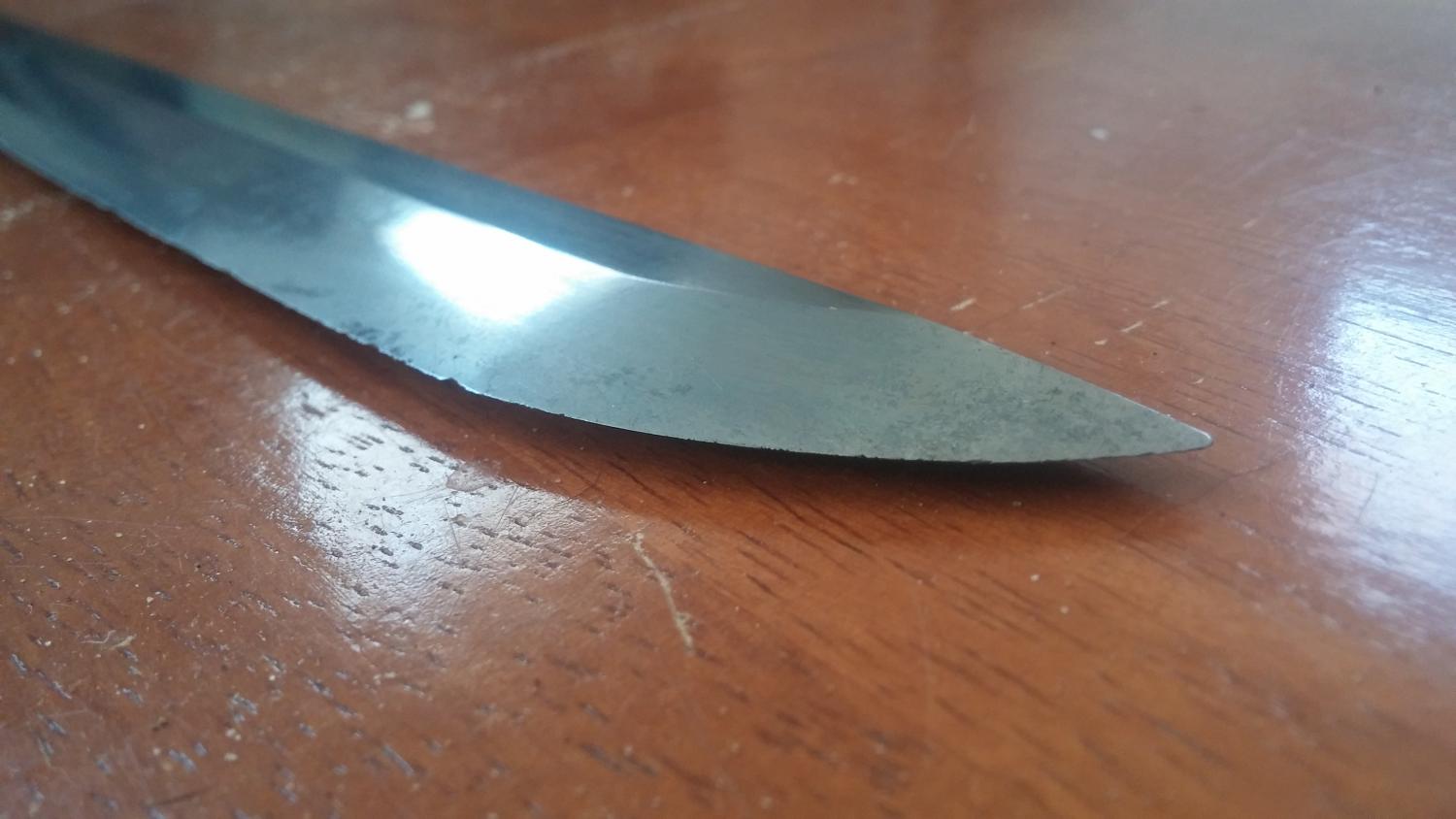
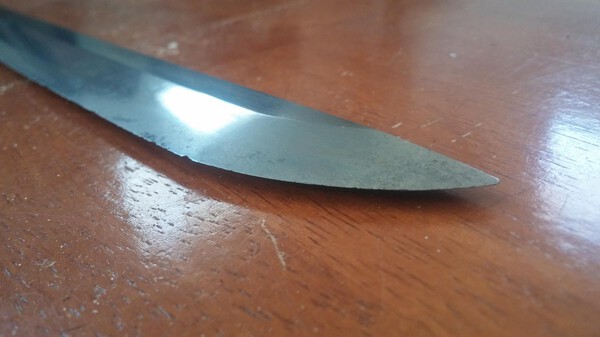
Hey guys. Once again, thank you for all of this info. This is great community that I hope I can contribute to in the future. What serendipity that there is a sword show in Chicago this weekend. I'll definitely make my way out there. Along with this sword I have 4 tsuba and a few menuki that I would love to know more about. As promised here are photo's of the whole blade. The blade in rough shape but is still sharp as a razor. It's straight as an arrow and well balanced. There's some surface discoloration in places but no pits or rust. Unfortunately the tsuka and scabbard are in really rough shape. Someone didn't take very good care of it before I got my hands on it but the menuki and handle/scabbard caps are there. Once again a million thanks, Ryan M



-
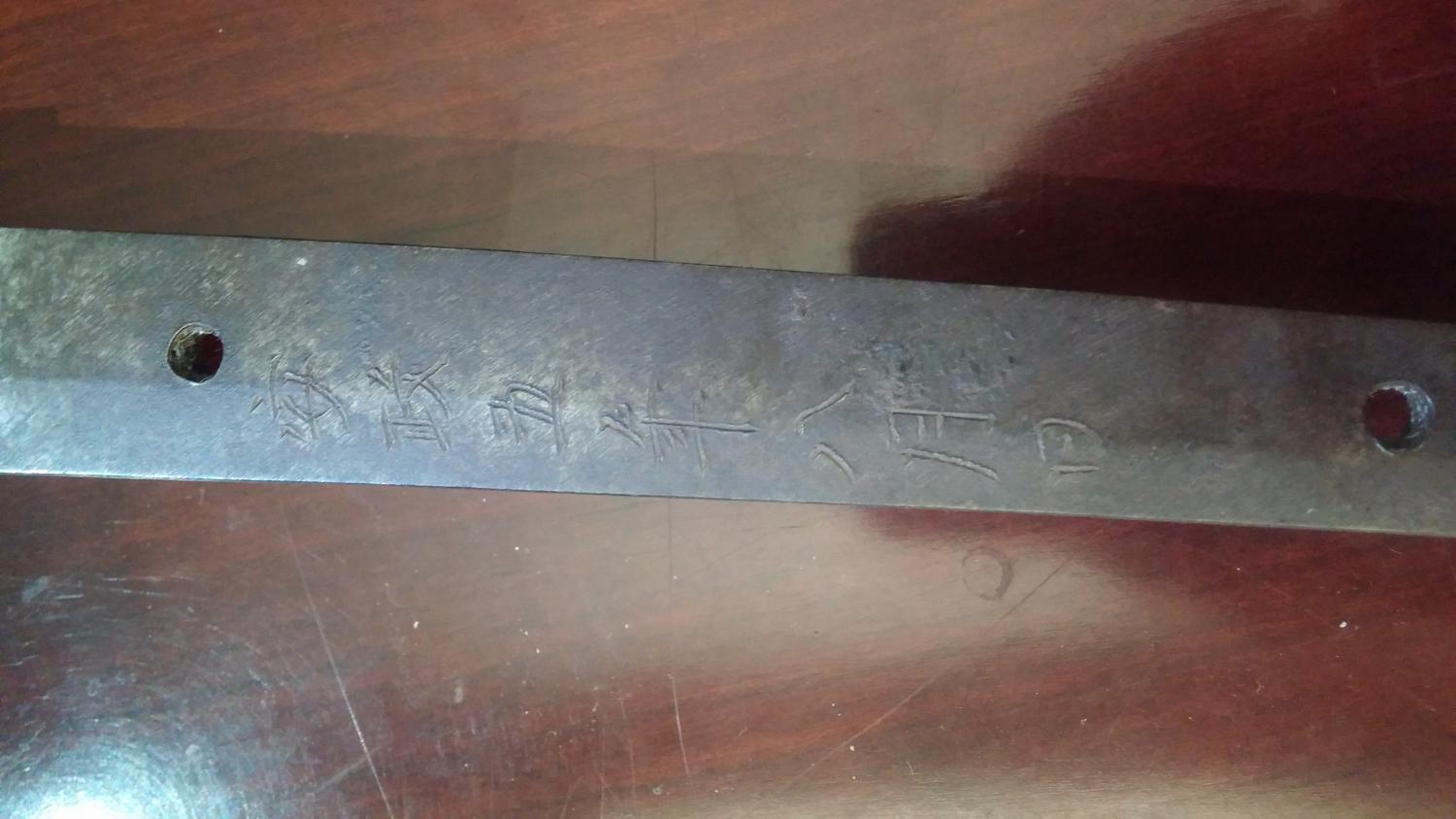
Wow. You guys work fast! I'll be able to sleep tonight without thinking of kanji. Thank you so much. I hope to one day be able to read mei as fast and accurate as you and return the favor to another novice. A few question for you two if you have the time. How did I do on the date of August 1859? What would be some good books to read on the subject of nihonto and mei? Good books on tsuba? Is there any good nihonto restorers or polisher in the midwest? Should It be polished? I will try and show some of the nicks on the blade edge in future photos. I want to thank you both for your time and knowledge. I will post some photo of the complete blade in a few hours. Ryan M
-
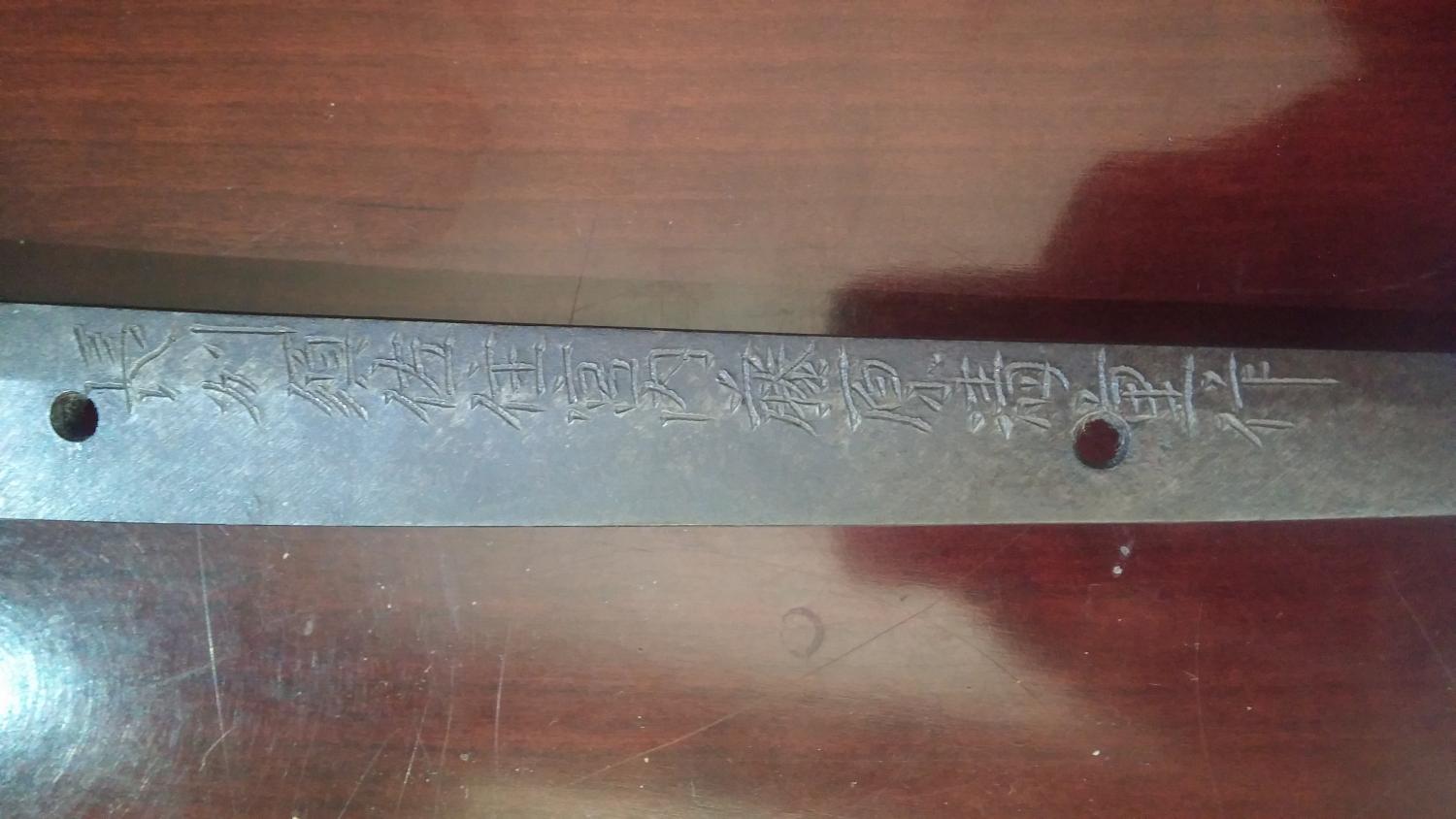
I would just like to start by thanking you for taking your time to look at this post. My name is Ryan M. I am a novice collector and lover of Japanese craftsmanship. I have mostly taken to collecting ojimi, netsuke and prints. If that hobby wasn't time consuming enough I happened to find a katana? in a friends shop that caught my eye. I've seen a lot of nihontos which haven't interested me much. This one somehow pulled me in. I've been driven mad over the last few days try to decipher and translate the mei. The kanji is so stylistic that I am having trouble finding character matches. I have come to this wonderful group humbly defeated to request your help. I hope what you maybe able to shed light on will help to educate me in understanding these incredible blades. Now onto the blade. It measures 38 inches from the tang to the point and 29 & 7/8th inches from the back notch to the point. The blade it self is about 1 inch wide. Unfortunately the blade is in rough shape. There is no rust or pits but the edge has many nicks ( some very large ). The beautiful cast iron signed tsuba that it came with had some rust but it cleaned up with a light touch of oil. Seeing this sword in a somewhat rough shape is what compelled me to buy it in hopes of restoring it to its former glory ( in well trained hands of course ). The photo attached to this post is what I assume is the makers mark. From what I could decipher the forth and fifth character refer to a resident of Sado? Character 8 & 9 is seem like Fujiwara Clan? The only mei similarity I could find for some of these marks was on swords belonged to the Kiyomaro school. The date marks I had a little more luck with. I figure the first two characters are Ansei? ( 1854 ). The following 2 character are year 5? The last 3 are 8th month day? So 1859 for the date? Sorry for the oriantation of the photos. I can't seem to figure out how to flip them. Thank you once again for your time and opinions, Ryan M