Ronin 47
-
Posts
152 -
Joined
-
Last visited
Ronin 47's Achievements






-
Thank you very much for that far superior translation Brano.
-
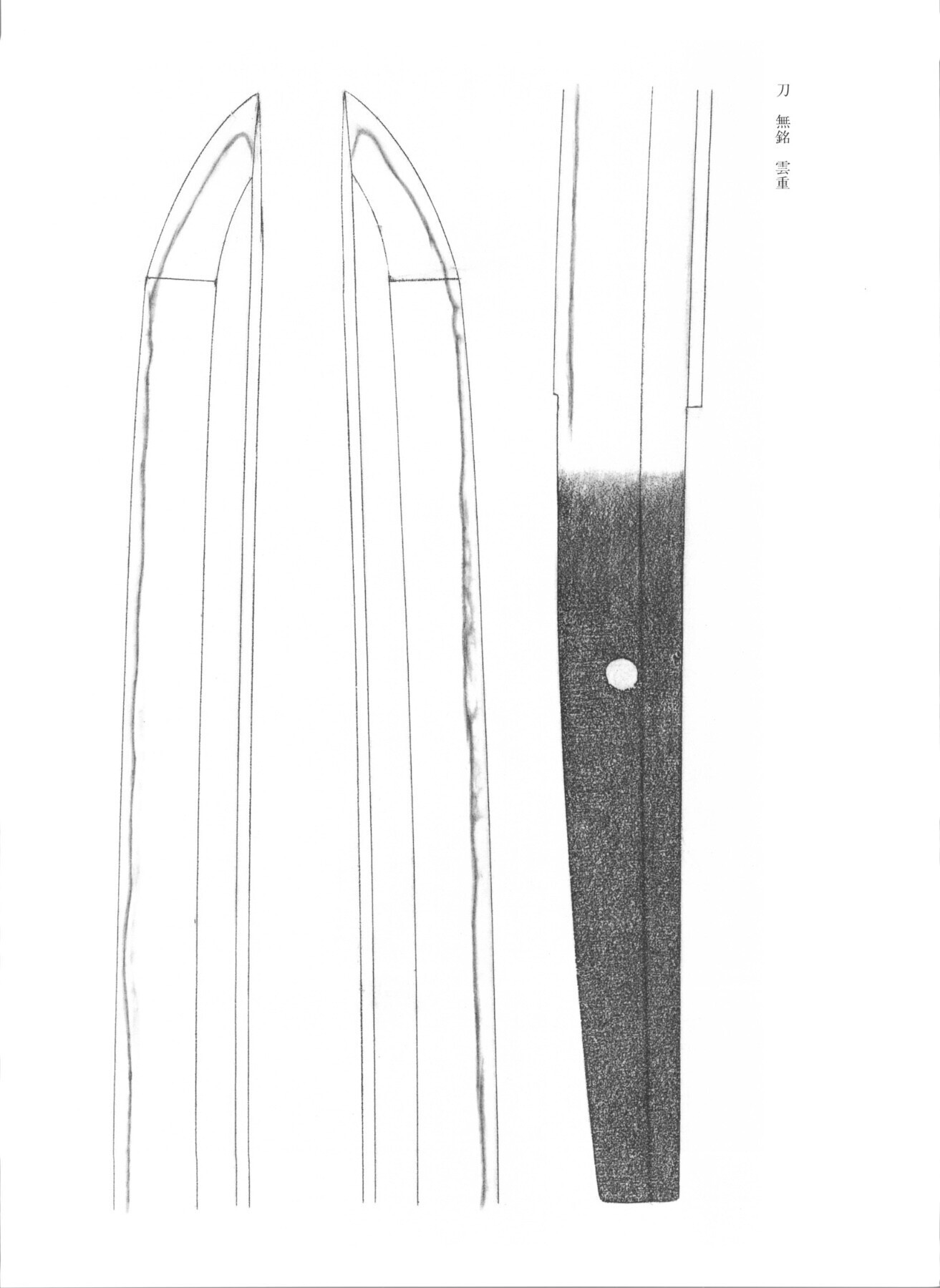
Well, The sword maketh the papers; the papers maketh not the sword. But yes, it is incredibly frustrating, as I have chased Sothebys for a few months - I have just decided to list as is for the moment. I am happy to detract the cost of getting the papers reissued for the new owner - but still hoping that my pressure campaign will have them turn up sooner or later. Yes Lewis, the work is without question mid-Nanbokucho and not 15th century as Sothebys cataloged it. It a beautiful and powerful work from the Embun (延文) -Joji(貞治) period or 1350-1360. One of the finer works I have had the pleasure of owning over the last couple years of collecting. It is textbook Unju, which is why the NBTHK gave it it directly to the smith in their description.
-
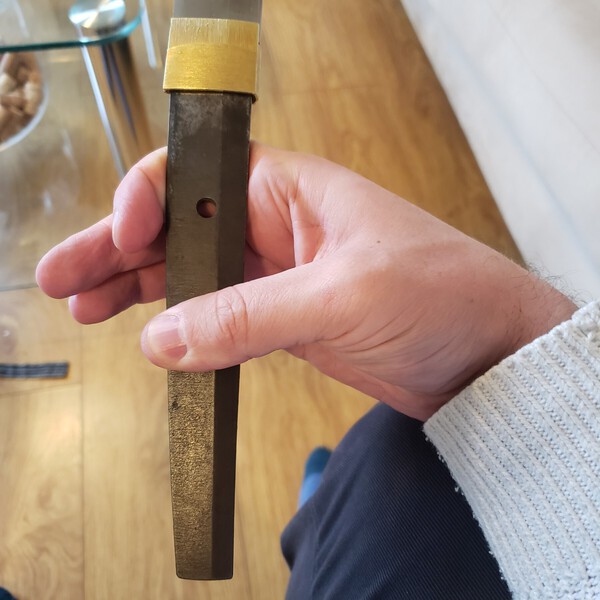
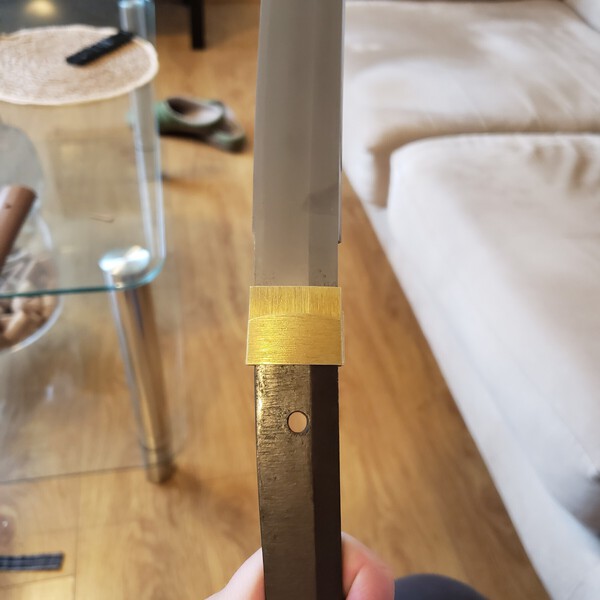
Nakago Pics
-
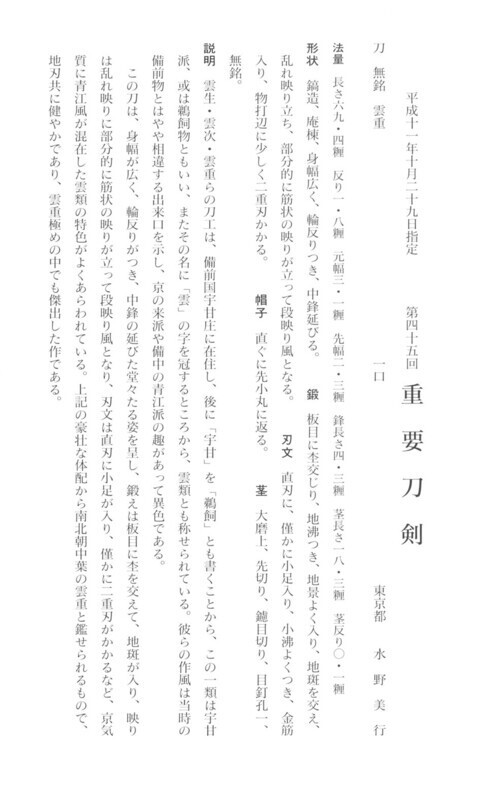
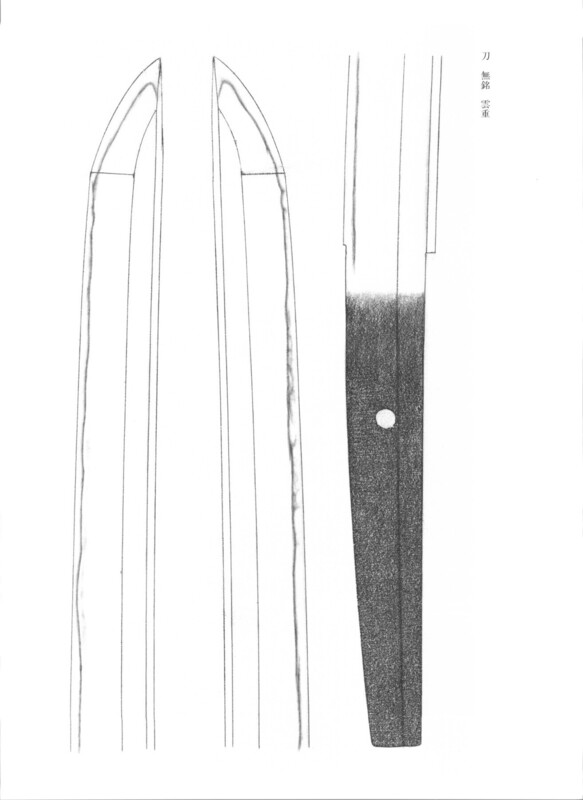
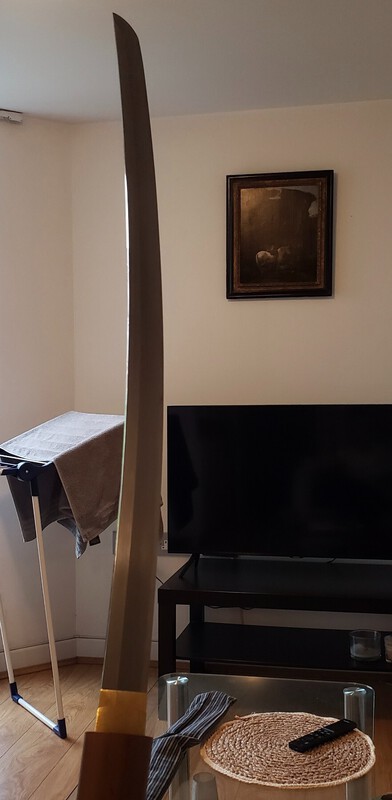
Type (Tachi, Katana, Wakizashi, Tanto, Naginata, Other): Katana Ubu, Suriage or O-Suriage: O-suriage Mei: (Mumei, Signature): mumei Papered or not and by whom?: NBTHK Juyo Token to Unju (雲重) Era/Age: Nambokucho – Embun (延文) -Joji(貞治) period or 1350-1360 Shirasaya, Koshirae or Bare Blade?: Shirasaya Nagasa/Blade Length: 69.3 cm., 27 3/8 in Hamon Type: A narrow suguha in ko-nie with small ashi Jihada: Itame-gokoro with some mokume-haba, a faint utsuri near the shinogi Flaws: None. Sword Location: UK Will ship to: Preferred is UK, EU or US, but open to discussion Payment Methods Accepted: Bank Transfer Price and Currency: £29,000.00 Full Description from the Juyo Token Zufu (AI Translated so some errors): Designated on October 29, 1999 Chapter 45 important sword Unsigned sword, Unju Tokyo Miyuki Mizuno Dimensions: Length 69 cm, Curve 1 cm, Base width 3.1 cm, Tip width 2.3 cm, Point length 4.3 cm, Tang length 18.3 cm, Tang curvature 1 cm The blade is shaped like a shinogi-zukuri, with an iori-mune, a wide blade, a ring-shaped curvature, and an extended medium-sized point. The grain is straight, with mixed figured patterns, a fine crystalline structure, well-defined patterns, and interspersed mottled patterns. The blade exhibits a turbulent reflection, with some areas showing streaky reflections, creating a stepped reflection effect. The blade has a straight edge with slight koashi (small feet), fine nie (small crystals), and kinsuji (golden lines). The blade has a slight double edge at the entry and striking edge. The tip immediately curves back to a small rounded shape. The tang has been significantly shortened, the tip has been cut, the file marks have been removed, and there is one peg hole. Unsigned. Explanation: Swordsmiths such as Unsho, Unji, and Unju resided in Ukai-sho, Bizen Province. Later, "Ukai" was also written as "Ukai," hence this group is called Ukai. They are also known as the Ukai school, and because their name includes the character for "cloud," they are also called the Unrui school. Their style differs somewhat from the Bizen ware of the time, and is unique in that it has the characteristics of the Rai school of Kyoto and the Aoe school of Bitchu. This sword exhibits a magnificent form with a wide blade, a rounded curvature, and an extended medium-sized point. The forging shows a wood-grain pattern mixed with a wood-grain pattern, with a mottled surface. The reflection is a turbulent reflection with some streaky reflections, giving it a stepped reflection appearance. The hamon (temper line) is straight with small feet and a slight double edge, clearly showing the characteristics of the Unryu style, a blend of Kyoto and Aoe styles. Based on the above-mentioned magnificent form, it is considered to be an Unju sword from the mid-Nanbokucho period. Both the blade and the blade itself are in excellent condition, making this a truly outstanding piece even among those attributed to Unju. Provenance & other info: This sword was at Sotheby’s a few years back (see link below). Unfortunately, the original Juyo papers were misplaced by the auction house (who also did not get the description right!). I am chasing them for these, and if they turn up will be sent to the respective buyer, but attached here is the work from the Juyo Token Zufu for reference. https://www.sothebys.com/en/buy/auction/2019/fine-Japanese-art/a-tachi-attributed-to-unju-muromachi-period-15th If further info or pictures needed PM me - my skills here are bit sub-par I am afraid Thanks for looking! Sincerely, Austin R
.thumb.jpeg.860d84bc6b5a8075207ce58a5eb30160.jpeg)
.thumb.jpeg.0e3049942ba38a39d69cdc0aeb527eb1.jpeg)
.thumb.jpeg.19387a8abb4fc96b0fa0a5a0f9346657.jpeg)
-
Mods ok to close this, as a board member was kind enough to send me the required info. Thanks again to them for being so helpful!
- 1 reply
-
- 1
-

-
Hello, Would anyone who has a copy of the 1999 Juyo Token Zufu be able to send me a scan or good picture of it for the following Juyo Token Unju (雲重) tachi that was sold at Sothebys a few years back, here is the link: https://www.sothebys.com/en/buy/auction/2019/fine-Japanese-art/a-tachi-attributed-to-unju-muromachi-period-15th I think this would be in Session 45. Thank you very much in advance to anyone wouldn't mind sending me a scan or picture of this. Sincerely, Austin
-
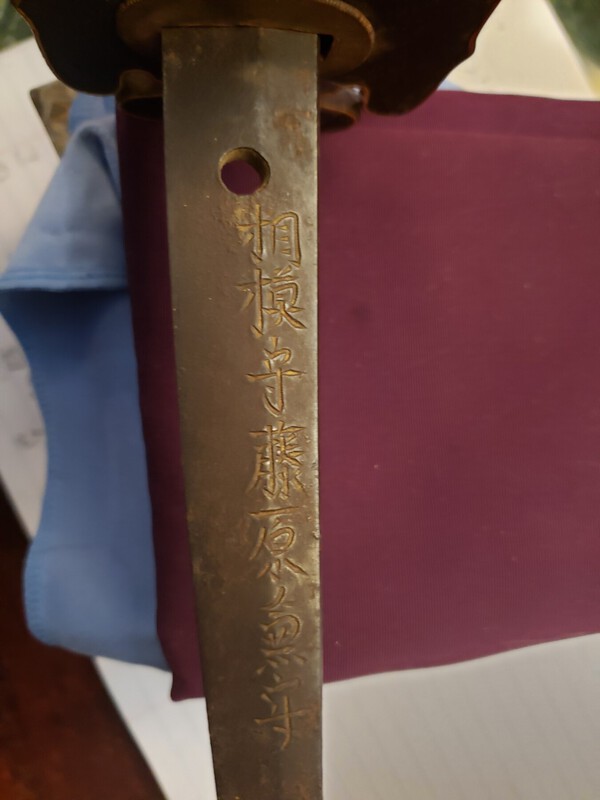
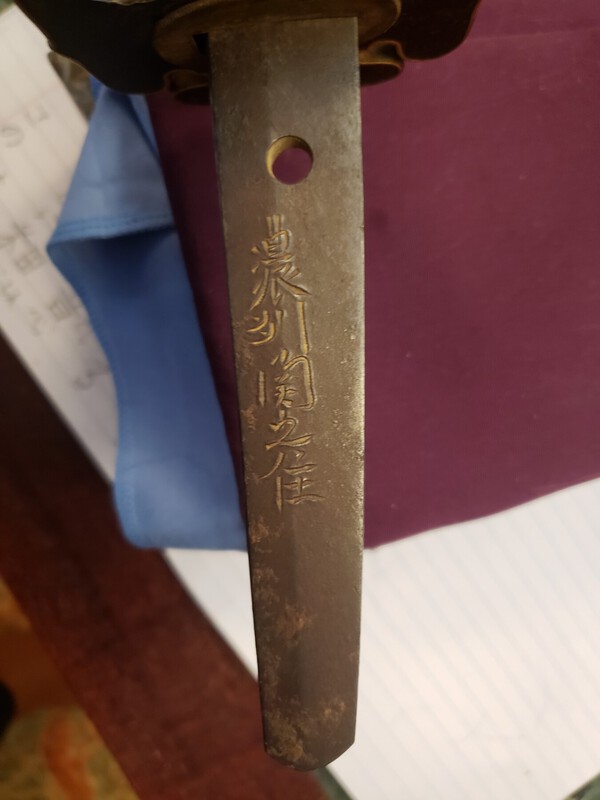
I have a wakazashi by Kaneyasu. Will try to get some more photos up at some point if and when I find some time.
-
I saw this same sword for auction, and thought about bidding on it for a split second. Needless to say I didn't even bother, for some of the reasons already stated. Lots of red flags on this one, the saki-zori being but one. While I certainly hope I am wrong, for the buyers sake, in my opinion there is too much money, and not a lot of scholarship on Live-Auctioneers. I don't know how many times I saw something on there, went to look at it in person, and ran away as fast I could, only to see someone pay insane prices based on sloppy photography. Happened again today. Was looking at a possible late 19th century Chinese vase made into a lamp. It had two huge cracks in it, and the more I looked at it the more suspicious I became. Even if real, the price payed was way over market. Coming back to this sword, 19k+22.5% buyers premium+tax+restoration...yeah, I think you get the point. Sincerely, Austin R
-
Your taking a 20th century example from a post-industrialized Western nation and trying to apply it to a pre-industrial 12th century society in East Asia. Personally, I find the Spitfire to be a very aesthetically pleasing piece of machinery, but I am not going to put it, or insert your favorite classic car here, on the same level as a Rembrandt. Once again, these clear categorical boundaries between art and utilization did not exist in these societies when the Japanese sword was in use as both a weapon, and as, yes, a whimsical study piece ( or more accurately as a means of reaching a transcendent understanding of the self and ones place in the cosmos.) Which is why many swords over the centuries have been donated to religious sites within Japan. Contrary, nobody, as least as far I know, has donated a Spitfire to St Paul's Cathedral as an act of spiritual reverence. Take for example this quote about the influence of Confucian philosophy on aesthetics in East Asia: "Confucian philosophy addresses the issue by first stressing the development that artists must undergo in acquiring their arts, emphasizing the development of artistic ability and ultimately the process of person‐making. Practicing an art is necessarily a moral affair as it entails transforming the self, finding a place within a tradition, and otherwise entering into significant relationships with others. Second, Confucianism also says something on the matter of the relationship between aesthetic and ethical value. It denies the moral autonomy of works of art and argues that art objects should serve the interests of the communities and states that they inhabit." That last sentence "art objects should serve the interests of the communities and states that they inhabit" explains why in pre-modern Japan the sword could be viewed as both a weapon that serves the state, but also as symbol of ethical value personified through the finest craftsmanship/artistry. This is what Nitobe Inazō meant when he wrote the following: "The sword-smith was not a mere artisan but an inspired artist and his workshop a sanctuary. Daily, he commenced his craft with prayer and purification, or, as the phrase was, ‘he committed his soul and spirit into the forging and tempering of the steel" Or D. T. Suzuki when he said: "The sword is the soul of the samurai, we must remember all that goes with it – loyalty, self-sacrifice, reverence, benevolence,...” During the Kofun Period (250-538CE) Animism was introduced into Japanese society. Animism is the belief that everything in life contains or is connected to a divine spirits, which is why you even have myths of spirits helping sword-smiths create these objects, such as the story of Munechika who was helped by a fox spirit, forging the blade kogitsune-maru ("Little fox"). This is illustrated further by story in The Nihongi, which has a particularly fascinating tale about a short sword that has a mind of its own, and how its disappearance from its owner’s cabinet, Kiyo-hiko, caused a great surprise as the story relates bellow: Last night the short sword came of its own accord to thy servant's house; but this morning it has disappeared.The emperor & was struck with awe, and made no further endeavor to find it. Afterwards the sword went of its own accord to the Island of Awaji, where the people considered it a God and erected a shrine for it, in which it is worshipped until this day. It is even assumed thought that the linguistic origins for words that pertain to “swords,” in the Japanese language, such as “tsurugi,” have their origins in the context of implements used in Shamanistic rituals (Naumann, Nelly, and Roy Andrew Miller. Old Japanese Sword Names and Stories Relating to Swords. Zeitschrift Der Deutschen Morgenländischen Gesellschaft 382-384). So in conclusion, while we in the materialistic reductionist West can view these things as purely weapons or commodities, that is most certainly not how the people who owned, cared for, and passed them down to us today viewed them for most of Japanese history.
-
I think the notion that Nihonto were "weapons first art object, way after" is a very Western reading of a Japanese art object, as where Japanese aesthetics would certainly not make any such clear distinction. Yes, the Japanese sword had a very specific utilitarian function as a weapon that was designed to take a human life, but it was also a social signaling object that indicated that the owner possessed not only the technological means to take a life, but also the social standing in which to do it (remember this a feudal society that made these objects, were basic civil rights for the average citizen were not even codified by and large until the Edo period). Furthermore, a tea bowl also has a utilitarian function of holding hot liquids to drink, that didn't stop the Japanese, and most societies within East Asia, from regarding the finest tea bowls, such as Song Dynasty Jian ware, as being viewed simultaneously as high-art. This same principle applies to Nihonto. For example, in the poem "The Song of Japanese Swords" Ouyang Xiu, a renowned poet of the Song Dynasty, he described Japanese swords as "It is a treasured sword with a scabbard made of fragrant wood covered with fish skin, decorated with brass and copper, encases the white sword and golden blade, and capable of exorcising evil spirits. It is imported at a great cost." A mere weapon would never be described in such terms. This is obviously something revered, not only from a monetary perspective, but also from a religious one. In other words, it was considered an art-object, and a divine one at that. Part of its divinity is derived from the very fact that it can take a life, or alternatively, protect one. I find it almost impossible to believe that the Awataguchi (粟田口) smiths were trying to produce mere weapons. No, they were trying to produce a holy object fit for a living god in the persona of the emperor and his consorts at the imperial court, as were their counterparts producing imperial porcelain at Jingdezhen. While it is true that all swords are weapons, it not necessarily true that all swords were not also art.
-
Thanks Jussi! While I might of missed that one by a wide country mile, it was an informative exercise all the same. Beautiful Naginata, and a real treat to see such an early signed and dated example. Sincerely, Austin R.
-
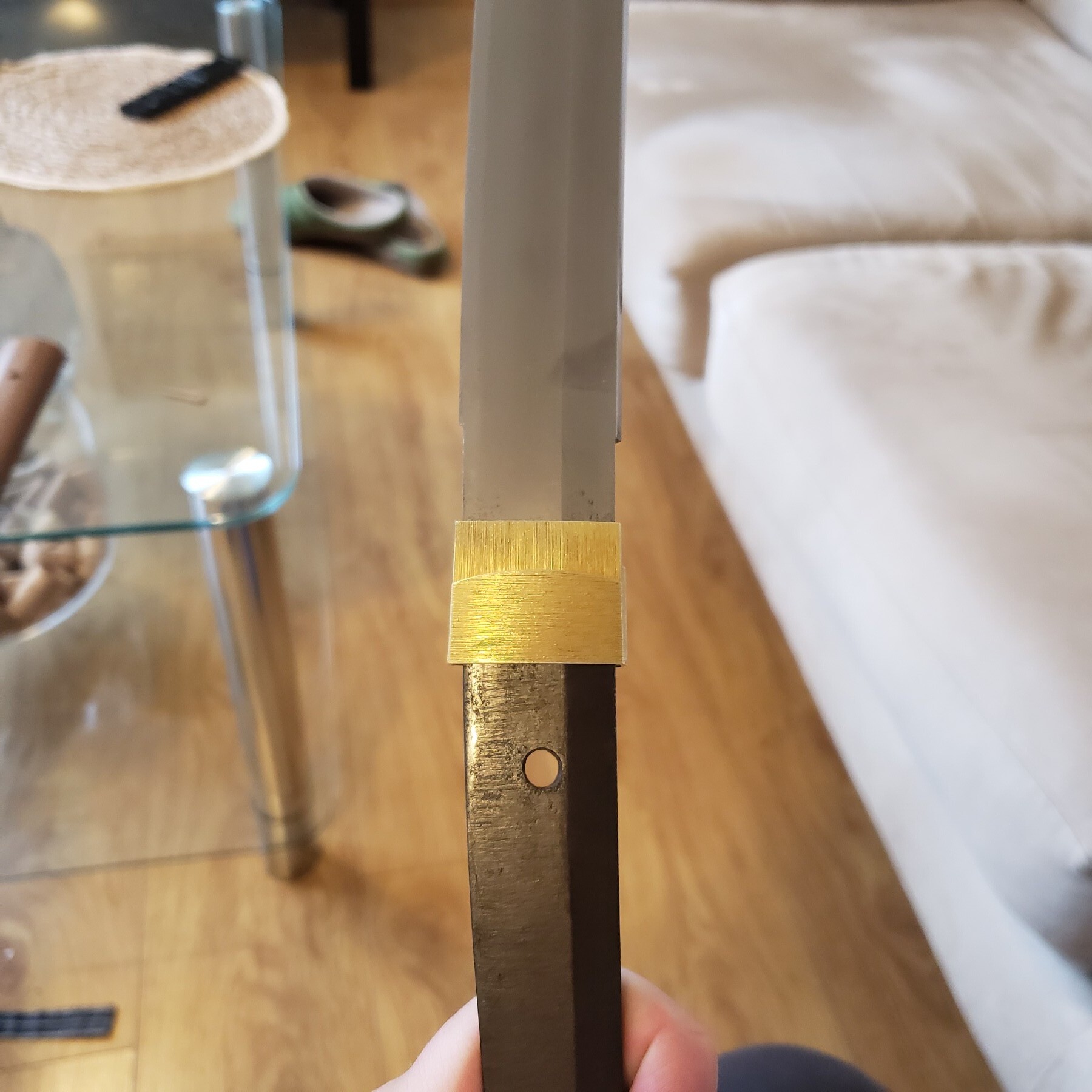
Late Muromachi, Dōtanuki (同田貫) perhaps?



.jpeg.0e6ca27cf6e937248b418001097aec7d.jpeg)

.jpeg.979fbd5148caa58ffc675bcaa6ee8aa6.jpeg)
.jpeg.422ed76da7a6567ef41e1517701dab09.jpeg)