rloose
-
Posts
9 -
Joined
-
Last visited
rloose's Achievements






-
Grey- I had lost track of Oda, but it appears he has gone back to Japan. He is an interesting mix of the old and the new. Here is a link: http://moderntosho.com/OdaTanto.htm Rich
-
Grey- I knew I would get a response like yours. I have an old mumei blade that I picked up at a trading post in Orogrande New Mexico (of all places) around 1978. I submitted it to a shinsa in Albuquerque in 1980 and it was rejected for "being too tired". I was told it was worthless. Lucky for me, John Yumoto consented to discussing the blade with me after the event. He told me it was suriage, and made by a "country smith" around 1590. So here I am with an artifact. I worked very carefully on the blade for about a year and even restored the yokote. I can now see the hamon and the hada. I am sure it is still worthless from a collector's point of view. This blade was never intended to be an art sword, but something to be used. It is worth something to me because of it's age and historical value. But this issue is somewhere between politics and religion. Rich
-
Hi Brian- I took a "polishing work shop" from Kuzan Oda (living in Denver at the time) and have some Japanese water stones. The geometry of this blade is very simple, so I think a window attempt is possible. I don't think I can hurt it much as long as I don't change the geometry. Thanks for the offer. If I don't have any luck, I will get back to you. Rich
-
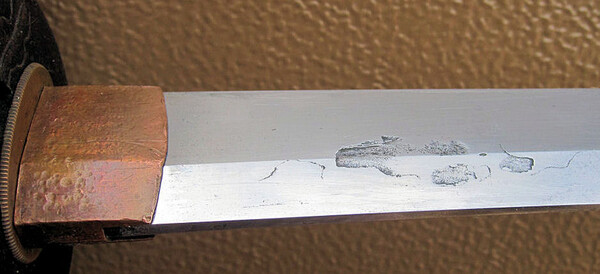
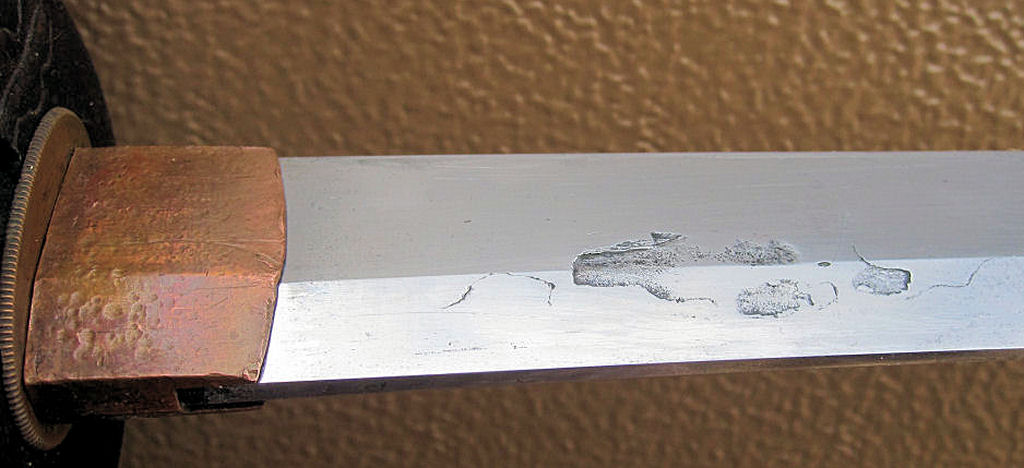
Jean- I am not the guilty party, but I cannot find a spot on the blade where any of the original surface is intact on either side. No sign of the hamon anywhere. It is still in one piece with no major nicks or dings. A good polish could possibly bring it back, but I imagine that would be more than I can afford. You can see the mune machi is still there, but the ha machi has been previously polished away. Rich

-
Ben- The blade is in very bad shape and I would not want anyone to see it. It is a shame. Rich
-
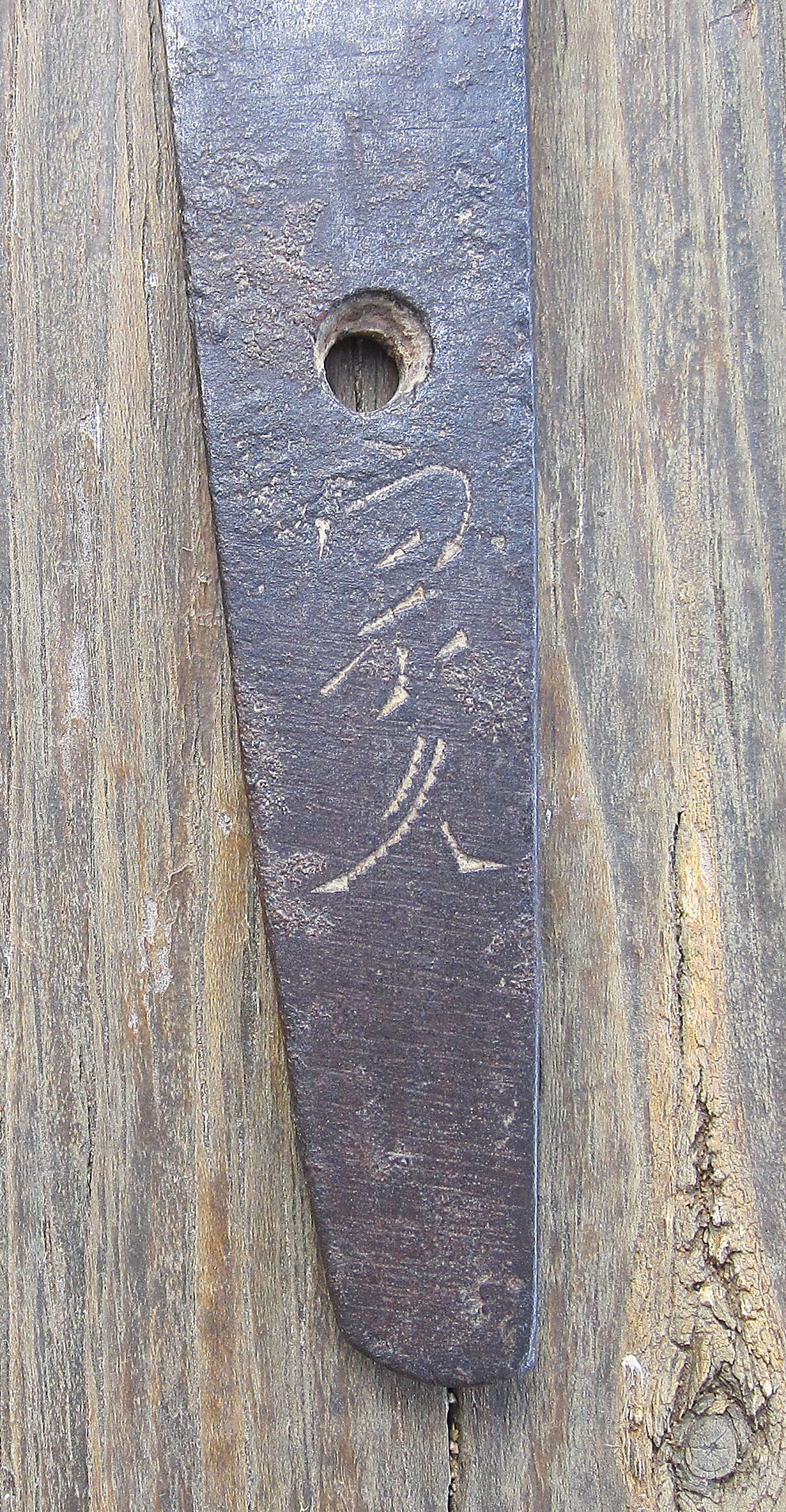
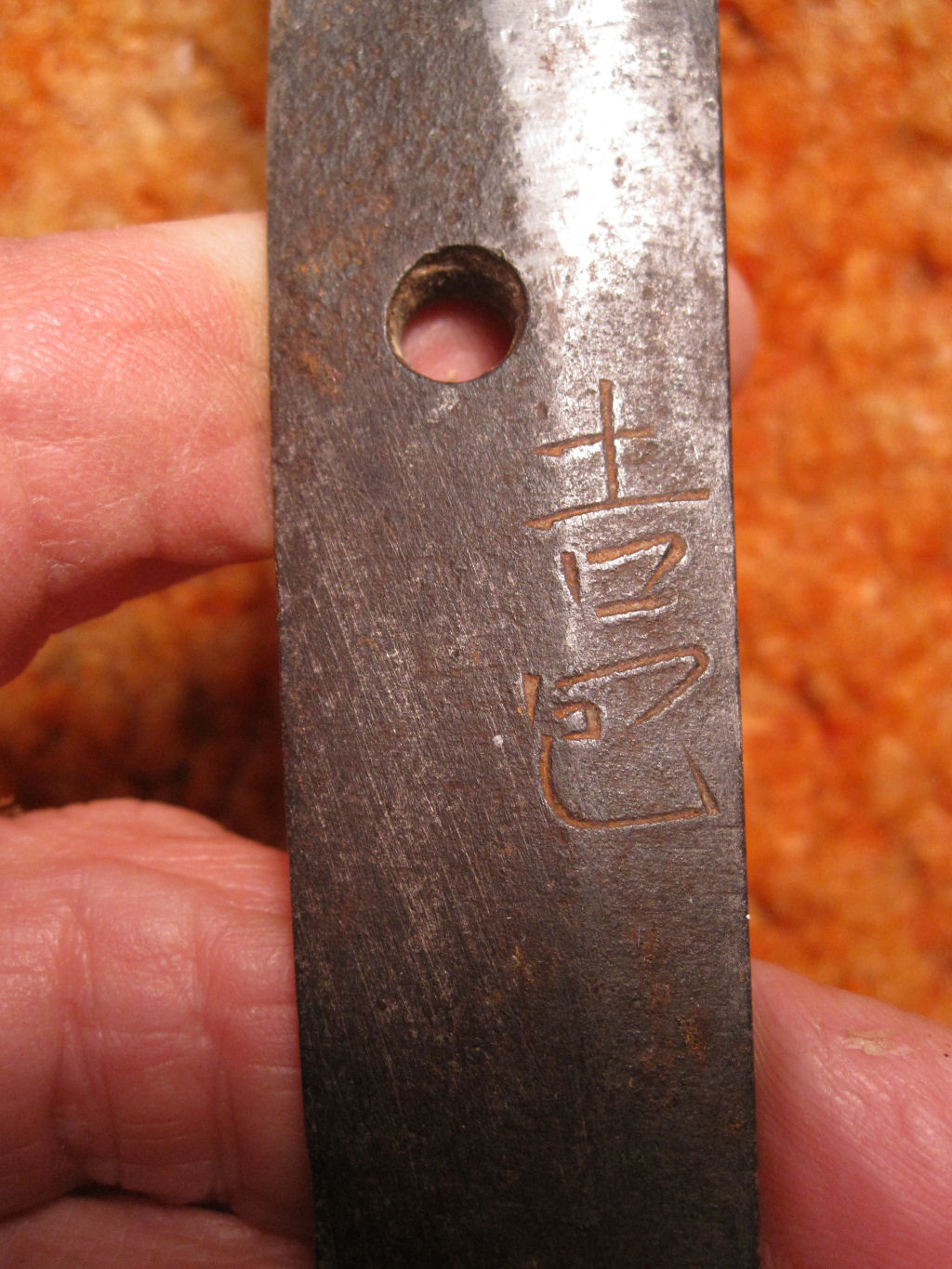
I found this tanto while cleaning out some drawers in an old shed. Any help with translating the signature would be appreciated. Rich

-
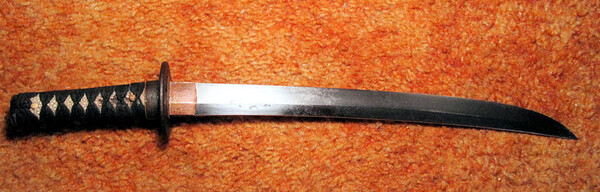
Hoanh- I am not referring to the bright spot where the patina is removed. You are right, the habaki is partly responsible, but it looks as if someone has actually filed it down a bit and removed the patina. I have had this sword for over 30 years and it was that way when I obtained it. What I am referring to can be seen best in my top full length photo. There is a groove that completely wraps around the nakago that is covered with patina. It is right where a tsuba would have been when the tsuka was mounted. If the tsuba was a bit loose it would have made a wear pattern on the nakago. I have seen this on other swords. I would think it would have to worn a lot for this to happen. Look between the mekugi-ana and the munemachi, you can see two parallel lines. The area between the lines is incised into the tang and patinated. Rich
-
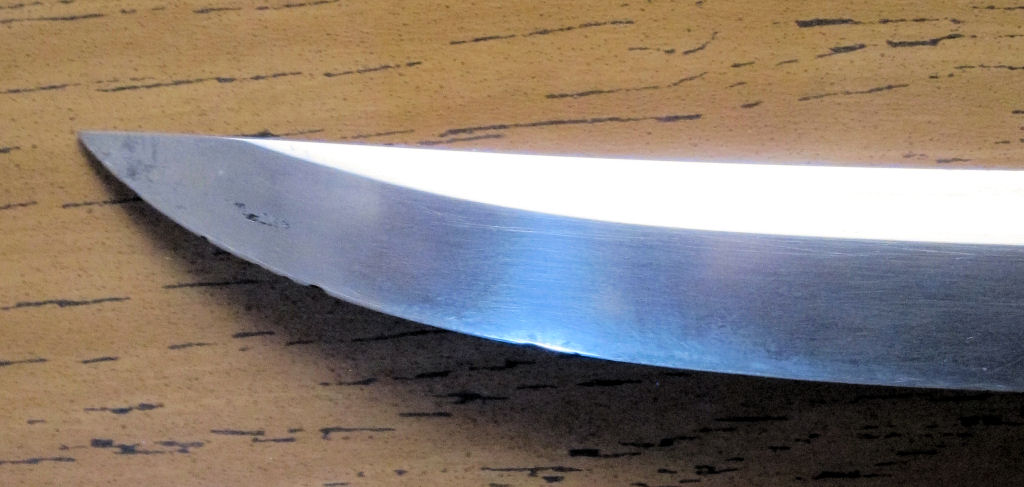
Here are some additional images of this sword. My interest is indeed academic. I have had this blade for over 30 years and was just curious as to when it was made. I was probably spoiled for sword appreciation by working for 40 years as an archeologist in New Mexico. Everything I ever picked up or dug up was broken and often weathered. The artifacts could still tell us a lot about the age and context of their deposition. This item has sentimental value for me because I obtained it while I was a kenjutsu student in Albuquerque. I also have a blade from the 1590s that I submitted to a shinsa in Albuquerque at the University of New Mexico in 1980. It was rejected for being "too tired" to be judged. But after the shinsa, I got to personally discuss the sword with John Yumoto. He told me it was made around 1590 by a Yamato school smith. He used the term "country smith" to indicate that this was a utility item made to be used, and not an art object. He advised me to hang on to it. I wish I had the opportunity to show him this blade as well. He was very generous to take the time to explain a not-so-pretty blade's history. By the way, note the wear on the nakago where the tsuba rubbed against it. This would indicate the sword was actually worn a fair amount? Rich



-
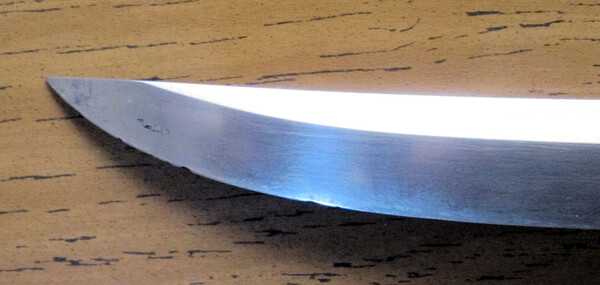
Hello to all- I have a wakizashi signed "yoshikane". It has only two characters. The blade is 38.2 cm long and sori is 0.8 cm. It has a diamond shaped cross section and a unokubi-zukuri design with no yokote. The mune is narrow. There are some large forging flaws. Grain is some itame and some masame. There is some gunome hamon visible near the tip. For it's size it has a heavy feel, kind of like a machete. There is a significant amount of wear in the nakago where the tsuba rubbed against it while being worn. I sure would appreciate any help with which one of the many Yoshikane smiths made it. Rich