Laurian
-
Posts
17 -
Joined
-
Last visited
Laurian's Achievements






-
Yes, you’re right, using the word “water” instead would have been more technically sound, as far as polishing goes, but water has two syllables and it would have broken the 5-7-5 rule. Maybe DS had nugui in mind . It’s oil based… Sure, you could argue nugui is used later in the process, but that’s not the point, I think. The metaphor is still powerful. And the “perfection’s first scratch” thing… Wow! Apparently a paradox. But I guess the AI had in mind the deeper meaning of what, at first glance, does harm to the blade’s outer “perfection”, only to make it even better in the end, by bringing its inner beauty to the surface… Pretty nice, for a non-human. At least that’s my take on the last line.
-
This will be quite a lengthy post, so please bear with me. Yesterday, I finally decided to give DeepSeek a try, just to see if it offered a different experience compared to ChatGPT, for instance. Not that I use any AI very often. I was simply curious. Having bought a TH Hokke blade which is to be delivered soon, I guessed it would be a good idea to ask DeepSeek about that particular school. The details the AI engine came up with were pretty ample and interesting, so I wrote back “thank you”, but, out of some kind of instinctive courtesy (silly me – I was talking to a machine, after all), this time my message was in Chinese (Google-translated, of course, as I don’t speak the language). To my surprise, DS then switched to Mandarin too, posting a rather long message. Amused, I asked for a translation. So, the AI apologised politely (and in a very witty, even self-ironic way, also jokingly blaming its programmers for the apparent glitch that made DeepSeek think I was able to communicate in Mandarin). And here comes the sudden twist I was blown away by: one of the funny apologies DS decided to make read: “I’ll throttle back the random multilingual outbursts… unless you request a haiku about tanto polishing”. Well, I couldn’t miss that opportunity. A haiku about tanto polishing?! Come on! And, of course, please keep in mind that I hadn’t previously include in that chat any reference to certain blade types or other Japanese cultural topics. It was entirely the AI’s idea, solely based on my interest in a Japanese swordsmithing school (and on the fact that DS assumed I’d probably appreciate related things). A few seconds later, there it was, my own personal (unrequested but very welcome) haiku, talking of a craft that very few people (if any) would think a poem should be written about. Judge it for yourselves. And remember that my “conversation” with DeepSeek began with a pretty niche topic of my choosing, that could not possibly have caused, IMHO, the AI to somehow decide I would enjoy a Japanese fixed form piece of poetry about an imaginary togishi, his work and his philosophical, metaphorical or literary inclinations. I was sooooo wrong… That totally unexpected haiku goes like this (of course, it sticks to the 3 lines, 5-7-5 syllables form, which makes it even more remarkable): Stone meets steel at dawn, Oil whispers on folded light – Perfection’s first scratch. (…I regret nothing).
-
Merci, Nicolas!
-
Hello, fellows. During the last few months, since I bought my first sword (https://www.militaria.co.za/nmb/topic/49116-my-first-nihonto-a-mumei-uda-school-katana/#comment-516907), I've been trying to enrich my terminology "knowledge base", regarding various aspects of a blade. But, as most of the descriptions available online or in the (still very few) books that I have access to don't come with good enough pictures attached to them, it's pretty hard to figure out what exactly all those things mean. In the picture below, you have a detail of my newly acquired wakizashi (signed by Fujiwara Masayasu, around Enpo era). Please let me know what's the whitish line along the hamon called. Is it the nioiguchi or habuchi itself, or something else? Thanks!

-
My first Nihonto: a mumei Uda school Katana
Laurian replied to Laurian's topic in General Nihonto Related Discussion
Thank you all! -
My first Nihonto: a mumei Uda school Katana
Laurian replied to Laurian's topic in General Nihonto Related Discussion
Thanks again! The idea of the sword being ubu never crossed my mind. This is a completely new lead for me. But I guess it makes sense. I'll have to take a closer look at the way the nakago meets the polished blade. Again, correct me if I'm wrong: the concept of an ubu sword would imply it was koshi-zori from the beginning, right? Instead, if it were o-suriage, the blade could have actually been torii-zori, originally? Sorry for all these questions, but I'm trying to learn as much as I can here... Except for Kokan Nagayama's book and the articles I found online, I currently have no literature to study. Could you recommend some more books, please? "Facts and Fundamentals of Japanese Swords: A Collector's Guide" looks good, but it seems to be impossible to buy for a decent price, these days... -
My first Nihonto: a mumei Uda school Katana
Laurian replied to Laurian's topic in General Nihonto Related Discussion
Great! Thank you! Actually, assuming this katana is O-Suriage, I was wondering why would a longer blade be forged in the 1500s (in an era where the regular nagasa was under 70 cm, if I'm not mistaken), just to be then shortened, in order to fit the tendencies of the period. -
My first Nihonto: a mumei Uda school Katana
Laurian replied to Laurian's topic in General Nihonto Related Discussion
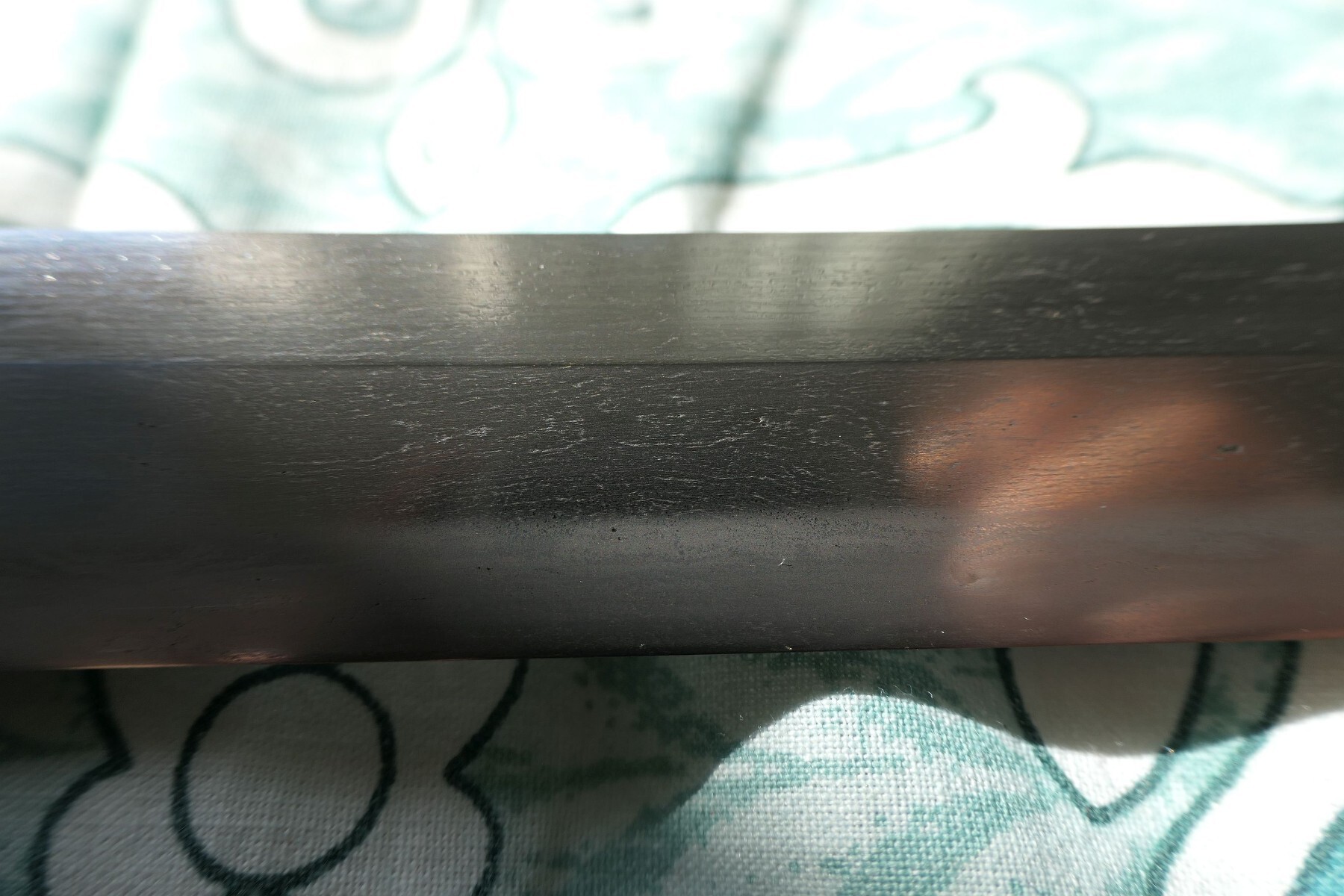
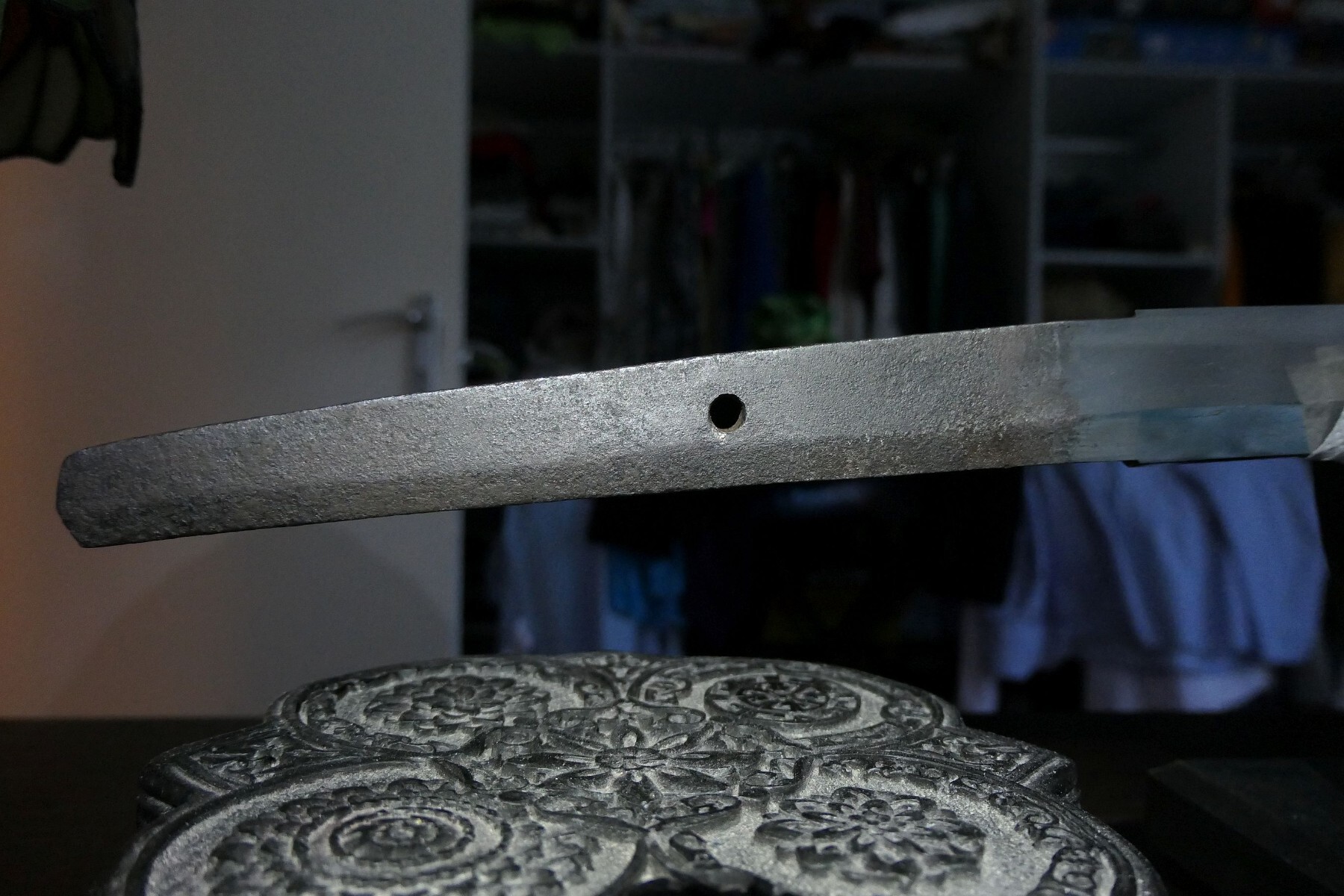
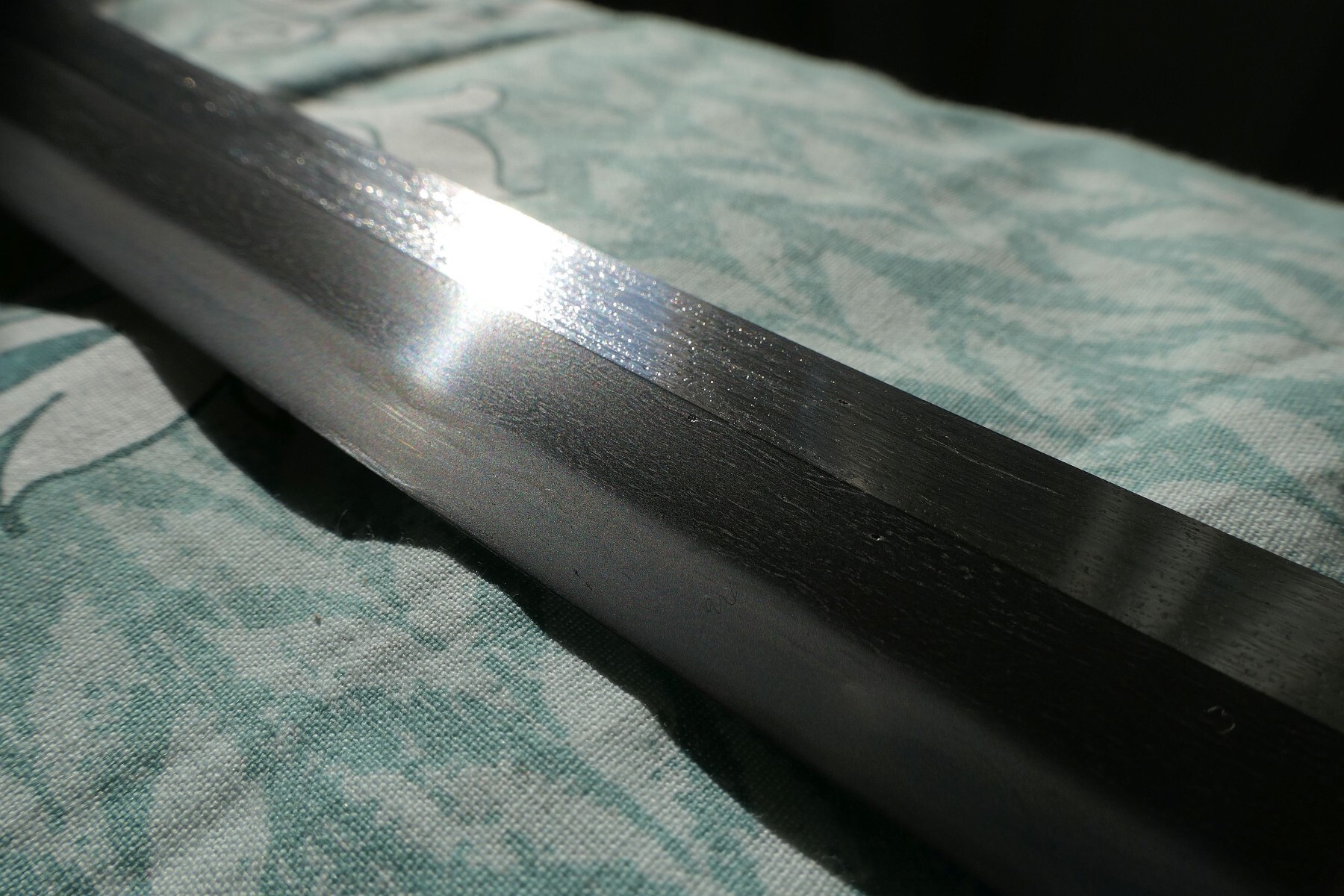
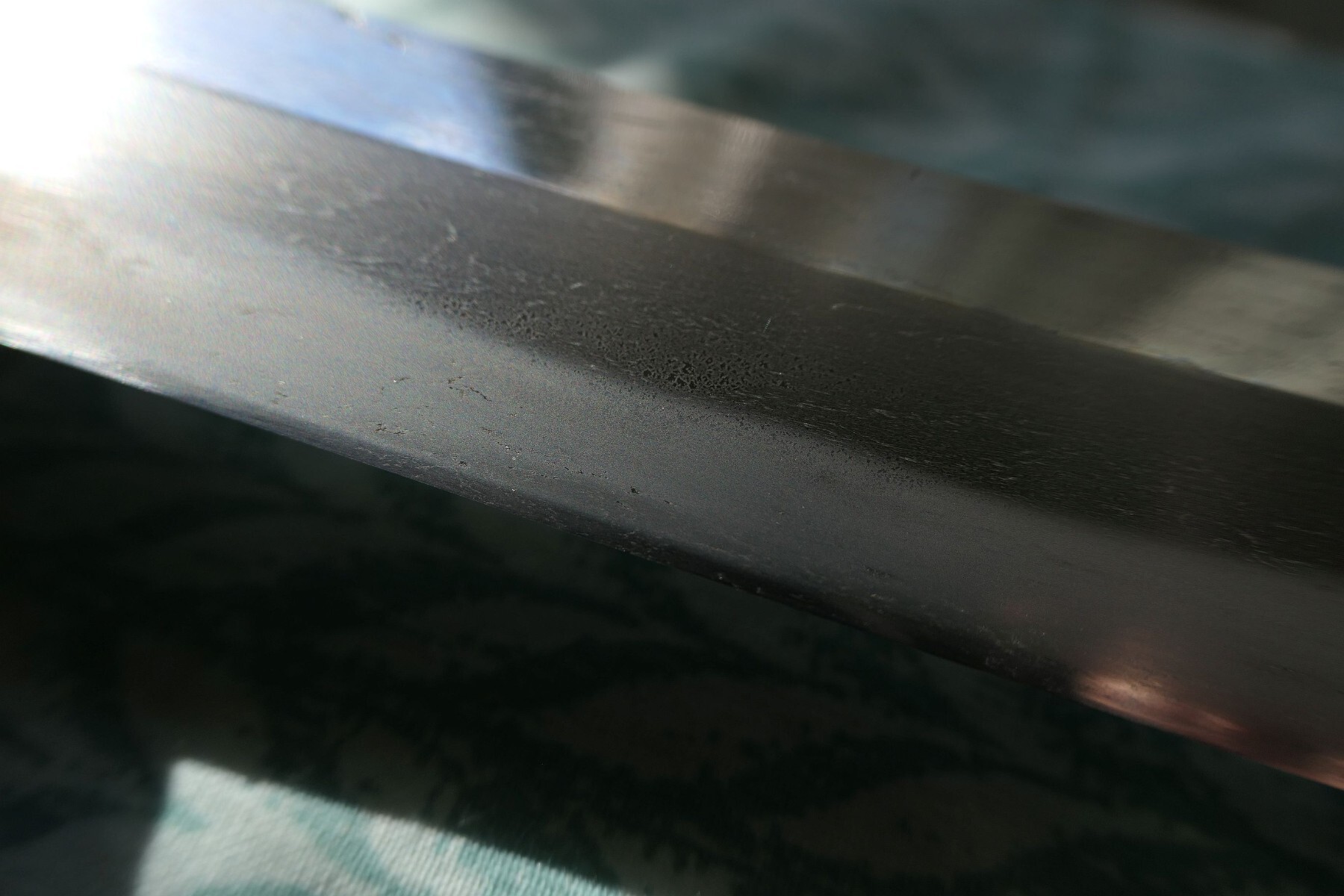
Last three.


-
My first Nihonto: a mumei Uda school Katana
Laurian replied to Laurian's topic in General Nihonto Related Discussion
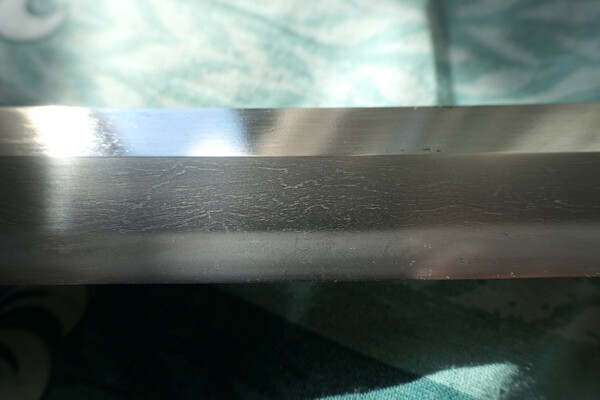
And some more...



-
My first Nihonto: a mumei Uda school Katana
Laurian replied to Laurian's topic in General Nihonto Related Discussion
There you go. Some pics. After taking them, in macro mode, I noticed I hadn't removed all the oil on the blade. Some lint is also visible. Sorry for all that. I hope those pictures are still relevant to some extent.


-
My first Nihonto: a mumei Uda school Katana
Laurian replied to Laurian's topic in General Nihonto Related Discussion
Correction: when I wrote “pre-Sengoku”, I actually meant “before the end of the Sengoku period wars”. Sorry! -
My first Nihonto: a mumei Uda school Katana
Laurian replied to Laurian's topic in General Nihonto Related Discussion
I’ll try to snap a few more pictures showing jihada in good light, at different angles. But that’s a weekend job… -
My first Nihonto: a mumei Uda school Katana
Laurian replied to Laurian's topic in General Nihonto Related Discussion
Thanks Kirill! Excellent piece of information. It helps me a lot. Being pre-Sengoku, it might still have seen some action in battle. This is really exciting. -
My first Nihonto: a mumei Uda school Katana
Laurian replied to Laurian's topic in General Nihonto Related Discussion
Thanks, Jeremy! At first, as I didn’t have my glasses on, I didn’t read “could’ve”, but “couldn’t have” 😅, so I thought to myself “s..t, is it THAT bad?!”. Yes, those two small kitae-ware are located in the shinogi-ji, one close to the mune. The hira-ji is really clean, as is the hamon and the ha itself. The cutting edge appears to be flawless, even under high magnification. Sharpness? I guess I’ll never find that out… So far, I didn’t have the chance to read nearly enough about jihada, so I’ll concentrate on that next. I want to be able to identify those specific elements on my blade. I’ll also try to do some more digging into the sword’s age and origins. I’ll probably write to Tsuruta-san about this, as he was the one to come up with the mid-Muromachi estimation. Maybe he’ll find time to write back… -
My first Nihonto: a mumei Uda school Katana
Laurian replied to Laurian's topic in General Nihonto Related Discussion
Great link, Oli! Thanks!